



Press Release

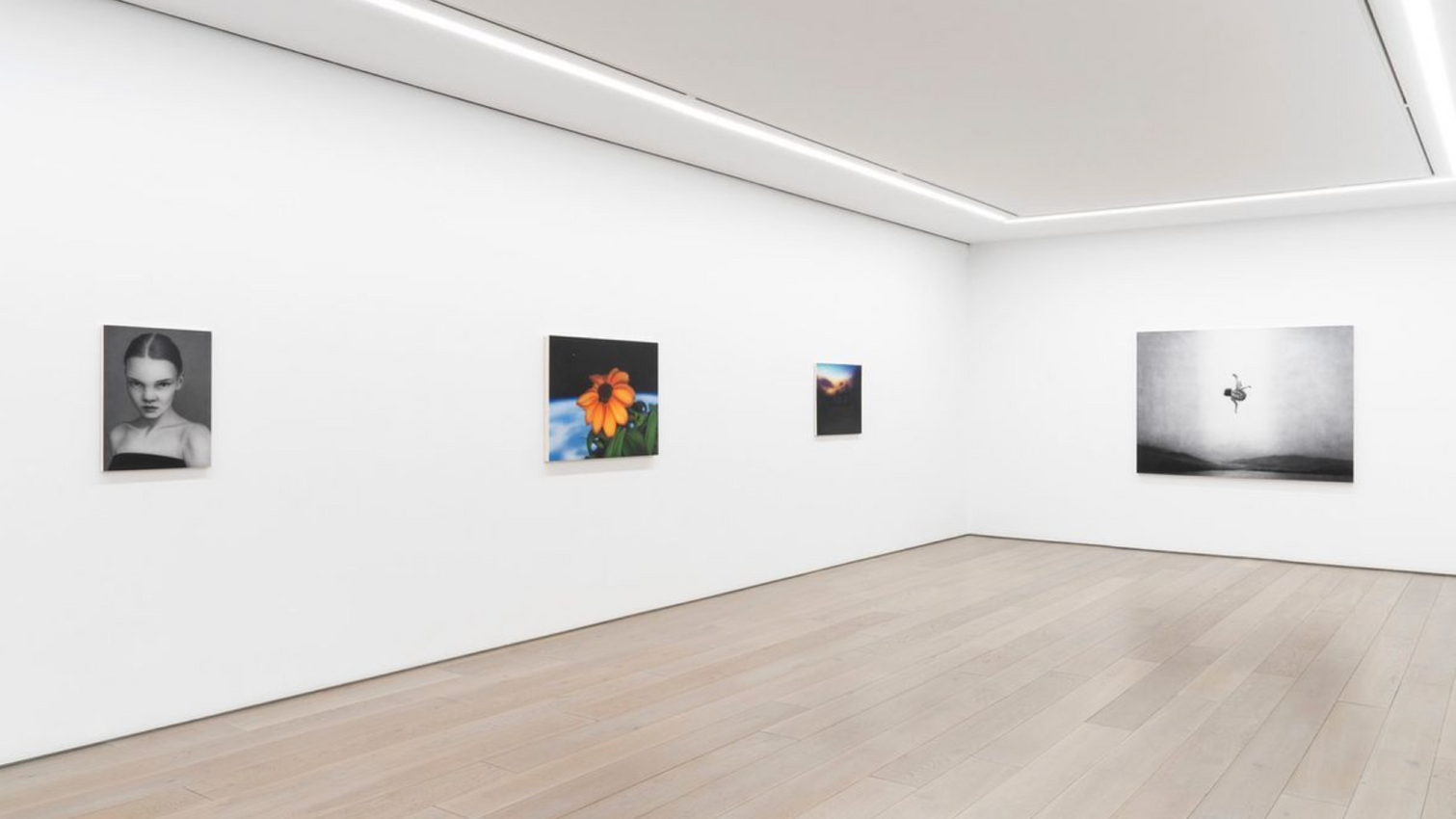
Perrotin is pleased to present the ninth solo exhibition by the Belgian artist Pieter Vermeersch with the gallery and the first in Dubai. His exhibition features eleven works that invite viewers to reflect on the relationship between humans and the material world.

In the creative realm of Pieter Vermeersch, there is space and time for slowness, attention, and meditation on human and more-than-human relations. His works move fluidly between painting, architectural elements, and geological ready-mades. Encountering an artwork is always an experiential phenomenon; Vermeersch, however, is especially interested in the viewer’s self-reflexive observation of the interplay between the recognisable and the abstract. Time, colour, space, and matter—the four fundamental elements of his oeuvre— are less formal categories than relations through which bodies and materials encounter one another.

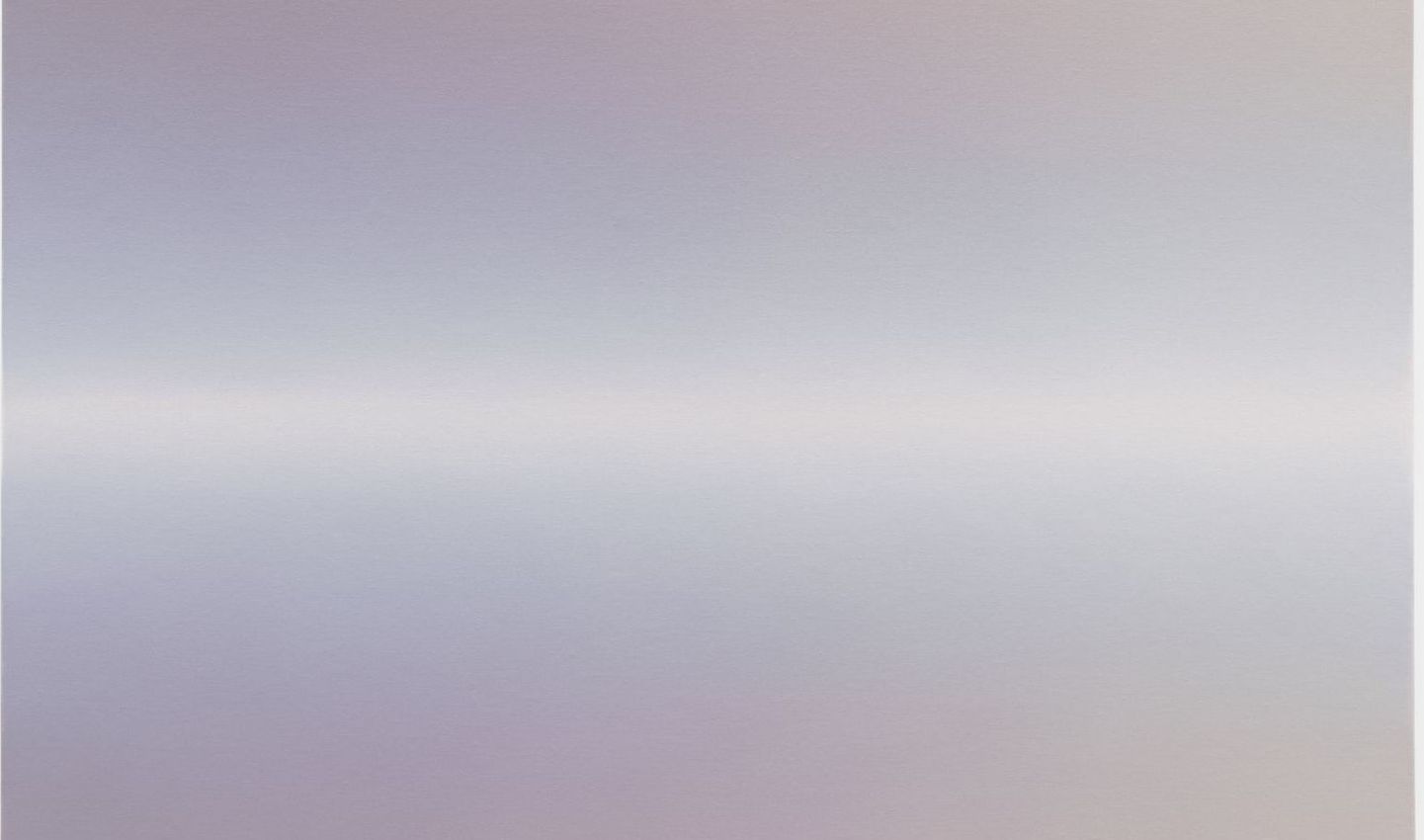
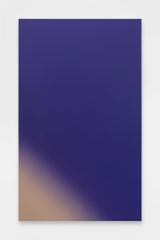
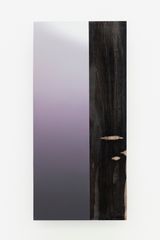
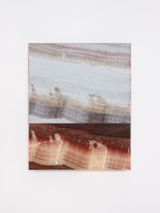
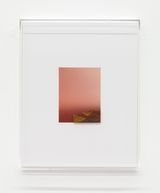
Each work is an archive of artistic processes and protocols that run alongside one another, producing a creative tension between a controlled framework and a free flow of occurrences. His paintings appear in their most reduced form: colour passes imperceptibly into another colour; at first glance, the surface is emptied of gesture, narration, and any recognisable subject. He begins by taking photographs without spatial references, turning them upside down and transforming them into negative images on canvas. Paintings thus emerge from a process in which the artist deliberately avoids defining a spatial or temporal framework.

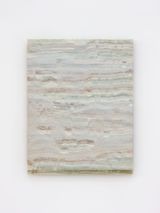
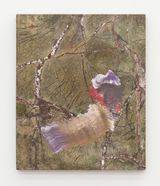
Vermeersch’s work begins where the distinction between image and matter, between the visible and the conditions of its appearance, becomes unstable. What happens when the supposedly passive surface refuses to remain passive? What happens when colour, pigment, stone, light, and architecture are no longer understood as instruments awaiting the agency of an artist or spectator but as forces participating in the formation of the work? Jane Bennett’s concept of vital materiality, set out in Vibrant Matter: A Political Ecology of Things (2009), offers a productive argument here: matter does not merely receive human intention but also acts, affects, and modifies the situations in which it participates. The paintings on found or cut stone, wood, or petrified wood that Vermeersch has developed since 2013 can be understood not as images imposed upon inert matter, but as temporary assemblages in which human and nonhuman agencies become difficult to separate. Their very weight testifies to a time that exceeds the human scale.

Living in the new geological time of the Anthropocene has further increased human responsibility and existence in relation to the more-than-human worlds. There is no view from nowhere, no neutral perception detached from embodiment, architecture, and histories of power relations—yet the anthropocentric vision is no longer possible either. The painted wall, the mineral surface, the light entering the exhibition space, the chemical behaviour of pigment and the architecture itself all participate in producing the experience. Agency becomes relational and distributed. Feminist materialist methods have sought to articulate a transformation of the human subject within geological time by recognising its material entanglement with more-than-human worlds.

Pieter Vermeersch’s first exhibition in the United Arab Emirates comprises eleven recent and earlier works, in which the exhibition space itself becomes a stage for human and more-than-human interactions. Walls painted in various shades of grey carry a subtle scenography that lets visitors move through the space in an open choreography, immersing themselves in works placed in careful relation to one another. For this exhibition, Vermeersch also presents a new experiment: Untitled (2026) is conceived as an assemblage of painting and stone, two separate entities placed side by side in an artistic search for greater relational freedom.

— Nataša Petrešin Bachelez

Courtesy Perrotin.

Read More
About the Artist

Pieter Vermeersch’s (Kortrijk, 1973) artistic research of painting expands beyond the confinement of the canvas. His work often consists of large spatial interventions, consistently subverting territory whether conceived for an exhibition space or adjusted to a pre-existing architectural site. In addition to the immersive, painterly installations and gradient wall paintings, his oeuvre also includes an array of ephemeral zero degree paintings on canvas.

View Artist Profile

Also Exhibiting at Perrotin

Address
Gate Village Building 5
Podium Level
05 Sheikh Zayed Rd
Dubai
United Arab Emirates
Opening Hours
Tuesday – Saturday
1pm – 10pm
(1)
Dubai Gate Village Building 5, Podium Level
Perrotin
Gate Village Building 5, Podium Level, 05 Sheikh Zayed Rd, Dubai, United Arab Emirates

Opening hours
Tuesday – Saturday
1pm – 10pm
The art world in focus
