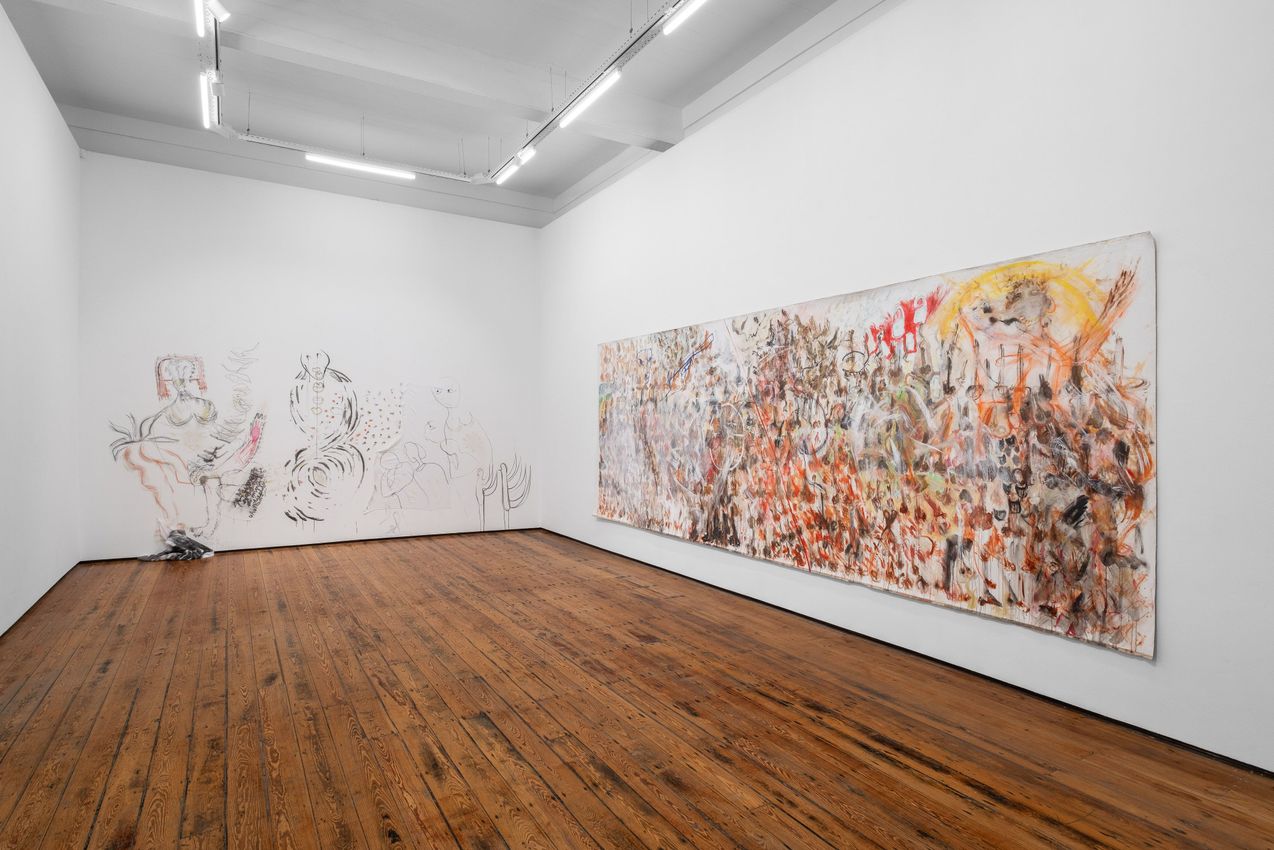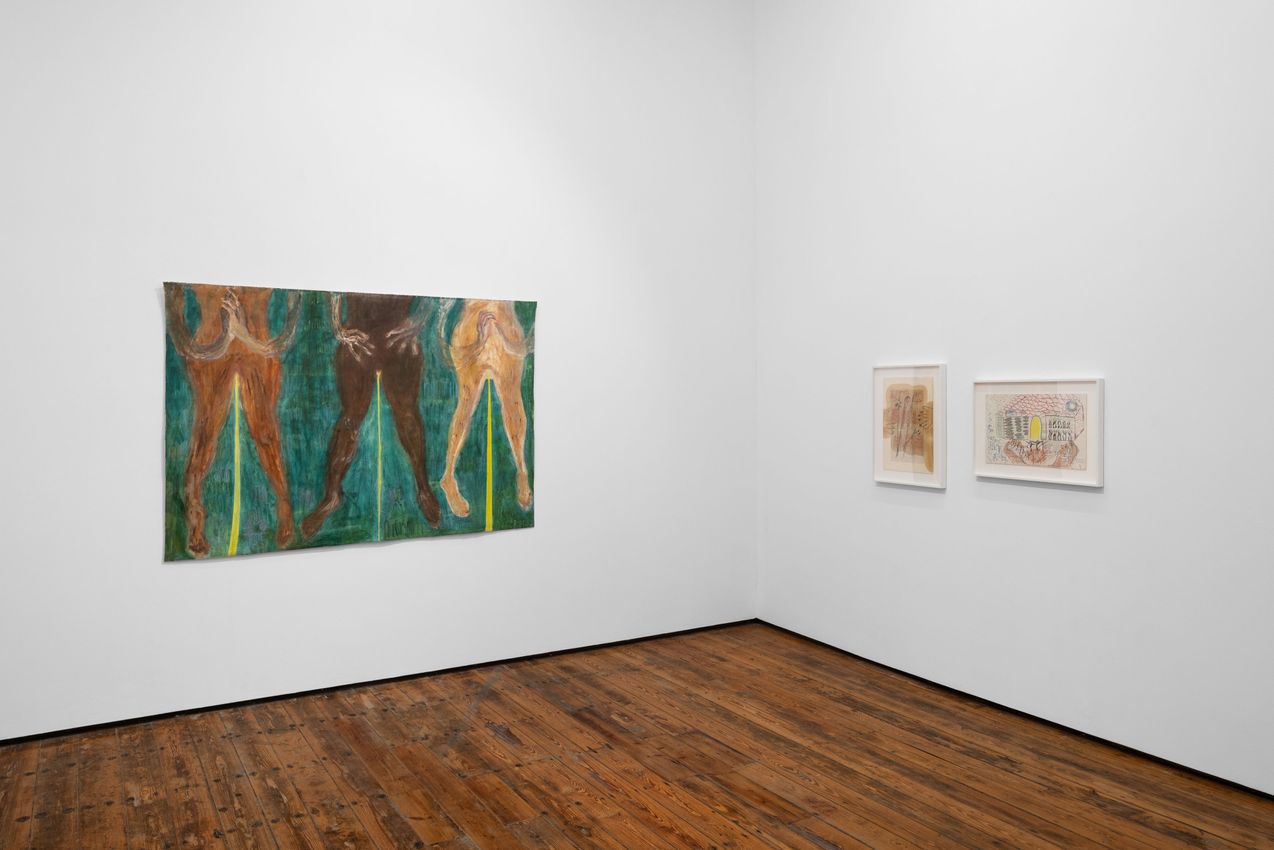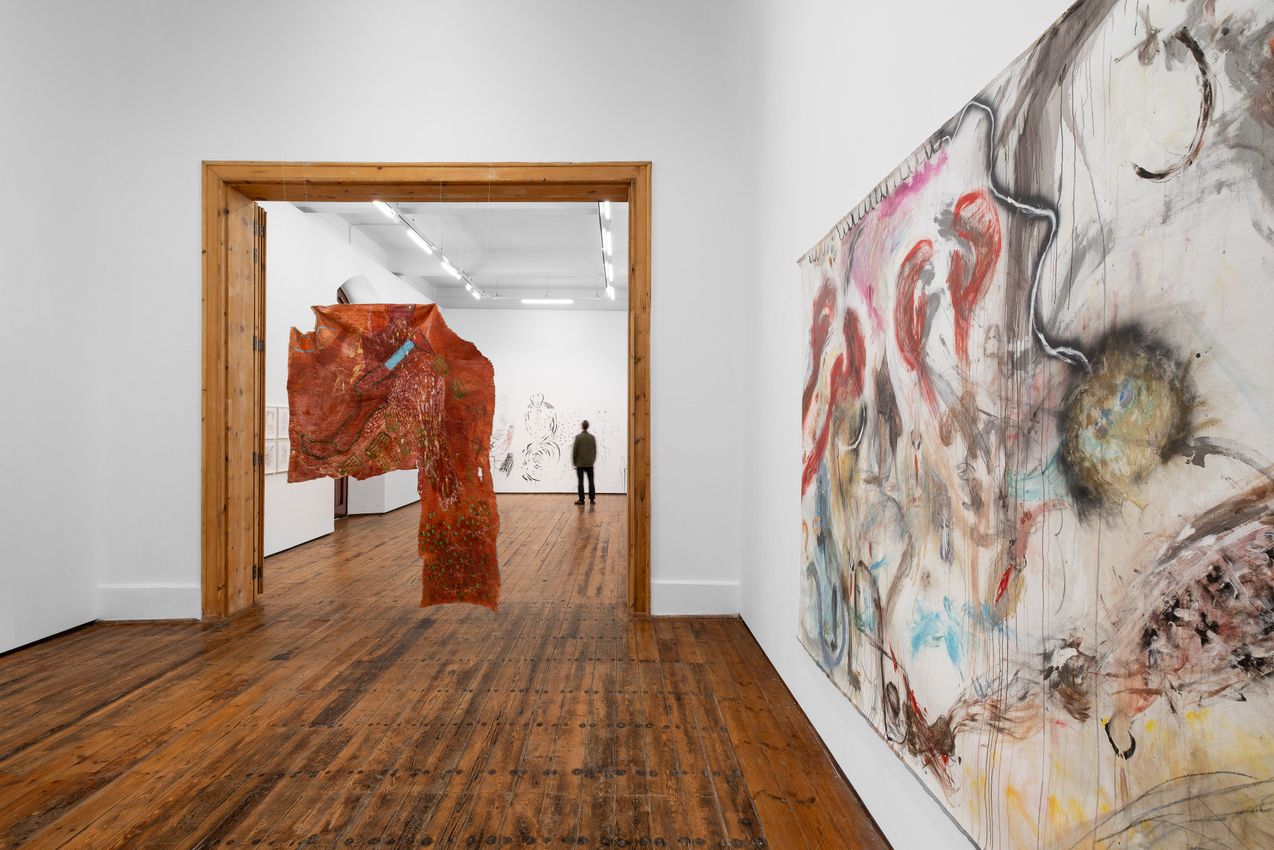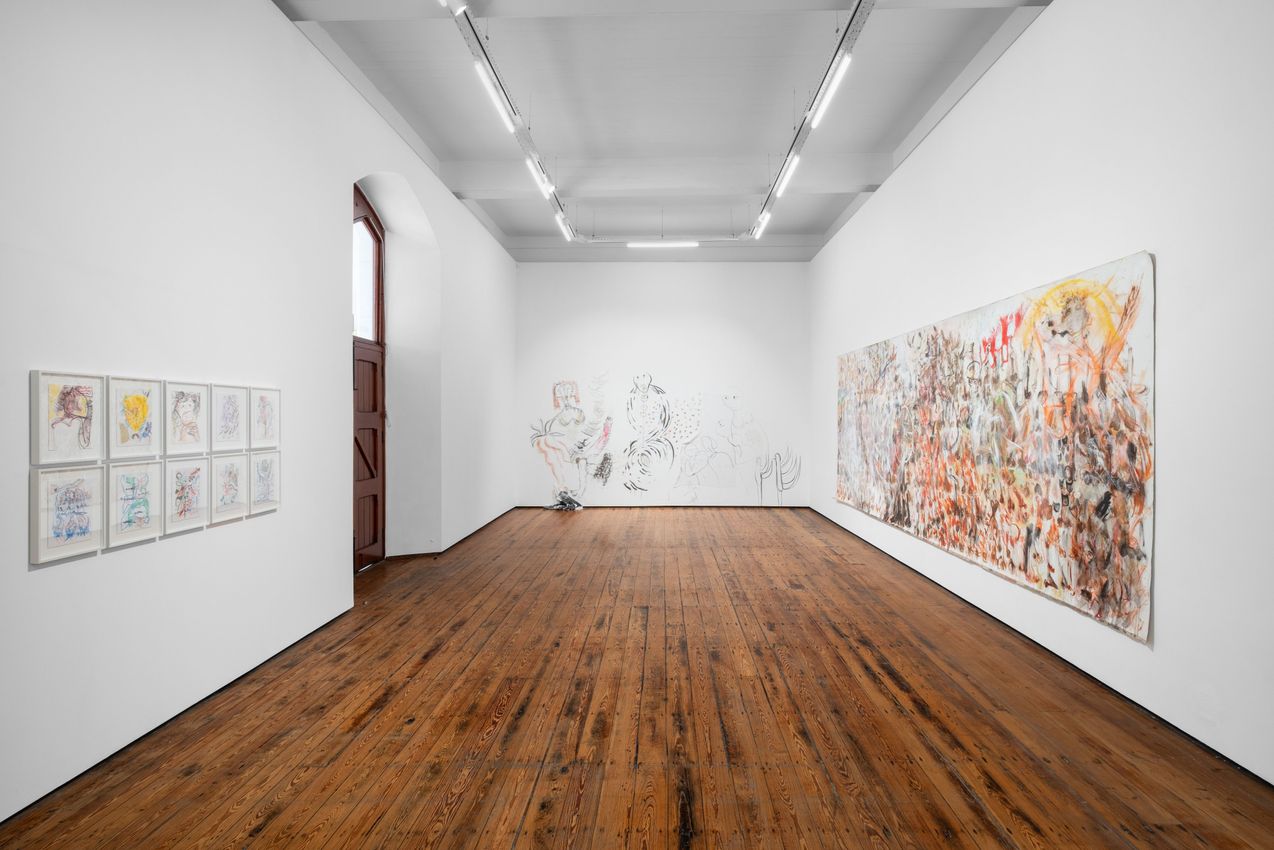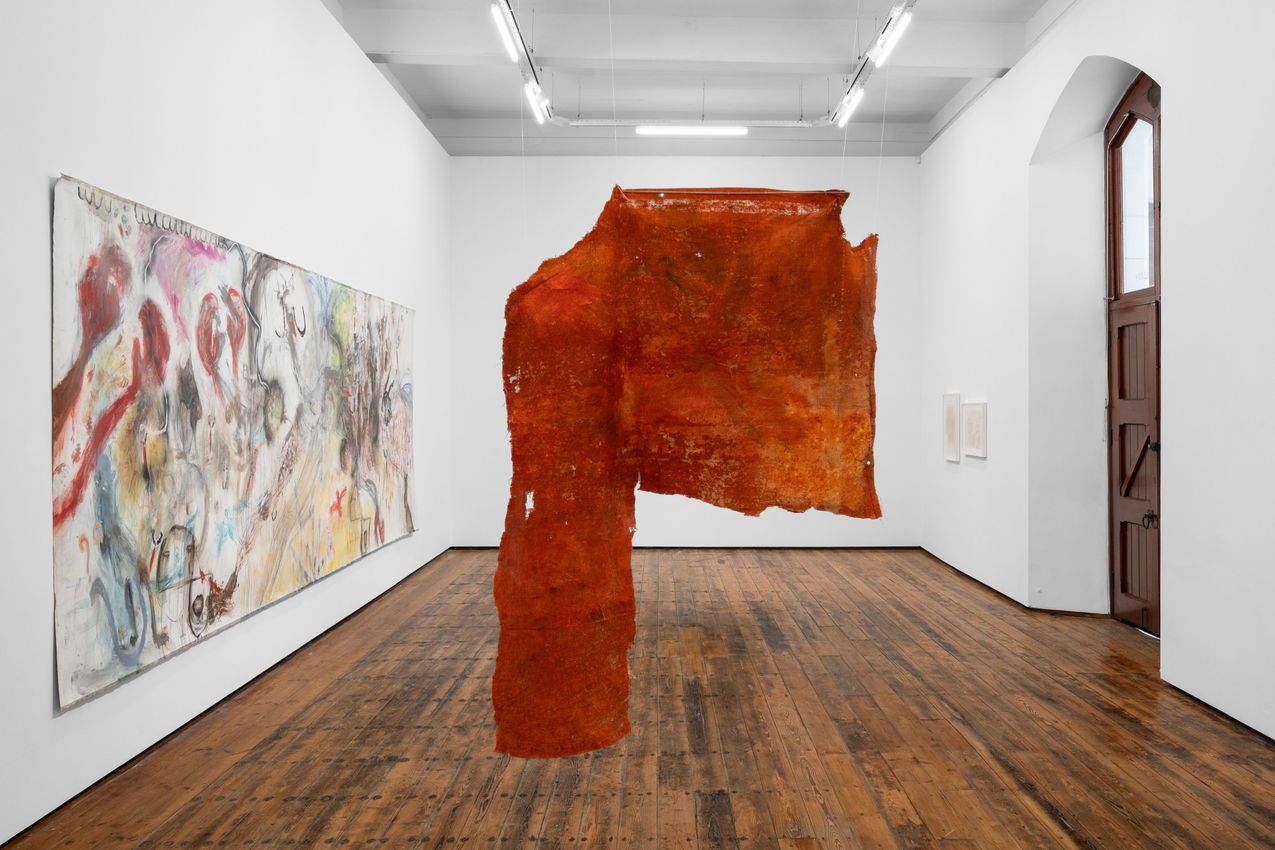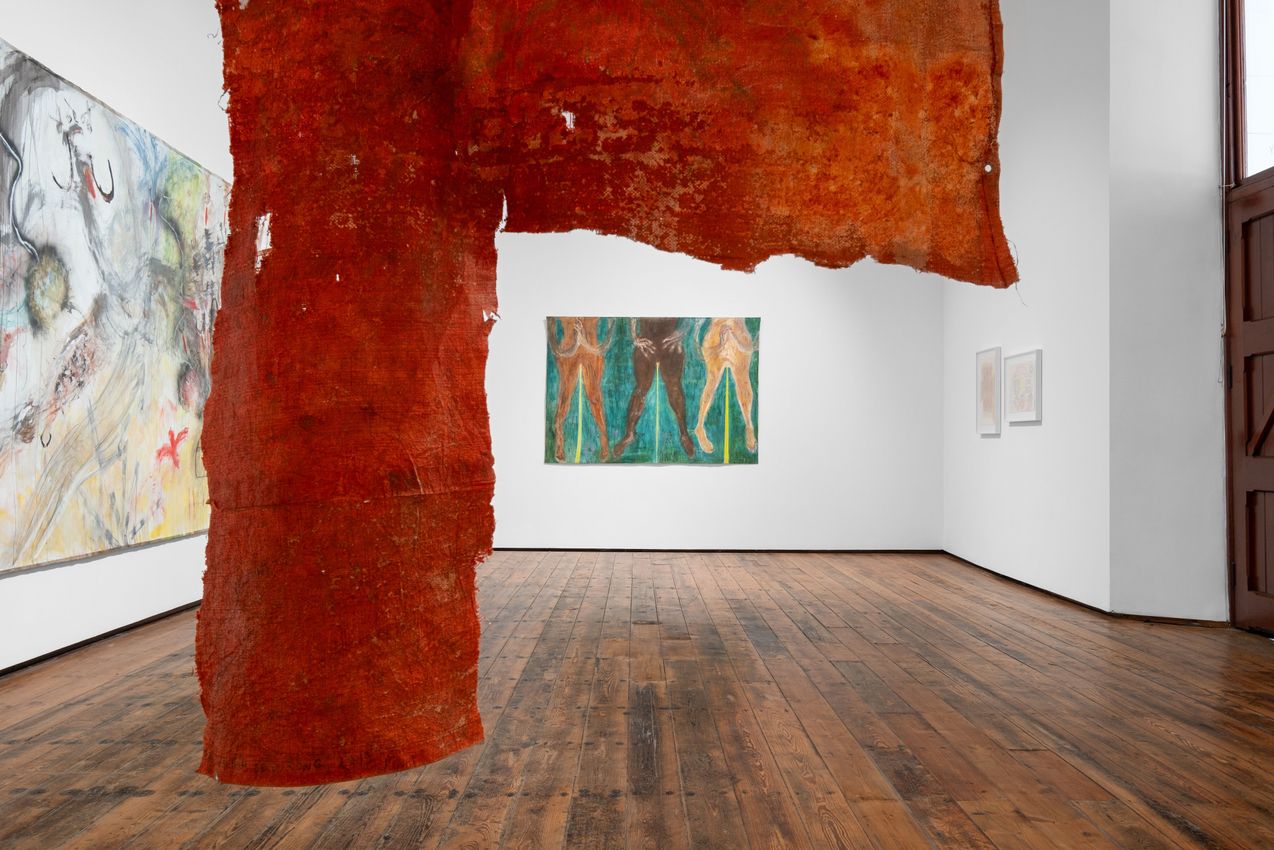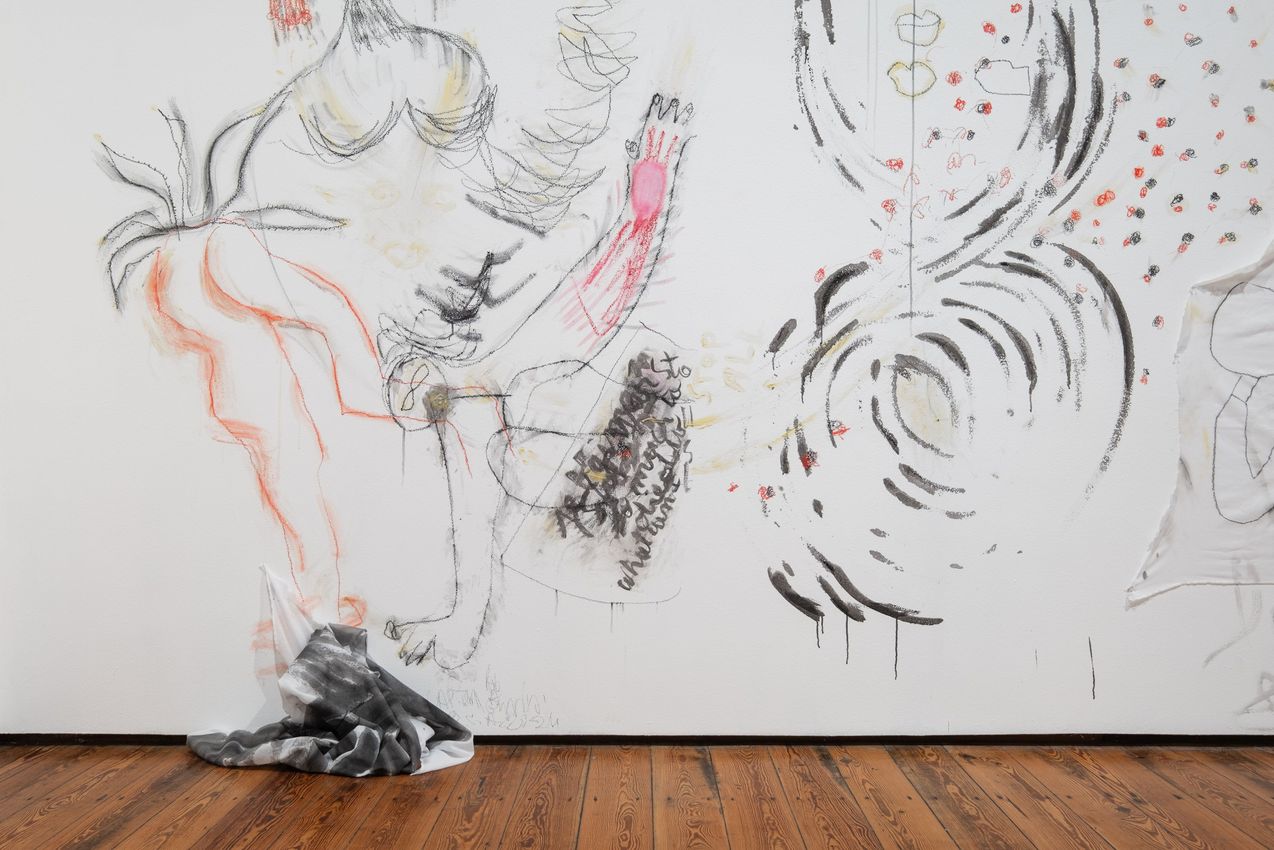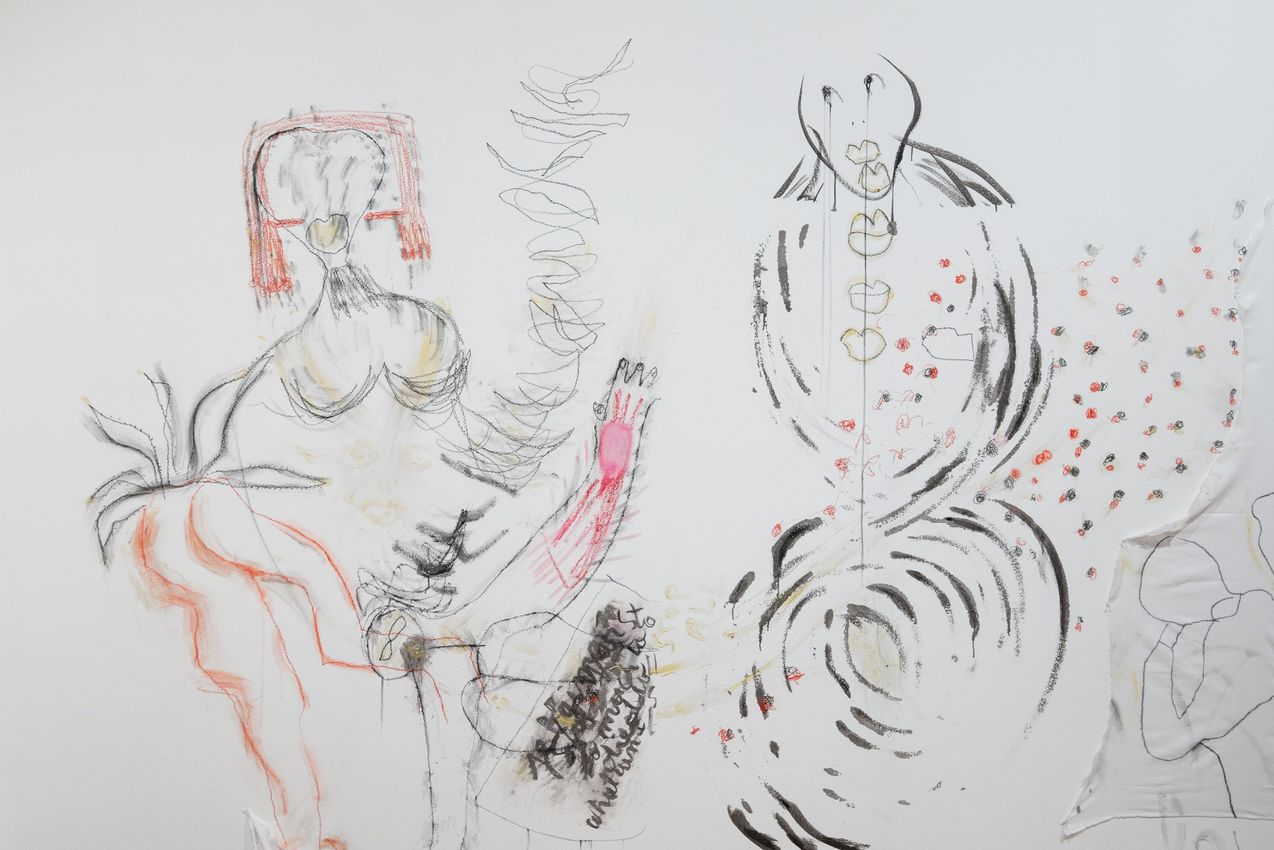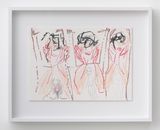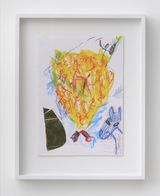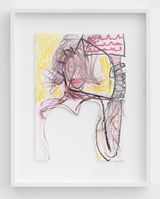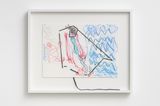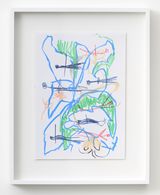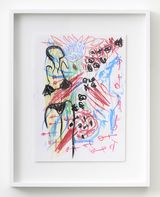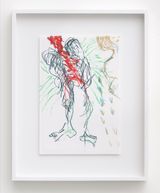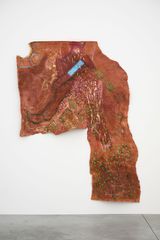




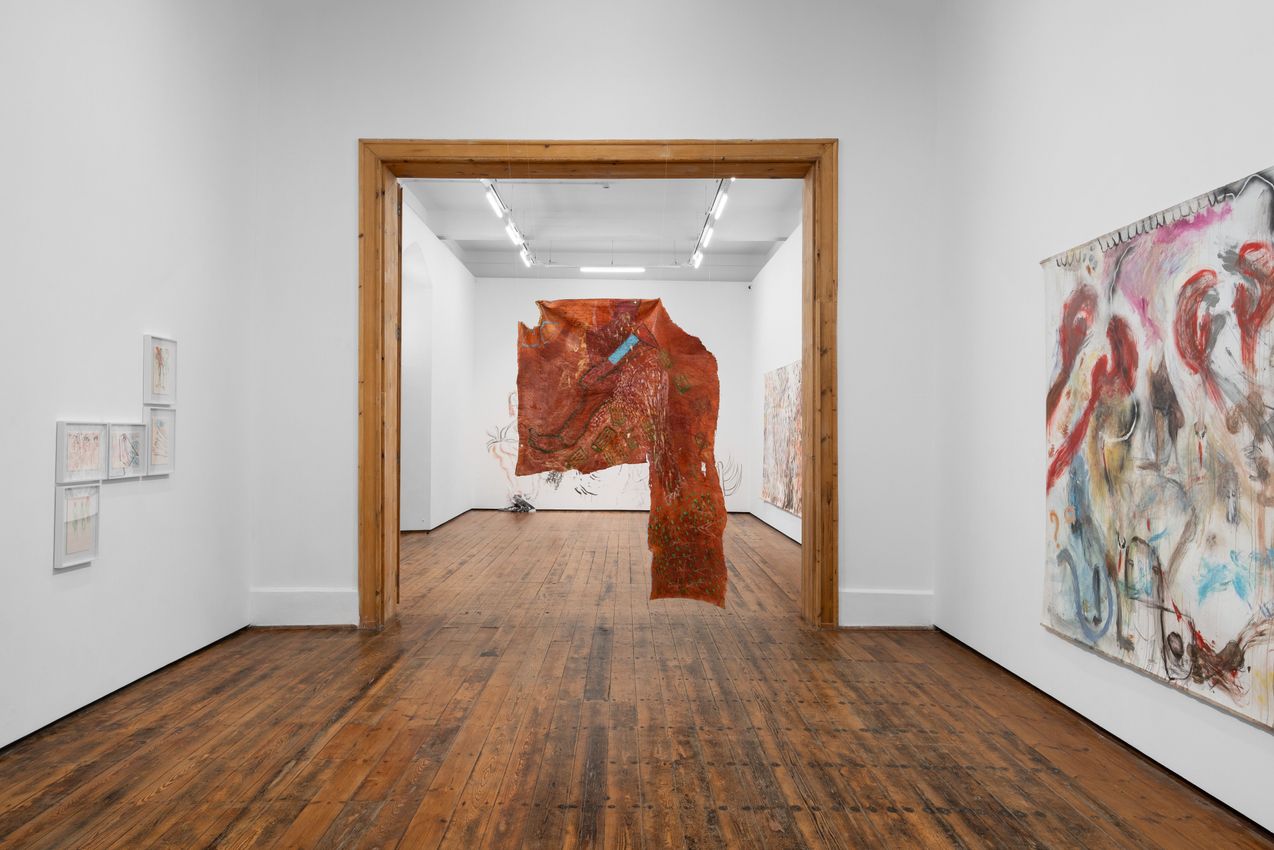
Goodman Gallery is pleased to present Pélagie Gbaguidi’s’The Colours are the Bark’, the artist’s first exhibition withthe gallery and in South Africa.
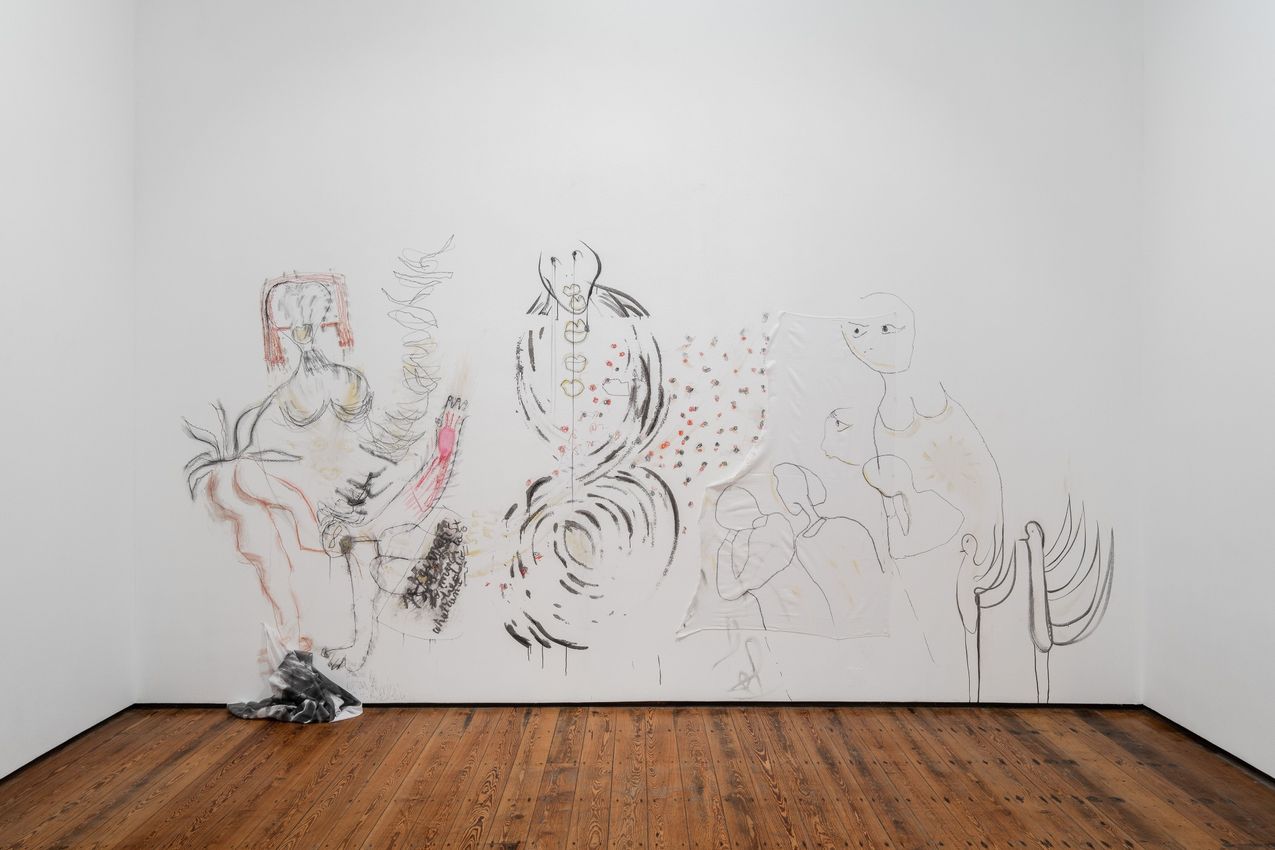
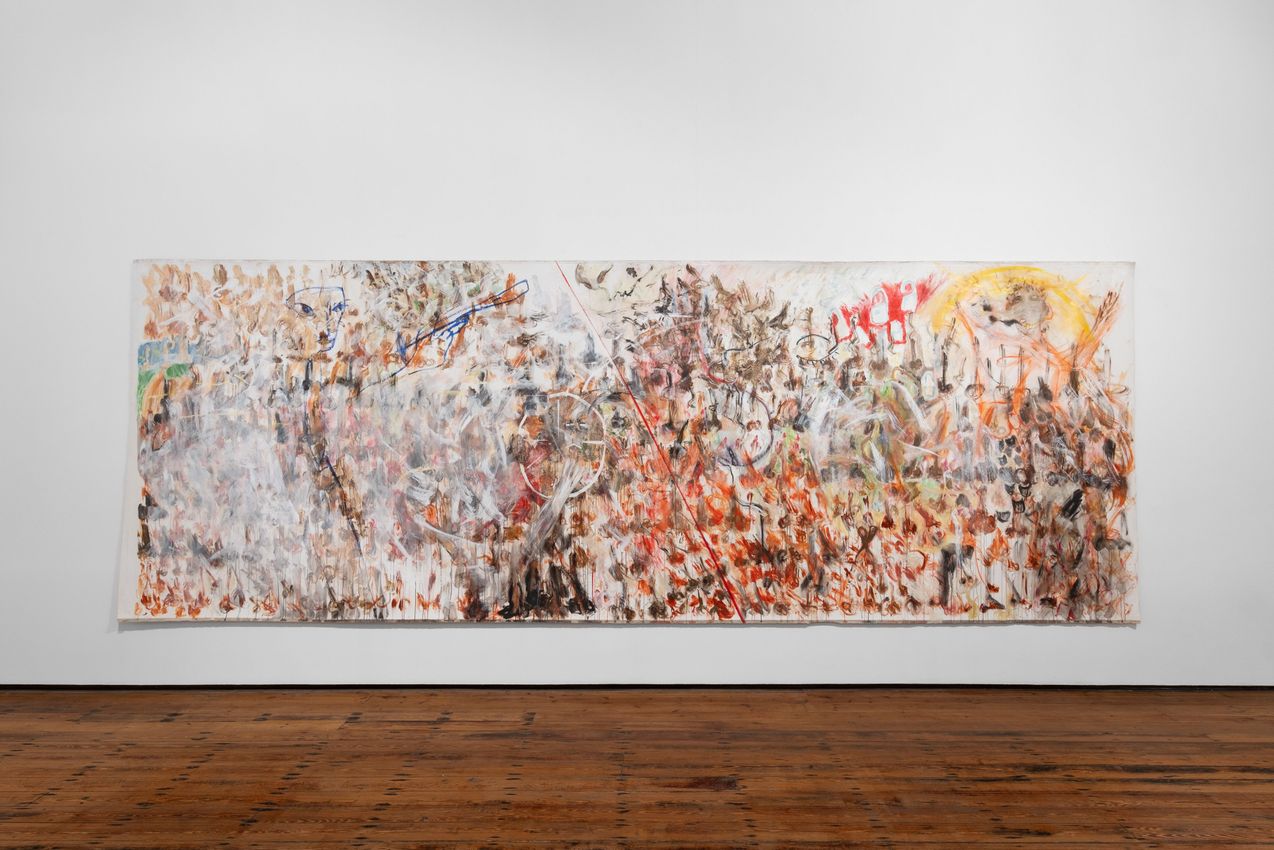
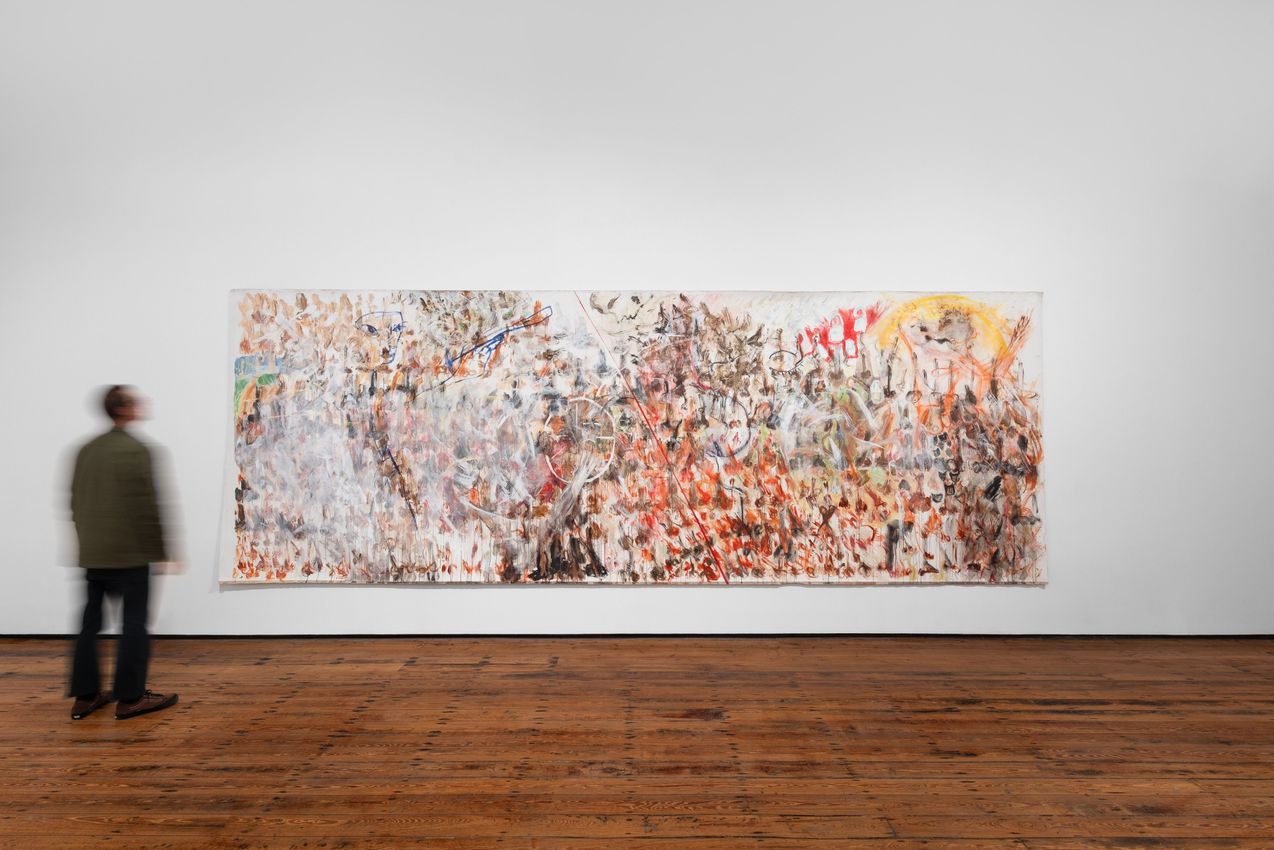
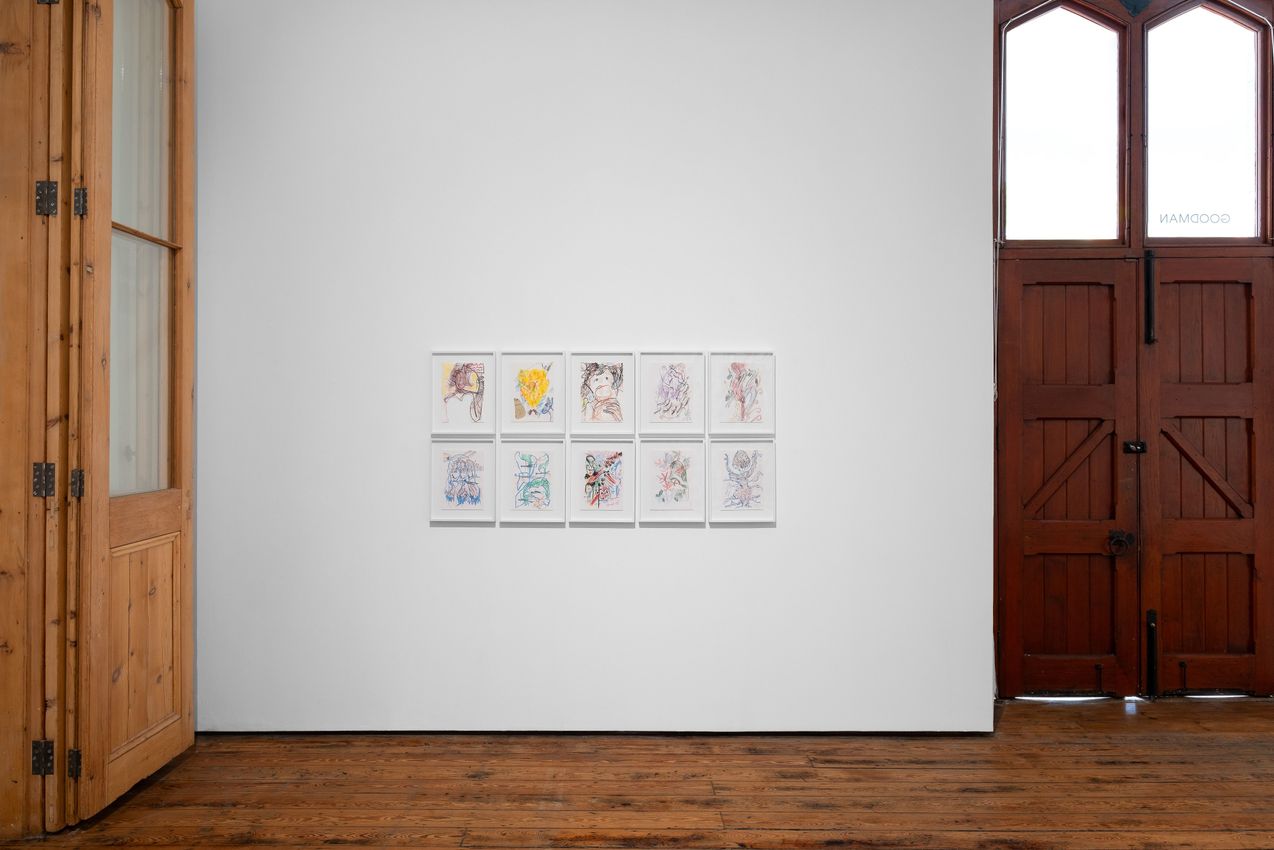
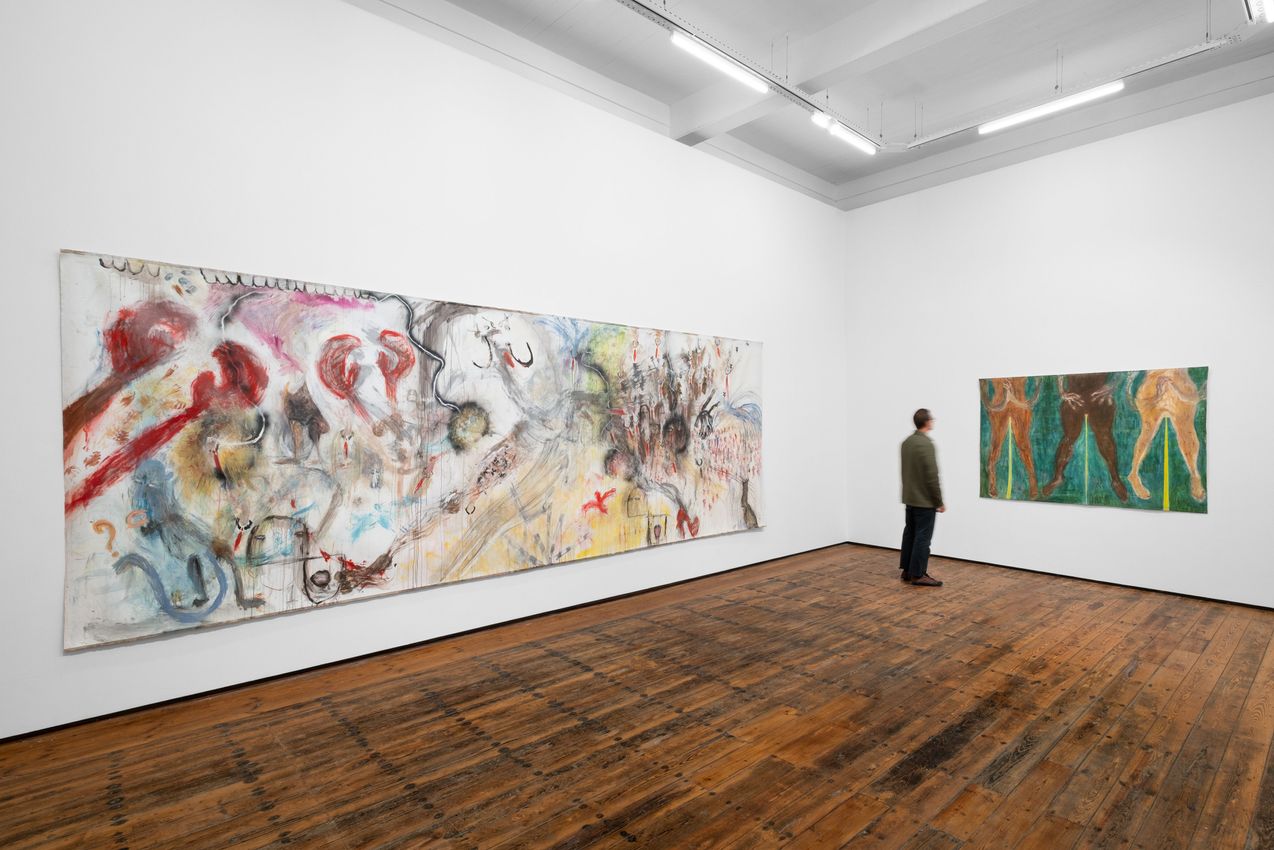
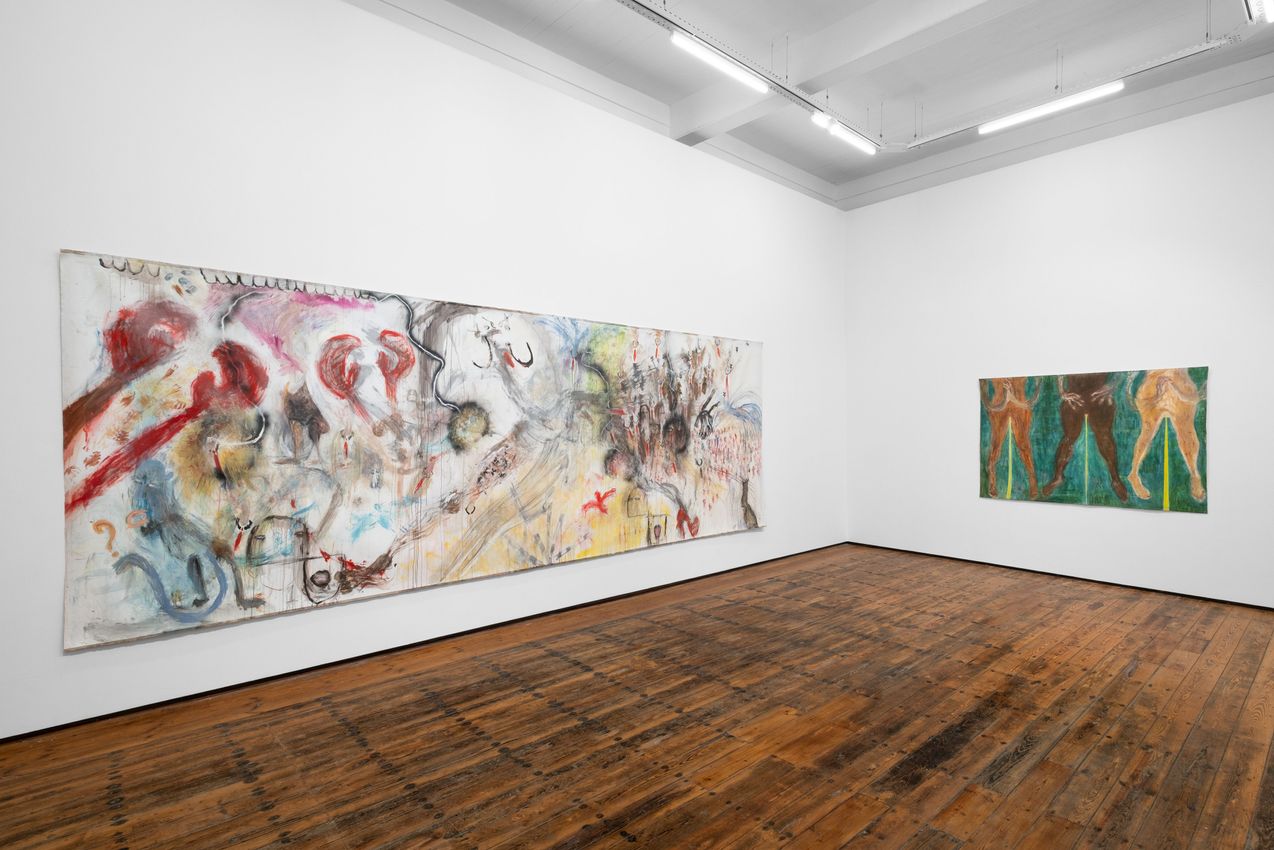
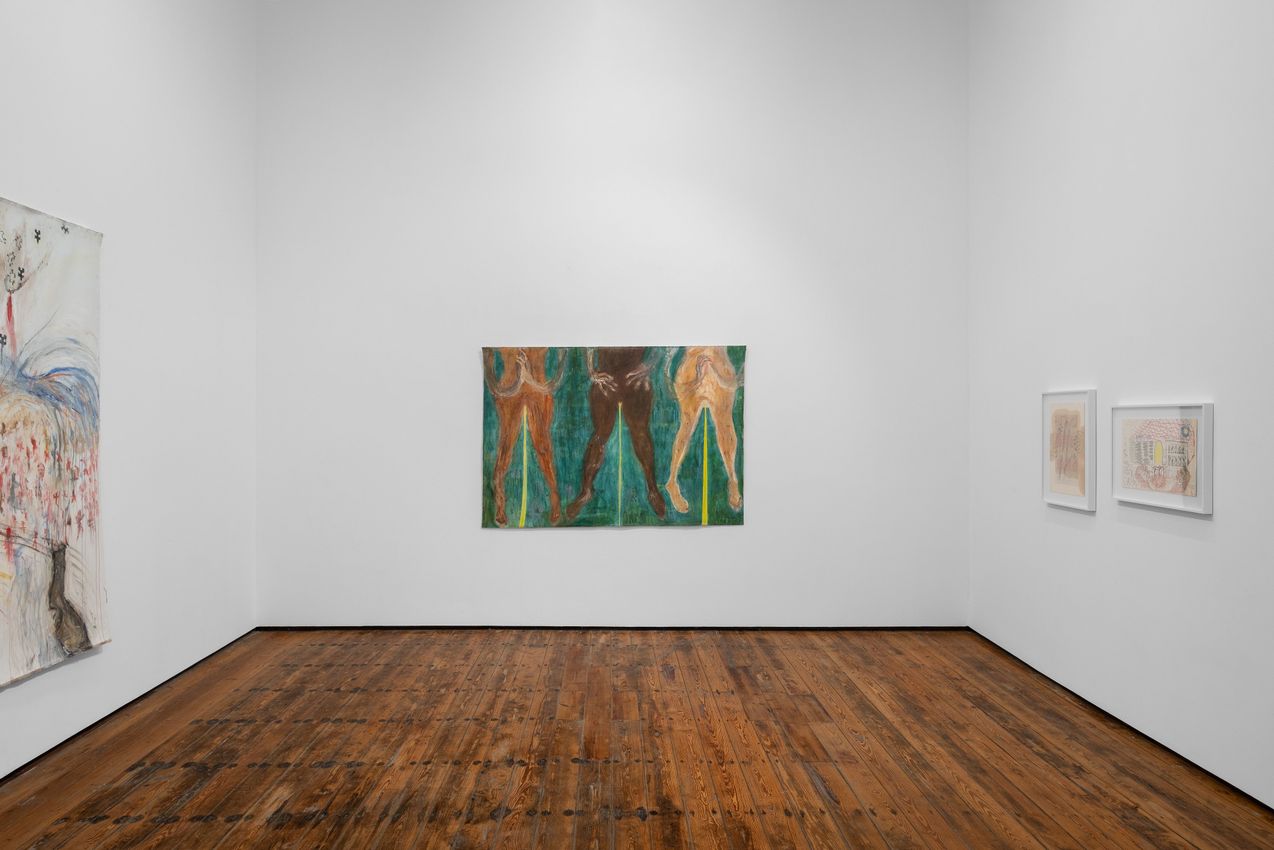
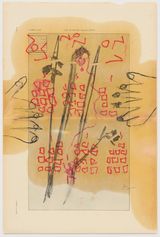
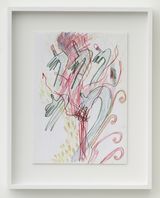
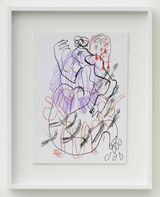
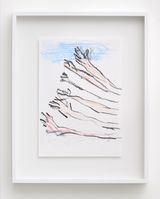
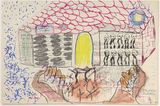
‘The Colours are the Bark’, brings together a range ofworks made throughout a number of years, tracing theartist’s extensive oeuvre. Featuring paintings, drawingsand mixed media works the show is an exploration of “thebig and small stories that take our beings towards theburning questions of the world, urging us to go beyondthe surface,” says Gbaguidi.
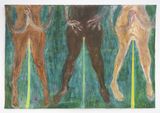
Gbaguidi’s candid and sometimes tongue-in-cheekcreations depict splintered figures in different forms andsettings - moving, contorting, shapeshifting. As rigorouscolour erupts alongside subtle hues, creatures lay next toother creatures, they merge with animal and plant life andother objects, breaking the hard edges between me/us/them/it.
The exhibition title subtly implies bark, the protective outerlayer of trees, as a lyrical metaphor - an attempt to givevoice to the grainy, textured matter of storytelling. Beyondthe schematics of its layers, bark is the life support of anytree, unmistakably etched and storied.
Often using natural pigments, alongside paint, ink, pencil,wool, wax and crayons and different materials such as floursacks and tarpaulin, Gbaguidi confronts colonial histories.By repurposing discarded materials and integrating theminto new contexts, she questions legacies of colonialism thatcontinue to impact migration, trade, and the environment.
Through a self-reflexive frame, using her own experiences asa setting off point, Gbaguidi considers how history impactsthe banal aspects of daily life alongside the trajectory ofhuman connection. Her practice, phenomenological and embodied, involves a performative element where thebody serves as a medium. She often uses own body topaint and make marks on the surfaces (instead of brushesor other tools). These scratches and smudges becomeimprints that allow the work to absorb memory into form,she explains; “thus, the body becomes a language thattranslates sociopolitical issues into a poetic choreographycomposed of paintings, drawings and textiles....”
Engaging with (while simultaneously breaking awayfrom) tradition, Gbaguidi confronts histories of oppression,particularly through women’s experiences, exposing howhistory, (un)recorded and remembered, continues toimpact on women’s lives. Her practice can be understoodthrough several key thematic threads —assemblage,fragmentation and intersections reflected through afocus on the female body; how the body is encounteredand read, alongside its relationship with the environment,in a technological age. Seeing herself as a modern daygriot and carrying on a long tradition of lyrical storytellingshe engages in transgenerational and intercontinentaldialogue, particularly between her birth place in WestAfrica and Europe.
Embracing colour as a language and mediator, Gbaguidiembraces various palettes including reds, browns, greens,blues, yellows and at times a significant amount of whiteto draw attention to empty space. In ‘Le jour se leve: TheMutants’, a work rendered in acrylic and pigment, Gbaguidiexplores intersections of identity and body politics, castingan enquiring eye to secular feminism through the femaleform. The notion of curvature and waves (as seen in her’Care’ series) is an important aspect of her visual language.She reflects on these undulating marks as “waves of life”,encompassing the flow of interactions, relationships andencounters between people and their environment.
Often using titles as provocations, Gbaguidi teases out morecomplex questions through satirical and bold phrases; ‘Whodid I sell my scalp to? Disconnection’, or ‘Pourquoi je nebande plus dit le vieil homme à son médecin’, translatingto ‘Why am I no longer hard, said the old man to his doctor’.This work is exemplary of the artist’s ability to weavetogether stories of varying depth and significance that foldinto inquiries of the human condition.
Much of Gbaguidi’s practice is collaborative andcommunal. Gbaguidi’s multilayered practice is groundedin impassioned responses to injustice, oppression,disconnection and trauma while also dreaming up newways through which the body can move towards liberation.
—
Pélagie Gbaguidi (b. 1965, Dakar, Senegal), describesherself as a contemporary ‘griot’ – a West African storyteller– which she defines as someone who functions as anintermediary between individual memory and ancestralpast. Her work is an anthology of the signs and traces oftrauma and is centred on colonial and postcolonial history.She recontextualises archives and official histories toreveal processes of forgetting. The materially embodiedimages created by Gbaguidi through painting, drawing,performance and installation seek to break out of binarythinking, archetypes and simplifications.
Gbaguidi’s first museum exhibition in France,‘Murmurations’ at Musée d’Art Contemporain de la Haute-Vienne – Château de Rochechouart is on view until 15 December. In January 2025 the artist will produce a projectat La Verrière - Fondation Hermès in Brussels. Earlier thisyear Gbaguidi participated in The Centre for the Less GoodIdea residency at Fondation Cartier alongside other artistsfrom Benin, Belgium, Austria and France.
Biennales and major international exhibitions include:Berlin Biennale (2020), Lubumbashi Biennale (2019), DakarBiennale (2004, 2006, 2008, 2014 and 2018) and documenta14 (2017). Her work has featured in group shows at CentrePompidou-Metz, WIELS (Brussels), Musée Rochechouart,Middelheimmuseum(Antwerp),Stadtmuseum(Munich),MMK (Frankfurt), and the National Museum of African Art– Smithsonian Institution (Washington, D.C.).
Collections include: Artothèque, Saint-Denis, Réunion,France; Casa África, Las Palmas de Gran Canaria, Spain;CNAP Centre National des Arts Plastiques, Paris, France;Holocaust Memorial Foundation, Chicago, United Statesof America; KANAL-Centre Pompidou, Brussels, Belgium;Kunstmuseum Basel, Kupferstichkabinett, permanentloan from the Hüni-Michel-Stiftung, Basel, Switzerland;M HKA Museum of Contemporary Art / City of Antwerp,Antwerp, Belgium; Memorial ACTe, Pointe-à-Pitre,Guadeloupe, France; and the Mu.ZEE, Ostend, BelgiumS.M.A.K. Municipal Museum of Contemporary Art, Ghent,Belgium
Gbaguidi lives and works in Brussels.
Pélagie Gbaguidi (b. 1965, Dakar, Senegal), describes herself as a contemporary ‘griot’ – a West African storyteller – which she defines as someone who functions as an intermediary between individual memory and ancestral past. Her work is an anthology of the signs and traces of trauma and is centred on colonial and postcolonial history. She recontextualises archives and official histories to reveal processes of forgetting. The materially embodied images created by Gbaguidi through painting, drawing, performance and installation seek to break out of binary thinking, archetypes and simplifications.


Goodman Gallery is an international contemporary art gallery with locations in Johannesburg, Cape Town and London. The gallery represents artists whose work confronts entrenched power structures and inspires social change.
A respected voice in contemporary art discourse.
Focusing on ambitious storytelling and insightful art-world commentary. Ocula Magazine publishes in-depth interviews, critical essays and timely analysis on the artists, exhibitions and ideas driving the global art world.
Learn more about Ocula Magazine
Showcasing the best of the art world.
Ocula partners with galleries from around the world to highlight their artists, artworks and exhibitions. Gallery membership is by application and invitation, with each member vetted by an independent panel.
Learn more about Ocula Membership

Specialises in the sale of major artworks.
Led by a team with deep ties to the world’s leading auction houses, galleries and collectors. Ocula’s advisory team offers bespoke services to high-net-worth clients from around the world who are looking to acquire the best of contemporary and modern art.
Learn more about our team and services