



Press Release

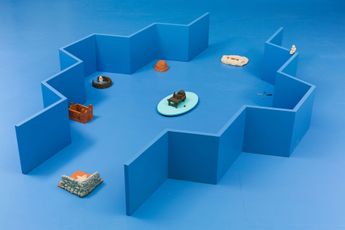
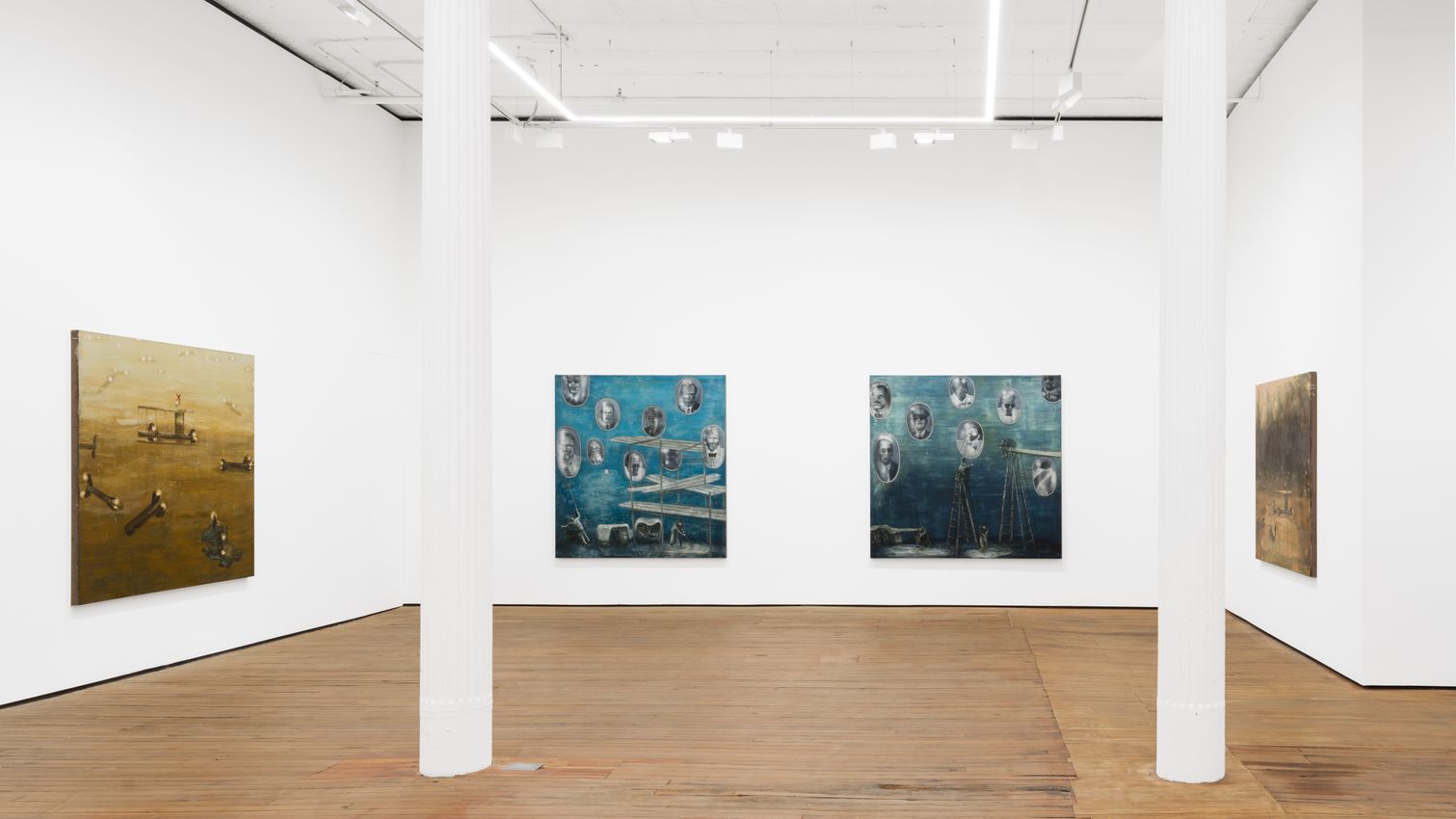
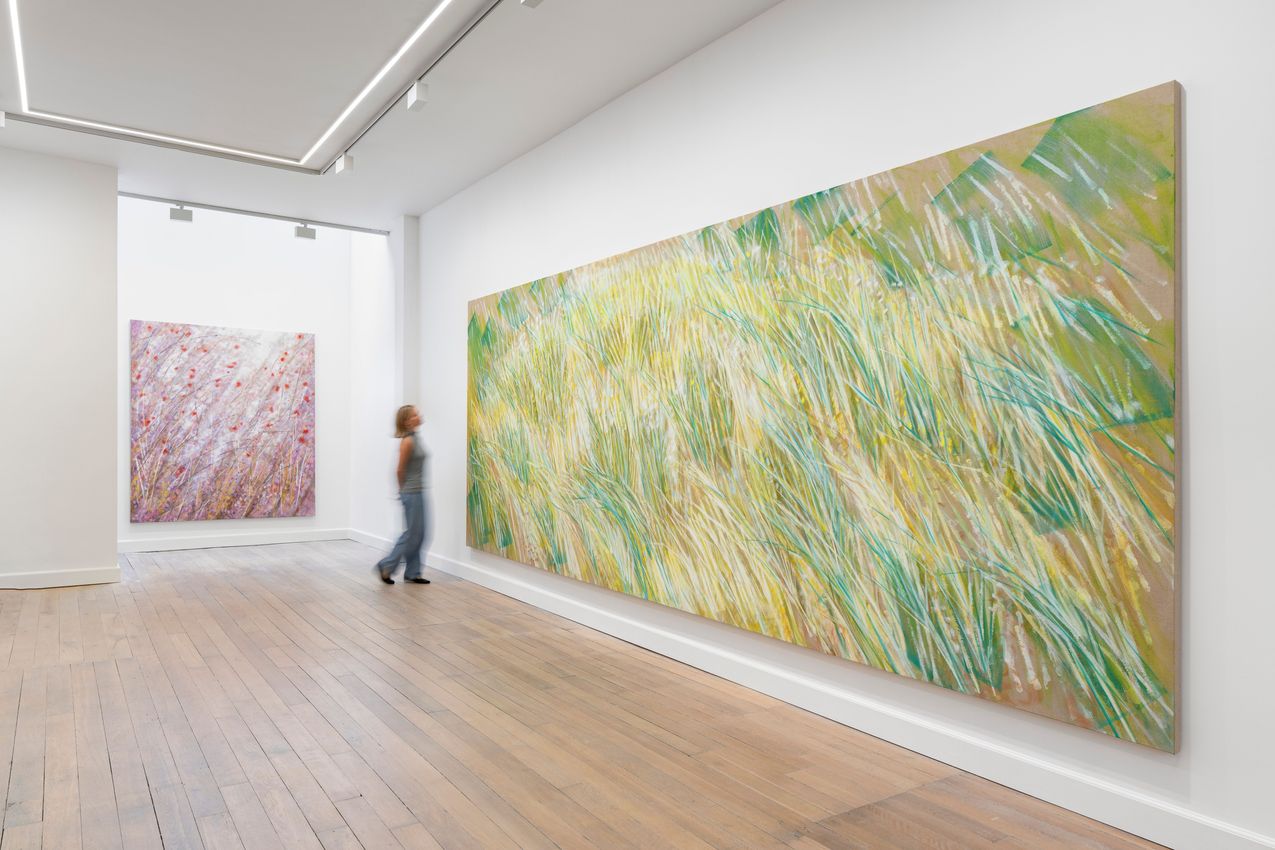
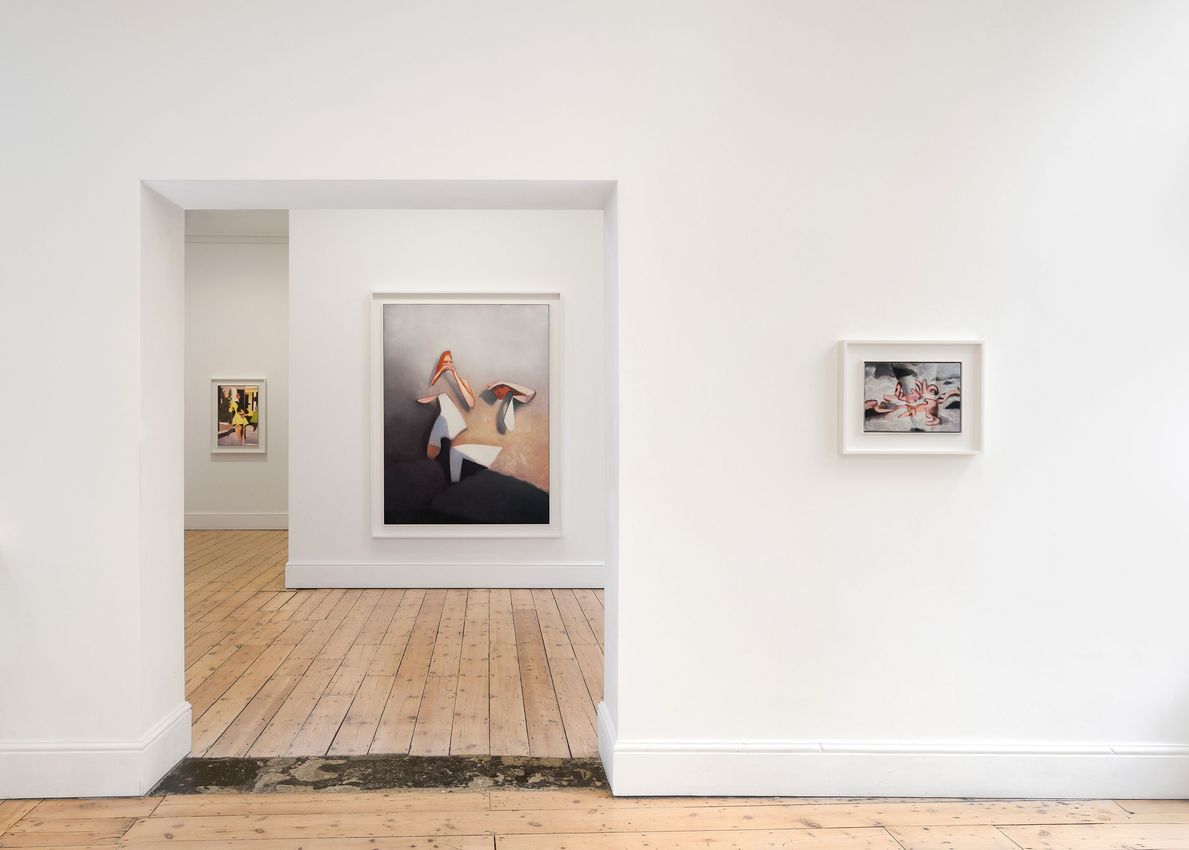
GRIMM is pleased to present two solo presentations at Art Basel, Basel (CH), 2025. At Art Basel Unlimited (Booth U3), a new wall-based installation by Claudia Martínez Garay, Conversiones, curated by Giovanni Carmine, will be on view. In the Statements sector (Booth M15), GRIMM debuts Every Step Is a Payment in Full, a new installation by Arturo Kameya.

Please find below both press releases.

Claudia Martínez Garay, Conversiones | Art Basel Unlimited, 2025, Booth U3

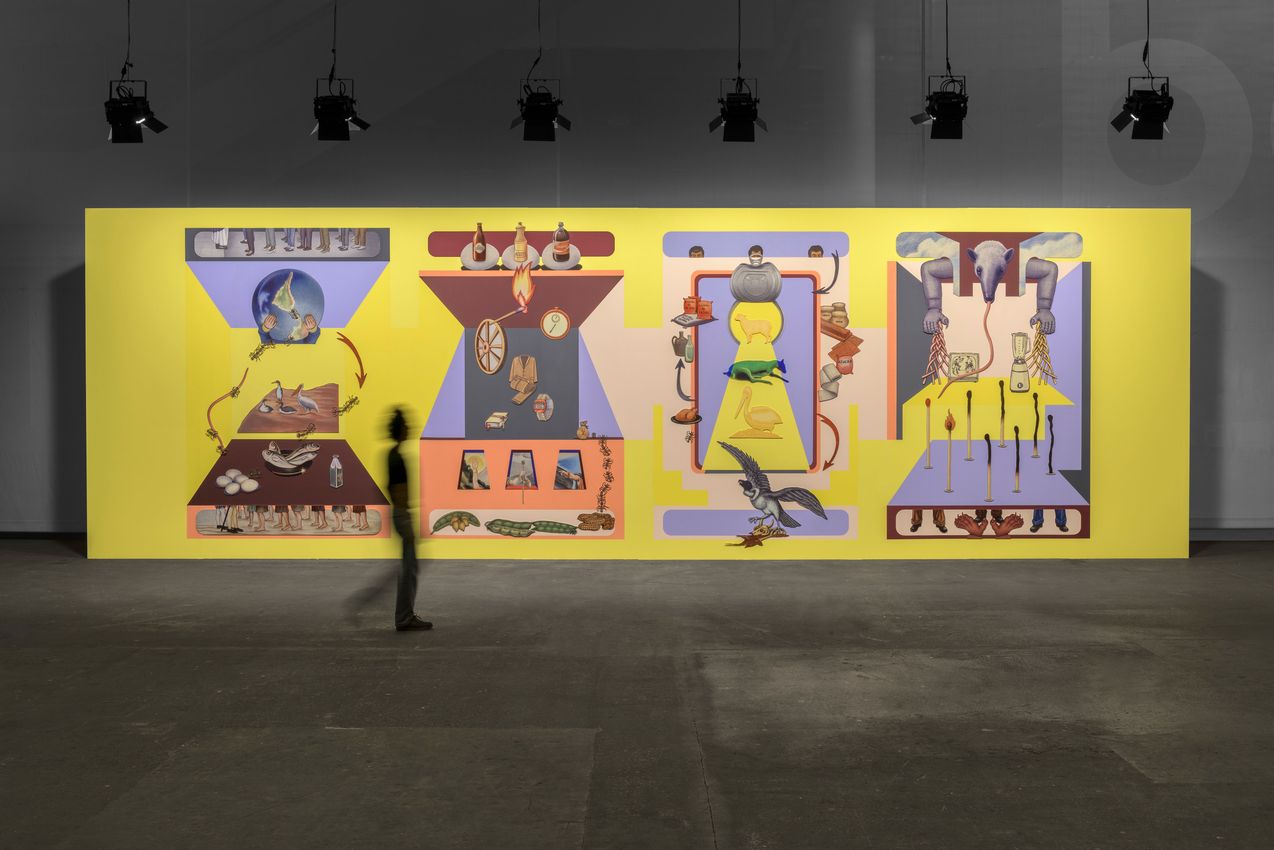
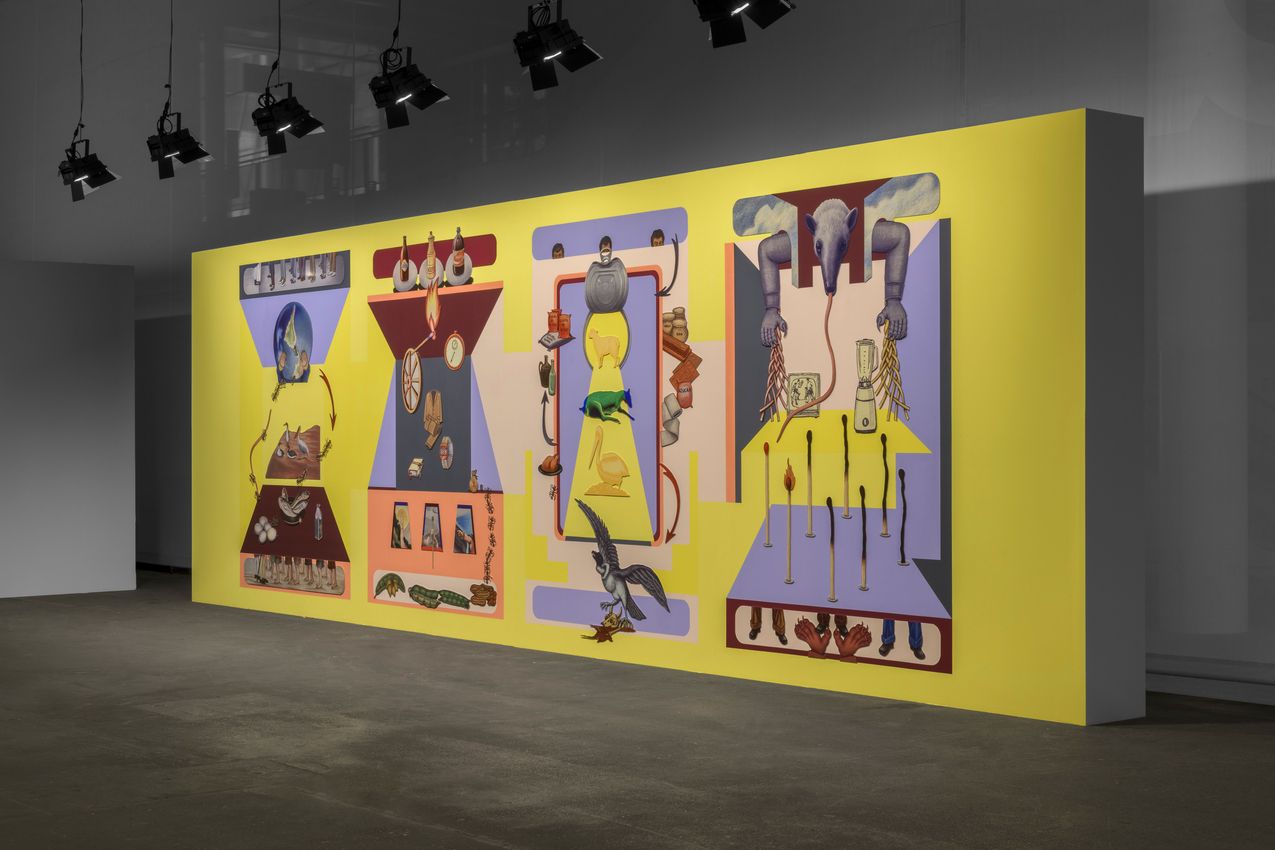
GRIMM is pleased to present a new wall-based installation by Claudia Martínez Garay (b. 1983, Ayacucho, Peru) on view at Art Basel Unlimited, 2025, curated by Giovanni Carmine. This will be the largest installation by the artist to date.

Mural work has been part of the artist’s practice for several years, with a focus on site-specific commissions. In this case, the wall painting is accompanied by sublimated prints of drawings created by the artist. The 12-meter wide installation is divided into sections, where the limits of depth and dimensions play a central role. It presents a series of imagined spaces—floors, walls, ceilings, skies, and vast voids—that, through free associations and juxtapositions, narrate stories connected to the brown body and its interactions with space, people, and culture. These narratives explore how the brown body collides with, adapts to, or resists the conditions imposed by the world. Martínez Garay invites viewers to immerse themselves in this symbolic and historically layered world.

The drawing style references schoolbooks, the works of chroniclers, myths, and stories that are ingrained in our ways of thinking and understanding the world. Within each space, there are clues to recent history—touching on themes like immigration, syncretism, modernity as an inseparable element of colonization, and the clichés and fixed ideas about the place that brown identities are expected to occupy in society. Each space represents a ‘season,’ not in the literal sense of climate or the seasons of the year, but rather as different historical periods.

Though these moments belong to the past, they remain relevant in the present, as the understanding of diverse cultures outside the Western hegemony continues to be marked by ignorance, and many prejudices have yet to be overcome. Martínez Garay uses symmetry throughout the composition, while recurring blue areas evoke the ocean, the

sky, or a sense of void; references to the sea as a colonial route, once used by explorers to ‘discover’ and claim new lands. Within this layered narrative, symbolic elements appear: the Bible, the wheel, and the watch stand as emblems of what was historically framed as civilization. In contrast, elements such as the Andean anteater, the condor, and bean sprouts reflect a lucid Andean perspective, offering a counterpoint rooted in Indigenous worldviews and lived knowledge.

The visual structures present geometries that reveal different spaces: the top of a mountain, a room without a roof, a room without walls, a cloister, etc. Navigating these different geometric demarcations, we encounter figures that are symbolic and modest in their simplicity. These figures break through and traverse these planes of reality, often disregarding the physical constraints of the objects they represent, moving against weight, gravity, and logic. The interpretation of these figures remains quite open, depending on the cultural background of the viewer. Conversiones highlights how historical moments remain relevant today, revealing how ignorance has shaped the misperceptions of non-Western cultures.

Claudia Martínez Garay (b. 1983 in Ayacucho, Peru) studied printmaking at the Pontificia Universidad Católica of Peru (PE) and was a resident at the Rijksakademie van Beeldende Kunsten in Amsterdam (NL) from 2016 to 2017.

Recent solo exhibitions include: Every seed is awakened, Dundee Contemporary Arts (UK) in 2024; Wakchakuna / We Who Share Everything and Nothing, Nottingham Contemporary (UK) in 2024; Ghost Kingdom, GRIMM, New York, NY (US) and Ayataki, Artpace, San Antonio, TX (US) in 2022.

Selected group exhibitions include: Sharjah Biennial 16: to carry, Sharjah Art Foundation (AE); The Overture of the Exhibition, Mälmo Kunstmuseum, Mälmo (SE); Tierra de Nadie, Il Posto, Santiago (CL); Spray and Stitch: Art with a message, Centraal Museum, Utrecht (NL) in 2024; Sediment Spirit, Sainsbury Centre for Visual Arts, Norwich (UK); Echoes of Our Stories, Quinta do Quetzal, Vidigueira (PT) in 2023; Who Tells a Tale Adds a Tail: Latin America and Contemporary Art, Denver Art Museum, CO (US); consume by, Museum Arnhem, Arnhem (NL) in 2022; The Faculty of Sensing: Anton Wilhelm Amo, SAVVY Contemporary, Berlin (DE) in 2021; 1 Million Roses for Angela Davis, Kunsthalle im Lipsiusbau, Dresden (DE); Imagined Communities, 21st Contemporary Art Biennial Sesc_Videobrasil, São Paulo (BR); the 16th Istanbul Biennal titled The Seventh Continent, curated by Nicolas Bourriaud, Istanbul (TR) in 2020.

Selected collections include: AkzoNobel Art Foundation, Amsterdam (NL); AMC Art Collection, Amsterdam (NL); Fundación Studie e Richerche Benetton, Treviso (IT); Central Reserve Bank of Peru, Lima (PE); Cisnero Fontanals Art Foundation, Miami, FL (US); Denver Art Museum, CO (US); THE EKARD COLLECTION; Hochschild Collection, Lima (PE); ING Collection, Amsterdam (NL); Inhotim Institute, Brumadinho (BR); KADIST Collection, Paris (FR) and San Francisco, CA (US); KPMG Art Collection, Amsterdam (NL); Krannert Museum, Champaign, IL (US); LAM museum, Lisse (NL); LOOP Collection, MACBA Museu d’Art Contemporani, Barcelona (ES); Micromuseo al fondo hay sitio, Lima (PE); Museo de Arte de Lima, MALI (PE); Museu Olho Latino, Atibaia (BR); Museum Arnhem (NL); National Gallery of Victoria, Melbourne, VIC (AU): Pérez Art Museum, Miami, FL (US); Sifang Art Museum, Nanjing (CN); Tanoto Art Foundation (SP) among others.

Arturo Kameya, Every step is a payment in full | Art Basel Statements 2025, Booth M15

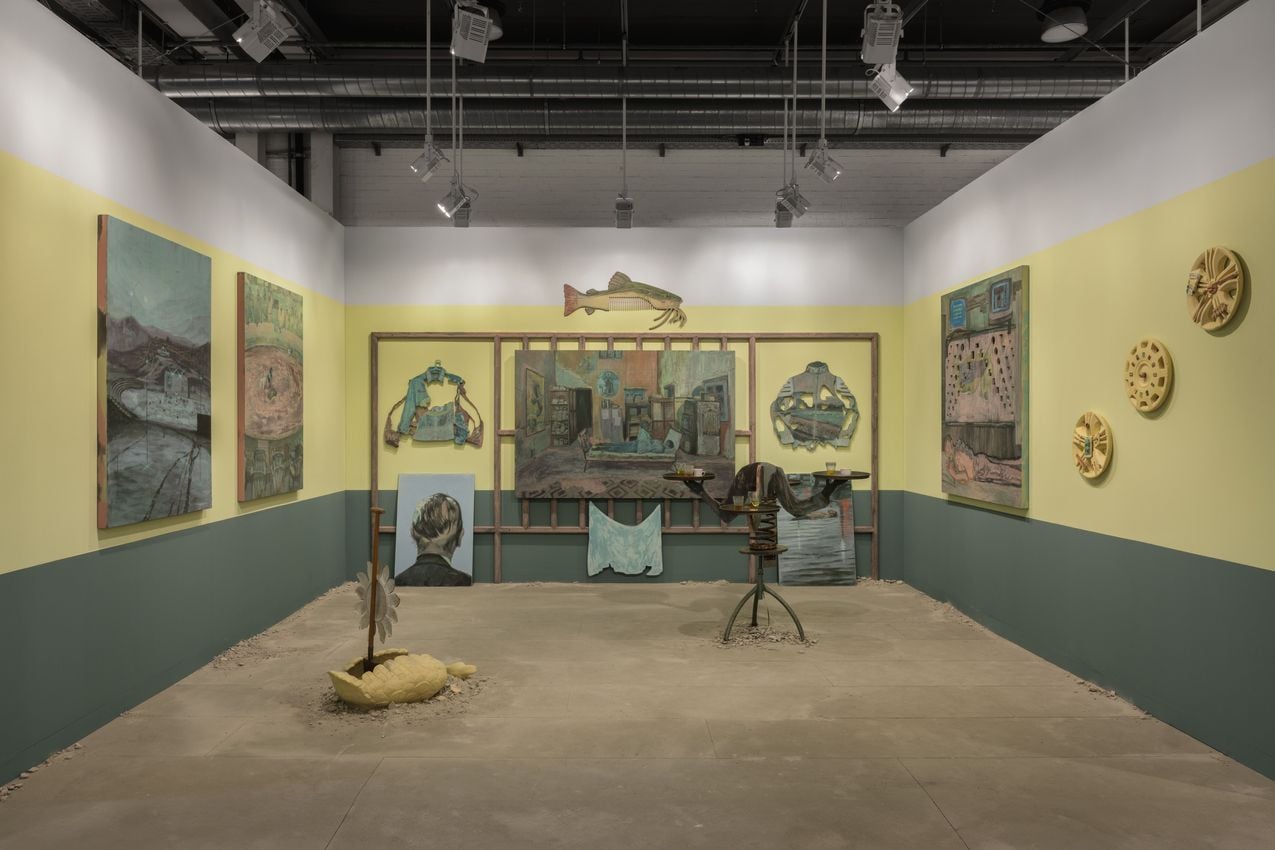
GRIMM debuts Every step is a payment in full, a new installation by Arturo Kameya (b. 1984, Lima, PE), in the Statements sector at Art Basel. Presented concurrently with his solo exhibition The moon wanted to be the sun, but it was too late to change at GRIMM Amsterdam, the installation follows his 2024 exhibition Opaque Spirits at Marres, Maastricht (NL), and precedes his upcoming solo exhibition at Centre d’Art Saint-Fons (CAP), Lyon (FR) in Fall 2025.

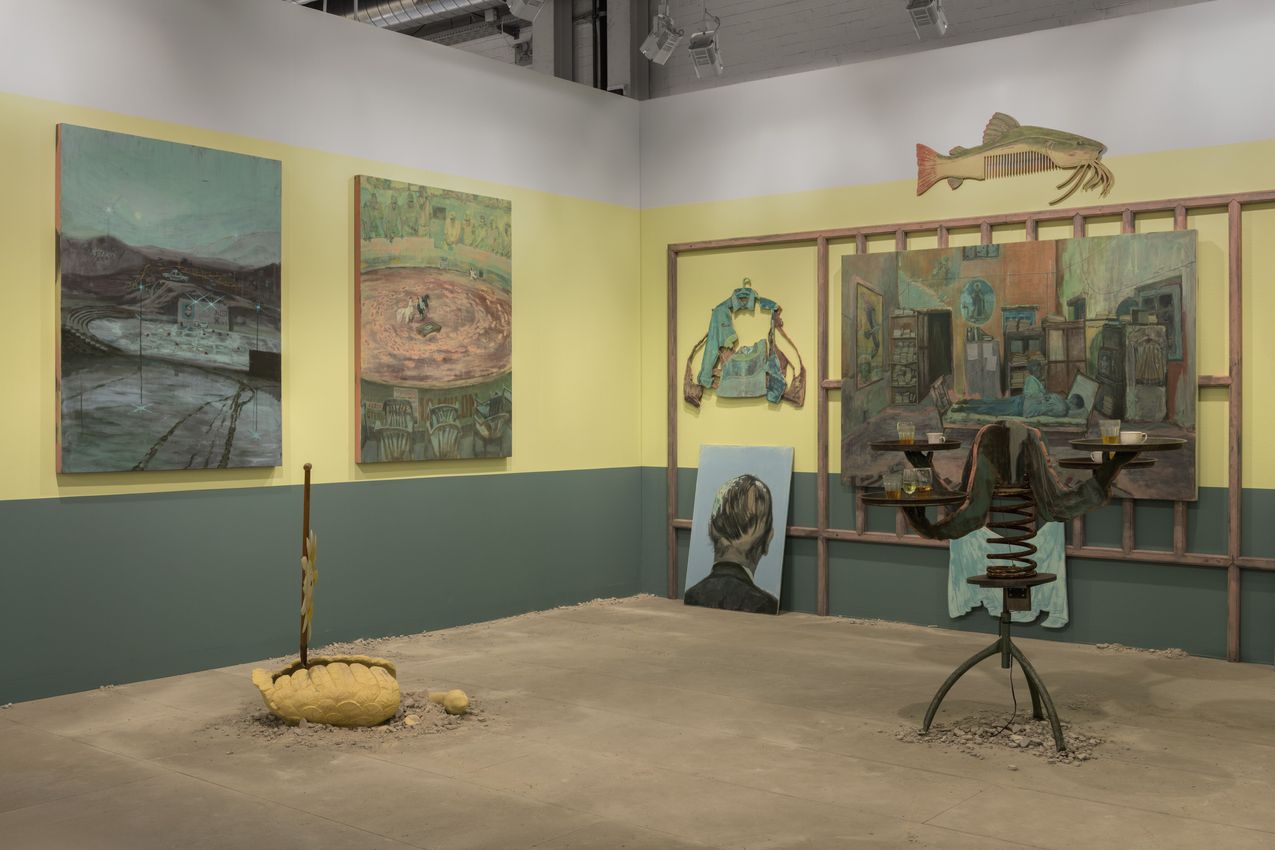
Kameya’s installation at Art Basel Statements is based on the history of physical education (P.E.) in 20th-century Peru. The installation examines the consolidation of cultural assimilation policies and the use of sports and physical education as a ‘civilising’ tool, one of the foundational pillars of modernisation. The artist draws upon educational centres in Peru for visual reference alongside historical and personal archives.

‘Physical education in large parts of Latin America originates in the management of bodies capable of work and the transfer of knowledge without the need for a complex structure of literacy or education: the transfer of knowledge and ideologies through the bodies.’1

In Peru, during the first half of the 20th century, the elite members of society managed physical education. After losing Art Basel Statements 2025, Booth M15 the war to Chile, they focused on imparting European principles and values upon the native population through a classist and racist civilizational project. Physical education ‘was seen as the means to form bourgeois individuals, in vigorous physical condition and with excellent morals.’2

The works explore, in a non-explicit and non-linear manner, how the oligarchic narratives that have governed the country from colonial times to the present have imposed the concept of an ‘Intrinsic guilt’ on the marginalised communities within the Peruvian social pyramid that functions like original sin, shifting the blame for society’s ills onto ‘undisciplined, barbaric, and uncontrollable bodies’, while deflecting attention from the structural issues of governance, such as corruption, disorganisation, and inequality. From the forced labor imposed upon the ‘amoral pagans’ during the colonial period to the defeat in the War of the Pacific, and the more recent downfall of the drunken footballer— a performative figure of pop culture that embodies the failure of social ascent— the blame always lands on the same bodies, those who are forever in debt.

Kameya’s installation draws upon numerous Peruvian educational centers and historical and personal archives for visual reference. The ambience, painted walls, and objects all contribute to the immersive space, while the imagery in each of his paintings offers an entry point into the subject at hand.

About the artist

Arturo Kameya (b. 1984 in Lima, PE) attended the Pontifical Catholic University of Peru in Lima (PE) and was a resident at the Rijksakademie van Beeldende Kunsten, Amsterdam (NL). He is the winner of the De Wolvecampprijs 2024.

In 2025, Kameya will participate in the exhibition Your Ears Will Later Know to Listen at Nottingham Contemporary (UK), which will be on view from May 31 to September 7. He will also have a solo exhibition at GRIMM, Amsterdam (NL), opening on May 22, coinciding with the Amsterdam Art Week. Following this, he will have a solo exhibition at Centre d’Art Saint-Fons, CAP, Lyon (FR), opening in the Fall.

Selected recent exhibitions include The moon wanted to be the sun, but it was too late to change, GRIMM, Amsterdam (NL); Prospect.6: The Future Is Present, The Harbinger Is Home, New Orleans, LA (US) in 2024; Opaque Spirits, Marres, Maastricht (NL) in 2024; Toward the Celestial, ICA, Miami, FL (US) in 2024; Los Ovnis, GRIMM, New York, NY (US) in 2023; Memory is an Editing Station, 22nd Biennial Sesc_Videobrasil, São Paulo (BR) in 2023; En esa pulga se mezcla nuestra sangre / In that flea, our blood mixes, GRIMM, New York, NY (US) in 2021; Drylands, Dordrechts Museum, Dordrecht (NL) in 2021; Soft Water Hard Stone, New Museum Triennial, New York, NY (US) in 2021.

Kameya’s work is included in collections such as the ABN AMRO Collection (NL); AkzoNobel Art Foundation, Amsterdam (NL); Beth Rudin DeWoody Collection (US); THE EKARD COLLECTION; ING Collection (NL); Institute of Contemporary Art, Miami, FL (US); Museo de Arte de Lima, MALI (PE) and Saastamoinen Foundation (FI).

Notes1. Paraphrased text from Juliane Müller’s El duelo entre la Escuela ‘Ayllu de Warisata y los vecinos de Achacachi: la indigenización del fútbol en el departamento de La Paz (1900-1940), published in the book Fútbol y sociedad en América Latina (2021).2. Mariana Marceillac Riofrío, The Political Construction of Sports in the Peruvian Educational System, Bachelor’s Thesis in Sociology, Pontifical Catholic University of Peru, 2020\
Read More

Installation Views

Artists Exhibiting

Also Exhibiting at GRIMM

The art world in focus