





The Korean Artist Using Gaming to Understand the World
Heecheon Kim sees technology as a tool for reading society. As his latest exhibition opens in Seoul, the artist talks about the frustration of using technology, his love of wrestling and how gaming, face‑swap apps and GPS systems might influence the narratives we construct about ourselves. Save to My OculaIn Heecheon Kim’s first video, Lifting Barbells (2015), he reads aloud the letters he wrote to his girlfriend in Argentina, reflecting on his father’s death in a cycling accident. The Seoul-based artist’s narration plays over images drawn from GPS data captured by his father’s smartwatch, tracing the final ride and the site of the accident on Google Maps. Meanwhile, heart-rate readings register his father’s final moments. The title, Lifting Barbells, connects his girlfriend’s casual question about lifting weights to a paramedic’s instruction to lift his father’s head. The emotional uncertainty of the letters sits beside the clinical precision of the data, which preserves the journey and, so, contains a version of the truth, but still cannot explain what happened.
That video established concerns that have remained central to Kim’s work: how technologies already embedded in daily life mediate memory, bodily experience and the narratives people construct about themselves. Across the following decade, GPS records, face-swap apps and game engines have served as his tools for reading the world as it has changed. His 2019 video Deep in the Forking Tanks followed a diver undergoing training in a flotation tank before entering the water. The training is recorded and exported into a simulation, and the diver moves between the recordings and his bodily experience until they become difficult to distinguish. “I think about the pixels that momentarily form my body,” the narrator says. In his 2024 film Studies, Kim used software to remove bodies from footage of teenage wrestlers. The film follows Chanjong, their depressed coach, who has resolved to kill himself after an upcoming tournament. When several students begin to disappear, the coach finds that he cannot remember them and searches recordings of their training for evidence.

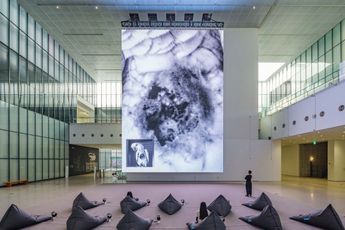
Kim’s current exhibition, Moles, opened late August, shortly before Frieze Seoul, at Seo-Seoul Museum of Art, the city’s first public museum dedicated to new media. It inaugurates the museum’s solo series for Korean media artists. Focusing on works made since 2023, it brings together autoplayed game-engine works, moving images and photographs, including new commissions for the museum, seeking to consider how systems that capture, model and predict people’s behaviour might begin to intervene in their sense of self. “There is no separate virtual realm,” Kim says. “What we call the virtual is already embedded in our lives as a layer.”
“I never use technology inaccessible to everybody else”
It was a drizzly day during Seoul Art Week when I met Kim. After an hour-long drive from the traffic-heavy city centre to see Kim’s exhibition on the capital’s residential south-western edge, I returned to Itaewon to meet him at a café. With the opening behind him, Kim seemed relaxed and largely unconcerned with the art-week buzz around us. We spoke, easily, about Korean masculinity, K-pop trends (about which neither of us knew very much) and, eventually, his work.
Kim was born in Seoul in 1989, just as South Korea was transitioning out of decades of a military-backed dictatorship and into democratic governance, and as the economy was booming, with companies such as Hyundai and Samsung expanding. He went on to train as an architect at the Korea National University of Arts, before moving “unexpectedly, to video making”. He has since had solo shows at Seoul’s Art Sonje Centre and London’s Hayward Gallery.
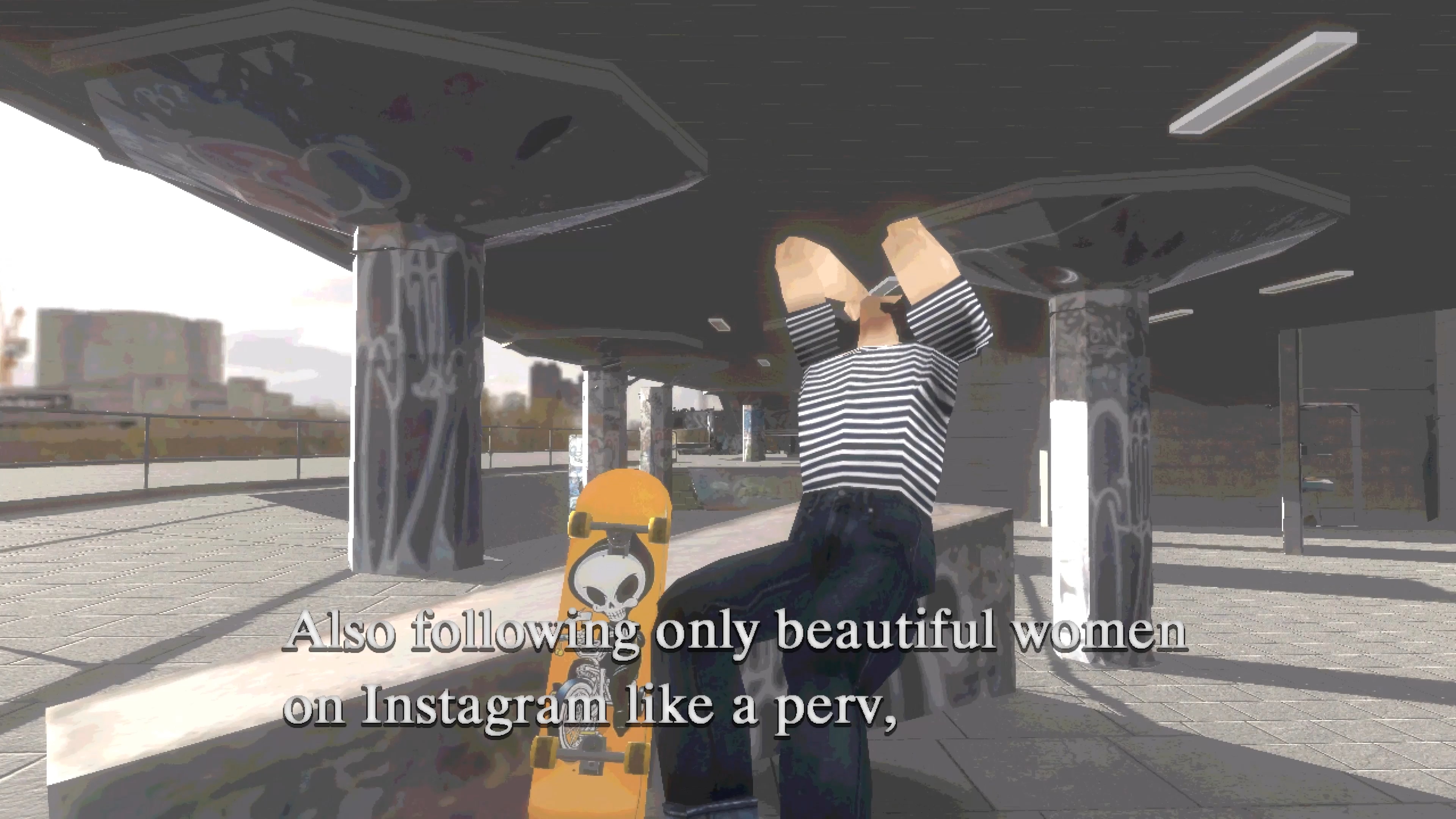
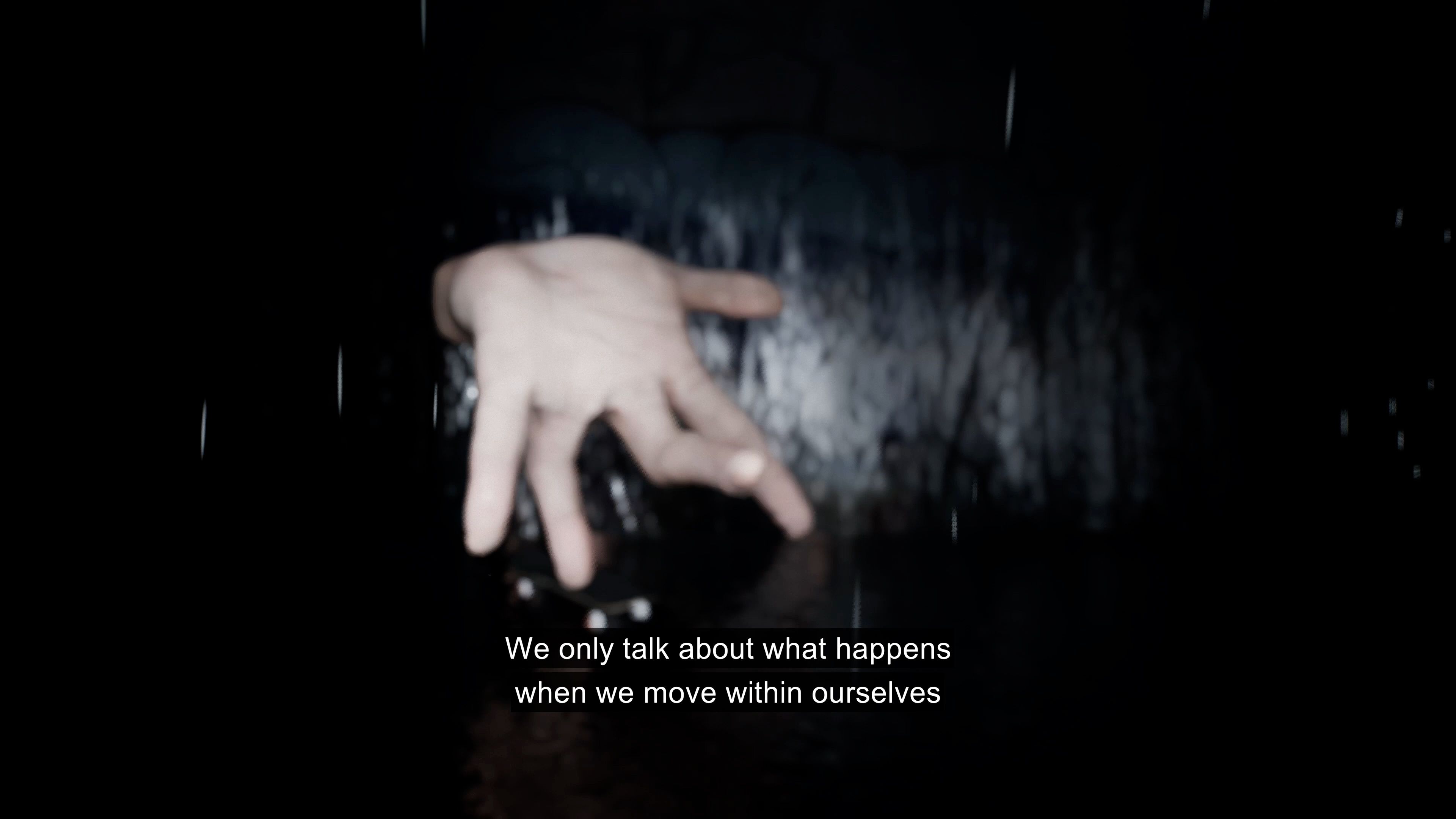
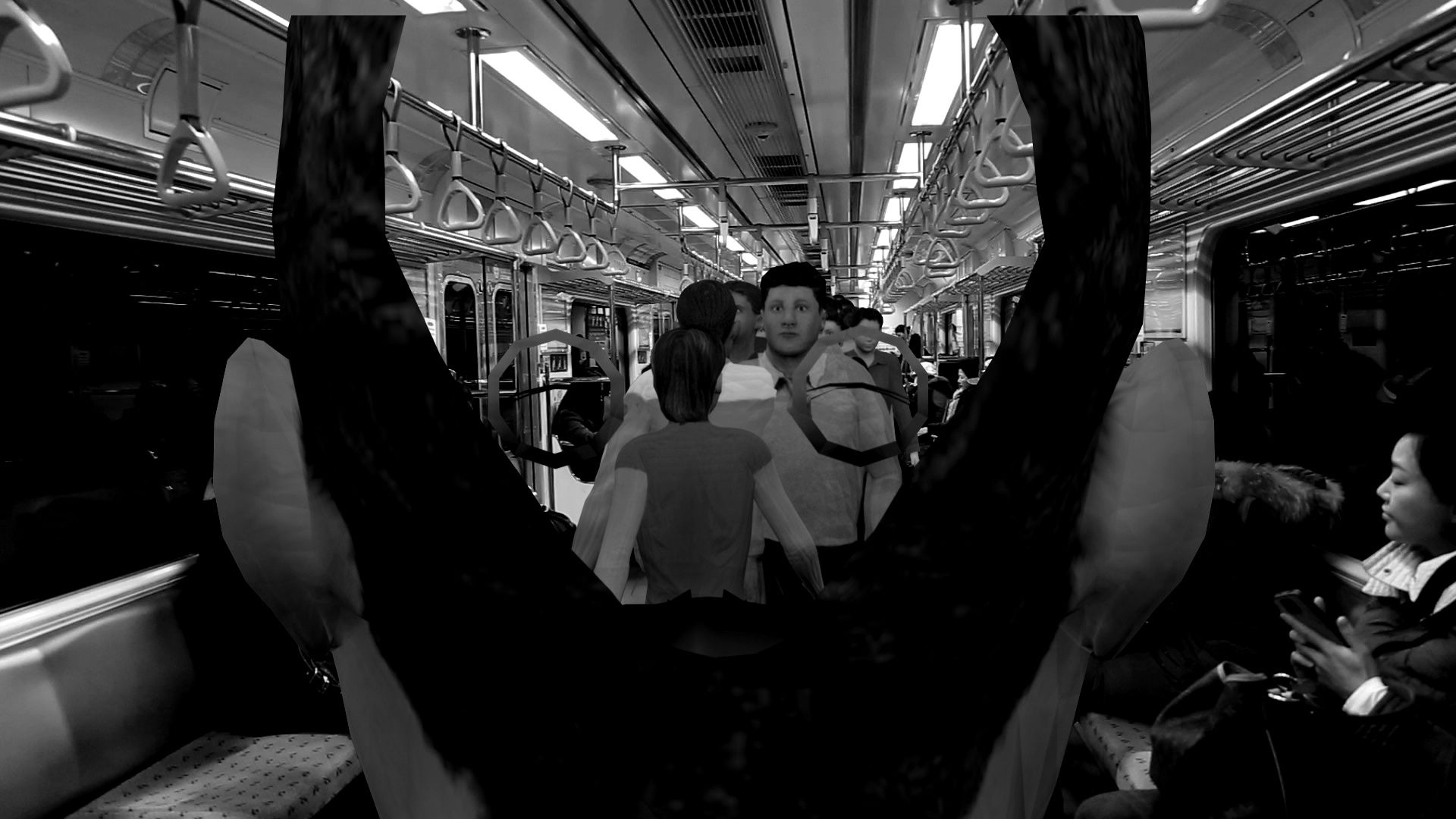
Still, the show in Seoul is a significant moment for the artist. Alongside a new multichannel video created with generative AI, it features three autoplayed video games, which have been rendered in real time, and are on show in the museum’s vast hall. The first, CutterIII (2023) sends an avatar through a model of the National Museum of Modern and Contemporary Art (MMCA) Seoul. The second, Double Poser (2023), reconstructs London’s brutalist Southbank Centre from blueprints, drawing on its skateboarding history and appearance in the PlayStation game Tony Hawk’s Pro Skater 4 (2002). The avatar appears to clip through the architecture, with instructions that tell the protagonist to avoid suspicion and “act like a mole” while infiltrating the Hayward Gallery. The last, Lemon (2026), features a mole that appeared as an Easter egg in CutterIII and Double Poser, and imagines that the creature has tunnelled between the two game worlds. At one point, it takes a lemon underground and watches over the fruit as it decays. The works recall games half-remembered from childhood, their nostalgia extending uneasily into the present and their awkward humour shadowed by a sense of confinement.
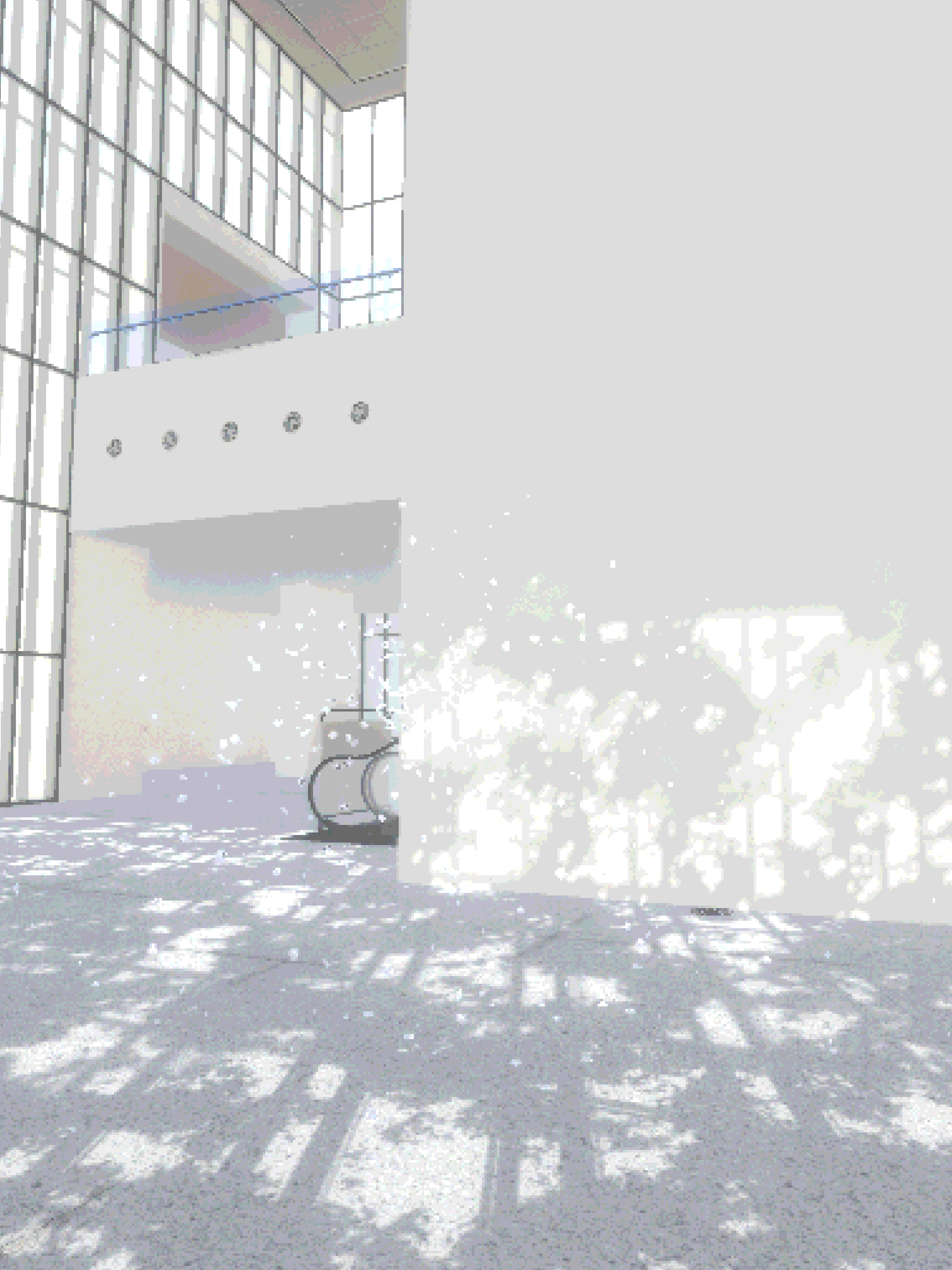
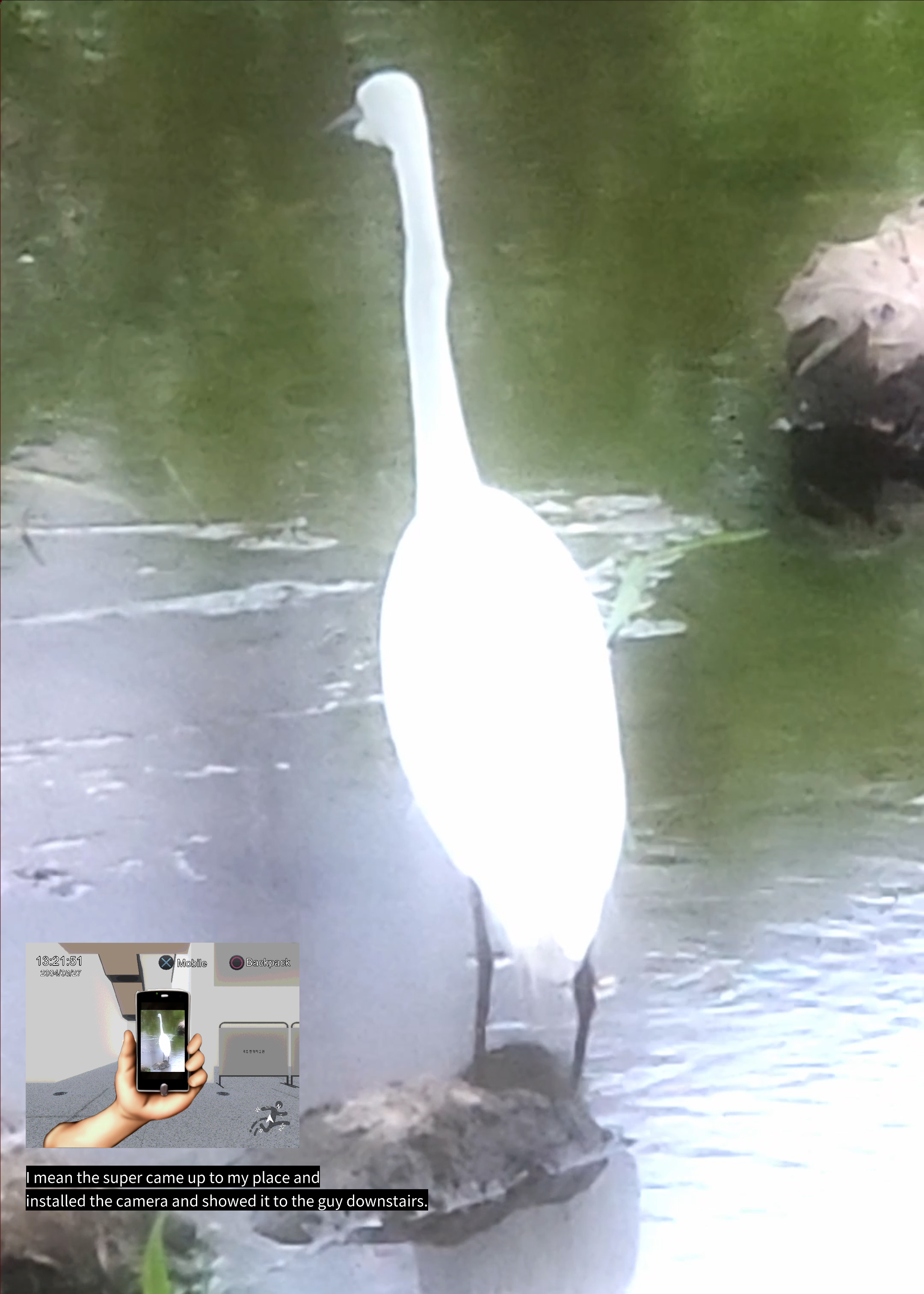
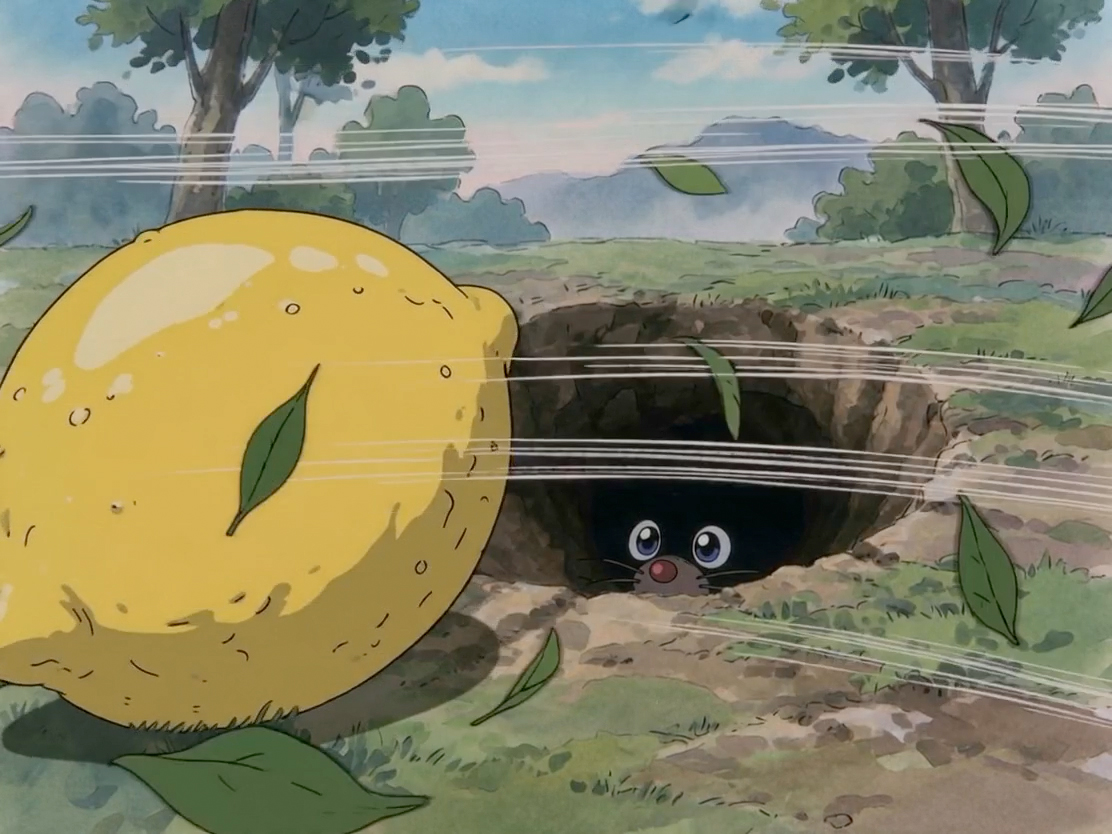
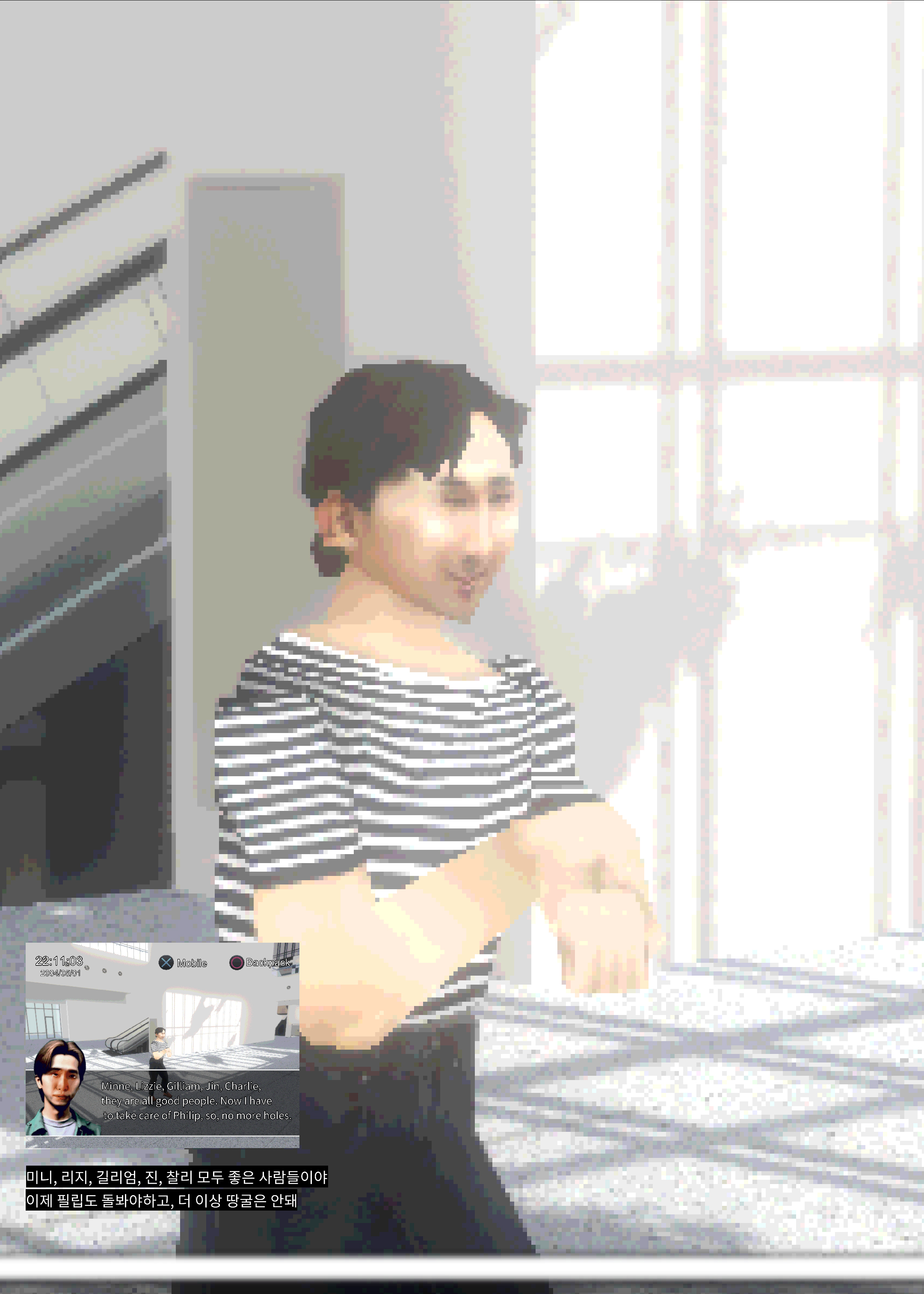
“I wanted to make images that did not look up to date and that held the possibility of being remastered,” Kim says. Their deliberately retro appearance also resists descriptions of Kim’s work as a pursuit of the newest technology: he was playing with face-swap apps, GPS tracking and widely available game engines. “I never use technology inaccessible to everybody else.” Because such technologies are already familiar, he can “read why a technology exists now and how it is being developed as a service. That makes it a very good tool for understanding society”.
“What we call the virtual is already embedded in our lives as a layer”
Working with a game engine made Kim conscious of a different kind of image. “If you are a filmmaker recording something completely still (an object on a table, with the camera fixed on a tripod) you can still feel the tension of time,” he explains. “You perceive time in the image, because the pixels continue to move. That creates tension: perhaps something will happen.” If nothing inside it moves, a game-engine image does not change. “These aren’t images of time,” Kim continues. “You are generating the time yourself.” He describes the sensation as a “strange frustration”. 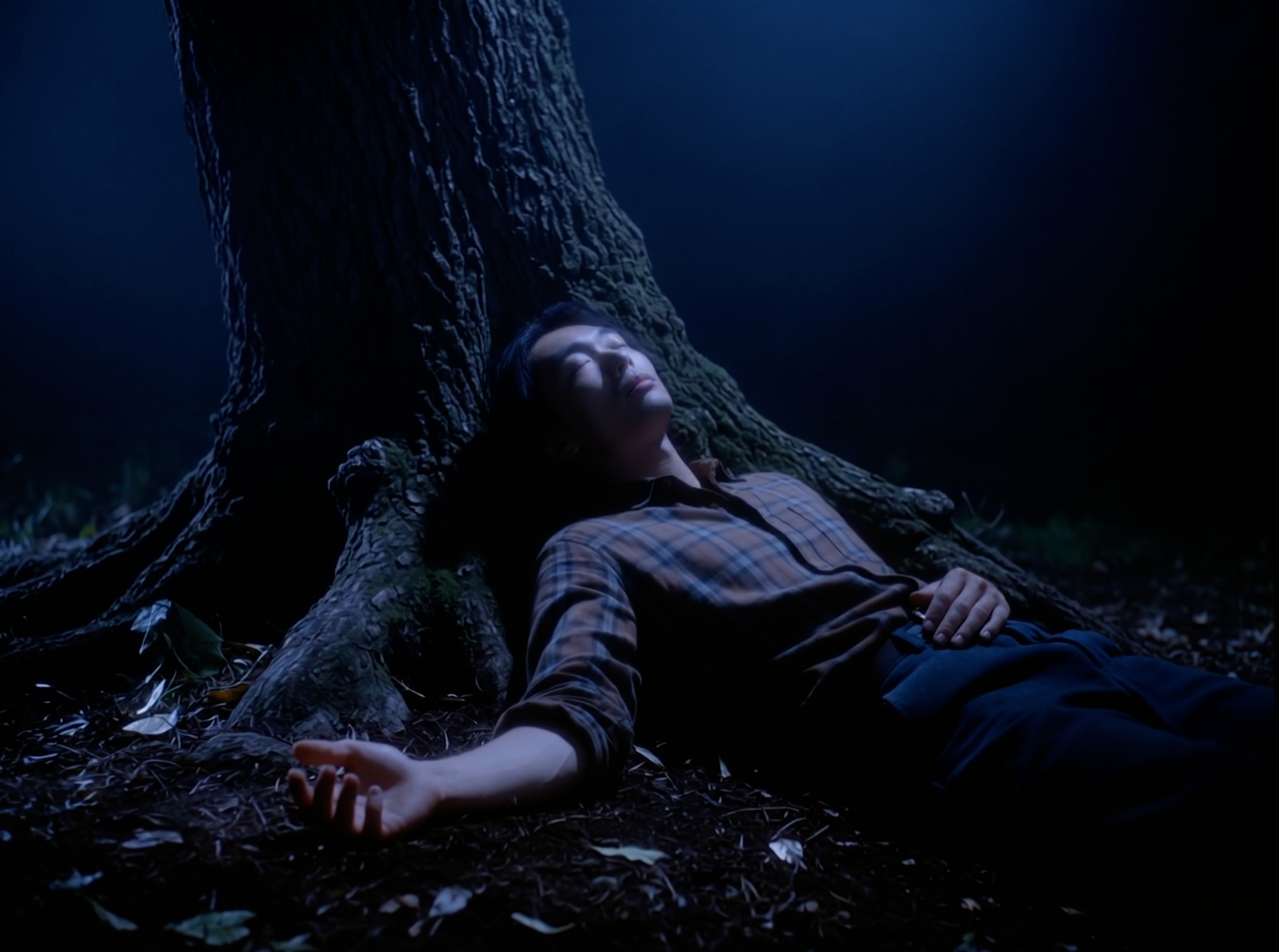
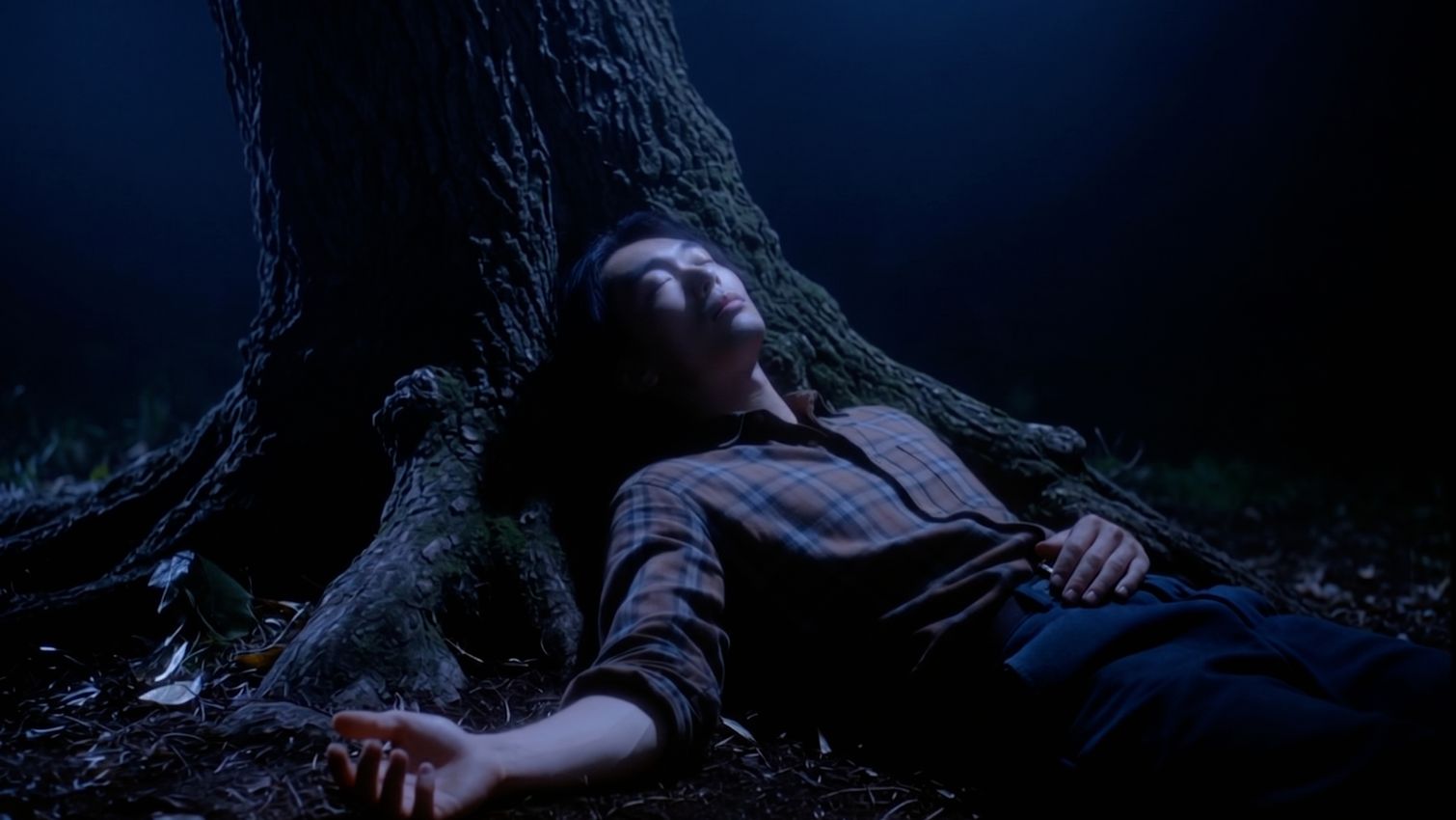
These questions take a new form in Cured (2026), in which a nature-documentary filmmaker must prove that his footage was filmed, although the world around him was generated with AI. Kim used models of actors rather than filmed performances, while the plot and movements on-screen were generated. “Nobody is acting and nobody knows anything,” he says. Within the four-channel work, three vertical screens show 15-second animal videos alongside prompts produced by a generator Kim built with Claude, allowing him “to see nature videos that I had not designed”. Because none had come through his own eyes, he was ‘only checking the results’. Reading about schizophrenia sparked a further thought: “What if technology takes the friction from us and we are not able to feel the gap between reality and tech-mediated reality?”
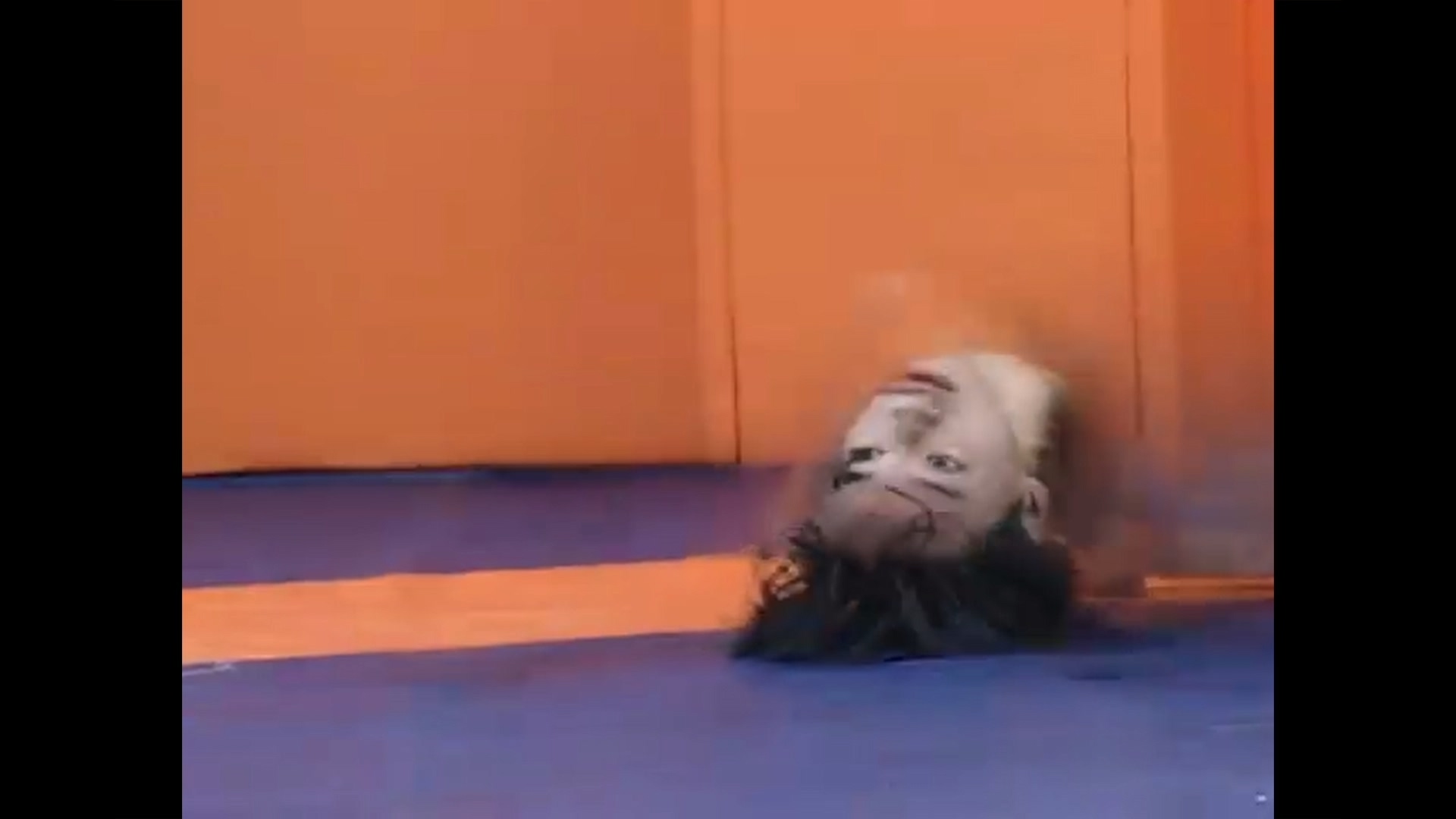
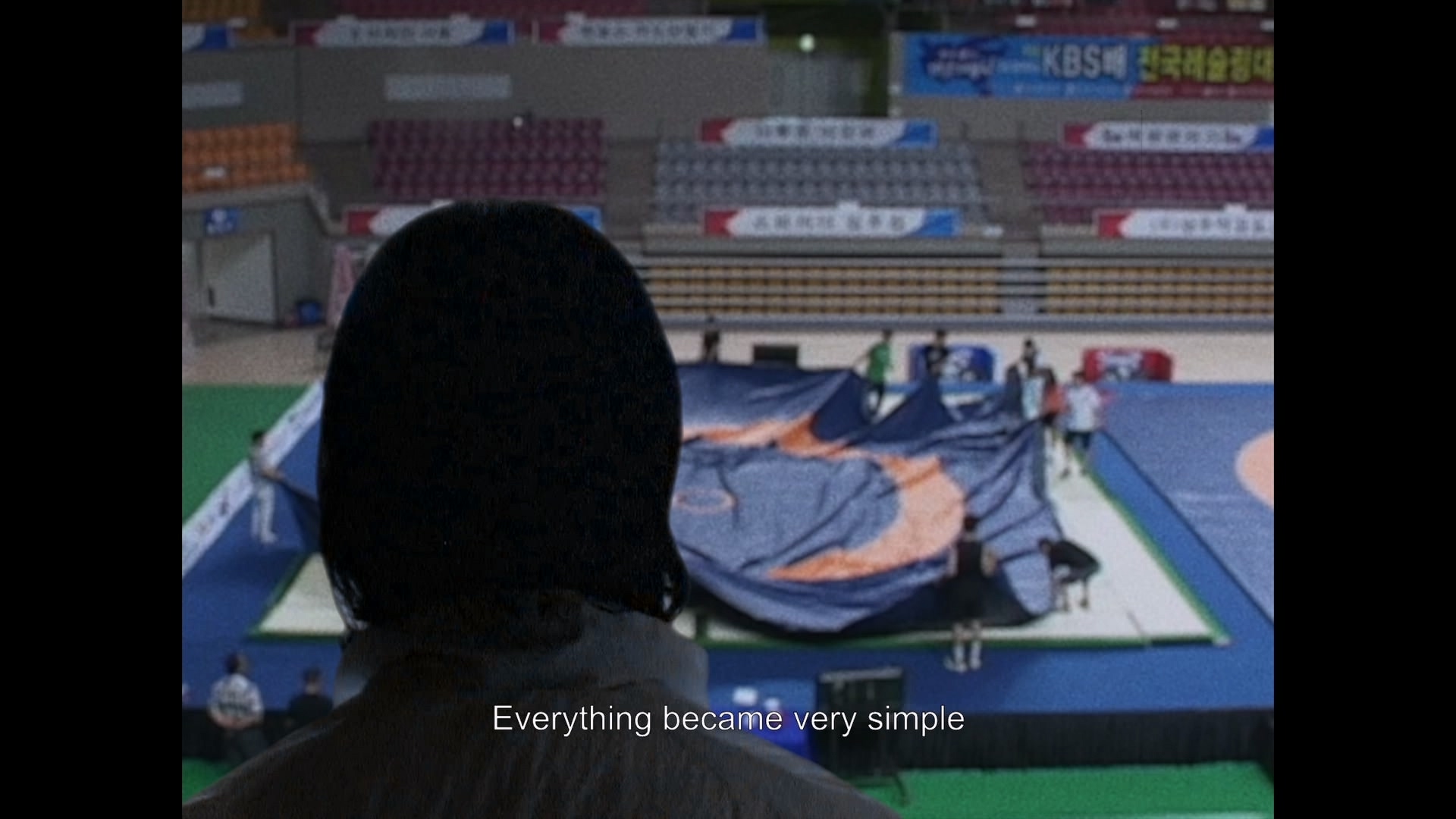
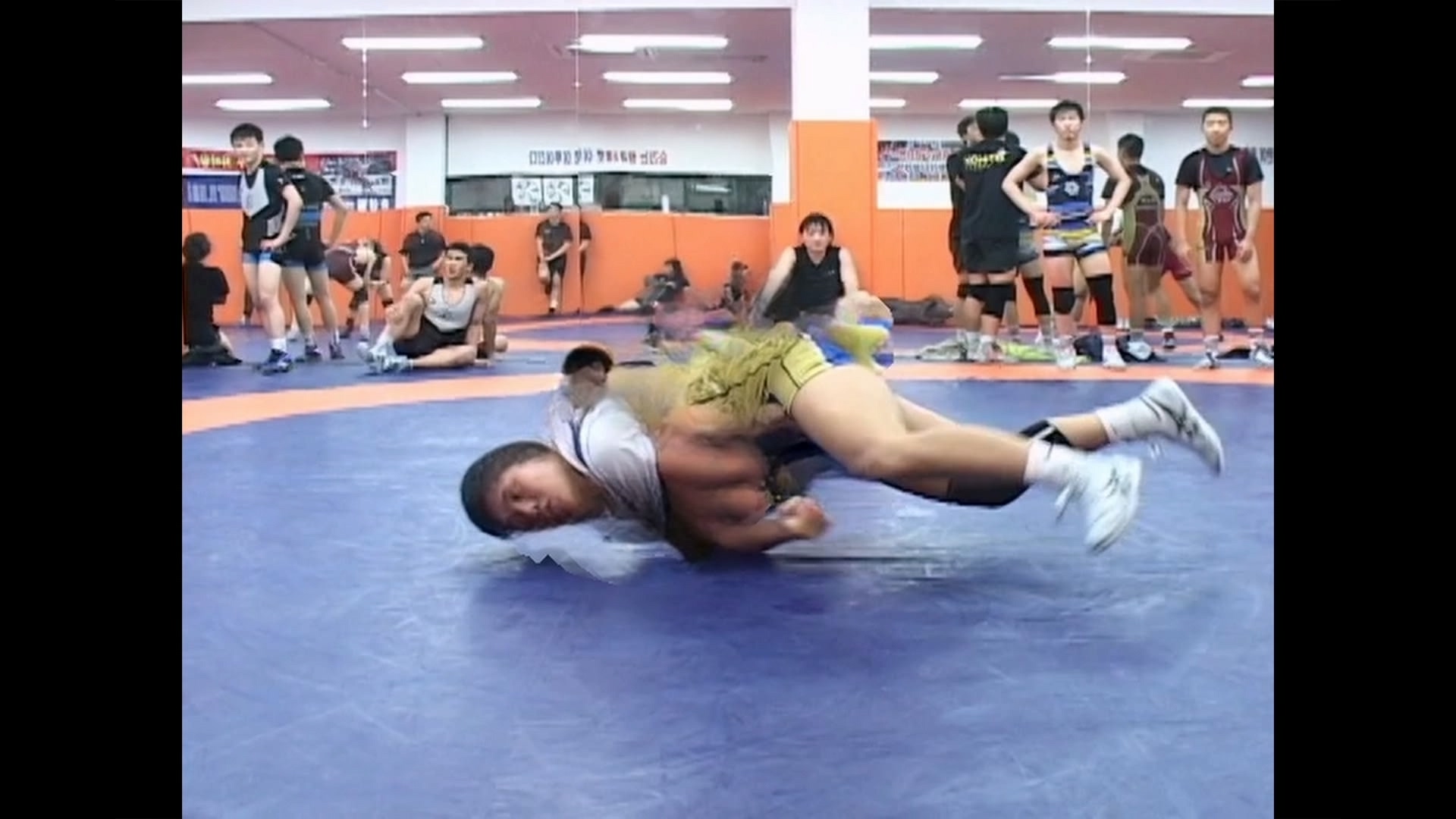
Bodily movement recurs throughout Kim’s work. Divers, dancers, powerlifters and wrestlers recur. Powerlifting and wrestling are Kim’s own hobbies; he also remembers “certain physical sensations and moments of danger” from skating when younger. With the divers in Deep in the Forking Tanks, he “began with the feeling that technology captures our outlines”, he says, “as though we were inside an aquarium and the water adapted its surface to our bodies”. At one point in Studies, a body stretches across the frame as if being swallowed by film; the distortion suddenly makes the camera perceptible. At other times, the two channels produce a doppelgänger. Then both projectors shut off, leaving only the voices of parents speaking about their missing child.
“AI is not simply erasing the person,” Kim says. To remove a wrestler, the software must detect and trace the body through every frame, just as machine vision in an autonomous vehicle must “repeatedly detect human beings in the world”. Erasure leaves a damaged outline: a low-quality smear of pixels and an after-image of the body it was asked to remove.
Like the cycling route preserved as data in Lifting Barbells, this residue brings the lost back into view. The original cannot be retained, but neither can its traces be completely erased. This incomplete return lends Kim’s work its melancholy, even as he gives the damaged outline in Studies another name: “a form of hope”. —[O]
Heecheon Kim, Moles (until 8 November) at Seo-Seoul Museum of Art
Main image: Kim Heecheon, Cured (2026) Commissioned and supported by the Seoul Museum of Art.










A respected voice in contemporary art discourse.
Focusing on ambitious storytelling and insightful art-world commentary. Ocula Magazine publishes in-depth interviews, critical essays and timely analysis on the artists, exhibitions and ideas driving the global art world.
Learn more about Ocula Magazine
Showcasing the best of the art world.
Ocula partners with galleries from around the world to highlight their artists, artworks and exhibitions. Gallery membership is by application and invitation, with each member vetted by an independent panel.
Learn more about Ocula Membership
Specialises in the sale of major artworks.
Led by a team with deep ties to the world’s leading auction houses, galleries and collectors. Ocula’s advisory team offers bespoke services to high-net-worth clients from around the world who are looking to acquire the best of contemporary and modern art.
Learn more about our team and services