





Sign of the Times
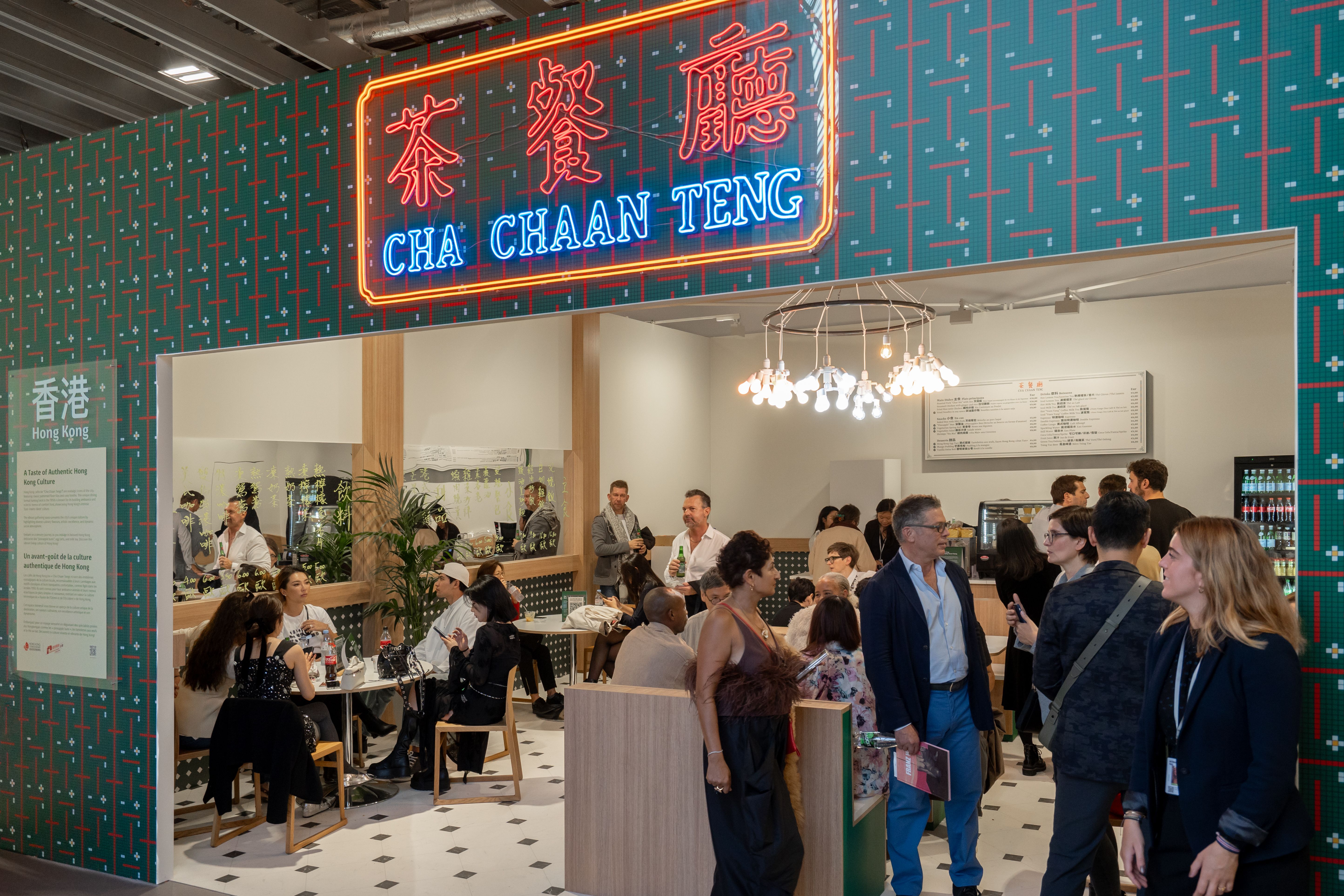
The authorities are taking down Hong Kong’s once‑iconic neon signs, while theme parks and commercial enterprises are recreating scenes from pre‑1997 life in the former colony. Jaime Chu asks whether it’s time the city stopped pining for the past and concentrated on the present. Save to My OculaVisitors entering the Grand Palais at Art Basel Paris in 2024 found themselves confronted with a retro Hong Kong dining experience, out of keeping with the rest of the fair. The spectacle was organised by the Hong Kong Tourism Board and centred on a live replica of a cha chaan teng, or casual diner, serving real food including pineapple buns, egg tarts, and Hong Kong-style milk tea. The dining room combined a light installation by Hong Kong-born artist Trevor Yeung and interior paintings by Hong Kong-born conceptual artist Mak2 with retro elements such as booth seats, patterned tiles, Formica tabletops, red plastic lampshades, and giant neon signage at the entrance. Back in actual Hong Kong, however, the number of operating cha chaan tengs, which were birthed in the 1940s to offer quick, affordable version of Western cuisine, and their even more casual cousins, dai pai dongs (outdoor food stalls serving Cantonese wok-based cooking), has reduced; since the early 1970s, the government has cut back on the number of new operating licenses for street traders in a drive to modernise the city.
This past version of Hong Kong may be slipping gradually from view, but the territory’s historic commercial and industrial design have increasingly served as objects of fascination, from a Fenty Beauty pop-up store inspired by the glamour of 1980s cinema to a local supermarket temporarily designed to look like a post-war general store (the chain has also created a store inspired by dai pai dongs), to recreations of historical locations and film sets at exhibitions and theme parks. These new iterations of a fading, once ubiquitous and materially specific local vernacular adopt a hyper-curated set of distinctive elements to recreate the atmosphere of an unspecified, booming past: neon signs, Chinese calligraphic signboards, mosaic tiles, vinyl and linoleum materials, wooden furnishings, ceramic accents, trompe l’oeil decor and vibrant red and green contrasting tones. For those, like me, who came of age in Hong Kong at the tail end of its governance under the United Kingdom in the 1990s, it’s disorienting to encounter this visual hysteria for a spectre of Hong Kong’s past and a period of rapid industrialisation and modernisation.
Decontextualised through replicas and simulations, the recycling of an otherwise vanishing period of Hong Kong’s history is often deployed to signify a packaged authenticity. This is best illustrated by another recent, short-lived spectacle. In August, the production team for the new Highlander action movie (a remake of the 1986 original slated for release in 2027) recreated a life-size street scene on Peel Street in Hong Kong’s Central at the height of its iconic decadence, complete with neon signs, dai pai dongs, and shopfronts with traditional Chinese-style lanterns, while signalling the year 2040 in the backdrop for a new year’s countdown. The scenery was built so impeccably that it could have been mistaken for the real road, save for the fact that building regulations in 2010 outlawed the very neon signs it fetishised. The set was torn down the day after filming wrapped.
“What kind of present is being constructed when a chosen past is tirelessly, mechanically reproduced?”
In Hong Kong: Culture and the Politics of Disappearance, published in the same year as the British handover of Hong Kong to China in 1997, cultural theorist Ackbar Abbas diagnosed the city’s transitional state since the 1980s and the cultural forms that emerged in response as “a culture of disappearance, whose appearance is posited on the imminence of its disappearance”. In this climate, Abbas argues, the perceived danger of a vanishing way of life in reaction to “the anticipated end of Hong Kong as people knew it” is contained through its representation through a nostalgic lens. Hong Kong’s globally revered cinematic legacy—the stylised action movies of John Woo and Tsui Hark, the slapstick comedies of Stephen Chow and Jackie Chan, and the works of new wave directors Wong Kar Wai and Ann Hui—emerged from this so-called Golden Era, a period of economic boom punctured by the twin traumas of the signing of the Sino-British Joint Declaration in 1984 and the Tiananmen Square protests of 1989. In the decades since, the commercialism of Hong Kong’s film industry, which produced more than 200 films a year and grossed more than $100 million at the box office at its height, has been endlessly rehabilitated in artistic discourse, its visual signatures and cultural influence elevated into iconographic cultural objects.
Cinema, Abbas notes, is the form through which the city’s “anxieties and contradictions can be read”. The current resurgence of nostalgia among Hong Kong’s artists owes much to ongoing efforts to restore films from the 1980s and 1990s and to profit from ancillary attractions such as filming locations and behind-the-scenes content (there will always be more unreleased footage from Wong Kar Wai), alongside recent blockbuster successes of films that take the same period and mise-en-scène, such as Twilight of the Warriors: Walled In (2024) and Night King (2026). The contemporary appetite for artistic appropriation of cultural objects from a past boom, too, reflects a response to Hong Kong’s transition from the Covid-19 pandemic and the swift implementation of a controversial national security regime in 2020, which criminalised dissent against China and curtailed freedom of speech. What kind of present is being constructed when a chosen past is tirelessly, mechanically reproduced?
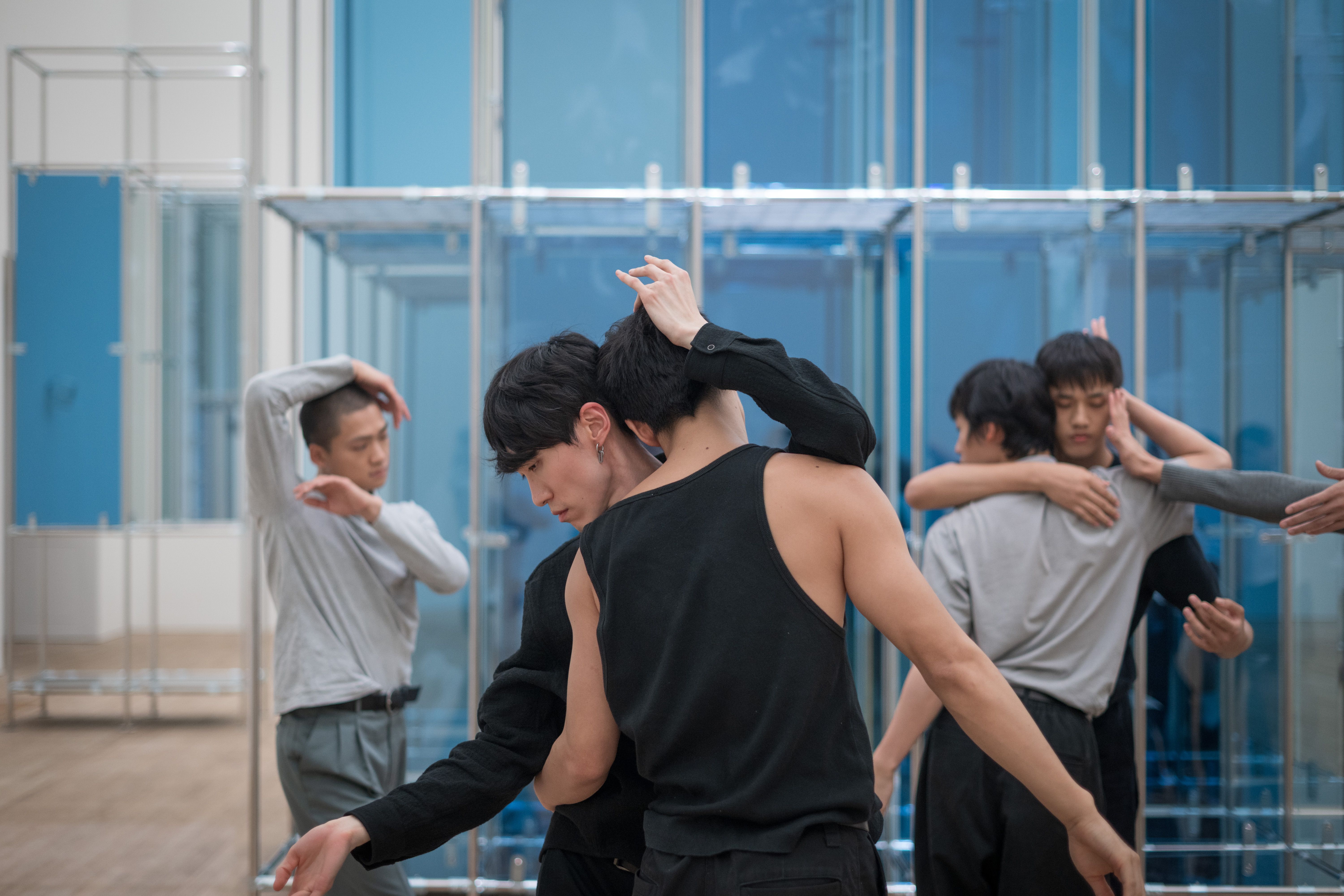
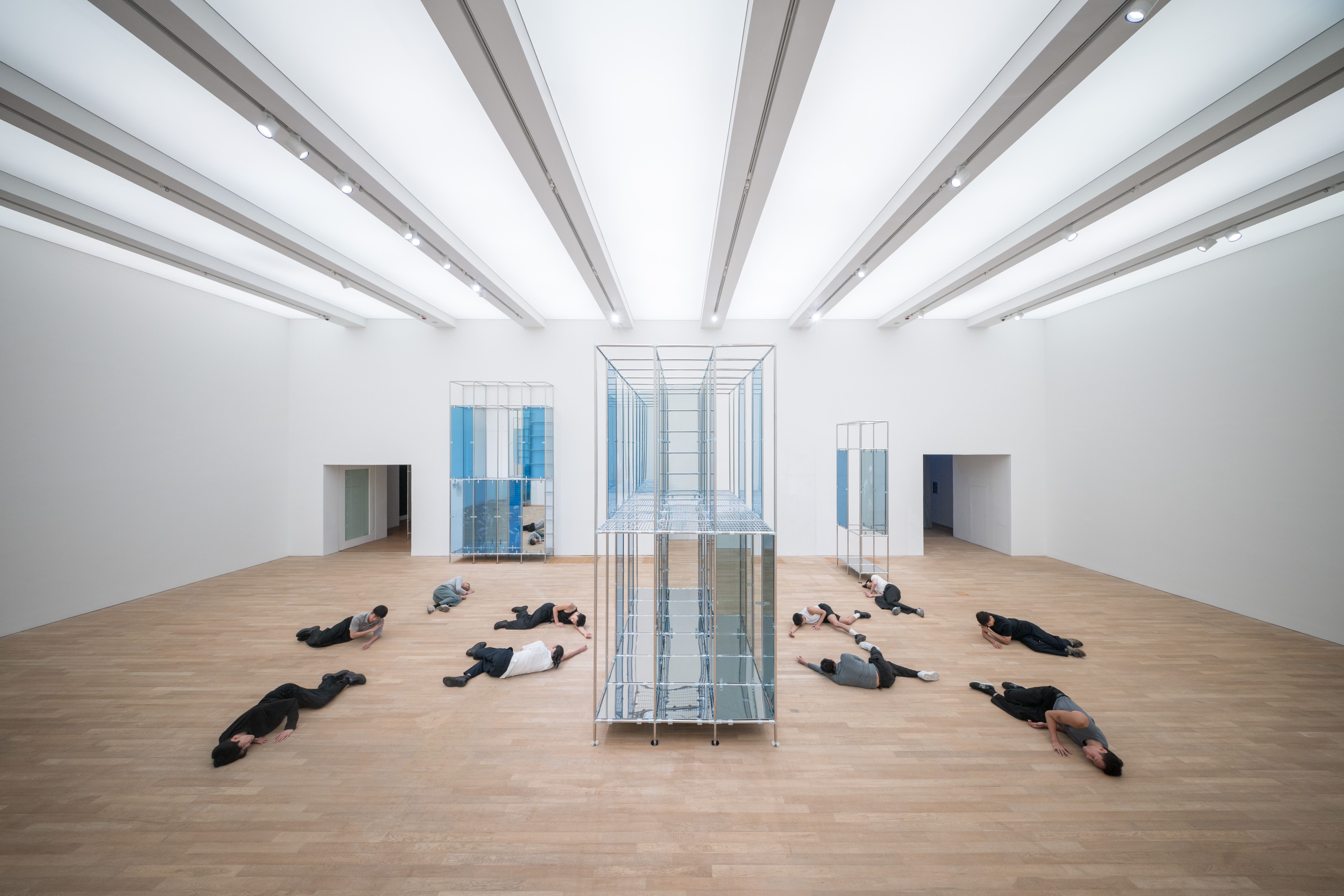
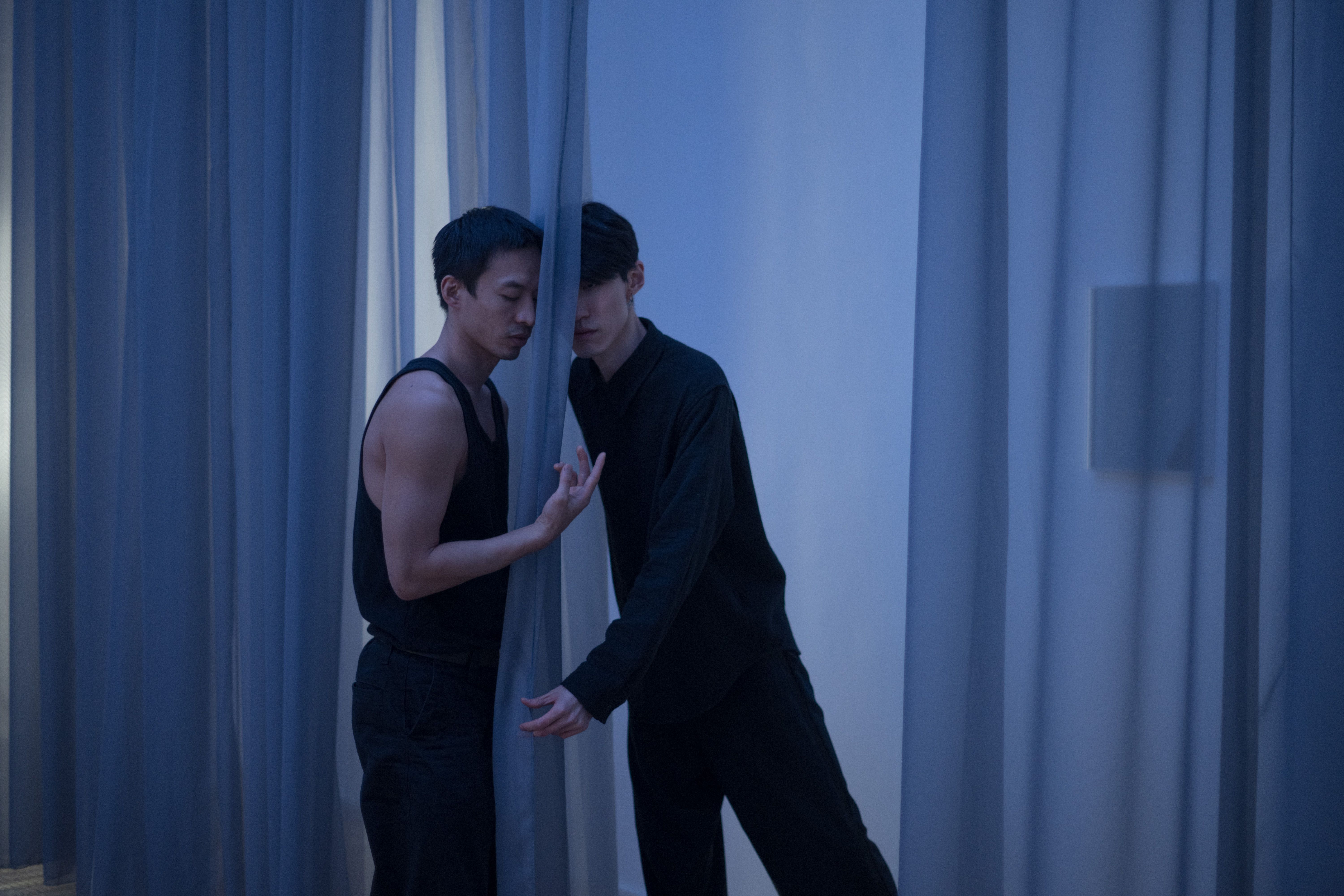
At Tai Kwun this summer (an arts centre itself located in a revitalised, historically significant site at the city’s former police headquarters), Hong Kong-born artist Isaac Chong Wai presented the solo exhibition An Intimate Surrender. The show leaned into the themes of gender performance in Chen Kaige’s 1993 film Farewell My Concubine—a film already preoccupied with the historical cycle of regurgitated myths—and the canonical stature of Hong Kong actor and icon of the Golden Era Leslie Cheung’s queer performance on- and off-screen. Yet the exhibition’s juxtaposition of austere, non-narrative performance with kitschy mirror installations felt largely superfluous to the sensual weight of its source materials rooted in Hong Kong’s radical cinematic legacy.
In a flatly lit gallery fitted with metal scaffolding recalling a film set, a troupe of seven male-coded dancers, dressed in uniformly dark navy T-shirts, black trousers and trainers, performed a 45-minute choreography to a tense electronic soundtrack. Combining contemporary dance with Peking opera hand movements, this well-rehearsed assembly of dancers appeared exactly that: nothing contended, nothing troubled in transposing the hyper-specific source material to the global contemporary art lexicon. In effect, the performance surrendered the complications of the historical source world of traditional Chinese opera—artifice, negotiated intimacies, and false revolutionary promises—to a globally legible hybrid form along the smooth surfaces of a white-cube gallery audience.
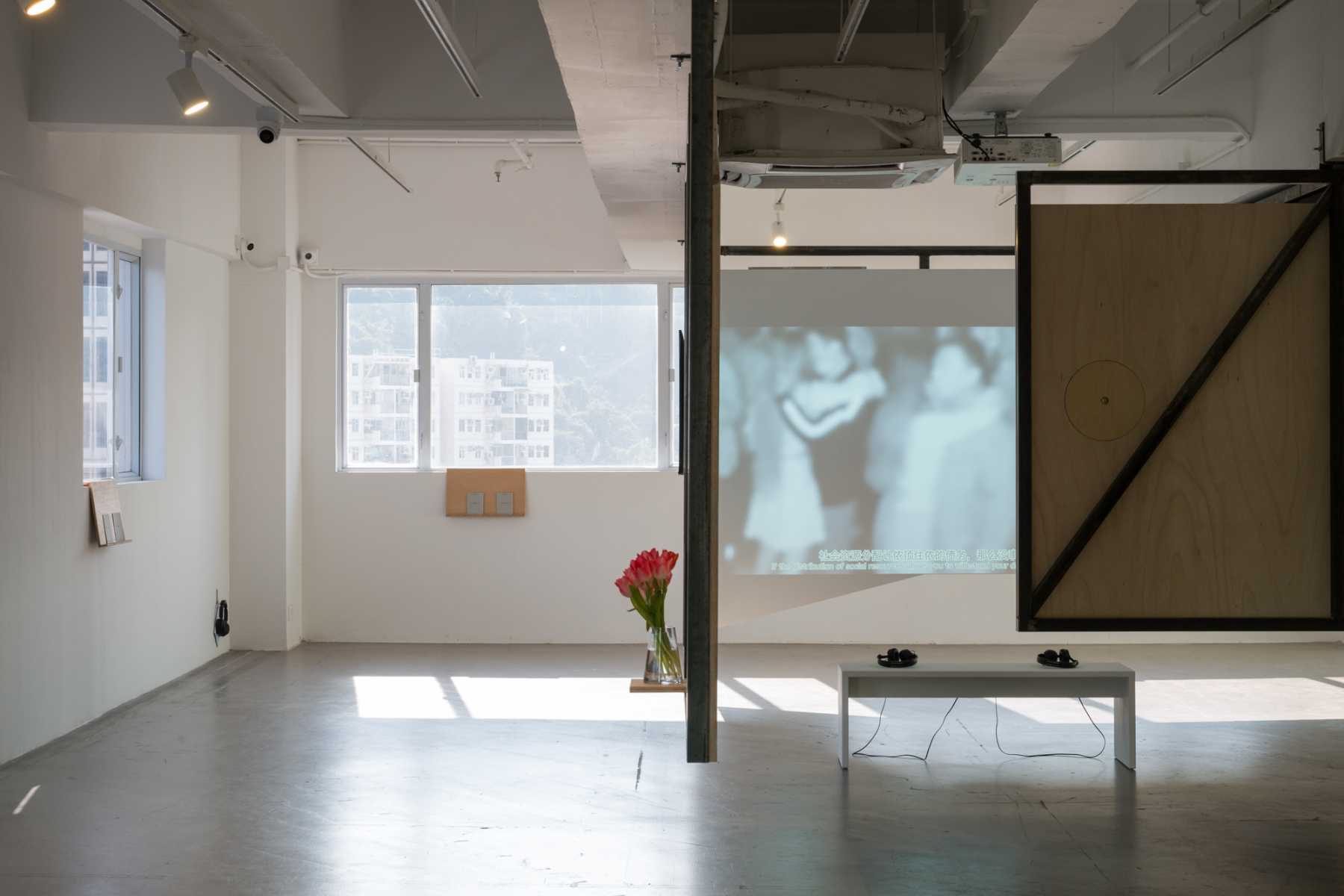
In a similar deflection from contextual specificity to global thesis, the artist selection for the 2024 group exhibition How to be Happy Together?, curated by Xiang Zairong at Hong Kong’s Para Site, was partially inspired by the Latin American setting of Wong Kar Wai’s 1997 film Happy Together. Meanwhile, the show expanded the claustrophobic on-screen romance to propose networked connections between queer lives shaped by globalisation and migration. Interestingly, while the original film used displacement as a romantically tortured synecdoche for the anxiety of Hong Kong’s imminent sovereignty transfer from Britain to the People’s Republic of China—mainland China is pointedly absent from the film—the exhibition omitted engaging with this crucial, provocative background, even as the relationship between Hong Kong and mainland China has shifted since 1997. Instead, the emphasis on diasporic Chinese presence was used to present a static, uninterrogated and underwhelming view of Hong Kong as an “in-between” place benefiting from a transnational migratory network.
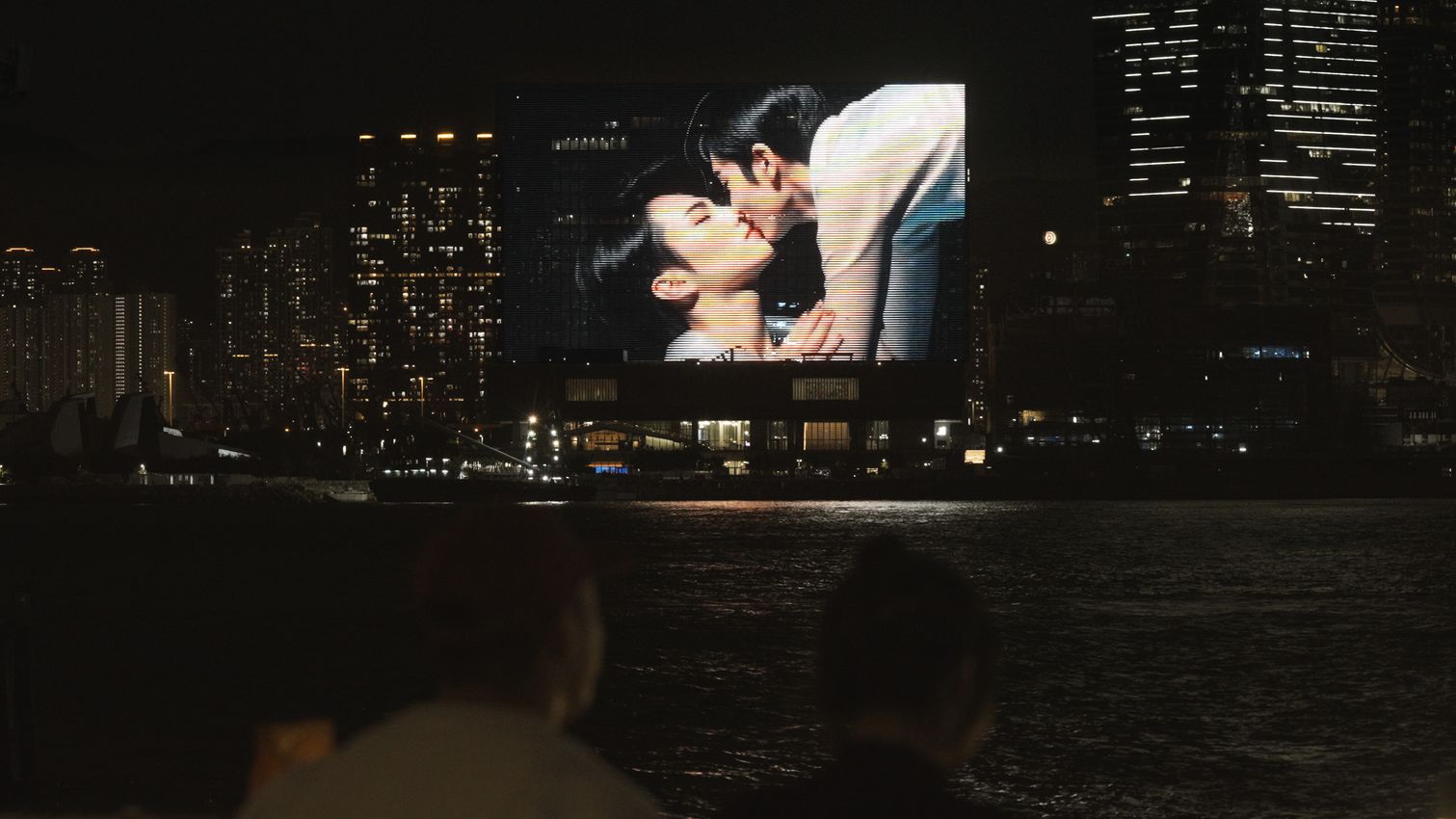
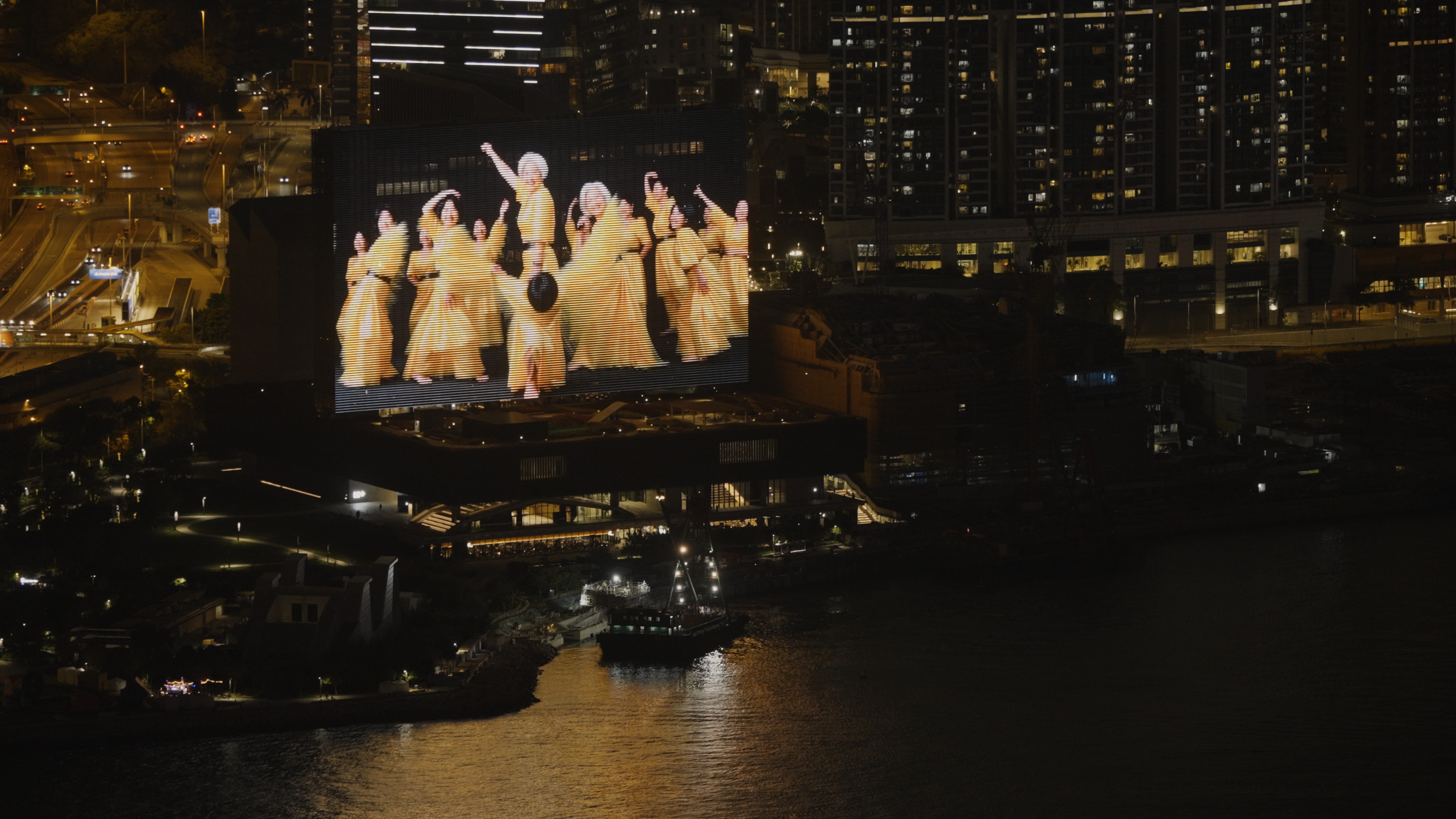
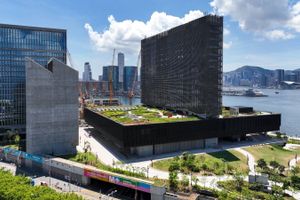
The fan-art-like reproduction of these cultural touchstones produces not only an uninterrogated present—a present that takes the past for granted—but also an uninterrogable present. Singaporean artist Ho Tzu Nyen’s Night Charades (2025), shown across the colossal LED façade of M+, featured a rotation of AI-generated characters miming performances from iconic Golden Era movies, like a Frankenstein-esque resurrection of a cryopreserved past. The irony of this spectacle, flashing over a city where the local film industry is in freefall and veteran director Johnny To has expressed his interest in making an AI movie, was hard to miss. Between the zombification of the past and the heralding of the future through AI technology, the present is conveniently bypassed. Watching the video from the Star Ferry, I longed for artist Linda Chiu-han Lai’s Door Games Window Frames: Near Drama (2012), which plays an algorithmically edited sequence of tropes clipped from 500 Hong Kong thrillers and melodramas from the 1960s, manipulating formal properties to critique the inherited structures of performance that still inform television and meme productions.
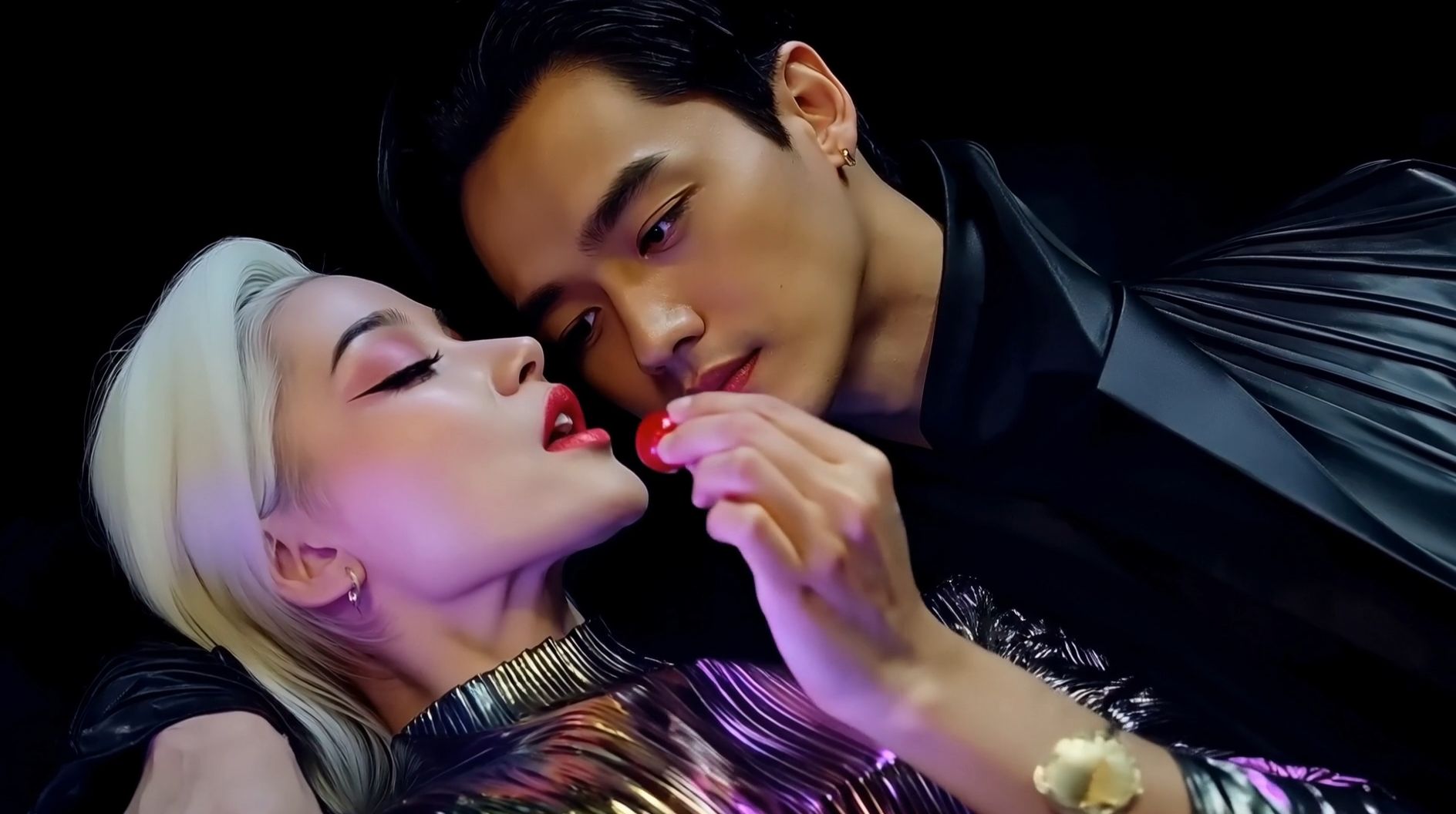

Back in 1993, cultural critic Rey Chow observed: “Any visit to Hong Kong in recent years tells one that strong feelings of nostalgia are at work in the general consumer culture.” In an environment where nostalgia is used for top-down, commercially driven aesthetic consumption, contemporary art’s most recent nostalgic turn towards Golden Era iconography now feels less like a search for communal identity in the face of a collective threat than Chow, Abbas and others had theorised. Instead, it reads as—in addition to a lack of creative imagination and curiosity beyond well-known references—an aporic response to a collective postcolonial trauma that could not be looked at and could not be mourned since the crackdown on the freedom of expression and mass movements in 2020.
“The more you look away from the present, the more its absence is felt—like the eye of a storm”
When the new censorship regime has foreclosed the repair of divisive societal traumas, summoning the imagery from a canonical past only underscores a formal void that stands in for what is no longer economically and culturally possible after multiple financial crises since the 1990s, the demise of the local entertainment industry and the fracturing of monoculture, as well as a deep apprehension for how contemporary social processes can be felicitously represented at a large scale, if at all. The institutional retreat to mining consensus from a popular past is not an appreciation or longing for what was, but a bid to outflank the aftermath of a recent past. But the more you look away from the present, the more its absence is felt—like the eye of a storm.
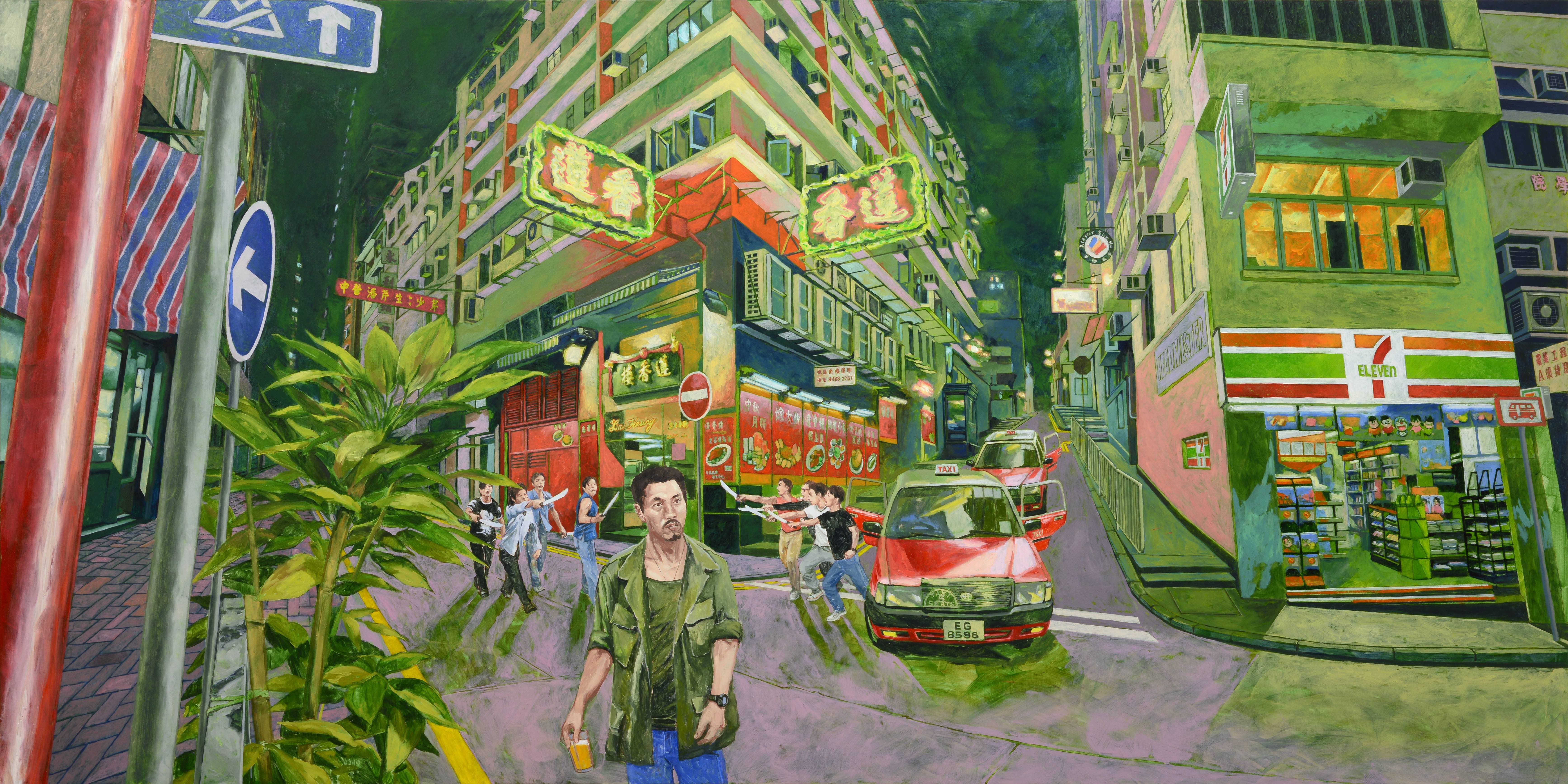
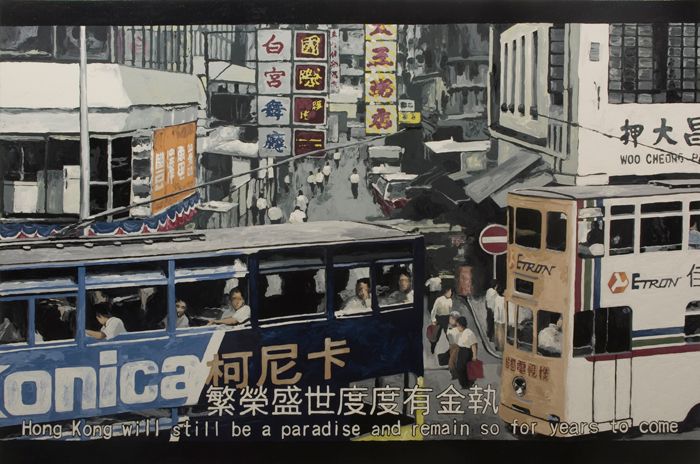
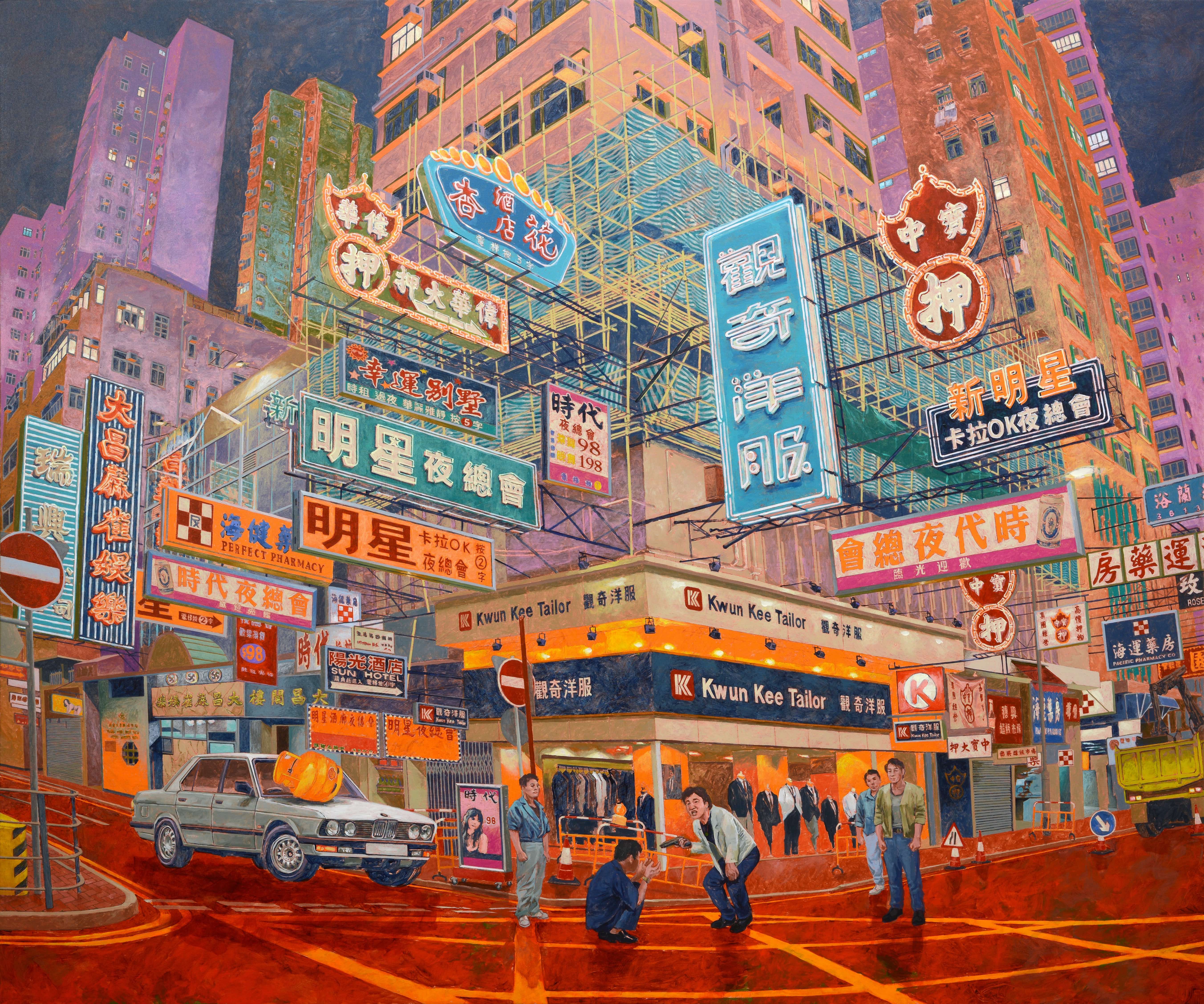
This is why I was surprised by the reversal of a mainstream nostalgia for the British colonial administration’s benign neglect in Cold War 1994 (2026), a prequel to the quintessential political thriller series Cold War (2012) and Cold War 2 (2016). Towards the end of the film, the main character, a chief superintendent for the Royal Hong Kong Police Force’s Organised Crime and Triad Bureau, realises, belatedly, how the once-revered British administration could legally sanction any atrocity in the interest of the empire by the legitimacy of its own law. The character confesses: “I don’t know how the game is played,” a moment unfolding like a screen capture for Chow Chun Fai’s Painting on Movies series, in which the artist ambivalently paints frames from local and international films alongside their original bilingual subtitles. The deadpan epiphany, casting British colonialists as the ultimate white-collar villains (in spite of the many caveats of a mainland Chinese co-production), struck me as more honest about Hong Kong’s postcolonial grief than any recent curatorial gesture towards “decolonisation”.
For generations, artistic discourse has held on to Abbas’s notion of the disappearance of Hong Kong’s history as a defining framework for its cultural production. In a way, the constant search for signs of disappearance is also Hong Kong’s own chosen trauma, the inheritance of an elusive deferral. Introducing the neon conservation project at M+ (for which the museum has acquired neon signs from the streets of Hong Kong since 2013) curator Tina Pang once claimed, somewhat hyperbolically, “Even though we now have so few neon signs in the landscape, I think that Hong Kong will forever be defined by neon signs.” But perhaps we must imagine Hong Kong surviving even without its neon.—[O]
Main image: Ho Tzu Nyen, Screening of Night Charades on the M+ Facade, Hong Kong (2025). Courtesy the artist. Photo: M+, Hong Kong.








A respected voice in contemporary art discourse.
Focusing on ambitious storytelling and insightful art-world commentary. Ocula Magazine publishes in-depth interviews, critical essays and timely analysis on the artists, exhibitions and ideas driving the global art world.
Learn more about Ocula Magazine
Showcasing the best of the art world.
Ocula partners with galleries from around the world to highlight their artists, artworks and exhibitions. Gallery membership is by application and invitation, with each member vetted by an independent panel.
Learn more about Ocula Membership
Specialises in the sale of major artworks.
Led by a team with deep ties to the world’s leading auction houses, galleries and collectors. Ocula’s advisory team offers bespoke services to high-net-worth clients from around the world who are looking to acquire the best of contemporary and modern art.
Learn more about our team and services