






Ed Atkins: 'I Would Like to Be an Artwork'
The multidisciplinary artist and writer talks about why photography is currently important to him, reading Joe Brainard and what he really means by “tech”. Save to My OculaIn 2009, towards the end of Ed Atkins’ time at art school, and shortly after he found out his father was dying, he started making collaged videos that, as he describes them, “explored how they were made and how they structured sentiment, confessing their artificial nature while remaining oddly ignorant of it”. Through that editing process, Atkins developed the fascination that has animated a lot of his work since: by pressing as hard as possible on technology’s formal constraints—and, later, in his hyperreal CGI animations, on its doomed claims to represent reality—he could push it to the point of failure. In this way, he could make technology release its own unruly expression of human feelings: melancholy, loss and others that are more difficult to name.
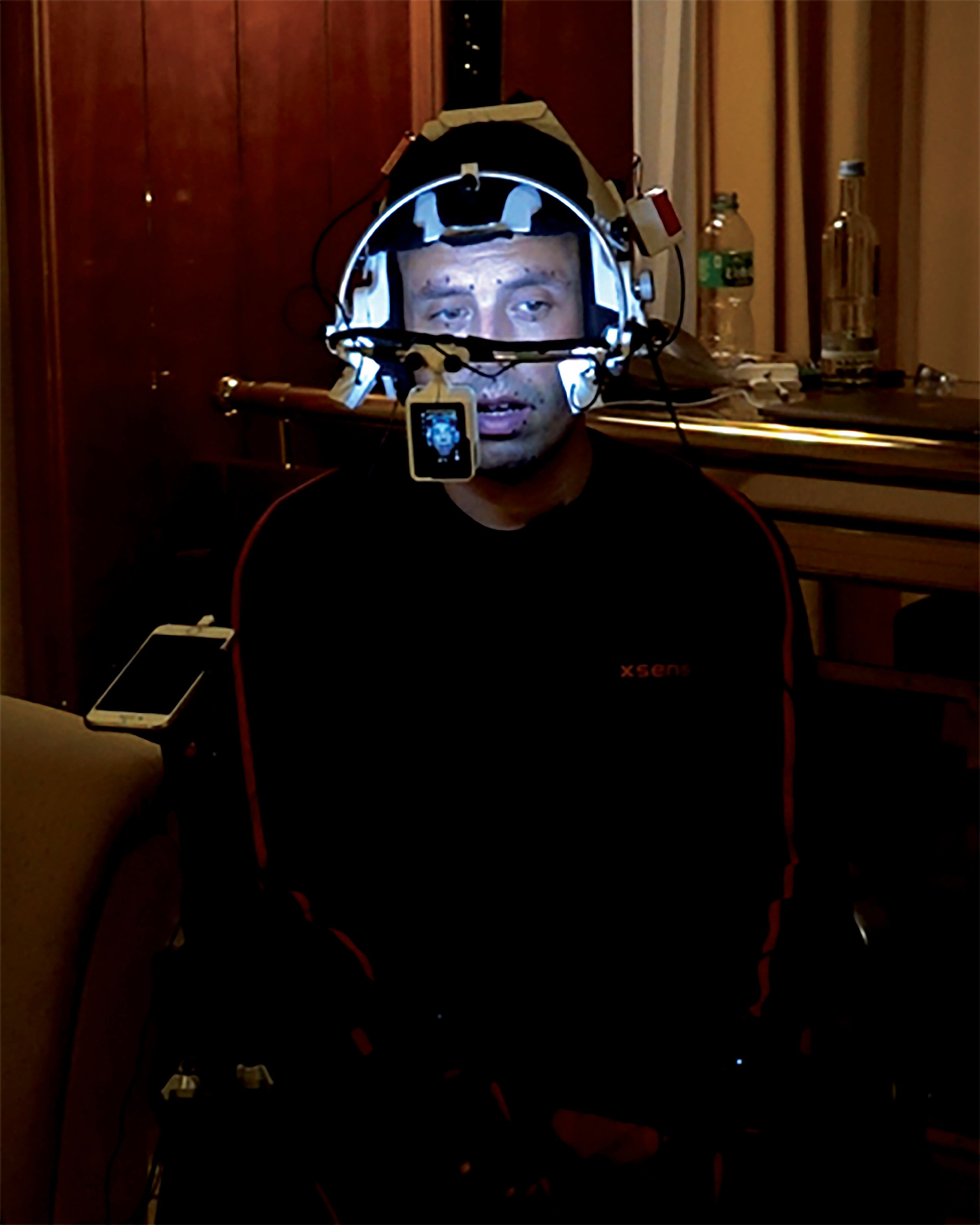
The CGI videos Atkins is most known for are populated by what he calls “dead men”: virtual avatars that mimic real human movements recorded via motion sensor. In Good Baby (2018), an infant boy silently weeps; in Ribbons (2014), a shirtless man with face tattoos blinks and gawps and grimaces while singing a song and nursing a pint of lager with an unnaturally rigid arm. The dead men’s faces are disarmingly open and their tics palpably human, but their movements are clunky and unnatural as they strain against virtual limits.
In recent years, this bizarrely confessional quality of Atkins’s formal experiments has found a more literal expression in explicitly personal material. His recent book Flower (2025), a kind of anti-memoir, discusses daily habits, childhood memories and bodily sensations (pissing, vaping, thinking) in sublime, granular detail. And the last rooms of Atkins’ survey show at Tate Britain last year were centred around a phone call between the artist and his mother, drawings he made for his daughter’s lunchbox, and excerpts from his father’s sickbed diary.
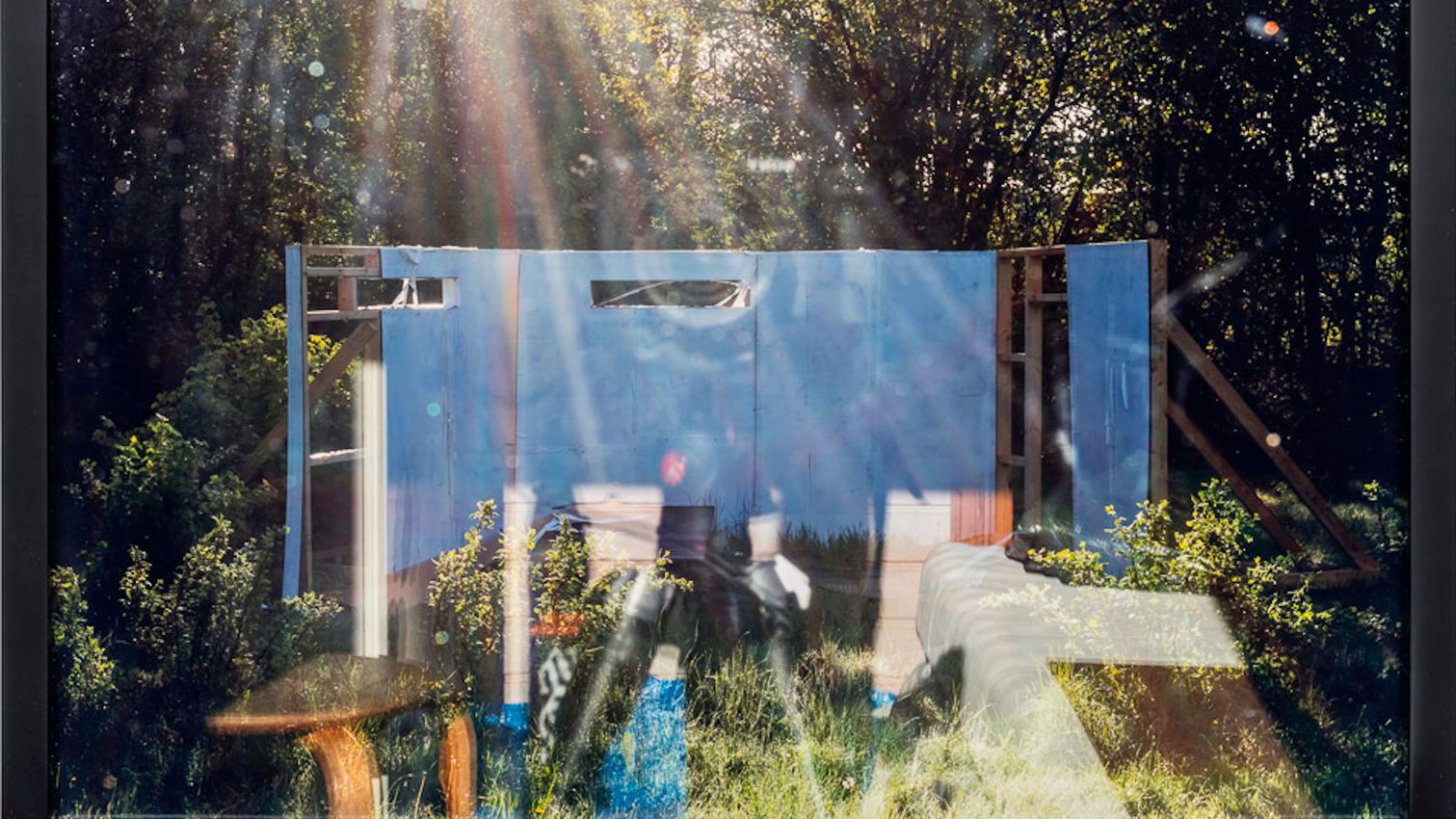
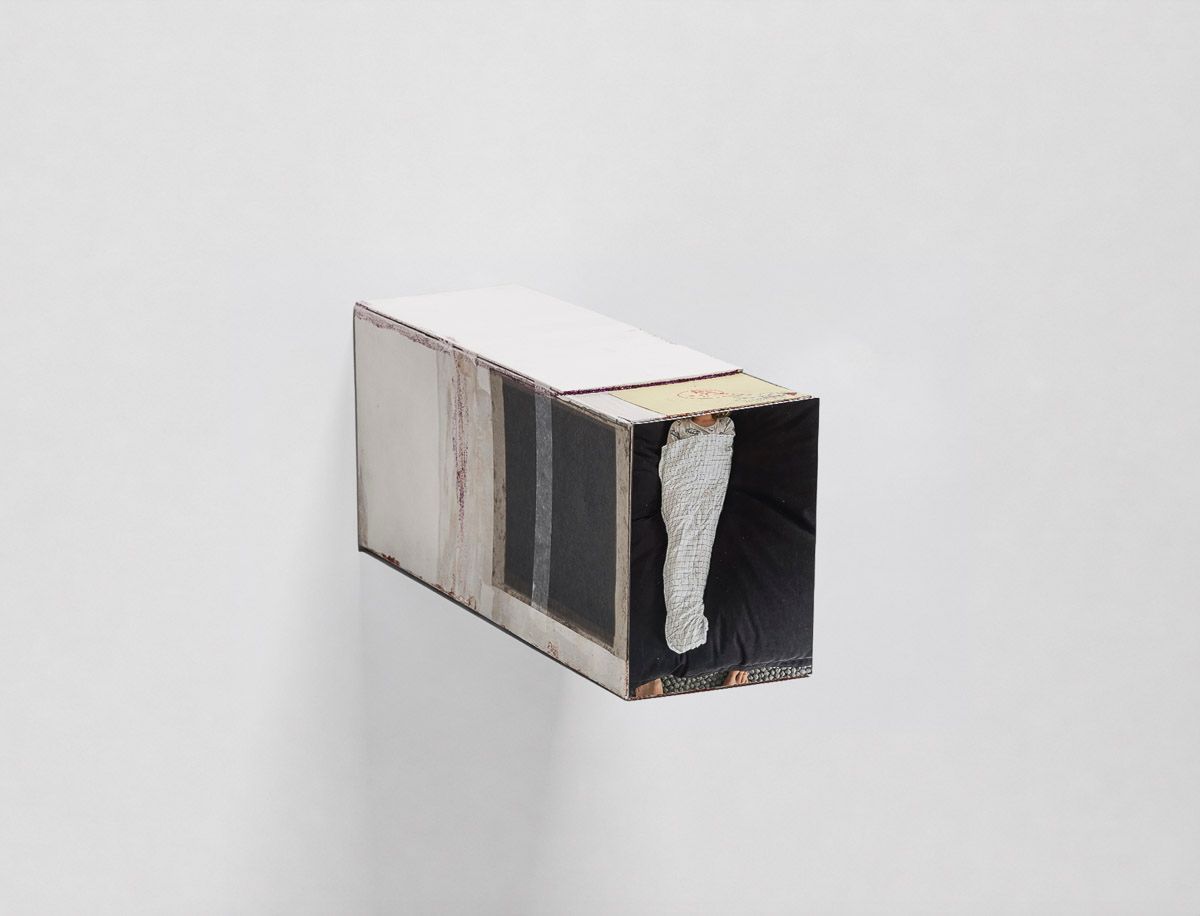
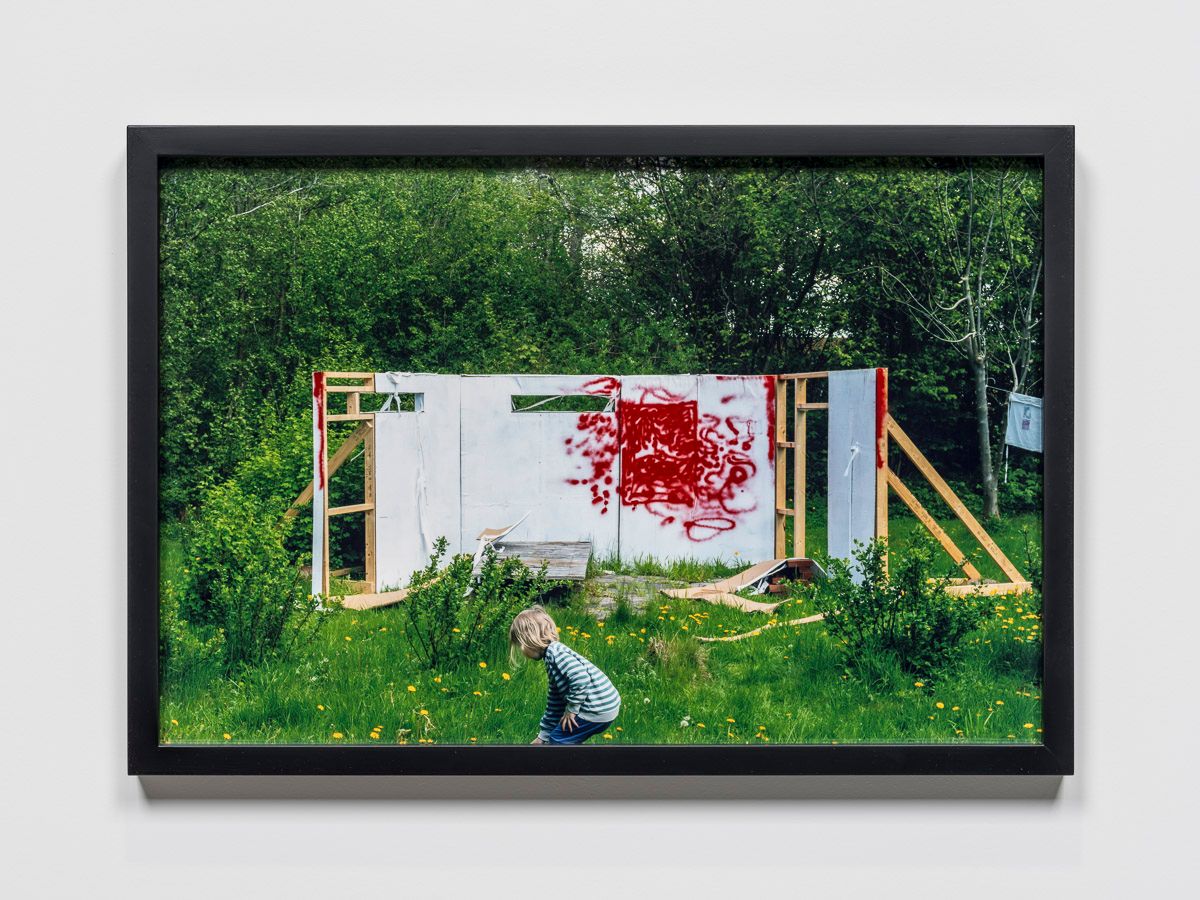
Atkins’s new exhibition at Gladstone Seoul, 1 Day in Space, also draws from the emotional matter and sentimental junk of family life which, again, is moving and resonant precisely because it is obstructed by an insistence on form. The central video, Passive Mech (2026), is made from timelapse photographs of a cardboard stage set mounted in a garden slowly degrading as winter turns into spring. At the same time, a collage of sound plays, capturing hundreds of accidental and minuscule affects as it skips through recordings Atkins made in his home and on his travels: a vacuum cleaner, radio news, plates clattering, people singing, children chatting, scraps of Queen and Abba songs, the ambient hiss of machines. The weightless passage of time in the video is anchored by a series of material works surrounding it: photographic stills, graphite frottages on paper, and small homemade sculptures made from matchboxes and card.
Atkins writes about his work with a kind of zany rigour. No one is better than him at describing its haunting effects. Which is not to say that the residue it leaves can be explained away conceptually. He tells me over email: “Whatever purposive eloquence is required to press some point or other feels kind of stillborn to me when it comes to the art I want, the things I want.”
Julieta Caldas: What are you reading at the moment?
Ed Atkins: I’ve been reading these two books by David Russell, on tact and the essay—Lamb, Hazlitt, Pater, Mills, etc.—and on Marion Milner, the psychoanalyst. [Tact: Aesthetic Liberalism and the Essay Form in Nineteenth-Century Britain (2017) and Marion Milner: On Creativity (2024)]. They’re astonishing and very, very important for me. I’m amazed at the synthesis. Also Ronald Sukenick! And Love Joe, The Selected Letters of Joe Brainard (2024), edited by Daniel Kane.
JC: The collage of sound in Passive Mech is really beautiful. It feels composed, but also clunky, accidental and human in a way that can only really come from technological manipulation. How did you make it?
EA: Like the visuals, it’s a kind of timelapse. While the camera was photographing for a month, one shot a minute, I recorded life at home and, spottily, while travelling. A microphone was going most of the time. Then I scissored it up into little chunks, a second of audio from every minute or so. Then sutured that back together. But where the visuals were strictly unchanged, I took liberties with the audio, overlaying, recomposing, editing. At night, when the screen is blank, I delved into my own archives, using soundtracks from old videos, recordings from my own childhood, and so on. So yes, composed and clunky.
JC: Photography as a form seems very close to some of the big concepts in your work. It’s an index of loss, and it’s a mechanical system prone to glitches and failures. Why have you arrived at it at this particular moment?
EA: It’s nothing new, really. Technological remediation, representation, how it cues sentiment, constructs reality. The difference is maybe the explicitly traditional photographic technique. Or the rudimentary mode of timelapse as a kind of stand-in for animation, for the dupe of movement or life from artificial representation. I wanted to make something that had the ring of essay about it, perhaps. Distil something, lean on but not reperform aspects of the work I’ve made for a while. Animation, tech reflexively confessing, structural anti-illusionary something meeting heavy, damp sentiment and real feeling and so on. I don’t know.
I did want to make something excessively tangible. I did feel the need to pause the cleaving to contemporaneity for a little. Or seek it elsewhere. It does feel like the gambit of leaning on the conspicuousness of technological compromise in order to reflect parallel incapacities of feeling or experience is, maybe, sometimes, played out. Perhaps. I’m nodding at AI, of course. So there’s some of that. But my work’s not some opinion-carrying thing concocted in order to press a point. Far from it. This is my medium, the point of mediation of my life and its attempted affinities with others, skewed and compromised by the claims of templated forms merrily split and unravelled by uncontainable experience.
“My work’s not some opinion-carrying thing concocted in order to press a point”
JC: The pieces at the end of your Tate show (Post-it note drawings, a film) were quite startlingly free from the mediating and distancing mechanisms in many of the earlier video works. Passive Mech also has a warm, embodied feeling. Even if the edited sound is slightly haunted and glitchy, there are no big tricks; the camera is placed inside the family home and looks out at the natural, material world. I don’t want to oversimplify the distinction between the digital and real, but are you becoming more invested in analogue forms?
EA: It’s a funny thing. I never once thought that this film, Passive Mech, was that different than lots of other things I’ve made. As with an answer above, I think the relocation of digital fidelities to reality is part of it. I also think I’ve always treated the digital stuff materially—even if unreally. I mean, the digital photos that comprise the timelapse are codified in the same way as the 3D objects in the previous works, and the mystified kind of confessional, magical way in which they defer their materiality isn’t so different, either. I’ve always loved the off-camera, and all the videos have not wanted to look at anything more than themselves, because that’s where I most significantly find myself, or a self I recognise, lost in there in the tech. And of course, by tech I mean language and pens and music and all that, and especially when each of those tries really hard to just be real and shed its propagandisticness.
JC: In Flower, there are so many true and naked confessions, but they are continually swept away in a tide of information. In Passive Mech, I was also moved by the scraps of audio that feel very intimate. To me they give the womb-like sensation of being woken up as a child by adults speaking in the next room—setting a tone, ordering reality—but again, these scraps give way to many other scraps, and the stitching together becomes more important than the content. I wonder if your conception of “the personal” or “autobiographical” in your art has shifted at all since you’ve drawn more directly on family material?
EA: I think I’ve had to, wanted to, pull my life into my work and my life has changed. I kind of think it’s as simple as that; I would like to be an artwork, I think. I would not risk losing anything I didn’t think could not afford to be lost in an artwork, and the brinkmanship of this is, I think ,the source of anything affecting that the works conjure. I don’t really know myself, but I know myself maybe better than most things and this is really interesting.
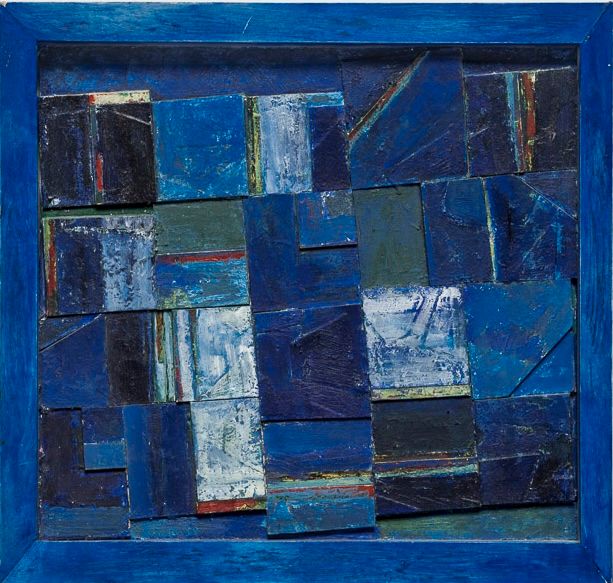
JC: Lastly, I wondered how Blue (by Philip Atkins) (1985-2000), the piece by your father Philip Atkins, relates to your work in this show?
EA: Materially, talismanically, reassuringly. It’s been on the wall of where I’ve lived on and off since I was a toddler, so it’s the foundation of a language.—[O]
Ed Atkins, 1 Day in Space (until 31 October) at Gladstone Gallery, Seoul
Main image: Ed Atkins, 15th of May 2026, 07.32'19" (Passive Mech), 2026. © Ed Atkins. Courtesy the artist, dépendance, Brussels, Galerie Isabella Bortolozzi, Berlin, Cabinet, London, and Gladstone. Photo: Jeon Byung-cheol.










A respected voice in contemporary art discourse.
Focusing on ambitious storytelling and insightful art-world commentary. Ocula Magazine publishes in-depth interviews, critical essays and timely analysis on the artists, exhibitions and ideas driving the global art world.
Learn more about Ocula Magazine
Showcasing the best of the art world.
Ocula partners with galleries from around the world to highlight their artists, artworks and exhibitions. Gallery membership is by application and invitation, with each member vetted by an independent panel.
Learn more about Ocula Membership
Specialises in the sale of major artworks.
Led by a team with deep ties to the world’s leading auction houses, galleries and collectors. Ocula’s advisory team offers bespoke services to high-net-worth clients from around the world who are looking to acquire the best of contemporary and modern art.
Learn more about our team and services