



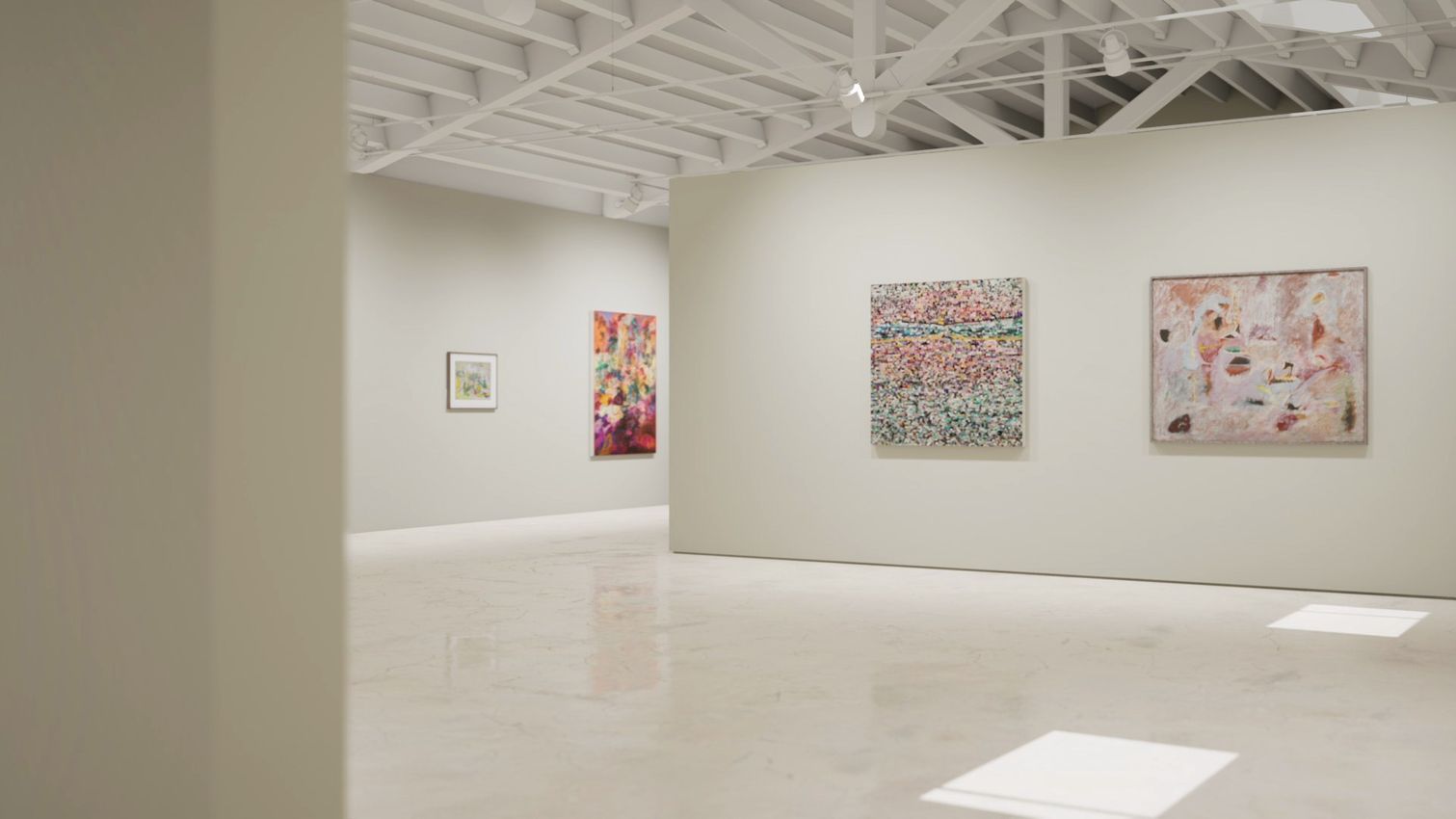
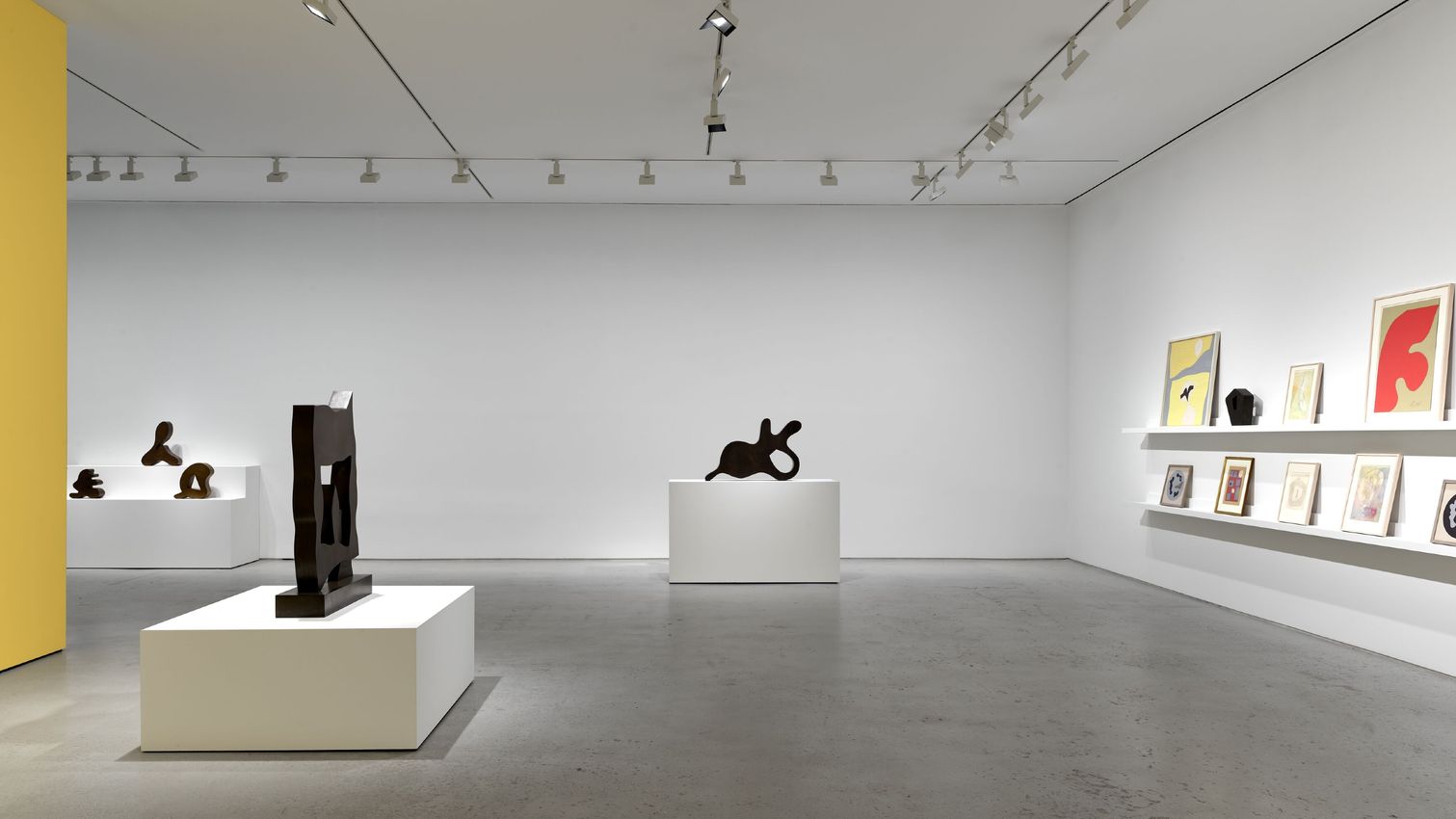
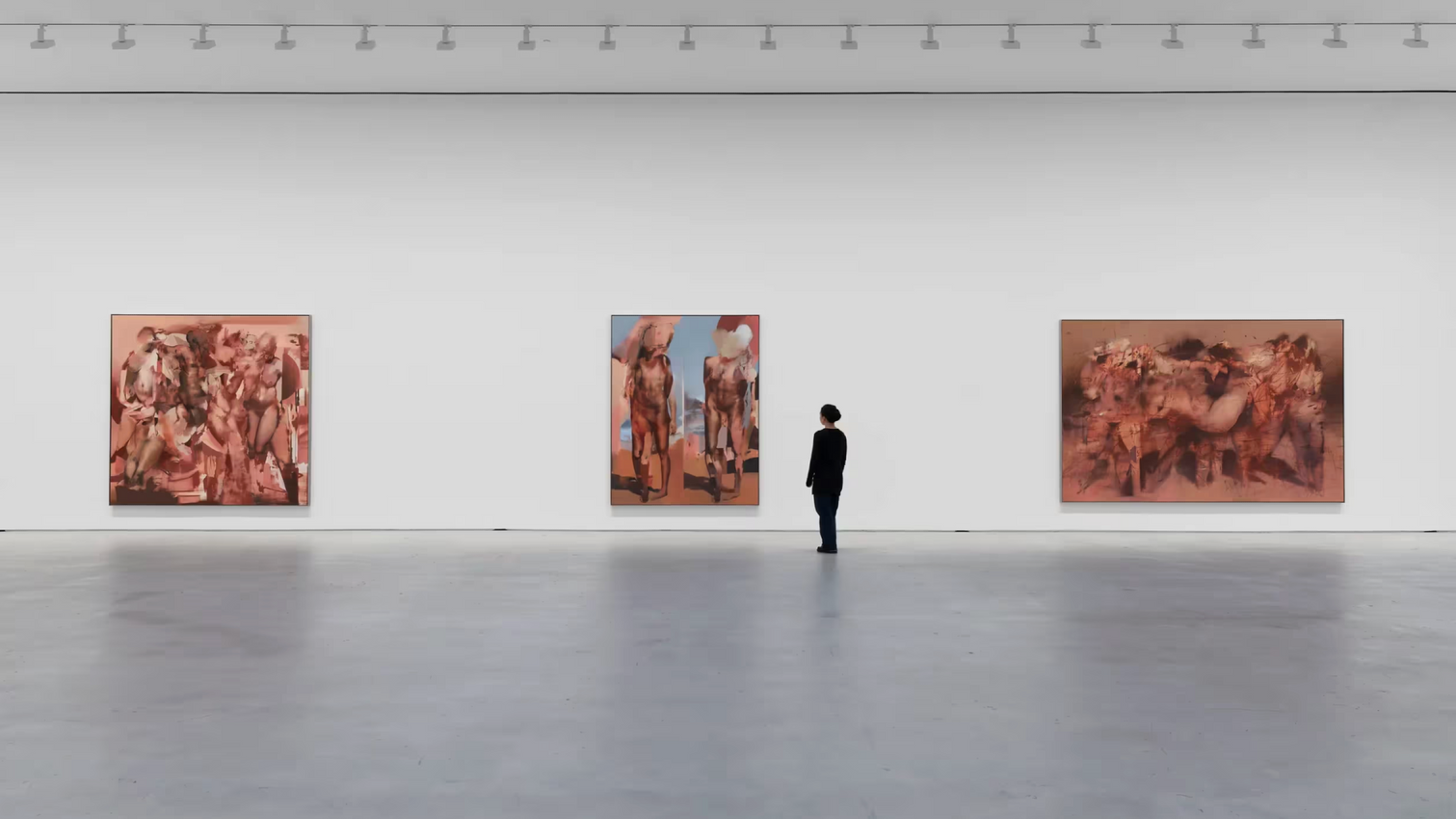
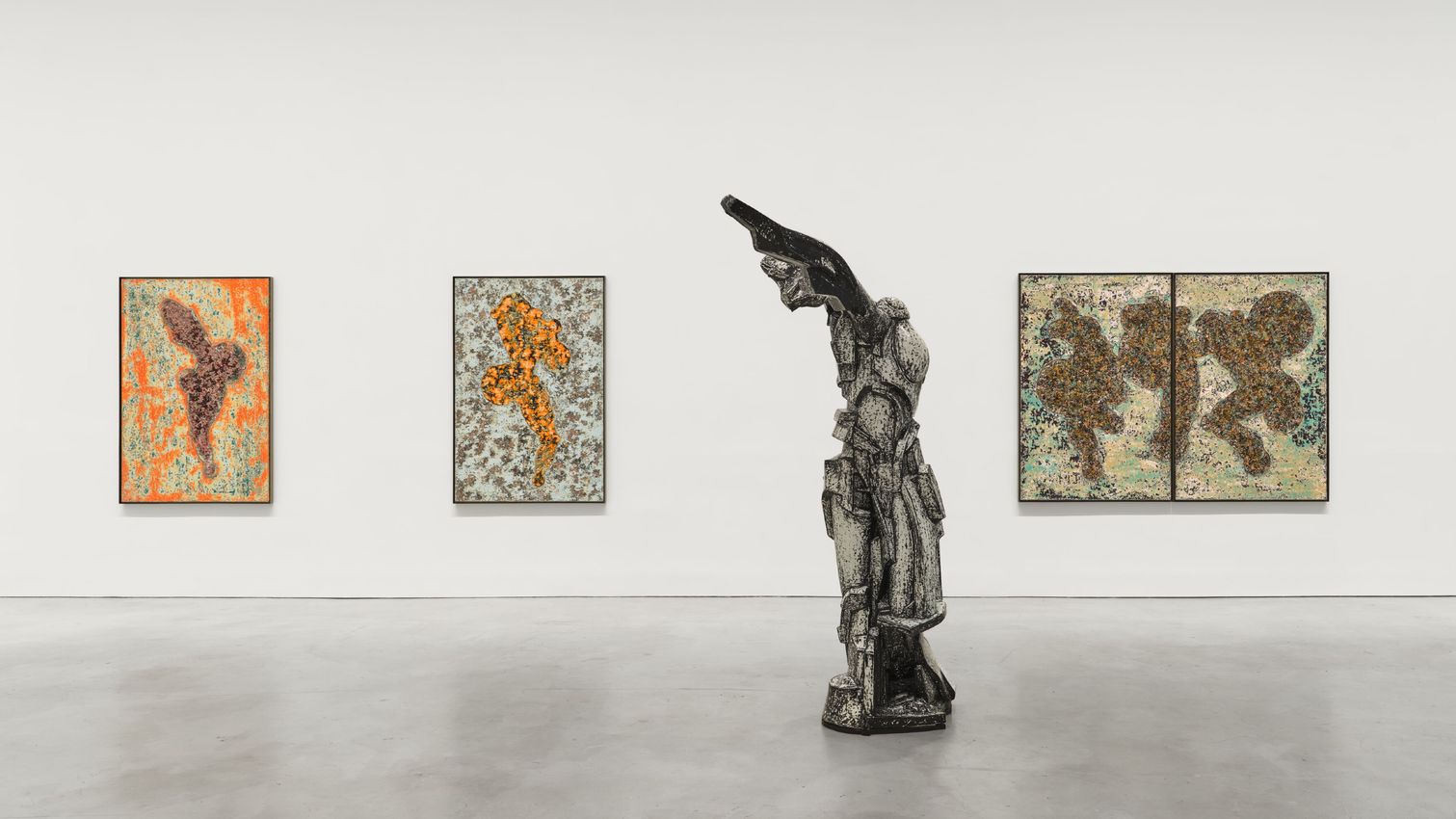
Arshile Gorky and Jack Whitten, two consummate master artists of the 20th century, are shown together in this online exhibition. The presentation was inspired by Whitten himself, who paid tribute to Gorky in a speech he gave in 2017. ‘Arshile Gorky was my first love in painting,’ he explained, ‘it was Gorky who first excited my imagination.’ Whitten described the experience of looking at Gorky’s work as, ‘witnessing something that comes from the deep soul of an artist.’
Belonging to different generations, each artist developed a highly individual visual vocabulary within their oeuvre. Gorky played a pivotal role in the shift to abstraction that transformed 20th-century American art, bridging surrealism and abstract expressionism. By absorbing and reacting to the work of ancient and past masters, as well as contemporary artists, he asserted his own understanding and imagination; a traditionalist sensibility in an American vanguard context. Whitten made it his mission to disrupt the discipline of art history through experiments with material, process, and technique. He effectively constructed a bridge between gestural abstraction and process art.
During Whitten’s intimate tribute he emphasised the soul, colour, and profound mastery present in Gorky’s work and its resonance, explaining: ‘I too have suffered at the hands of man’s inhumanity to man. Gorky knew how, what this does of the psyche... I can read it in the colour structure’. The connection between these two artists is poignantly revealed in this exhibition, through the final work created by Jack Whitten in 2017 before his passing in January 2018, a homage to Arshile Gorky. Titled Quantum Wall, VIII (For Arshile Gorky, My First Love In Painting), the work is constituted by a colourful array of acrylic paint tiles that both physically and metaphorically reflect the light, sensibility, and impression Gorky’s work left on the artist’s mind and imagination.
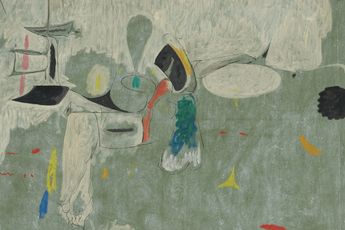
Both Gorky and Whitten turned to the natural world for solace and inspiration, often employing landscape motifs to express underlying emotions. Gorky spent extended periods of time between 1943 and 1946 at Crooked Run Farm in Virginia, becoming enchanted by the bucolic surroundings, and his response began to manifest in his vibrant compositions. As he explained, ‘I do not paint in front of, but from within nature.’ The resulting works, including ‘Untitled’ drawings and ‘Virginia Landscape’ from 1944–1945, are filled with organic forms and infused with extraordinary expressive freedom, marking a profound reawakening of his connection to nature. In the last few years of his life, between 1946–1948, Gorky goes on to make arguably some of his most iconic works, such as the remarkable Pastoral (1947), rediscovered in 2010, using gestural planes of color that give shape to the negative space and seeming to emerge from within the canvas. As well as his masterful Gray Drawing for Pastoral (ca. 1946–1947), his instinctive symbols—still amorphous and suggestive—form a distinctive vocabulary comprising recurring forms.
Arshile Gorky was my first love in painting, it was Gorky who first excited my imagination.—Jack Whitten
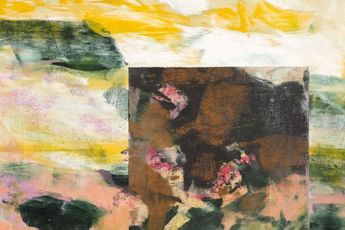
Whitten absorbed the ancient landscapes of Crete; its colours and topographical viewpoints were expressed as elements in his art which he described as ‘structured feelings’. Whitten vividly described the impact on his senses: ‘Memory, both good and bad, is a powerful activator of emotion. The scent of fresh sawed pine logs, fresh sugarcane, mulberries, wild blackberries, huckleberries, plums, watermelons, persimmons, wild grapes and muscadine are all alive and active through sense memory’. In this vein, the exhibition displays Whitten’s Garden in Bessemer VI (1968), directly influenced by Gorky’s Garden in Sochi (1941), a work that signalled a shift in the use of acrylic paint as collage to create an almost geometrical view of nature.
The central role of Gorky’s draughtsmanship in his practice is exemplified in an early seminal work featured in the exhibition, Untitled (Study for Mural), executed in 1933–1934. A series of vignettes made up of abstract and figurative shapes and objects, the work is one of only three pen and ink drawings that theartist conceived. Over the course of his career, Whitten ceaselessly worked through a range of styles and techniques, experimenting continuously to arrive at a nuanced language of painting that hovers between mechanical automation and spiritual expression. In the 1970s, and visible in works such as Steel City I, Whitten began experimenting with mechanical automation, moving away from gestural mark-making.
Saskia Spender, President, and Parker Field, Managing Director, of The Arshile Gorky Foundation respond to the exhibition: ‘A taste of Gorky vis-a-vis Whitten is timely and enticing. Harmonious in many respects, particularly in terms of palette and compositional structure, Gorky and Whitten were artists of many faces and styles. As we continue to appreciate their compositions side by side, we look forward to studying the nuanced consonance between the two artists’ bodies of works. Occupying opposite halves of the 20th century, their kinship tells a compelling story of American art.’
Also responding to the exhibition, Mary Whitten says: ‘To be able to see the love and admiration Jack had for Gorky, albeit on a digital screen, is a palpable connection between two artists at different ends of the 20th century. The call-and-response aspect of the paired landscapes almost speaking to one another is quite moving. I think as Jack grew older and dove deeper into his feelings, the beauty and sadness that runs through Gorky’s oeuvre continued to inform Jack’s expression.’
This exhibition precedes The Arshile Gorky Catalogue Raisonné, an invaluable web-based resource presenting the first definitive record of Gorky’s complete production. The first instalment will launch in early 2021, followed by further sections in subsequent months. As well as a forthcoming exhibition of rarely seen works by Jack Whitten at Hauser & Wirth Zürich, and the 2020 reissue by Hauser & Wirth Publishers of the seminal collection of the artist’s writings, Jack Whitten: Notes from the Woodshed from 2018.


Hauser & Wirth was founded in 1992 in Zurich by Iwan Wirth, Manuela Wirth and Ursula Hauser, who were joined in 2000 by Partner and Vice President Marc Payot. A family business with a global outlook, Hauser & Wirth has expanded over the past 26 years to include outposts in Hong Kong, London, New York, Los Angeles, Somerset and Gstaad. The gallery represents over 70 artists and estates who have been instrumental in shaping its identity over the past quarter century, and who are the inspiration for Hauser & Wirth’s diverse range of activities that engage with art, education, conservation and sustainability.

A respected voice in contemporary art discourse.
Focusing on ambitious storytelling and insightful art-world commentary. Ocula Magazine publishes in-depth interviews, critical essays and timely analysis on the artists, exhibitions and ideas driving the global art world.
Learn more about Ocula Magazine
Showcasing the best of the art world.
Ocula partners with galleries from around the world to highlight their artists, artworks and exhibitions. Gallery membership is by application and invitation, with each member vetted by an independent panel.
Learn more about Ocula Membership

Specialises in the sale of major artworks.
Led by a team with deep ties to the world’s leading auction houses, galleries and collectors. Ocula’s advisory team offers bespoke services to high-net-worth clients from around the world who are looking to acquire the best of contemporary and modern art.
Learn more about our team and services
