Press Release

For more than fifty years, British artist Phyllida Barlow has created sculptures and large-scale installations using a direct and intuitive process of making. She transforms humble, readily available materials through layering, accumulation, and juxtaposition, often drawing inspiration from her urban surroundings to reference construction debris, architecture, signs, fences, and discarded objects. Following Barlow’s critically acclaimed presentation at the British Pavilion for the 2017 Venice Biennale, Hauser & Wirth is pleased to present tilt, an exhibition featuring recent large-scale works installed for the first time alongside more than a dozen smaller sculptures. Together, the works on view encourage an intimate encounter between object and viewer, continuing a career-long exploration into the ways in which sculpture can dissolve boundaries between realms of experience.

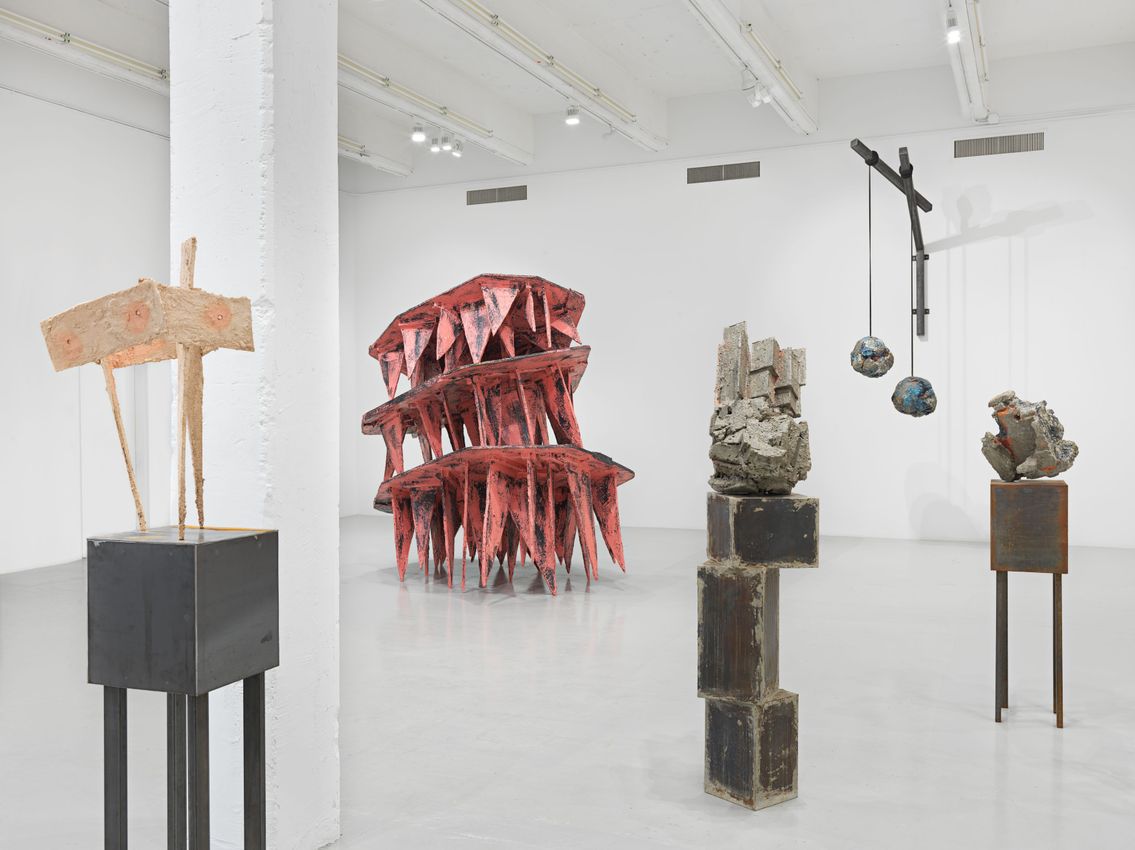
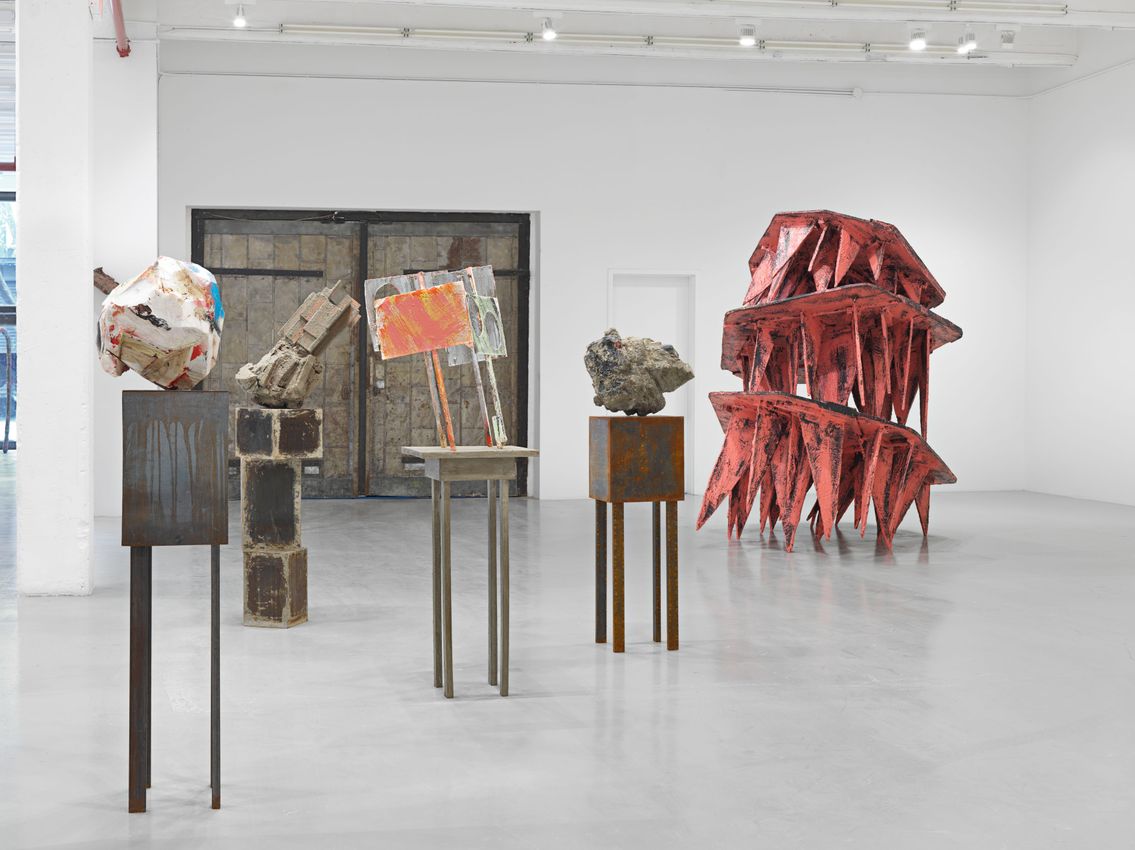
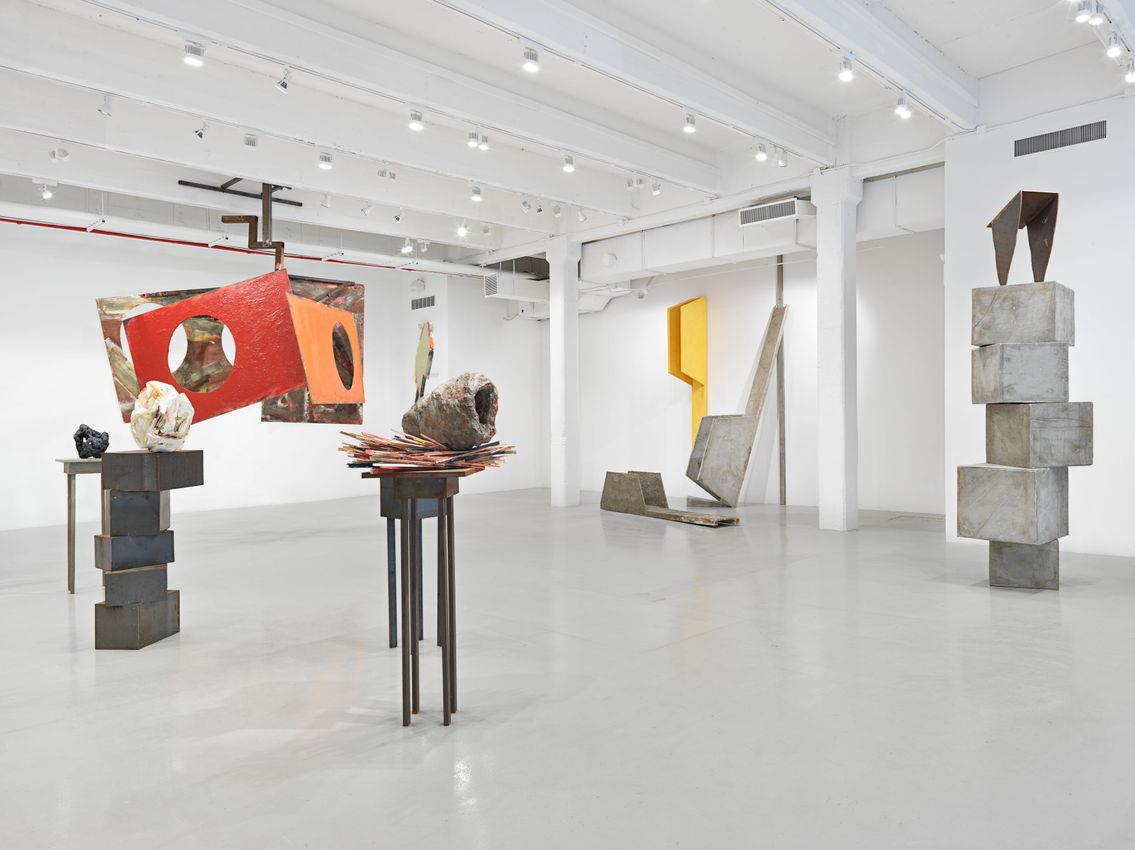
Employing a visual vocabulary developed over the past five decades, Barlow’s works are often painted in vibrant colours, the seams of their construction left visible, revealing the means of their making. tilt marks a new stage in Barlow’s practice, as she shifts her focus from the immersive built environments of her past presentations–which often riffed on the architecture of their installation spaces, transforming their surroundings–in favour of more autonomous, stand-alone sculptures that invite viewers to consider the works on an individual basis. They block, straddle, and balance precariously throughout the gallery, challenging viewers into a new relationship with the sculptural object.

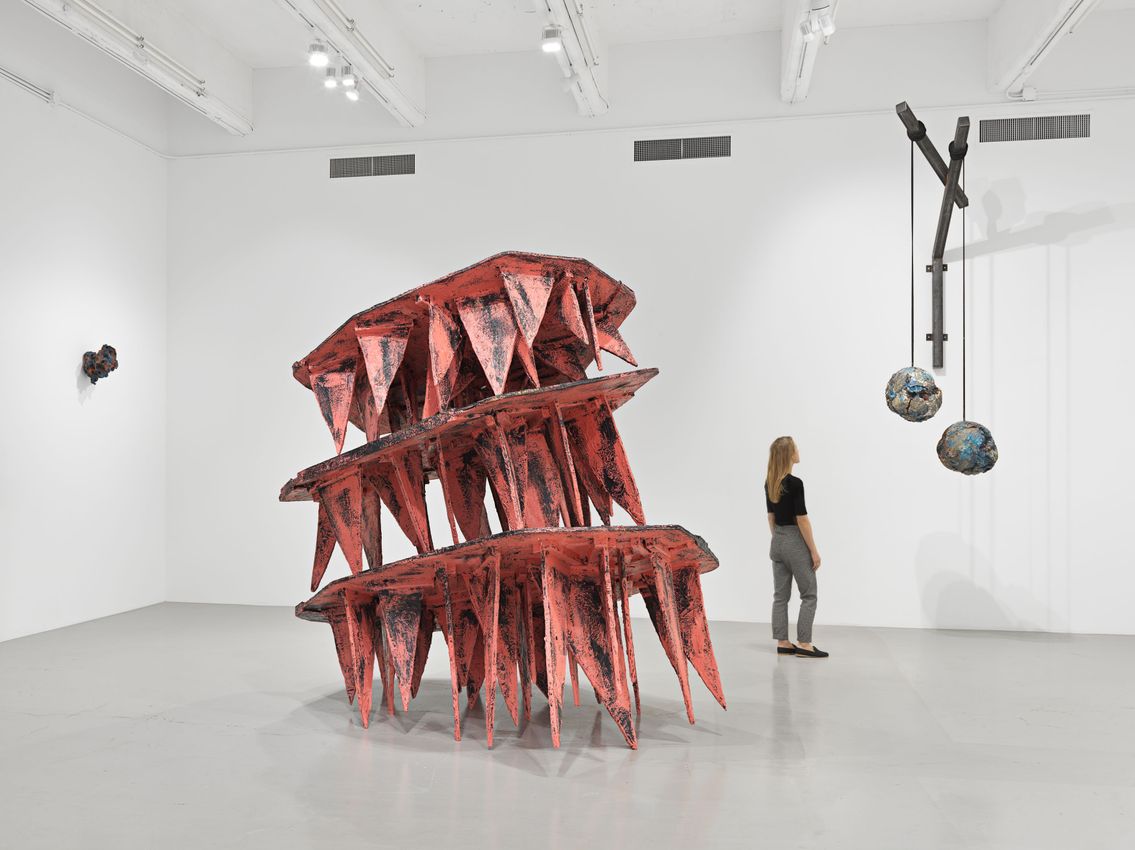
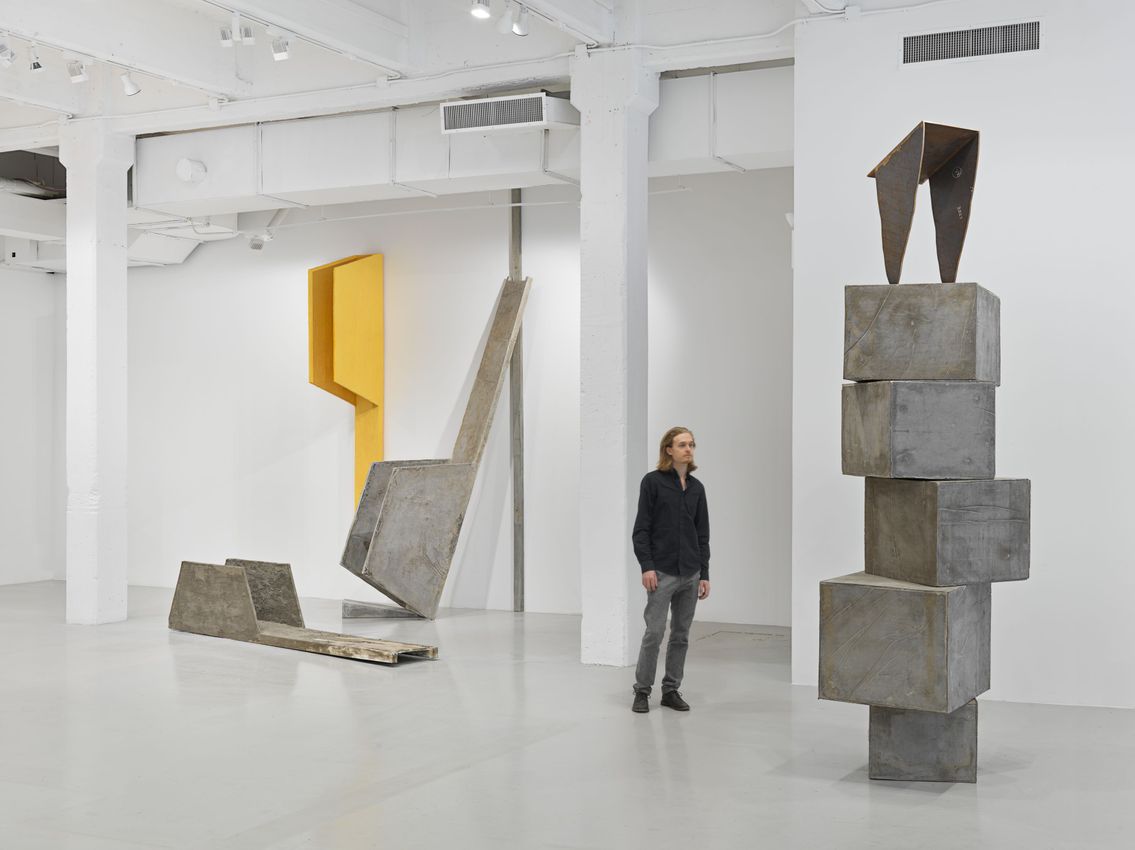
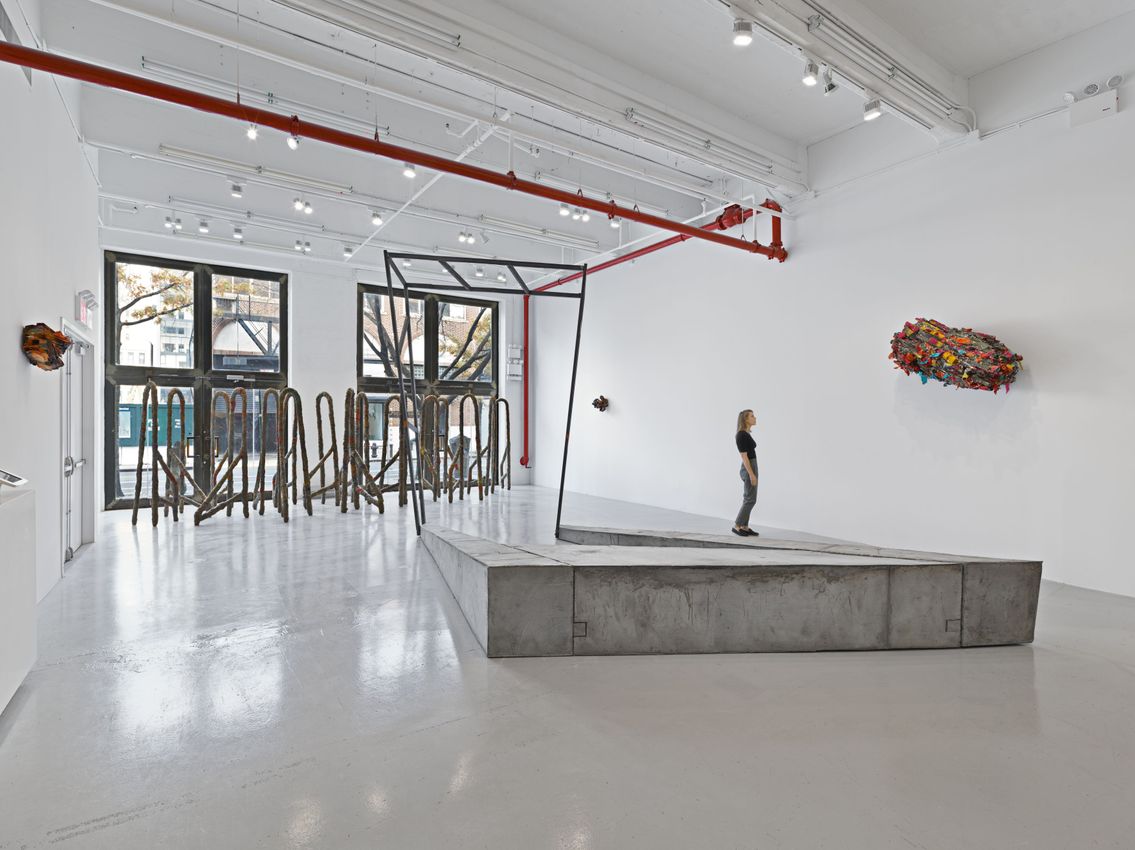
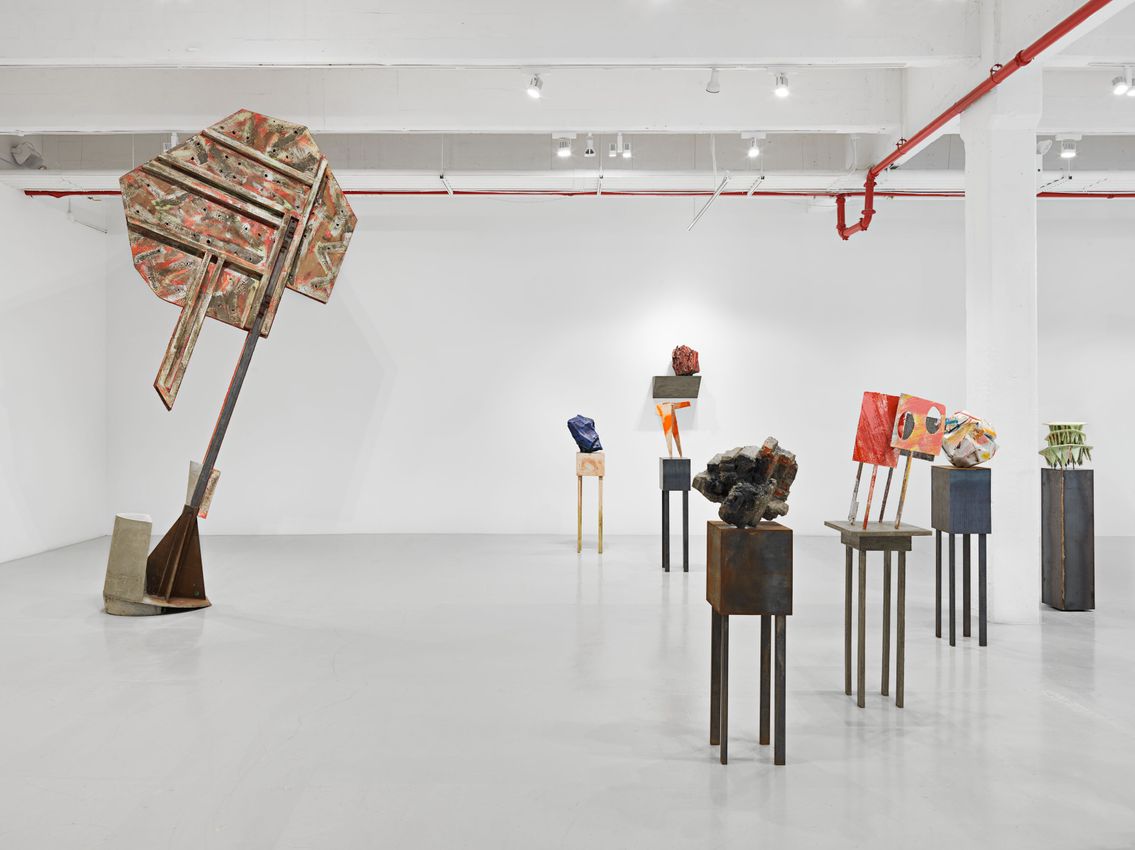
Upon entering the gallery, visitors are confronted with Barlow’s towering untitled: tilt(lintel); 2018. Roughly hewn from industrial materials including cement, scrim, plywood, and steel, the sculpture’s title alludes to support beams that span doorways or windows. Here, Barlow has stripped the architectural threshold down to an essence, its shape ambiguous and its purpose subverted. As visitors pass underneath untitled: tilt(lintel); 2018, their movement is almost immediately blocked: where the shadow of the construction would appear, Barlow has made manifest its form. She relishes in the transformation of these objects and has said ‘The translation from something actually observed to the thing it becomes, I hope, gets more and more eroded and blurred until it can’t remember what it is meant to be.’

At once menacing and playful, imposing and delicate, additional large-scale works on view stretch the limits of mass, volume, and proportion, drawing visitors into equally intriguing physical encounters. Barlow’s enormous untitled: hung4; 2018 suspends from the gallery’s ceiling, while her untitled: female (2); 2018 stands more than ten feet tall, towering over the gallery space. Elsewhere, the restless, arched forms of untitled: boundfence; 2018 and the colossal untitled: sign; 2018 hint at objects that typically direct or impede our movement through the urban environment.

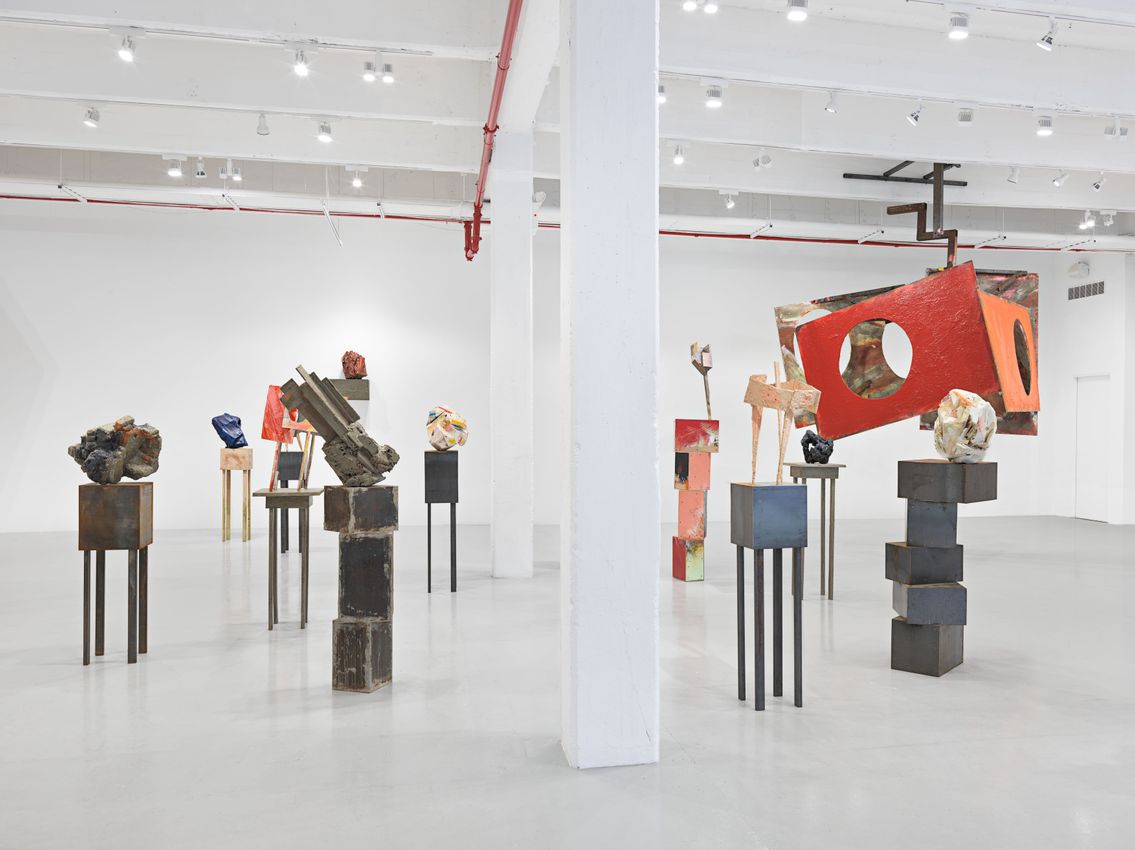
At the centre of the gallery are new small-scale sculptures that provide a powerful counterpoint to the massive constructions that surround them. Here, Barlow continues her negotiations of space by propositioning the viewer with a more intimate interaction. Standing between five and seven feet in height, works including untitled: dancer; 2018 and untitled: slope; 2018 appear totemic yet vaguely anthropomorphic. Barlow’s plinth sculptures, such as untitled: sleeve; 2018 and untitled: pointer; 2018, play on notions of classicism and perceived value, their roughly made forms offering a lesson in what it takes for everyday objects to become art. Colour animates their surfaces, rendering a delicate friction that engages the eye as it climbs from base to top. Together with the other works on view in tilt, these precarious-looking sculptures critique monumentality while emphasising the transient, absurd, and often joyous encounter between an object and its surroundings.

In conjunction with tilt, Barlow’s recent commission, prop, for the High Line remains on view through March 2019. Drawing inspiration from a sculpture she presented outside the British Pavilion at the 2017 Venice Biennale, prop consists of two large concrete panels, with holes cut from their centres, set on stilts. The towering sculpture appears like a character teetering among the planks at its base and emerging from the planting beds below. prop is the first artwork ever presented on the Northern Spur Preserve at 16th Street, a location that allows for unique views both from the High Line and the avenue below.

Read More

Installation Views

About the Artist

For more than 50 years, British artist Phyllida Barlow has taken inspiration from her surroundings to create imposing installations that can be at once menacing and playful. She creates anti-monumental sculptures from inexpensive, low-grade materials such as cardboard, fabric, plywood, polystyrene, scrim and cement. These constructions are often painted in industrial or vibrant colours, the seams of their construction left at times visible, revealing the means of their making.

View Artist Profile

Also Exhibiting at Hauser & Wirth

About the Gallery

Hauser & Wirth was founded in 1992 in Zurich by Iwan Wirth, Manuela Wirth and Ursula Hauser, who were joined in 2000 by Partner and Vice President Marc Payot. A family business with a global outlook, Hauser & Wirth has expanded over the past 26 years to include outposts in Hong Kong, London, New York, Los Angeles, Somerset and Gstaad. The gallery represents over 70 artists and estates who have been instrumental in shaping its identity over the past quarter century, and who are the inspiration for Hauser & Wirth’s diverse range of activities that engage with art, education, conservation and sustainability.

View Gallery Profile
Address
548 West 22nd Street
New York
United States
Opening Hours
Tuesday – Saturday
10am – 6pm
(1)
New York 548 West 22nd Street
Hauser & Wirth
548 West 22nd Street, New York, United States
+1 212 790 3900
http://www.hauserwirth.com

Opening hours
Tuesday – Saturday
10am – 6pm
The art world in focus