




POPPY JONES
b. 1985, United KingdomPoppy Jones is a British contemporary artist celebrated for her intimate, cinematic still lifes that capture the fragile poetry of everyday life, and she is rapidly emerging as a key voice in 21st-century painting in the UK and Europe.
Background
Born in London in 1985, Poppy Jones lives and works on the Sussex coast, part of a new generation of British painters reimagining the still life for a contemporary audience. Based between Eastbourne and Bexhill-on-Sea, she draws closely on the rhythms, light, and domestic spaces of southern England, grounding her work in a distinct UK coastal sensibility. Jones studied Fine Art at Falmouth College of Art before completing an MA in Fine Art Printmaking at the Royal College of Art in London in 2010, a training that underpins the technical precision of her images.
Practice, Medium, and Imagery
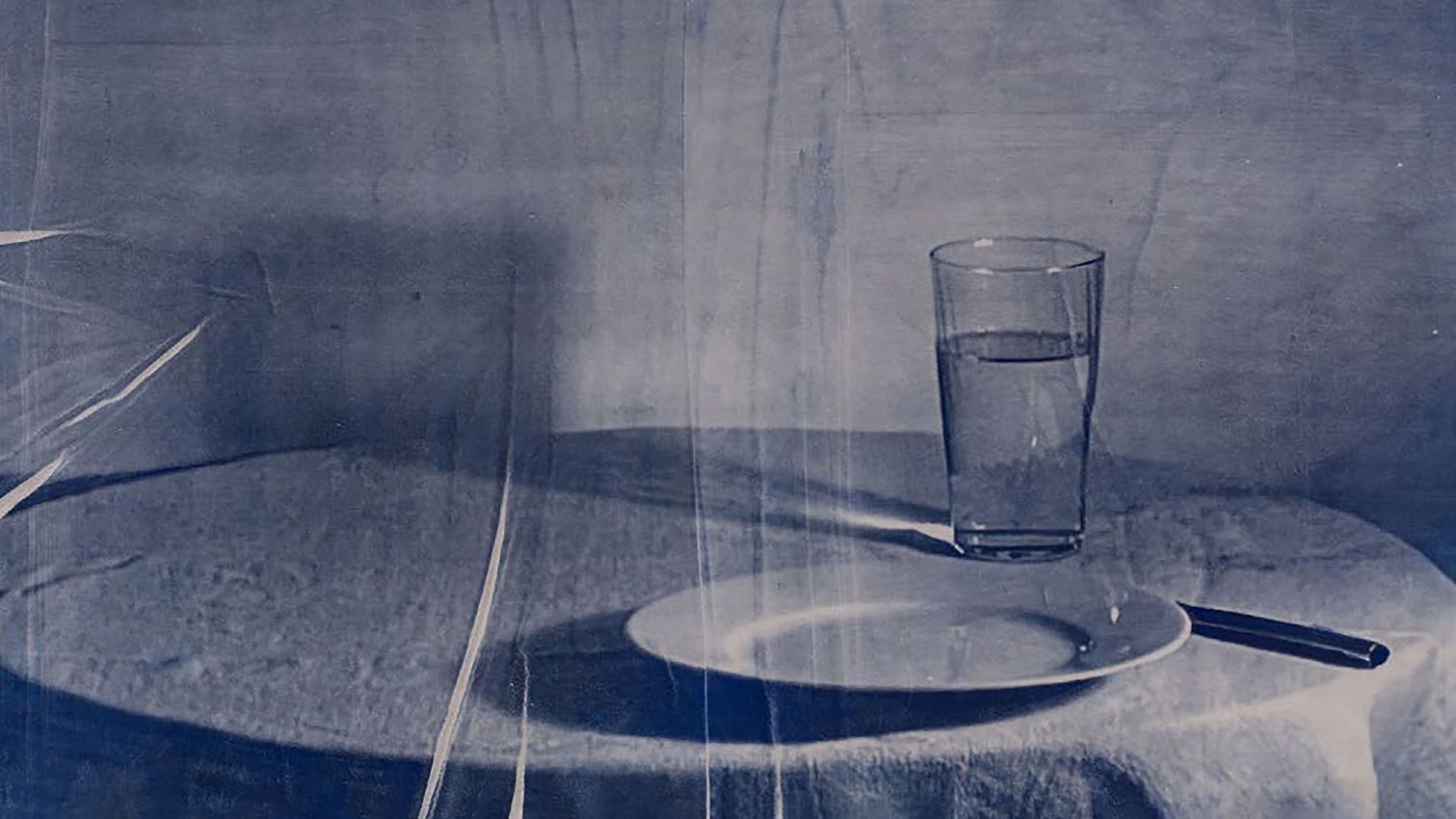
Jones is best known for small-scale, closely cropped paintings that translate her own photographic imagery onto panels of recycled suede, silk, leather, and cotton through a process of monotype printing and overpainting. Everyday motifs—a windowsill, an open book, a zipped jacket, a lit candle, drooping flowers in a vase—are rendered with a soft-focus intensity that feels at once familiar and quietly uncanny. Nuanced shifts in colour and tone, combined with the absorbent surfaces of her chosen textiles (often cut from garments connected to her own life), heighten the sense that each work functions as a fragment of an autofictional diary.
Her images often begin with hastily taken photographs that capture transient details: the angle of a shadow, dust motes caught in a shaft of light, or the way fabric folds across a body just out of frame. Through her layered making process, these snapshots become slow, meditative still lifes that foreground the materiality of the image as much as its subject. Fingerprints visible on the suede surface of works such as White Tulips (Friday) and Last Days (both 2023) resemble smudges on touchscreen devices, an intentional nod to image sharing in the digital age. The result is a body of work that hovers between painting and print, between object and image, and between private memory and shared visual culture.
Themes and Influences
Jones’s practice has been deeply shaped by early motherhood and the altered perception of domestic space it brought with it. Caring for her infant son during the 2020 lockdown, she noticed everyday scenes—the kitchen table, a crumpled shirt, flowers on a sill—taking on an almost surreal charge, which she translated into eerily timeless still lifes. These works, often described as incomplete inventories or portraits of someone just out of shot, record the emotional residue of ordinary moments rather than grand narratives.
Her cinematic framing and focus on psychological atmosphere reveal an affinity with modernist Italian cinema, particularly Michelangelo Antonioni, as well as with women Surrealists such as Eileen Agar and Ithell Colquhoun. Like peers including Issy Wood and Louise Giovanelli, Jones uses texture, cropped viewpoints, and heightened surface detail to build a sense of enigma and tension within apparently straightforward subjects. At the same time, her work remains rooted in the British still life tradition, inviting viewers to reconsider the fleeting and discarded objects that structure domestic life in contemporary Britain.
Technique and Development
Jones originally emerged from a background in printmaking, experimenting intensively with processes such as stone lithography and other traditional techniques that emphasise the physicality of the image. During her residency at West Dean College, she explored the image as both a bearer of information and a material object, a concern that continues to inform her later painting practice. Her shift towards a more pared-back, still-life focused language during lockdown marked a decisive break from earlier, more technically complex collaged works that relied on high-tech printing facilities.
Today, she employs a subtle layering of mediums: monotype impressions transfer her photographs to suede, silk, or leather before she works back into them with paint to introduce unexpected colour relationships and tonal shifts. This combination of analogue print processes, recycled textile supports, and painterly intervention creates images that feel at once fragile and durable, like memories imprinted onto fabric. By using materials tied to clothing and the body, she underscores the intimate, wearable quality of her images, reinforcing their status as personal fragments of a larger cultural record.
Exhibitions, Recognition, and Market
Jones’s still lifes first gained widespread attention online, where her atmospheric images quickly built an international following before being taken up by leading contemporary galleries. She has presented solo exhibitions including Bright Sleep at South Parade, London (2021), as well as earlier solo presentations at Project 78 Gallery, St Leonards-on-Sea (2016) and 248 Clapham Road, London (2014). Her institutional breakthrough came with the group exhibition The Shape of Things: Still Life in Britain at Pallant House Gallery, Chichester (2024), which foregrounded her contribution to the renewal of British still life.
In 2026, Towner Eastbourne stages Frozen Sun, Jones’s first institutional solo exhibition, showcasing new works that deepen her exploration of the subtle poetry of the everyday within a coastal UK context. Her paintings have also appeared in international contexts, including solo shows in Los Angeles at Mrs. Gallery (2022) and Overduin and Co (2023 and 2025), and she has joined the roster of influential galleries such as Herald St and Mai 36 Galerie. Growing collector demand is reflected in her auction performance, with works on paper and paintings achieving strong prices on the secondary market.
Poppy Jones FAQs
Who is Poppy Jones?
Poppy Jones (b. 1985, London) is a British contemporary artist known for intimate still lifes and atmospheric images that translate her own photographs onto suede, silk, leather, and cotton through monotype and painting.
Where does Poppy Jones live and work?
Poppy Jones lives and works on the Sussex coast in Bexhill-on-Sea, in the south of England, and is closely associated with the UK contemporary painting scene.
What kind of art does Poppy Jones make?
Poppy Jones creates small-scale, closely cropped images of everyday domestic scenes—such as windowsills, books, garments, candles, and flowers—rendered on recycled textile supports that give her still lifes a cinematic, dreamlike quality.
What materials and techniques does Poppy Jones use?
Poppy Jones combines traditional printmaking processes and monotype with painting, transferring her own photographs onto recycled suede, silk, leather, or cotton before overpainting to introduce subtle colour shifts and tonal variations.
Where did Poppy Jones study?
Poppy Jones completed a BA (Hons) in Fine Art at Falmouth College of Art before earning an MA in Fine Art Printmaking at the Royal College of Art, London, in 2010.
Which galleries represent or exhibit Poppy Jones?
Poppy Jones work has been shown with galleries including Herald St (London), Mai 36 Galerie (Zurich), and Mrs. Gallery and Overduin and Co in Los Angeles, positioning her within both the UK and international contemporary art markets.
Has Poppy Jones exhibited in museums or institutions?
Yes, Poppy Jones has been included in institutional exhibitions such as The Shape of Things: Still Life in Britain at Pallant House Gallery, Chichester, and she presents her institutional solo exhibition Frozen Sun at Towner Eastbourne in East Sussex.
What themes does Poppy Jones explore in her work?
Poppy Jones practice focuses on the emotional charge of everyday objects, the passing of time, and the way domestic spaces in contemporary Britain hold memory, often framed through the lens of early motherhood and coastal life in southern England.
Where can collectors see Poppy Jones’s work in person?
Collectors can encounter her work at gallery exhibitions in London and Zurich, at institutional shows in UK venues such as Towner Eastbourne and Pallant House, and through international presentations in cities like Los Angeles. In 2026, Towner Eastbourne presents Poppy Jones: Frozen Sun (28 March–31 May 2026).
Ocula | 2026


Explore and Follow Artists Shaping Contemporary Art
A respected voice in contemporary art discourse.
Focusing on ambitious storytelling and insightful art-world commentary. Ocula Magazine publishes in-depth interviews, critical essays and timely analysis on the artists, exhibitions and ideas driving the global art world.
Learn more about Ocula Magazine
Showcasing the best of the art world.
Ocula partners with galleries from around the world to highlight their artists, artworks and exhibitions. Gallery membership is by application and invitation, with each member vetted by an independent panel.
Learn more about Ocula Membership
Specialises in the sale of major artworks.
Led by a team with deep ties to the world’s leading auction houses, galleries and collectors. Ocula’s advisory team offers bespoke services to high-net-worth clients from around the world who are looking to acquire the best of contemporary and modern art.
Learn more about our team and services