Press Release

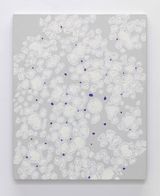
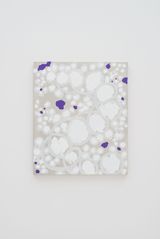
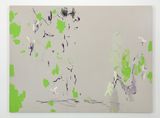
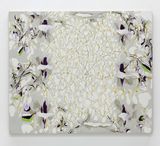
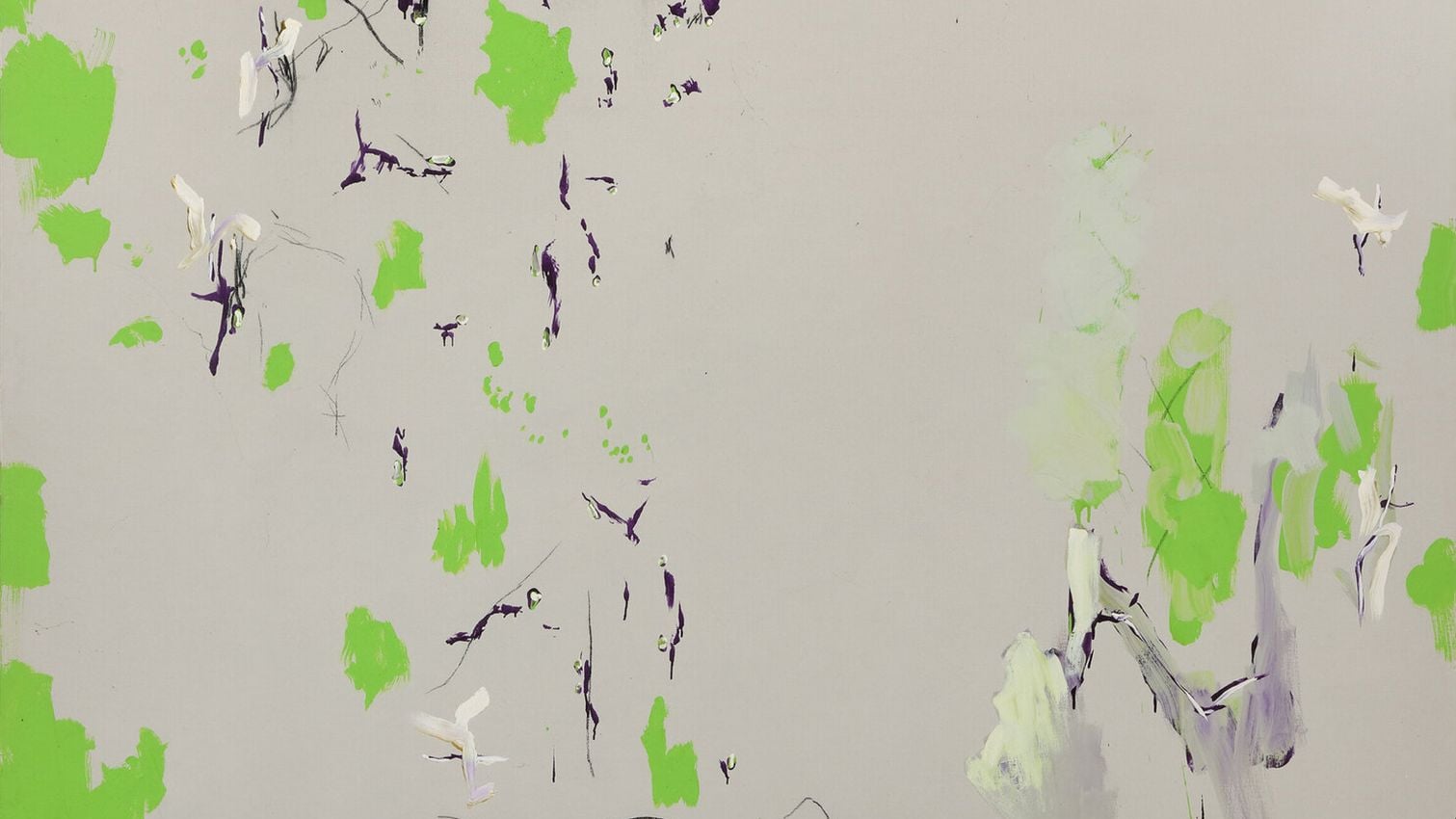
SCAI THE BATHHOUSE is pleased to present A Study of the Glaringly Bright, a solo exhibition of works by Natsuyuki Nakanishi, curated by the art critic Yusuke Minami. Marking the tenth anniversary of his passing, this exhibition coincides with the retrospective on view at the National Museum of Art, Osaka (scheduled to tour to the Yamanashi Prefectural Museum of Art, the Sezon Museum of Modern Art, and the Museum of Modern Art, Ibaraki). With the cooperation of the Estate of Natsuyuki Nakanishi, the exhibition features a selection of his paintings from the 1960s through his final years, including previously unseen studies. Throughout a career spanning more than fifty years, Nakanishi continually returned to questions concerning the origins of painting. “Painting is the study of the glaringly bright,” he once stated. Taking his words as a point of departure, this exhibition reflects on Nakanishi’s singular thinking and practice, serving as a space to reexamine the very act of painting.

I have in my possession a copy of an essay discussing two letters sent by René Magritte to Michel Foucault. It was written by Koichi Toyosaki, a scholar of French literature, and published in a Japanese literary journal (Hyoryubutsu épaves, vol. 3) in 1979. The essay was sent to me by Natsuyuki Nakanishi in 2006. He sent it to me in connection with something I had once said about mathematical analogy underlying resemblance and similitude. (I have long been interested in the idea that linear perspective and analogy are built on the same proportional relationship—A:B = C:D—so perhaps that’s why I had brought it up. However, Nakanishi must have thought that this argument was completely misguided.)

Koichi Toyosaki’s essay introduces and discusses the two letters written in 1966 from Magritte to Foucault that were included at the end of Foucault’s famous essay on Magritte, This Is Not a Pipe. Originally published in French in 1973, the essay was translated into Japanese by Koichi Toyosaki and Tadashi Shimizu in 1986 (Tetsugaku Shobo). Magritte had received Foucault’s The Order of Things as a gift, and he says in his letter that while neither Foucault nor dictionaries seem to draw a distinction, he (Magritte) thinks that resemblance and similitude are different. He asserts that there is no “resemblance” between one thing and another thing; they have (or do not have) similitude. He says that resemblance is a characteristic of only thought.

Toyosaki says that in accepting this distinction made by Magritte, Foucault gained a new perspective on certain types of works by Magritte. He then goes on to quote Foucault.

“To me it appears that Magritte dissociated similitude from resemblance, and brought the former into play against the latter. Resemblance has a “model,” an original element that orders and hierarchizes the increasingly less faithful copies that can be struck from it. Resemblance presupposes a primary reference that prescribes and classes. The similar develops in series that have neither beginning nor end, that can be followed in one direction as easily as in another, that obey no hierarchy, but propagate themselves from small differences among small differences. Resemblance serves representation, which rules over it; similitude serves repetition, which ranges across it. Resemblance predicates itself upon a model it must return to and reveal; similitude circulates the simulacrum as an indefinite and reversible relation of the similar to the similar.” (Michel Foucault, This Is Not a Pipe, trans. James Harkness [University of California Press, 1983], 44)

It is not difficult to imagine that reading Toyosaki’s essay strengthened Nakanishi’s resolve (Nakanishi might even have said that it encouraged him). Setting aside the contemplation of Magritte’s paintings, it shows the possibility of painting as a device for escaping the realm of “representation”, that “circulates the simulacrum as an indefinite and reversible relation of the similar to the similar.”

In a piece that he wrote in memory of Toyosaki, who suffered an early death, Nakanishi mentioned Toyosaki’s essay about the two letters, and then went on to say the following.

“However, it is not merely “something that is very similar” (resemblance), it is further repeated as “something that is similar to something very similar” (similitude), as the two similar things eventually converge on being “the same thing” (identical). Conversely, it can be inferred that something that has become identical can be divided and separated into two similar things. And it is here that I realize that I am not painting a picture. I am somewhere between “the picture” and “a similitude of the picture.” In that in-between space, I either transfer (copy) “something similar to the picture” to “the picture,” or transfer (copy) “the picture” to “something similar to the picture.” Either of these could be replaced with, “the world.” Then, I am in the space between “the world” and “the picture.” It is not as though there is a canvas between me and the “world” on which I am painting the picture.” (Natsuyuki Nakanishi, Enwainarumono: Toyosaki Koichi [Fate is a strange thing], 1989)

“The world” and “the picture” are “similitudes” that are almost infinitely similar, and “I” exist between them. It is not that “the picture” lies between “the world” and “I.” This is a complete rejection of projection (Plato’s allegory of the cave, perspective, etc.). For Nakanishi, a “picture” should not be the representation of a scene or phenomenon, or of a thought or sensory perception. Perhaps Nakanishi’s paintings, or his “pictures,” were imbued with that intent from the very beginning. The skin-like texture of Rhyme. The “direct action” of the Hi-Red Center. The squeegee for Hopscotch at the Summit. They again show that Nakanishi never let go of a certain kind of directness, whether in his dealings with the world or in his paintings. From the 1980s onward, he followed a rigorous procedure that appeared almost ritualistic to create many of his paintings. He layered his brushstrokes—applied with a brush attached to the end of a long handle—onto the canvas while the paint was still wet, making them no less than the amassing of the traces of primordial gestures. What’s more, when Nakanishi said that “painting is the study of the glaringly bright,” might this use of the word “glaringly bright” have been the ultimate expression of his directness?

“... Writing this naturally calls to mind Plato’s allegory of the cave... But at the time, there was just one thing that was left behind without revealing its true form. It might have been something that wasn’t there at the very beginning. It is like some kind of sign, but when you go outside your body or your world, it seems like it is the world itself, the body itself. More precisely, it vaguely seems to be a similitude of the world/body. It is a picture, and a picturing, but in order to be able to say this, there are things that must be done. If the simplified form of my body—that is to say, the simplified form of Plato’s cave—is a cylinder, then when it is cut in half lengthwise, allowing the confluence of the sun—Plato’s outside light—with the inside, the ultimate limit of this opening is a perfectly flat plane that responds to and is receptive to that outside light; in other words, for us, the limit of what we know. Dazzling! It was so dazzling that I could scarcely keep my eyes open...” (Natsuyuki Nakanishi, “Akasegawa Genpei no karada no naka o orite yuku” [Descending into the body of Genpei Akasegawa], The Adventures of Akasegawa Genpei [1994])

Read More
About the Gallery

SCAI The Bathhouse is a contemporary art gallery located in Yanaka, with a town ambience reminiscent of Old Tokyo. In walking proximity to Ueno, an area dense with museums and art schools, the gallery was converted from a venerable 200-year-old public bathhouse. Take a step inside, and you will find a white cube with soft natural light descending from the high ceiling.

View Gallery Profile
Address
Kashiwayu-Ato
6-1-23 Yanaka
Taito-ku
Tokyo
Japan
Opening Hours
Tuesday – Saturday
12pm – 6pm
(1)
Tokyo Kashiwayu-Ato, 6-1-23 Yanaka
SCAI THE BATHHOUSE
Kashiwayu-Ato, 6-1-23 Yanaka, Taito-ku, Tokyo, Japan

Opening hours
Tuesday – Saturday
12pm – 6pm
The art world in focus