Press Release

Jhaveri Contemporary presents a stand of drawing, sculpture, textiles, and photography by five artists – Joydeb Roaja, Kamruzzaman Shadhin and Gidree Bawlee, Kirtika Kain, Sayan Chanda, and Simryn Gill. Working with tactile materials, indigenous traditions, and community practice, and/or investigating the complexities of what it means to be indigenous, these artists collectively address themes as varied as heritage, displacement, militarisation, and ecology.

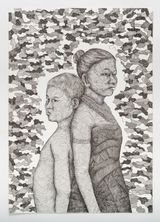
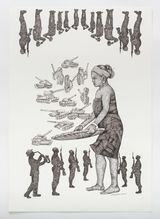
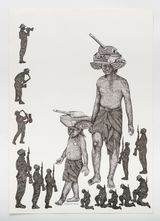
Joydeb Roajahas an interconnected performance, painting, and drawing practice that highlights the challenging social and political landscape of Bangladesh’s Chittagong Hill Tracts. The area is home to eleven indigenous groups including Roaja’s community, the Tripura. His pen and ink drawings are tied to the experiences of indigeneity, often emphasising the deep and symbiotic connection of these groups with their land as well as the fight for recognition and rights in a state that has denied them.

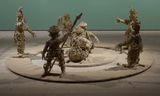
Kamruzzaman Shadhin formed the Gidree Bawlee Foundation of Artsin the north-west region of Bangladesh in 2001. Together they present Kaal (Pala) (2023), an installation of seven jute sculptures woven collaboratively with village communities. Drawing upon the movements and gestures of rural folk theatre based on ancient myths and legends, Pala captures the collective essence of participation and shared narratives, blurring the lines between human and non-human realties. This installation was recently on view in_Stepping Softly on the Earth_ at the Baltic Centre for Contemporary Arts (2023-24), an exhibition of mostly non-western and indigenous artists that considers how interventions such as dam projects, mining, monoculture, and other human interventions have affected their lands and way of life.

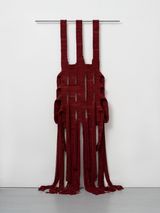
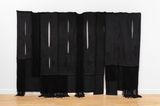
Sayan Chanda’s tapestries acknowledge the importance of textiles as bearers of personal and collective memory, history, and knowledge. His works at Frieze are inspired by lost Vedic goddesses, female divinities who have been forgotten or exiled. Working with weaving, stitching, dyeing, and hand-building, often with found materials, his suspended works function as totems, portals, or talismans through which he reimagines folk narratives and indigenous rituals. Jyestha (Sanskrit for ‘the elder one’) is a monumental work made by unpicking, deconstructing, and rearranging vintage Kantha quilts - a form of embroidery on found material using a simple running stitch which is combined with dyed cotton. Dwarapalika II (Sanskrit for ‘female gatekeeper’) evokes the gatekeeper sculptures found in many Indian temples. These figures, often male or female, are traditionally placed at the entrance of the sanctum sanctorum, guarding the principal deity.

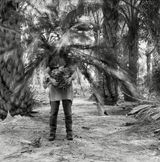
Simryn Gill records herself disguised as an oil palm tree in continuation of her photographic series Vegetation (1999–ongoing), the earlier iterations of which saw her disguised as local plants: tumbleweed and agave in Texas, grass tree and paperbark tree in rural New South Wales, and an epiphytic fern in a rare derelict site in Singapore. This work continues Gill’s interest in impermanence, ecology, and movement, as well as personal themes such as locality, history, and memory.

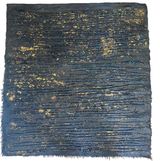
Kirtika Kain’s practice incorporates elements of sculpture, experimental printmaking, and painting. Embodying a rich dialogue between heritage, memory, and identity, Kain’s practice invites a new perspective on the history and culture of Dalits, a social group that has been historically marginalised in Hindu caste society. The artist’s chosen mediums often have deep links to rituals that were restricted to higher-caste Hindus. By bringing together traditional materials such as tar, pigments, and gold with contemporary mediums such as wax, Kain draws attention to this history of social division.

Read More

Also Exhibiting at Jhaveri Contemporary

The art world in focus