A pelican landed in the water as I sat waist deep - it was both arresting and terrifying as it circled, staring with a side gaze. It was drawn to me but didn’t want to touch me. Moving from a gentle bobbing to the roar of ascending wings the Pelican flew across air - in a place I had only ever imagined - and then dove next to my body - time after time. In my father’s Jamaican waters looking to the skyline, and Cuba, the place of his birth, I was scared - yet exhilarated by the grace of the ungainly body with the razor-sharp bill. This repeated action; a scene of both survival and killing all at once. I sat motionless - a bystander to the onslaught yet somehow part of the play.
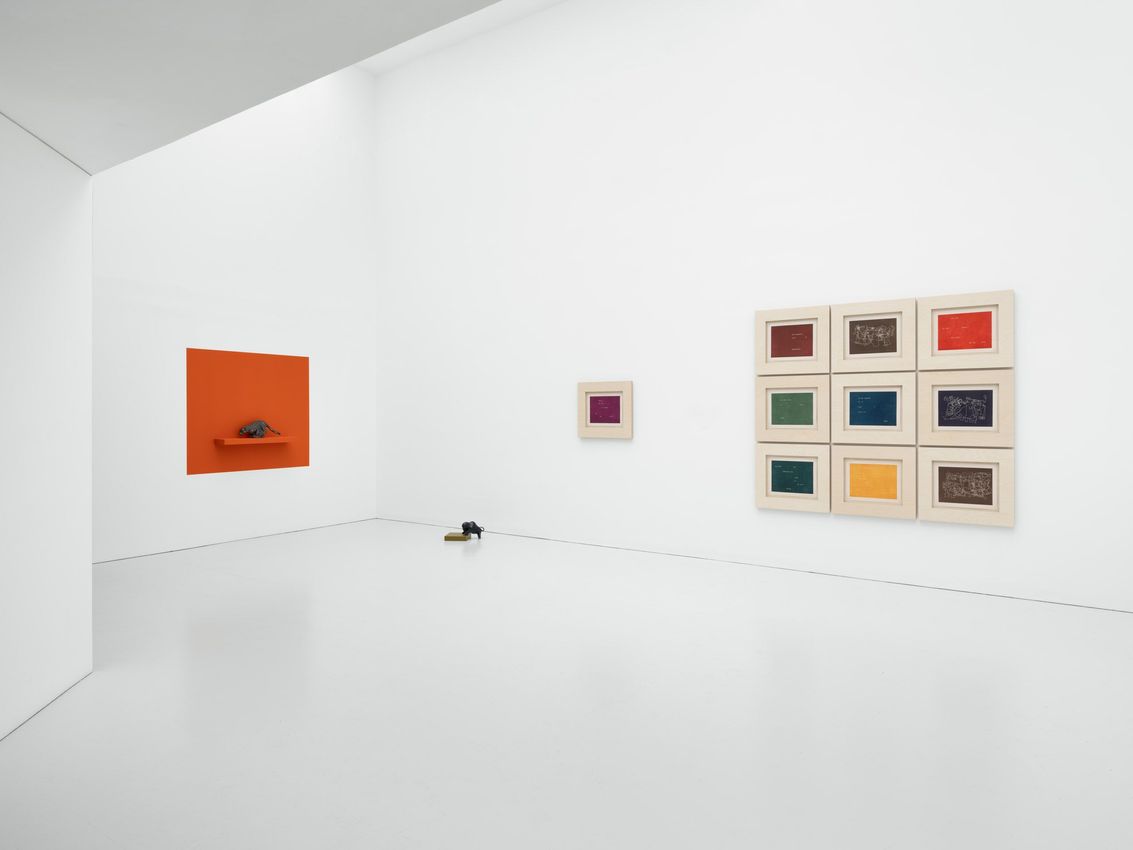
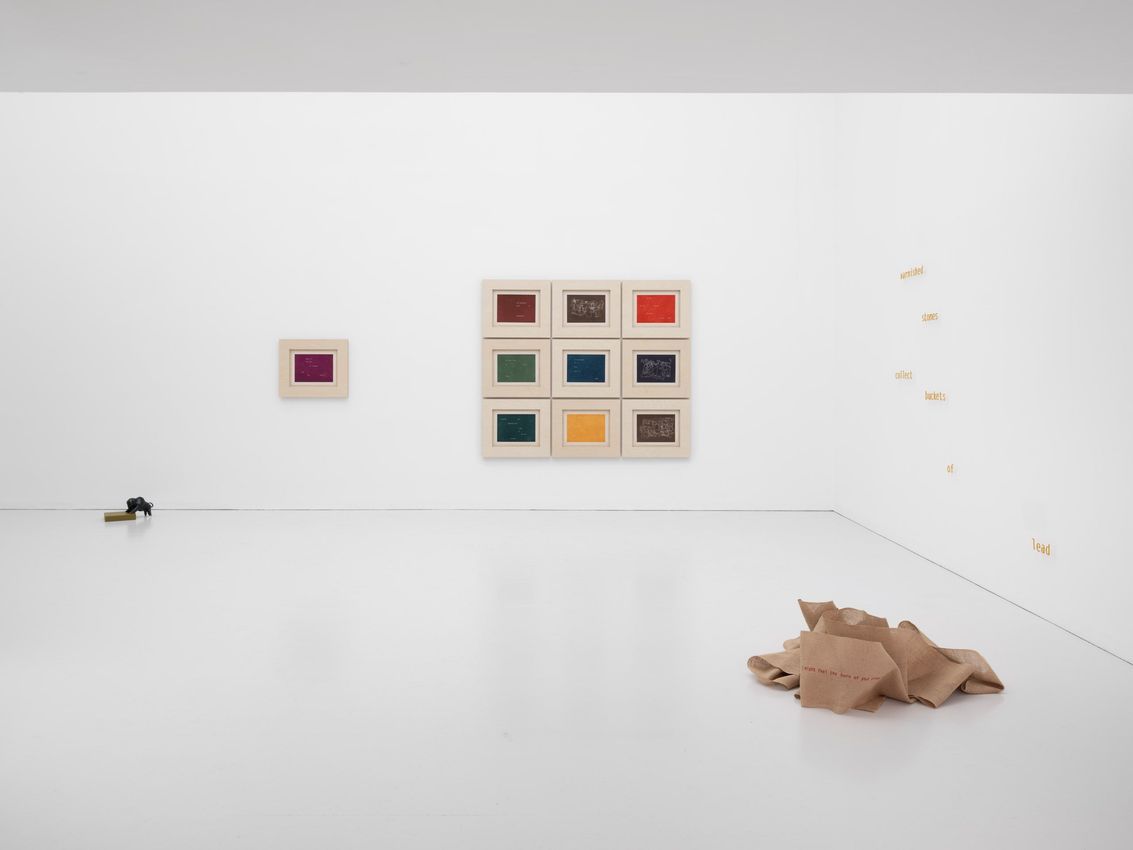
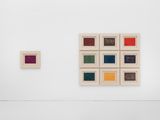
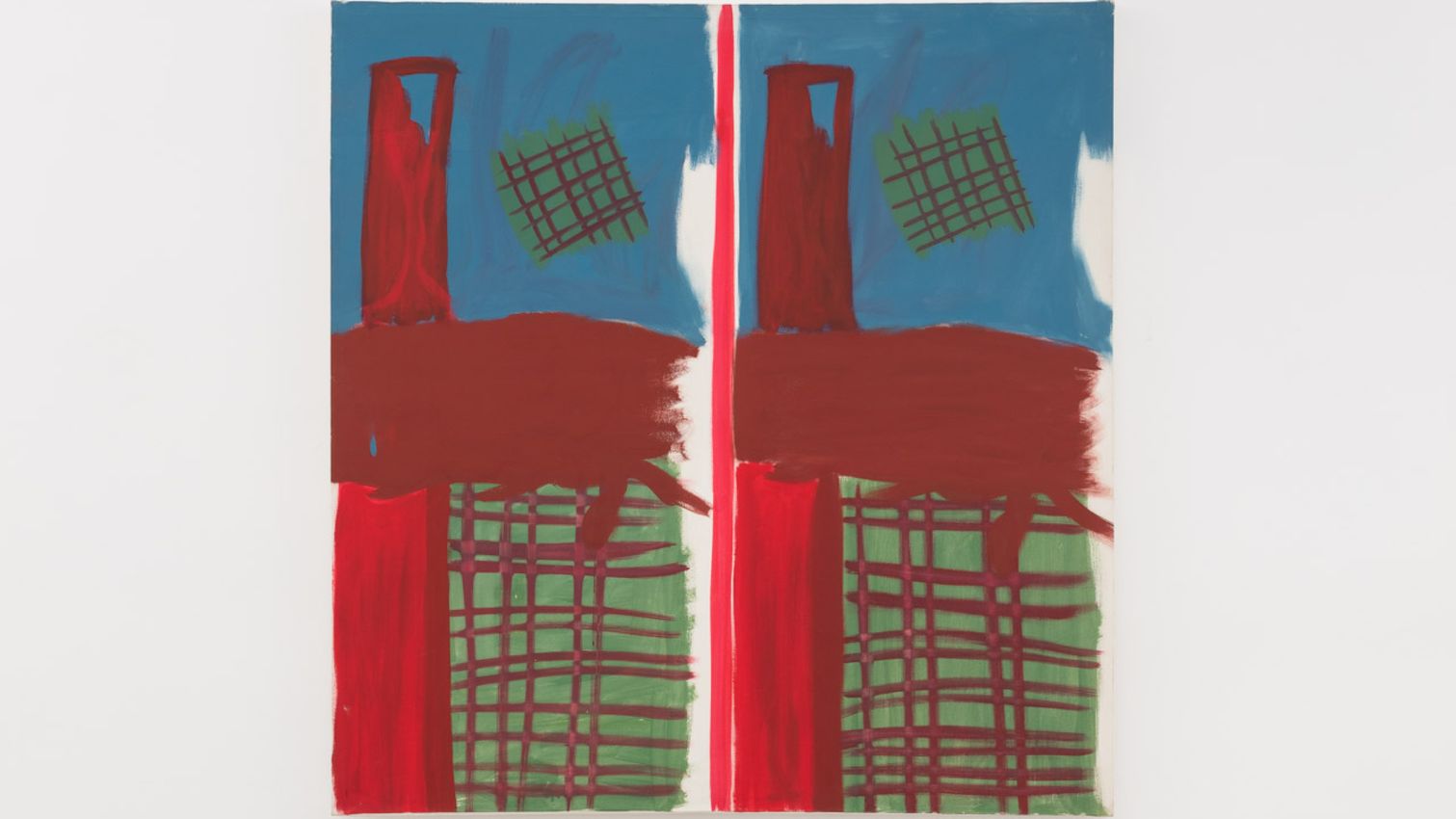
Kate MacGarry is pleased to present Helen Cammock’s second solo exhibition at the gallery. The exhibition’s title is taken from a recent body of relief prints produced during a visit to Jamaica, where the artist’s father grew up. Responding to the rhythms of a sonic and haptic geography of place; wind, sea, and sound are intertwined with thoughts on displacement and reckoning in what Cammock describes as ‘the liminal suspension’ of her diasporic identity.
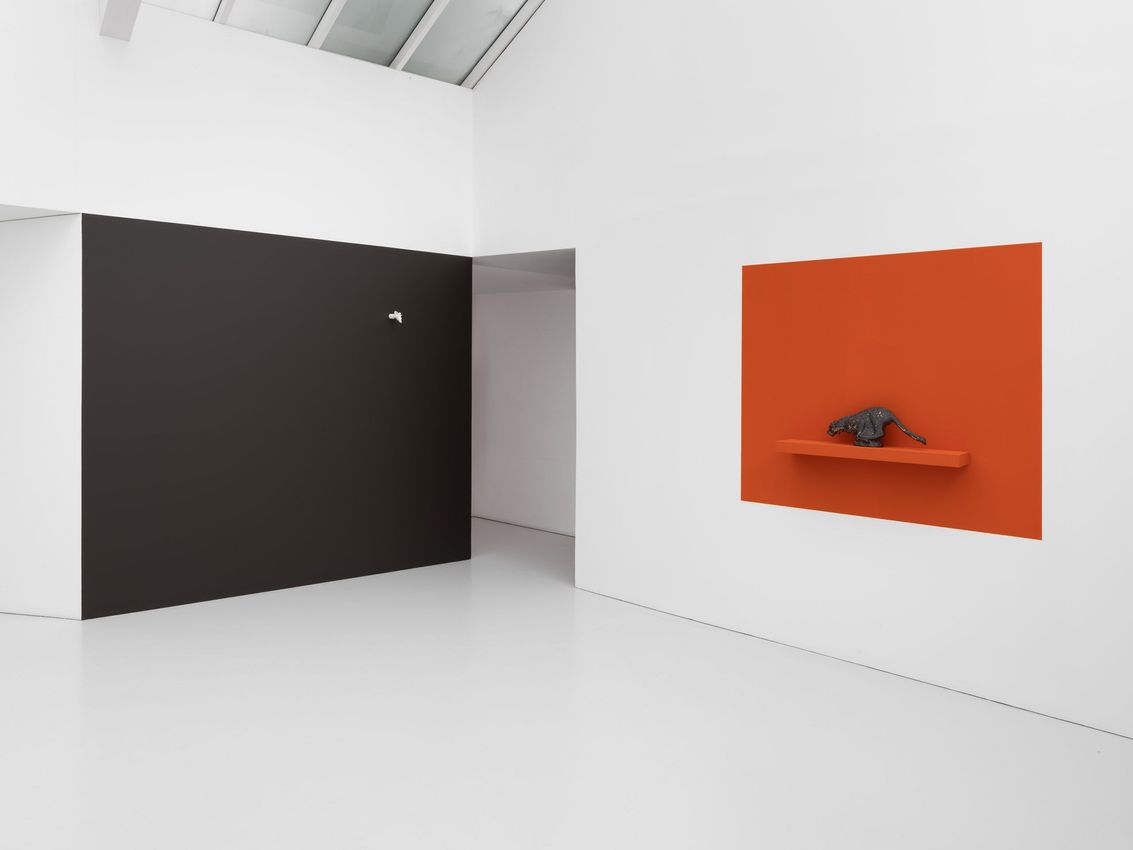
She considers how her body-as-lens replicates and reactivates ideas, meaning, emotions - ventriloquising histories’ whispers; building a Black feminist intersectional epistemology moving across archives, stories, dialogue, imagination, loss, and heritage. The material starting point in Cammock’s process of making is often voice and writing, her ‘audible fingerprint’ forming the basis for moving image, performance and wall-based works, as well as hand-crafted objects that embody both personal and structural narrative. Scripts are woven through many registers of voice, while objects respond to specific events that speak of geographical, historical and generational transference of experience. This exhibition operates as an environment bringing into a set of relations Cammock’s coalescence of ideas and materials.
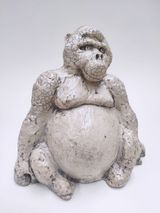
A group of ceramics - animals cast from plaster moulds made by George Cammock in the 1960s, found by his daughter after her father’s death - explore inherited memory, vulnerability, violence and protection. Buckets of Lead (2025), wall-hung letters in stainless steel, confronts mythmaking and the political and ideological veneers that perpetuate violence.
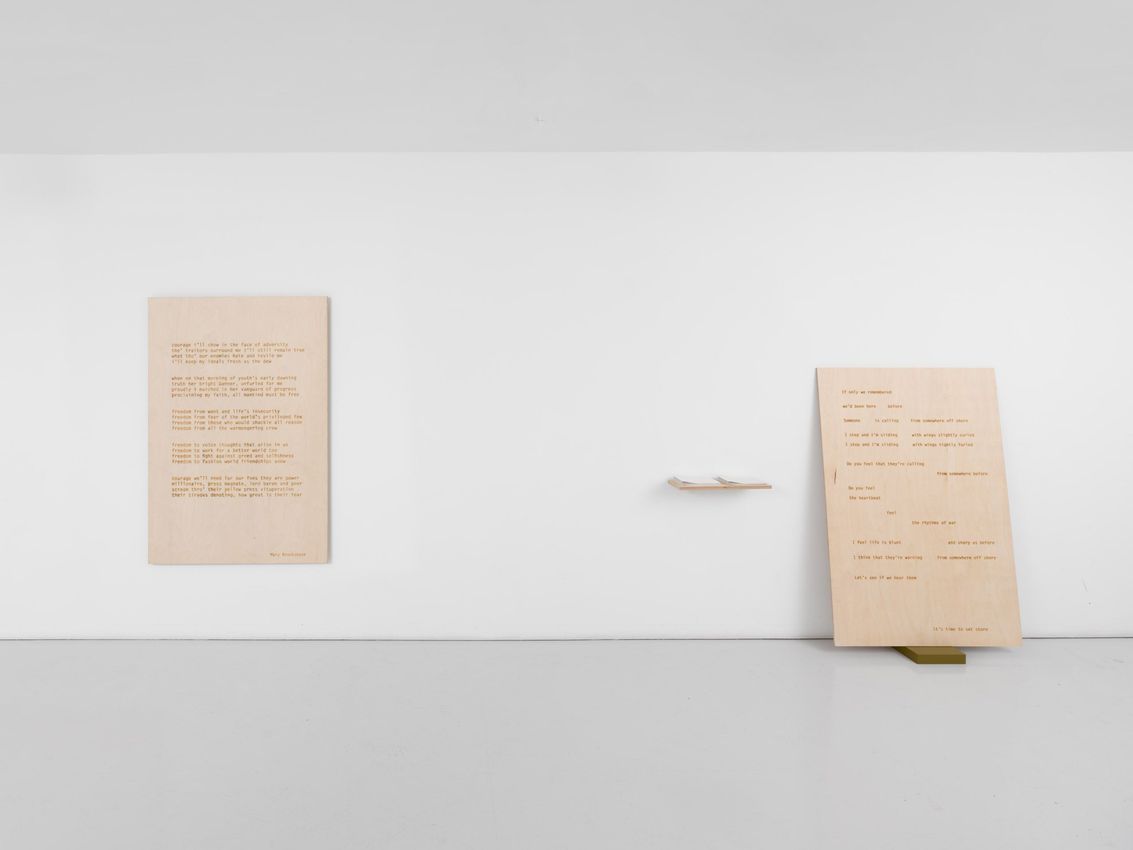
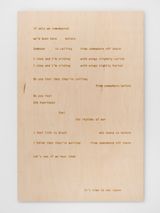
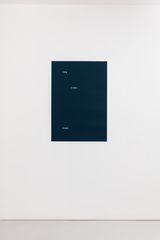
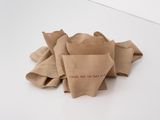
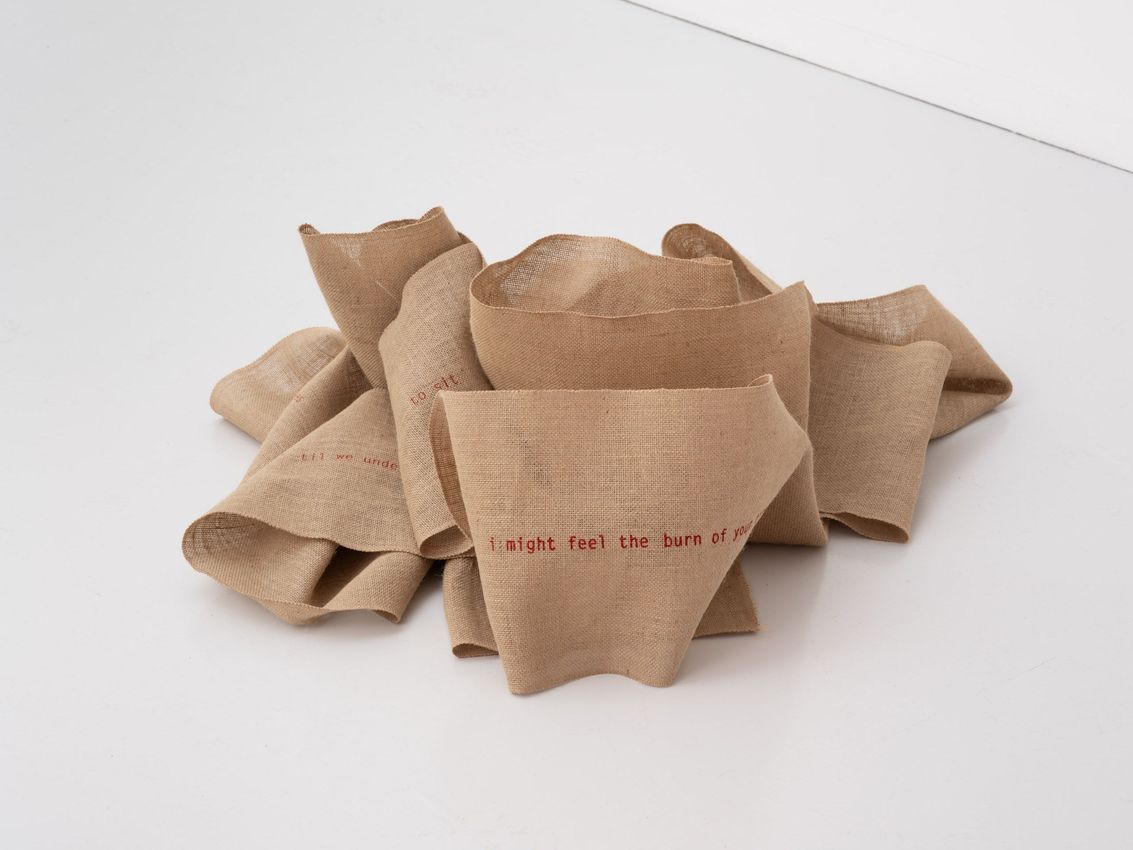
During a recent residency at Dundee Contemporary Arts Print Studio, Cammock produced a body of work inspired by Mary Brooksbank, a Scottish jute mill worker, activist, and songwriter. The discovery of Brooksbank’s poem Courage in the University of Dundee archives, prompted a reflection on working-class women’s voices, political resistance, and the relationship between poetry and protest. Inspired by these and their relationship to song and resistance, a medium Cammock has often explored - she engraved Brooksbank’s poem Courage onto a large plywood panel. This work is placed in dialogue with a floor sculpture If I Run My Palm Along the Twine (2024), a screen-print on jute that draws attention to the material that is deeply tied to labour and industry - produced across British mills to clothe enslaved bodies. Here the material acts as a conduit for both memory and endurance, speaking directly to Coalescence (2025), a new text written and engraved into plywood as a call and response with Brooksbank’s Courage, straddling almost a century of violence and rhyme.
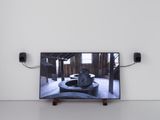
The Lay Shaft Drive Is Down (2023) is a short film developed from a song and spoken word performance commissioned by The Line, London for its 2023 exhibition Tributaries. Set within The House Mill on the River Lea, an 18th-century gin distillery, the work draws on the site’s industrial and colonial legacies. It reflects on themes of child labour, mechanisation, the emotional and physical effects of productivity with a continuous interest in the power of the voice and singing. The performance uses a ‘work song’, The Layshaft Drive is Down; written and sung by Cammock which repeats as a motif throughout the work, and is accompanied by a script that stems from research into early industrialisation, colonialism, and the mercantile role of the mill; referencing Adam Smith, George Elliot and William Hogarth. Moving across the House Mill’s different spaces, the video shifts from spoken enquiry into the sound of Cammock’s work song to traditional mill song Hard Times in the Mill, and African American spiritual Wade in The Water. There is a collision again of sound, of motion and of temporality.
Helen Cammock (b. Staffordshire, 1970) lives and works in North Wales and London. She was joint recipient of the Turner Prize in 2019 and winner of the Max Mara Art Prize for Women in 2017. Recent solo exhibitions include I Will Keep My Soul, Art + Practice, Los Angeles, and UNO Gallery, New Orleans with Rivers Institute for Contemporary Art & Thought, New Orleans (2023); Bass Notes and SiteLines, Amant, Brooklyn (2023); Behind the Eye is the Promise of Rain, Kestner Gesellschaft, Hanover, Germany (2022); Concrete Feathers and Porcelain Tacks, The Photographer’s Gallery, London (2021); Beneath The Surface of Skin, Stuk, Leuven, Belgium (2021), Che Si Può Fare__, Whitechapel Gallery, London (2019); and The Long Note, IMMA Dublin (2019).
This September, Cammock will premiere a new film, Persistence (2025), at the National Portrait Gallery as part of the commission Artists First: Contemporary Perspectives on Portraiture.


Helen Cammock works across moving image, photography, writing, poetry, performance, printmaking and installation. She is interested in histories, authorship, storytelling and the excavation of unheard, excluded and buried voices; often mapping her own writing, literature, poetry, philosophical and other found texts onto social and political situations.
The gallery was founded by Kate MacGarry in 2002 on Redchurch Street, London, where some of its represented artists, including Goshka Macuga (Poland), Francis Upritchard (New Zealand), Ben Rivers (UK) and Dr Lakra (Mexico) had their first commercial gallery exhibition. The current gallery space, originally designed by architect Tony Fretton, is on Old Nichol Street where they present six exhibitions a year. The gallery participates in international art fairs including Art Basel and Frieze London where they have presented solo projects since 2010. The gallery represents 25 emerging and established artists; most recently adding Dawn Ng, Rio Kobayashi and Mark Corfield-Moore to the roster.

A respected voice in contemporary art discourse.
Focusing on ambitious storytelling and insightful art-world commentary. Ocula Magazine publishes in-depth interviews, critical essays and timely analysis on the artists, exhibitions and ideas driving the global art world.
Learn more about Ocula Magazine
Showcasing the best of the art world.
Ocula partners with galleries from around the world to highlight their artists, artworks and exhibitions. Gallery membership is by application and invitation, with each member vetted by an independent panel.
Learn more about Ocula Membership

Specialises in the sale of major artworks.
Led by a team with deep ties to the world’s leading auction houses, galleries and collectors. Ocula’s advisory team offers bespoke services to high-net-worth clients from around the world who are looking to acquire the best of contemporary and modern art.
Learn more about our team and services