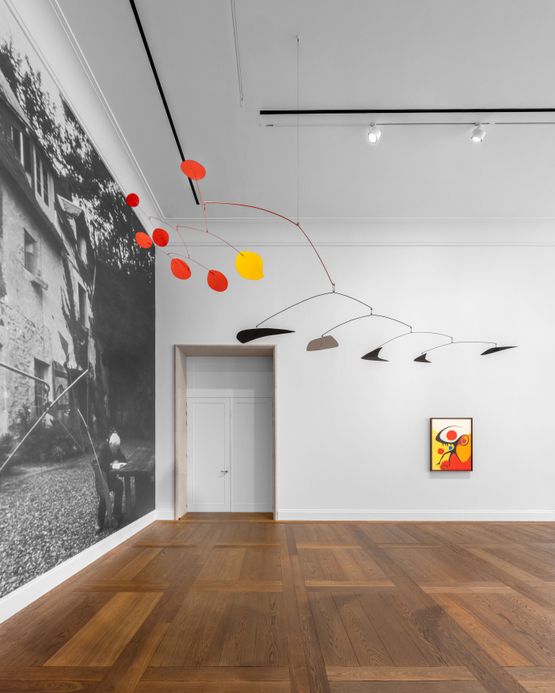
In 1953, Calder returned to live in France for the first time in 20 years, settling in the countryside outside Aix-en-Provence and then in the small town of Saché in the Loire Valley. The artist’s productivity flourished in the expansive Provençal landscape and the modest, solitary spaces of a 17th-century stone house called François Premier in Saché. In Paris the following year, Galerie des Cahiers d’Art exhibited Calder’s ink and gouache paintings from Aix and Galerie Maeght presented ‘Aix. Saché. Roxbury. 1953–54’—a pair of shows that together marked Calder’s triumphant return to France.
Over 70 years later, inspired by a curious fortuity, the beautiful galleries of Hauser & Wirth Paris—located within an hôtel particulier on a street that also bears the name François Premier—‘Calder: François Premier’ will be the first major project dedicated to this expansive postwar period in the life and career of one of the greatest artists of the 20th Century.
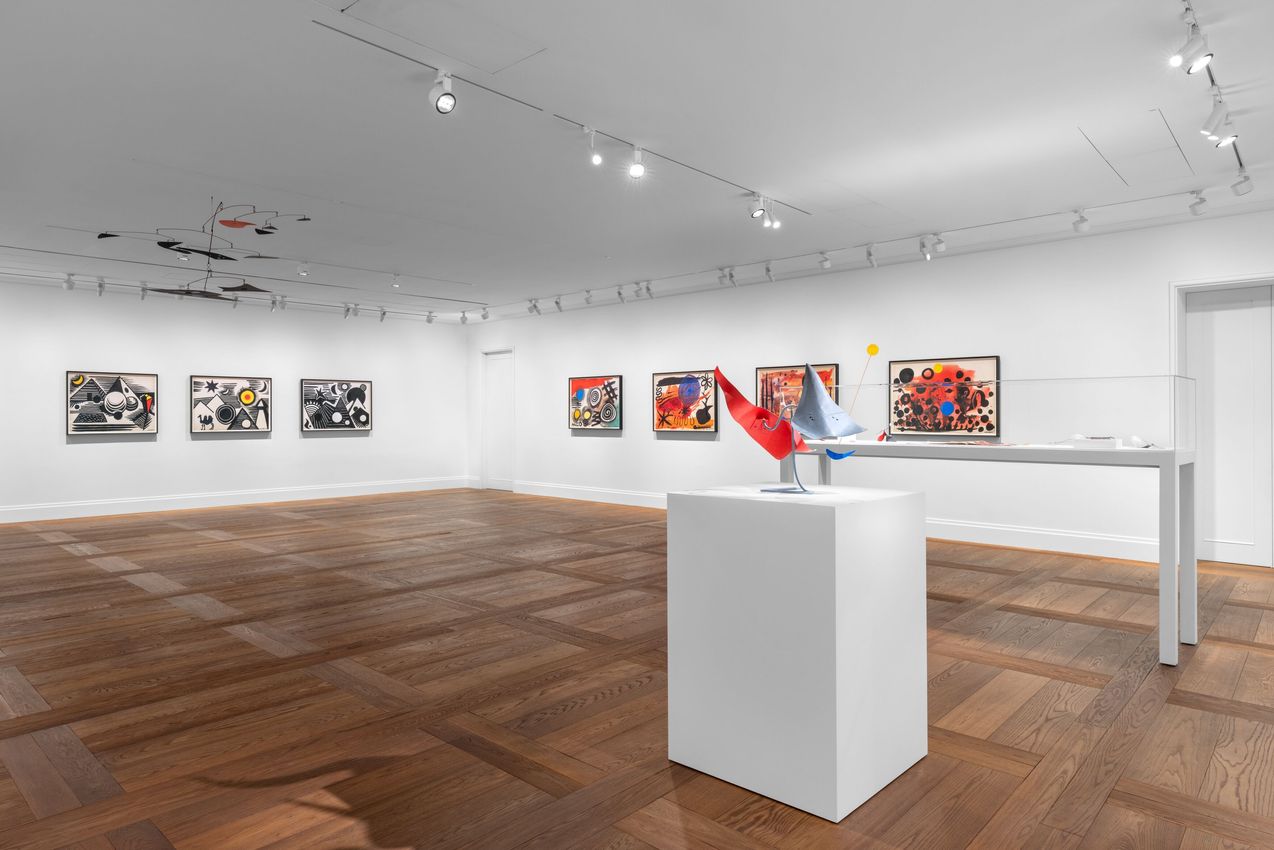
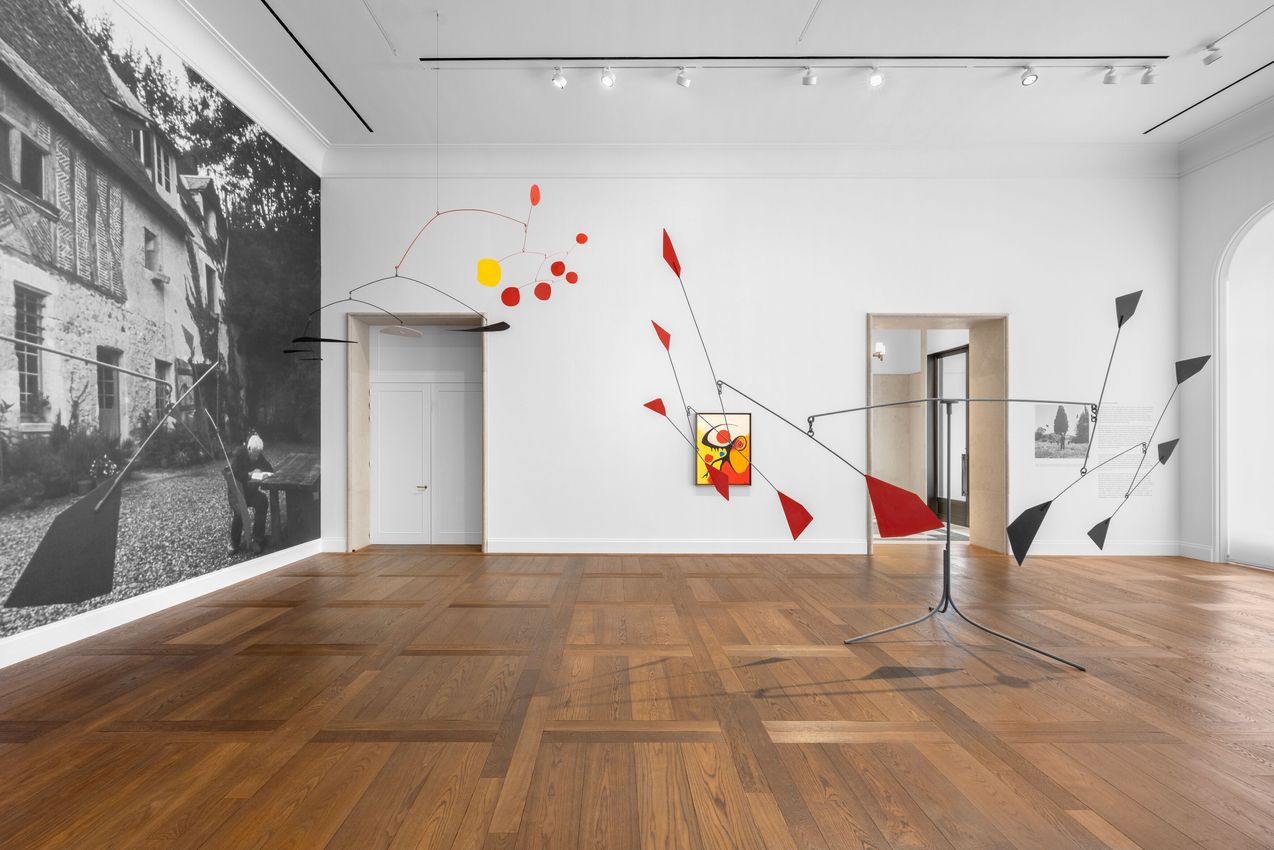
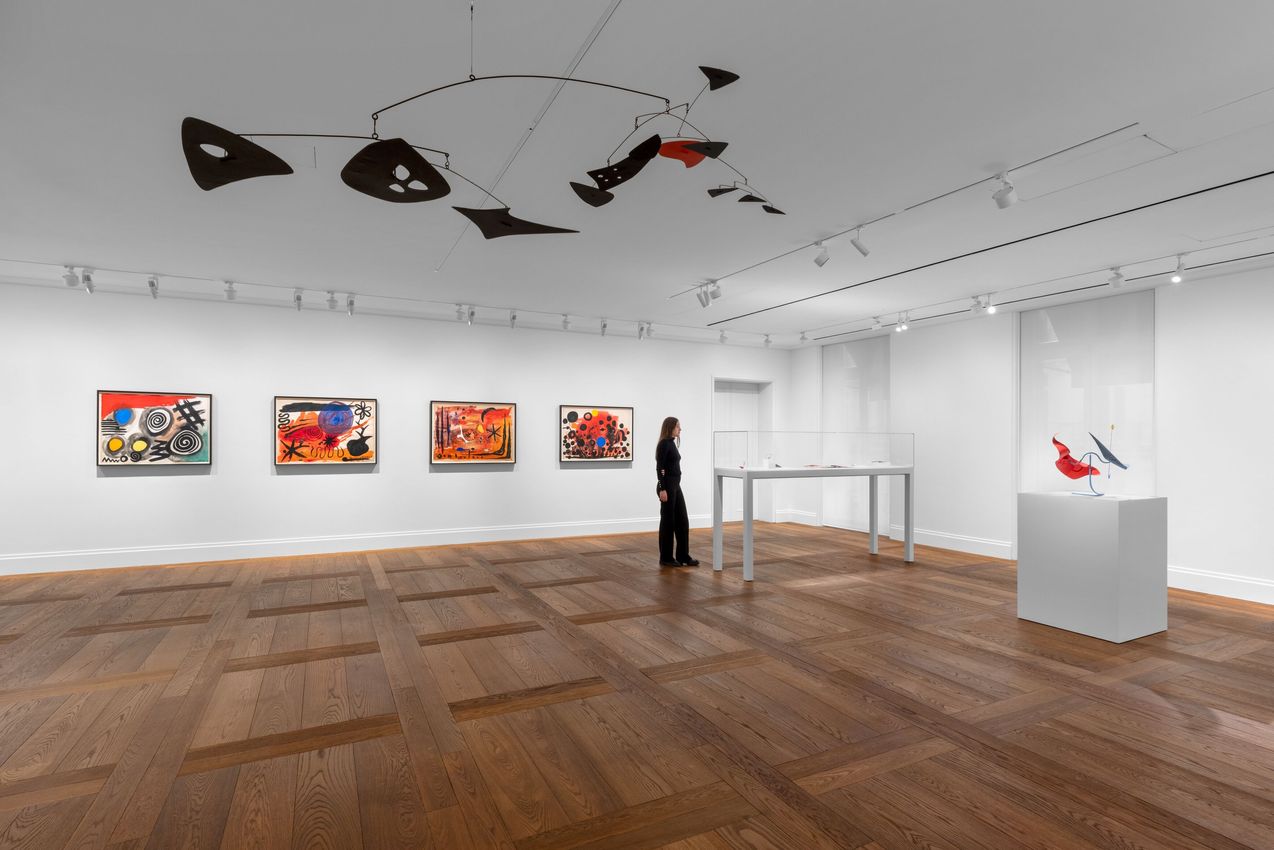
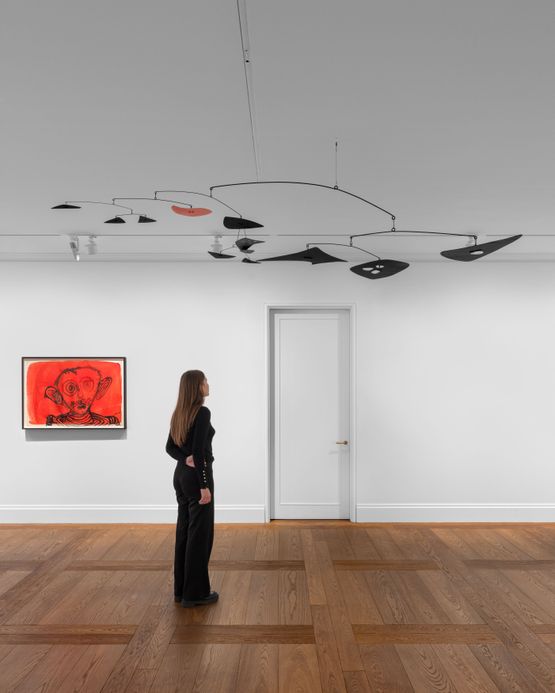
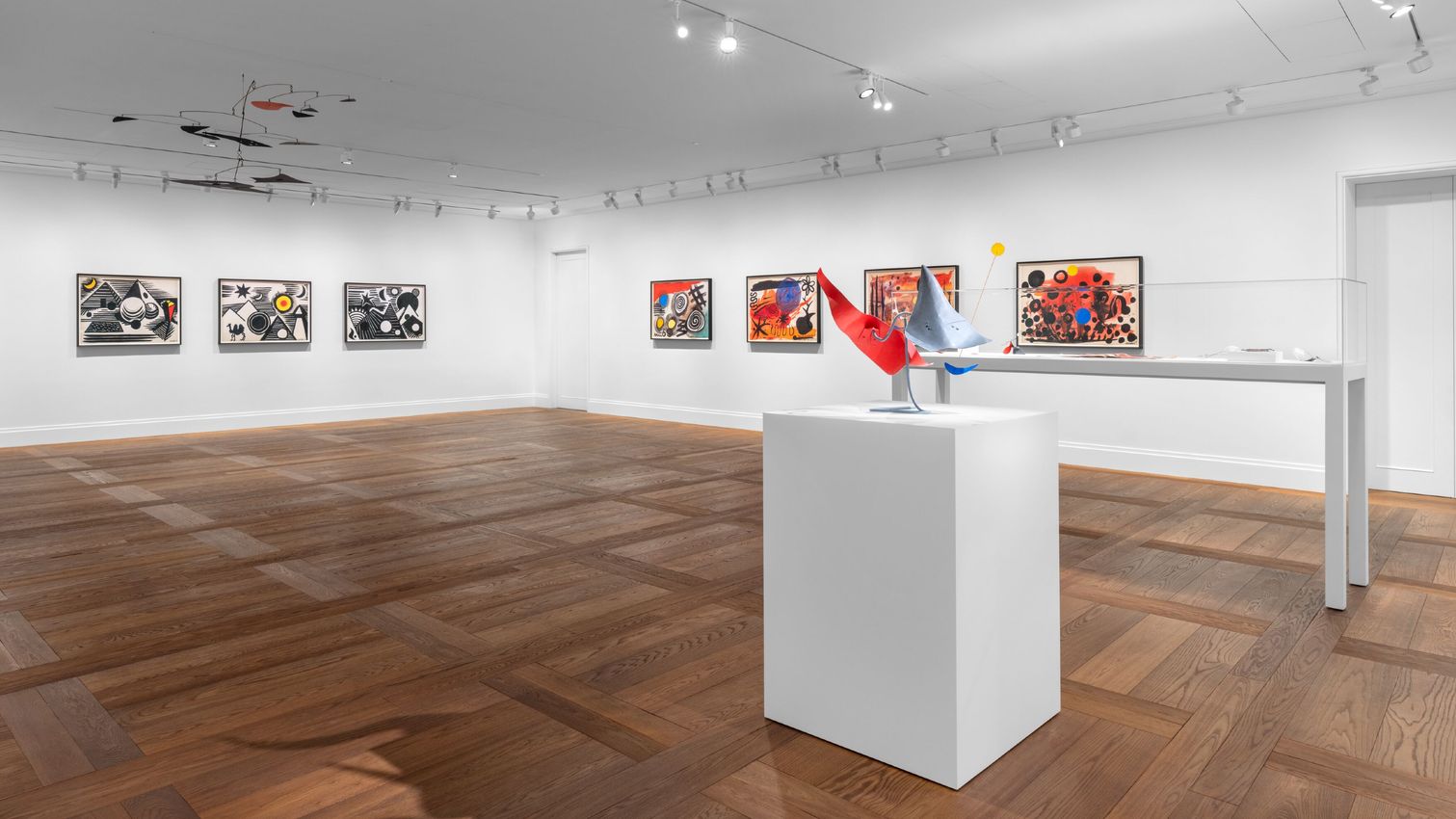
‘Calder: François Premier’ will introduce new generations of viewers to two extraordinary, multi-dimensional works: ‘Les Granettes’ (1953), a large-scale standing mobile exhibited for the first time in 72 years, and ‘The Putney Mobile’ (1954), making its public European debut here seven decades after its creation. These sculptural masterpieces will be complemented by an important body of ink and gouache paintings and other works executed by Calder between these seminal years of 1953 and 1954.
Together, the works on view in ‘Calder: François Premier’ capture the amalgam of explosive imaginative energy and technical innovation that defined the career of one of the world’s most influential and enduringly contemporary artists.
About the exhibition
In the summer of 1953, Calder and his wife Louisa returned to France after 20 years, urged by the painter André Masson and his wife, Rose, their neighbors in Connecticut during the Second World War who had recently settled outside of Aix-en-Provence. The Calders rented a home known as Mas des Roches in the rural hamlet of Les Granettes near Aix, setting up in a house without running water or electricity. It was during this time that Calder and his wife acquired the rural property of François Premier in the hamlet of Saché, deepening their recommitment to life and work in France, a country they regarded as a second home.
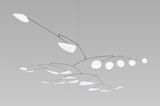
Back in Les Granettes, at a nearby blacksmith shop, Calder began a series of large outdoor standing mobiles. Rather than his standard process of working from a maquette, he chalked forms directly onto steel plates, then cut and welded the elements together in an unconventional method. This mode of working was risky, as mistakes could be costly and time-consuming. The process yielded the large-scale standing mobile ‘Les Granettes’ (1953), which later became a fixture in the private courtyard of François Premier. Bold but graceful, with suspended polygons in red, white and black, this outdoor sculpture will anchor the ground floor of the exhibition at Hauser & Wirth Paris, where it will be publicly shown for the first time since it debuted in Paris in 1954. Suspended above, the delicately interlocking wires and white forms of ‘The Putney Mobile’ (1954) will float in a dynamic dialogue with ‘Les Granettes.’ The two works are a testament to Calder’s rare mastery over the interplay of aesthetics and physics, equilibrium and disparity, stasis and motion.
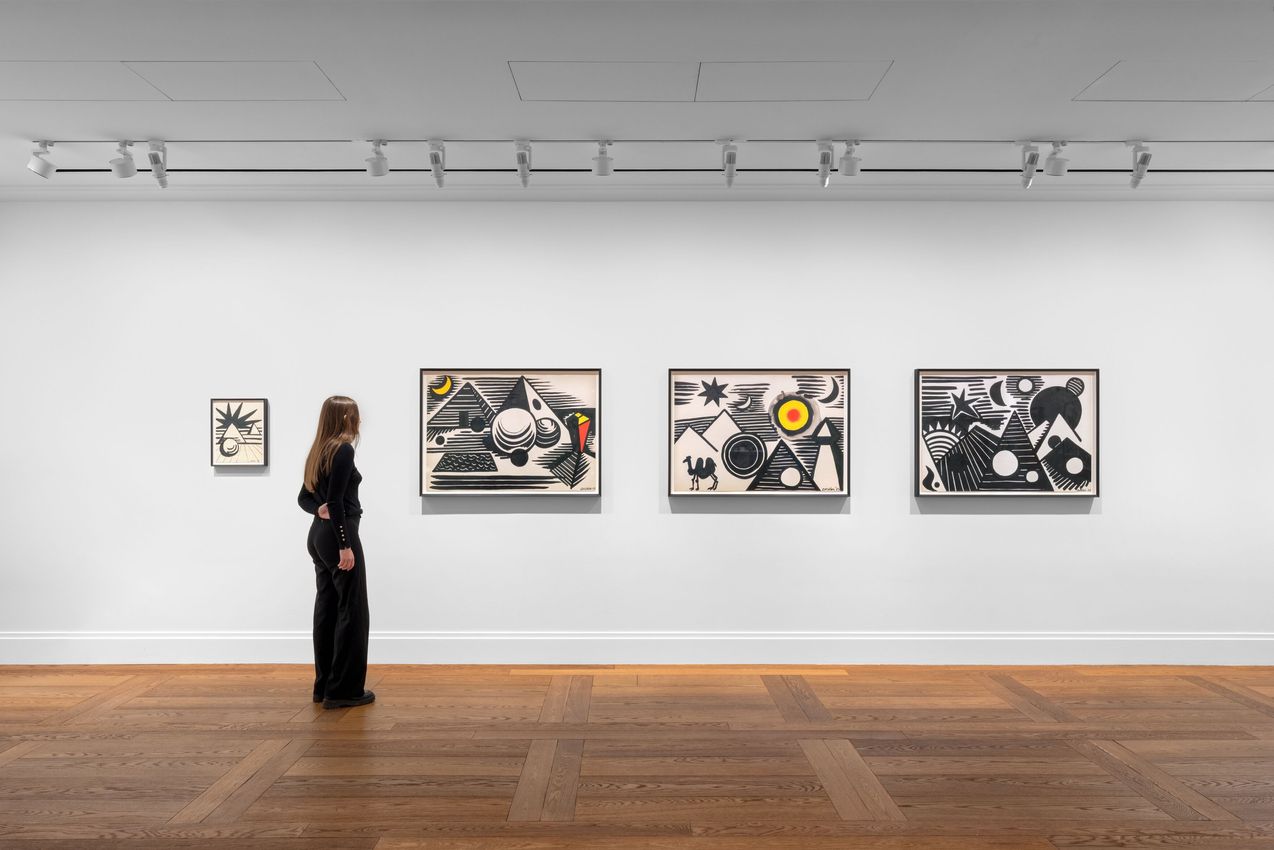
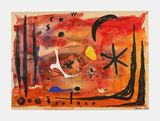
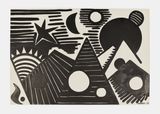
Using the carriage shed at Mas des Roches as a studio, Calder began to concentrate on ink and gouache paintings that paralleled the movement of his sculptures, echoing the forms and lines of the three-dimensional works in metal while establishing a bold yet enigmatic language of their own. The second floor of the exhibition at Hauser & Wirth Paris will focus on this extraordinary body of work. These paintings, striking and diverse, range from richly hued compositions created by mixing ink liberally with water such as ‘The Black Star’ (1953) to abstracted landscapes such as ‘Untitled’ (1953) and a series of monochromatic, crosshatched figures such as ‘Portrait de famille’ (1953). ‘I was practically doing nothing but gouaches and concentrating on them,’ Calder wrote of this time. ‘I seemed to develop something new.’
Courtesy Hauser & Wirth.


Alexander Calder was born in 1898, the second child of artist parents—his father was a sculptor and his mother a painter. In his mid-twenties, Calder moved to New York City, where he studied at the Art Students League and worked at the National Police Gazette, illustrating sporting events and the Ringling Bros. and Barnum & Bailey Circus. Shortly after his move to Paris in 1926, Calder created his ‘Cirque Calder’ (1926–31), a complex and unique body of art. It wasn’t long before his performances of the ‘Cirque’ captured the attention of the Parisian avant-garde.
A respected voice in contemporary art discourse.
Focusing on ambitious storytelling and insightful art-world commentary. Ocula Magazine publishes in-depth interviews, critical essays and timely analysis on the artists, exhibitions and ideas driving the global art world.
Learn more about Ocula Magazine
Showcasing the best of the art world.
Ocula partners with galleries from around the world to highlight their artists, artworks and exhibitions. Gallery membership is by application and invitation, with each member vetted by an independent panel.
Learn more about Ocula Membership

Specialises in the sale of major artworks.
Led by a team with deep ties to the world’s leading auction houses, galleries and collectors. Ocula’s advisory team offers bespoke services to high-net-worth clients from around the world who are looking to acquire the best of contemporary and modern art.
Learn more about our team and services