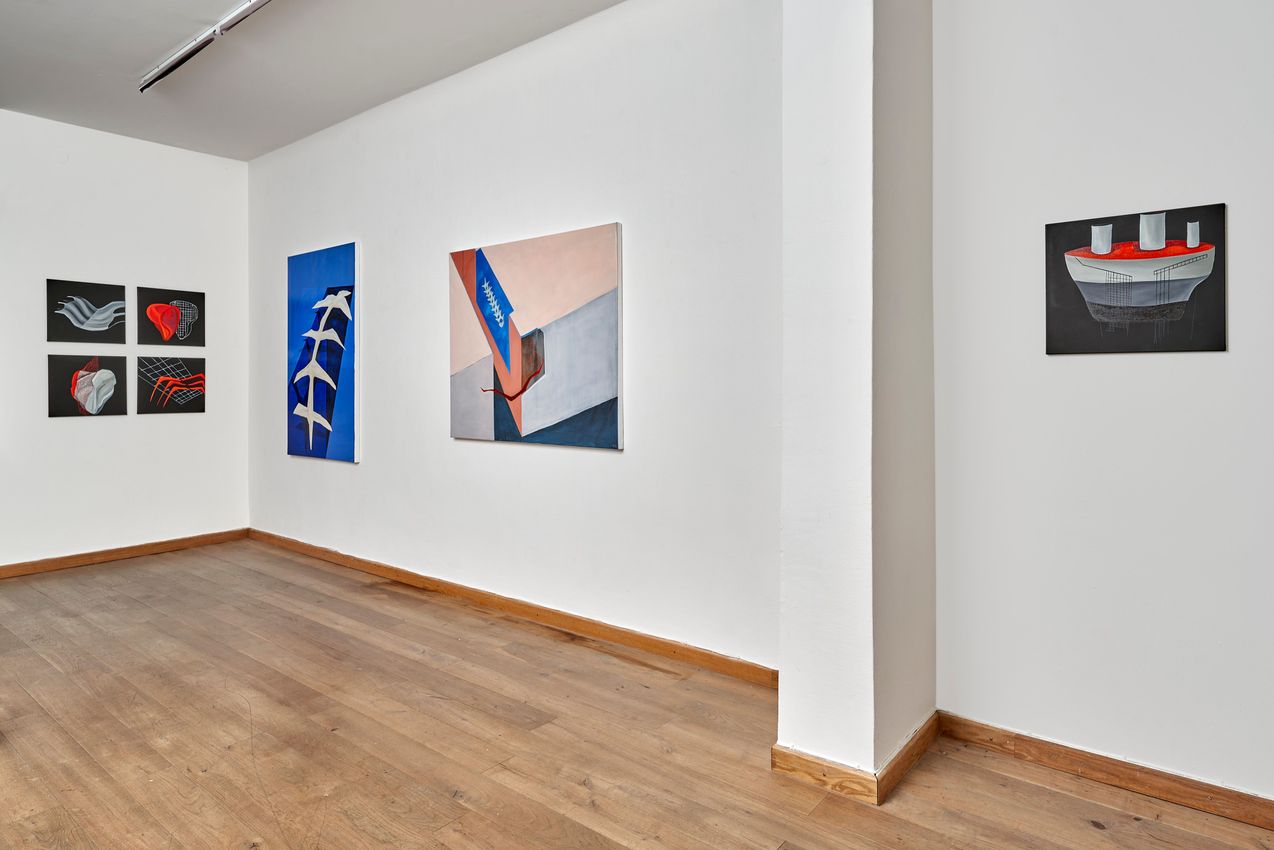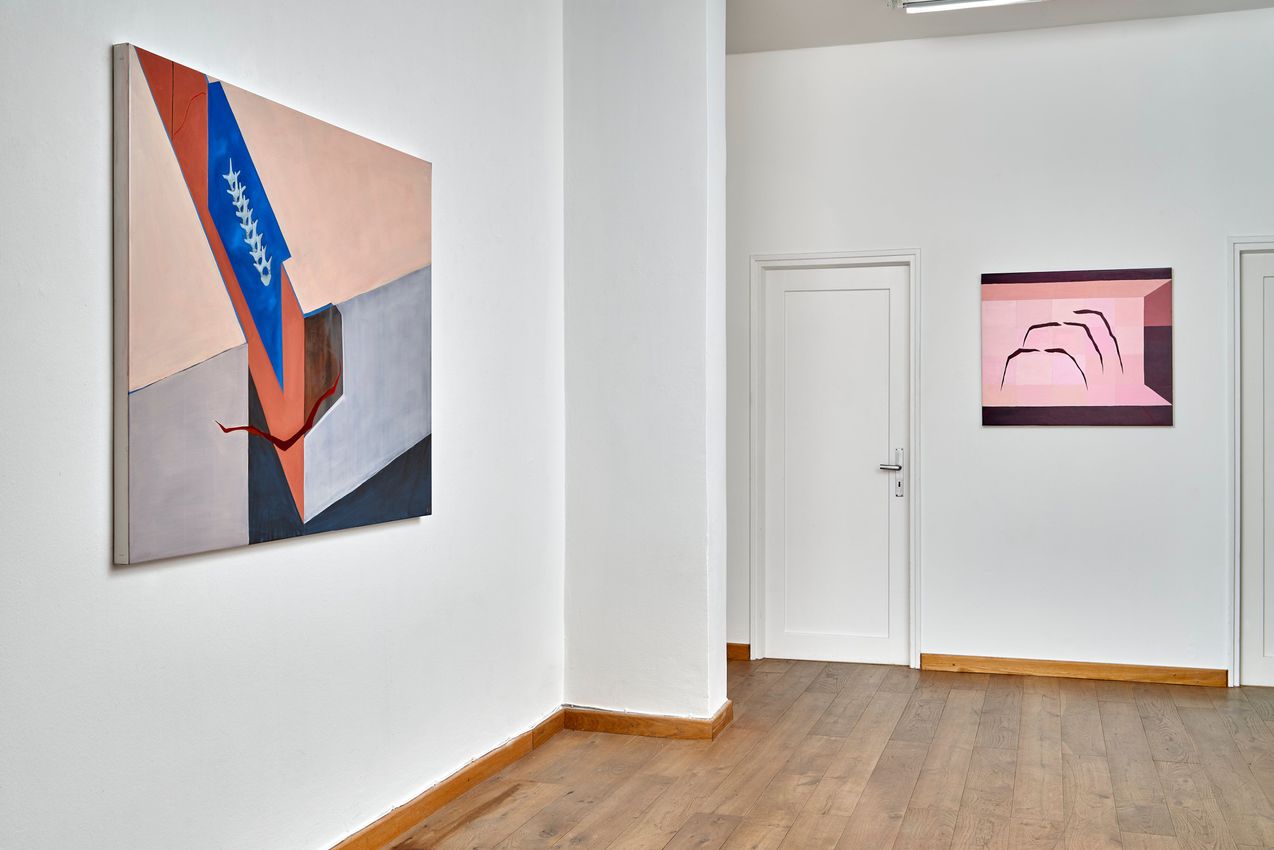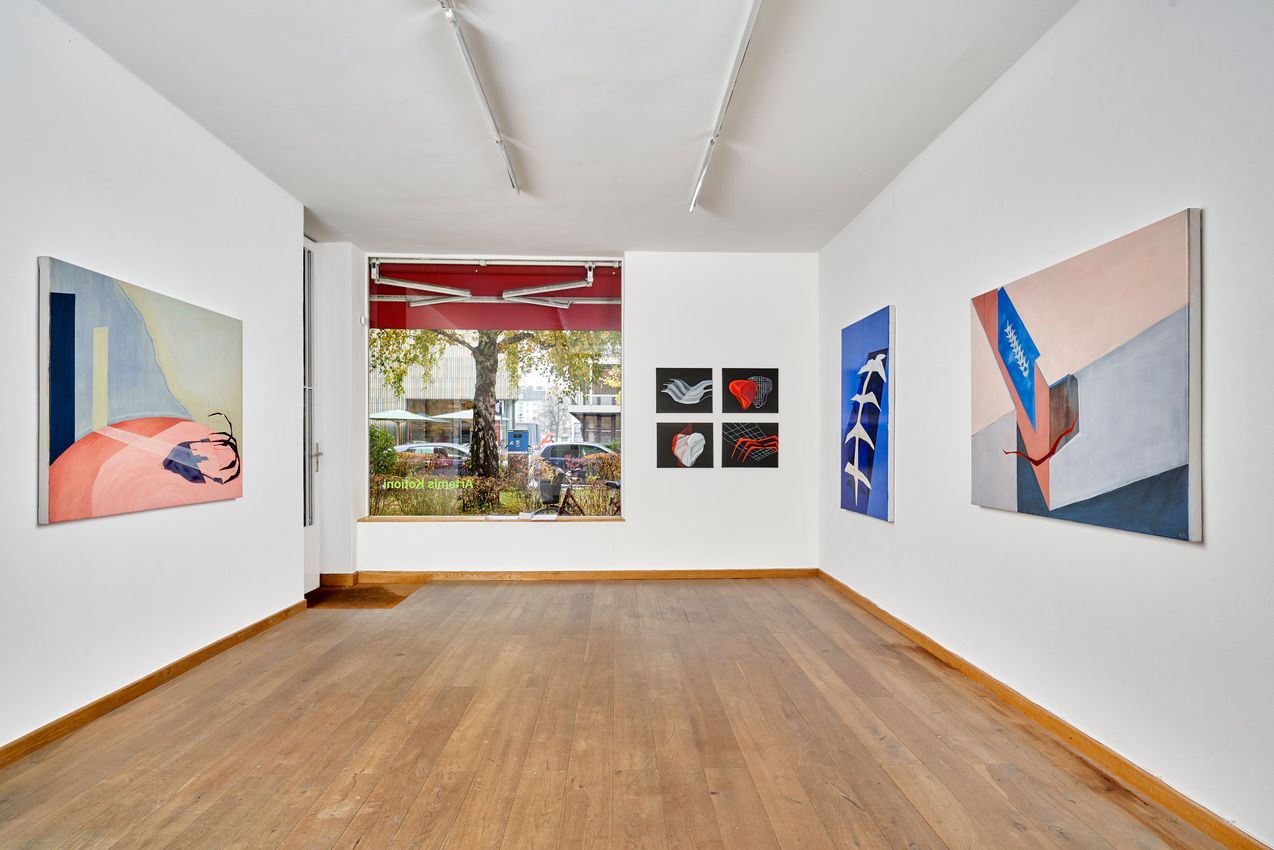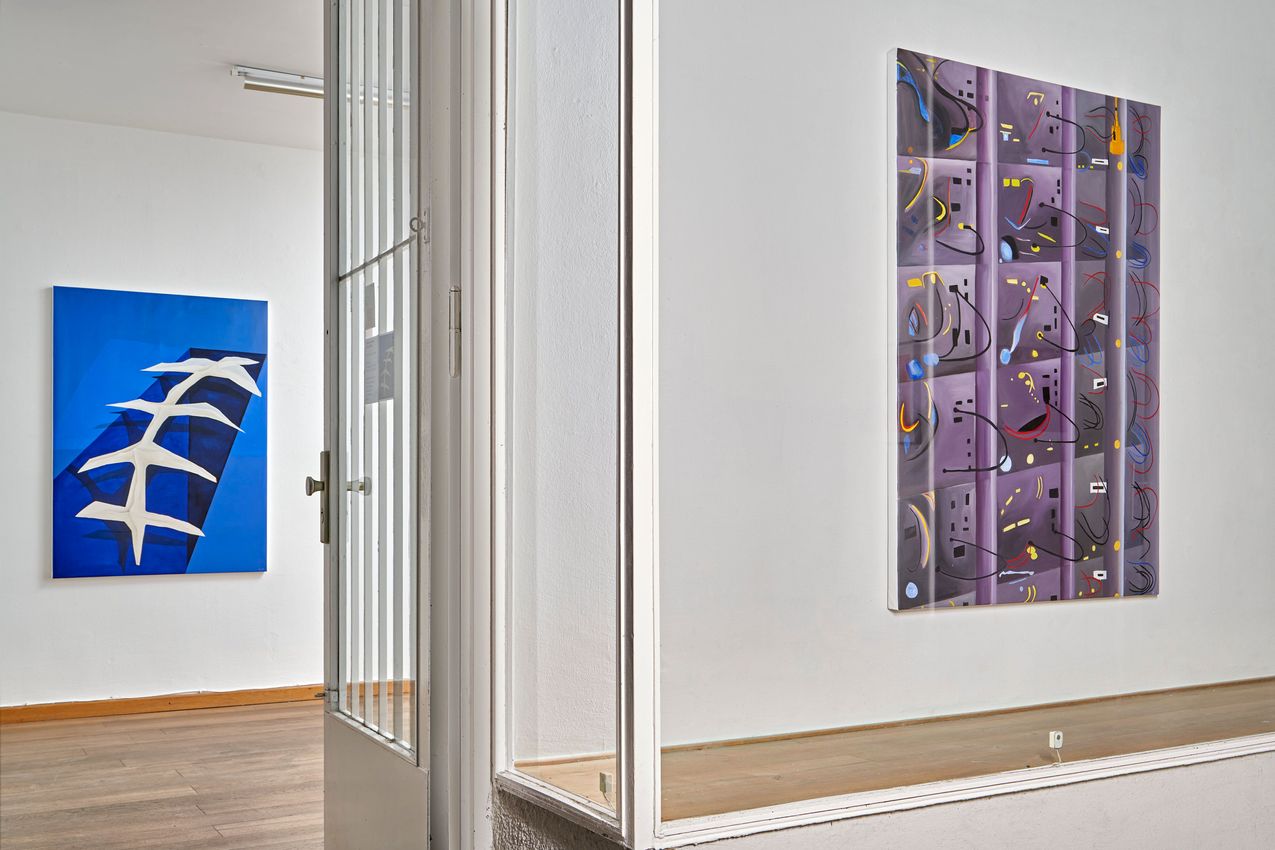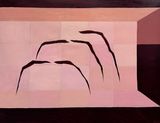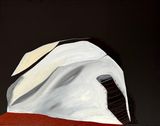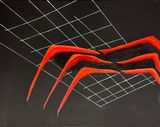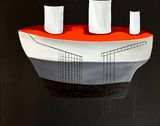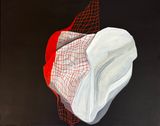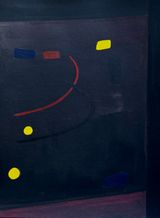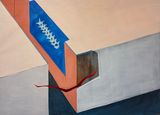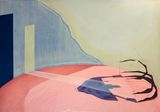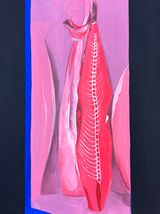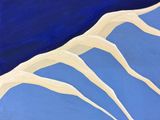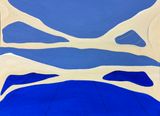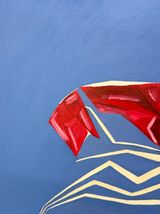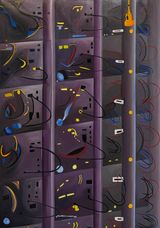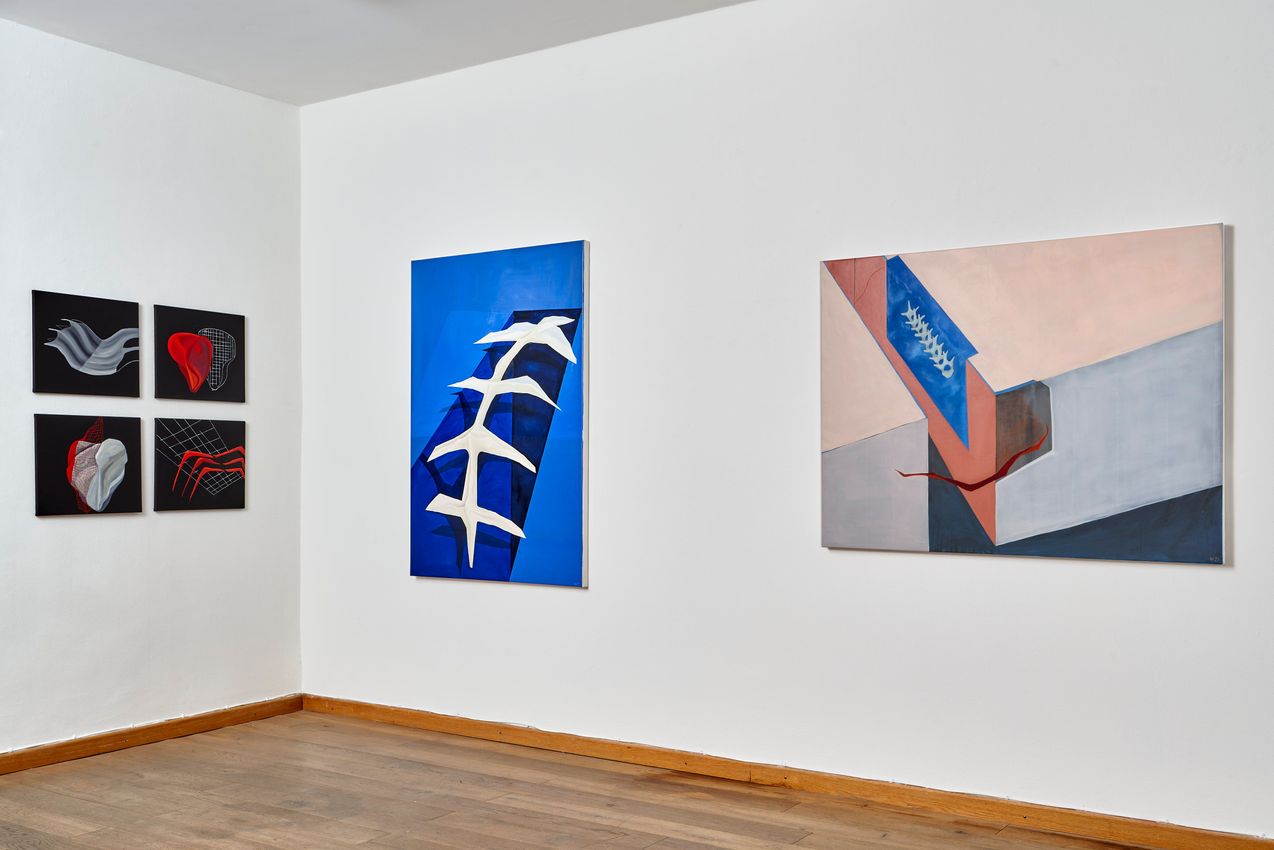
In the exhibition, In Real Time, Kotioni positions the materiality of bones, rocks and earthly matter against an imaginary architecture of machines. A fascination with spacecraft initiated this body of work, drawing from imagery where these machine-actors appear to have anthropomorphic qualities as they spend their days drilling holes and counting stones and minerals on the Moon and Mars. In turn they send -along with data- selfies and messages back to Earth. The work then extends to the notions of artificial intelligence and visually investigates the physical and material forms and manifestations of AI, such as data centres.
A central aspect of the artist’s process while making the paintings, as well as the intention for the audience viewing the work, is to hover in a space of ambiguity with regards to what the depicted object is. This is achieved by working between abstraction and representation, hence allowing for a dialectic between different objects such as bird, airplane, human spine or spider leg, wire, drilling rig etc. In turn the question morphs into whether what we are looking at is human or machine, alive or not so alive. Has the human become a machine of consumption -zombie- or has the machine become human-like -AI-?
From the visual deconstruction of the materiality that makes up a body, be that the human body or the imaginary machine body (spacecraft, building etc), the imagery that emerges in this work is suggestive of the Body Without Organs theory by Deleuze and Guattari. Exploring how form can exist before identity- how matter, whether mechanical or biological, might reorganize it self before function. The paintings of bony, bird-like structures and floating organ-forms visualise this liminal state: bodies without hierarchy, systems without centre; a call to break tradition.
Aiming to position itself in an art historical context the work makes conscious references to the following artists and their work. Beginning with the symbolic dimensions of Louise Bourgeois’s spiders, the material versus immaterial found in Vija Celmins’s paintings and sculptures, the surreal bones floating in a landscape by Georgia O’Keefe and the abstract spaces that are meticulously blended with representational sculptures, of Camille Henrot. At the same time the work has deep roots in geometric abstraction and suggests that perhaps, not only is it still alive but that there is room to push the conversation further.
Ultimately, _In Real Time, _invites the viewer to linger in a space between recognition and uncertainty, perhaps identifying an atmosphere that mirrors the current moment. To the extent that we may conclude that there is an uncanny feeling of aliveness in this work- then one question we could be left with is: what does it mean to be alive in a moment that is calling us to ask profound questions of morality with regards to human and multi-species life?
Artemis Kotioni (b. Athens, Greece 1995) is a visual artist based between Brooklyn and Athens. She works in painting, printmaking as well as large scale installation. Her work has been exhibited in the US and Europe and her pieces are part of private art collections. Artemis received her degree in Studio Arts from Bard College (2017) and her MFA from NYU (2024), where she has also held teaching positions in painting since graduating.


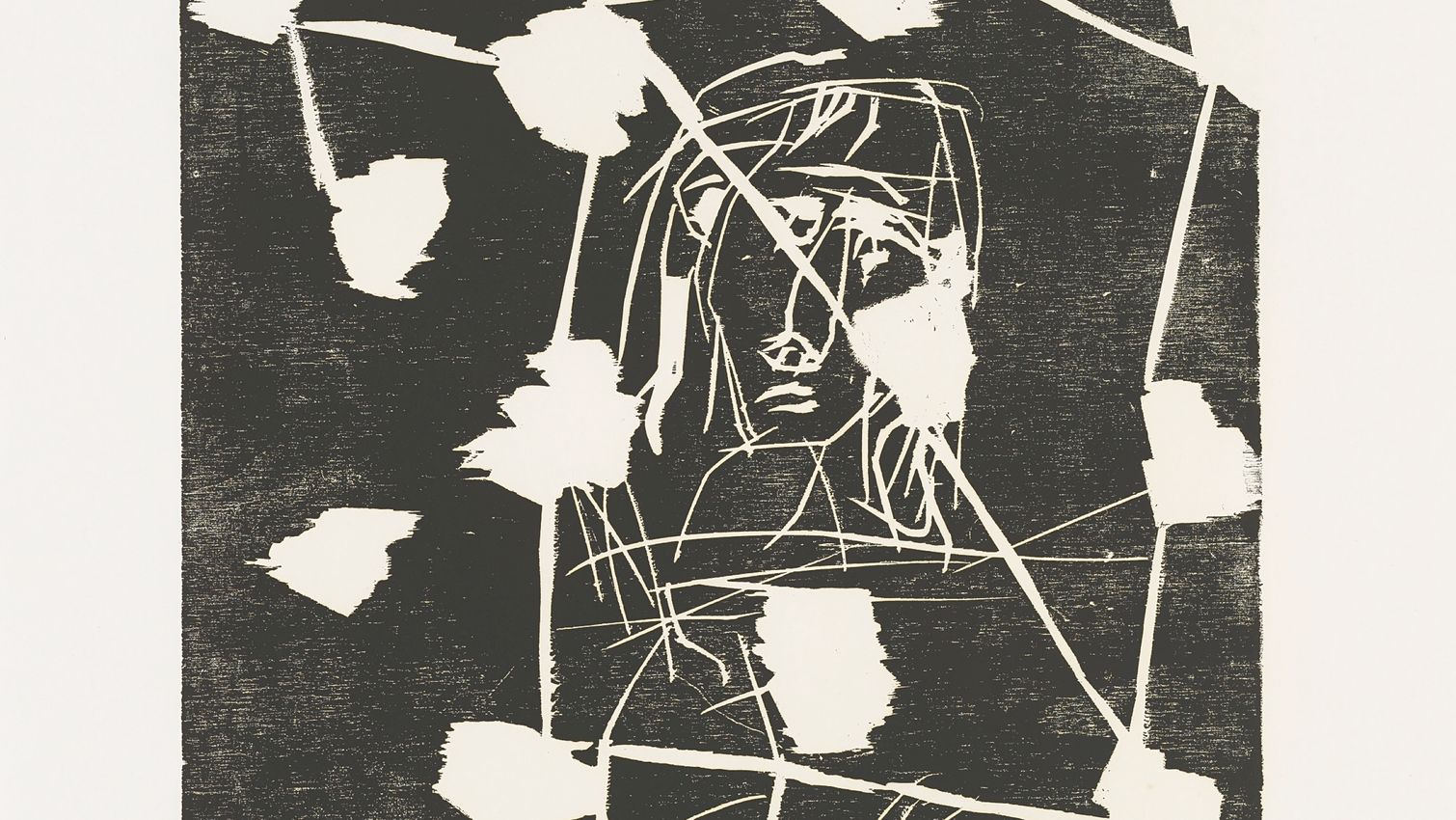
Knust Kunz Gallery Editions was founded in 1982 under the name Galerie Sabine Knust. Continuous collaborations with artists like Georg Baselitz, Per Kirkeby, A.R. Penck, Markus Lüpertz, Jörg Immendorff, and Imi Knoebel formed an ongoing presentation of their print and graphic œuvre for over 30 years. In 1998 Matthias Kunz joined as partner.

A respected voice in contemporary art discourse.
Focusing on ambitious storytelling and insightful art-world commentary. Ocula Magazine publishes in-depth interviews, critical essays and timely analysis on the artists, exhibitions and ideas driving the global art world.
Learn more about Ocula Magazine
Showcasing the best of the art world.
Ocula partners with galleries from around the world to highlight their artists, artworks and exhibitions. Gallery membership is by application and invitation, with each member vetted by an independent panel.
Learn more about Ocula Membership

Specialises in the sale of major artworks.
Led by a team with deep ties to the world’s leading auction houses, galleries and collectors. Ocula’s advisory team offers bespoke services to high-net-worth clients from around the world who are looking to acquire the best of contemporary and modern art.
Learn more about our team and services