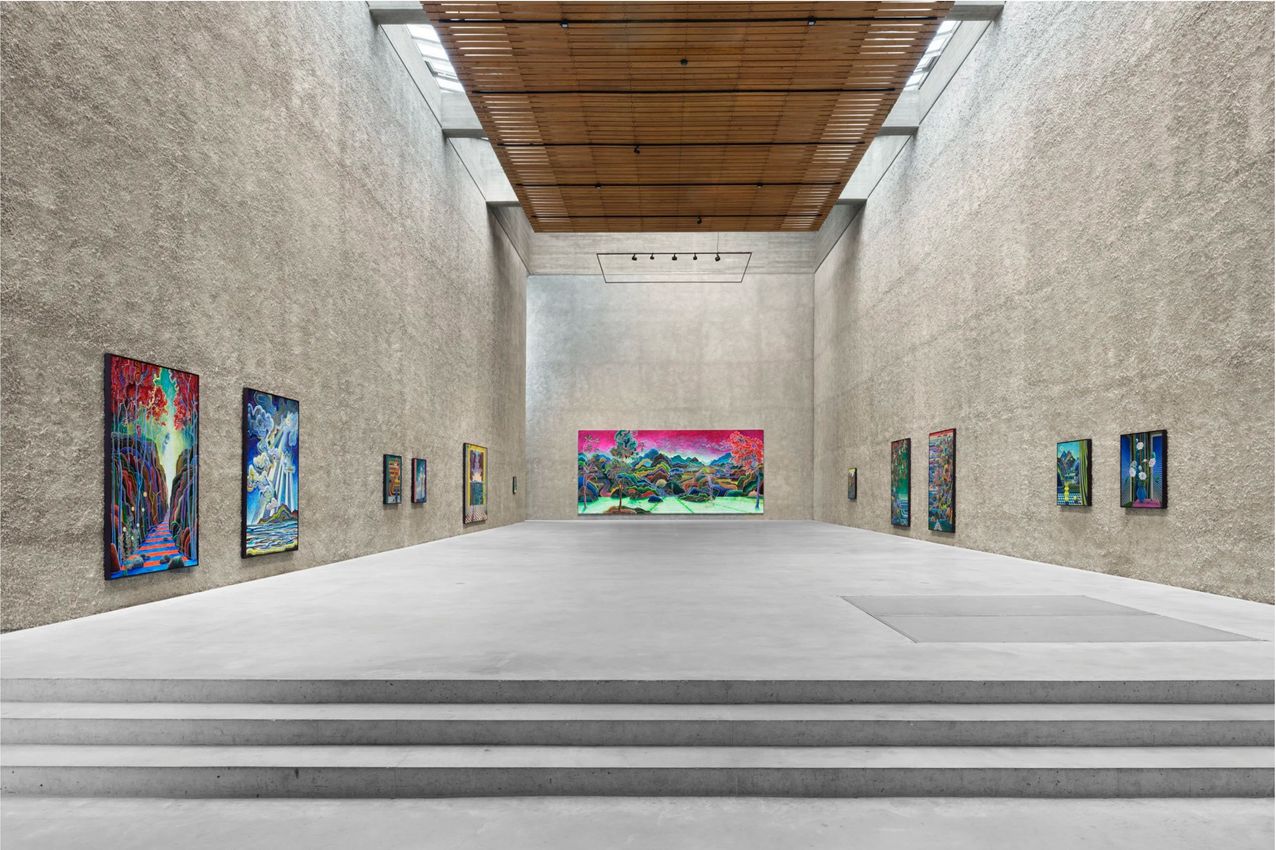
KÖNIG SEOUL is pleased to present a solo exhibition by renowned German painter, Matthias Weischer. He is one of the most important representatives of figurative painting emerging from Leipzig, where classical perspective and large-format realist pictures where still taught in art schools in the former GDR in the decades following the reunification of Germany. For his exhibition in Seoul, Weischer created twelve new oil on canvas works.
Each of the paintings in Seoul depicts an interior space, where straight lines of sight are subject to radical multiplication, often with oblique entry points into the picture’s compositional expanse. These scenes are populated with objects such as everyday wares and other artworks that continue the vertiginous play between the flat surface of the painting and the optical recession into an illusory depth of field. This tension between real and depicted space is typical of Weischer’s work and represents one of the most significant contributions to the wider field of painting in Germany.
In many of the works for Seoul, Weischer doubles the rectangular support of his canvases with the addition of other flat planes–carpets, room dividers, supplemental drawings–that allegorise his trademark displacement of real and constructed space. The effect is enhanced by the orientation that is provided to viewers within these perspectival spaces, where interior scenes are largely directed toward a corner and not to a straightforward entry into the painting’s setting. The results of this highly original visual drama are compelling in and of themselves, but they also reveal something more fundamental in Weischer’s practice: the laying bare of painterly technique, hiding nothing about the genesis of the picture’s construction.
In one work, a small painting can be viewed on a wall of the exact same colour, with a mask resting on said wall. On the right are abstract ornamental elements, and when viewed alongside the other paintings in the show in which floral elements puncture the visual boundaries of a space, it becomes entirely unclear whether these motifs emerge from beyond the painting or are flat renderings on the surface of the painting that return the gaze back to the canvas itself. This undecidability is a frequent result of Weischer’s work in which eyes move into and out of the picture’s compositional constraints. Elements perform double duty as both surface decoration and perspectival constructions, emblematised in the towels and textiles that hang on makeshift structures in many of the paintings, their limp forms thematising flatness while also defining the depicted rooms.
Weischer’s paintings traditionally have rough surfaces, as if worn by the ceaseless march of historical time, complementing the objects that appear to return to the era of the former GDR. This lack of the usual sheen of oil paint adds yet another layer to the overall impression of these paintings, where no section of the work is treated with any greater significance than another. This creates a radical democratisation of painting’s customary hierarchy of forms and helps to break the pictorial illusion that there is anything beyond the material surface of the canvas, despite appearances to the contrary. With the inclusion of flowers, mirrors, smaller paintings, lights, and other sundry objects, Weischer gestures directly to the regions that extend beyond the canvas, and in so doing, emphasises the artificiality of any given representation–the pictures never present a totality, a world completed, observed as a mere image.

German artist Matthias Weischer is known for his association with the New Leipzig School of German painters, which emerged at the end of the 1990s. He gained renown for his illusory and experimental ‘pulp paintings’, using a mixture of oil paint and cotton-fibre papier-mâché to create artificial landscapes and staged interiors.


A respected voice in contemporary art discourse.
Focusing on ambitious storytelling and insightful art-world commentary. Ocula Magazine publishes in-depth interviews, critical essays and timely analysis on the artists, exhibitions and ideas driving the global art world.
Learn more about Ocula Magazine
Showcasing the best of the art world.
Ocula partners with galleries from around the world to highlight their artists, artworks and exhibitions. Gallery membership is by application and invitation, with each member vetted by an independent panel.
Learn more about Ocula Membership

Specialises in the sale of major artworks.
Led by a team with deep ties to the world’s leading auction houses, galleries and collectors. Ocula’s advisory team offers bespoke services to high-net-worth clients from around the world who are looking to acquire the best of contemporary and modern art.
Learn more about our team and services