



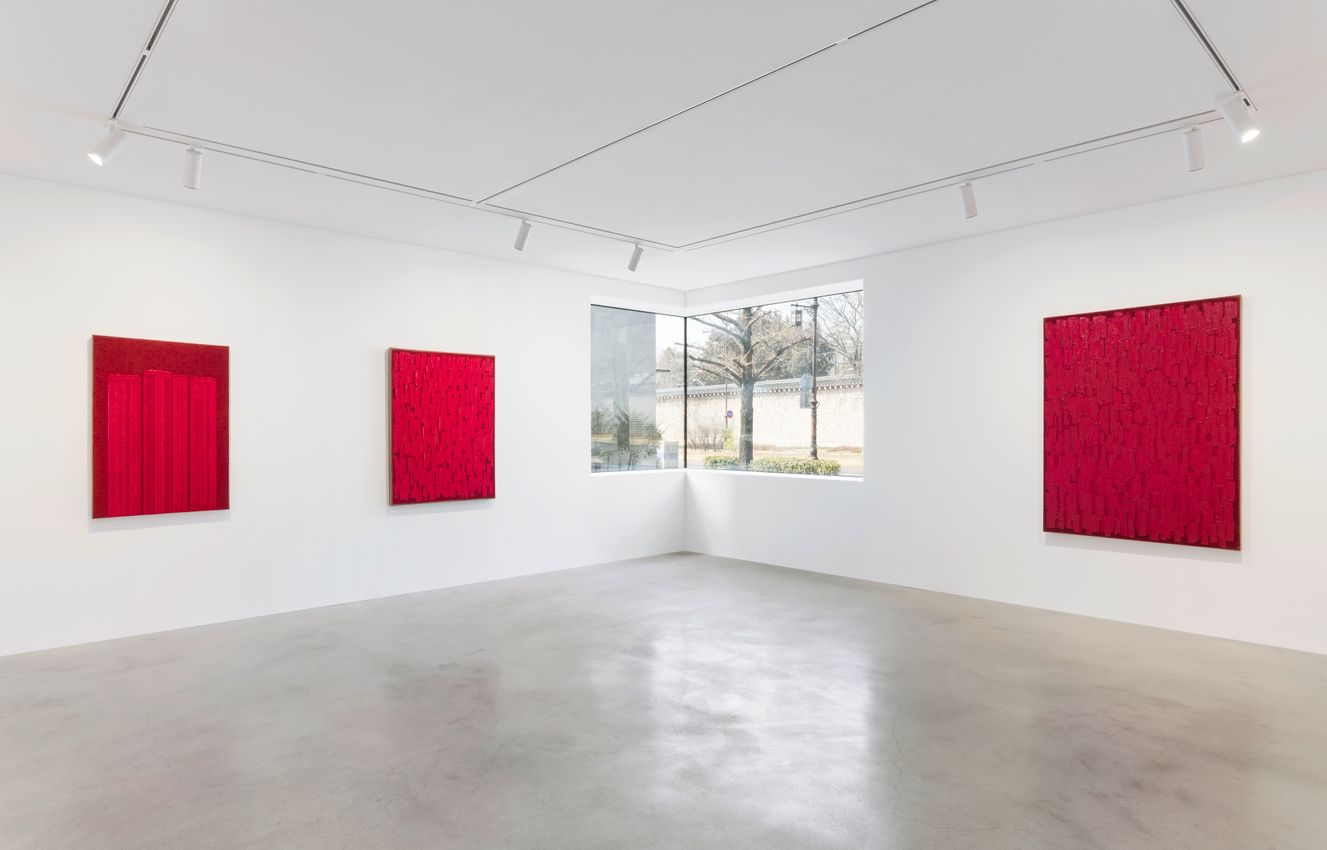
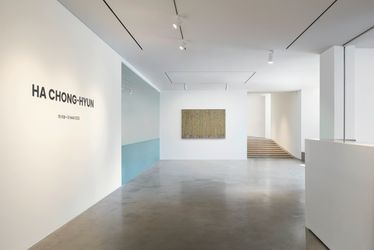
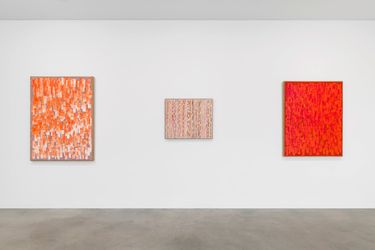
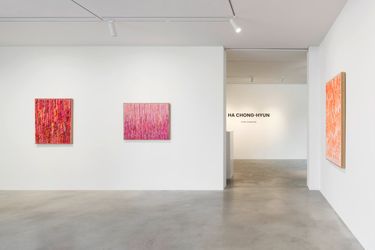
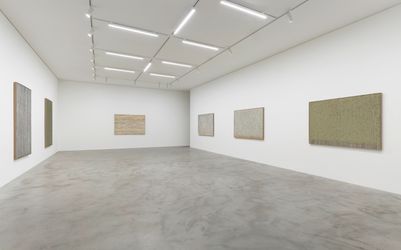
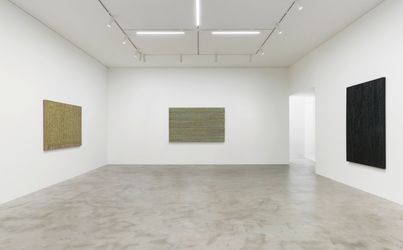
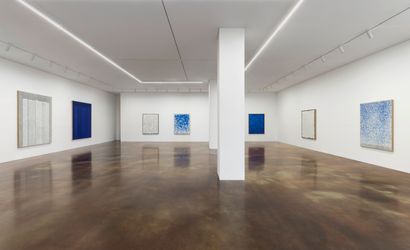
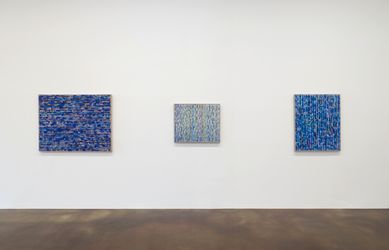
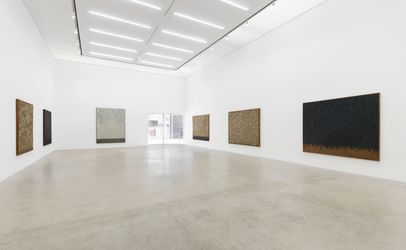
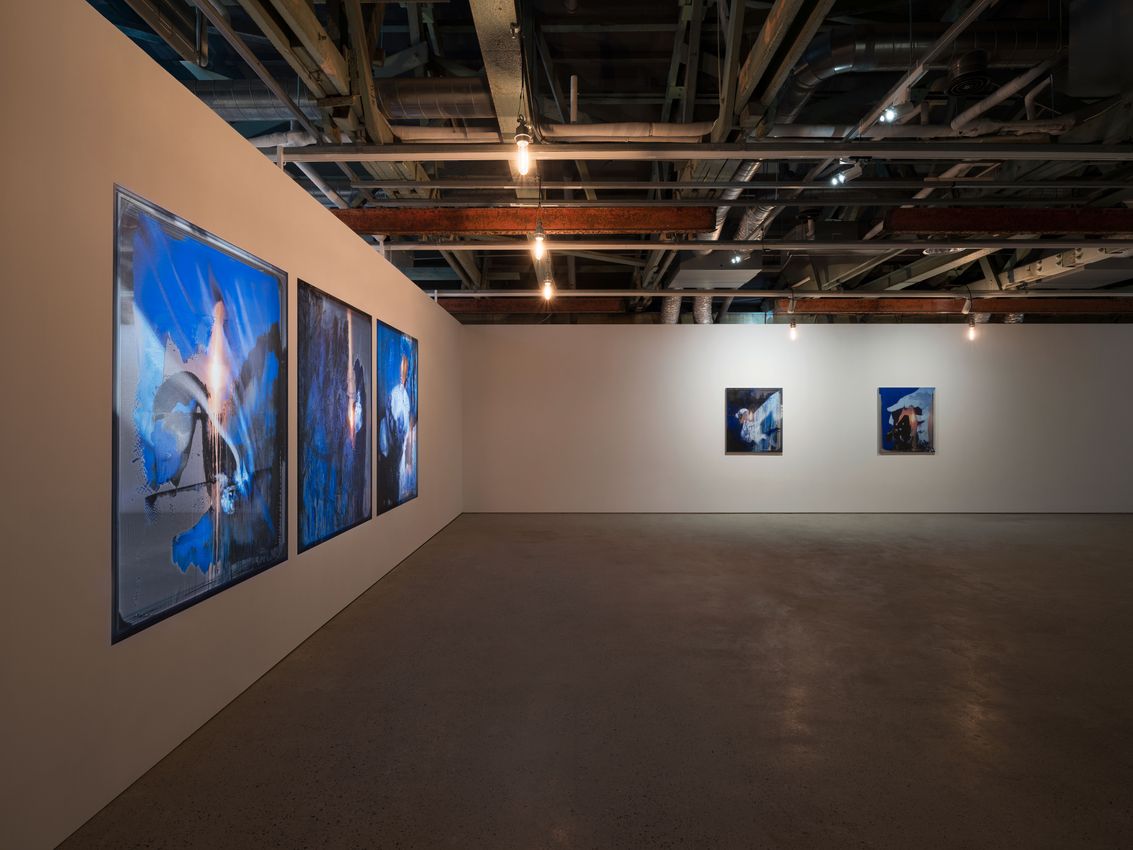
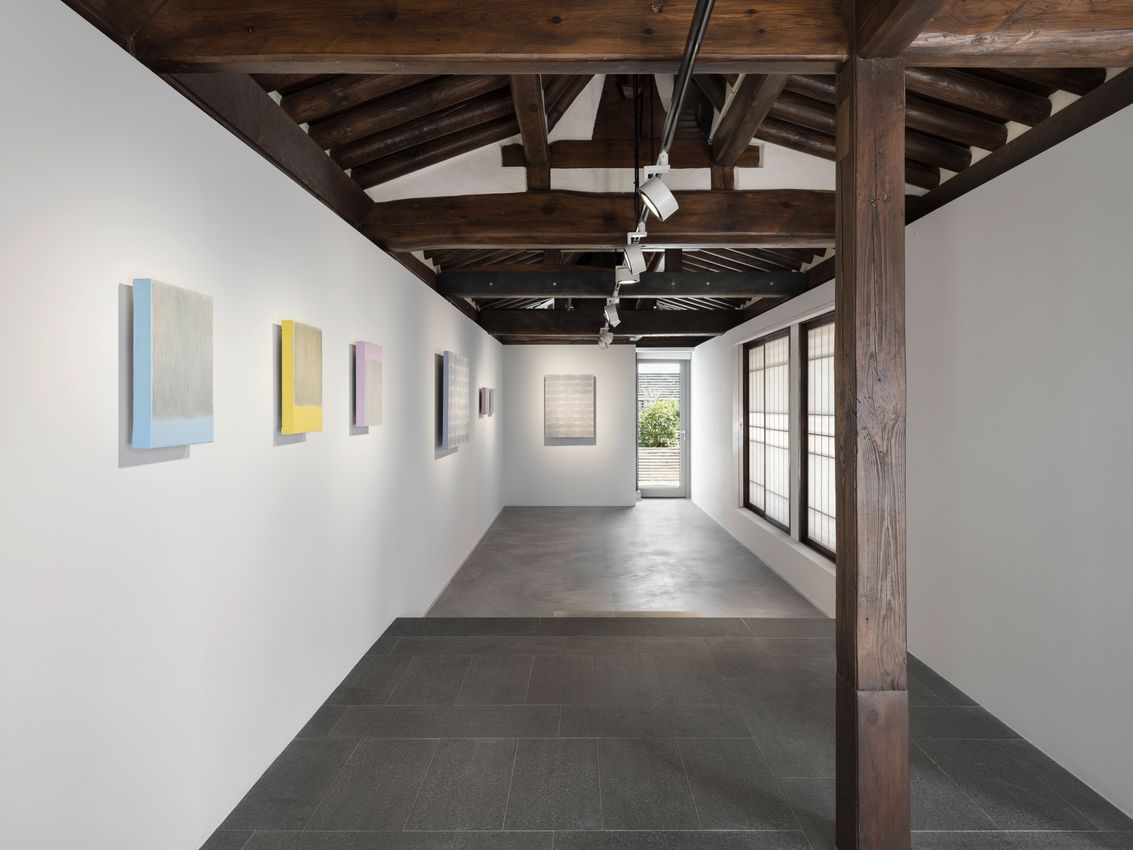
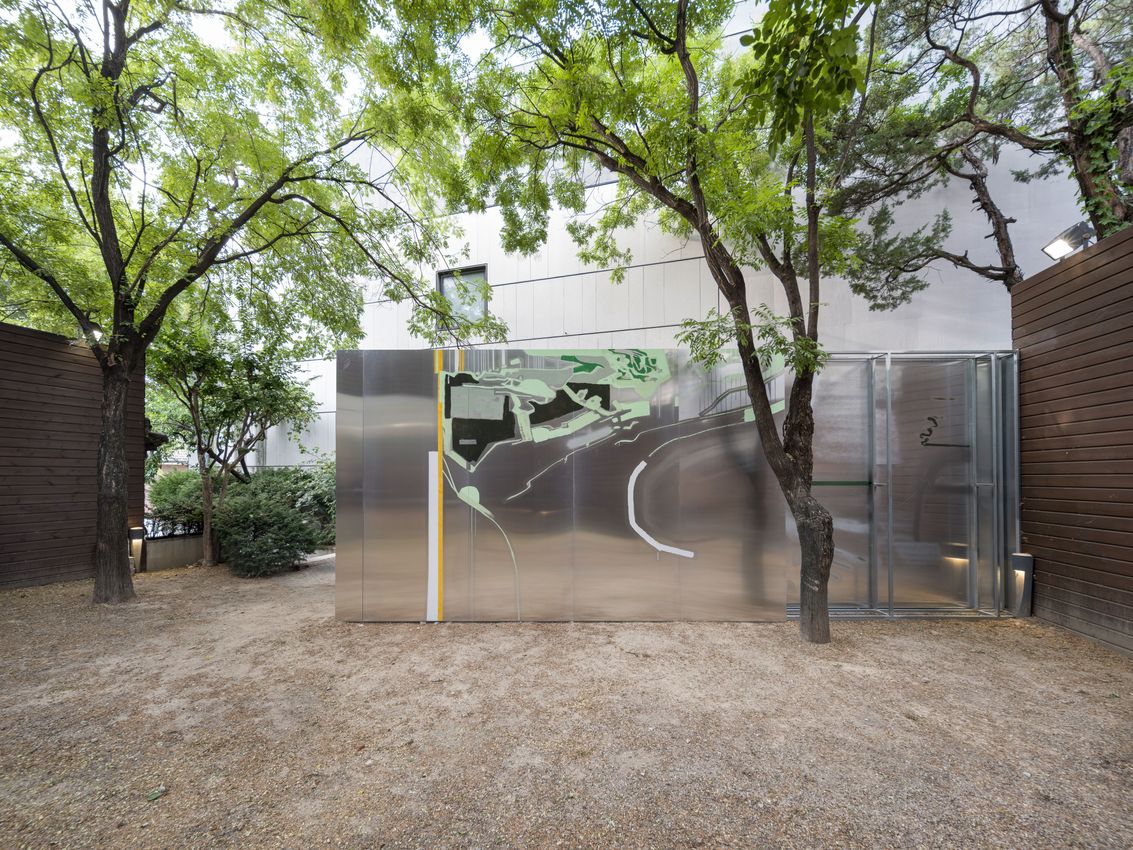
Kukje Gallery is pleased to present a solo exhibition of Ha Chong-Hyun, one of Korea’s most celebrated artists and a leading figure of the Dansaekhwa movement. On view from 15 February through 13 March 2022, across all three of the gallery’s spaces (K1, K2, K3) in Seoul, the installation is the most expansive of the artist’s solo exhibitions at Kukje Gallery, following his previous shows in 2019 and 2015. Best known for his experimentation with paint and commitment to asking, ‘what is painting?’ Ha’s exhibition showcases the outcomes of his ongoing study of colour and material. The exhibition will introduce works from the 1990s to the present and will include works from Ha’s signature ‘Conjunction’ series with an emphasis on recent multicoloured pieces, as well as mark the first ever showcase of new works from the artist’s ‘Post-Conjunction’ series, underscoring his relentlessly evolving and expanding practice.
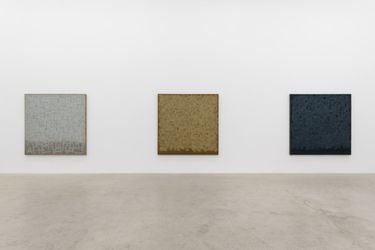
Ha began his ‘Conjunction’ series in the 1970s, developing it as his signature style over the ensuing decades. The artist cultivated a labor-intensive and innovative technique known as bae-ap-bub, where he pushes oil paint through the coarse weave of the burlap canvas, from the back to the front. While this technique and the unique texture it creates remain evident in the recent multicoloured ‘Conjunction’ series, brushstrokes applied on the back of the canvas and colourful gradations incorporated by the artist reflect a more contemporary palette, as seen in Conjunction 21-38 (2021). The work—which integrates blue and white hues—employs bae-ap-bub with white paint across a surface first treated with black paint, on top of which Ha has drawn vertical lines and manipulated the form and shape of the emergent media. As a final touch, the artist has added blue paint to create a work that deviates from the existing ‘Conjunction’ pieces. This shift, manifest in the further richness of form and hue, reflects the longstanding relationship between Ha and his use of colour. While Ha’s past works were concerned with colours found in Korean traditional roof tiles called giwa, white porcelain, and landscape to honor distinctive forms found throughout the Korean cultural milieu, the recent introduction of bright colours reflects the artist’s efforts to go beyond the parameters of Dansaekhwa, which has been a defining framework for his work during the past decades.
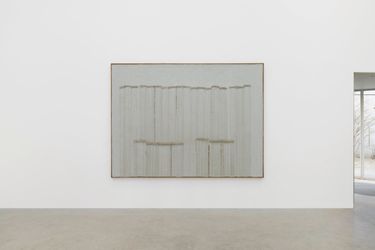
Meanwhile, the ‘Post-Conjunction’ series includes work that reinterprets and further explores the application of bae-ap-bub, along with Ha’s method of composing a unique pictorial plane by manipulating the plasticity of the paint and colour in uniform bands. ‘Post-Conjunction’ works begin with cutting thin wooden sticks in linear form and wrapping each individual pieces of wood with canvas covered in ink or paint. The artist then aligns these sticks on the plane; after one wooden piece is placed within the frame of the canvas, oil paint is applied underneath or on its edges, before placing the next. Ha repeats this process until the paint has pushed through the wood in sufficient volume, to articulate the linear forms of the composition. The artist sometimes scratches the paint left on the surface with a tool in order to amplify the dynamics of the pictorial plane, as can be seen in Post-Conjunction 11-3 (2011), or adds more paint for compositional rhythm, as in Post-Conjunction 10-38 (2010)—such variations in Ha’s working process allow his works to express a wide range of nuances.
While the ‘Conjunction’ series utilizes burlap as a two-dimensional surface, characterized by an emphasis on the paint’s material properties (especially when applied in thick layers), the Post-‘Conjunction’ series can be seen as inventing an entirely new pictorial plane created through the artist’s unconventional use of wooden sticks, adding a sculptural quality to Ha’s two-dimensional works. Materials used by the artist immediately after the Korean War, such as USAID burlap sacks, flour, and barbed wire, commented directly on the sociopolitical climate of the times, while those for the ‘Post-Conjunction’ series are no longer anchored to a specific era, but instead cultivate an expanding spectrum of material exploration and open up a new dialogue between painting and object, broadening the overall definition of ‘Conjunction’.
A pioneer of Korean modernism, Ha is an artist whose lifelong work illustrates his commitment to exploring the infinite possibilities and materiality of painting. His practice is defined by this passion for constructing a unique artistic language through two-dimensional works imbued with specific and highly charged material properties and energy. This solo exhibition not only encompasses Ha’s ‘material exploration’ that has defined his career and allowed him to reflect his own life and time, but also provides an opportunity for a new discourse on the ‘Conjunction’ and ‘Post-Conjunction’ series, both of which have expanded the definition of painting in seminal ways.
Meanwhile, Ha will hold a major retrospective exhibition in Venice as a Collateral Event of the Biennale Arte 2022 with the support of Kukje Gallery and Fondazione Bevilacqua La Masa from April 21 to August 24, 2022, at the historical Palazzetto Tito. The survey presentation will focus on important chapters of the artist’s ongoing career which spans six decades, introducing his perspectives on the development of Dansaekhwa while discussing its current state and future development.
Born in 1935 in Sancheong, Ha Chong-Hyun graduated from the Department of Painting at Hongik University in 1959, later serving as the Dean of the Fine Arts College at Hongik University (1990–1994) and the Director of the Seoul Museum of Art (2001–2006). Ha has been the focus of major retrospectives at the National Museum of Modern and Contemporary Art, Korea, Gwacheon (2012); Gyeongnam Museum of Art, Changwon (2004); Fondazione Mudima, Milan (2003); and has recently held solo exhibitions across galleries in New York, London, and Paris. Ha has been acknowledged as a founding member of Dansaekhwa, participating in group exhibitions including Korean Abstract Art: Kim Whanki and Dansaekhwa (2018) at the Powerlong Museum in Shanghai; When Process becomes Form: Dansaekhwa and Korean Abstraction (2016) at Villa Empain – Boghossian Foundation, Brussels; Dansaekhwa (2015), an official Collateral Event in the 56th Venice Biennale; and Dansaekhwa: Korean Monochrome Painting (2012) at the National Museum of Modern and Contemporary Art, Seoul. His works are housed in the collections of prominent institutions around the world, including the Centre Pompidou, Paris; OCT Boxes Art Museum, Guangzhou; Museum Voorlinden, Wassenaar; Museum of Modern Art and Solomon R. Guggenheim Museum, New York; Art Institute of Chicago; M+, Hong Kong; Tokyo Metropolitan Art Museum; National Museum of Modern and Contemporary Art, Korea; and Leeum Museum of Art, Seoul.


A leading figure of Tansaekhwa (the Korean Monochrome Movement), Ha Chonghyun (b. 1935, Sancheong, Korea) is best known for his practice of pushing paint through the back of thickly woven stretched canvas, smearing it across the front of the canvas as it appears through the gaps in the weave. He has been highly praised for his manipulation of the materiality of paint and his incorporation of the canvas structure into the creation of his works.


Established in the heart of Seoul in 1982, Kukje Gallery is a leading Korean gallery dedicated to showcasing works by Korean and international artists and promoting modern and contemporary art. At 54 Samcheong-ro, Jongno-gu, the gallery has 3 key exhibition spaces, respectively named K1, K2, and K3. In 2018, the gallery opened a second location in F1963, a cultural complex housed in a former wire factory in Suyeong-gu, Busan.

A respected voice in contemporary art discourse.
Focusing on ambitious storytelling and insightful art-world commentary. Ocula Magazine publishes in-depth interviews, critical essays and timely analysis on the artists, exhibitions and ideas driving the global art world.
Learn more about Ocula Magazine
Showcasing the best of the art world.
Ocula partners with galleries from around the world to highlight their artists, artworks and exhibitions. Gallery membership is by application and invitation, with each member vetted by an independent panel.
Learn more about Ocula Membership

Specialises in the sale of major artworks.
Led by a team with deep ties to the world’s leading auction houses, galleries and collectors. Ocula’s advisory team offers bespoke services to high-net-worth clients from around the world who are looking to acquire the best of contemporary and modern art.
Learn more about our team and services
