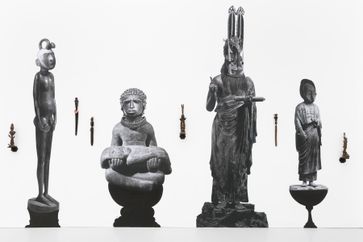
kurimanzutto presents Tupi or not tupi by Dr. Lakra, an exhibition featuring new works in a variety of media, including painting, sculpture, ceramics, and a large-scale mural.
The exhibition’s title, Tupi or not tupi, references a phrase from the Manifiesto Antropófago (Anthropophagous Manifesto, 1928) by Brazilian poet Oswald de Andrade. Written in the context of the artistic avant-garde in 1920s São Paulo, the question “tupi or not tupi” encapsulates the concept of anthropophagy that the manifesto proposes. It appropriates and transforms Shakespeare’s Hamlet with a nod to the Tupi, an indigenous South American tribe. Dr. Lakra’s works on view adopt a similar avant-garde anthropophagist approach: they take, devour, and appropriate diverse references and iconographies through a process of cultural digestion.
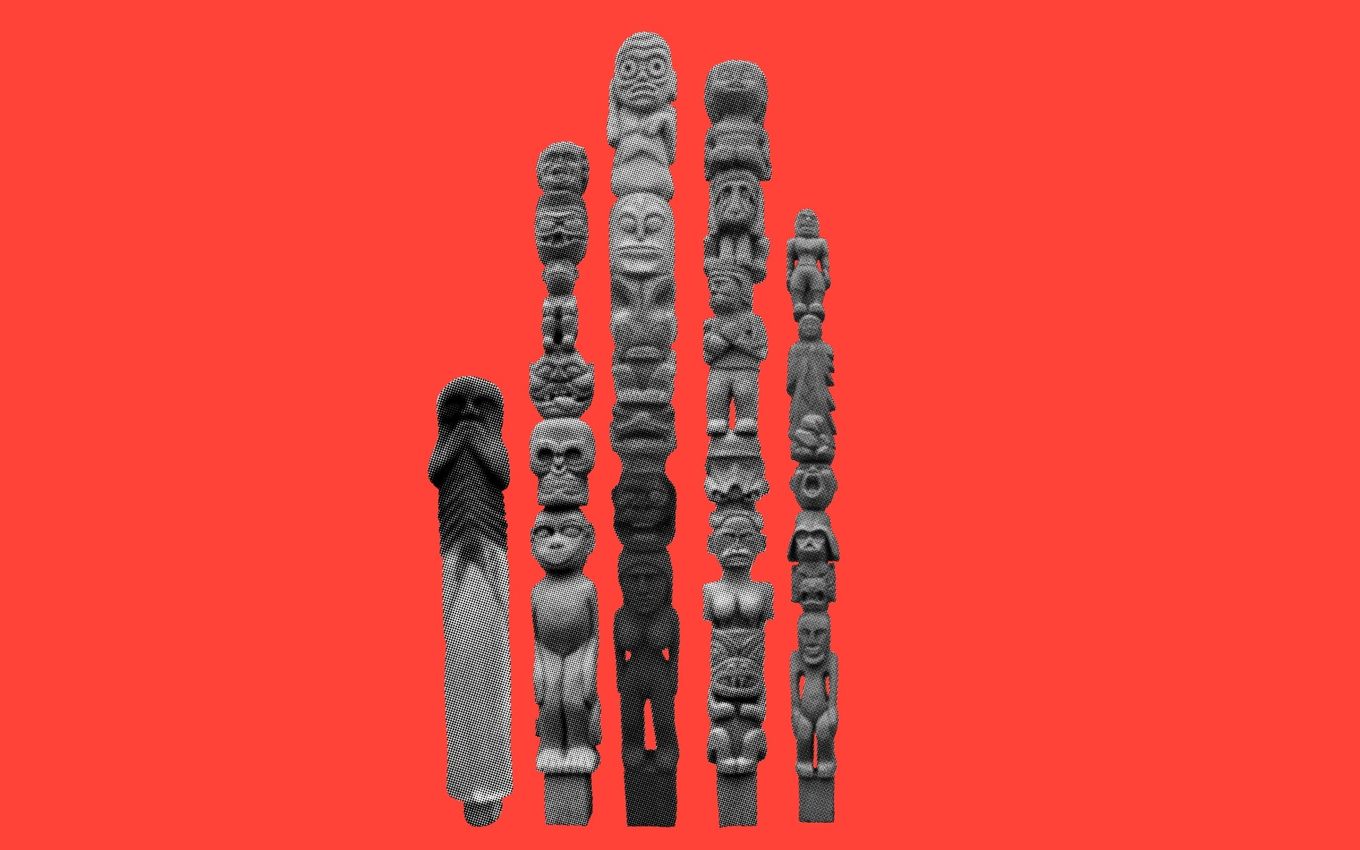
Drawing a connection to his 2015 solo exhibition at kurimanzutto, Mexico City, the artist presents new totemitos. These totemic sculptures combine effigies from African, Asian, and American cultures, and representations of religious iconography and objects from contemporary culture. Alongside these pieces, Lakra debuts a series of oil paintings that evoke the style of 16th-century Italian Renaissance painter Giuseppe Arcimboldo, known for his compositions of animals, flowers, fruits, and everyday objects arranged into imaginative portraits.
The central work of Tupi or not tupi is a 4 x 4 meter mural that occupies one of the gallery’s walls. Inspired by Mexican artist Miguel Covarrubias’s maps of the Pacific Ocean, created for the 1939 Golden Gate International Exhibition, Lakra offers his own rendition—a map tracing key tattoo routes across Asia, Australia, North America, and South America. Reflecting his deep fascination with tattoo culture, the exhibition features a preview of a documentary series that he has been developing for over twelve years, which explores Japanese tattooing from an anthropological perspective.
Jerónimo López Ramírez—a.k.a. Dr Lakra—is a Mexican artist and tattooist who is bets known for his irreverent and provocative drawings and paintings on appropriated posters, erotic magazines and postcards . His practice however also encompasses mural painting, collage and sculpture.

Kurimanzutto was first conceived in the late 1990s in New York by Mónica Manzutto, José Kuri and Gabriel Orozco. They imagined a gallery that could exist nomadically, adapting its form to the spaces needed by specific projects.

A respected voice in contemporary art discourse.
Focusing on ambitious storytelling and insightful art-world commentary. Ocula Magazine publishes in-depth interviews, critical essays and timely analysis on the artists, exhibitions and ideas driving the global art world.
Learn more about Ocula Magazine
Showcasing the best of the art world.
Ocula partners with galleries from around the world to highlight their artists, artworks and exhibitions. Gallery membership is by application and invitation, with each member vetted by an independent panel.
Learn more about Ocula Membership

Specialises in the sale of major artworks.
Led by a team with deep ties to the world’s leading auction houses, galleries and collectors. Ocula’s advisory team offers bespoke services to high-net-worth clients from around the world who are looking to acquire the best of contemporary and modern art.
Learn more about our team and services