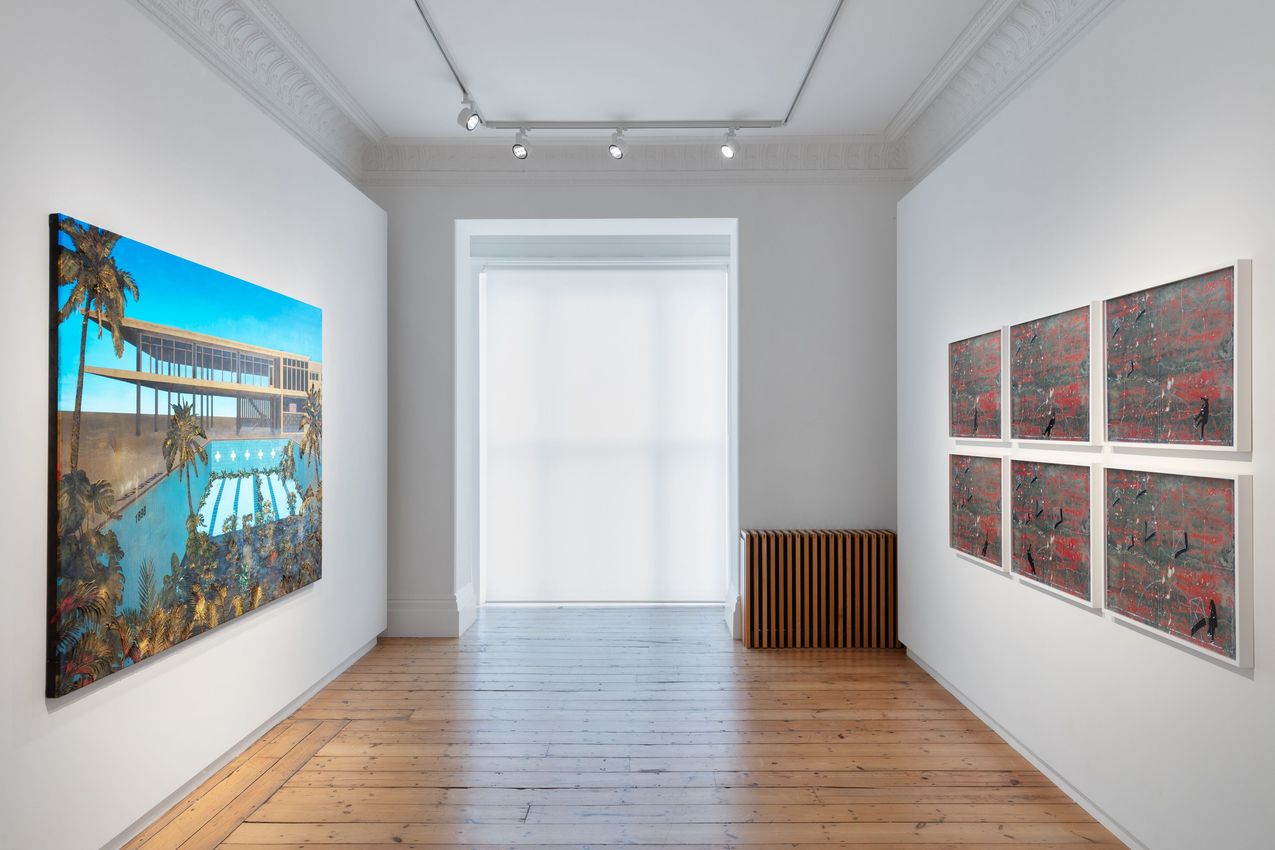




Lehmann Maupin is pleased to present In Dialogue: Robin Rhode & Rogelio Báez Vega, the latest exhibition in the gallery’s new series that places artists from Lehmann Maupin’s program and beyond in an intimate conversation through their distinct approaches to artmaking. For the London debut of In Dialogue, Lehmann Maupin brings together new photography-based work by artist Robin Rhode and paintings by Rogelio Báez Vega that consider the role of urban architecture in contemporary society. The exhibition will open in the gallery’s South Kensington space from November 19th, with an opening reception with Báez Vega in attendance from 6–8 PM.
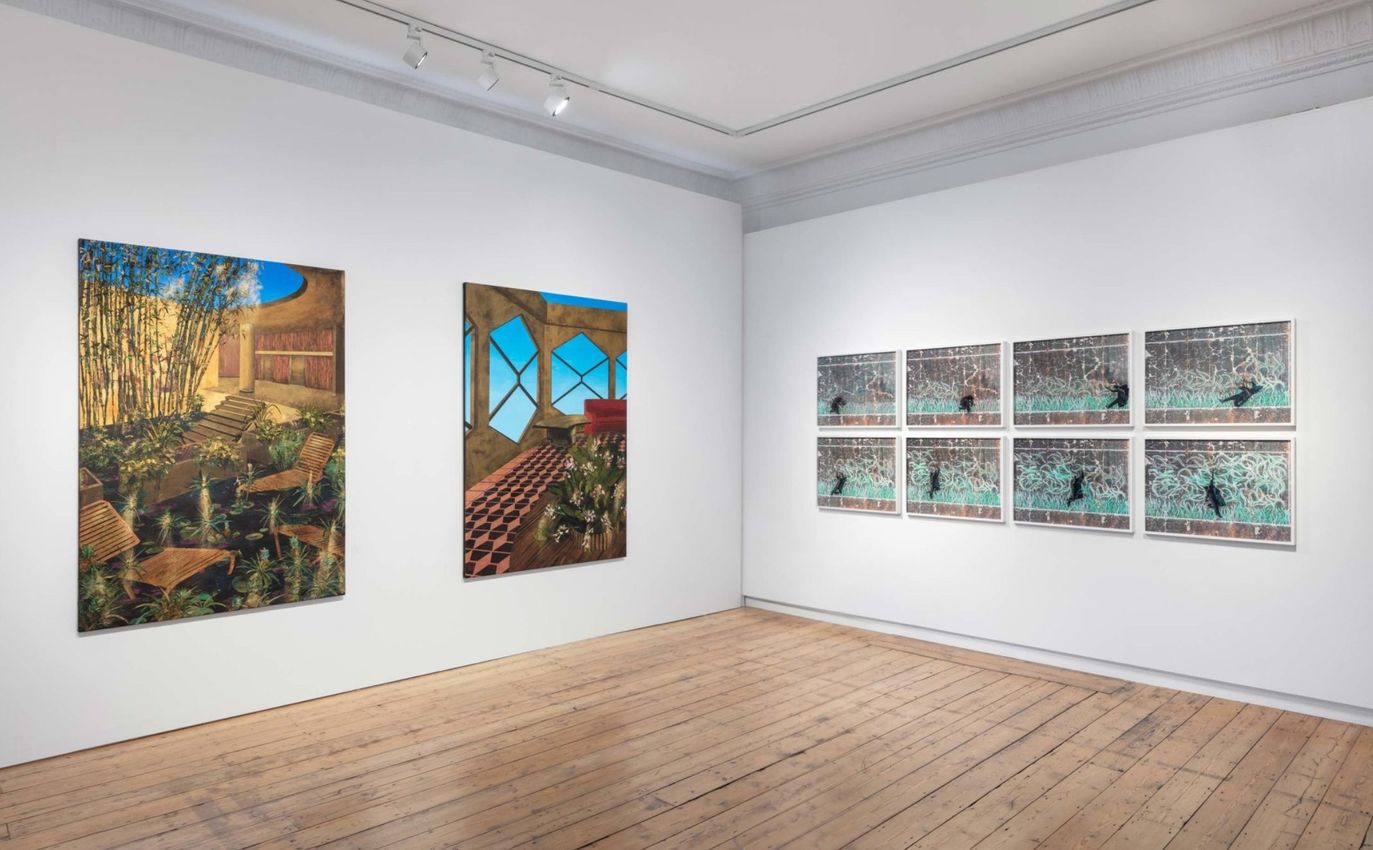
In Dialogue: Robin Rhode & Rogelio Báez Vega foregrounds work from both artists that uses urban architecture as a lens for examining the cultural, social, and political contexts in which it is constructed. From Rhode’s multi-panel, narrative images, shot in an abandoned sports ground in the West Rand in Johannesburg, to Báez Vega’s uncanny depictions of urban planning projects in Puerto Rico, both artists explore the physical and symbolic properties of the built environment through their respective bodies of work.
Rhode is best known for his multi-part works in which he combines painting, drawing, and performance with photography to create extended narrative series. Each piece is composed of a number of panels that depict figures interacting with large-scale paintings and drawings created in public spaces, often on exterior walls in the city of Johannesburg. These works function as a kind of storyboard, with each photograph capturing the choreographed movements of Rhode’s figures as they appear to alter the two-dimensional world they inhabit.
Rhode views these works as visual interventions into public spaces, addressing cultural, political, and ecological environments with the aim of transforming landscapes and communities. In his newest series, featured prominently in In Dialogue, the artist moves away from the wall and onto the pitch, photographing himself on abandoned sports grounds in the West Rand neighbourhood of Johannesburg. By creating images of ecological renewal, as seen in Garden Service (2024), or different forms of recreational play, depicted in Kite (2024), Rhode imagines new purposes for the now-defunct site. While his images capture the passage of time through markers of architectural degradation, their hopeful subject matter simultaneously posits that both the space and wider city are in a constant state of renewal and regeneration.
In Dialogue places Rhode’s new work in conversation with new paintings by multidisciplinary artist Rogelio Báez Vega. Based in Puerto Rico, Báez Vega’s practice addresses the island’s actual colonial status, built landscape, and modern architecture. In his luminous canvases, which often feature shimmering gold pigment, the artist incorporates references to Caribbean literature and Puerto Rico’s contemporary political culture; specifically, the artist often refers to the island’s rampant industrialisation process during the mid-century and the construction of the ‘commonwealth’ as an idealised ‘nation/state,’ polemicising its colonial history.
The exhibition features a number of new works from Báez Vega’s Construct for a No-Country series, in which he explores the interior spaces of modern buildings in Puerto Rico—both real and imagined—from the 1950s to today. Here, the artist focuses on urban planning projects, such as universities, hospitals, and social housing, which were designed to project an image of progress and modernisation. In Báez Vega’s renderings, these spaces feel futuristic yet dystopian, an effect heightened by the lack of figures in his compositions and the encroachment of tropical vegetation into the buildings’ interiors. For the artist, these indigenous plants symbolise the wild, precarious, or exoticised, but they also function as agents re-colonising, or de-colonising, these architectural structures and reclaiming their own land.
In each work in In Dialogue: Robin Rhode & Rogelio Báez Vega, Rhode and Báez Vega imagine new futures for urban sites and for the cities and communities that surround them. Whether through physical or imagined means, both artists use their artistic practice to create interventions in architectural environments, destabilising the perceived solidity of existing structures and creating space for new ideas to flourish and grow.


Rachel Lehmann and David Maupin founded Lehmann Maupin in 1996. The gallery represents a diverse range of American artists, as well as artists and estates from across Europe, Asia, Africa, South America, and the Middle East. It has been instrumental in introducing numerous artists from around the world in their first New York exhibitions.
A respected voice in contemporary art discourse.
Focusing on ambitious storytelling and insightful art-world commentary. Ocula Magazine publishes in-depth interviews, critical essays and timely analysis on the artists, exhibitions and ideas driving the global art world.
Learn more about Ocula Magazine
Showcasing the best of the art world.
Ocula partners with galleries from around the world to highlight their artists, artworks and exhibitions. Gallery membership is by application and invitation, with each member vetted by an independent panel.
Learn more about Ocula Membership

Specialises in the sale of major artworks.
Led by a team with deep ties to the world’s leading auction houses, galleries and collectors. Ocula’s advisory team offers bespoke services to high-net-worth clients from around the world who are looking to acquire the best of contemporary and modern art.
Learn more about our team and services