Press Release

Lehmann Maupin is pleased to announce McArthur Binion‘s first shows in Asia, opening simultaneously in both Hong Kong and Seoul. The Hong Kong presentation will be presented jointly with Massimo De Carlo, which will also host an exhibition of Binion’s work in their Hong Kong gallery. Spanning all three spaces, these joint exhibitions present an unprecedented opportunity to view new work by the 72-year-old American artist who has been garnering increasing international attention.

Over the course of his career, Binion has defied classification as an artist, beginning his highly distinctive, innovative, and self-referential practice at the prestigious Cranbrook Academy of Art in 1973. After graduation, Binion moved to New York City and found himself in the midst of a hotbed of artistic activity—socialising and working among artists such as Jean-Michel Basquiat, Brice Marden, and Sol LeWitt. Throughout the 1980s and 1990s, his style evolved from more gestural abstraction to include increasingly pared-down, colourful, and geometric abstraction. Binion’s earliest incorporation of found material dates to the 1980s, when he realised the potential for building an ‘under-conscious,’ or layers of reference material, below his freehand painting. During the mid-1990s, Binion incorporated his first personal mementos into his work, and in the early 2000s he developed a unique amalgamation of these aesthetic elements, incorporating photocopies of pages from his personal address book, his birth certificate, and family photos beneath dense drawn or painted grids. These works made their international debut in 2017 at the Venice Biennale.

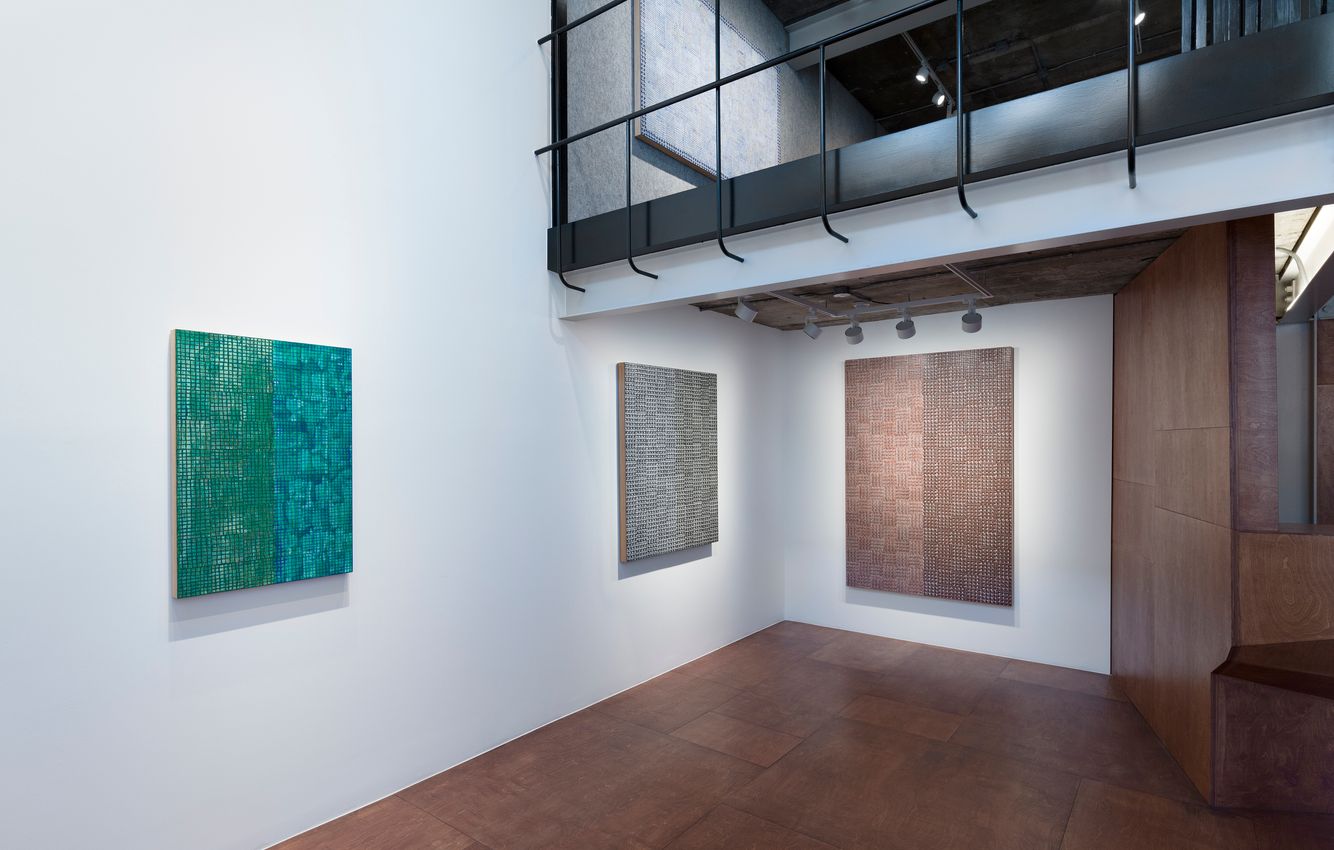
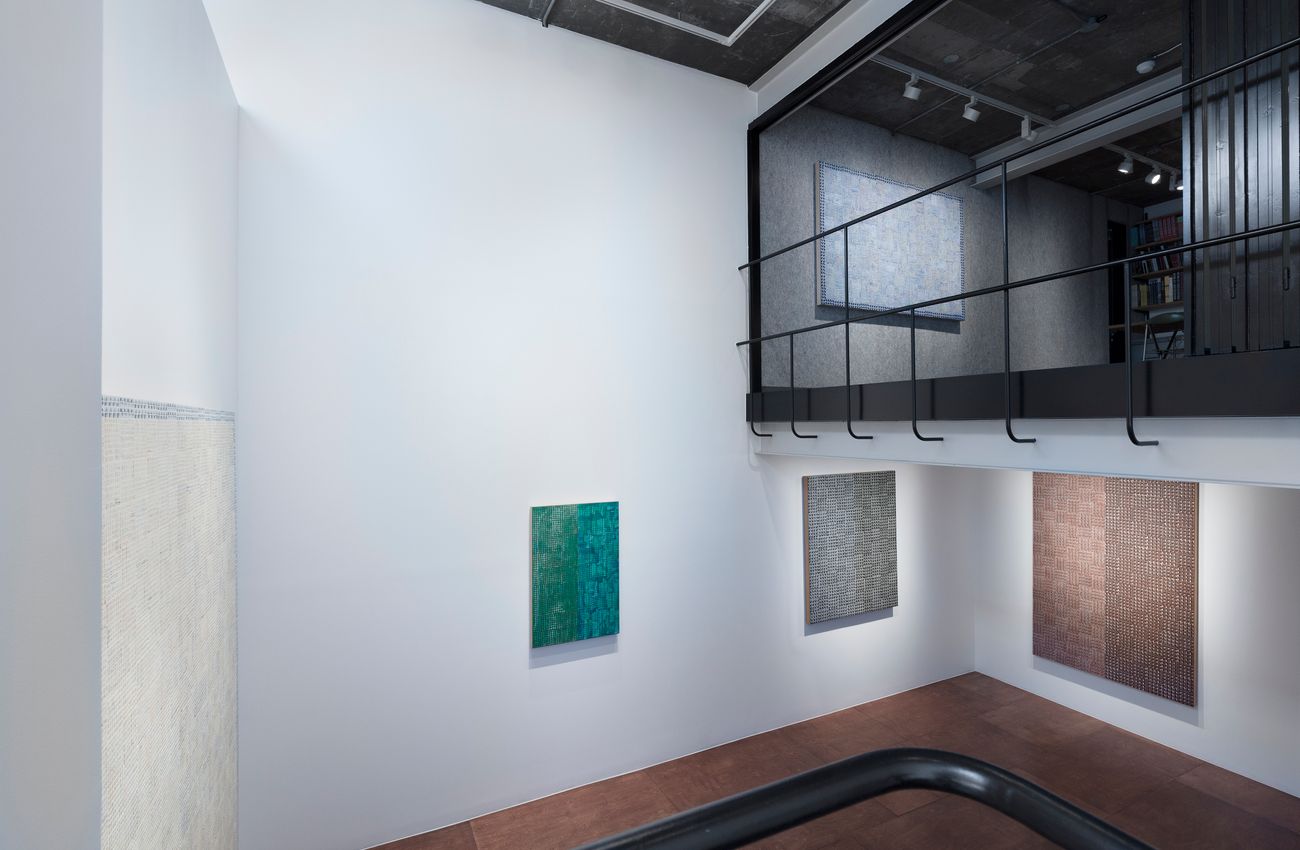
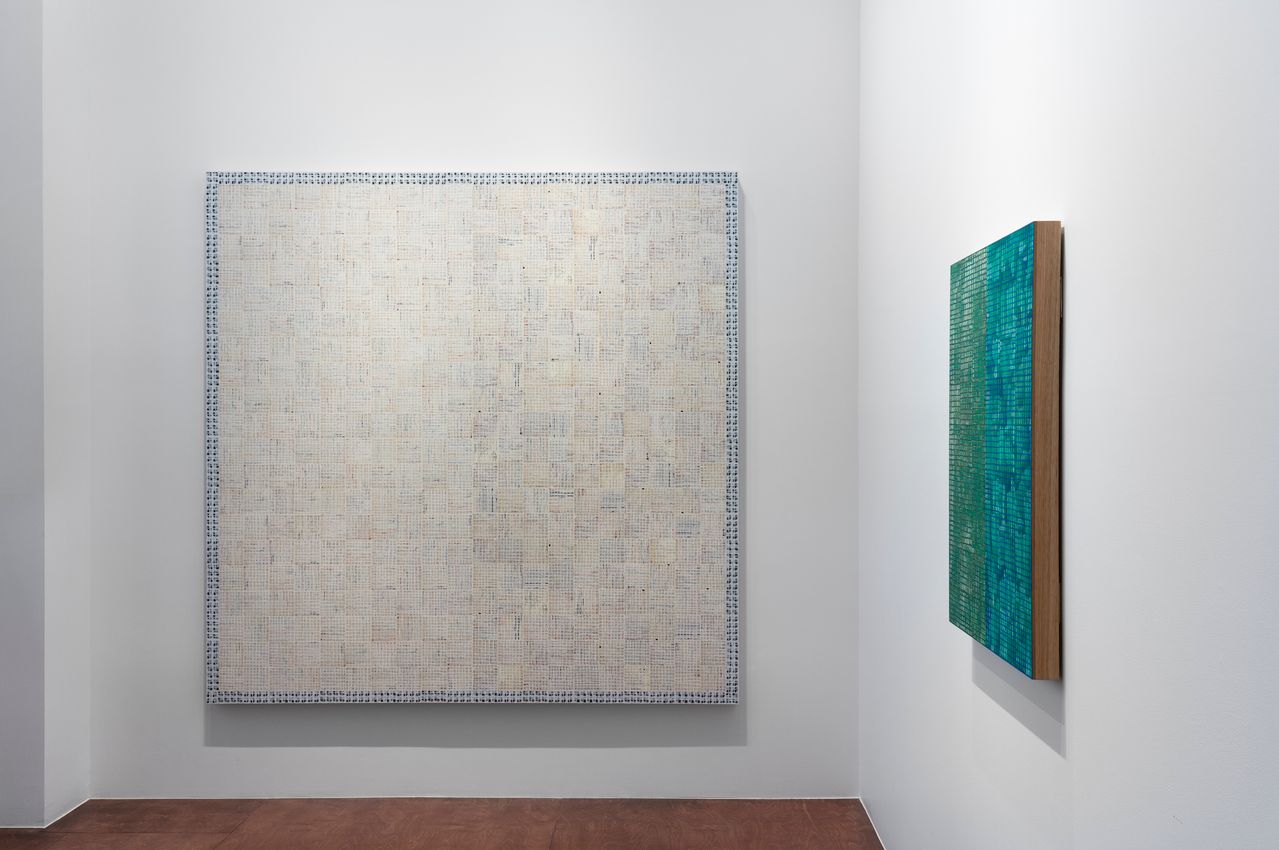
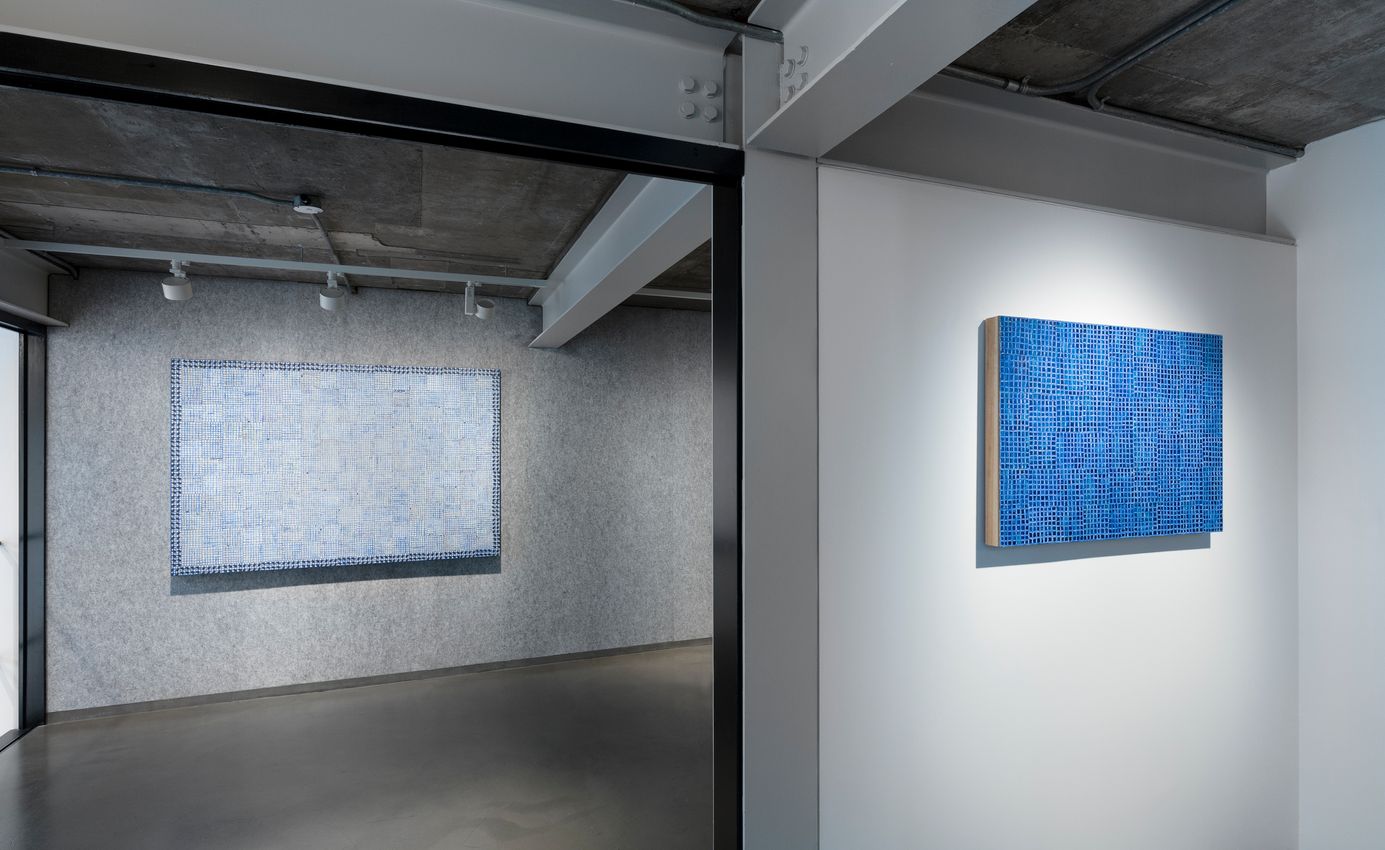
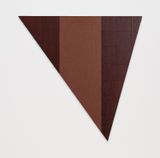
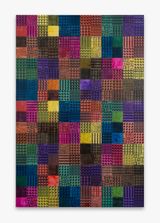
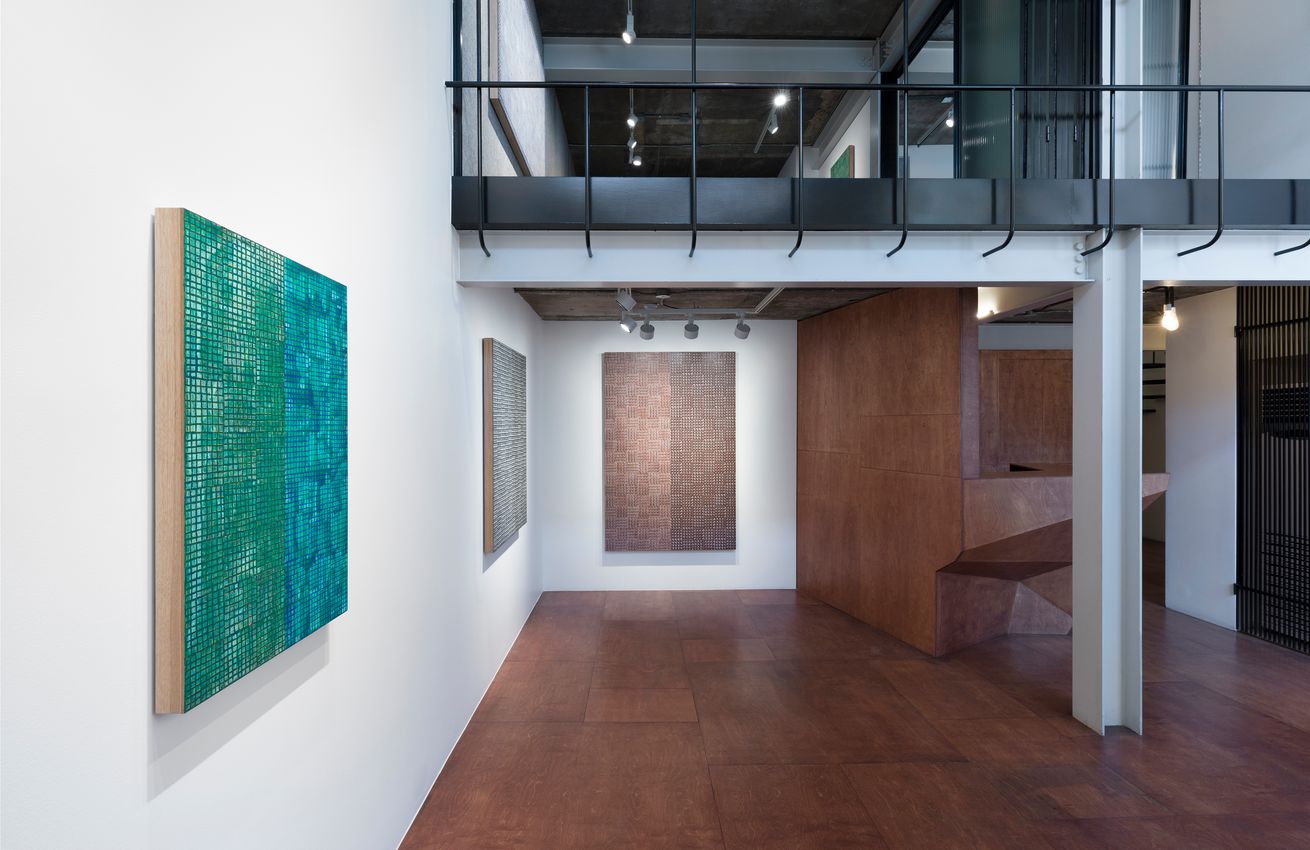
For Binion, personal documents represent the sum total of one’s social life: relationships, citizenship, vocation, and family. In his newest Hand:Work:II paintings, Binion’s insertion of his hand in repeated sequences of intricately layered mark-making reveals the time-consuming and laborious nature of his practice, illuminating the myriad of gestures and movements he condenses into a single painting. The bold colour palette chosen for these works is also self-referential, and harks back to his earliest paintings of the 1980s when he developed his ‘under-conscious’ approach. In these works Binion has recreated the brightly saturated hues of his earlier paintings in colourful ink washes poured and spread across the photocopied pages of his address books from that period. Through the incorporation of his hand as a self-generating subject, Binion pushes his work into new conceptual territory, expanding his repertoire to include performative self-portraiture. In recent years, Binion has emerged as an increasingly important artist of his generation, combining the post-minimal embrace of new, commercial grade materials (in Binion’s case, the oil stick), with a more personalised approach to the austere, formal devices of minimalism, realised through the incorporation of his personal history into these deceptively simple paintings.

McArthur Binion (b. 1946, Macon, MS; lives and works in Chicago) received his BFA from Wayne State University, Detroit, in 1971, and his MFA from the Cranbrook Academy of Art, Bloomfield Hills, MI, in 1973. Binion’s works were featured prominently in the 57th Venice Biennale, VIVA ARTE VIVA, curated by Christine Macel. Solo exhibitions of his work have been organised at the Contemporary Arts Museum, Houston, (2012); and the University of Maryland University College Gallery, Adelphi, MD (2010). Recent group exhibitions featuring his work include Picturing Mississippi, 1817-2017: Land of Plenty, Pain, and Promise, Mississippi Museum of Art, Jackson, MS (2017); Dimensions of Black: a Collaboration with the San Diego African American Museum of Fine Art, Museum of Contemporary Art San Diego, San Diego (2017); New at NOMA: Recent Acquisitions in Modern and Contemporary Art, New Orleans Museum of Art, New Orleans (2017); Through the African American Lens, National Museum of African American History and Culture, Washington, D.C. (2017); Circa 1970, The Studio Museum in Harlem, New York (2016); Prospect.3: Notes for Now, New Orleans (2014); When the Stars Begin to Fall: Imagination in the American South, The Studio Museum in Harlem, New York (2014); and Black in the Abstract, Contemporary Arts Museum, Houston (2013). His work is in numerous public and private collections, including the Institute of Contemporary Art, Boston; San Francisco Museum of Modern Art; Cranbrook Art Museum, Bloomfield Hills, MI; Detroit Institute of Arts, Detroit; Kemper Museum of Contemporary Art, Kansas City, MO; Metropolitan Museum of Art, New York; National Museum of African American History and Culture, Washington, D.C.; New Orleans Museum of Art; The Phillips Collection, Washington, D.C.; Wayne State University, Detroit; and the Whitney Museum of American Art, New York.

Read More

Installation Views

About the Artist

McArthur Binion (b. 1946, Macon, MS; lives and works in Chicago) combines collage, drawing, and painting to create autobiographical abstractions of painted minimalist patterns over a surface of personal documents and photographs. Photocopies of his birth certificate, pages from his address book, his passport photos, newspaper clippings, and photographs of his mother and childhood home constitute the tiled base of his works, over which he layers grids of oil stick. The complexly layered works, from a distance, appear to be monochromatic minimalist abstractions that have led many to compare his work to that of Jasper Johns, Robert Ryman, or Brice Marden. However, while his contemporaries focused more on materiality, abstraction, and in some cases the social and political climate of the time, Binion’s works are intensely personal and deeply dedicated to the rigorous process of making a painting. Upon closer inspection, these monochromatic abstractions come into focus: The perfect grid becomes a series of imperfect, laboriously hand-drawn lines, revealing intimate details of Binion’s identity and personal history. Binion’s gridded compositions impose rational order on the layers of personal history, showing only fragments of information from his birth certificate, or hints of details about his mother—but never enough to be immediately legible. Having begun his career as a writer, Binion is highly influenced by language and music, which can be seen in his titles and the ways he layers information to be “read” rather than simply seen. The tension that exists between the grid and the artist’s visible gestures is not unlike that of jazz music that merges improvisation with the order of a musical composition.

View Artist Profile

Also Exhibiting at Lehmann Maupin

About the Gallery

Rachel Lehmann and David Maupin founded Lehmann Maupin in 1996. The gallery represents a diverse range of American artists, as well as artists and estates from across Europe, Asia, Africa, South America, and the Middle East. It has been instrumental in introducing numerous artists from around the world in their first New York exhibitions.

View Gallery Profile
Address
213, Itaewon-ro
Yongsan-gu
Seoul
South Korea
Opening Hours
Tuesday – Saturday
11am – 7pm
(1)
Seoul 213, Itaewon-ro
Lehmann Maupin
213, Itaewon-ro, Yongsan-gu, Seoul, South Korea

Opening hours
Tuesday – Saturday
11am – 7pm
The art world in focus