



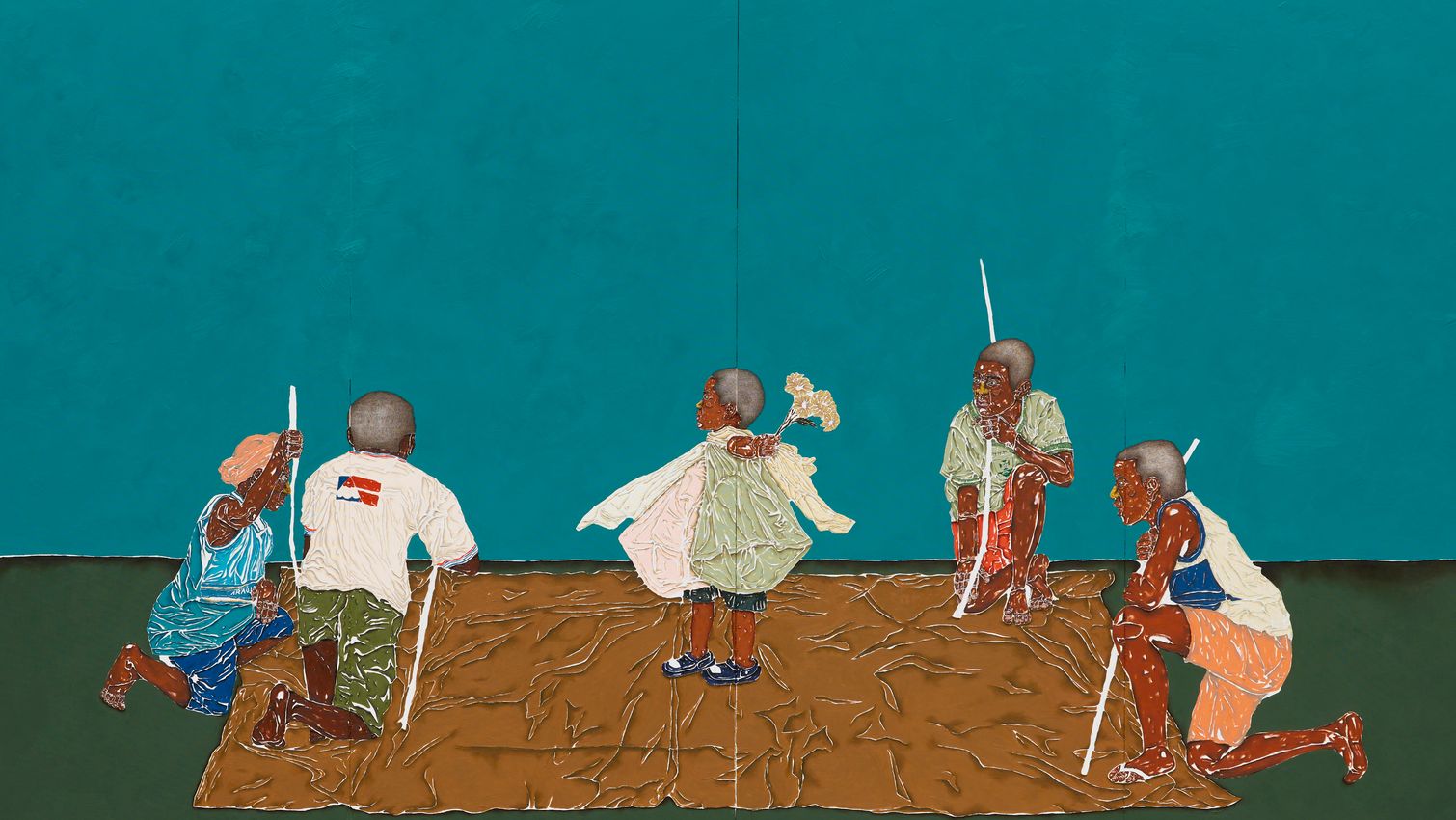
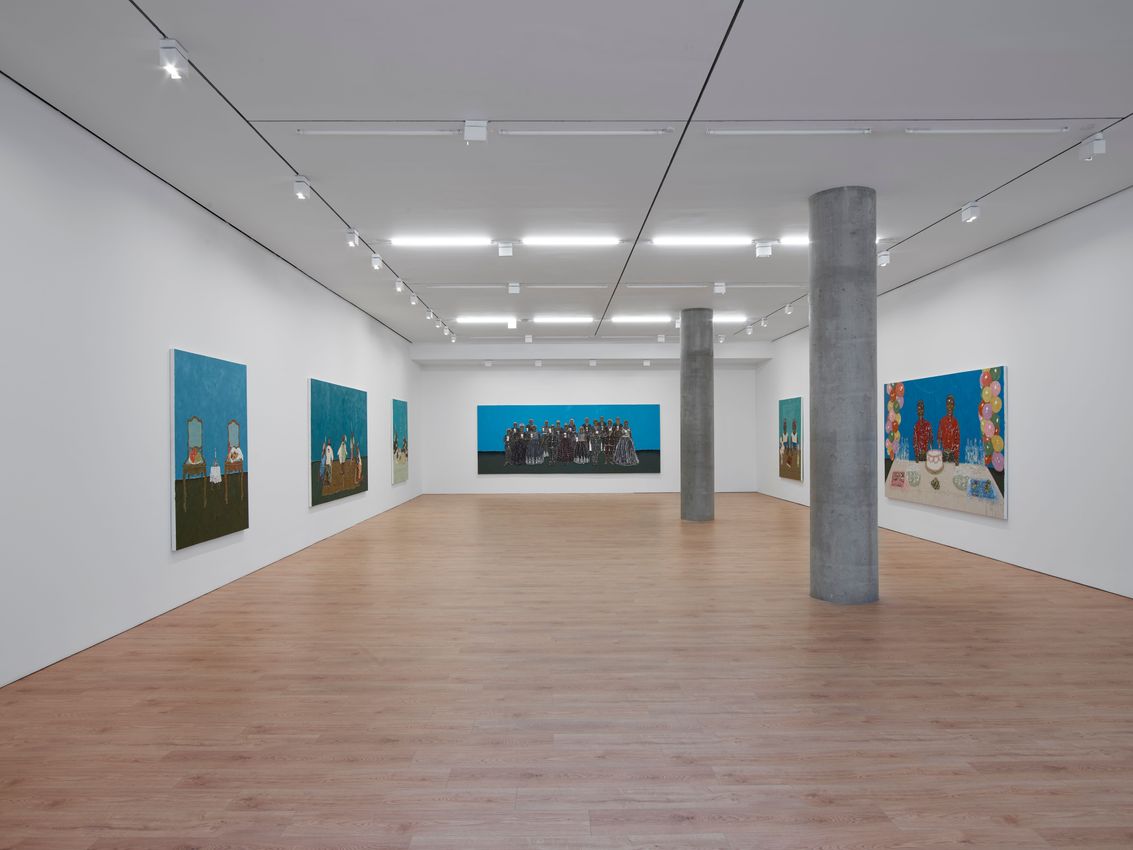
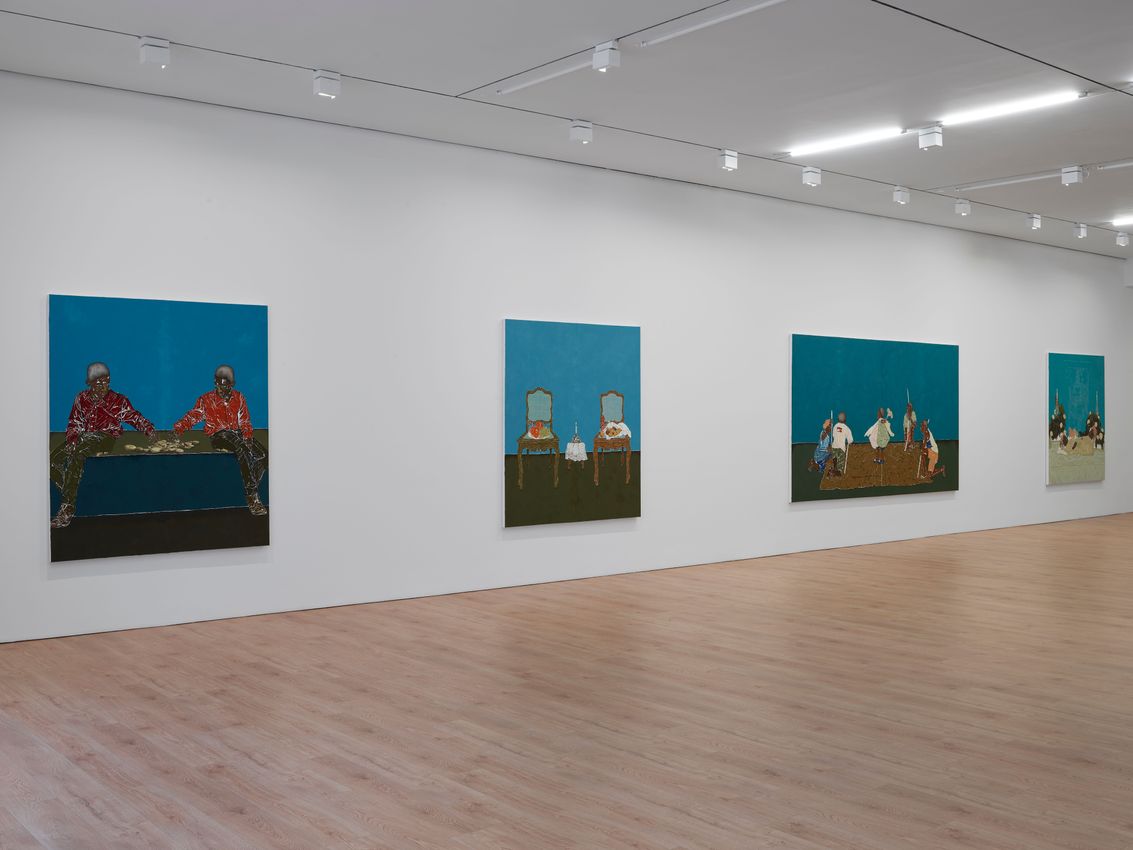
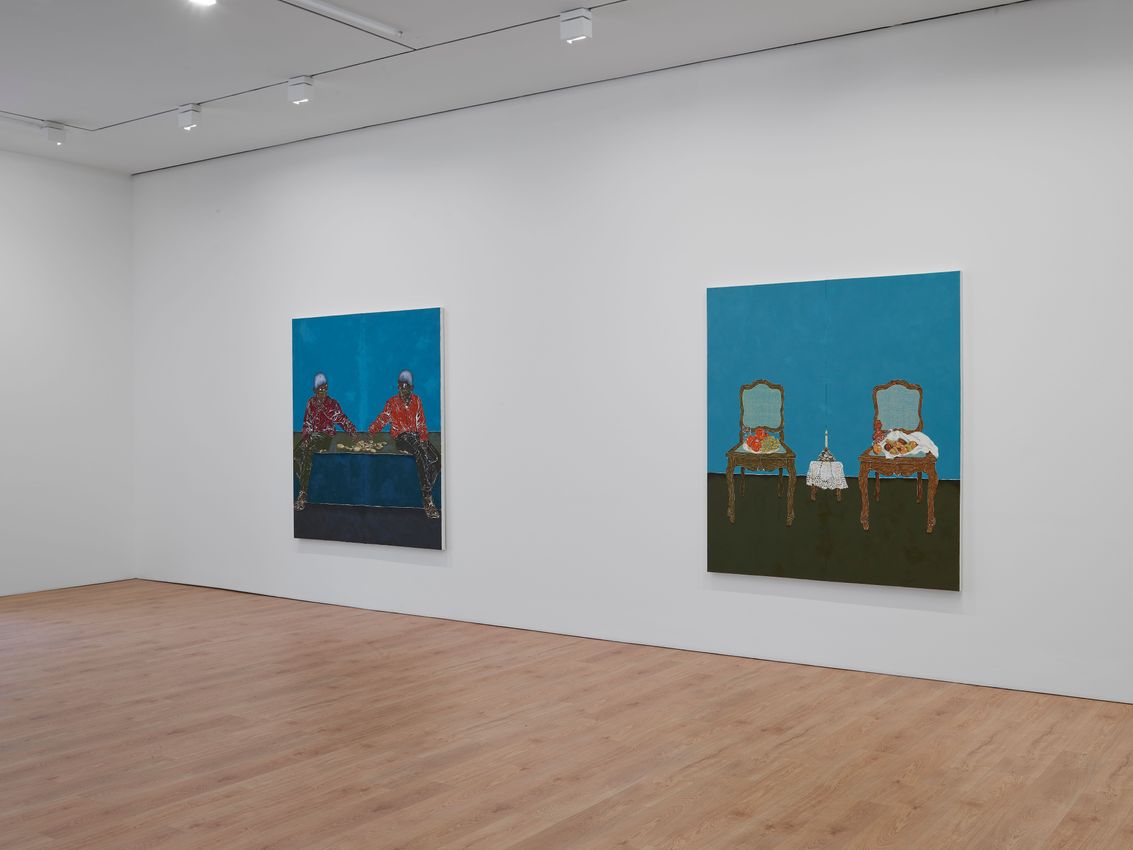
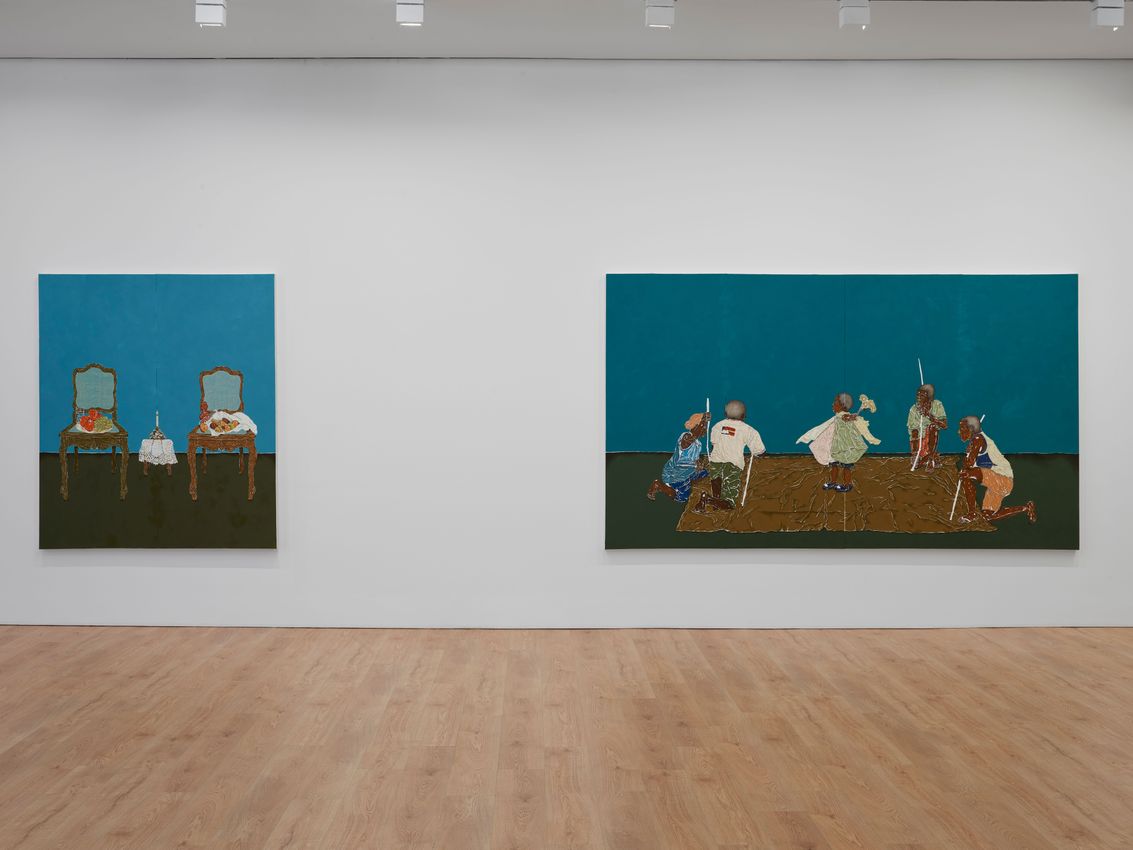
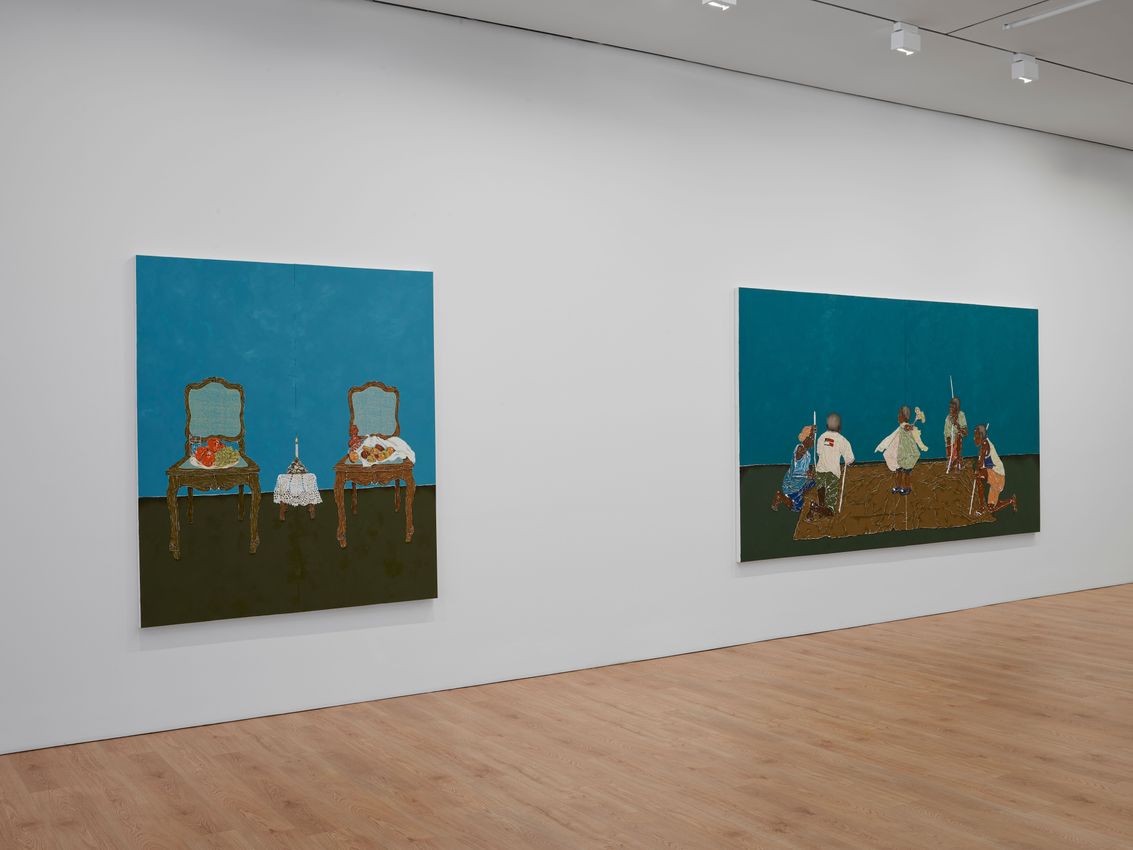
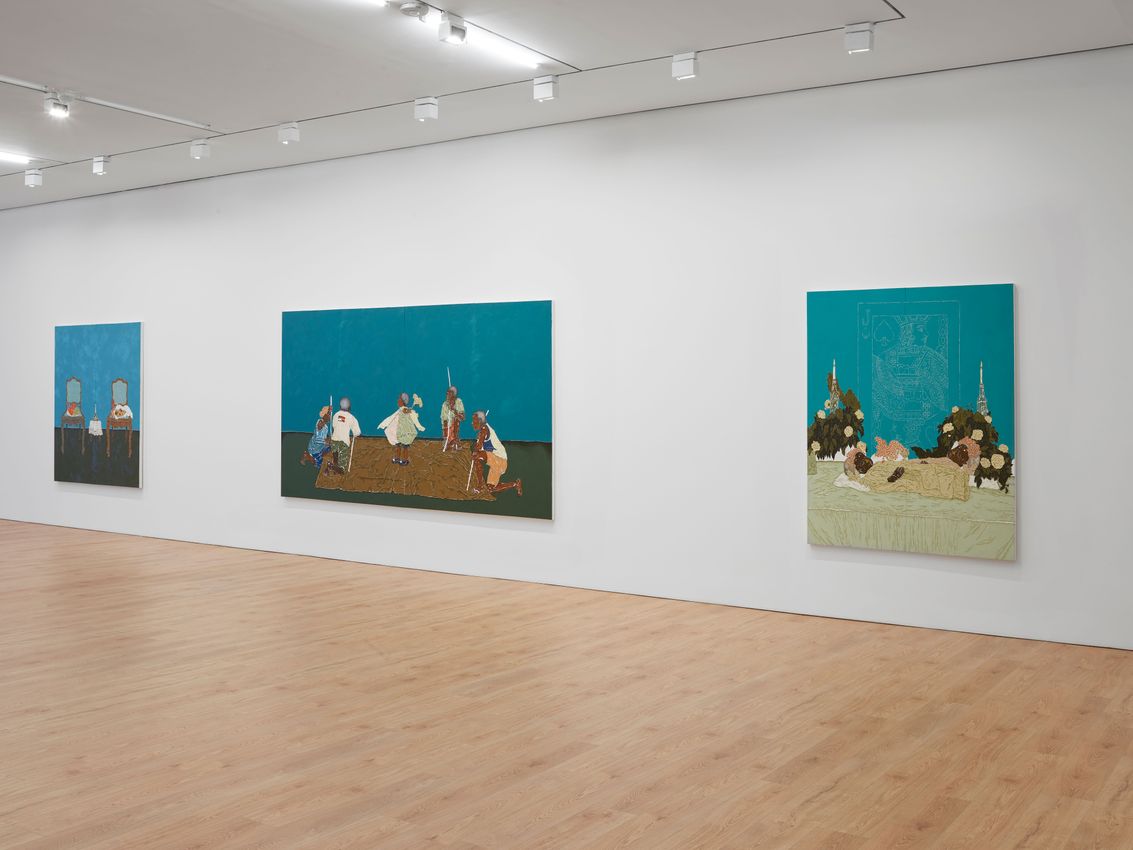
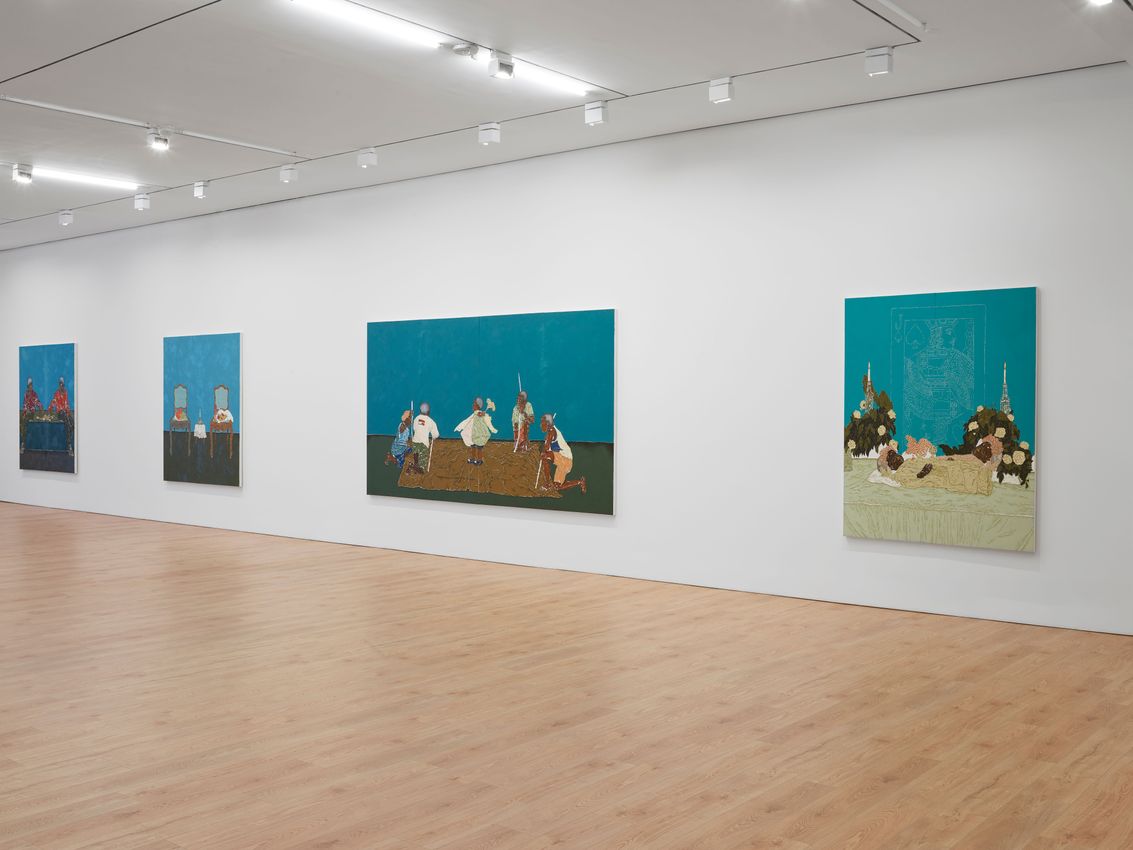
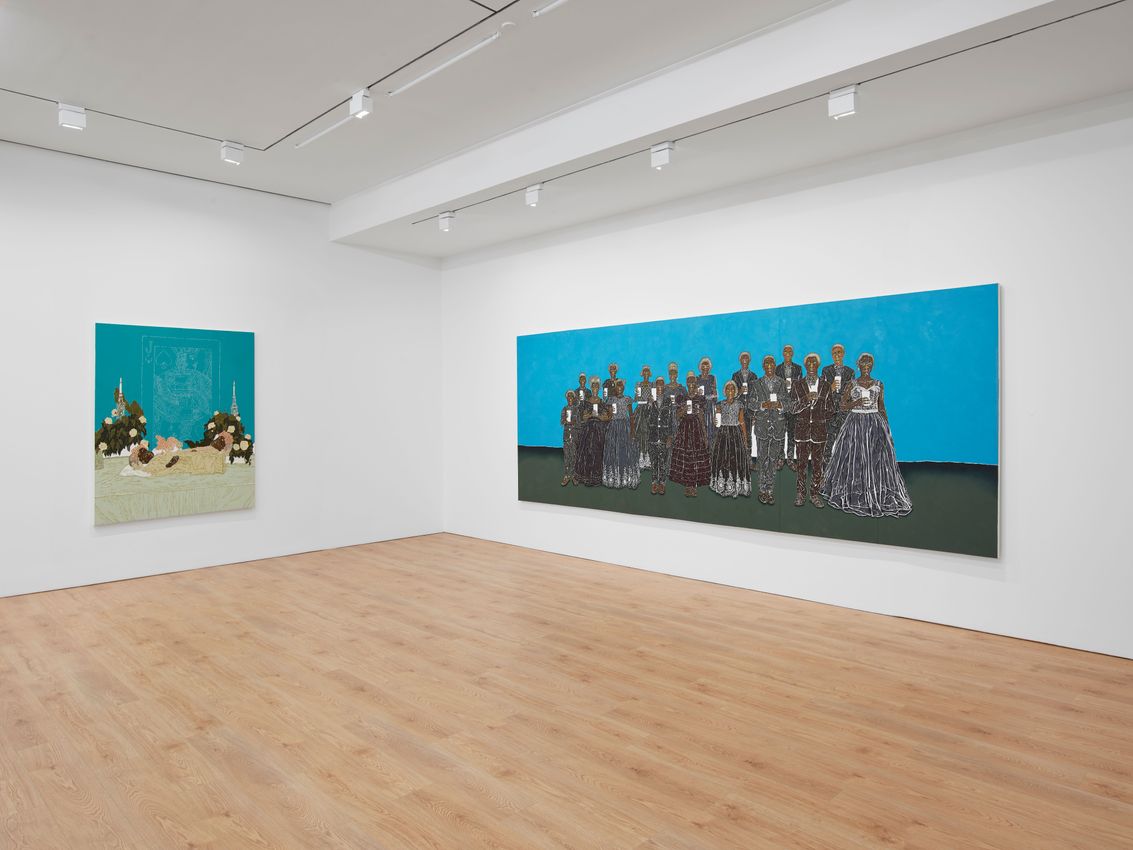
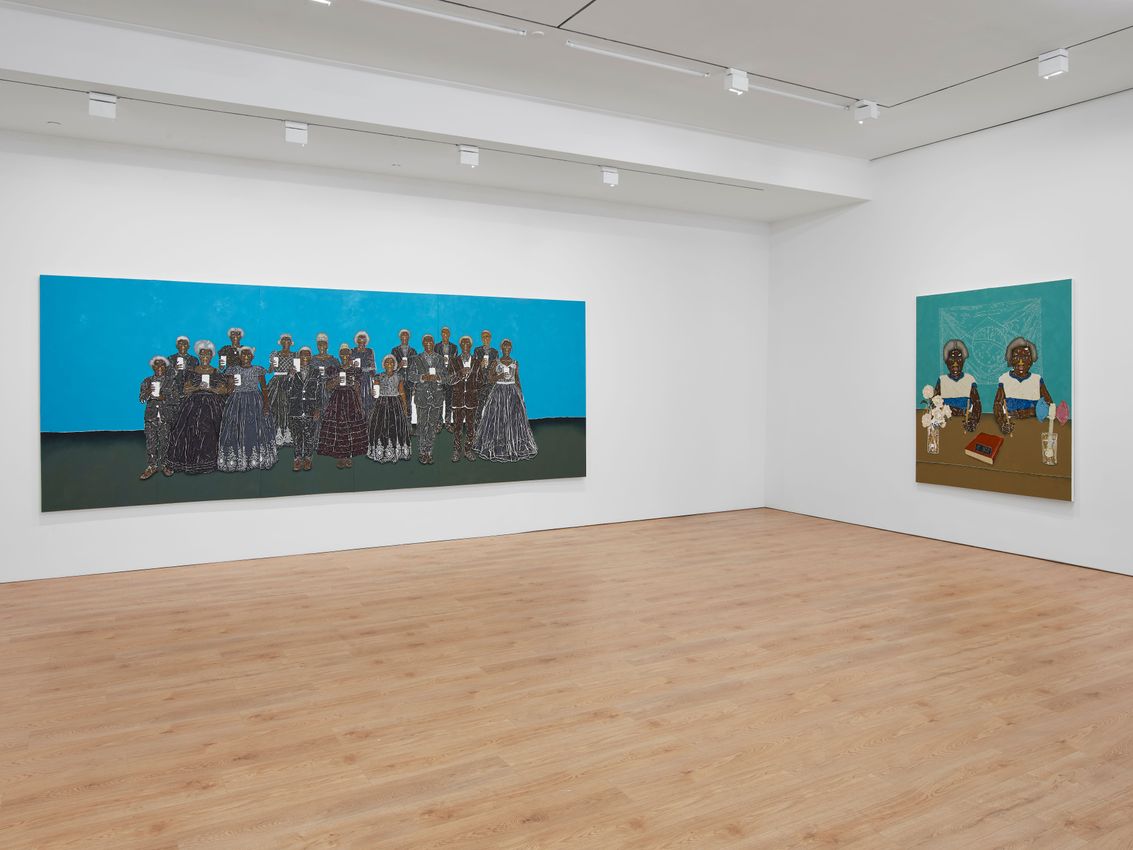
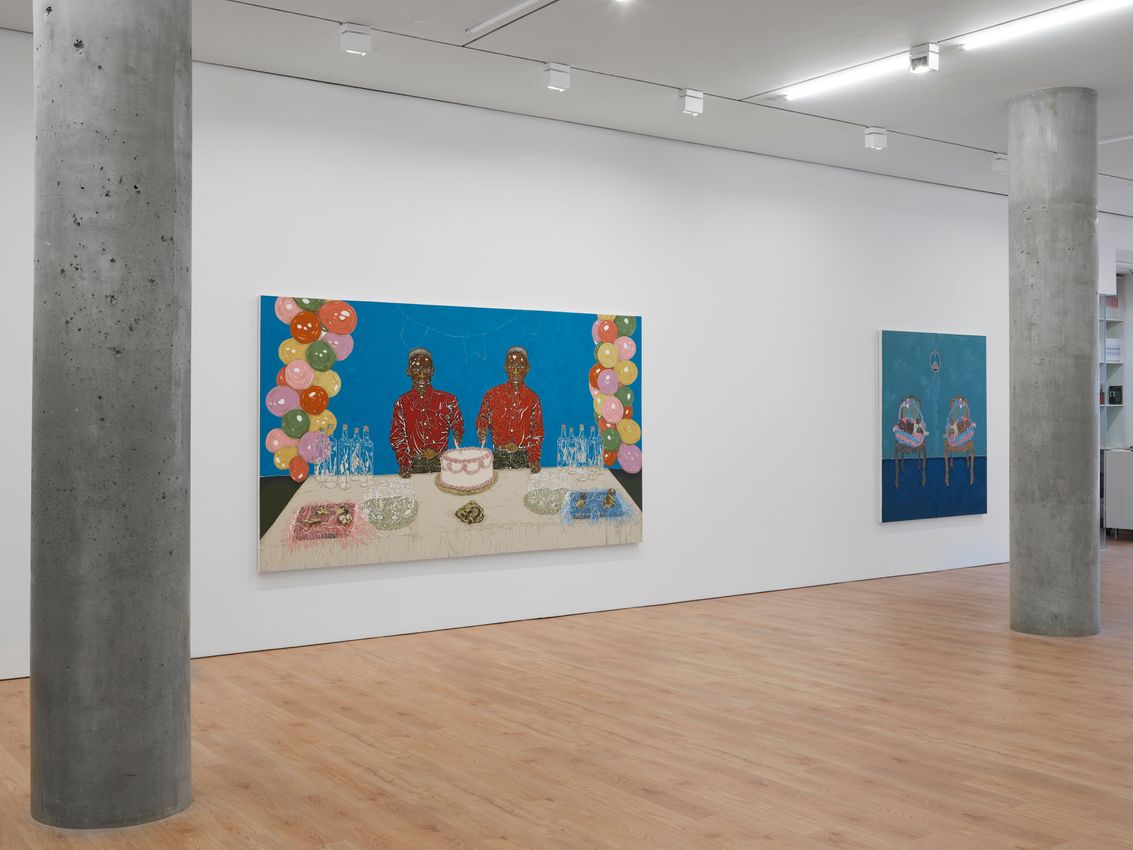
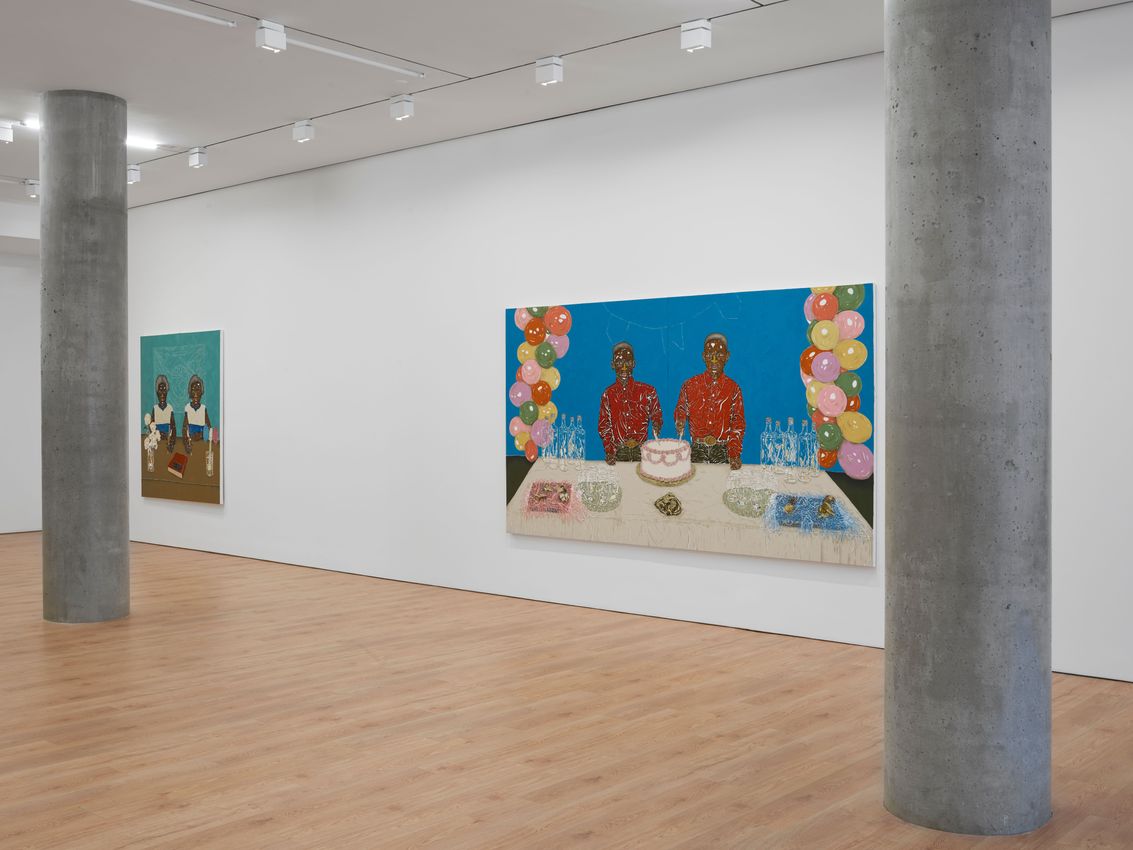
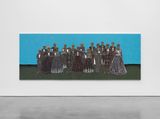
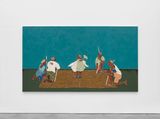
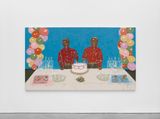
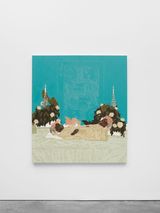
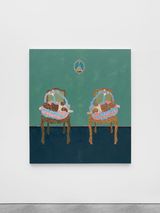
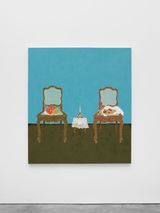
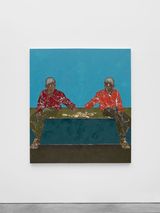
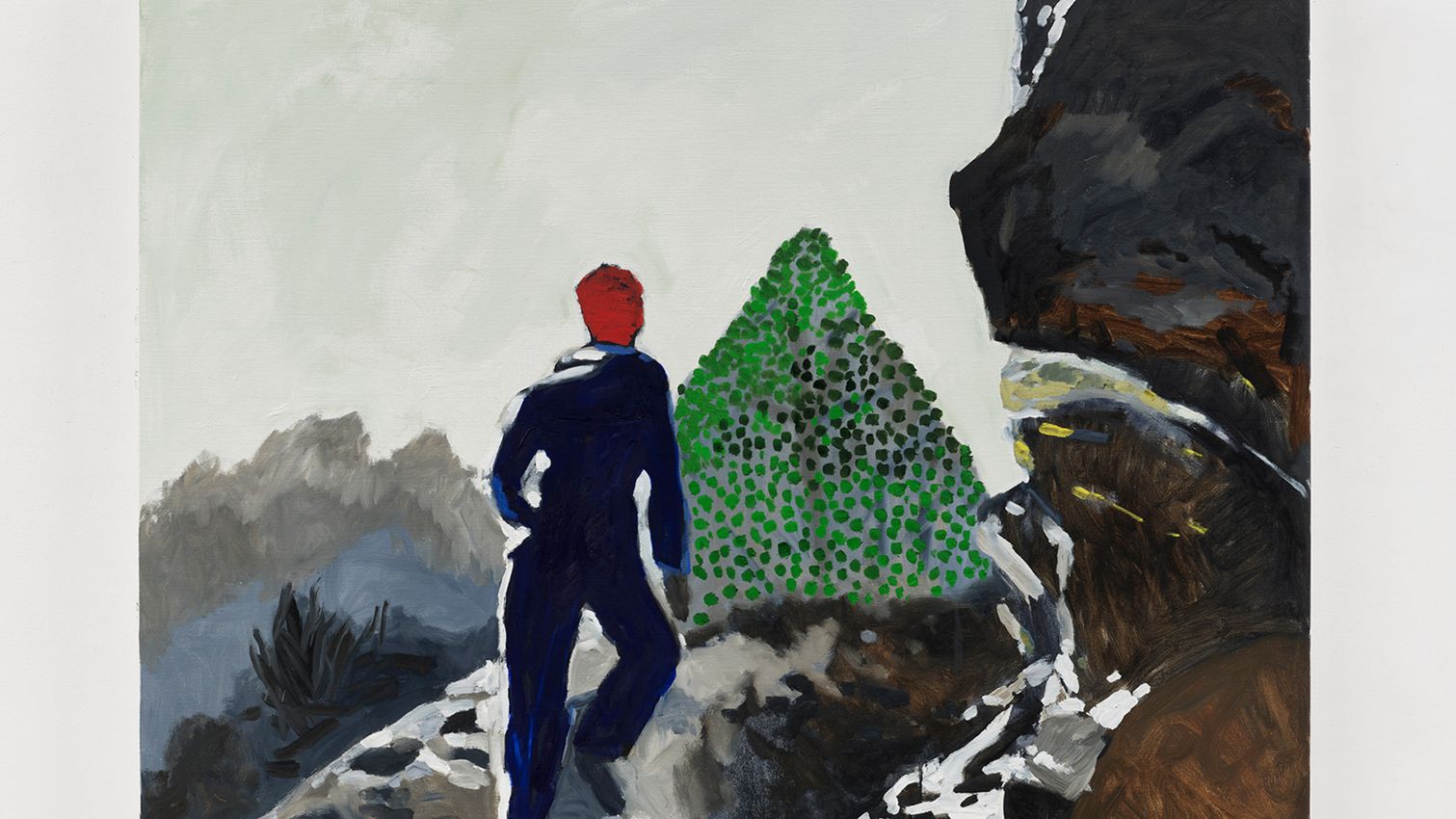
Lisson Gallery is pleased to present its debut solo exhibition with acclaimed Brazilian artist Dalton Paula, featuring a powerful new body of work that reclaims and re-centers Black childhoods as vital spaces of joy, memory, resilience, and cultural continuity. Marking a significant expansion of his practice, Paula moves beyond his celebrated portraiture to create vivid, narrative-filled compositions that depict moments of play, ritual, celebration, and communal life—each rendered against his signature blue-green backgrounds, a visual nod to Brazil’s tradition of studio portraiture.
At the heart of the exhibition is a monumental, four-meter-wide painting portraying a choir of 17 children. Dressed in ceremonial attire that fuses historical and contemporary dress, as well as the sacred and the playful, they sing in unison—a sonic and visual gesture resonant with Brazil’s cultural syncretism. More than a depiction of music, this work becomes a living archive: a testament to collective memory, ancestral knowledge, and the creative agency of Afro-Brazilian youth. Across the exhibition, childhood is reframed not merely as a site of innocence, but as a domain of resistance, inheritance, and imaginative power.
Paula’s approach is grounded in rigorous archival research and a method he calls critical fabulation (from the framework set out in Saidiya Hartman’s 2008 book, Venus in Two Acts)—a speculative, creative process that fills in the silences of undocumented histories. His paintings often incorporate symbolic motifs, often modelled or modified from art historical precedents, which layer the work with spiritual and contextual depth. Elements such as the wooden chair, symbolizing dignity and authority, or the glass of water, evoking spiritual purification and remembrance, serve as quiet tools of storytelling, asserting Afro-Brazilian presence and power within a reimagined visual canon.
While the scenes of birthdays, games, offerings, and everyday intimacy may appear novel within Paula’s visual language, they continue a longstanding thread in his practice. Earlier series, such as Rota do Tabaco[Tobacco Routes], 2016 (paint on ceramic vessels,) and Rota do Algodão, [Cotton Routes] 2022 (cotton textile-covered objects), also featured portraits of children, toys and dolls, while continuing his sustained commitment to recovering Afro-Brazilian histories through image-memories—narratives that resist colonial erasure and center Black resilience.
This new series also meditates on the transformative power of voice—understood as song, as testimony, and as collective affirmation. Drawing from the history of choral traditions in Brazilian schools and churches, Paula frames voice as both a spiritual and political force. When children are denied full recognition and protection, these works offer a counterimage: one where Black children are not ornamental or invisible, but central—makers of culture, carriers of tradition, and embodiments of the future.
Running concurrently with the Lisson Gallery exhibition, Paula’s art school and residency, Sertão Negro, will present a speci al project at the Storefront for Art and Architecture in New York, opening September 13. Founded in Goiás, Brazil, Sertão Negro ext ends beyond the arts, integrating its educational and studio provision with a self - sustaining farm and garden. This multidisciplinary, emancipatory project is modeled after the tradition of quilombos — communities formed by escaped enslaved peoples — and is rooted in Afro - Brazilian knowledge systems, ecological stewardship, and intergenerational learning. Sertão Negro will also participate in the 36th Bienal de São Paulo this fall in the form of an architectural and participatory installation.


Dalton Paula is an artist, researcher and educator known for his powerful engagement with Afro-Brazilian traditions. Paula foregrounds the lives of undocumented Black figures whose contributions to society have been overlooked by working to impart a lasting cultural legacy through the continuation of communities and bodies of wisdom that have been forgotten or hidden over time. Just as the personages he depicts were excised from official narratives or documentation due to their actions in opposition to slavery or other forms of injustice, Paula uses collage, paint, film and photography, as well as the symbols and traditions of studio portraiture, in order to stitch the memory of their existence back into the fabric of history. He also works to elevate and commemorate these portrayals through the use of regal attire, highlights of gold leaf and the aura of reverence usually reserved for subjects of high or noble rank.


A respected voice in contemporary art discourse.
Focusing on ambitious storytelling and insightful art-world commentary. Ocula Magazine publishes in-depth interviews, critical essays and timely analysis on the artists, exhibitions and ideas driving the global art world.
Learn more about Ocula Magazine
Showcasing the best of the art world.
Ocula partners with galleries from around the world to highlight their artists, artworks and exhibitions. Gallery membership is by application and invitation, with each member vetted by an independent panel.
Learn more about Ocula Membership

Specialises in the sale of major artworks.
Led by a team with deep ties to the world’s leading auction houses, galleries and collectors. Ocula’s advisory team offers bespoke services to high-net-worth clients from around the world who are looking to acquire the best of contemporary and modern art.
Learn more about our team and services