





RASHID JOHNSON
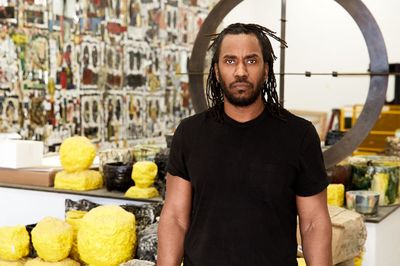
b. 1977, United StatesOne of the most celebrated artists in America, Rashid Johnson examines the scope and breadth of Blackness through photography, installation, film, painting, sculpture and drawing. His work interrogates the complexities of cultural identity and history in the contemporary world, engaging with the history of conceptual art as well as Black experience.
Early Years
Born in Chicago in 1977, Rashid Johnson’s father was a multidisciplinary artist and his mother a poet and academic—he has talked about “intersectional identities” in his home. In high school, he realised he wanted to make art and graffiti became his outlet for expression. While at Columbia College in Chicago, he worked for a wedding photographer, which spurred him into thinking that art photography could be a creative option.
Rashid Johnson: Artworks
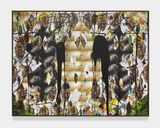
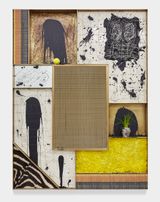
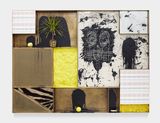
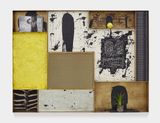
Johnson began his artistic career with photography and first garnered critical acclaim when he took part in Freestyle (2001), a group exhibition curated by Thelma Golden featuring work by 28 young Black artists at the Studio Museum in Harlem, New York City. He showed a series of photographic portraits depicting a homeless Black man he had encountered in Chicago. He then expanded his practice into video and abstract paintings, mixing African black soap with melted wax and applying this new medium to mirrored panels or ceramic tiles. This led to his Cosmic Slops series, where he poured the wax/soap mix into trays and carved into it as it dried. Text paintings and abstract sculptures followed. In 2020, he began painting with oil on canvas.
- In the photograph I Talk White (2003), a white substance spells out the title on a mirror, alluding to the preconceived notions of Blackness and racialisation of speech.
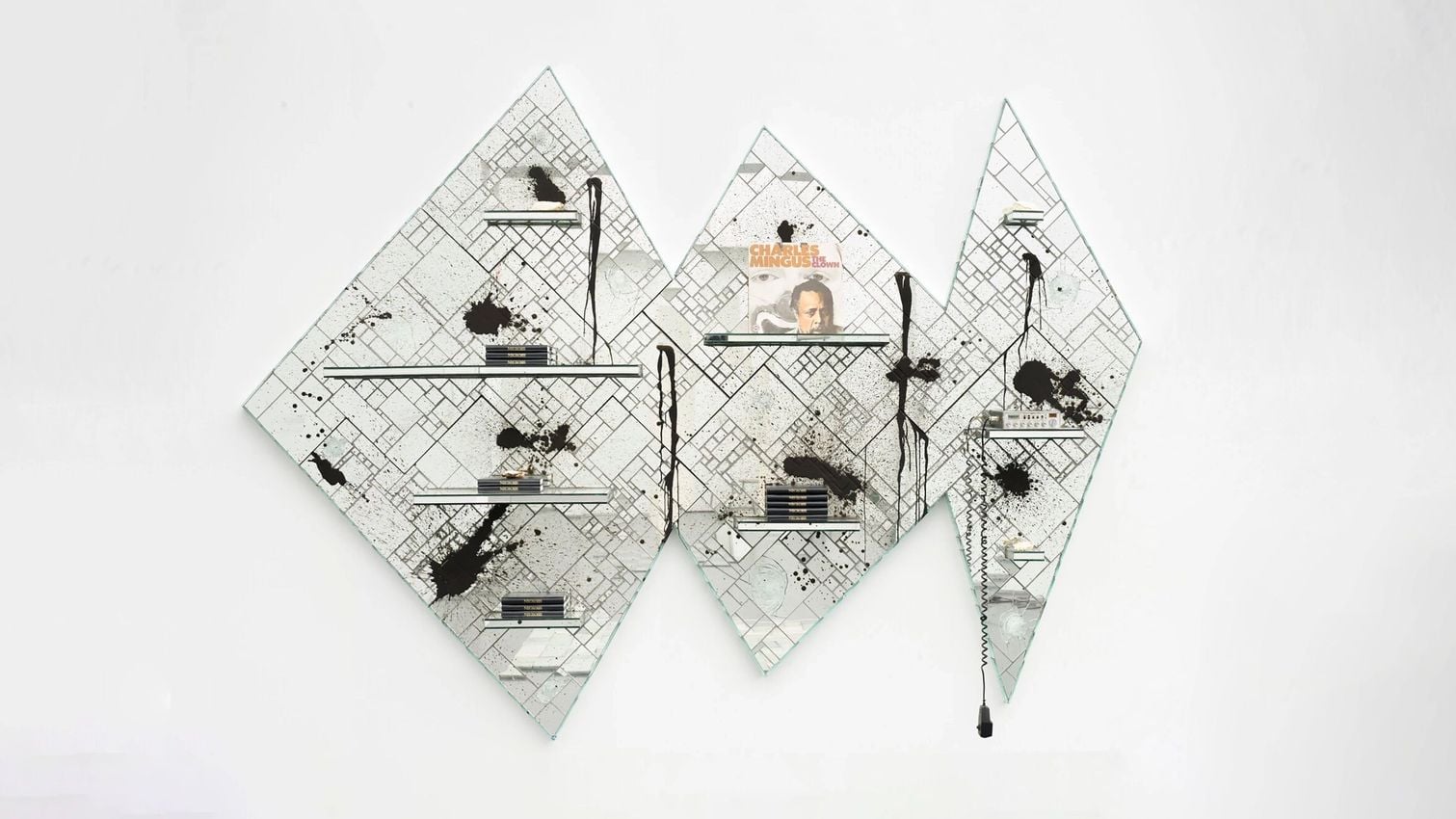
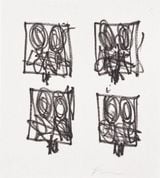
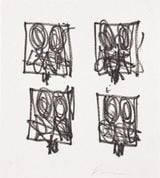
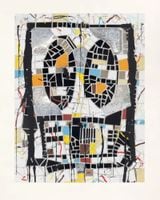
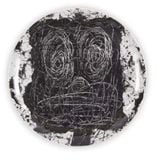
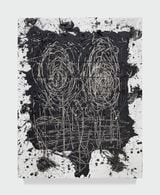
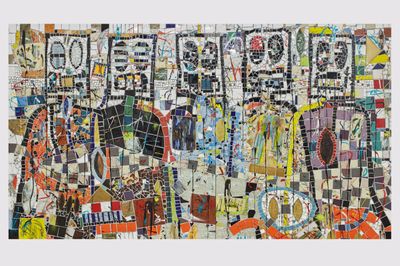
- Johnson’s Anxious Men series began as black soap paintings in 2015, in which abstract portraits of Black faces were scratched on to the surface. Later works in the series were made from ceramic tiles and mirror pieces, for example The Broken Five (2019). Johnson updated the visual language of the Anxious Men series in his Covid-19 pandemic online Anxious Red series, using oil slick on cotton rag paper.
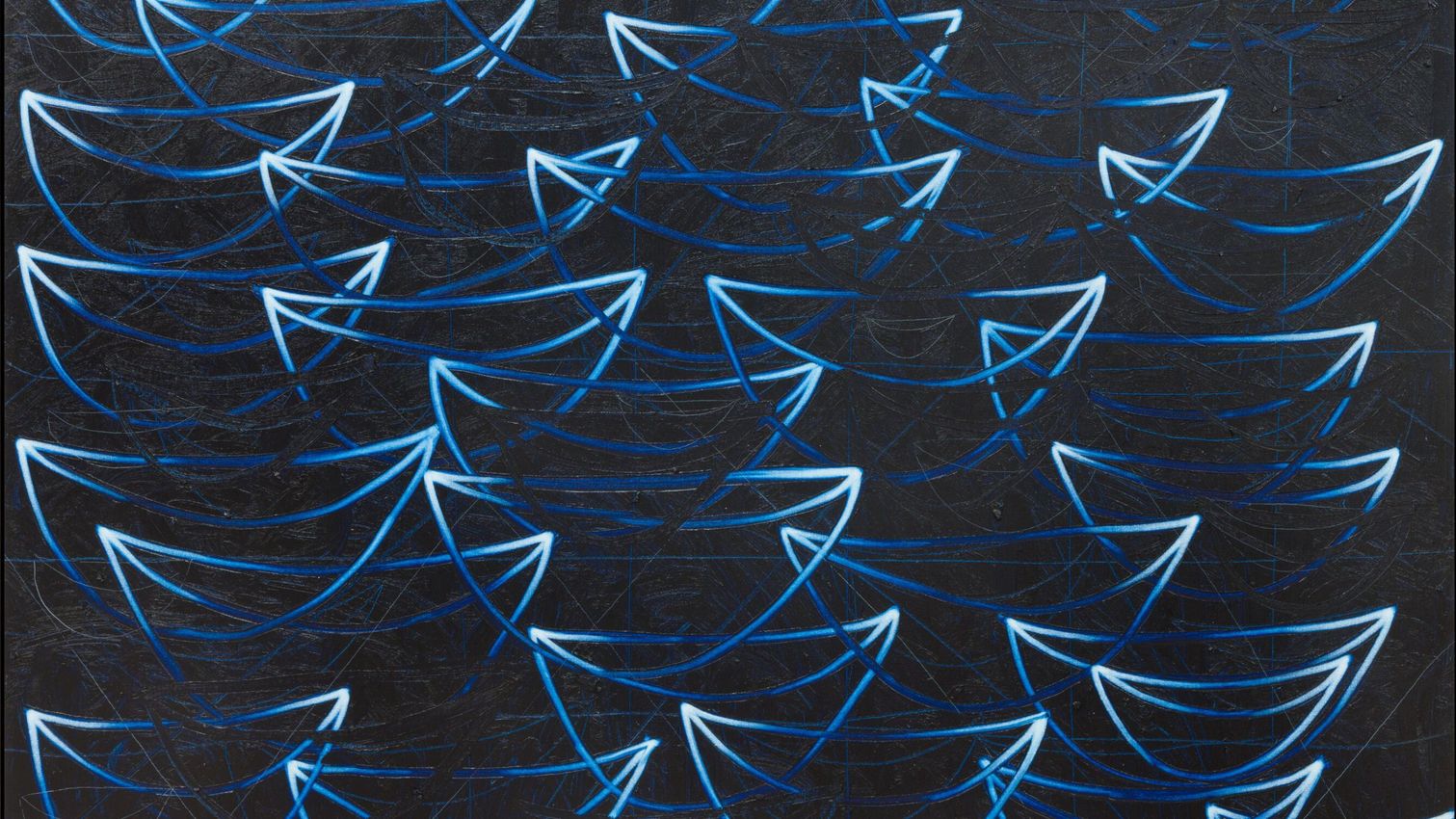
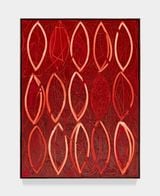
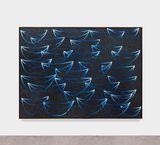
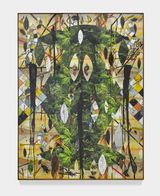
- His Soul Paintings series (begun in 2024) is an exploration of how we imagine our essence, using art to try to answer life-defining questions such as what a soul looks like. The series features the vesica piscis (also seen in Johnson’s God Paintings and Seascapes), the almond-shaped symbol which could be viewed as an opening eye or as a vessel.
Rashid Johnson: Exhibitions
Select Solo Exhibitions
- The Hikers, Media Arts Watch Gallery, University of Rochester (2026)
- Rashid Johnson: A Poem for Deep Thinkers, Solomon R Guggenheim Museum, New York City (2025)
- Anima, Hauser & Wirth, Paris (2024)
- Nudiustertian, Hauser & Wirth, Hong Kong (2023)
- Sodade, Hauser & Wirth, Menorca (2022)
- The Chorus, Gallery Met, The Metropolitan Opera, New York City (2021)
- Waves, Hauser & Wirth, London (2020)
- Rashid Johnson: Message to Our Folks, Museum of Contemporary Art Chicago (2012)
Select Group Exhibitions
- Directionless, Hauser & Wirth, Menorca (2026)
- Performer and Participant: Sovereignty of Quiet, Tate Modern, London (2026)
- Big Things for Big Rooms, Hirshhorn Museum and Sculpture Garden, Washington DC (2025)
- Come One, Come All, Anthony Gallery, Chicago (2024)
- Thus Spoke The Moment, Start Museum, Shanghai (2023)
Further reading
- Rashid Johnson’s Instagram
- Interview with Harper’s Bazaar in 2025
- Profile in New Yorker magazine (2024)
- Interview and profile in Time magazine (2025)
- In conversation with Naomi Beckwith at the Guggenheim about the use of live plants (2025)
- Rashid Johnson’s artist page at Hauser & Wirth
Rashid Johnson FAQs
What techniques and materials does Rashid Johnson use?
While Rashid Johnson’s early photographs were developed using a 19th-century technique called Van Dyke brown, which gave them an intimate, historical feeling. He then expanded his practice into painting with a mixture of African black soap and melted wax, creating abstract sculptures and eventually painting with oil on canvas. He told New Yorker magazine in 2024: “I see myself as a post-medium artist... I used the camera lens when I wanted legibility, but the lens doesn’t capture my need for gesture in the way painting does. Sculpture is a space for play and tactility.” He has also worked with wood, brass, steel, ceramic tiles, found objects and live plants.
What are Rashid Johnson’s influences?
Rashid Johnson is influenced by Black American culture in the post-Civil Rights era and his personal lived experience and memories. He has been inspired not only by visual artists but by activists, writers, actors, philosophers and musicians, for example: Joseph Beuys, Eldridge Cleaver, David Hammons, Carl Andre and Sun Ra.
What are the main themes in Rashid Johnson’s work?
Personal and collective experiences of Black Americans receive careful contemplation in Johnson’s works. His references come from Black identity and cultural history, and also from art history. Anxiety is also a frequent theme, not only in the Anxious Men and Anxious Red series, but also in The Hikers (2019), a seven-minute film in which two young Black men run into each other on a mountain peak, explores the anxiety that comes from unexpected meetings in an isolated space. Rashid Johnson also frequently references plants, not just in his work but by adding live plants to exhibitions.
Ocula

Rashid Johnson's Exhibitions Opening Soon


View Rashid Johnson's Artworks






















Rashid Johnson in Ocula Magazine










Explore and Follow Artists Shaping Contemporary Art
A respected voice in contemporary art discourse.
Focusing on ambitious storytelling and insightful art-world commentary. Ocula Magazine publishes in-depth interviews, critical essays and timely analysis on the artists, exhibitions and ideas driving the global art world.
Learn more about Ocula Magazine
Showcasing the best of the art world.
Ocula partners with galleries from around the world to highlight their artists, artworks and exhibitions. Gallery membership is by application and invitation, with each member vetted by an independent panel.
Learn more about Ocula Membership
Specialises in the sale of major artworks.
Led by a team with deep ties to the world’s leading auction houses, galleries and collectors. Ocula’s advisory team offers bespoke services to high-net-worth clients from around the world who are looking to acquire the best of contemporary and modern art.
Learn more about our team and services