Press Release

“My paintings are about ordering the chaos. If they could speak, they would tell how I stand in the world, how I try to solve conflicts, but mostly how to preserve paradoxes as sources of thoughts and happiness.”

– Bernard Frize, November 2024

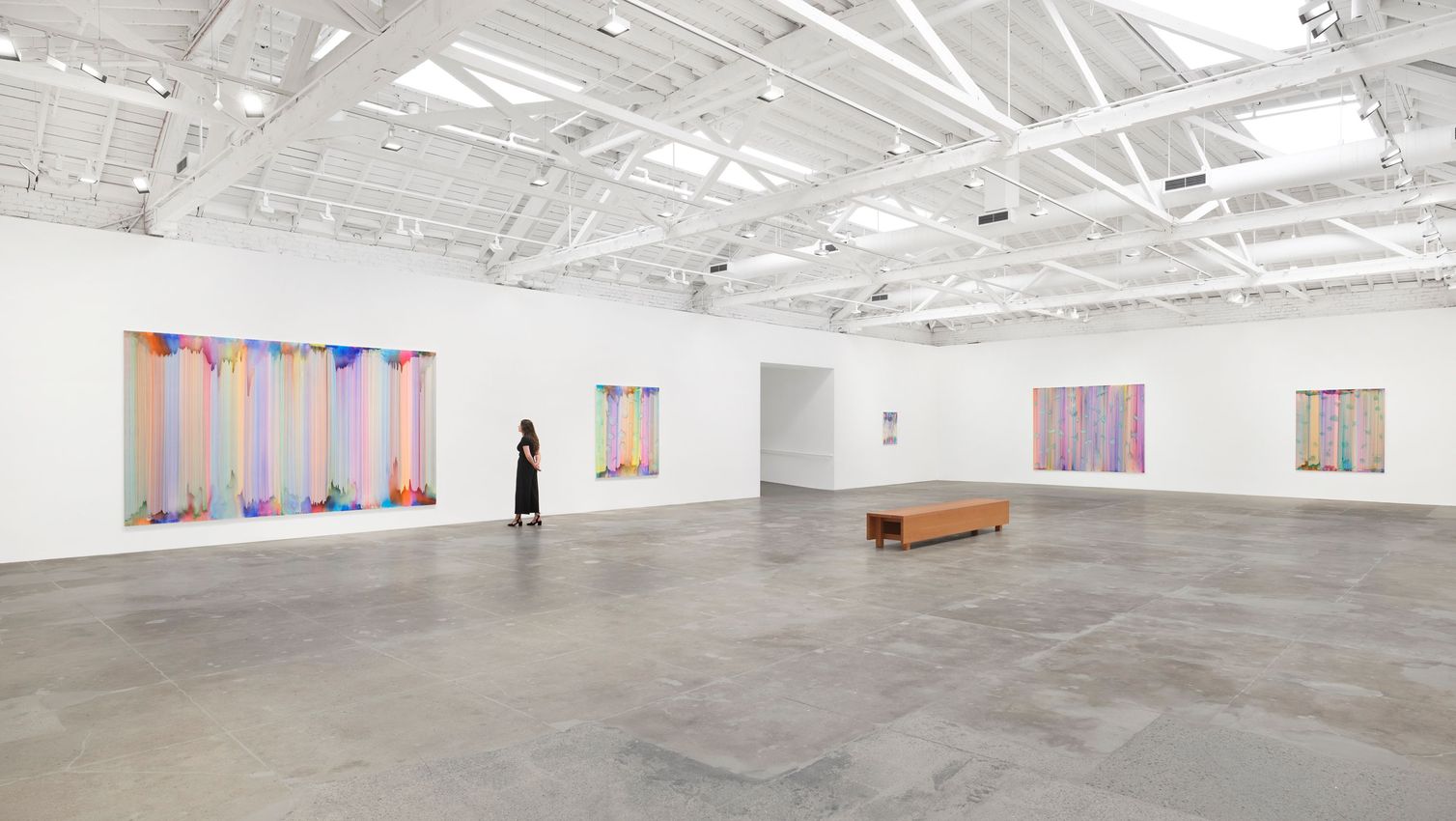
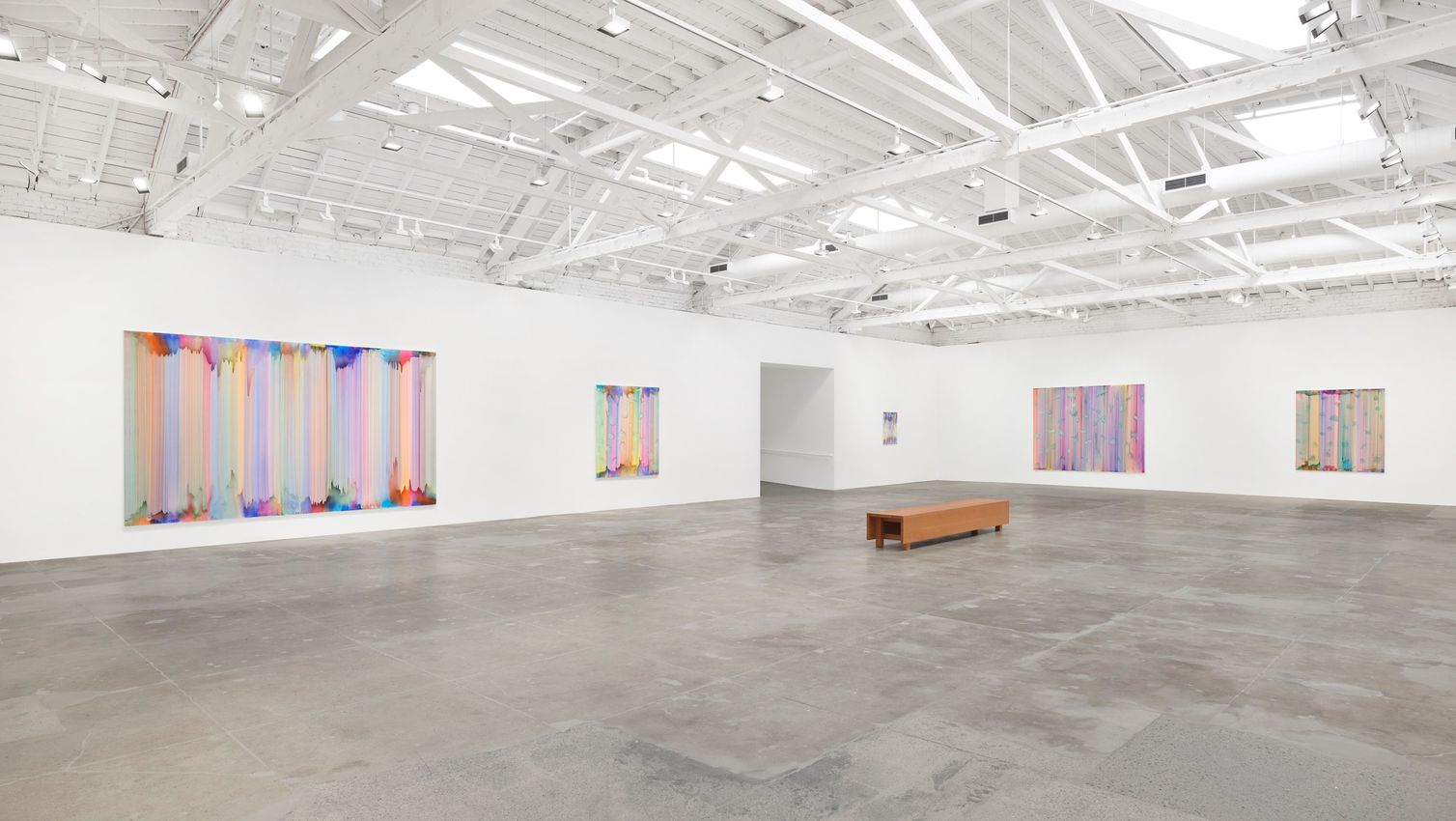
Marian Goodman Gallery is pleased to present our first exhibition with French artist Bernard Frize since announcing representation of him earlier this year, as well as his first solo exhibition in Los Angeles in twenty years. Since the late 1970s, Frize has concentrated his practice on abstract conceptual painting that reflects on what it means to make a painting as well as how a painting can be made. Through a dedicated methodology that is at once playful, mechanical, and spiritual, Frize liberates his work from the self-expressive promise of the painterly gesture through a range of strategies that reflexively question the role and labor of the painter.
Through minimal, self-evident compositions, Frize takes a performative yet rational approach that has ranged in the past from paintings completed with a single brush stroke to others made by the artist conducting two to eight participants who exchange brushes as they choregraphically move to a determined protocol around a canvas. The artist has used a variety of other compositional determinations, such as utilising the width of a household paint roller, limiting his palette to a handful of colours, or dipping a canvas into paint and letting it drip until it dries into a finished work. In addition, Frize is open to, if not welcoming of, chance within his operations, often creating methods with structural or material opportunities for it.

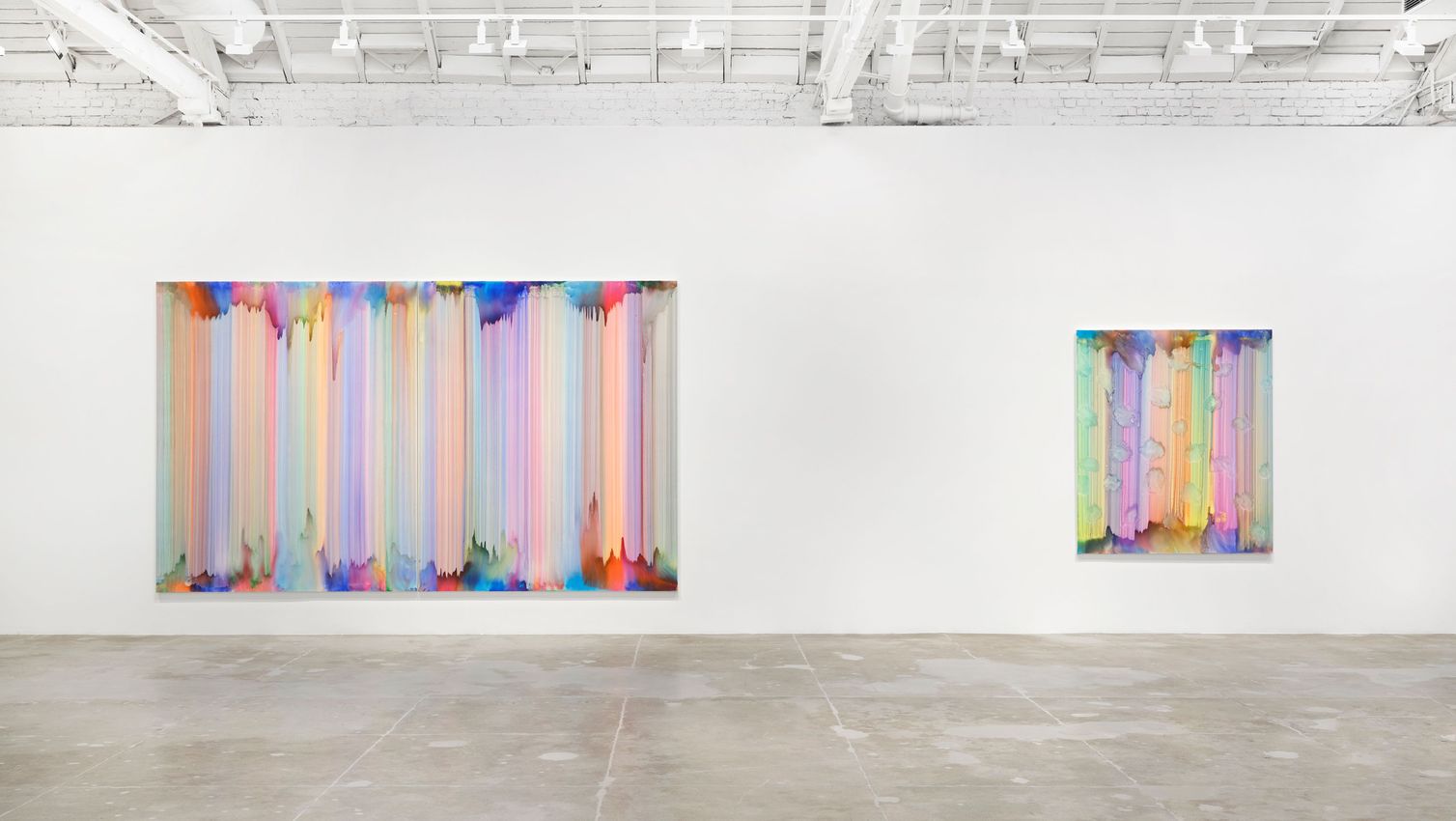
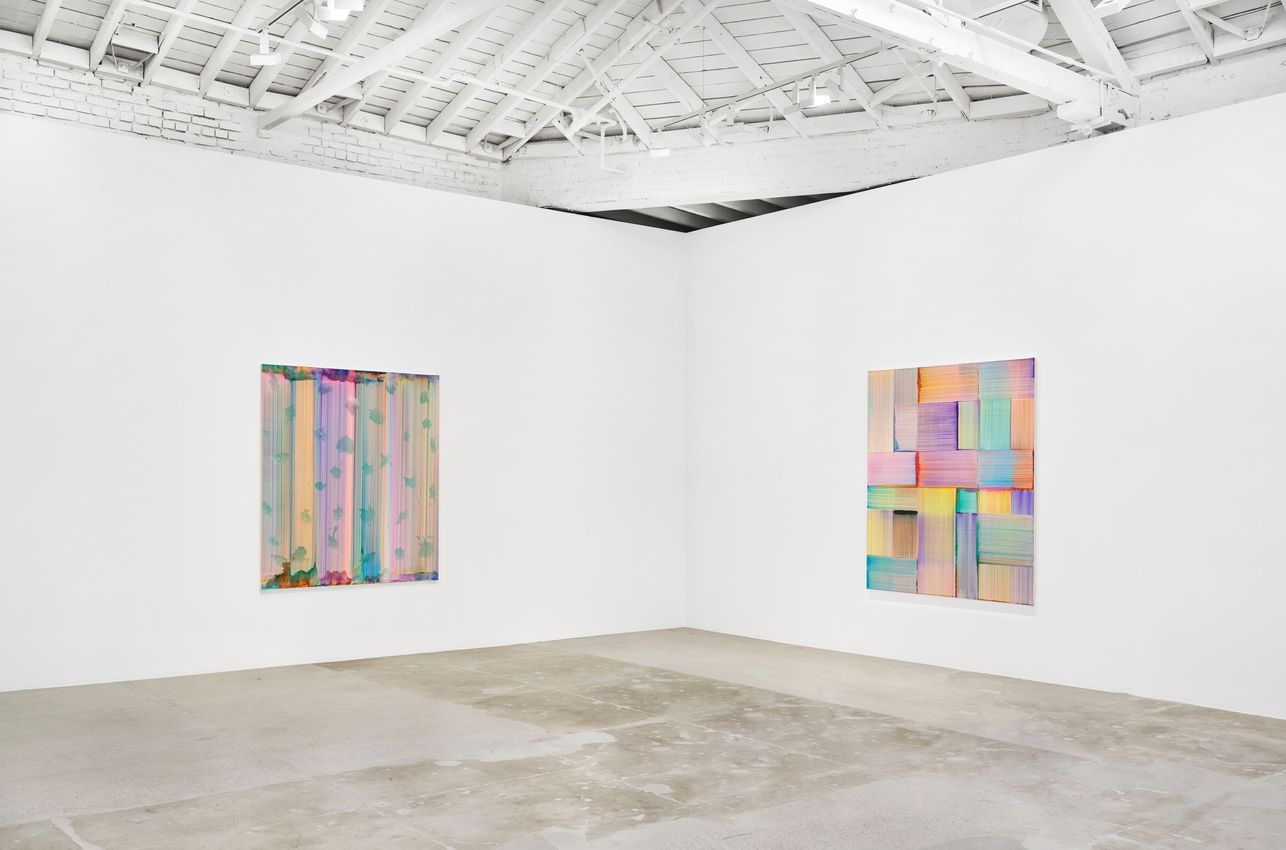
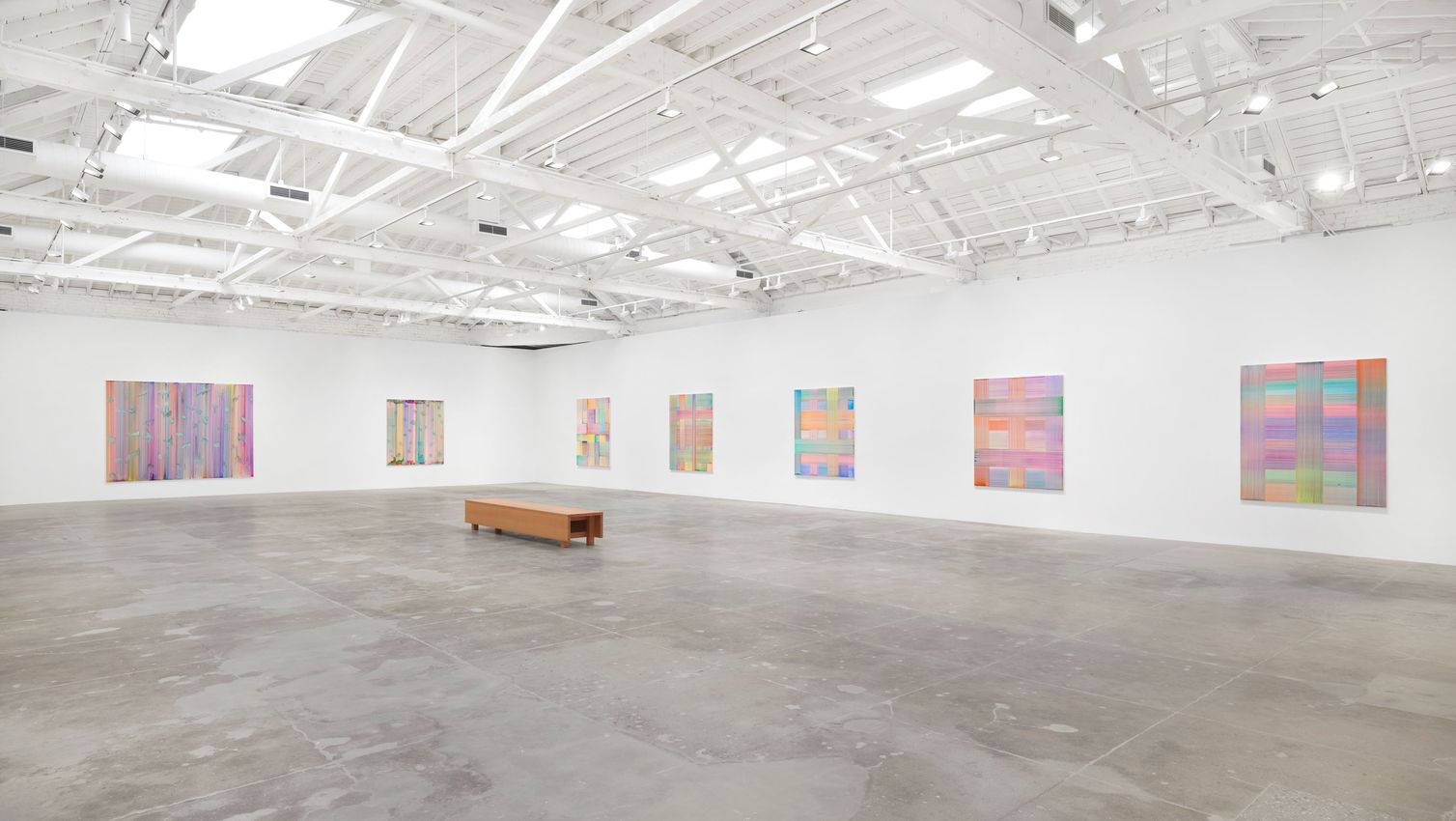
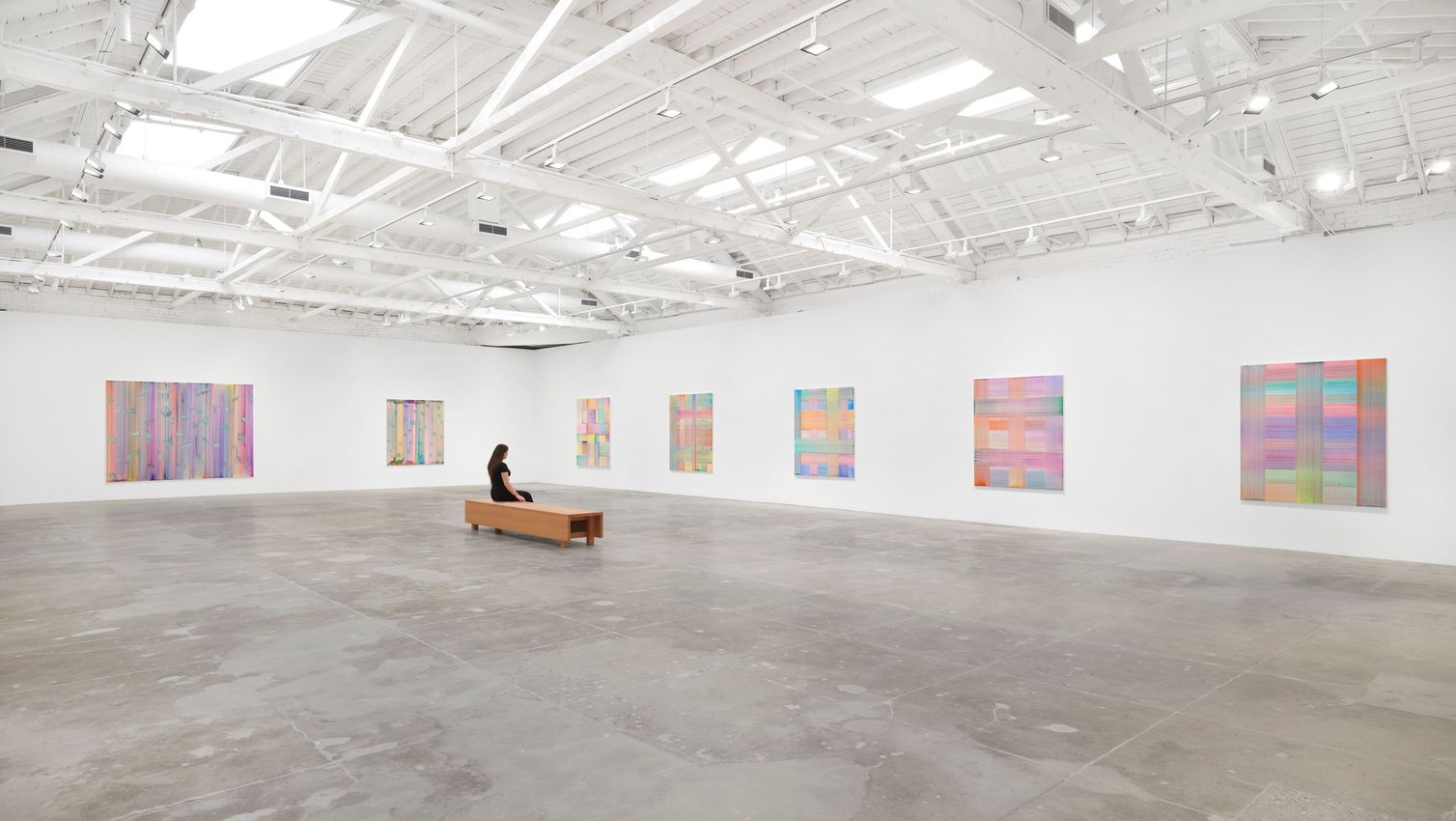
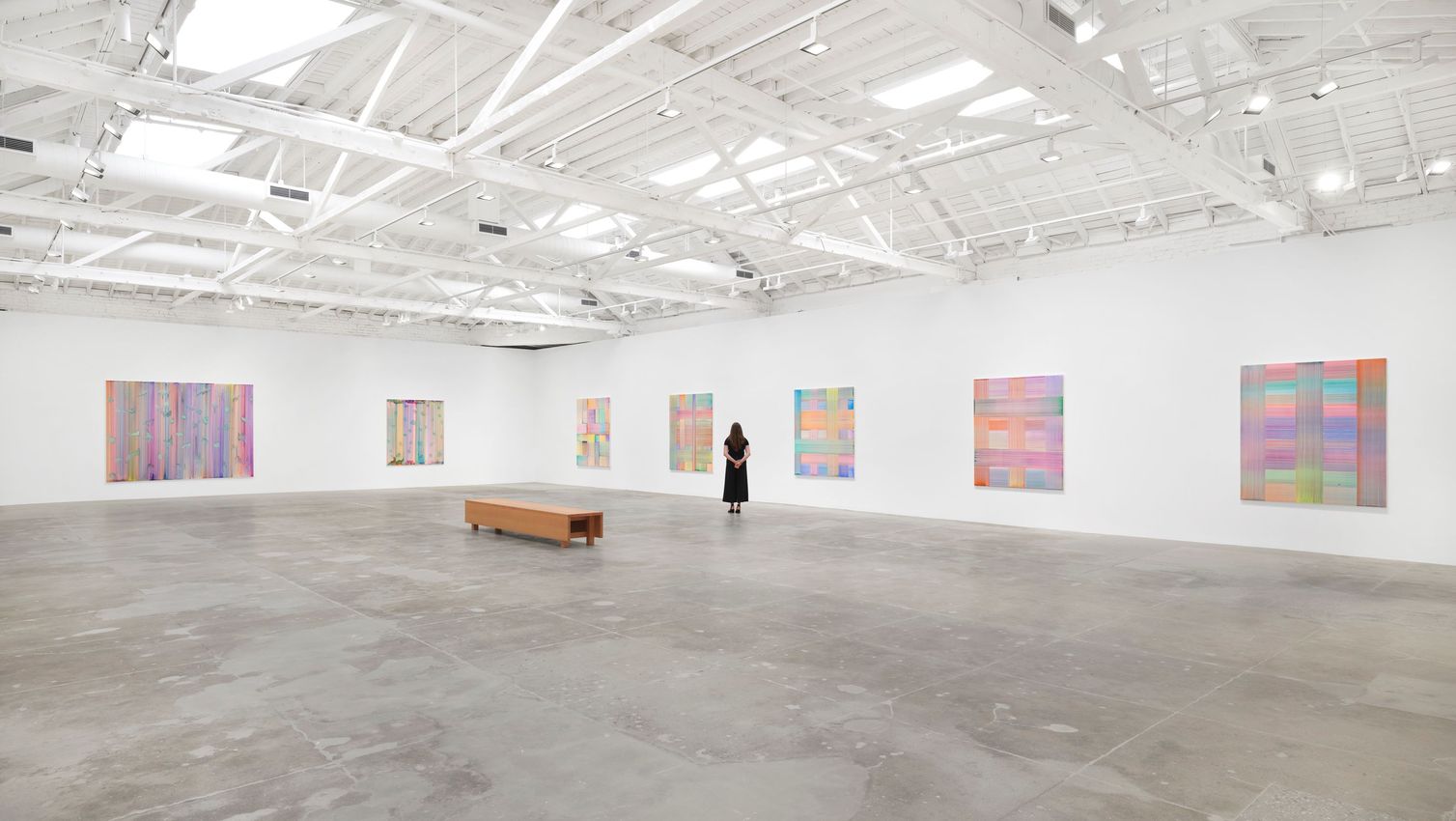
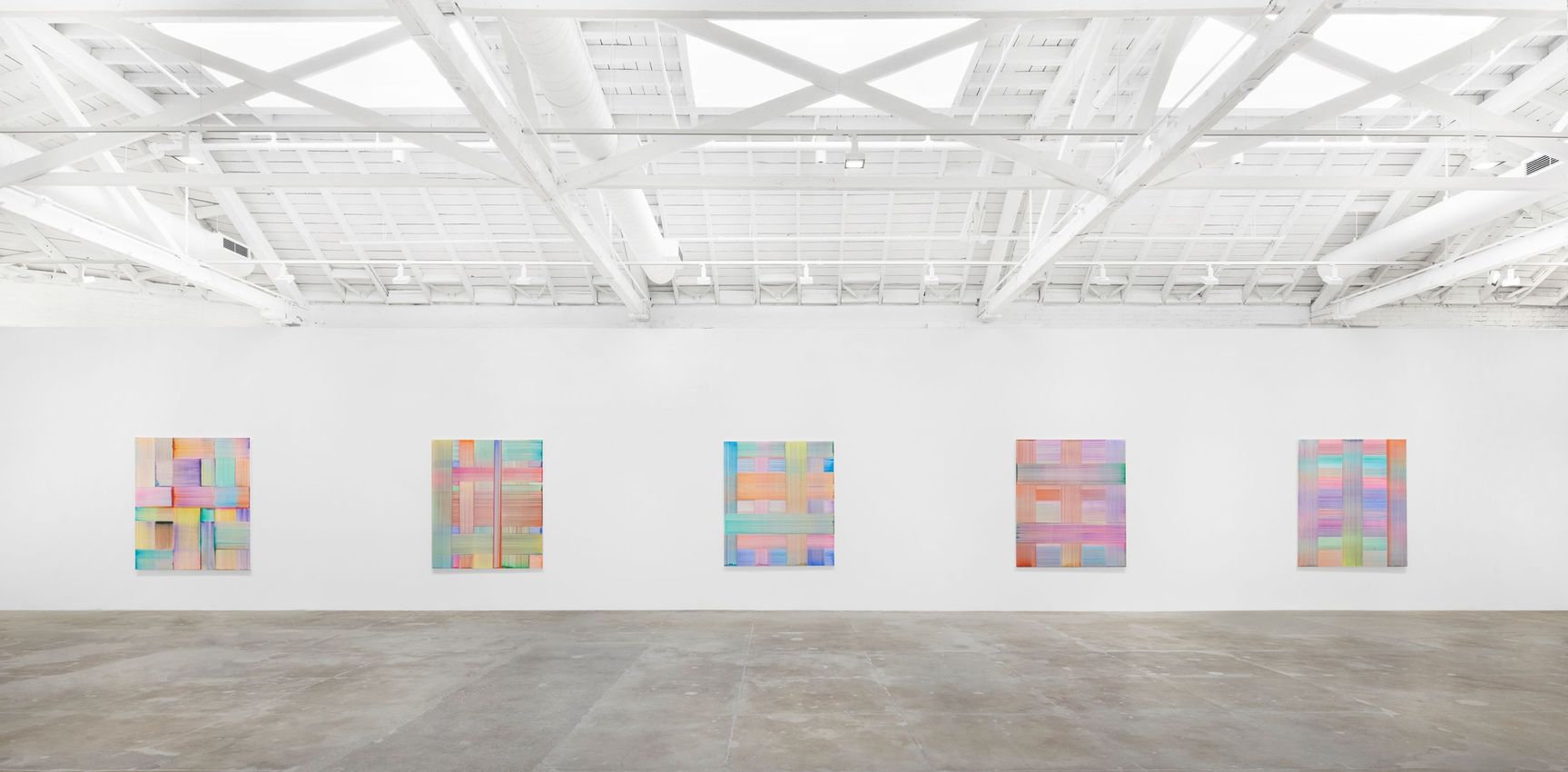
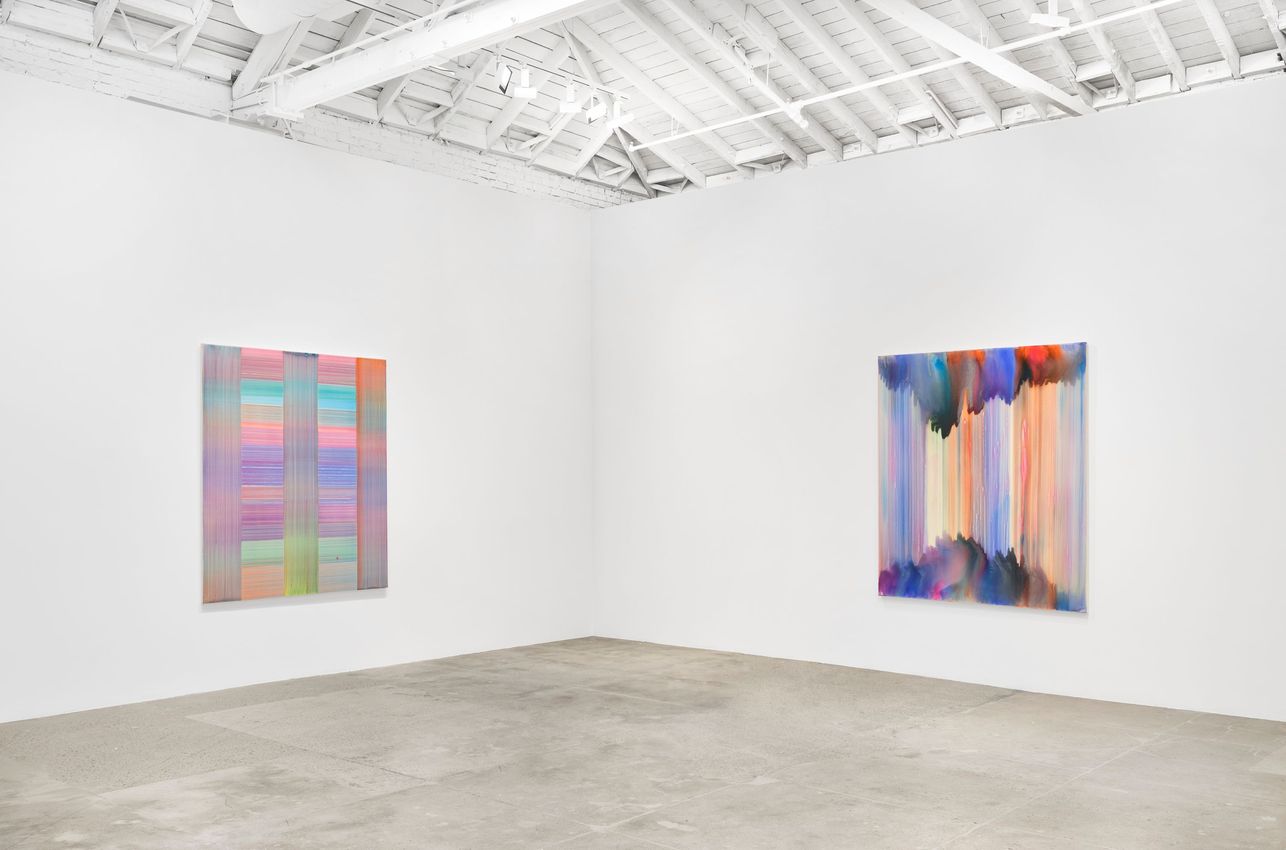
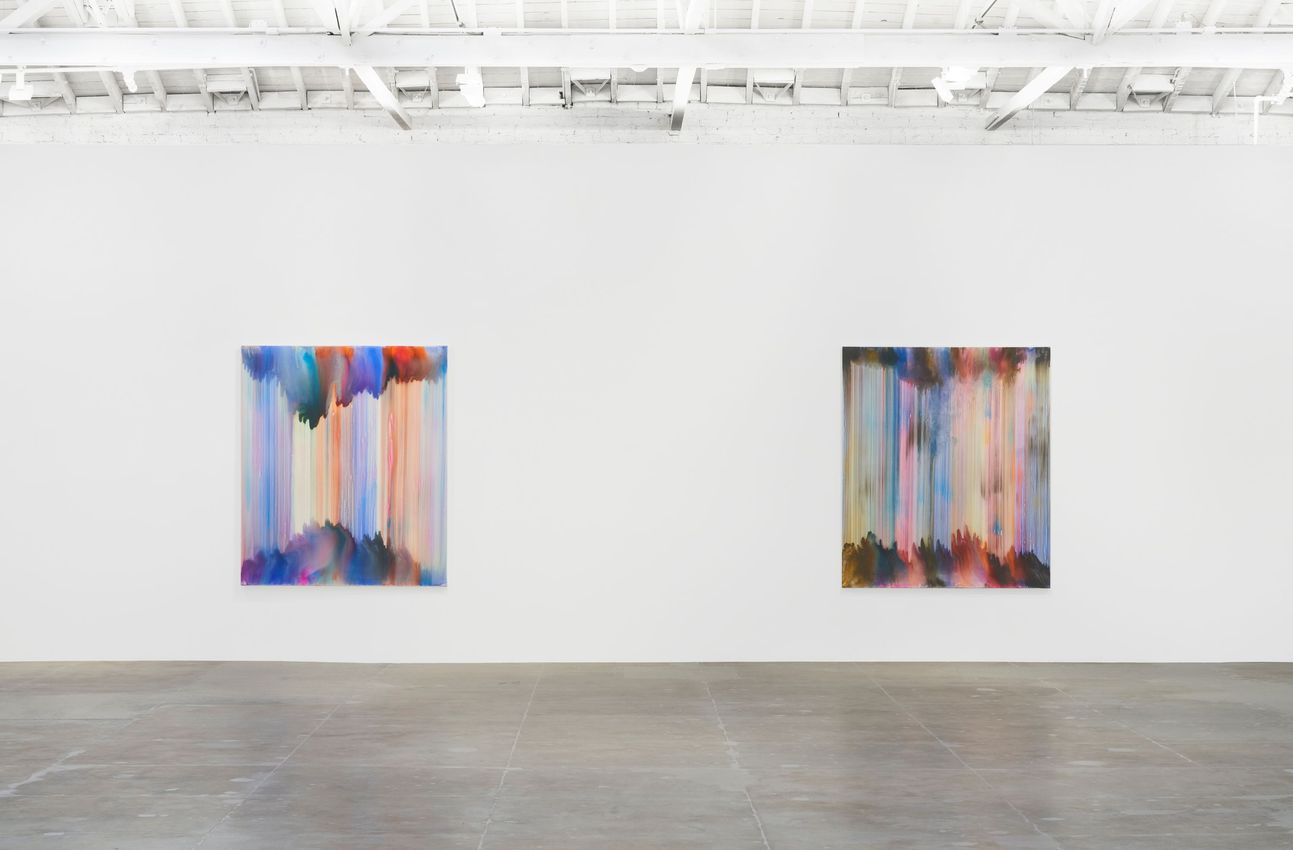
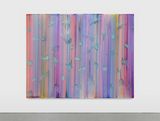
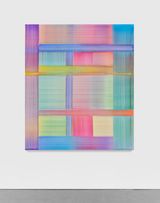
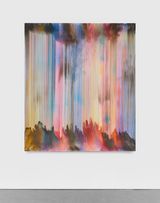
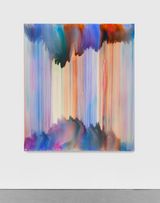
For the works in this exhibition, Frize established a set of rules around how the paintings would be made, then executed them with the addition of resin, at once requiring the artist to complete the paintings quickly, creating ethereal and unpredictable movements in the paint. The works are finished with a smooth top coat of resin, which visually compresses and neutralises the fleeting moment of the artist’s labor into a single image frozen in time. The development of the works is in many ways similar to the experience of taking a Polaroid, where one captures an image within a given structure (such as canvas size, predetermined set of paint colours, and dimensions of a brush), watches it emerge, and then experiences it in its final state: flat, distant, and with the intriguing sensibility of a photograph.

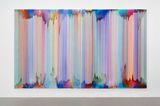
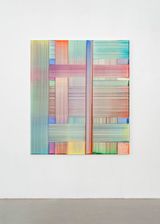
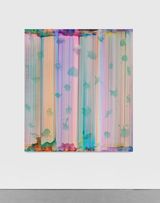
Perhaps most formally notable is the recurrent use of perceivable brushstrokes that run the entire length and sometimes width of many of the works. These “bands” visually record the painterly process for the viewer— at times appearing thicker at the start and end of a single brushstroke, these traces of the routine act of placing, dragging, and withdrawing the brush pattern the composition. By varying chromatic tools and random modes of operation, whether through grid, gesture, or process, Frize also depicts a repeated interest in developing observable layers of paint that create a visually perceivable timeline in the work where one can read the progression of marks as they were laid in sequence upon the canvas.

The presence of a certain overarching neutrality is of great importance to Frize, much of which is reinforced in his approach to deliberately remove artistic subjectivity in his work. Similarly, the titles of the works in the show—such as Suff, Moga, Etom, and Vion—were penned by Frize yet operate as “readymades” that at first seem to suggest meaning but intentionally refer to nothing. The combination of colours in each work too is devised in such a way that no single colour appears perceivably dominant to the eye, providing space for the viewer to more deeply reflect upon the intellectual aspects of the work and how it came to be. In line with this, as is the case with other notable works from the canon of postconceptual painting, any resultant beauty that a viewer experiences in a given painting is merely a side effect of a supremely literal process.

Solo exhibitions of Frize’s work have been organized by many institutions, including Sans Repentir, Centre Georges Pompidou, Paris, France (2019); This is a Bridge, Fondaçao Calouste Gulbenkian, Lisbon, Portugal (2015); Bernard Frize- Günter Umberg, Fondation Fernet-Branca, Saint Louis, France (2015); And How and Where and Who, Morsbroich Museum, Leverkusen, Germany (2010); Fat Paintings, Kunsthallen Brandts Klaedefabrik, Odense, Denmark (2007); S.M.A.K., Stedelijk Museum voor Actuele Kunst, Ghent, Belgium (2002), amongst many others.

Frize has been the recipient of the Kathe-Kollwitz Prize, Germany (2015), the Fred Thieler Prize for Painting, Berlinische Galerie, Berlin, Germany (2011) the DAAD, Berlin, Germany (1993) and the Villa Medici, Rome, Italy (1984). His work is in numerous public collections worldwide, including at the Centre Pompidou, Paris, France; Kunstmuseum Basel, Switzerland; MUDAM, Luxembourg; Tate Modern, London, UK; MUMOK, Vienna, Austria; MOCA, Los Angeles, USA; Reina Sofia, Madrid, Spain; Kunstmuseum Bonn, Germany and SMAK, Ghent, Belgium.

Read More

Installation Views

About the Artist

Bernard Frize is a French abstract painter, born in 1949, best known for rule-based, serial paintings that test how far systems, colour, and chance can take painting beyond individual expression. His practice has been widely recognised through major museum retrospectives and participation in key biennials.

View Artist Profile

Also Exhibiting at Marian Goodman Gallery

Address
1120 Seward Street
Los Angeles
United States
Opening Hours
Tuesday – Saturday
10am – 6pm
(1)
Los Angeles 1120 Seward Street
Marian Goodman Gallery
1120 Seward Street, Los Angeles, United States

Opening hours
Tuesday – Saturday
10am – 6pm
The art world in focus