





TOM WESSELMANN
1931-2004, United StatesTom Wesselmann was a pioneering American artist known for his bold contributions to Pop Art. He created provocative and stylised works that redefined representations of the body, domesticity, and consumer culture.
Often grouped with contemporaries like Andy Warhol and Roy Lichtenstein, Wesselmann stood apart for his sensuous compositions and unwavering focus on formal beauty.
Early Works: The Great American Nude and Domestic Pop (1960s–1970s)
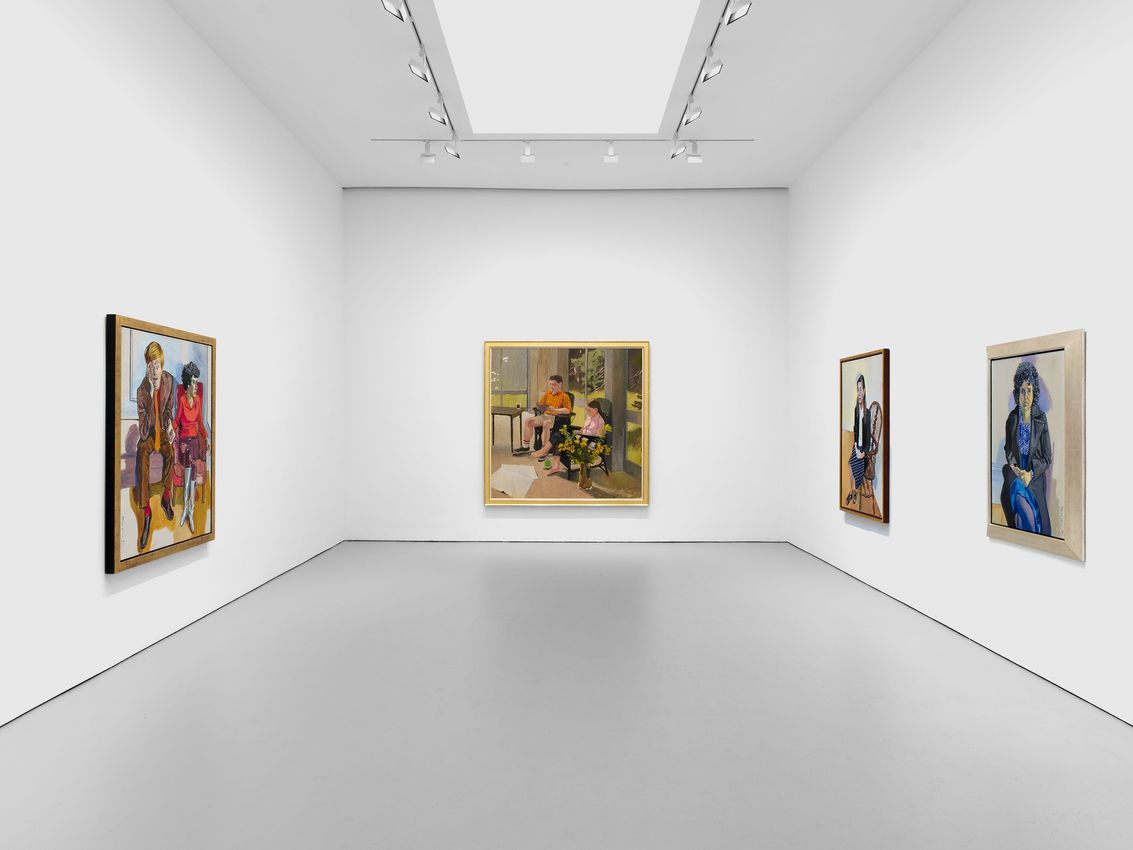
Wesselmann first gained acclaim with his Great American Nude series (1961–1973), a body of work that captured stylised female figures set against backdrops of stars and stripes, art historical references, and mid-century interiors. Painted in flat fields of colour, these nudes were provocative and celebratory, challenging the boundaries between high art and mass culture.
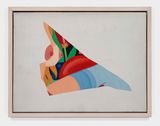
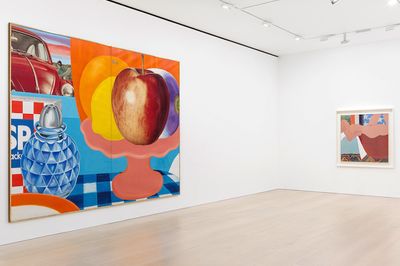
In tandem, Wesselmann developed his Still Life and Bedroom Painting series, incorporating real objects—light switches, radios, food packaging—into painted compositions. These works, such as Still Life #35 (1963), treated the domestic environment as a stage for modern consumer identity, echoing the visual strategies of advertising and commercial art.
Throughout this period, Wesselmann rejected the term ‘Pop’ in relation to his own practice, instead focusing on the formal beauty of line, colour, and composition. While his subject matter reflected contemporary life, his approach remained rooted in the modernist tradition.
How did Wesselmann innovate with materials and techniques?
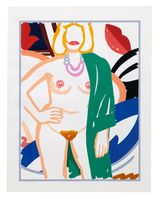
From the late 1960s onwards, Wesselmann experimented with laser-cut metal and shaped canvas, producing sleek steel drawings that reduced the human form to elegant contour lines. This technique, seen in works like Steel Drawing (Profile Face with Lipstick) (1989), allowed Wesselmann to merge drawing and sculpture in a novel way, stripping imagery down to essential lines while maintaining sensuality and impact.
In the 1990s and early 2000s, Wesselmann created cut-out aluminium works, further pushing his interest in industrial materials. His late paintings revisited earlier themes, blending painterly elements with the crisp, commercial aesthetic that defined his oeuvre.
What are Tom Wesselmann’s most iconic works?
Wesselmann first gained recognition with his Great American Nude series (1961–1973), which fused art historical references with contemporary visual language. The nudes are rendered in flat planes of colour, often surrounded by American flags, portraits of presidents, or fragments of commercial interiors. These works challenged conventional notions of eroticism and art, placing female forms within collaged domestic spaces.
In parallel, Wesselmann developed his Still Life and Bedroom Painting series. These large-scale works combined painted and real objects—including functional light switches, televisions, and appliances—to depict scenes of everyday life. His Still Life #35 (1963), for example, incorporates both painting and assemblage, emphasising the artwork’s objecthood.
What influenced Tom Wesselmann?
Tom Wesselmann drew significant influence from early modernist masters, particularly Henri Matisse and Paul Cézanne, whose colour, line, and spatial composition innovations deeply impacted his artistic development.
Wesselmann admired Matisse’s bold use of flat colour fields and decorative pattern, qualities that he would later integrate into his large-scale nudes and still lifes. Equally formative was the visual world of American consumer culture—billboard graphics, magazine advertisements, product packaging, and pin-up photography. These elements helped shape the visual language of his art, which merged high and low culture to reflect the aesthetics, desires, and contradictions of post-war America.
Awards and Accolades
- Inducted into the American Academy of Arts and Letters (1995)
Exhibitions
Tom Wesselmann has been the subject of solo and group exhibitions at important institutions.
Solo Exhibitions
- Tom Wesselmann: La promesse du bonheur. Le Nouveau Musée National de Monaco (NMNM), Monaco (2018).
- Beyond Pop Art: A Tom Wesselmann Retrospective. Denver Art Museum, Denver, CO. (2014).
- Pop Art and Beyond: Tom Wesselmann. Virginia Museum of Fine Arts, Richmond, VA. (2013).
- Tom Wesselmann Draws. The Kreeger Museum, Washington, DC. (2011).
- Tom Wesselmann: A Retrospective Survey 1959-1992. Shimbun, Isetan Museum of Art, Shinjuku, Tokyo, Japan; traveled to the Museum of Contemporary Art, Sapporo, Japan.
- The Museum of Modern Art, Shiga, Japan; Museum of Art, Kintetsu, Japan (1993).
Group Exhibitions
- Matisse and American Art. Montclair Art Museum, Montclair, NJ. (2017).
- International Pop Art. Walker Art Center, Minneapolis, MN. Traveled to; Dallas Museum of Art, TX; The Philadelphia Museum of Art, PA. (2015).
- Pop to Popism. Art Gallery of New South Wales, Australia (2014).
- Ileana Sonnabend; Ambassador for the New. The Museum of Modern Art, New York, NY (2013).
- Pop and Op. Nassau County Museum of Art, Roslyn Harbor, NY (2008).
- Picasso and American Art. Whitney Museum of American Art, New York, NY. Travelled to; Walker Art Center, Minneapolis, MN (2006).
- West to Wesselmann; American Drawings and Watercolors. Princeton University Art Museum, Princeton, NJ (2004).
Website
Tom Wesselmann’s website can be found here.
Critical Reception
Wesselmann’s work has been discussed widely in publications such as Artnet, ARTnews, and The Guardian.
Annabel Downes | Ocula | 2025

Explore Tom Wesselmann's Exhibitions On Now












Explore and Follow Artists Shaping Contemporary Art
A respected voice in contemporary art discourse.
Focusing on ambitious storytelling and insightful art-world commentary. Ocula Magazine publishes in-depth interviews, critical essays and timely analysis on the artists, exhibitions and ideas driving the global art world.
Learn more about Ocula Magazine
Showcasing the best of the art world.
Ocula partners with galleries from around the world to highlight their artists, artworks and exhibitions. Gallery membership is by application and invitation, with each member vetted by an independent panel.
Learn more about Ocula Membership
Specialises in the sale of major artworks.
Led by a team with deep ties to the world’s leading auction houses, galleries and collectors. Ocula’s advisory team offers bespoke services to high-net-worth clients from around the world who are looking to acquire the best of contemporary and modern art.
Learn more about our team and services