Press Release

Almost-Landscapes
Luisa Duarte

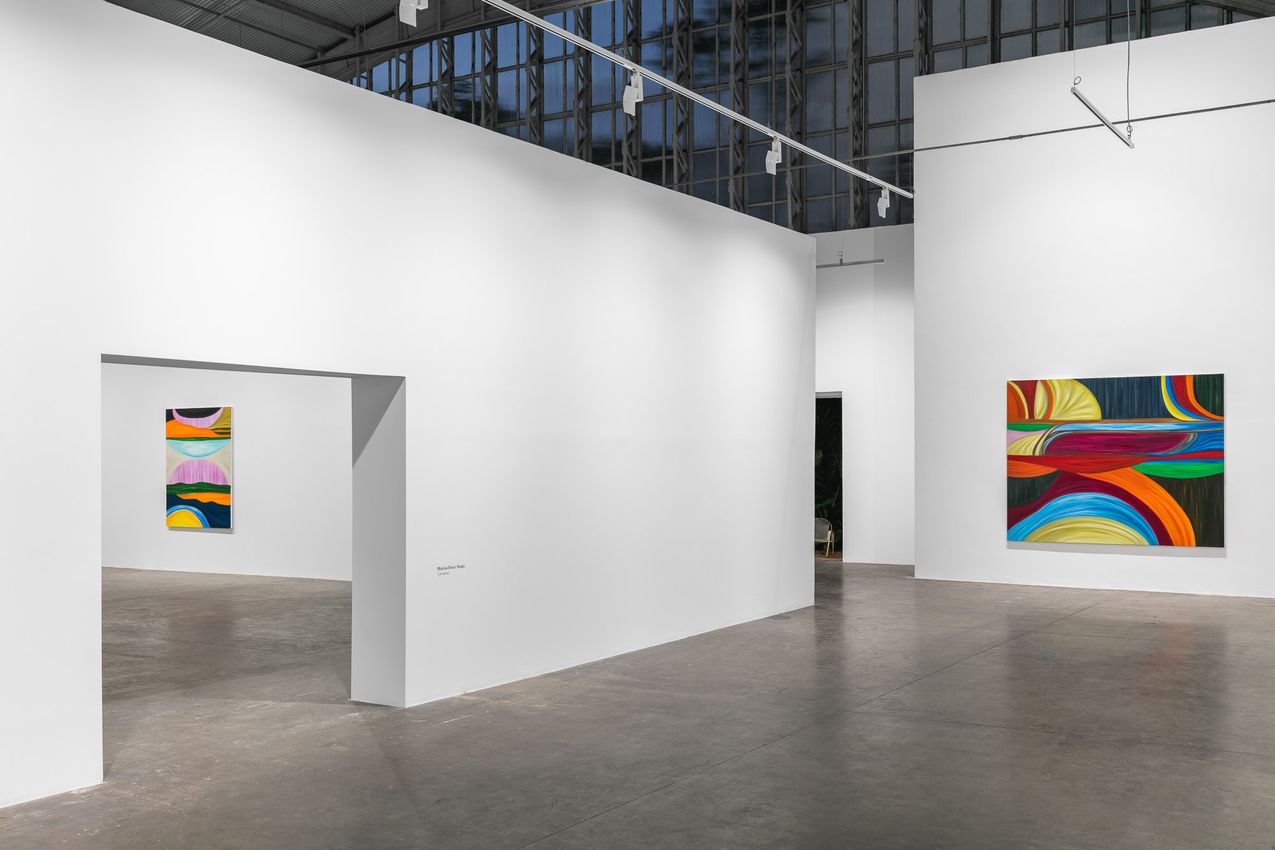
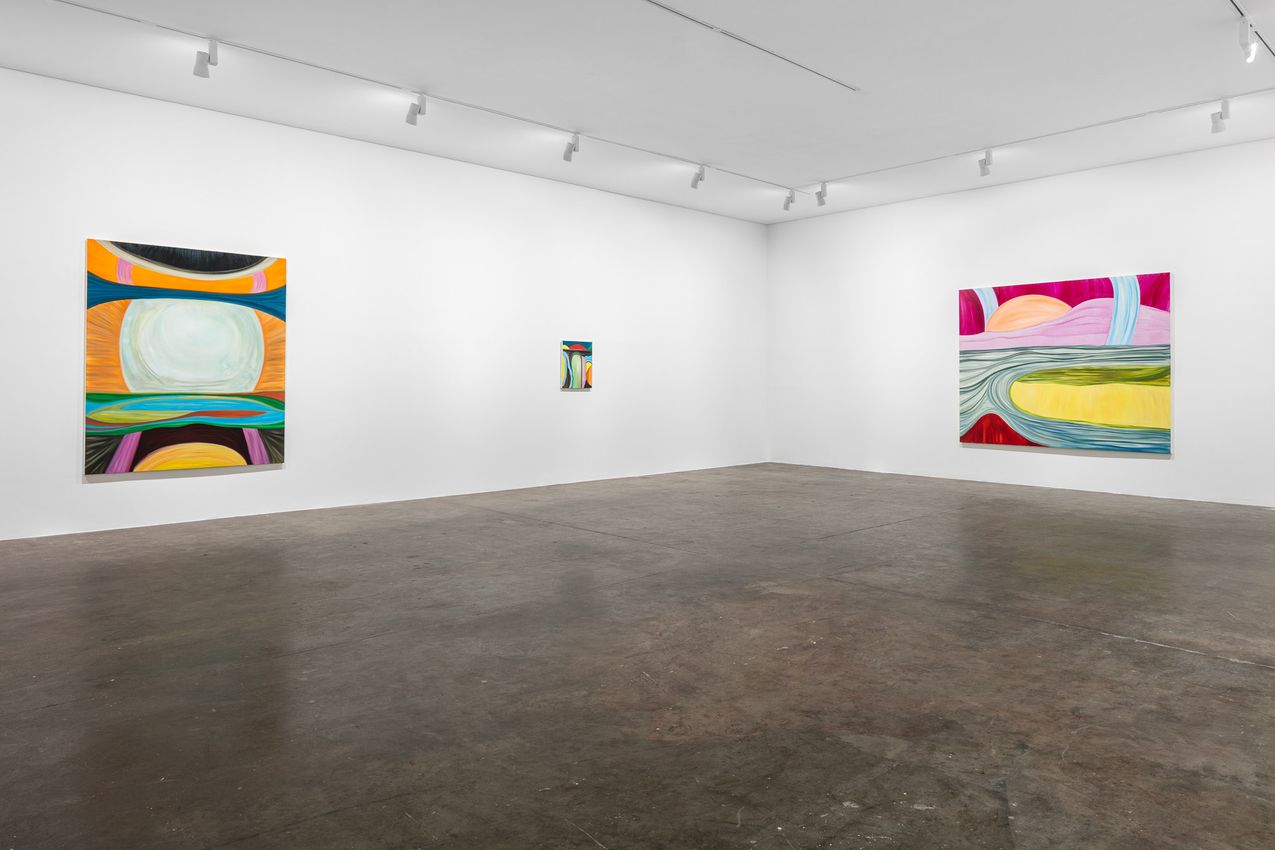
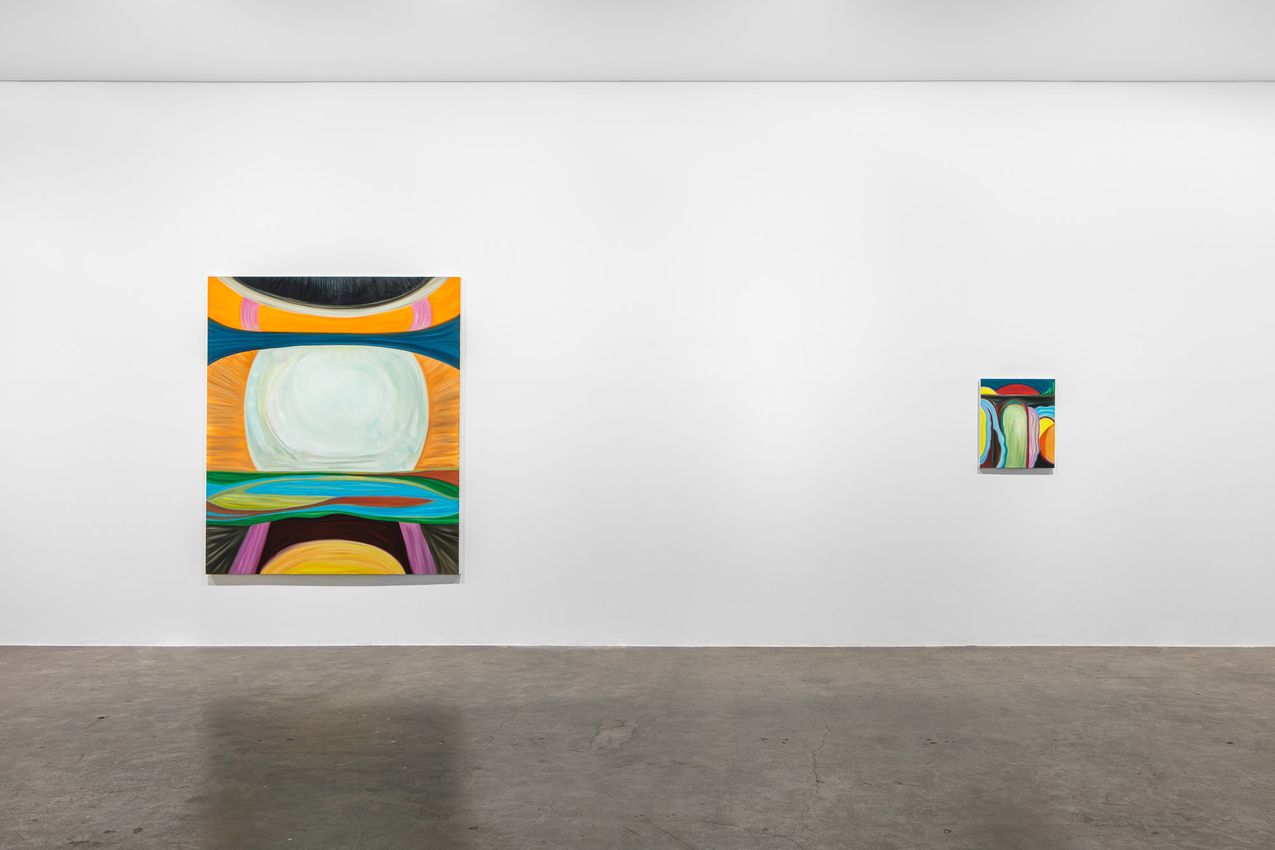
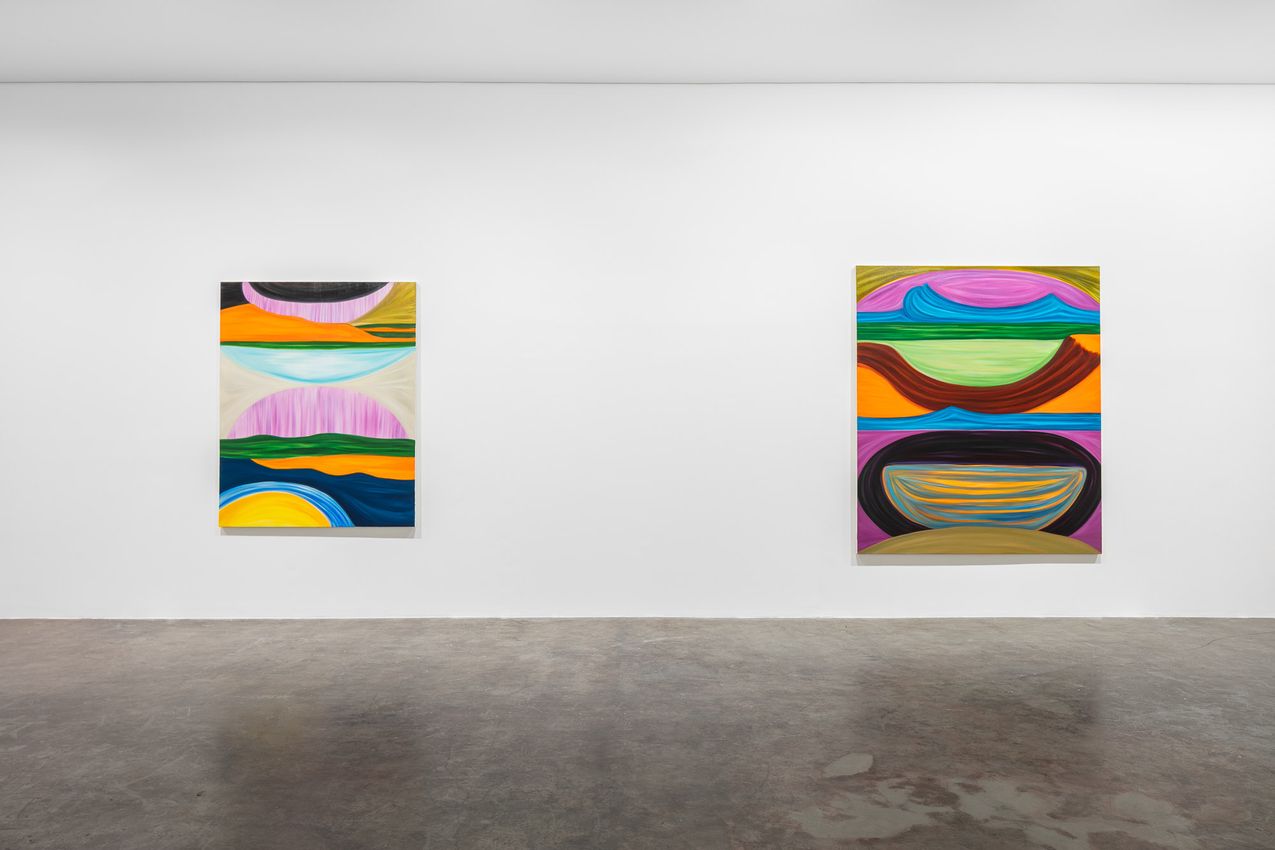
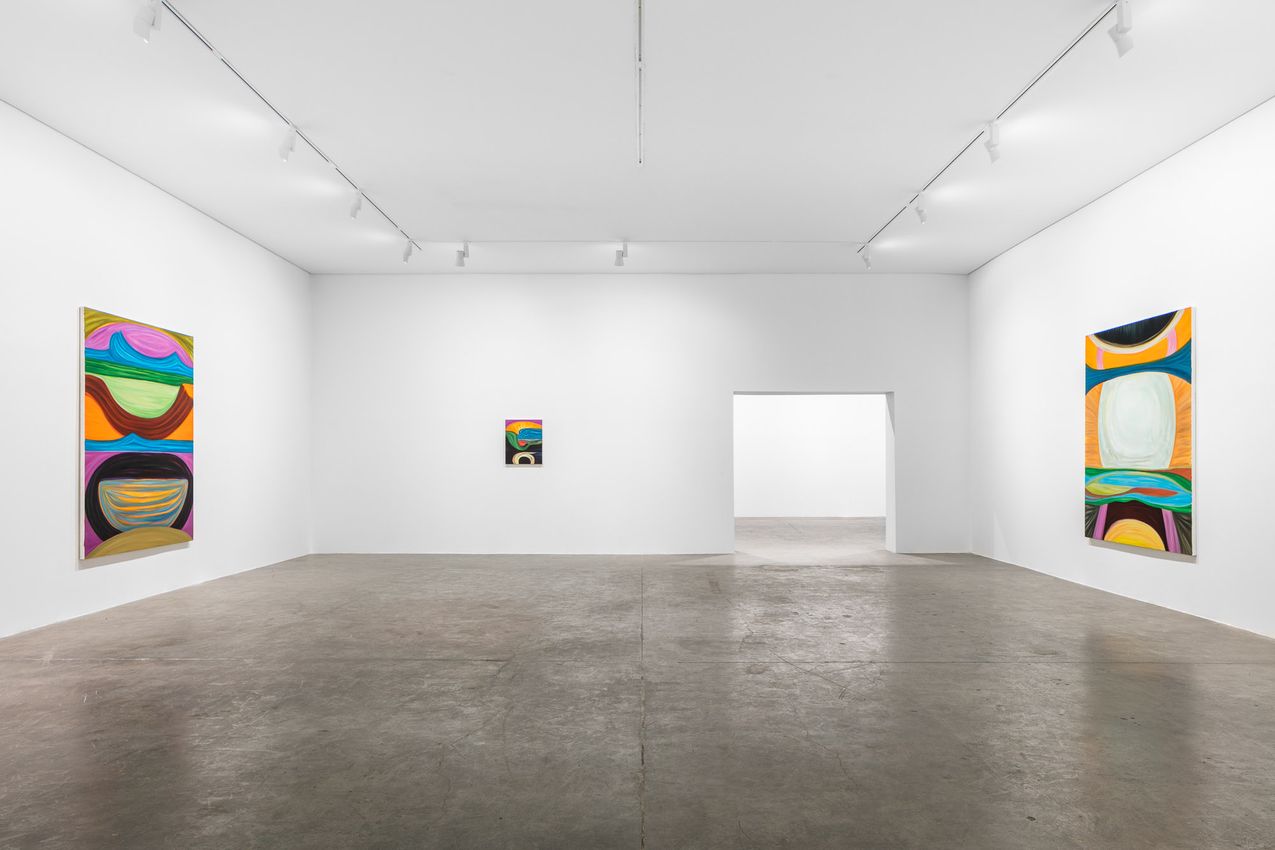
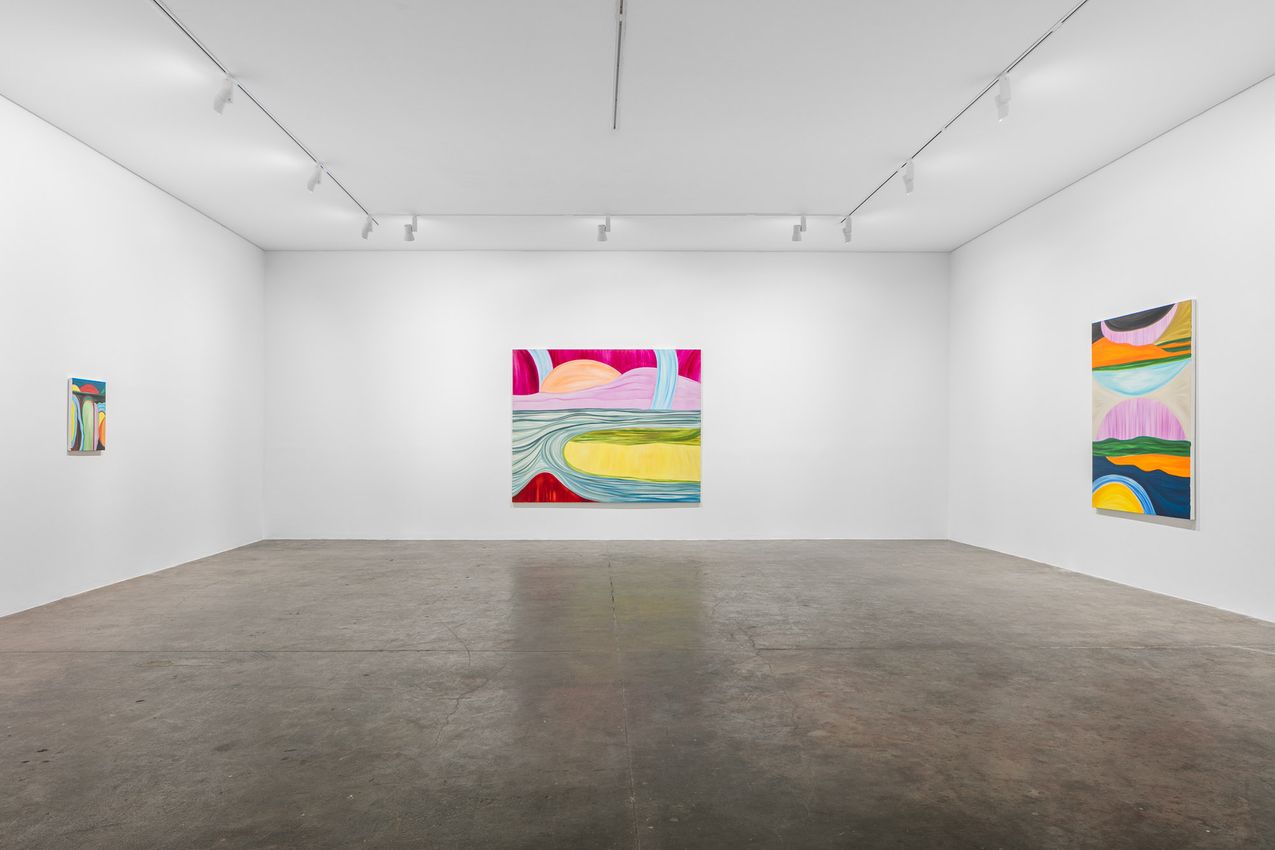
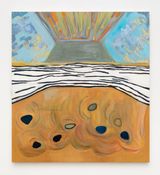
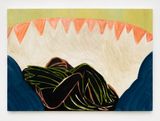
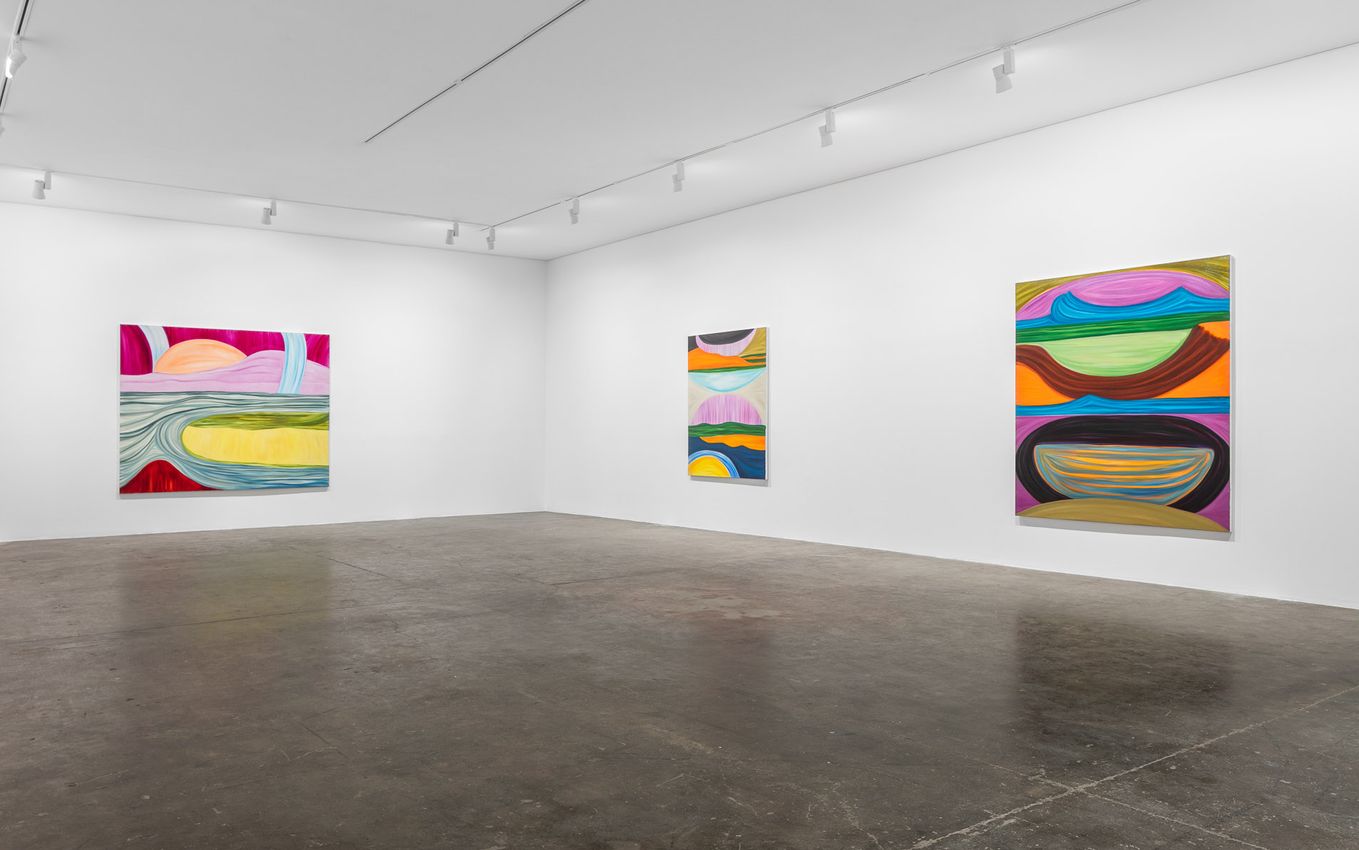
There is, it would seem, a paradox between the name of the current exhibition and what isrevealed in the works. On the one hand, we have the laconic title 5 Paintings and, on the otherhand, we have a series of works in which the generosity of forms and colours do not evokesynthesis, but rather a baroque visuality. Therefore, it becomes a challenge to unravel the linkswith nature, both concise and eloquent, which characterise the practice of Marina PerezSimão.

Let’s go back to the origins of these paintings. Everything starts in small sketchbooks in which fine traces made with pencil reveal almost nothing, but an almost-nothing that is alreadydrawing and rhythm. The cadence that emerges from the paintings begins here, in the curves,in the wavy lines produced with a sort of automatic writing. In the following stage, the tasktakes the form of an elusive element. It is at this point, with the numerous watercolours onpaper that precede the paintings, that the artist creates a type of cartography that guides thepictorial act.

It is not by chance that her canvases are the exact size of what her body can apprehend, her height and arms’ reach define the parameters so large gestures can reach their full range. If weare looking at a composition that begins with the minimum (drawing) then moves towardsthe whole (painting), when we think of the image field we can take the opposite route, as theappeal of the image goes through a process of decantation.

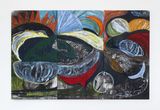
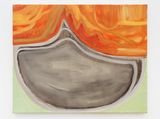
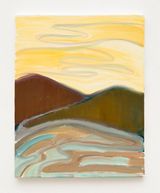
It is not misplaced to associate this group of paintings with the genre of landscape. The particularly accurate way in which Simão sets up her complex chromatic proximities and theconsistency of her sinuous lines makes us ‘see’ the mirages of mountains, seas, horizons,moons, skies, where only colour and form are given. The artist works at the threshold betweenabstraction and figuration, always insinuating, but never revealing anything. By taking the sideof ambiguity and moving away from the literal, handing us the task to mentally fill in what wesee, Simão moves in the counterflow of a time eager to show, reveal, explain and narrateeverything.

We understand how technical acceleration in the field of sensorial stimulation results in a fragmented perception. Faced with the proliferation of stimuli, we see a lot but see nothing.We are faced with a paradox. We live amongst highly advanced technologies at the same timethat our perceptive apparatus is increasingly atrophied.i Instead of broadening sensitivity, theway these innovations are introduced into our everyday lives seems to trigger an anesthesia ofsenses, producing a sort of ongoing soporific dispersion. The 24/7 world, marked by the mass presence of technology, is the same world that witnesses a narrative inflation. Everything must be said, narrated, and explained, and everything that is revealed in a perceptional abstract way,or in between the lines, or only insinuated, is gradually losing space. This current context ofomnipresent images and discourses is also where we experience our increasingly impairedimagination.

It is no surprise that Simão finds in literature and music expressions that are very dear to her. The artist reminds us that ‘painting exists where the word fails’. This is precisely where heralmost-landscapes operate. They never narrate or illustrate something, they emerge instead aspictorial acts for that which language cannot embrace, thus summoning a dormantimagination. Her greens, blues, and oranges can be perceived as almost forests, rivers, suns,and also notes that translate, like in music, lightness and scale, summer and storm.

Perhaps here we have a clue for the enquiry introduced at the beginning of this text. If we are, unequivocally, facing a practice whose formal and chromatic dynamics exude a baroqueeloquence; at the same time, in its reluctance to adopt any discursive dimension and in itsdecision to insinuate without showing, Simão’s practice is also an unsuspected exercise ofsynthesis. The exhibition is titled 5 paintings, but if we look carefully, the set of paintingsbrought together here seems to be forging a single intertwined movement. Going against thepresent time that is marked by an over-eagerness to show and narrate everything, Marina PerezSimão offers us a cartography without a destination. It is up to us, using a newly irrigatedimagination, to fill in the map of her almost-landscapes.

i See TÜRCKE, Christoph. Hiperativos: abaixo a cultura do déficit de atenção. Rio de Janeiro: Paz e Terra, 2016; TÜRCKE, Christoph. Sociedade excitada: filosofia da sensação. Campinas: Editora da Unicamp, 2012.
Read More

Installation Views

About the Artist

Marina Simão’s working process is based fundamentally on the accumulation and juxtaposition of memories and images. By combining personal experiences and multiple references stemming from fields such as philosophy, literature and journalism, the artist collects certain narratives in order to edit them through pictorial means that do not belong to any predefined language; rather, they develop within an organic practice, which combines thematic density and a delicate treatment.

View Artist Profile

Also Exhibiting at Mendes Wood DM

About the Gallery

Intellectually rigorous, politically active, and highly conceptual, the programme of contemporary art gallery Mendes Wood DM places an emphasis on critical conversation, working to embrace the individuality of each artist while also supporting the discovery of intersections between practices that might initially seem disparate.

View Gallery Profile
Address
Rua Barra Funda 216
01152 – 000
São Paulo
Brazil
Opening Hours
Mon - Fri, 11am - 7pm
Sat, 10am - 5pm
(1)
São Paulo Rua Barra Funda 216, 01152 – 000
Mendes Wood DM
Rua Barra Funda 216, 01152 – 000, São Paulo, Brazil
+55 113 081 1735
http://www.mendeswooddm.com

Opening hours
Mon - Fri, 11am - 7pm
Sat, 10am - 5pm
The art world in focus