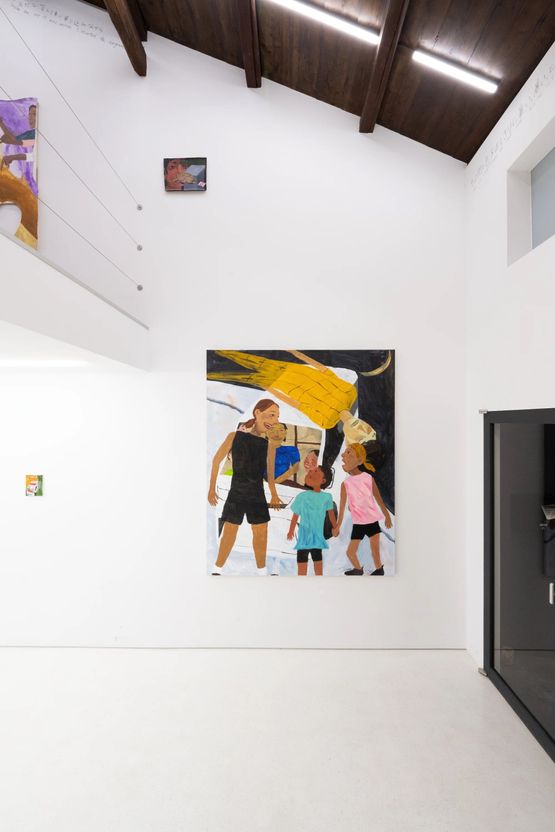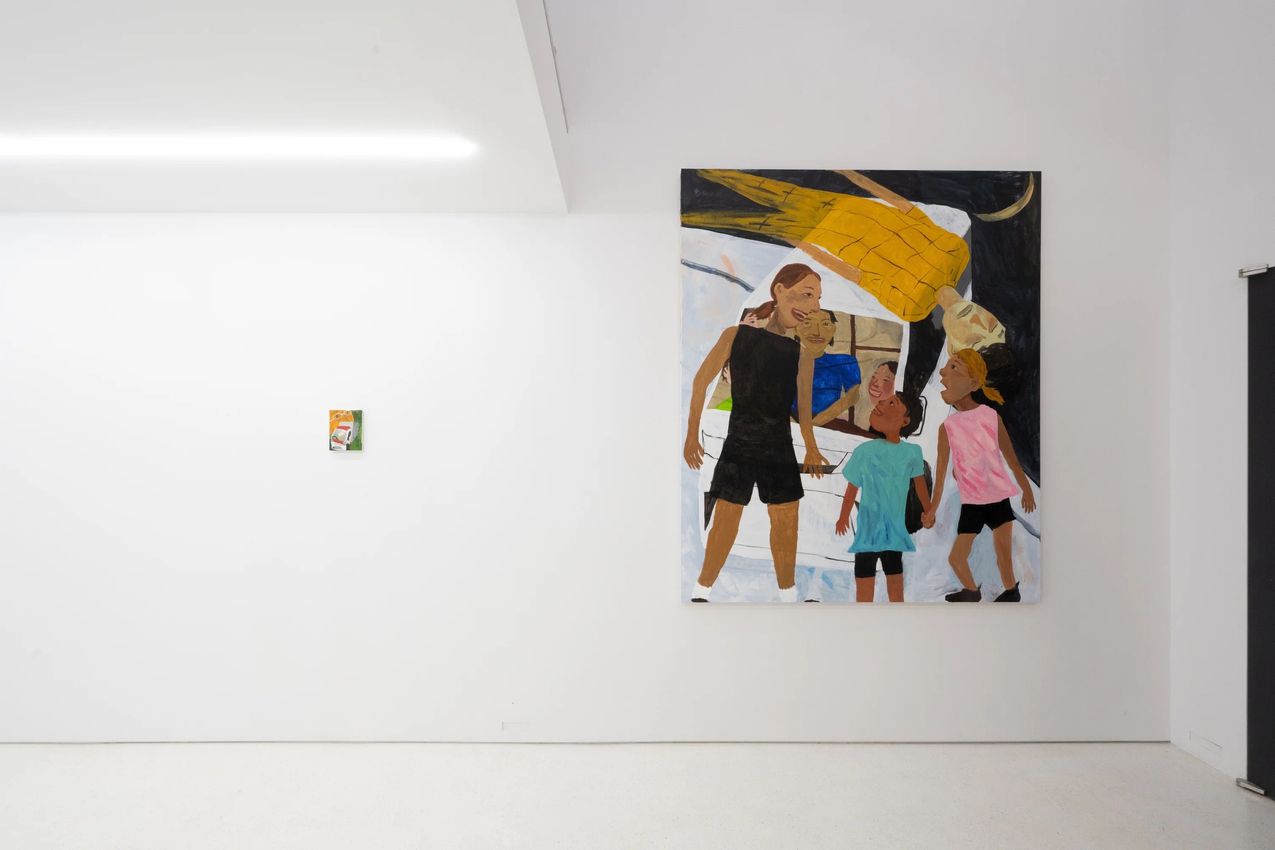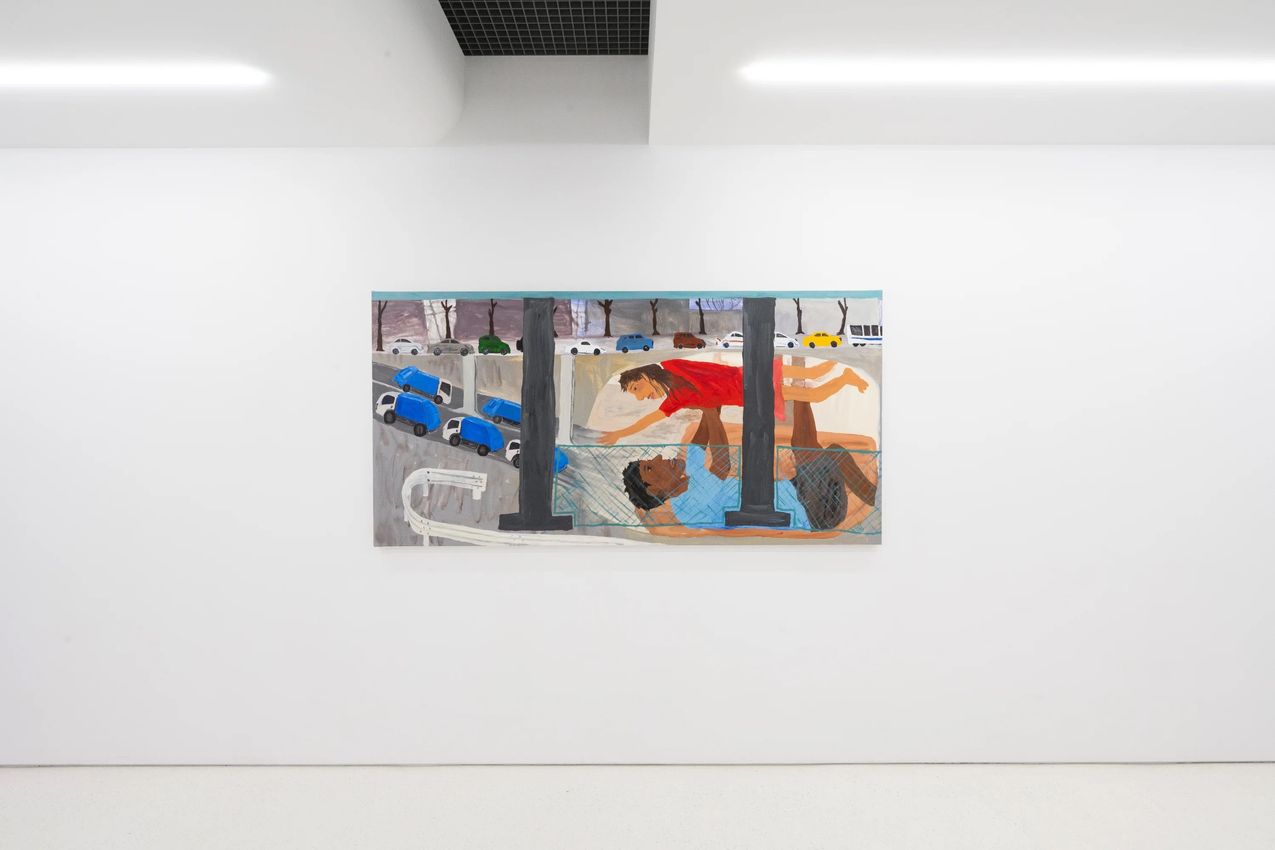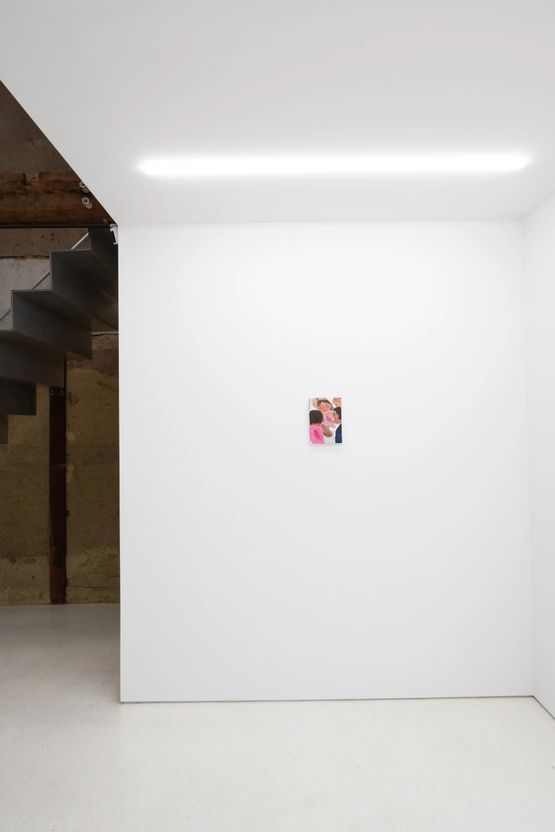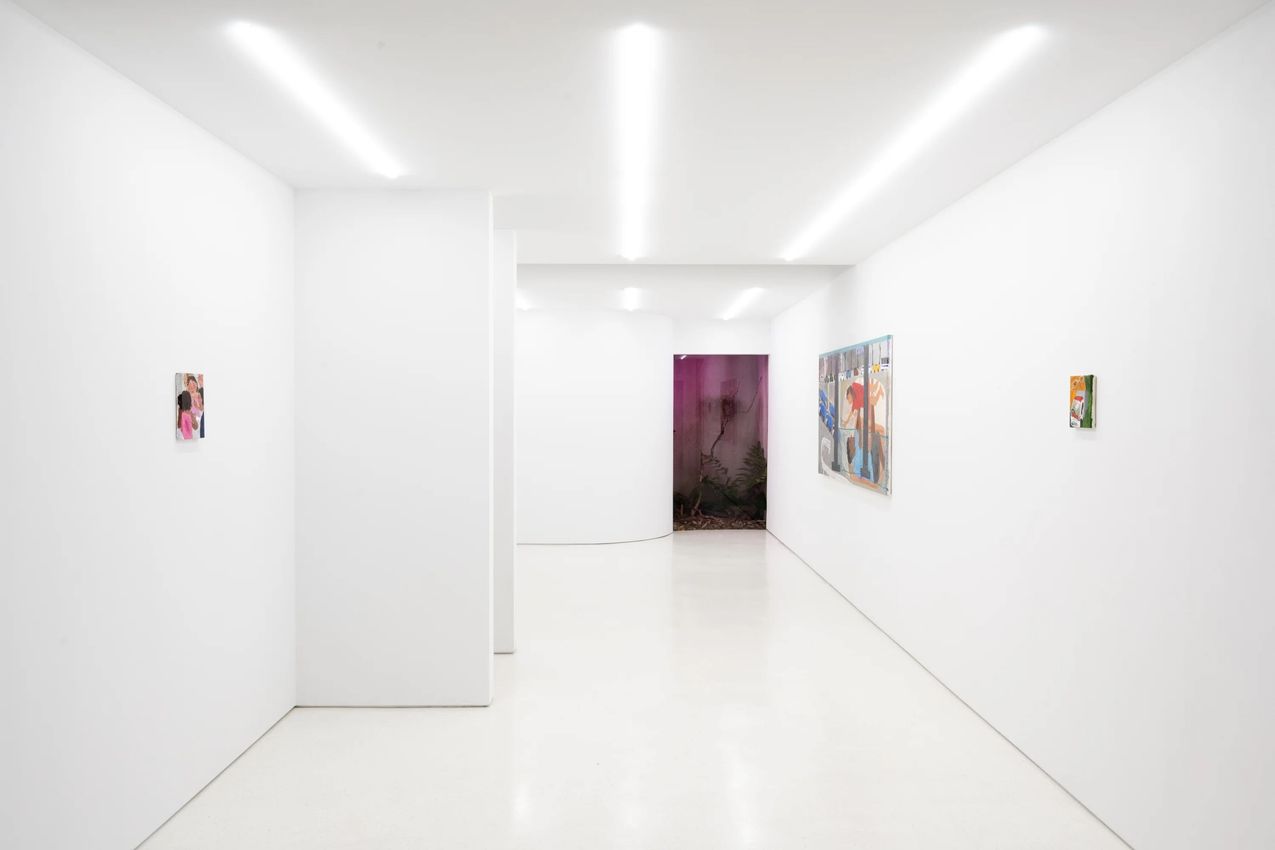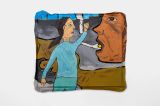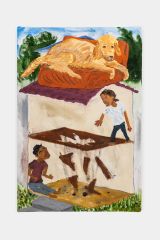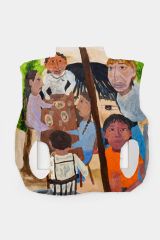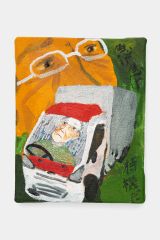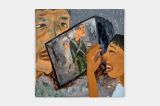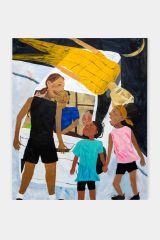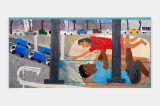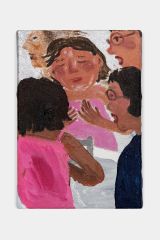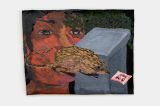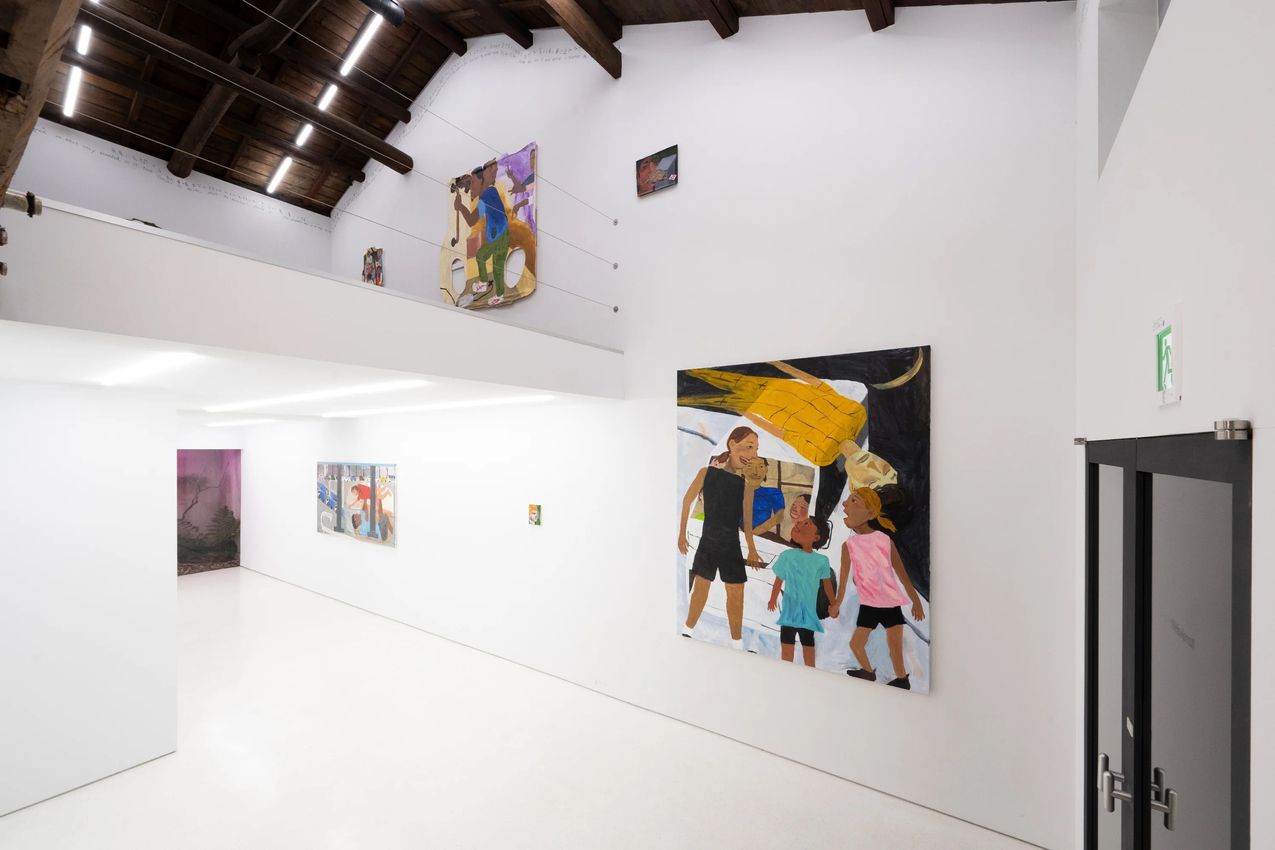
Nonaka-Hill Kyoto is pleased to present Extreme Heat, Kyoko Idetsu’s solo exhibition, on view from May 16 to July 11.
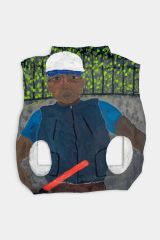
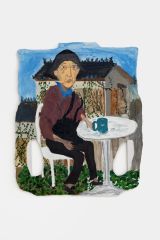
Inspired by the term “extreme heat,” which has recently entered everyday vocabulary, the exhibition reflects Idetsu’s ongoing interest in how individuals, each situated within uneven realities, come to share common conditions. Through an installation of language and painting, the artist gives form to these layered states of experience.
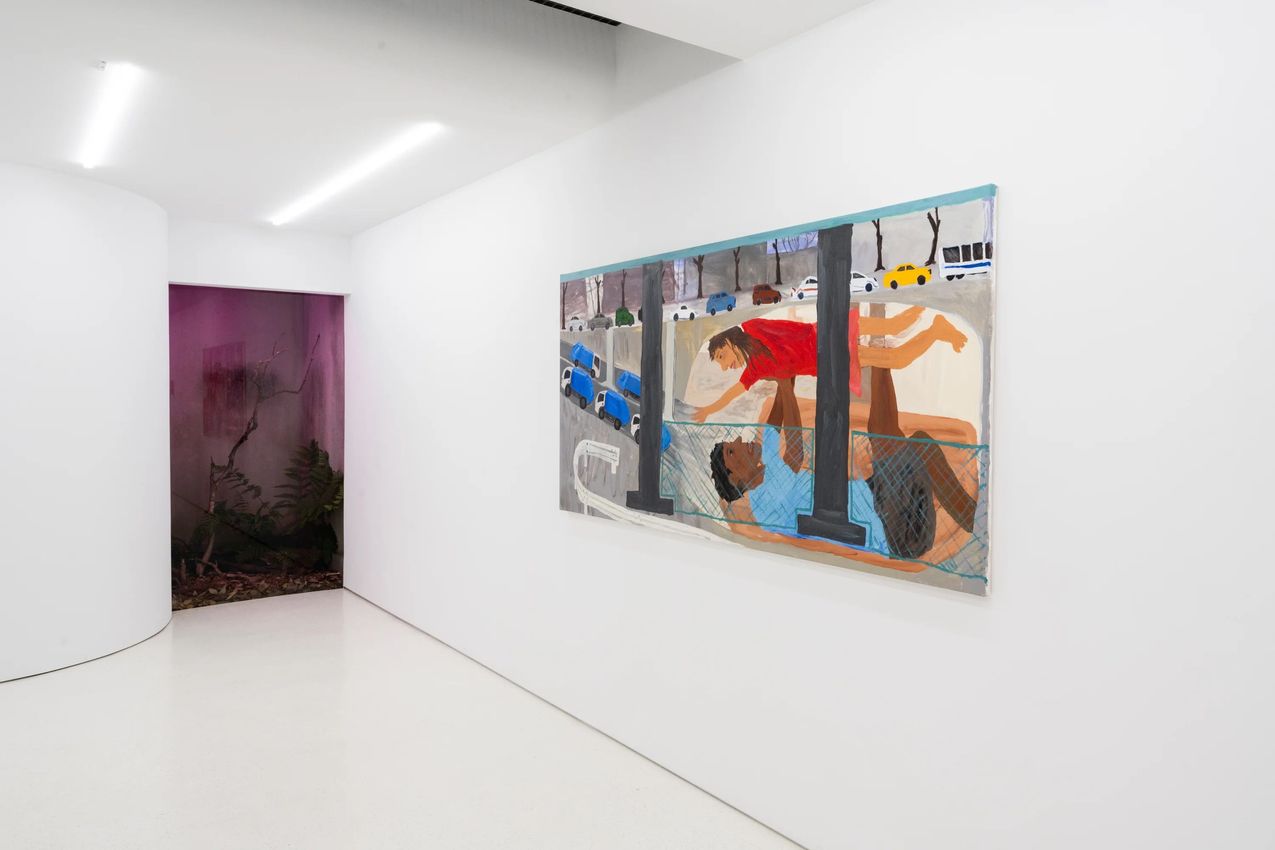
Idetsu’s paintings often begin with events from her immediate surroundings and sensations that catch in the flow of everyday life. What appears in her work is not the exceptional or the dramatic, but rather situations that seem as if they could occur anywhere, and fragments of feeling that resist easy articulation: an exchange with family, a conversation with a friend, a scene glimpsed in the neighborhood, a passage from a book. Through Idetsu’s hand, these small, personal occurrences are transformed into images that carry the atmosphere of their time and society. The fragments of daily life that appear in her paintings do not remain private records; they open, gently and obliquely, toward others.
This mode of working is inseparable from the circumstances of Idetsu’s own life. She paints in the living room of her home, a space at the center of her family’s daily life. For Idetsu, making and living are not clearly divided, but exist on the same continuum. Painting as an extension of time spent with family and the rhythms of domestic life shapes not only her subjects, but also the sense of time and distance that emerges within the work. In this place where the time of the person living and the time of the painter overlap, events are not isolated as something exceptional. Rather, they are allowed to remain on the surface of the painting in a state close to how they first appeared.
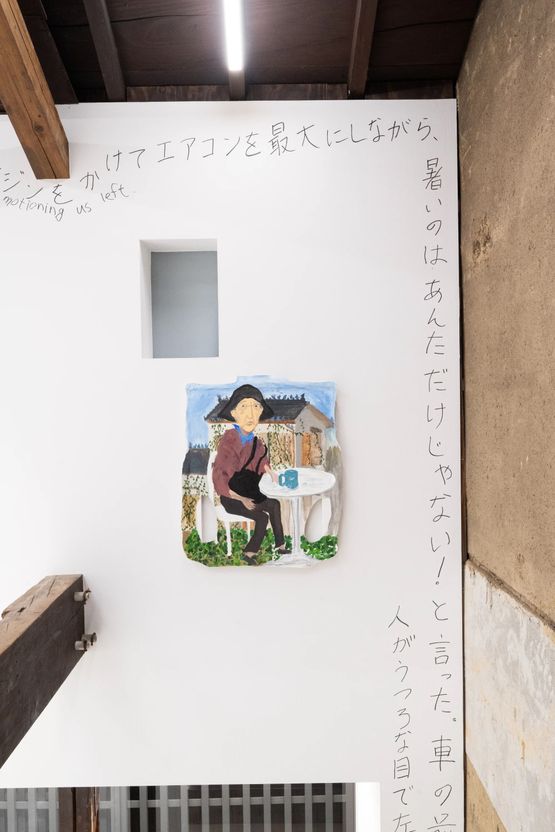
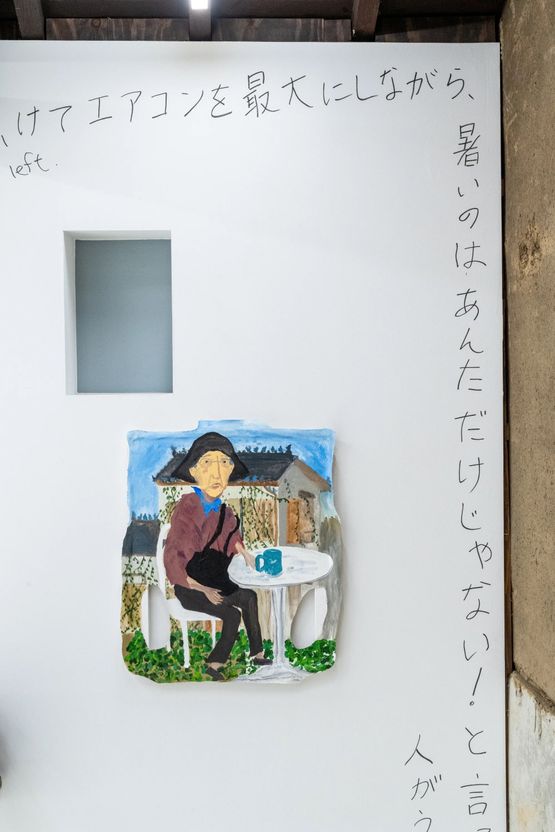
One of the most compelling aspects of Idetsu’s work is its close relationship to language and narration. For Idetsu, painting is not simply a matter of constructing an image in advance; it is also a place where images called forth by stories, events, and words can be received. Fragments of another person’s life, or descriptions encountered in a novel, may arise as concrete images even when they depict things she has never seen directly. This process of emergence forms a central basis of her practice. In recent years, her interest in novels and written texts has become increasingly pronounced, and the relationship between language and image has been approached with greater deliberateness. The texts that accompany her works do not function merely as explanations, but as another element placed alongside the paintings.
At the same time, her paintings sustain a tension between image and pictorial structure. Idetsu’s approach to painting is urgent and improvisational, yet grounded in a highly attentive mode of thought. Her brushwork is free yet delicate, combining a sense of accelerated movement with a careful hesitation, as if pausing just before conclusion. Within a single picture plane, multiple times and perspectives overlap, while traces of distant places and thoughts are quietly introduced. A figure in the foreground may carry an intimate emotional charge, while the background, too, holds its own density and presence. The painting becomes a single scene, yet one that contains several events at once.
The exhibition’s title, Extreme Heat, refers to a Japanese term that has become increasingly familiar in recent years in response to intensifying summer temperatures. As weather, heat may appear to be a shared condition. Yet the burdens it produces are far from uniform. Its effects differ profoundly according to each body, circumstance, and environment. These differences are not merely individual; they also reflect the unequal conditions in which people are placed. What Idetsu’s work addresses is precisely this kind of sensation: particular yet shareable, personal yet collective. It is also the uneven reality in which we find ourselves. In this exhibition, a shift can also be seen in Idetsu’s treatment of canvas as a support. Surfaces marked by cuts and folds depart subtly from a neatly ordered format, preventing the work from closing itself off as a completed object. This formal gesture resonates with the nature of the events depicted within the paintings, and may be read as a resistance to fixing an event into a single, stable image. Although Kyoko Idetsu’s paintings are deeply rooted in personal experience, they never remain enclosed within the private sphere. Instead, they quietly ask under what conditions the events of everyday life come into being, and how they might connect to others, to society, and to time itself. Without making such structures explicit, her work brings into view the less visible forces that lie behind daily life.


A respected voice in contemporary art discourse.
Focusing on ambitious storytelling and insightful art-world commentary. Ocula Magazine publishes in-depth interviews, critical essays and timely analysis on the artists, exhibitions and ideas driving the global art world.
Learn more about Ocula Magazine
Showcasing the best of the art world.
Ocula partners with galleries from around the world to highlight their artists, artworks and exhibitions. Gallery membership is by application and invitation, with each member vetted by an independent panel.
Learn more about Ocula Membership

Specialises in the sale of major artworks.
Led by a team with deep ties to the world’s leading auction houses, galleries and collectors. Ocula’s advisory team offers bespoke services to high-net-worth clients from around the world who are looking to acquire the best of contemporary and modern art.
Learn more about our team and services