There is a body that traverses territories, carrying the traces of worlds cut short. A body that moves through colonial ruins, borders, family memories, and ancestral spiritualities. As it walks, it reveals stories buried by slavery, the genocide of Indigenous peoples, forced migration, and the systematic erasure of Black and Indigenous identities in the Americas.
In IMPASSE, Paulo Nazareth constructs a cartography of traumatic memory and resistance. His work emerges from movement – physical, symbolic, political, and spiritual – transforming displacement into a method of artistic production and critical thought.
IMPASSE is a territory of suspension where objects cease to function as representations and become testimonies. Each work functions simultaneously as an archaeological vestige, a political document, and a ritual of survival.
Through fractures, tensions, and approximations, Nazareth reveals what colonial modernity sought to erase: ancestral cosmologies, silenced revolts, and ways of life deemed disposable.
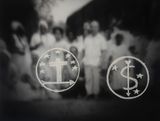
This dimension emerges in Botocudos Heritage, where colonial photographic archives depicting Indigenous peoples are revisited. Contemporary descendants hold daguerreotypes once used for racial cataloging and scientific objectification. By returning these images to the communities, the artist disrupts colonial authority over the archive. The past ceases to be a closed chapter of history and becomes a present conflict.
This exploration of ancestry extends to the photograph Amor de Mãe in which the maternal presence emerges as the spiritual axis of the exhibition. Here, ancestry has a face, a body, and a voice. The maternal figure becomes a symbol of permanence and collective resilience through care.
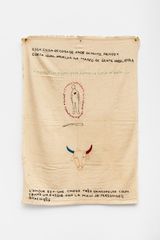
Another component of the exhibition is the Patuá.Patuá refers to the Afro-Brazilian amulet associated with spiritual protection and the preservation of memory. Nazareth develops this idea and transforms each artistic object into a potential talisman against forgetting. Patuá resonates with different semantic and historical layers: phonetically, it resembles pas toi, “not you” in French, evoking mechanisms of exclusion and the denial of belonging, but it also refers to patois, a term historically used in France to designate languages and dialects considered “minor” or “uncivilized.” By bringing together_patuá_, pas toi, and patois, the series highlights how culture is also a field of colonial violence.
The exhibition also examines how colonialism persists through commerce and consumption. In Ovo de Colombo, resin sculptures encapsulate food products and commercial objects associated with Indigenous names and the Afro-Brazilian diaspora. These transparent blocks resemble fossils from an unfinished colonial history, revealing how capitalism absorbs and commodifies its own violence.
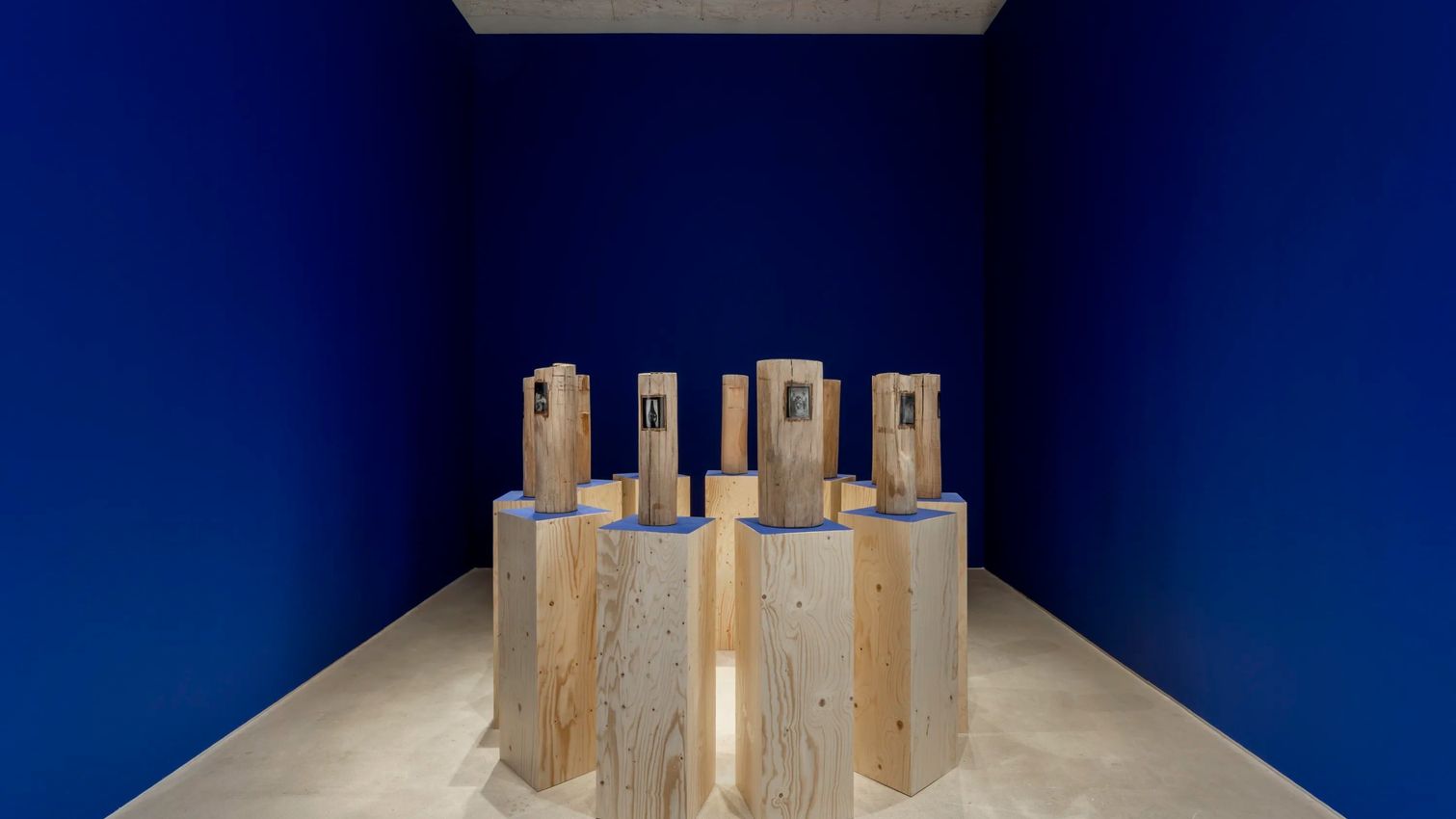
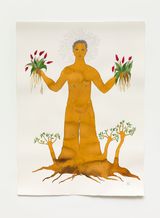
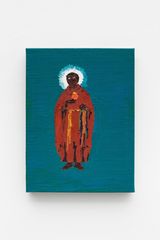
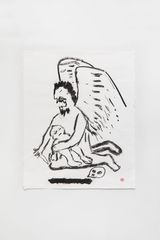
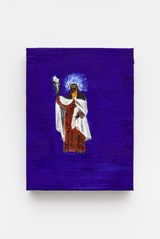
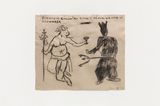
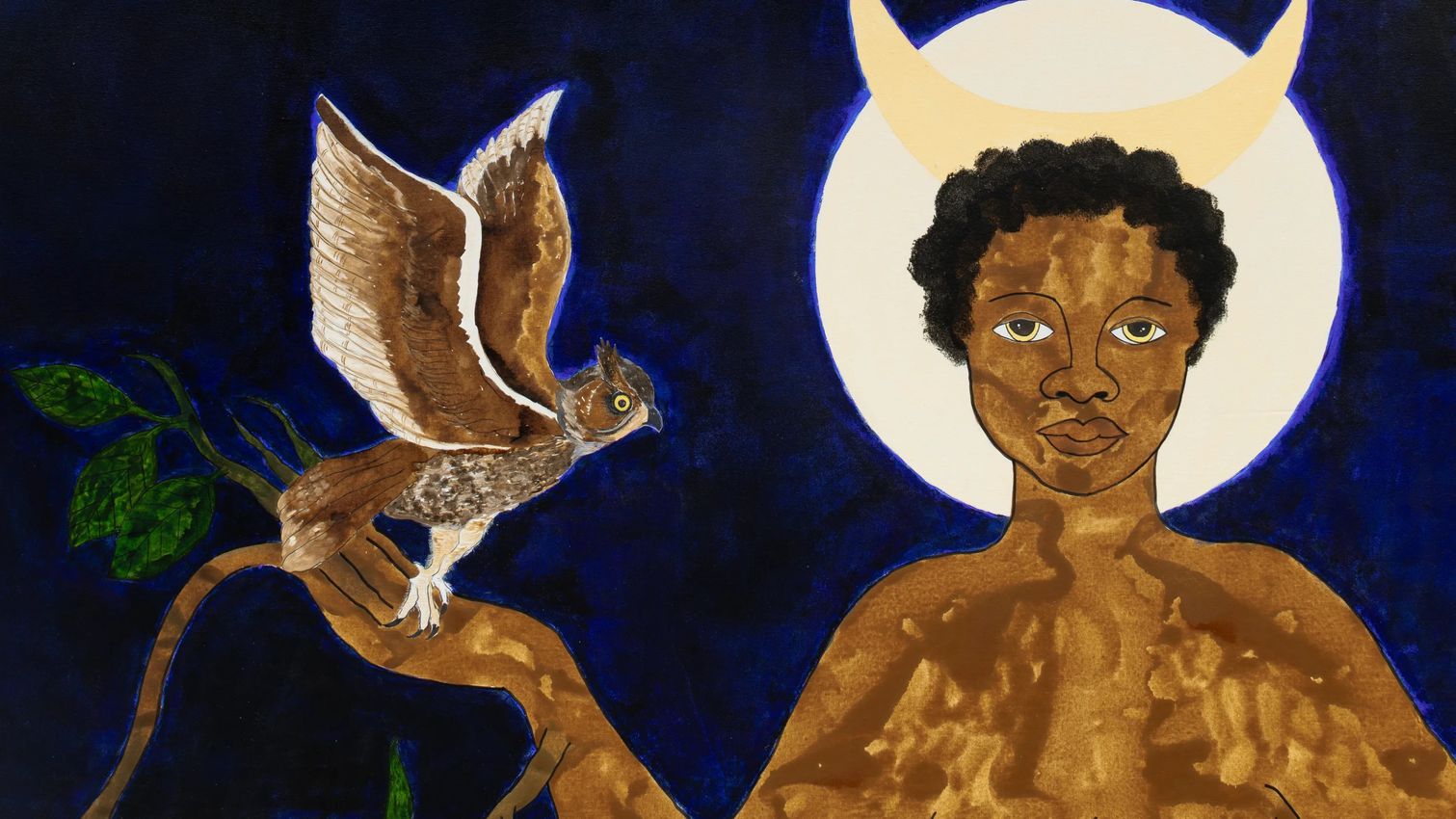
Nazareth’s paintings, engravings, and charcoal drawings similarly recover silenced stories of Black and Indigenous resistance. Works painted on gamelas made of tamboril wood evoke insurrections, slave rebellions, and revolutionary movements erased from official narratives. In the exhibition IMPASSE, Paulo challenges official regimes of historical representation by integrating images of African kings and queens in power into monumental wooden structures. In this way, these figures emerge as political and spiritual presences still active in the present.
However, he goes even further by inviting Queen Belinha to the exhibition. Matriarch of the Guarda de Moçambique and the Congo Treze de Maio de Nossa Senhora do Rosário, Queen Belinha, Queen Conga, emerges as a body-archive, a territory of continuity and guardian of a lineage of women who, over generations, have sustained the ritual, political, and communal dimensions of the Congado of Minas Gerais. It is no coincidence that, during her enthronement, Queen Belinha transforms into Nzinga, evoking the memory of the Central African sovereign as a principle of strength, passage, and reinvention. Even her trip to Angola allowed her to retrace the paths of her ancestors, in a gesture of historical and spiritual re-inscription. This other journey, from Belo Horizonte to Paris, will not function as an exotic displacement, but as evidence that, within the diasporas, there still exist living vehicles for the transmission of memory, spirituality, and a sense of belonging that continue to reshape forms of collective existence. Through the inclusion of Queen Belinha in the exhibition, Paulo shifts our very understanding of monuments, royalty, and archives, affirming Black ancestry as a living, continuous, and inescapable aspect of human experience.
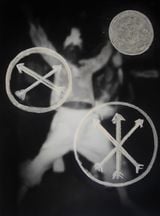
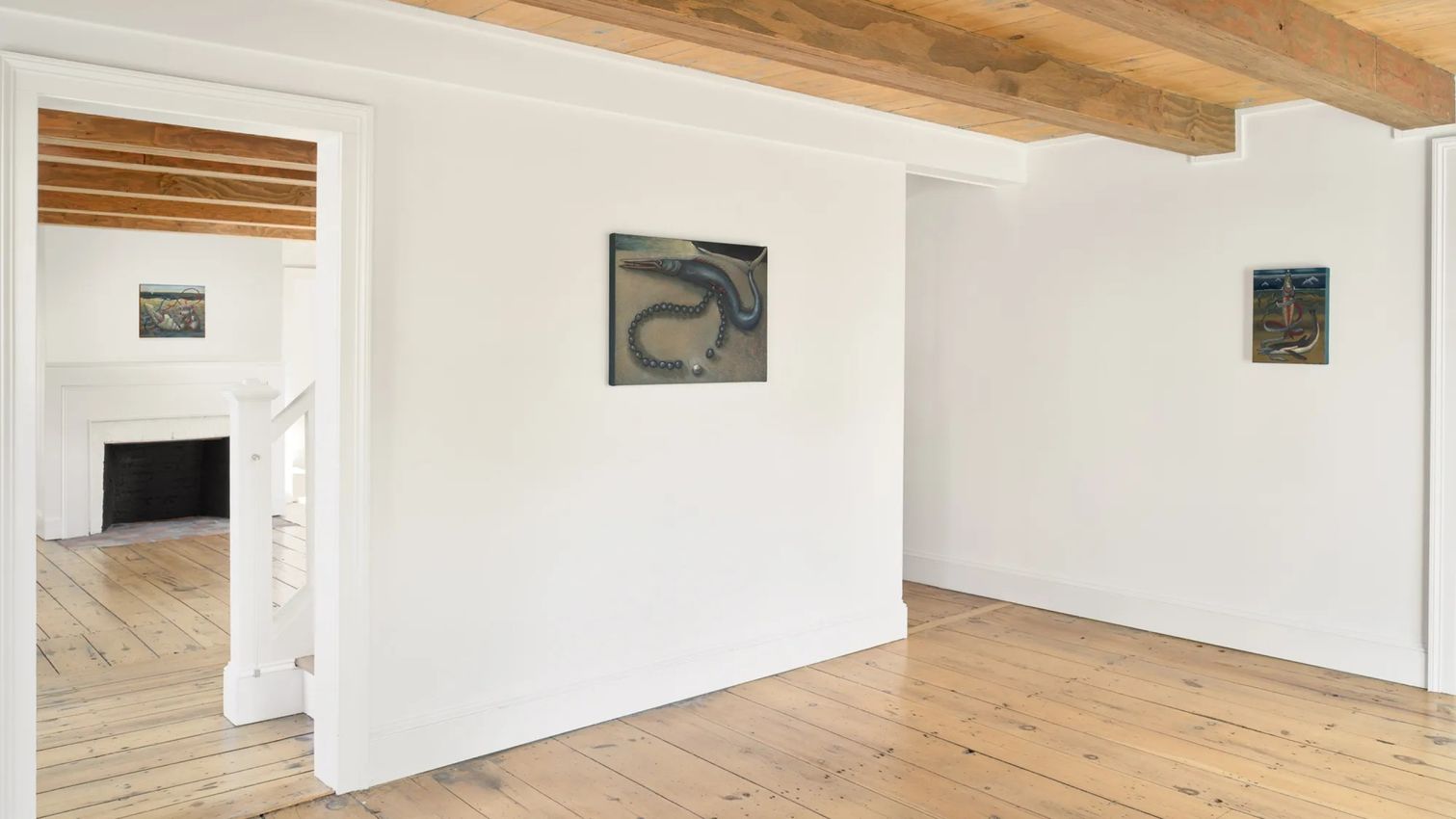
The photographic series in the exhibition features circles of efun, white chalk used in African spiritual practices for purification and ancestral connection. This tension between materiality and memory also runs through the paintings gathered in the exhibition. Produced at different points in his career, they share an atmosphere of temporal suspension. The gestures depicted seem frozen in the moment immediately before or after a confrontation.
This process reaches its final unfolding in the series_They Do Not Know My Country_. The result of his travels and international movements, the prints reveal experiences of racism, exclusion, and invisibility endured by racialized individuals in transit around the world.
Throughout IMPASSE, Nazareth constructs alternative archives made of absences, silences, ruins, and survival. His work reveals that memory is not nostalgia, but a field of contention. Each work questions who has been authorized to remain in history, who has had the right to remember, and who continues to be forced to forget in order to survive. The artist creates a territory where art, spirituality, politics, and daily life become inseparable. Each object, path, and gesture exposes the persistence of colonial inequality, while affirming collective survival, care, and reinvention.
In IMPASSE, Paulo Nazareth insists on affirming the persistence of life by presenting a body of work deeply committed to constructing new ways of imagining belonging, ancestry, and justice.
Paulo Nazareth’s performance and installation-based work often draws upon his joint African and indigenous heritage. His ongoing work Cadernos de Africa [Africa Notebooks] is presented as part of Journal: a five-year walk he began in 2013 from his home in a favela near Belo Horizonte, throughout Brazil and eventually northwards across the entirety of the African continent from Cape Town. His walk-performance represents a slow, real-time inquiry into his own experience and that of the individuals he encounters on the way, tracing a subtle matrix of connections that bridge not only people but communities and shared histories. His installations consist of an arrangement of collected ephemera and video works that document his journey. He engages with a number of subjects that are often related to race, ideology and the unequal distribution of development through his practice that is both interdisciplinary and participatory. Nazareth seeks to embody the idea of the artist as a connector, a decoder, and a philosopher.