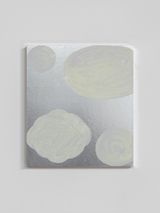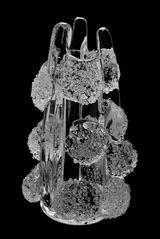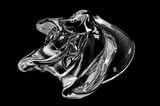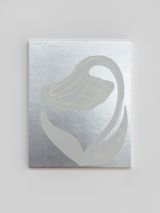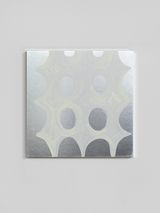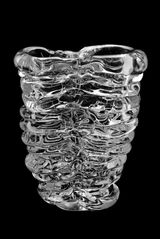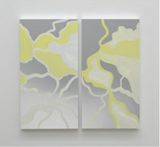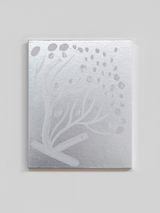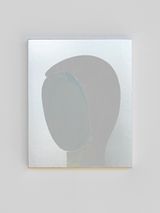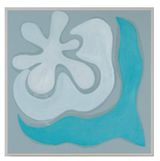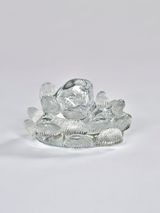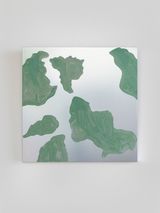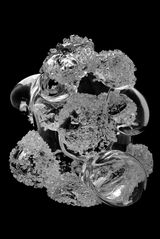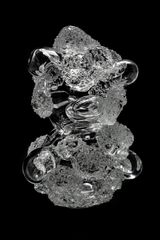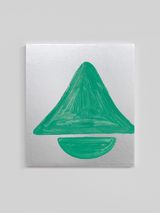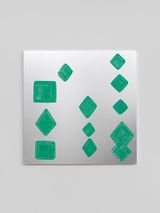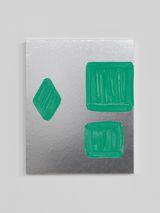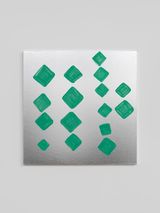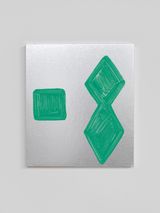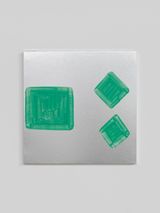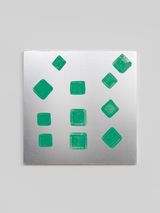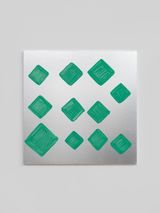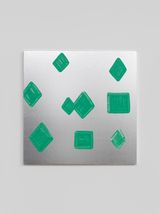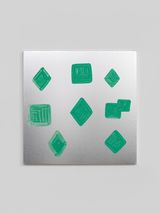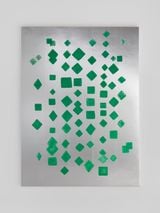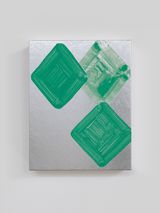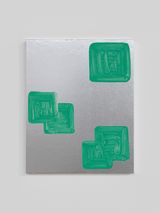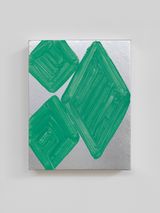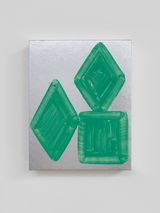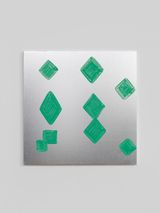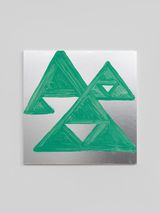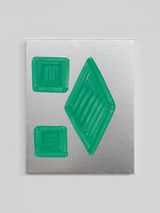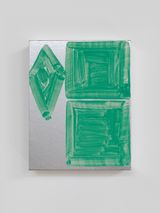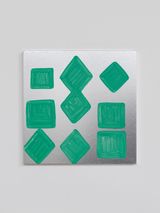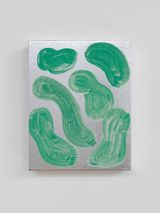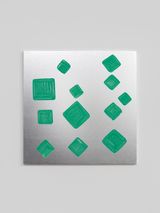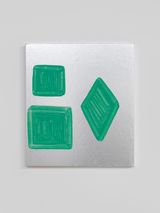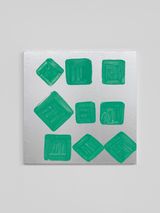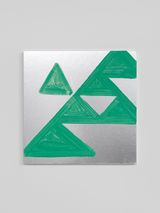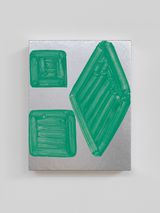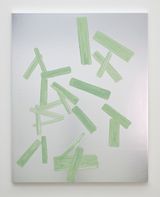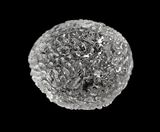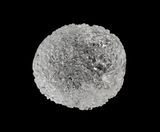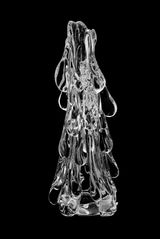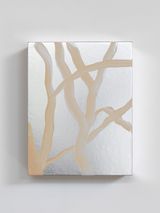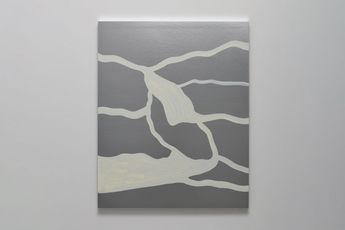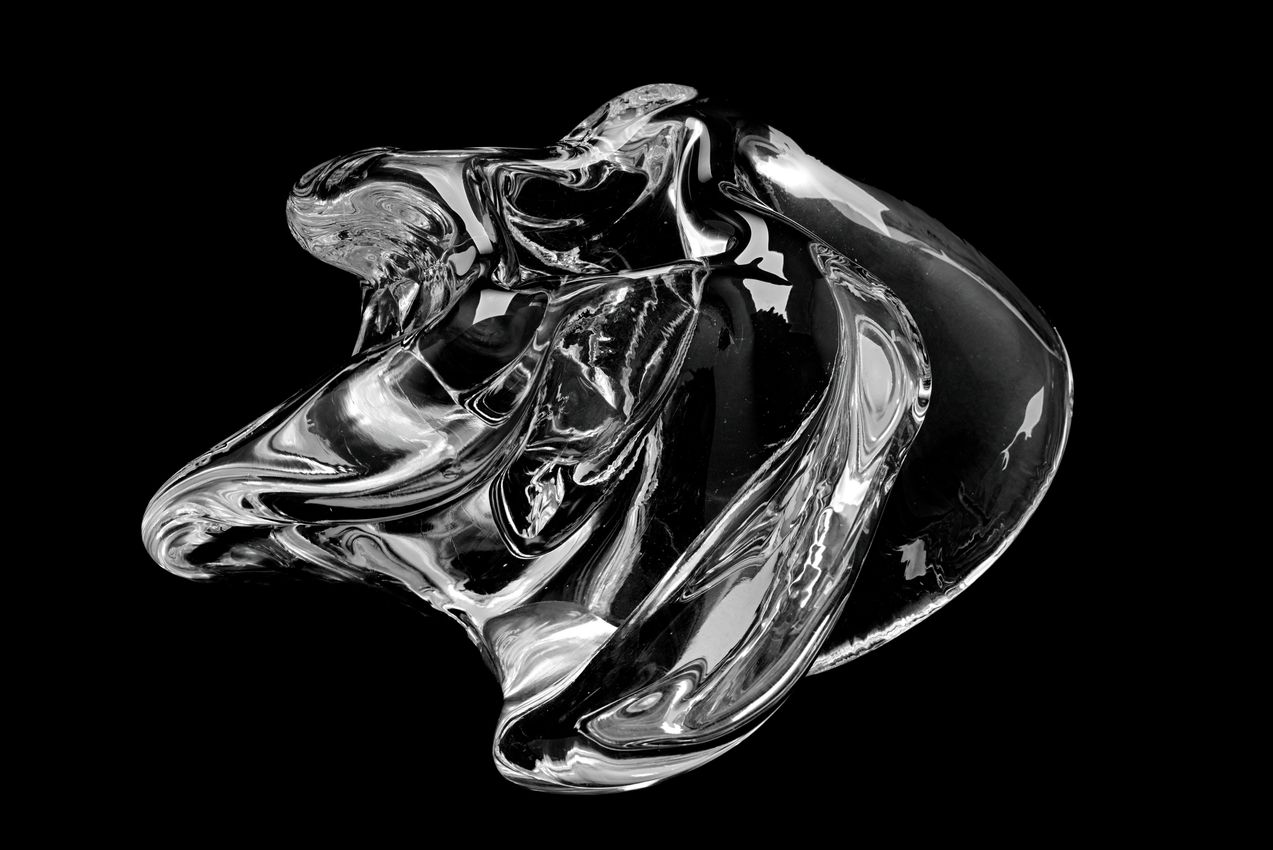
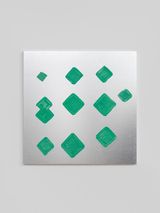
Nonaka Hill is delighted to present, Singing Forest, a two-person exhibition featuring glass sculptures by Ritsue Mishima and paintings by her son, Anju Michele. In their first exhibition in Los Angeles, the Kyoto and Venice-based artists engage in a materially intimate dialogue. Through the transparency of Mishima’s sculptures to the shimmer of Michele’s paintings, they evoke flickering light and colors rising from a forest once engulfed in flames, paying homage to our city in an immersive installation.
While their aesthetic harmony is rooted in family bonds, they transcend generations by their unique and complementary uses of light. For Mishima, it is the refractive quality of transparently shaped glass that absorbs and scatters the light around it; while for Michele, it is the reflective and absorptive interplay of color and metallics on a flat surface. In situ, the former plays on the light and color of the latter, each approach completing the other in a dual presentation.
Hand blown on Murano Island with expert glass artisans, Mishima’s sculptures deftly evoke, without traditional colorants, the quintessence of natural phenomena, from levels of the organic to the quantum. They depict the flow of water and ice, the fruiting of bodies and molecules, the play of light as if it were in slow motion. Each sculpture is made within the propulsive will of life, while also depicting its aqueous, oscillational, crystalline, and figural manifestations. That they are made in concert with artisans with whom Mishima has developed an instinctual bond allows for ideational, material, and emotional variables to determine the final form. All of the sensory information of the day at the factory becomes fodder for the work: “All become one,” Mishima has written.
Ritsue Mishima was born in Kyoto in 1962 and raised in the region’s countryside. Mishima’s eventual engagement with glass was initially casual, having decided to make her own vase out of personal necessity. This led to regular visits to the glass workshops, spawning enough vases to stage her earliest exhibition at an an atelier in Milan in the mid 1990s.
Anju Michele was born in Venice in 1989 and displayed an early talent for drawing and painting. Michele attended Fine Arts High School in Venice for several years, and School of Art in Tokyo, during which he received formal art training, cementing his interest in painting and animation. This suggests how his paintings are imbued with motion, using elemental shapes like circles, diamonds, and rectangles to reveal the interplay of cosmic and spiritual bodies. Painted improvisationally on metallic grounds of either silver or gold, Michele works from a deeply intuitive place, exquisitely sensitive to paint application and the placement of shapes. Due to the thinness of Michele’s paint application, one can see the metallic backgrounds showing through the shapes, all of which placed against conventional strictures of composition. They are paintings made in a free-floating associative state unconstrained by rules or preconceived ideas, falling out of Michele as much as they are products of labor.
This exhibition presents two artists that use light and surface as their common denominator. Mishima’s works, made briskly in the presence of expert craftsmen—themselves vessels of knowledge passed down through hundreds of years—act a prism through which one gains insight into the work of her son, who paints swiftly without direct reference to language or history. In harmonizing their work in one space, they co-author a visual musicality; they reinforce the clarity of light in each other’s practices, yielding a new synthesis of feeling.


Nonaka-Hill is a contemporary art gallery in Los Angeles with a focus on Japan, founded in 2018 by Rodney and Taka Nonaka-Hill.
Rodney was a partner at Marc Foxx Gallery, Los Angeles and previously worked with Jay Gorney Modern Art in New York. Taka has worked as an art director in the Japanese fashion industry.
Designed by architect Linda Taalman, the gallery is located inside a strip mall, featuring a floor to ceiling glass storefront facade, breaking away from ‘white cube’ gallery design. Above the front entrance, the gallery has maintained the original Best Cleaners signage of the former tenants. Inside, two main exhibition spaces are divided by a central corridor which resembles a traditional Japanese tokonoma area. The gallery’s rear viewing room displays additional artworks and ikebana.

A respected voice in contemporary art discourse.
Focusing on ambitious storytelling and insightful art-world commentary. Ocula Magazine publishes in-depth interviews, critical essays and timely analysis on the artists, exhibitions and ideas driving the global art world.
Learn more about Ocula Magazine
Showcasing the best of the art world.
Ocula partners with galleries from around the world to highlight their artists, artworks and exhibitions. Gallery membership is by application and invitation, with each member vetted by an independent panel.
Learn more about Ocula Membership

Specialises in the sale of major artworks.
Led by a team with deep ties to the world’s leading auction houses, galleries and collectors. Ocula’s advisory team offers bespoke services to high-net-worth clients from around the world who are looking to acquire the best of contemporary and modern art.
Learn more about our team and services