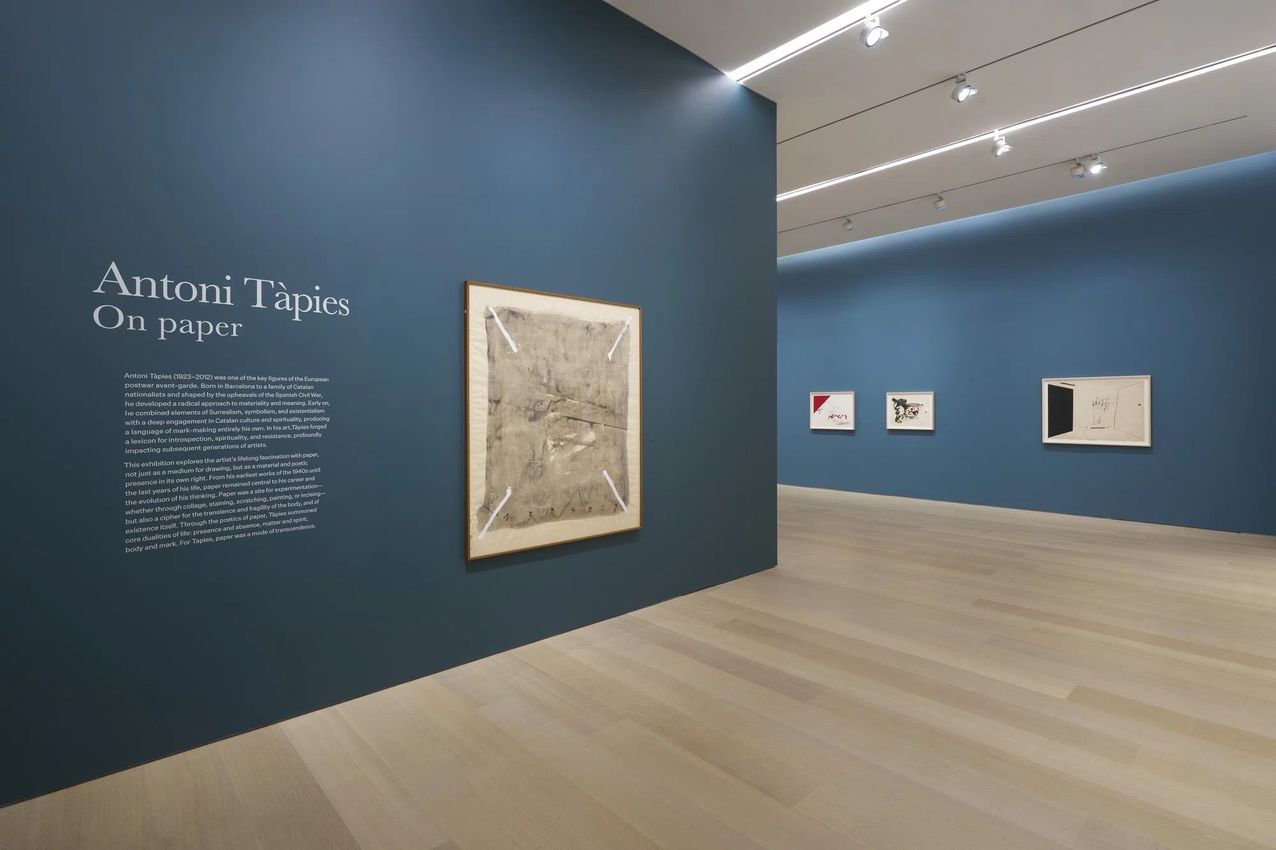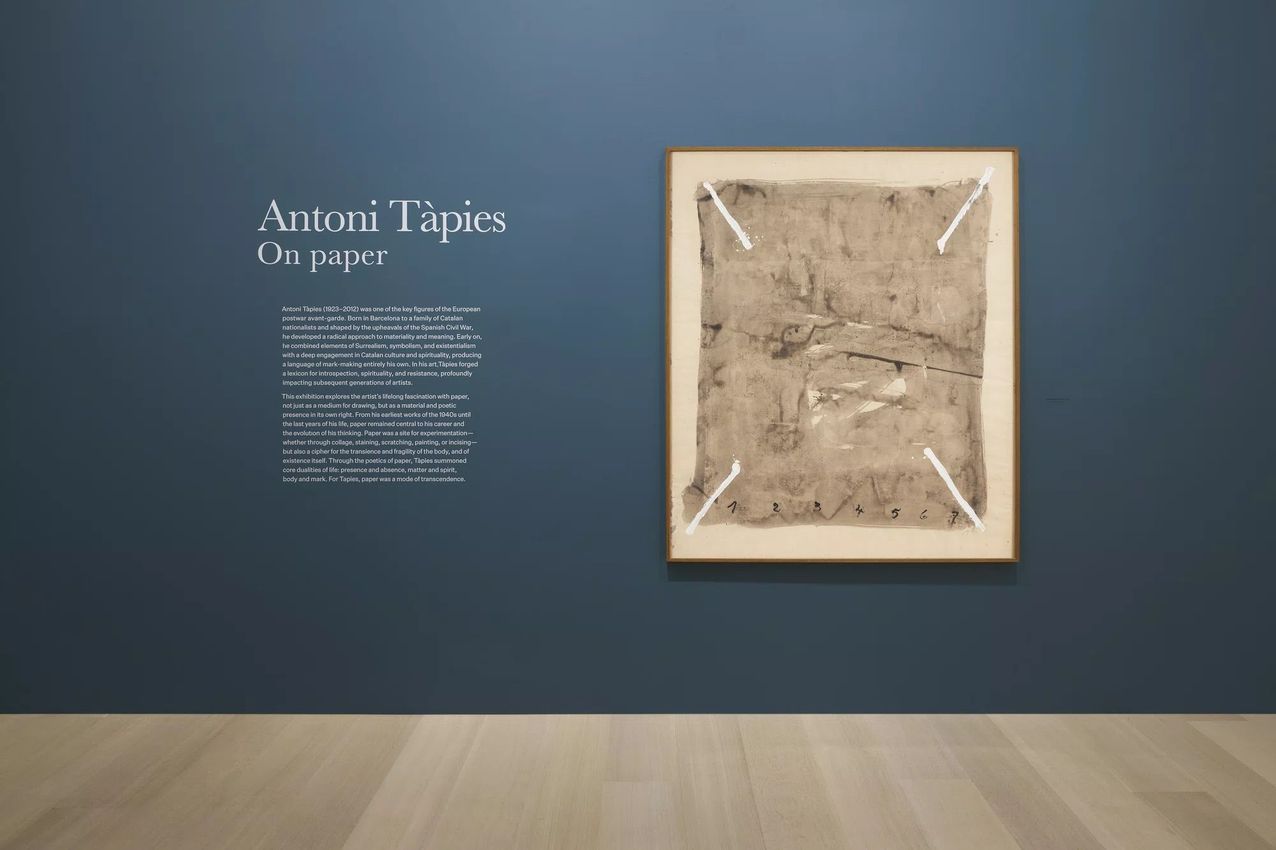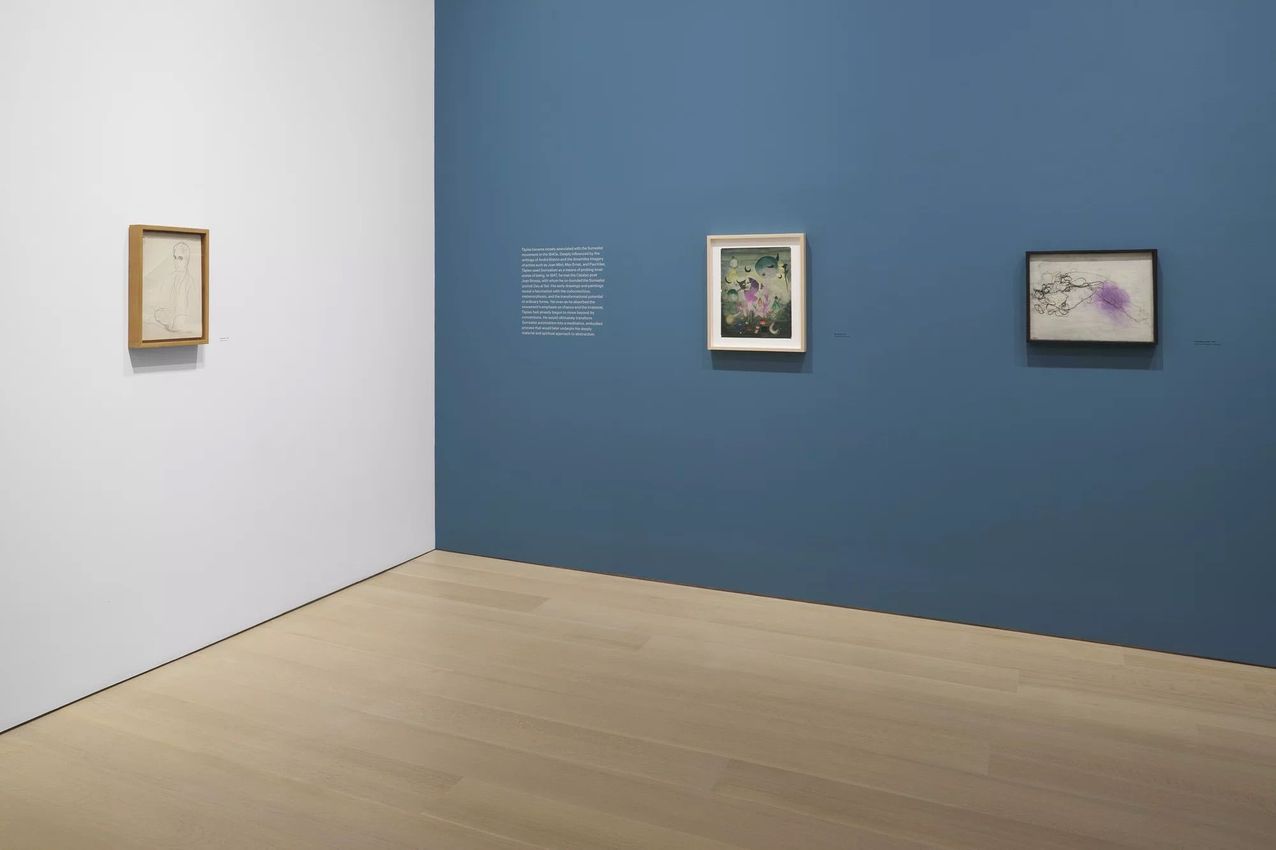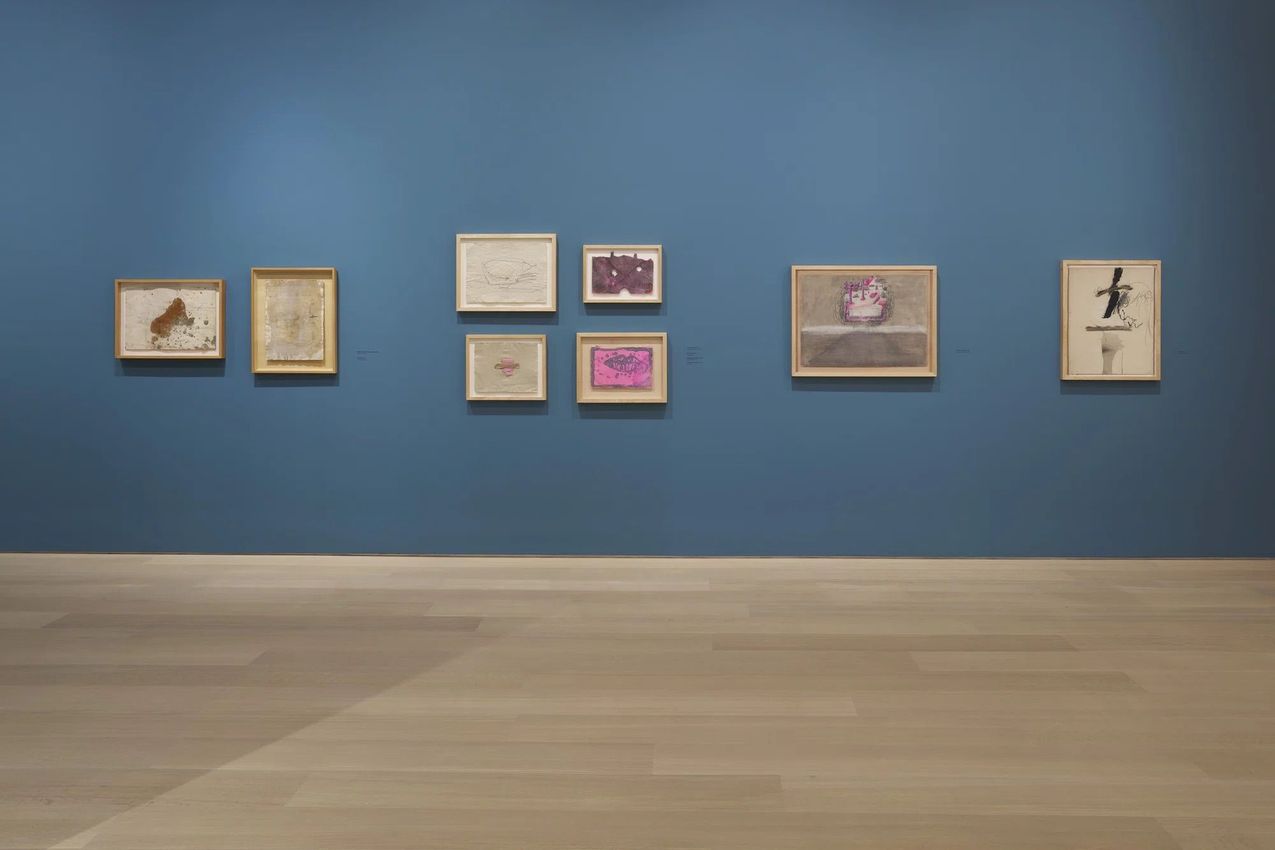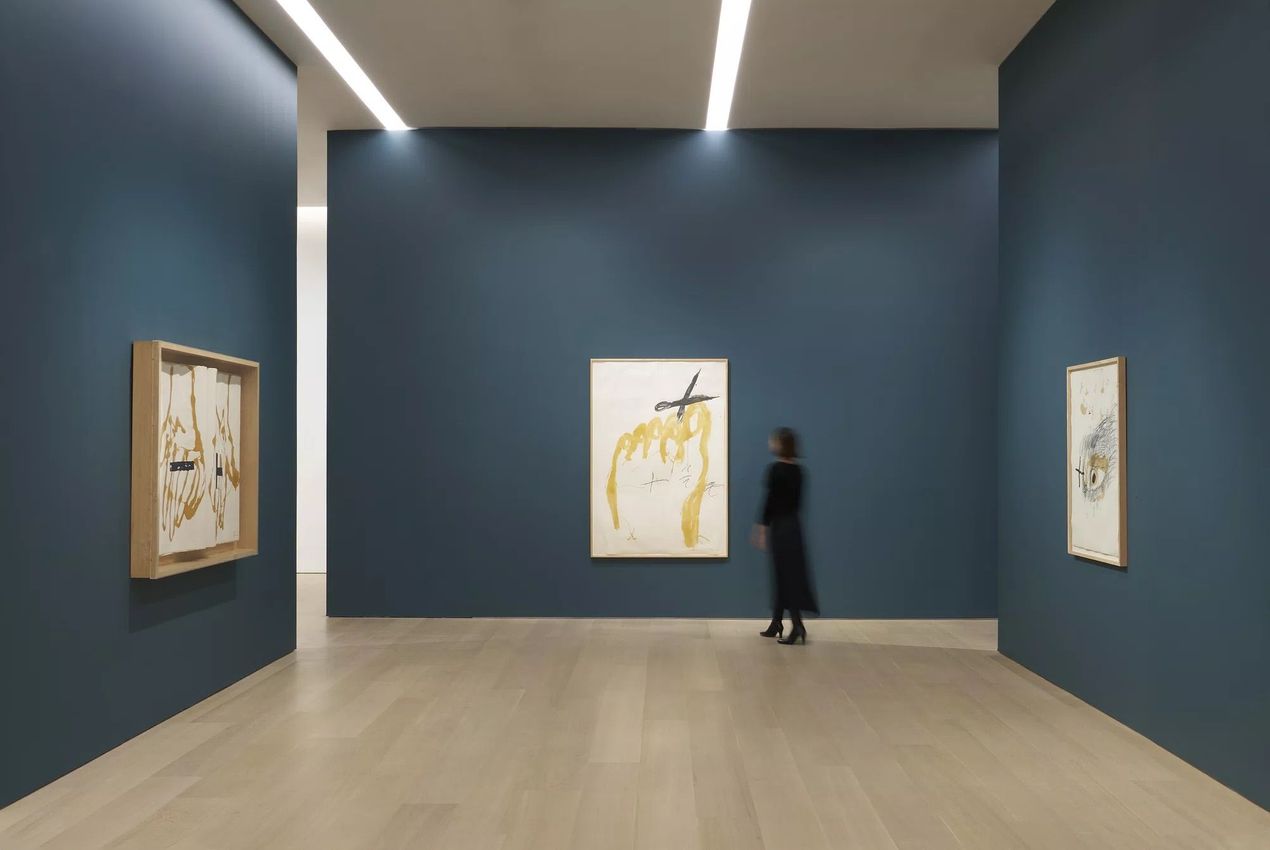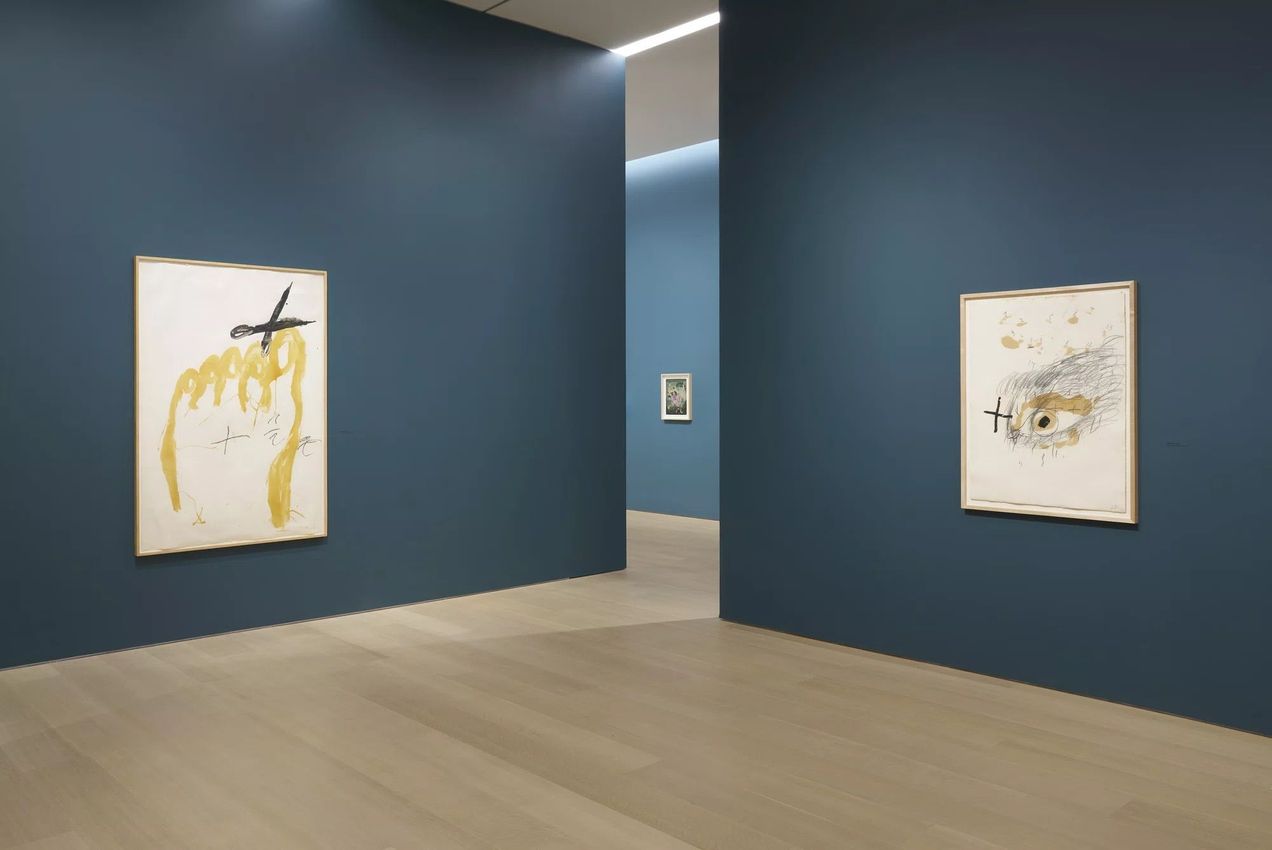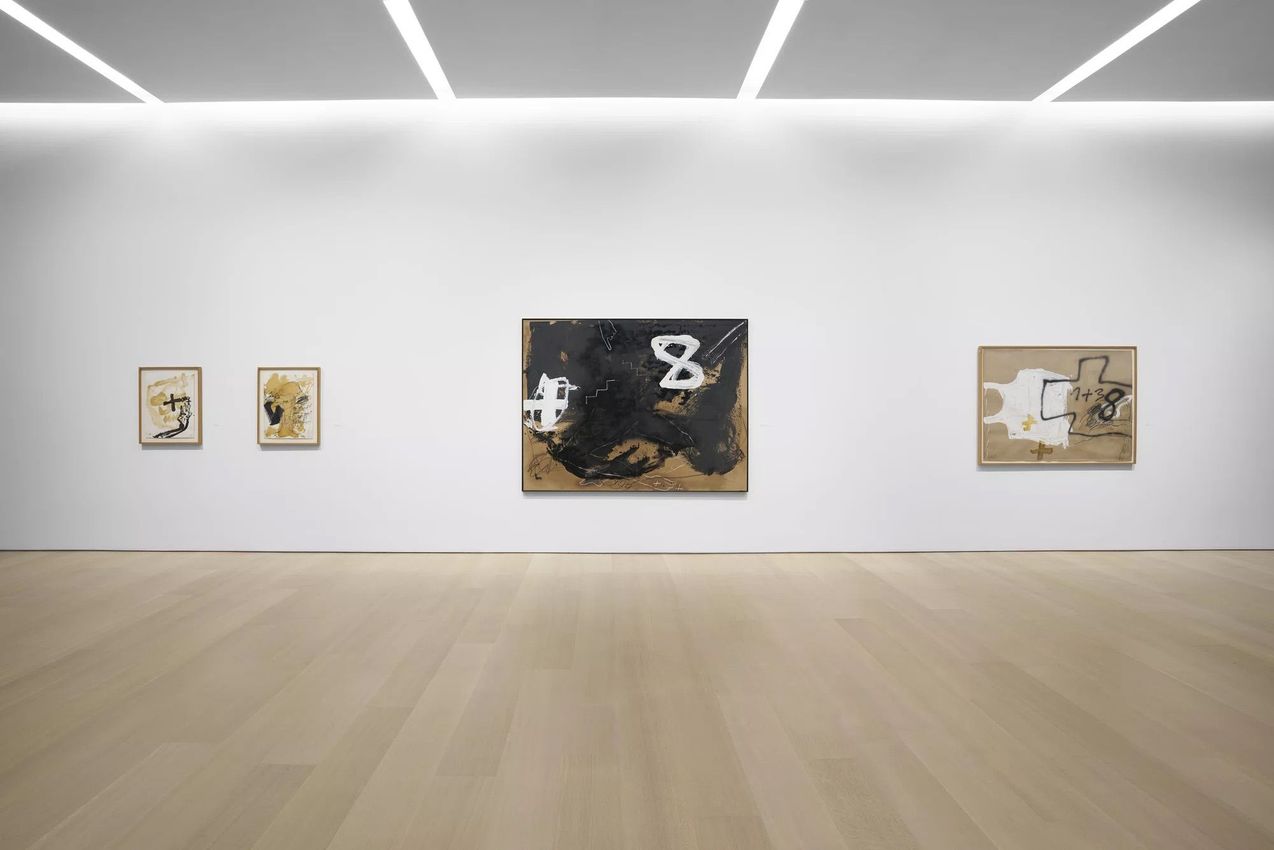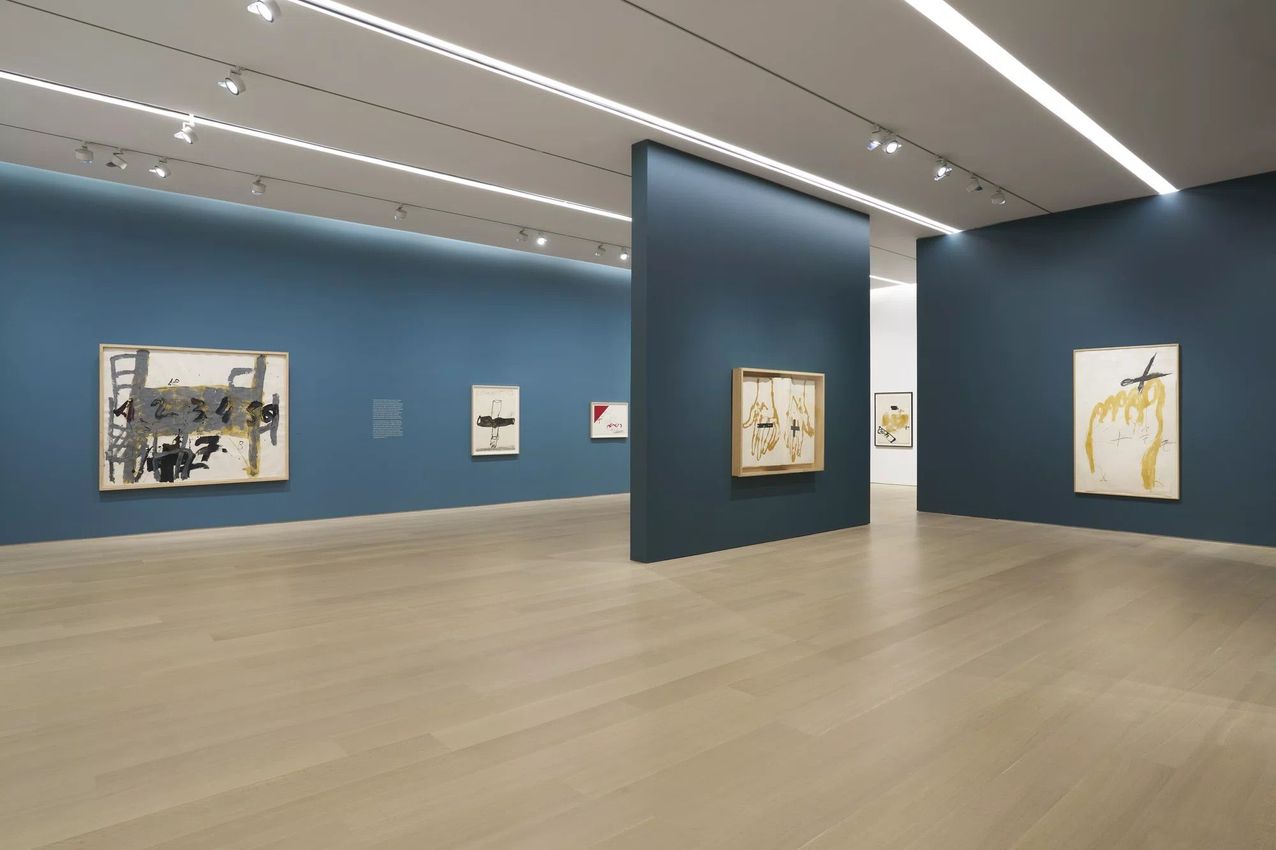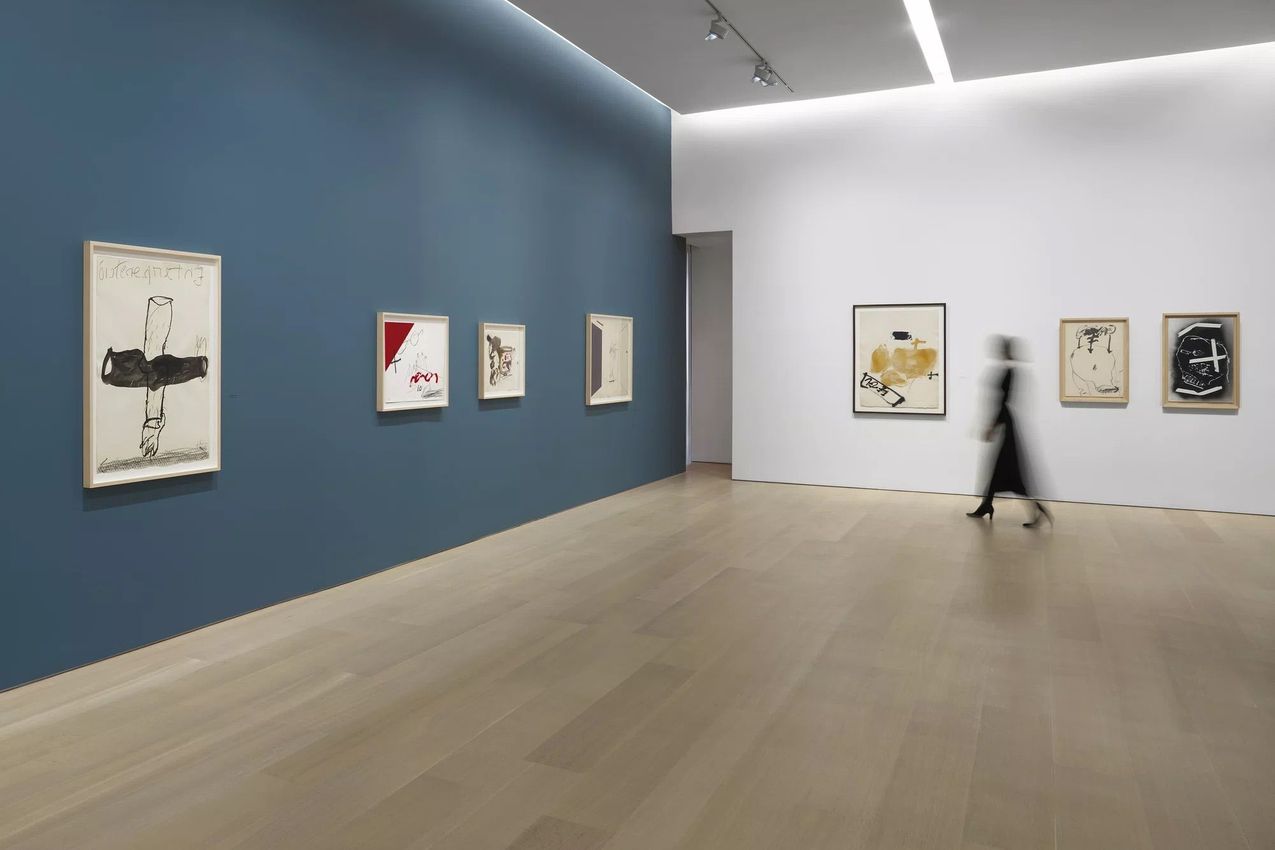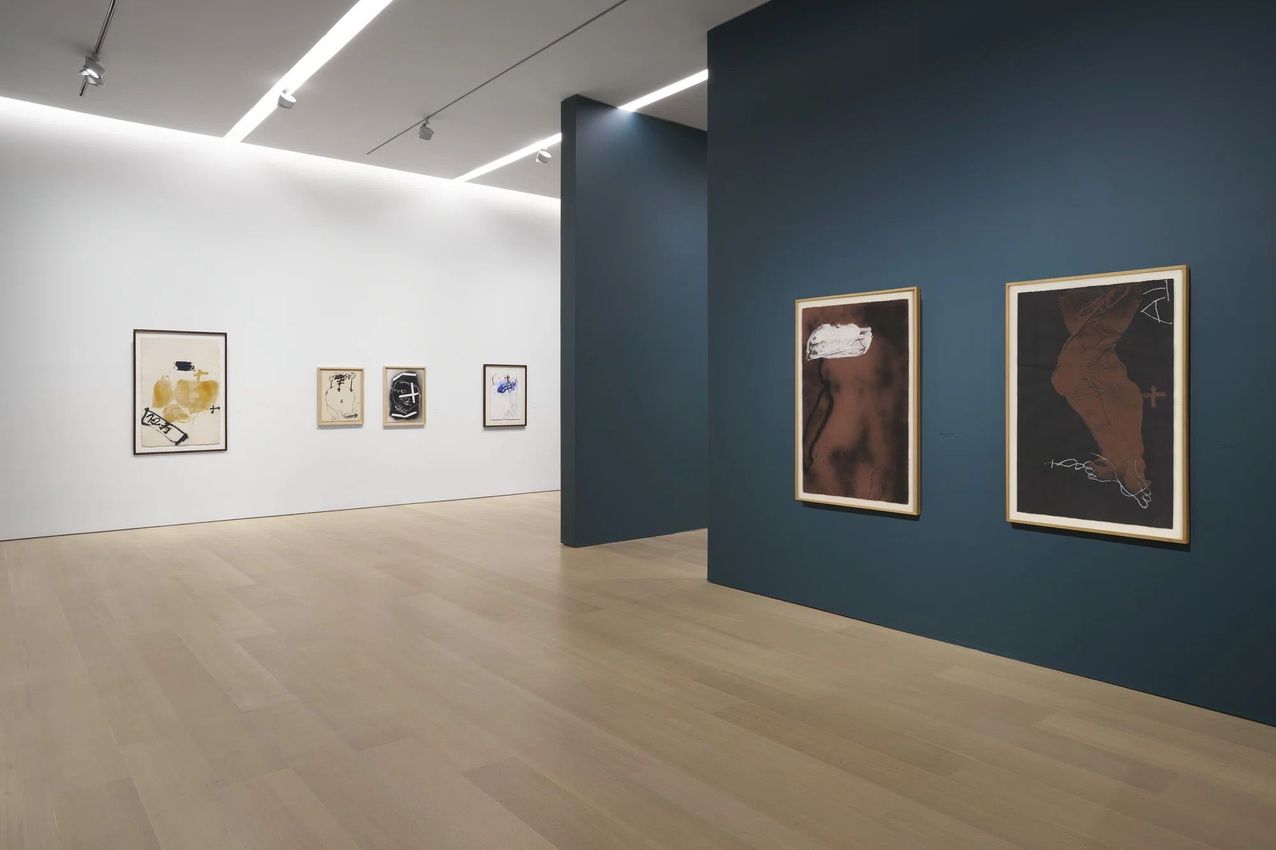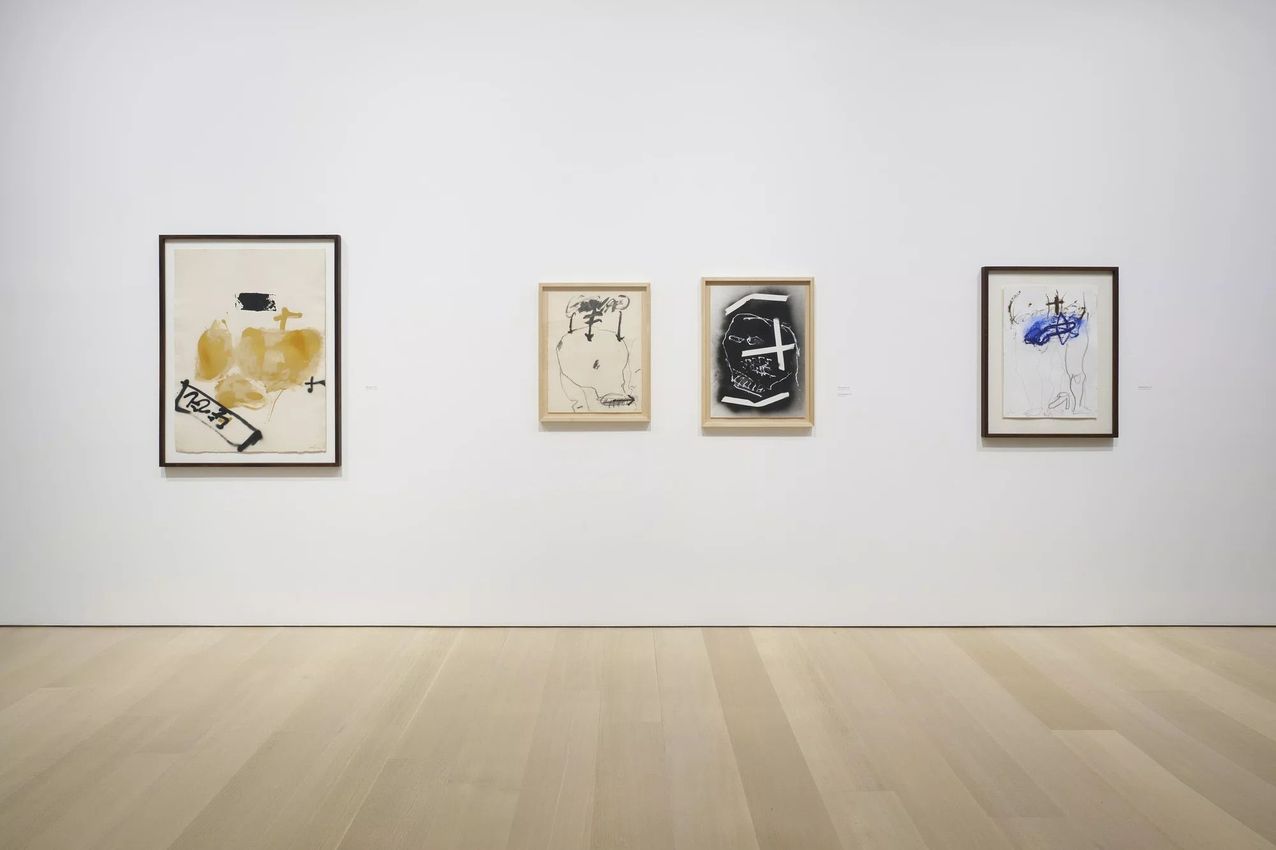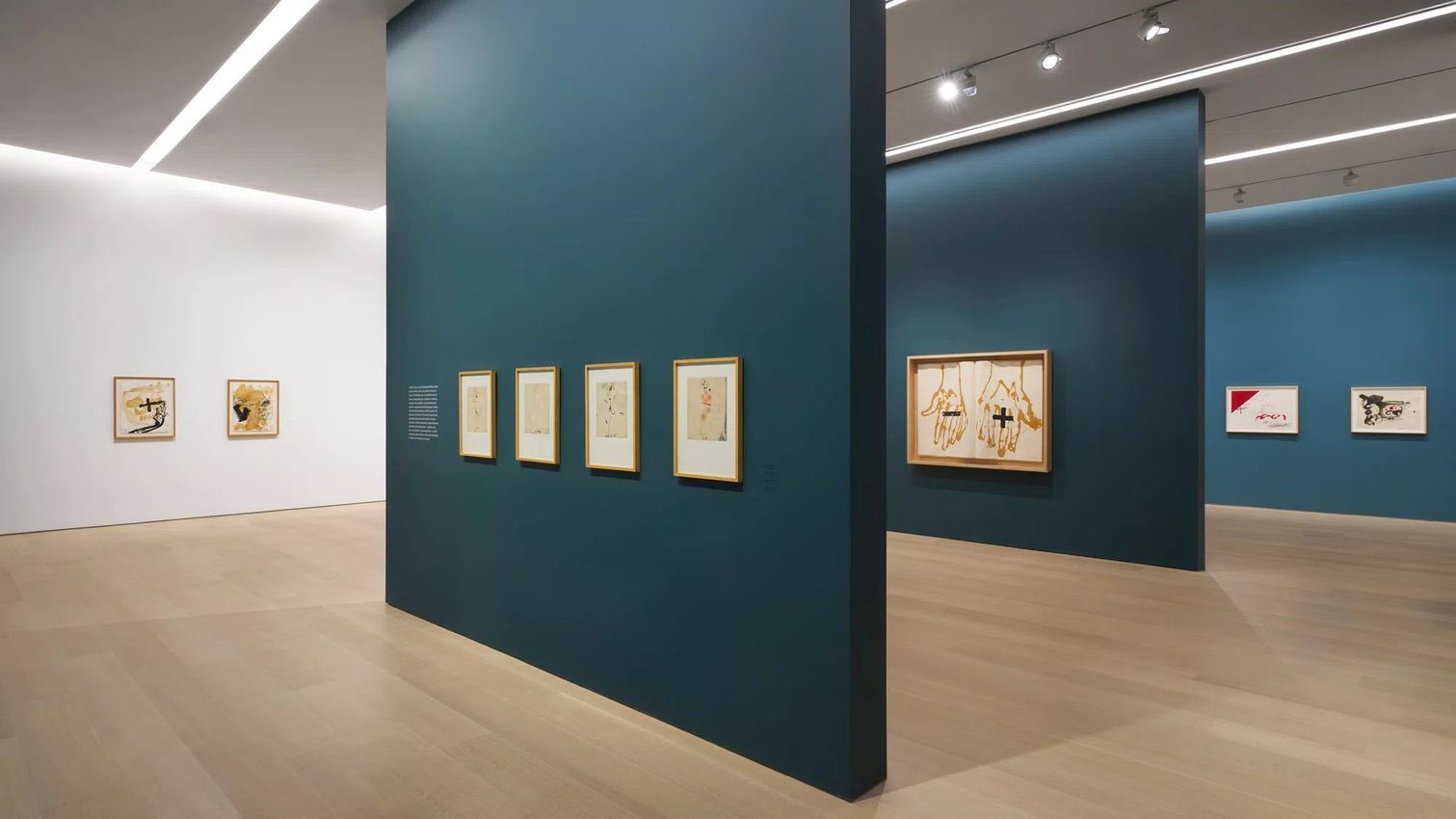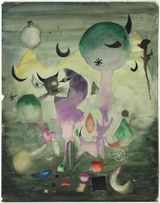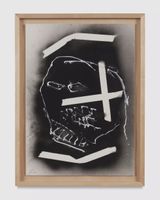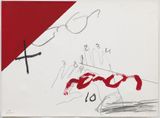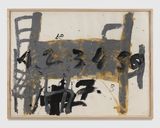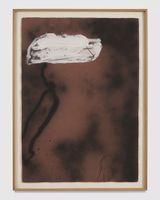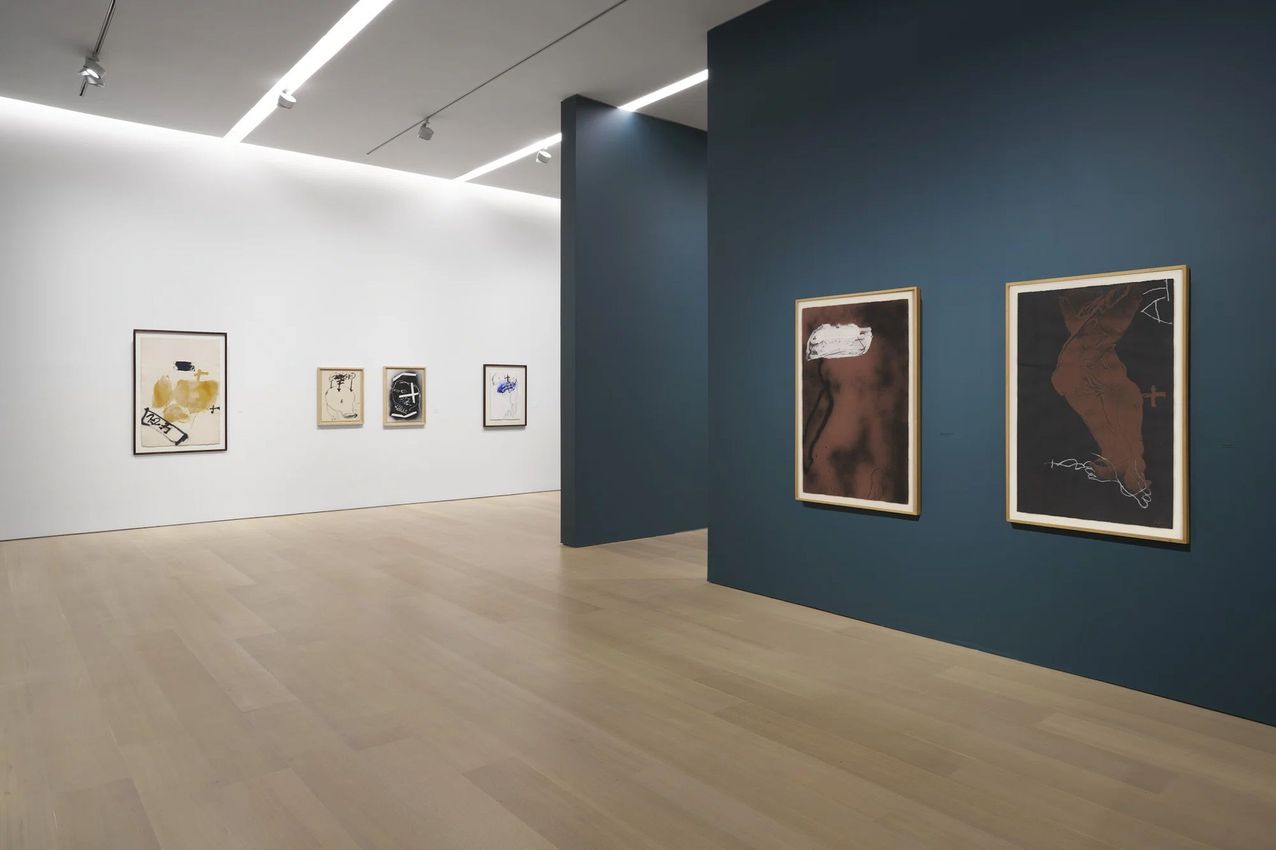
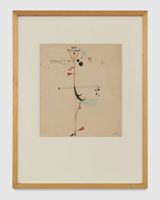
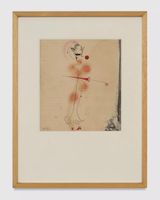
Pace is pleased to present a survey of works on paper by the Spanish artist Antoni Tàpies at its 540 West 25th Street gallery in New York from November 7 to December 20. Bringing together some 40 artworks created between the 1940s and the 2010s—including never-before-exhibited compositions—this presentation will showcase Tàpies’s meditations on the human condition through his works on paper and, more broadly, his indelible impact on the history of art in Europe and across North America and Asia.
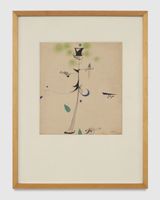
Born in Barcelona in 1923, Tàpies was a self-taught artist who developed a unique visual language centering on exchanges among symbols, gestures, and materials. The artist—who was also a celebrated theorist and philosopher—incorporated signs and symbols from Catalonia and other cultures into his paintings, collages, and sculptures, imbuing his work with historical allusions and odes to phenomena of the natural world. Replete with personal resonances and references to political and social struggles in his native Catalonia and Spain, his art made radical aesthetic propositions during the postwar era.
Over the course of his seven-decade career, Tàpies investigated abstract and surrealist forms using unconventional, raw materials. His combinations of media as diverse as wood, dirt, spray paint, cardboard, blankets, clothes, carpet, furniture, and marble dust reflect the intensely experimental ethos of his process. Tàpies forged complex layers of materials like these, bringing striking amalgams of color and texture to the fore of his compositions. In this way, enactments of transformation and transfiguration animated the spirit of all his work as an artist.
Pace’s exhibition of Tàpies’s works on paper, the gallery’s twelfth exhibition dedicated to the artist since it began representing him in 1992, will shed new light on the ways that drawing functioned in his practice—as a medium through which he could narrate his own experiences and express the poetic and fragile dimensions of the human condition. Featuring a large selection of works produced between the start of his career in the 1940s and the final years of his life, this presentation will trace the development of his visual lexicon, which reflects his deep interest in signs and symbols from Eastern religions and philosophies, particularly Buddhism. They also speak to the connections between Tàpies and his American contemporaries at the forefront of Abstract Expressionism—importantly, the artist began showing with Martha Jackson Gallery in New York the year it opened in 1953, during the early years of his career, and he presented solo exhibitions with the storied American gallery until 1978.
Tàpies’s reimagination and redefinition of painting as a highly physical undertaking would inspire future generations of artists. Notably, in 1993—the same year he mounted his first solo show with Pace—he was chosen to represent Spain at the 45th edition of the Venice Biennale, when he won the Golden Lion for his large-scale installation titled Rinzen. In 1984, the artist established the Fundació Antoni Tàpies in Barcelona—which opened a museum and library in 1990—to support the exhibition of his work and that of other modern and contemporary artists. Along with the Fundació Joan Miró and Museu Picasso, the Fundació Antoni Tàpies remains a key cultural institution in the fabric of the Spanish city.
Today, his work can be found in the collections of the Museum of Modern Art and the Guggenheim Museum, New York; the Baltimore Museum of Art; the Museum of Fine Arts, Houston; the San Francisco Museum of Modern Art; the Museo Tamayo, Mexico City; the Museu Nacional d’Art de Catalunya, Barcelona; the Museo Nacional Centro de Arte Reina Sofía, Madrid; the Museo Guggenheim, Bilbao; Tate, London; the Stedelijk Museum, Amsterdam; the Moderna Museet, Stockholm; the Centre Pompidou, Paris; the Kunstmuseum Basel; the Städel Museum, Frankfurt; the Museum Ludwig, Cologne; the Tehran Museum of Contemporary Art; the National Gallery of Victoria, Melbourne; and many other international institutions.
Concurrently with Pace’s exhibition in New York, Antoni Tàpies: The Imagination of the World is on view at the Museu Tàpies in Barcelona through January 25, 2026.


Antoni Tàpies (b. 1923, Barcelona; d. 2012, Barcelona) has for six decades refined a visual language inspired by a wide range of sources that coalesce into a complex fusion of materials, gestures, and symbols. His explorations of Surrealist imagery early in his career served as the foundation for an ongoing investigation of the nature of physical objects and their materiality. Tàpies’ work embodies his extensive personal experience and history, as well as that of his native Spain and specifically Catalonia. As Tàpies’ use of tangible materials for making art emphasize physical transformation, spiritual transformation is evoked through signs and symbols drawn from Eastern and Western cultures. Tàpies has participated in three Venice Biennale exhibitions (1952, 1954, 1958) prior to being selected to represent Spain at the 45th Venice Biennale in 1993, during which he was presented with the Biennale’s Award for Painting.


Pace is a global art gallery of and for the future, modeled on a set of core values established during its founding in 1960 and designed to serve its artists, estates, and collectors in a way that is focused, responsive, and aligned with its enduring mission.

A respected voice in contemporary art discourse.
Focusing on ambitious storytelling and insightful art-world commentary. Ocula Magazine publishes in-depth interviews, critical essays and timely analysis on the artists, exhibitions and ideas driving the global art world.
Learn more about Ocula Magazine
Showcasing the best of the art world.
Ocula partners with galleries from around the world to highlight their artists, artworks and exhibitions. Gallery membership is by application and invitation, with each member vetted by an independent panel.
Learn more about Ocula Membership

Specialises in the sale of major artworks.
Led by a team with deep ties to the world’s leading auction houses, galleries and collectors. Ocula’s advisory team offers bespoke services to high-net-worth clients from around the world who are looking to acquire the best of contemporary and modern art.
Learn more about our team and services