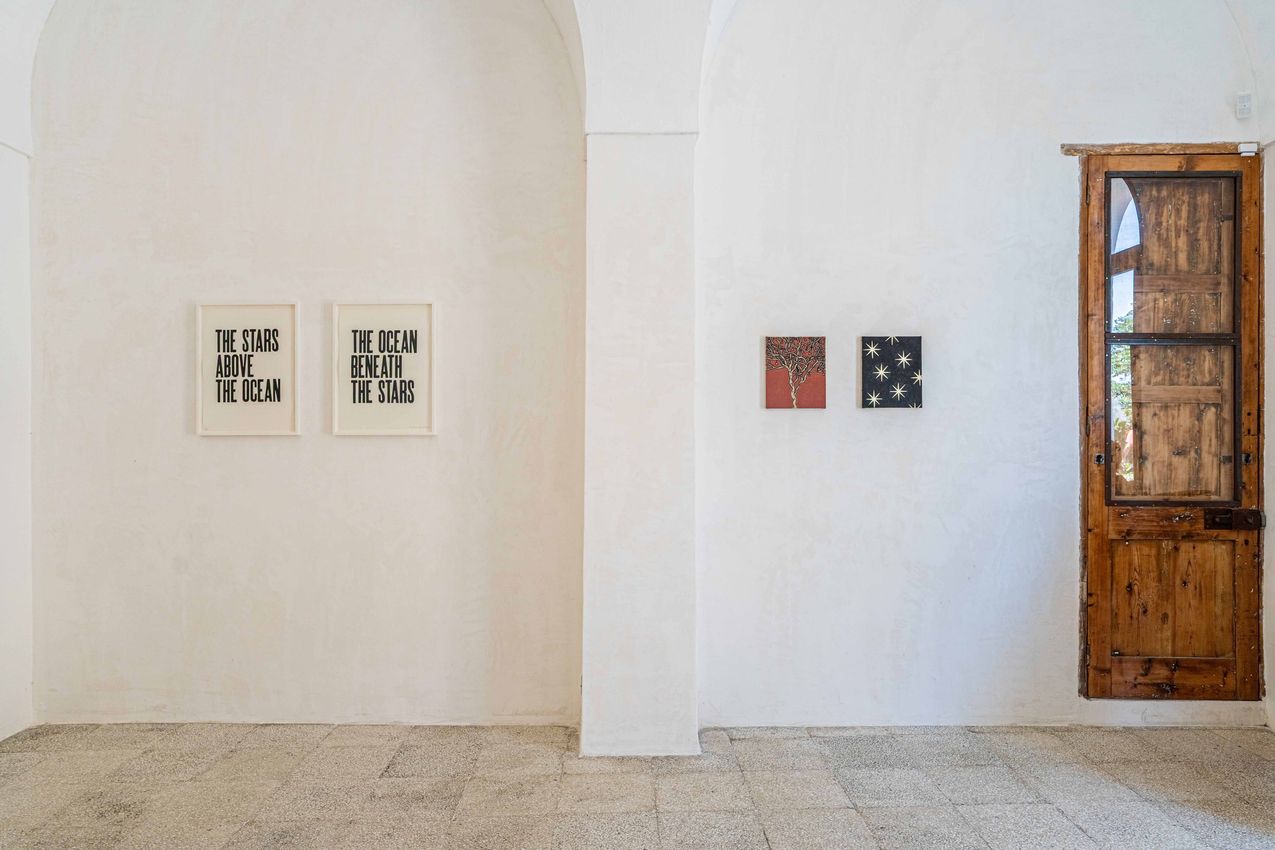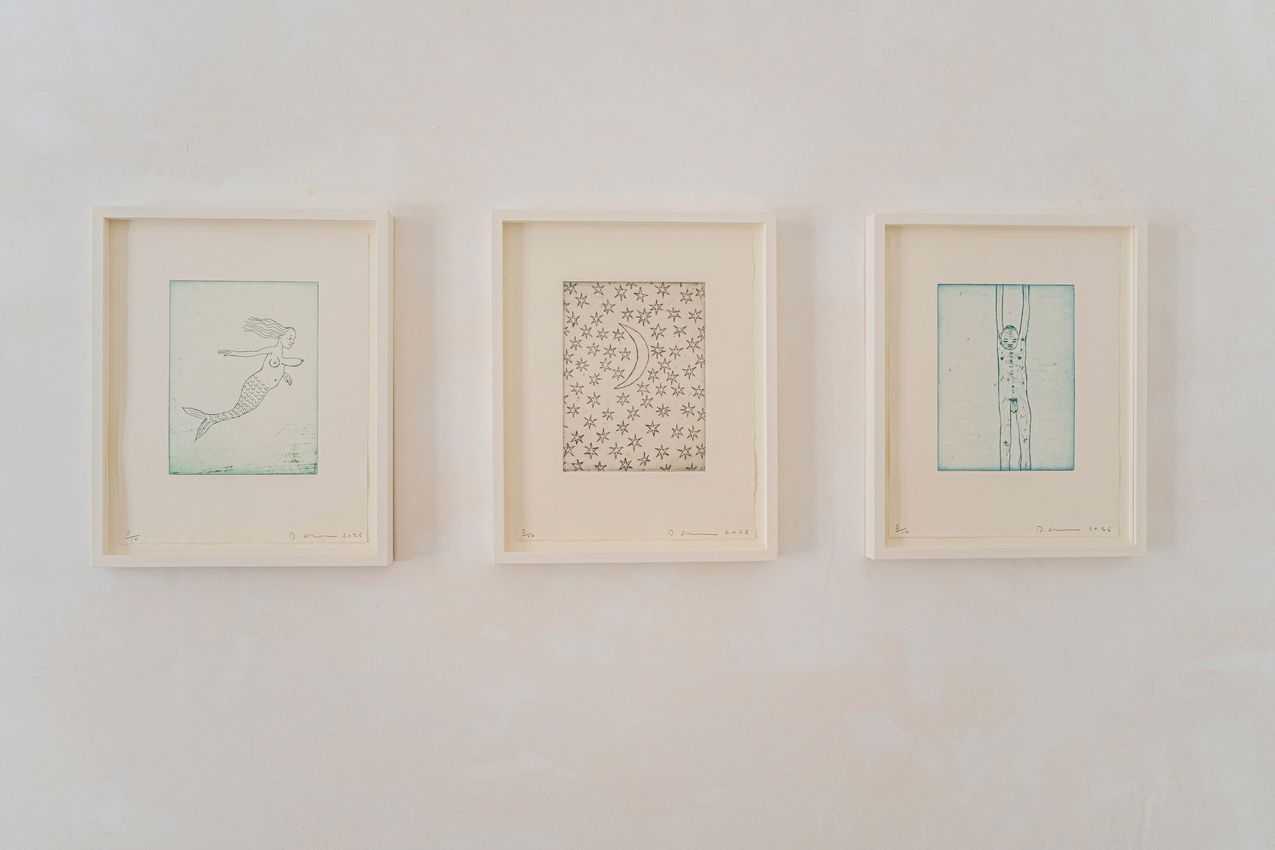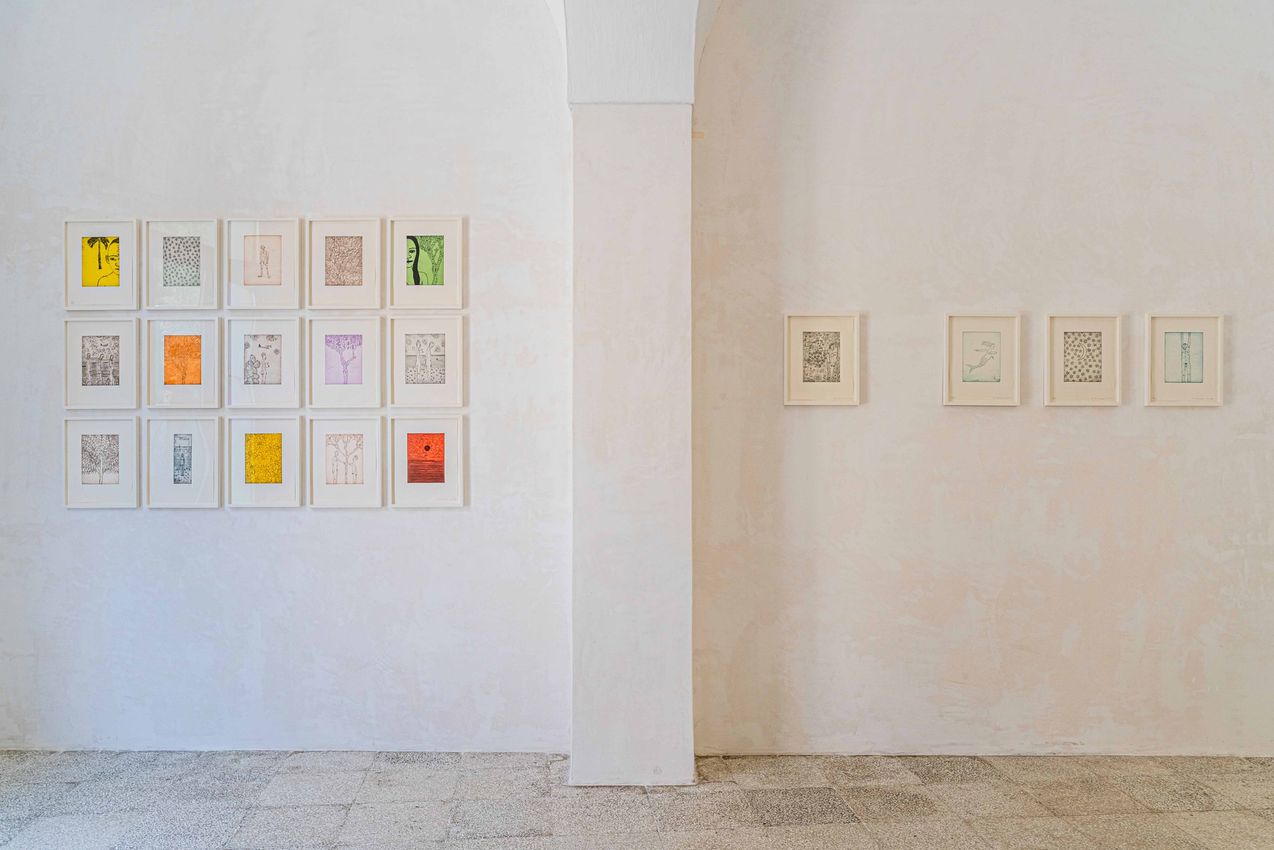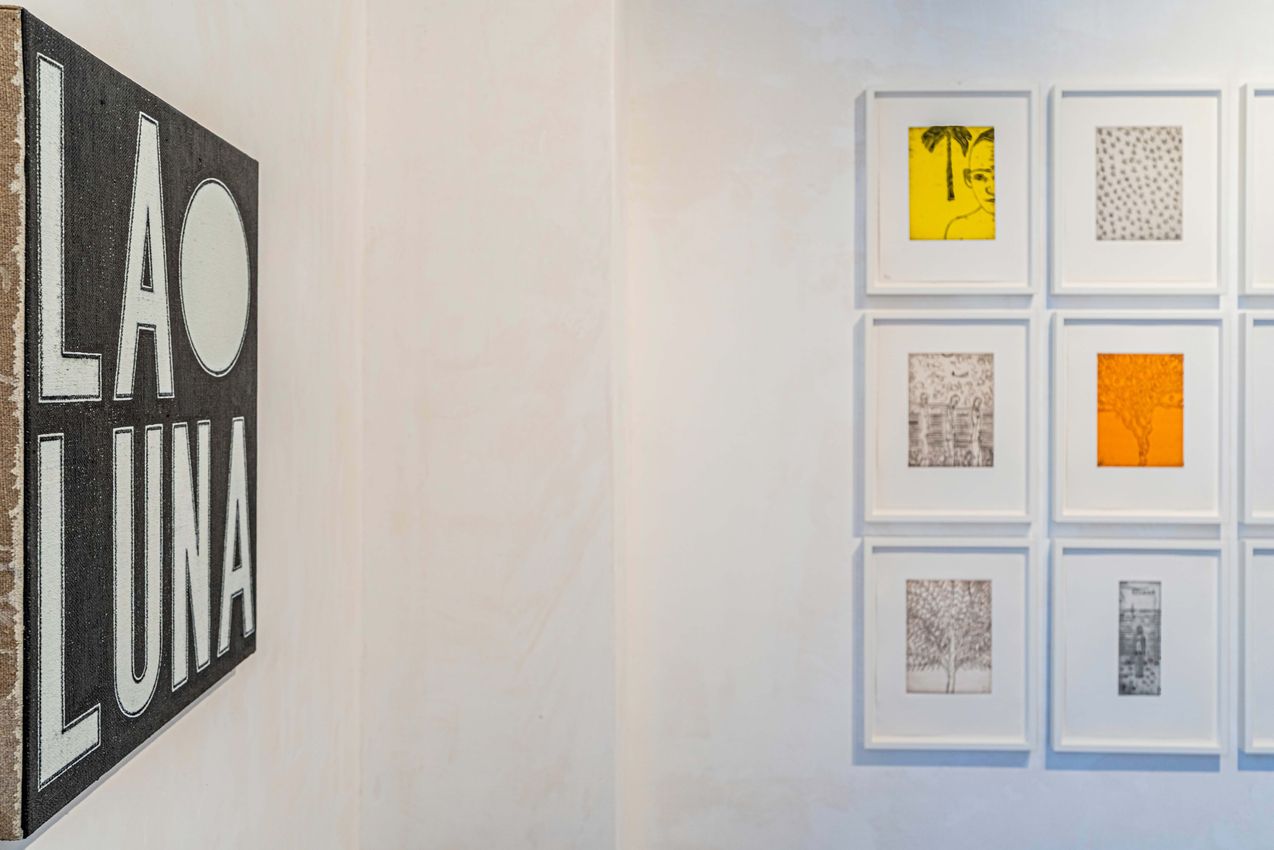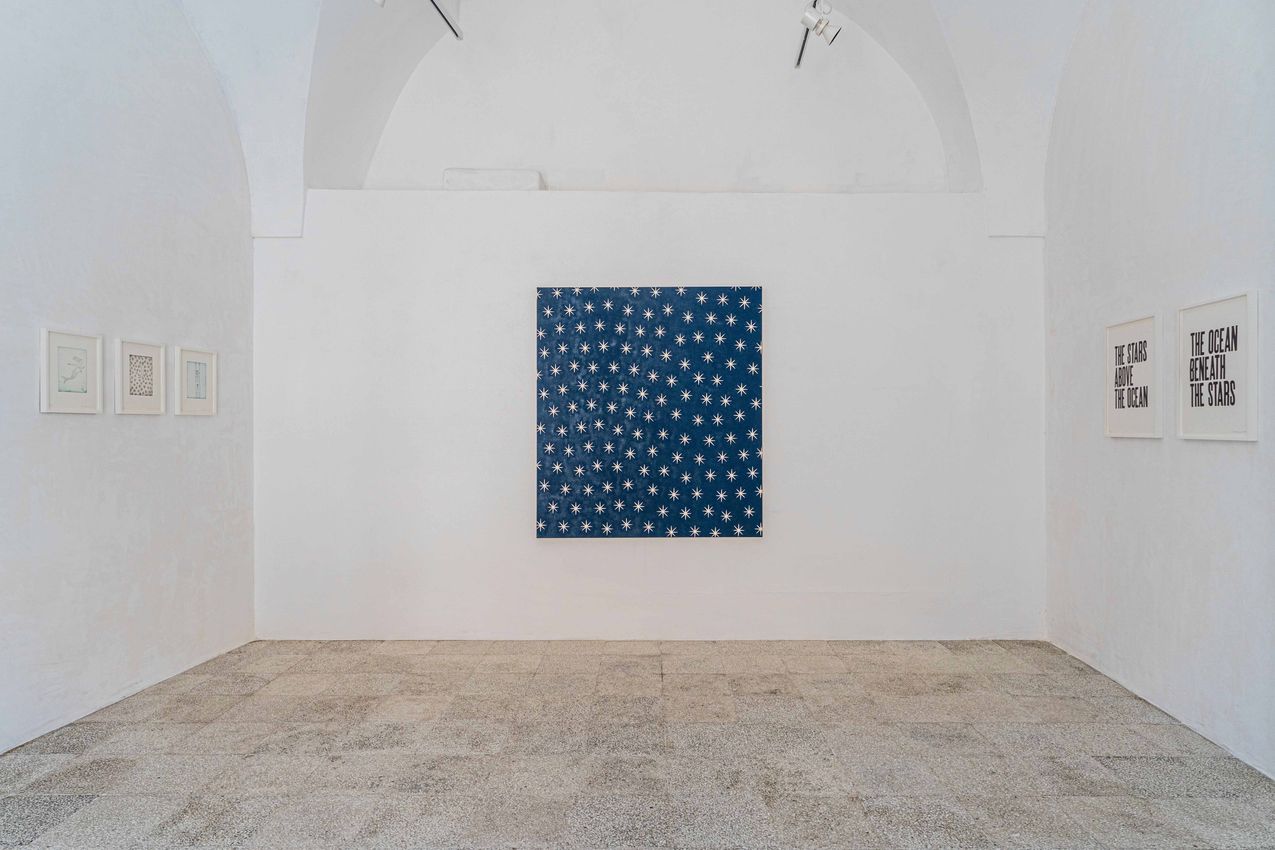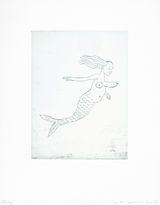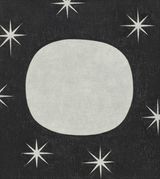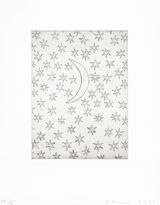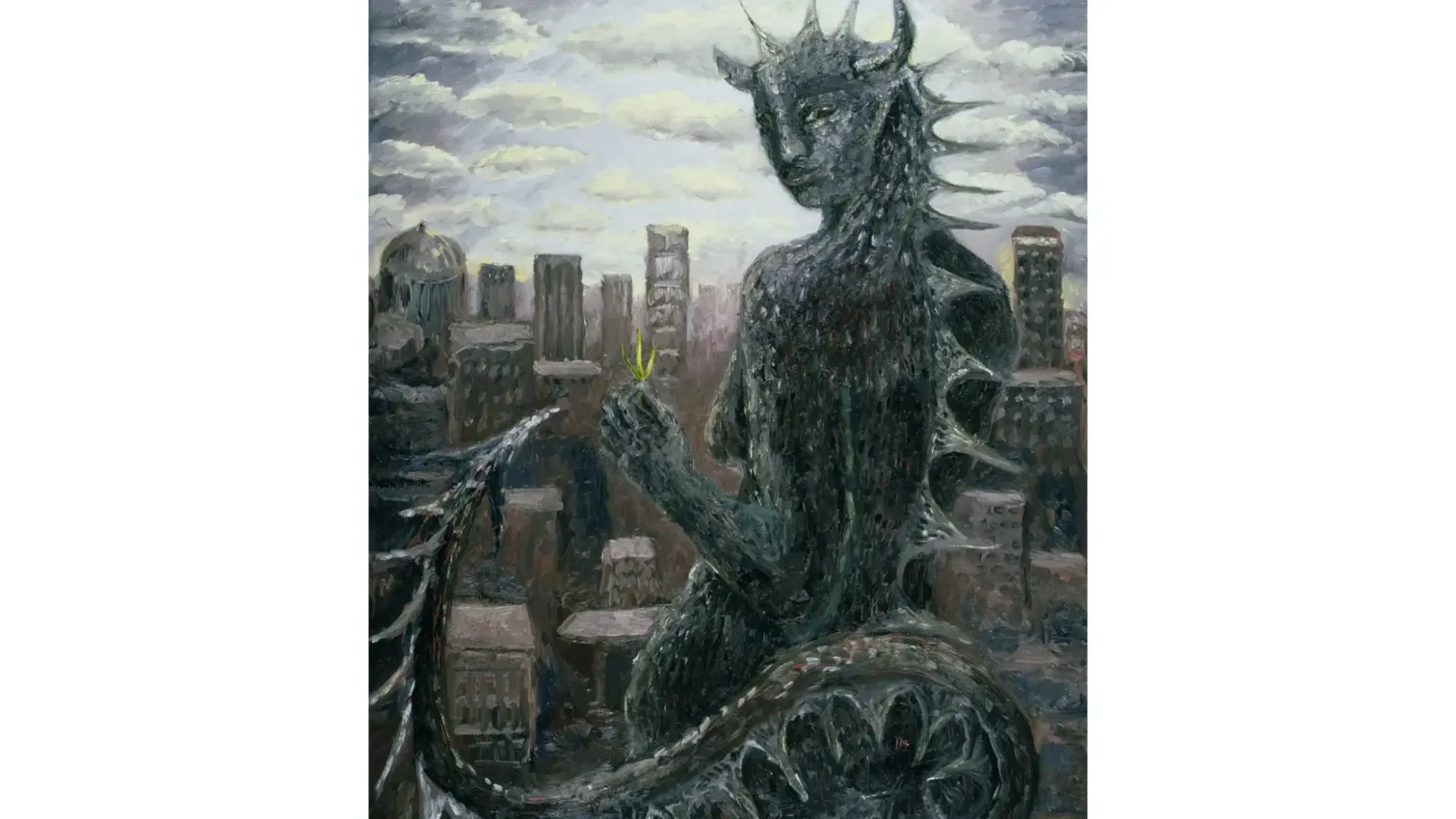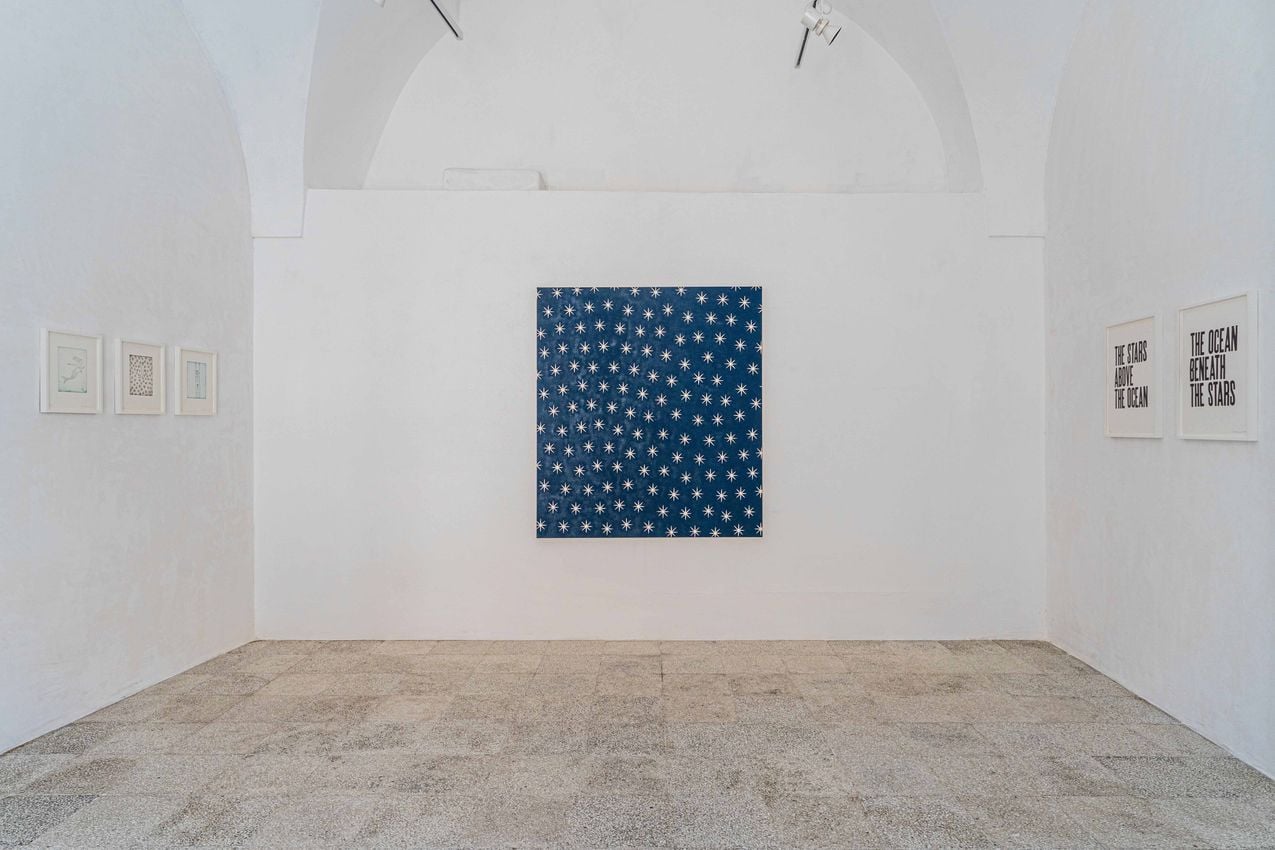
TOTAH presents The island, an exhibition of recent works by London-based artist David Austen. Made predominantly following a stay at our residency in Pantelleria this past spring, The island will be on view July 5th through September 5th, 2026. This is Austen’s third solo exhibition with the gallery.
Similar to the storied history of Pantelleria itself, Austen’s iconography sustains a tension between elementality and complexity, between the weathering changes history inflicts on a place and the eternal forms that persist apart from all variation and decay. Many of the details that fill out Austen’s etchings, paintings, and text-based works derive from observational particulars gathered on the island itself—from the details of trees and brush inhabiting these pictures to the helicopters that hover along the coastline.
Yet The island is as much metaphor as history. When Austen depicts Edenic figures, he borrows from the human presence of traces left behind; and his trees are similarly the remakings of actual trees that grow on Pantelleria. But underlying all this is a process whereby tangible realities are gradually stripped of the context in which they first appeared, and are inserted into a new vision. The result is a paring down, almost to the point of minimalism, where certain things begin to resemble archetypes, while never entirely ceasing to be themselves.
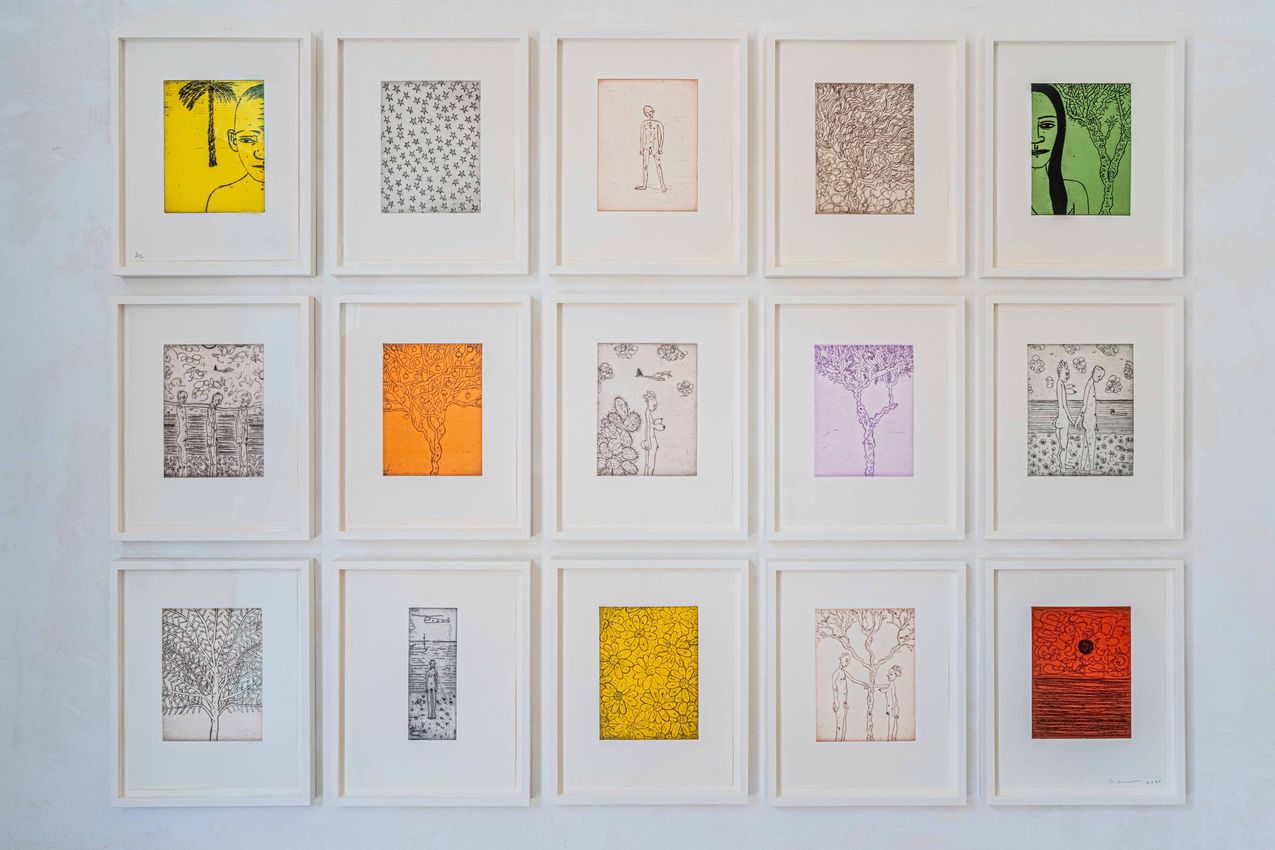
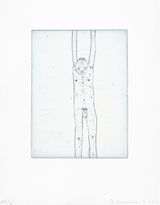
In his series of fifteen etchings, the many cultural influences found on Pantelleria, ranging from the ancient—Phoenicians, Byzantines, Arabs, Normans—to far more modern influences, take hold across each work. While Austen’s pictures generally tend to be dominated by a single image or theme, here the felt implications of his subjects give way to something difficult to describe in language. Just as Austen’s stars, isolated figures, trees, flowers, sea horizons, and quasi-mystical fauna tend to exceed the edges of his pictures, so too do the associations they provoke exceed what is manifestly shown.
Whether figurative or descriptive, the notion of an island connotes a world apart: something disconnected from life, yet which also defines itself in terms of this disconnection. Throughout The island, Austen returns to this condition again and again, translating the lived realities of Pantelleria —its persons, flora, and the mythologies that haunt it.
David Austen (b. 1960, Harlow, United Kingdom) studied at Maidstone College of Art and the Royal College of Art in London. From 2004-05 he was a Drawing Fellow at the Wimbledon School of Art, and in 2011 was the subject of a film series produced by Tate Britain focusing on his watercolors. His film ‘The Gorgon’s Dream’ premiered at the Edinburgh International Film Festival in 2012. In 2020, his work was included in the Summer Exhibition at the Royal Academy, London, and a significant solo survey, Underworld, took place in 2019 at Dundee Contemporary Arts in Scotland. The 2023 exhibition The Boys: an Adventure (Ingleby Gallery) featured the correspondence between David Austen through artworks with text by Pulitzer Prize winner Hisham Matar. Austen has had solo presentations including the Serpentine, London; Modern Art, Oxford; Matt’s Gallery, London, and has been included in group shows at Whitechapel Art Gallery, London; Drawing Room, London; Irish Museum of Modern Art, Dublin; and Tate Britain, London. His work has been covered in The Observer, The Guardian, Vogue, Architectural Digest, The LA Times, Art in America, and The Brooklyn Rail. His work is held in many public and institutional collections including Tate Modern, London; Arts Council England; Government Art Collection, UK; British Council, UK; and JP Morgan Chase, New York, as well as in private collections in the UK, Europe, and the United States. Austen lives and works in London, UK.
David Austen’s (b. 1960, Harlow, United Kingdom) work encompasses painting, drawing, sculpture, and film. He offers a view into a fertile imagination that transitions effortlessly between the formal demands of different media – and where ambivalent interpersonal relationships bleed into the tactile qualities of each medium.
A respected voice in contemporary art discourse.
Focusing on ambitious storytelling and insightful art-world commentary. Ocula Magazine publishes in-depth interviews, critical essays and timely analysis on the artists, exhibitions and ideas driving the global art world.
Learn more about Ocula Magazine
Showcasing the best of the art world.
Ocula partners with galleries from around the world to highlight their artists, artworks and exhibitions. Gallery membership is by application and invitation, with each member vetted by an independent panel.
Learn more about Ocula Membership

Specialises in the sale of major artworks.
Led by a team with deep ties to the world’s leading auction houses, galleries and collectors. Ocula’s advisory team offers bespoke services to high-net-worth clients from around the world who are looking to acquire the best of contemporary and modern art.
Learn more about our team and services