Press Release

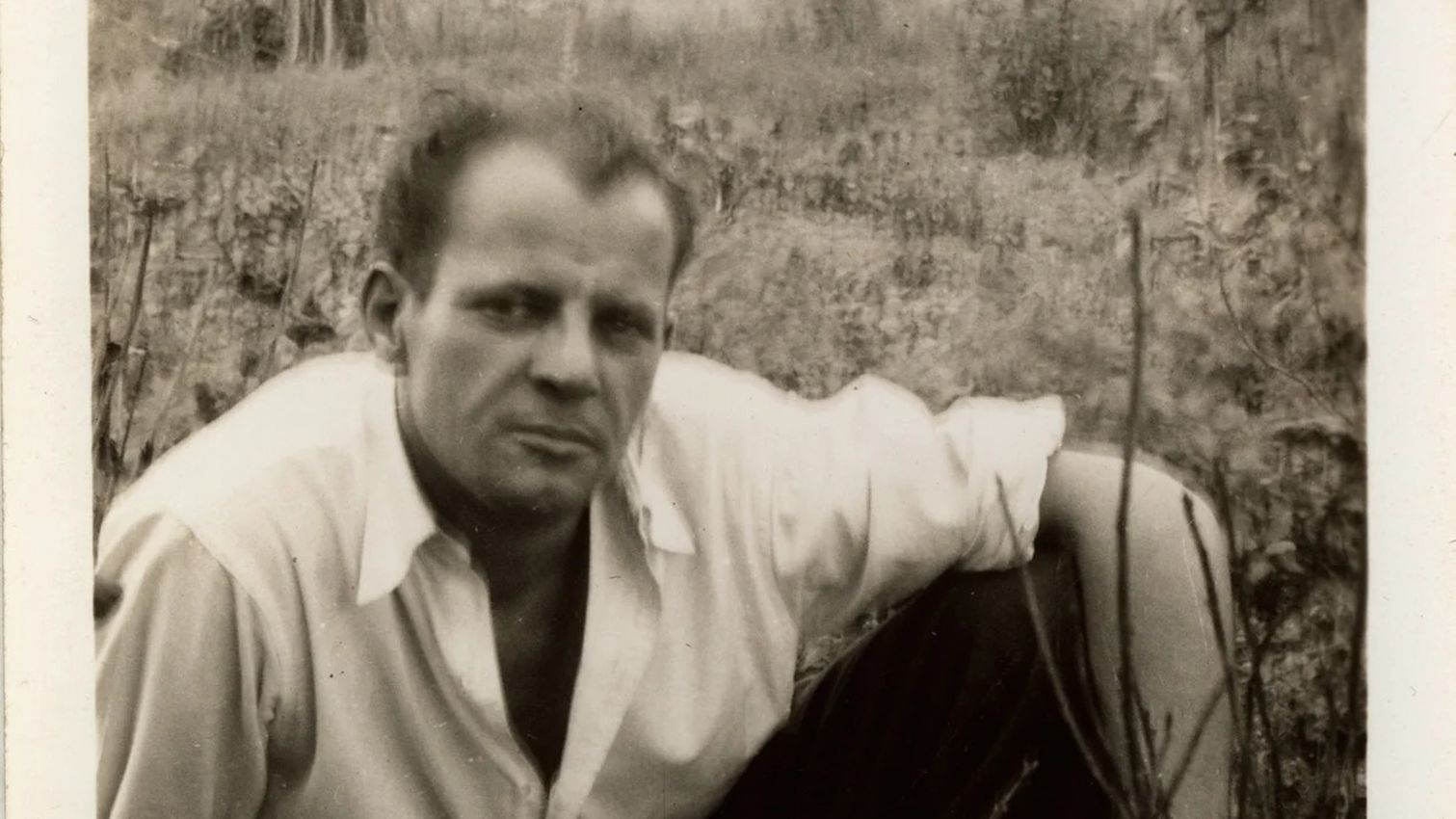
Pace will present Jackson Pollock: Intimate Legacy, an exhibition of works by Jackson Pollock, at its 540 West 25th Street gallery from September 11. Intimate Legacy will feature Pollock’s works on paper—including sketchbook pages, silkscreens, and engraving and drypoint prints—as well as a rare Pollock sculpture.

The works in this show create a remarkably intimate image, not only of Pollock’s practice but of his inner circle: a drawing made for and kept by his therapist; a sketchbook held by Lee Krasner after she had donated others; a suite of prints made with and owned by his brother; a second suite of prints held by Krasner and passed to Jason McCoy, Pollock’s nephew; and paint splattered stools used by both Pollock and Krasner in their studio.

Intimate Legacy brings together a selection of Pollock’s prints and drawings, including two rare complete print suites as well as one of only five existing complete sketchbooks and the only one still in private hands.

The earliest work in the show is an untitled double-sided drawing from 1939–1940. Drawn with graphite and orange pencil, it anticipates the abstract shapes and devices Pollock would develop on his canvases, opening a window onto his search for symbols. Art historian Philip Rylands describes the work’s origin with Dr. Joseph L. Henderson: “Henderson, a student of Carl Gustav Jung in 1929, accepted Jackson as almost his first, pro bono, patient in 1939 when he moved to New York. Unable or reluctant to recount his dreams, and in order to make the weekly sessions productive, Jackson would bring a drawing for discussion. This is one of them.”

Created to explore the artist’s subconscious, this drawing has echoes in the suite of six framed sketchbook pages from 1950–1954, composed with ink, ink wash, pen, and pencil on Japanese commercial airmail stationery. Exhibiting a dynamic range of forms and fluid compositional movements, the sketchbook pages reveal an unmediated act of creation. “Made by Jackson in private moments,” Rylands explains, the drawings give “evidence of how the artist’s hand and mind come together, offering no beginning and no end.” Beyond their scale, these works are highly personal: Pollock made only five sketchbooks in his lifetime, and these particular sheets belonged to Lee Krasner. The three earliest notebooks [two of them 1937–1939, one 1938–1941] are held in the collection of The Metropolitan Museum of Art, New York, and the other [1950–1954] is owned by the Morgan Library & Museum, New York.

Among the works on view in the exhibition is a complete set of six silkscreens from 1951, interpretations of a selection of Pollock’s Black Paintings chosen with the help of his brother Sanford McCoy. Illustrating Pollock’s growing interest in seriality and image-making, the silkscreens are remarkably forward-thinking in their outlook, distilling the artist’s gestural intuition into its essence while retaining its expressionistic force. Using a photonegative method to create these works, Pollock’s process, too, was innovative and ahead of its time.

Intimate Legacy also highlights a full suite of engravings and drypoint prints from 1944–1945, one of few remaining intact sets. Pollock created these works in the print workshop of Stanley William Hayter in New York, with whom Calder, Kandinsky, Klee, Masson, Miró, and Picasso also made prints. Without a predetermined composition, Pollock etched directly on the copper, utilizing the same automatist process that produced his drawings and paintings. Full sets are held in the collections of the Art Institute of Chicago; the Museum of Modern Art, New York; the Metropolitan Museum of Art, New York; the Minneapolis Institute of Art; and the National Gallery of Australia.

At the outset of his artistic career, Pollock intended to be a sculptor, and even while cementing himself as one of the most influential painters of the 20th century he would consistently revisit sculpture. Included in this show is a 1964 bronze cast of a head from an earlier stone sculpture. The basalt original from which this work was cast is from approximately 1930– 1933, dating from Pollock’s earliest years in New York, and is the earliest known Pollock sculpture.

A pair of paint-splattered stools from the Springs studio complete the exhibition by providing a unique physical sense of the artist and his practice. As Rylands writes, “as Jackson and his extraordinarily vivid life slip into the past, these stools, like the notepad sheets, reconnect us to the living man—instruments of repose and contemplation during the lonely vigils in the studio. They contradict the memento mori: they remind us that Jackson lived.” In the summer of 2021, for the first time, the stools were temporarily returned to the studio they originally inhabited at the Pollock-Krasner House and Study Center.

Read More

Installation Views

About the Artist

Abstract painter Jackson Pollock was one of the pioneering figures of the American post-war movement of Abstract Expressionism, and is for many an icon of 20th-century modern art.

View Artist Profile

Also Exhibiting at Pace Gallery

About the Gallery

Pace is a global art gallery of and for the future, modeled on a set of core values established during its founding in 1960 and designed to serve its artists, estates, and collectors in a way that is focused, responsive, and aligned with its enduring mission.

View Gallery Profile
Address
540 West 25th Street
New York
United States
Opening Hours
Tuesday – Saturday
10am – 6pm
(1)
New York 540 West 25th Street
Pace Gallery
540 West 25th Street, New York, United States
+1 212 421 3292
http://www.pacegallery.com

Opening hours
Tuesday – Saturday
10am – 6pm
The art world in focus