





How the War in Ukraine Has Restricted the Way We See the Country’s Art
Not all art being made in Ukraine since Russia’s full‑scale invasion is about conflict, but it has become a lens through which many people consider the work of Ukrainian artists. Save to My OculaSince Russia’s full-scale invasion in 2022, Ukrainian artists have become far more visible internationally. But that attention comes with a demand: their work is often expected to remain legible as testimony to violence, displacement and national resistance. Artist and cultural anthropologist Lia Dostlieva calls one consequence of the post-2022 rush of cultural solidarity a “Ukrainian ghetto”. Western institutions urgently sought a Ukrainian presence, she tells me, but limited knowledge of the country’s contemporary culture, colonial assumptions and rushed programming meant that “the mere fact of a ‘Ukrainian voice’ being present became more important than what was actually presented and said”. Across Europe this year, several major exhibitions have placed Ukrainian art inside a wartime frame, even as they have questioned what that context can hold.
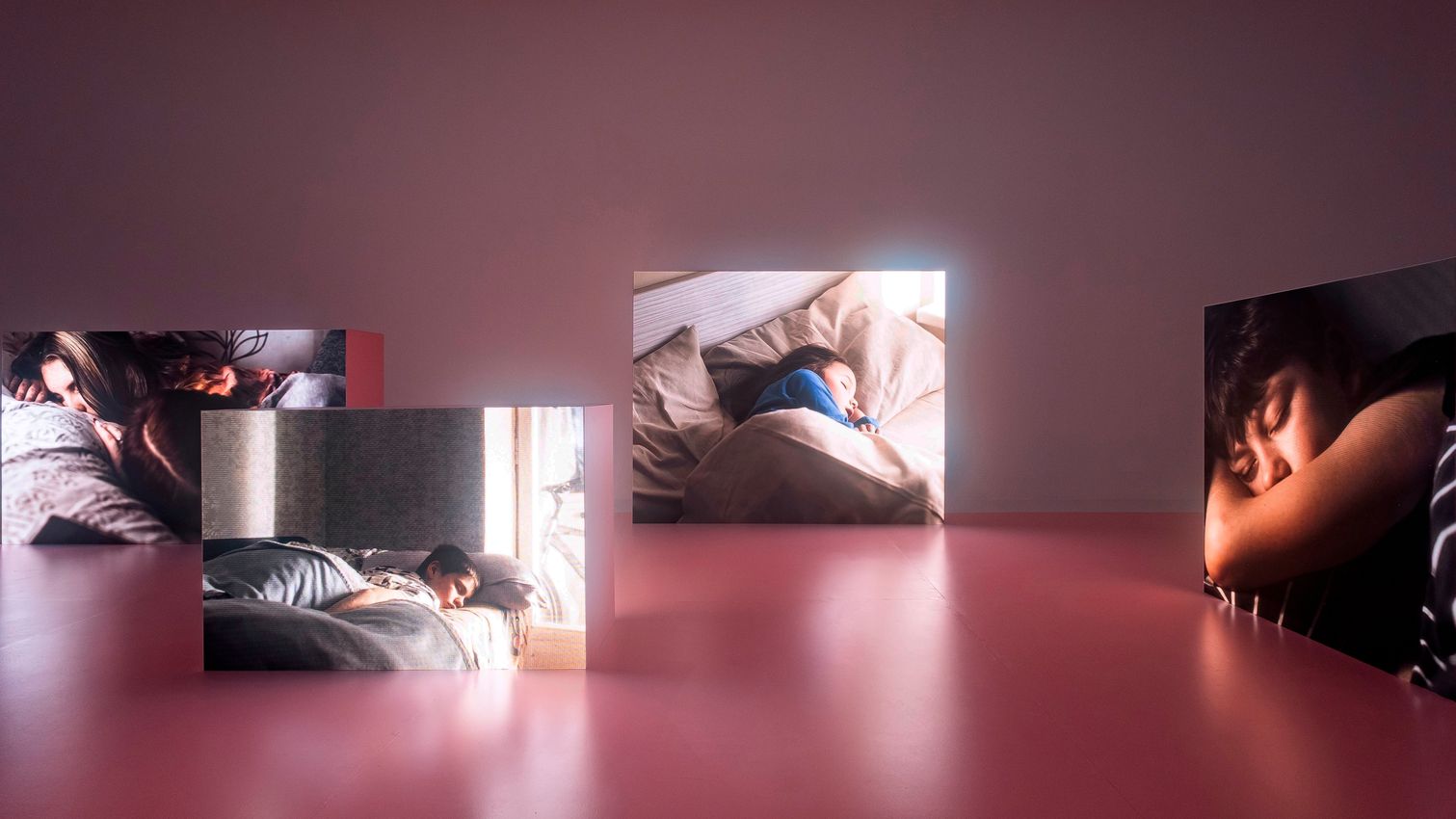
This summer at Madrid’s Museo Nacional Thyssen-Bornemisza, TBA21’s Pedagogies of War presented four video installations by Ukrainian artists Roman Khimei and Yarema Malashchuk. The exhibition treated war less as a single event than as a process that reorganises attention, behaviour and ordinary life. While in Venice this May, the duo’s two-channel video of Kyiv ravegoers, filmed before and during the full-scale invasion, opened Still Joy—From Ukraine into the World, a PinchukArtCentre exhibition that ran alongside the Biennale until August. Clubbing appears as pleasure, community and historical record all at once, yet the knowledge of the ongoing war changes the meaning of the footage without erasing the lives inside it.
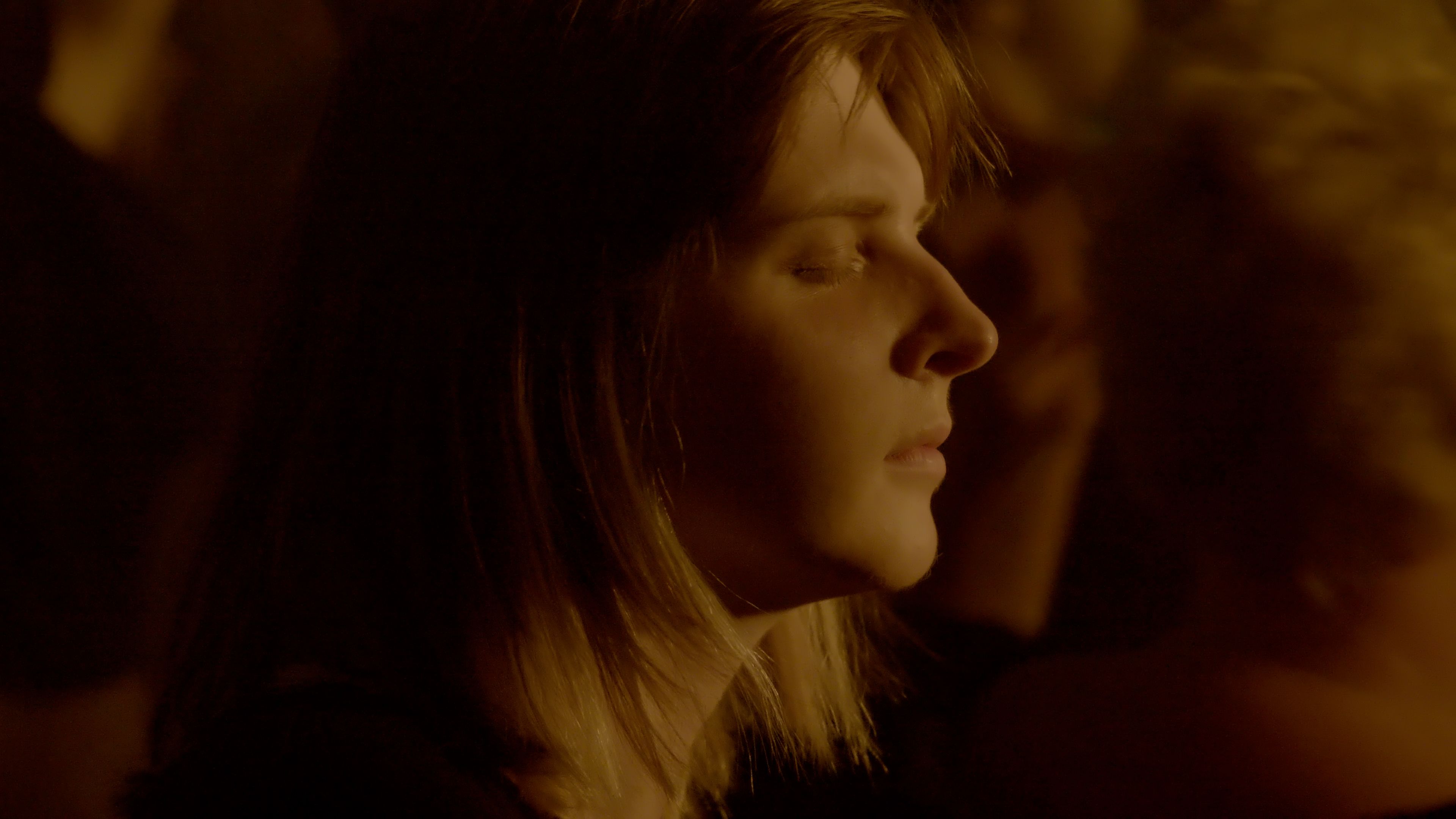
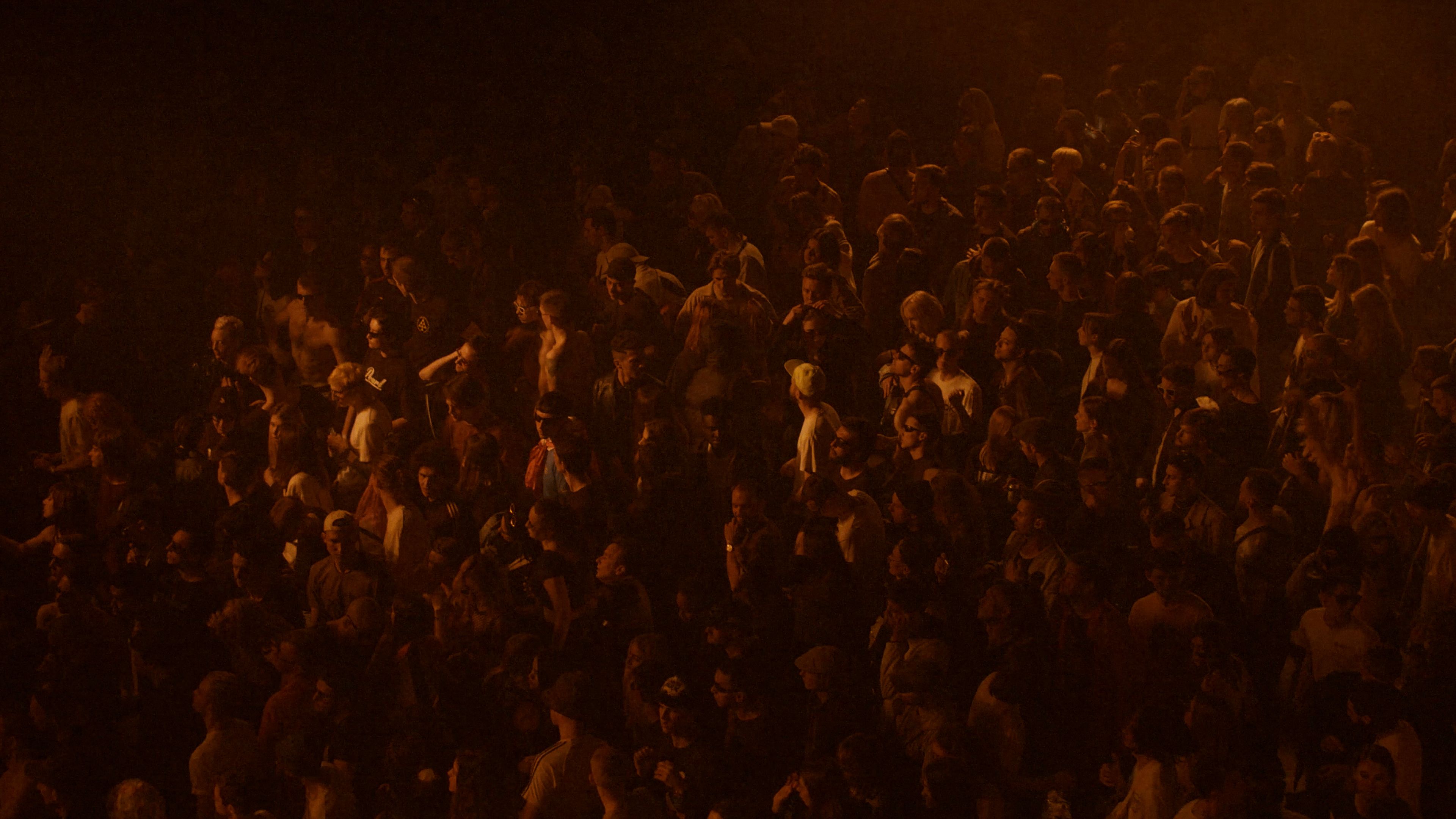
The artists describe the 2023 remake of their 2019 work as “a kind of performative gesture”; an attempt, through moving images, to return to the period before the pandemic and the full-scale invasion. “We live in the rare moment in time when past was brighter than present,” they say. For them, the work is ultimately about the time recorded by their cameras and the interval separating those two moments.
Still Joy placed those scenes beside works about landscapes, love, ecology and childlike pleasure, while grounding the exhibition in testimony collected by Hlib Stryzhko, a Ukrainian marine, veteran and former prisoner of war. The curatorial tension was deliberate: testimony remained present without determining every work’s meaning.
Khimei and Malashchuk resist treating art as an illustrative extension of journalism. “For us, art can introduce an independent language—one that does not function simply as a tool to ‘raise awareness’ or as a ‘creative’ replica of the news feed,” they say. War inevitably shapes how their work is understood, but they want viewers to question how that context itself structures perception.
“The mere fact of a ‘Ukrainian voice’ being present became more important than what was actually presented and said”
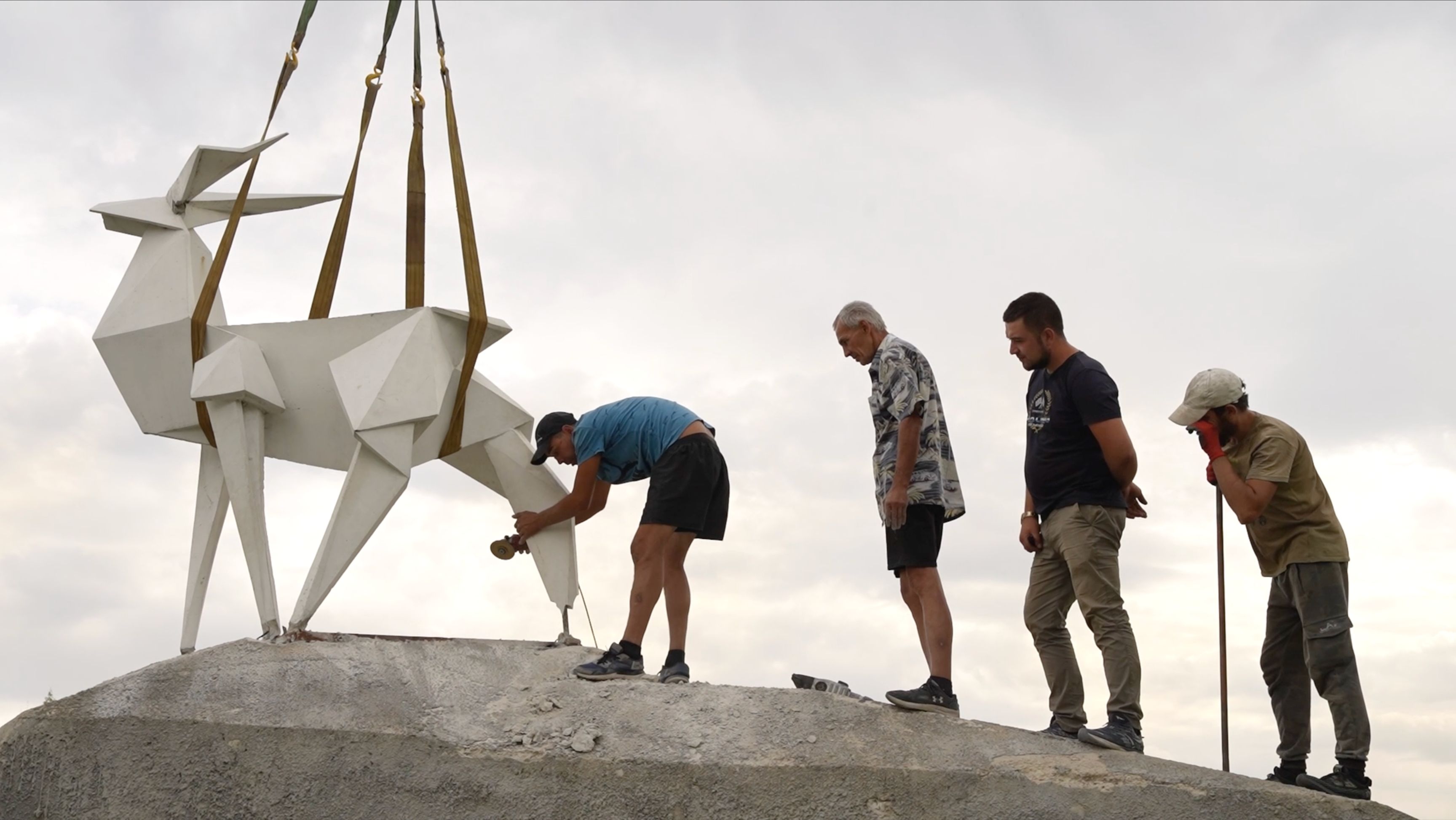
At the official Ukrainian Pavilion at the current Venice Biennale, representing artist Zhanna Kadyrova’s Security Guarantees centres on the origami deer, a concrete sculpture originally commissioned from the artist by the city of Pokrovsk, in the Donetsk region of Ukraine, as part of the regeneration of a municipal park in 2018. When Pokrovsk faced invasion by Russian forces in 2024, a decision was made to evacuate the sculpture from the park, alongside other artefacts and artworks from museum collections. Suspended from a crane, the deer’s precarious position invokes the security assurances Ukraine received under the 1994 Budapest Memorandum, in which leaders from Russia, the UK, the US and Ukraine agreed to respect the sovereignty and borders of the others and refrain from force, in a pact that was broken two decades later when Russia annexed Crimea. The object also carries the memory of a public place and the people who gathered around it. The work is unmistakably shaped by war, but its force comes through displacement, uncertainty and attachment rather than a direct image of violence.
These projects sharpen the central question raised by This Cat Was Drawn During the War, a group exhibition that took place at Warsaw’s Ujazdowski Castle Centre for Contemporary Art in spring and summer 2026. Curated by Anna Łazar and Ukrainian artist Lada Nakonechna, it brought together works responding to the Second World War, the wars in former Yugoslavia and Russia’s continuing war against Ukraine. Few looked like conventional “war art”. The exhibition’s framework activated connections between war and works concerned with social relations, trauma, language, manipulation and threats to democracy.
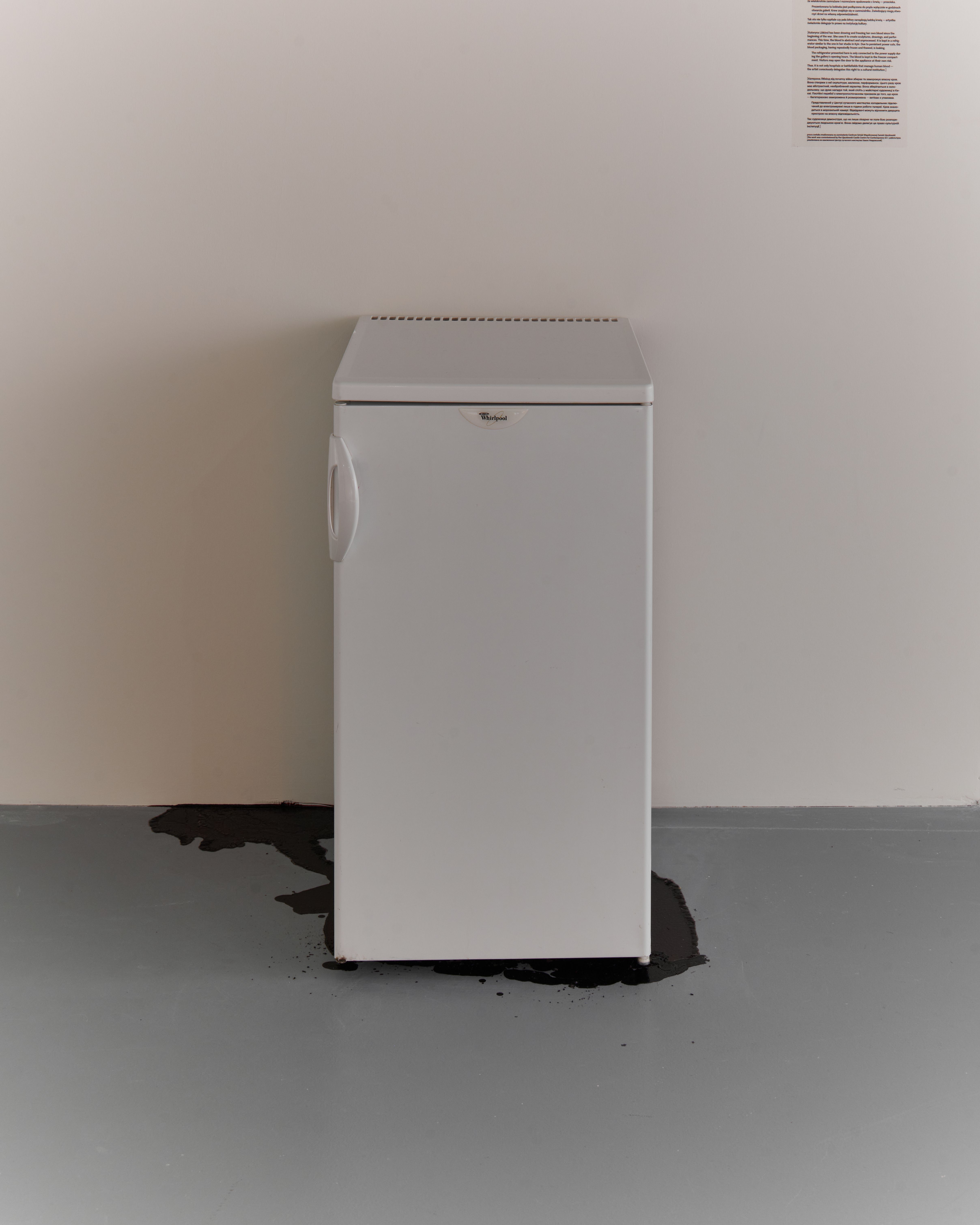
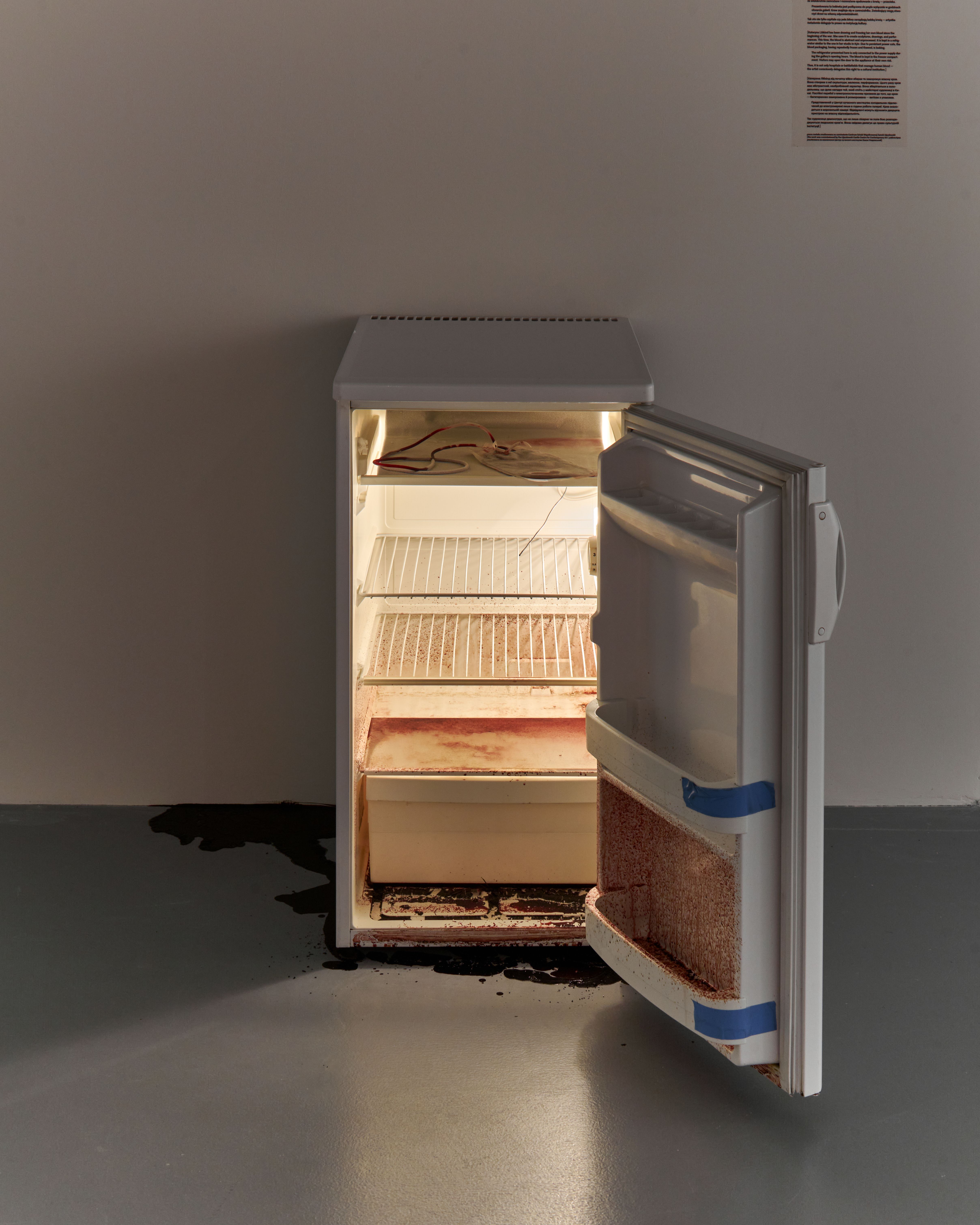
The curators attribute the title to Ukrainian artist Katya Libkind. Almost anything viewed in Ukraine can now acquire a wartime association, Libkind tells me. A cat might recall animals rescued from occupied or destroyed towns, or those kept by soldiers in trenches to frighten away mice. For her, this does not place war, cats, happiness and suffering into separate categories. “These subjects give birth to one another,” she says, “and never stop transforming into each other.”
Libkind’s contribution uses her own blood as material, placing viewers in the uncomfortable position of looking at bodily suffering inside an exhibition. Nakonechna asks when such suffering becomes spectacle, and whether displaying a real artist’s blood is itself a waste or consumption of the material. Libkind’s wider practice moves between drawing, painting, installation, video and performance, often beginning with close observation of her immediate surroundings and emotional experience.
Kateryna Iakovlenko, curator of the Warsaw exhibition’s public programme, offers a useful distinction. In Ukraine, she says, people speak of both “war art” and “wartime art”. The latter simply describes art made during war; it does not prescribe a subject. “It can be anything,” she explains, “including images of flowers.”
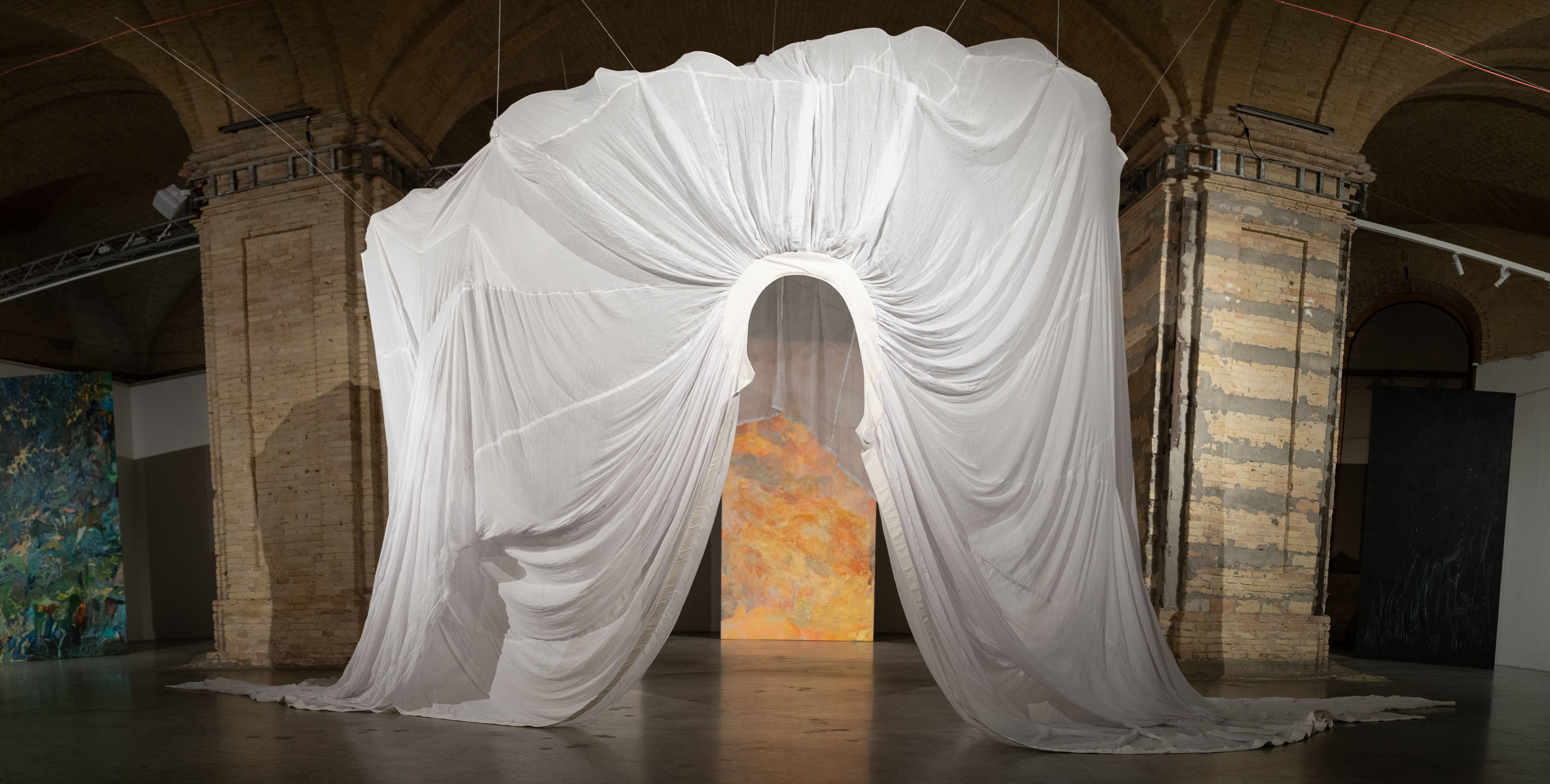
This distinction allows intimacy, humour and the everyday to be understood as part of the terrain altered by war. Iakovlenko points to Kateryna Aliinyk’s dreamlike yet ominous moonlit landscapes, on display in a new exhibition at Jednostka Gallery in Warsaw, and a 2025 installation in which Anna Zvyagintseva enlarged her own shirt to speak about care and support. While in the 2025 Kiev Biennial, Zvyagintseva exhibited scenes of domesticity sketched during peacetime, playfully sculpted in fragmented iron wires in which parts of the original images are now missing and obscured. War may appear through rubble and loss, but also through a changed sense of personal space, safety, love or time. Humour persists too, often as sarcasm that produces laughter close to tears.
The problem begins when context hardens into a formula. Iakovlenko has watched artists consciously reproduce techniques, images and themes that previously attracted attention. Such works may respond to external demand rather than an artist’s own impulse. “By reproducing what worked once before, we prevent something new from emerging,” she says, “and we may lose our ability to understand the time we are living through.”
Artist and anthropologist Dostlieva, whose work was not included in the Warsaw show, explains that while she was welcomed as a representative of a country at war, but not always treated as a producer of knowledge. She recalls a German journalist asking at the 2024 Venice Biennale what she wanted audiences to learn about Ukraine from her work. She replied that visitors were not toddlers and that she did not intend to turn her art into an educational tool. His response was: “So why do you make art at all?”
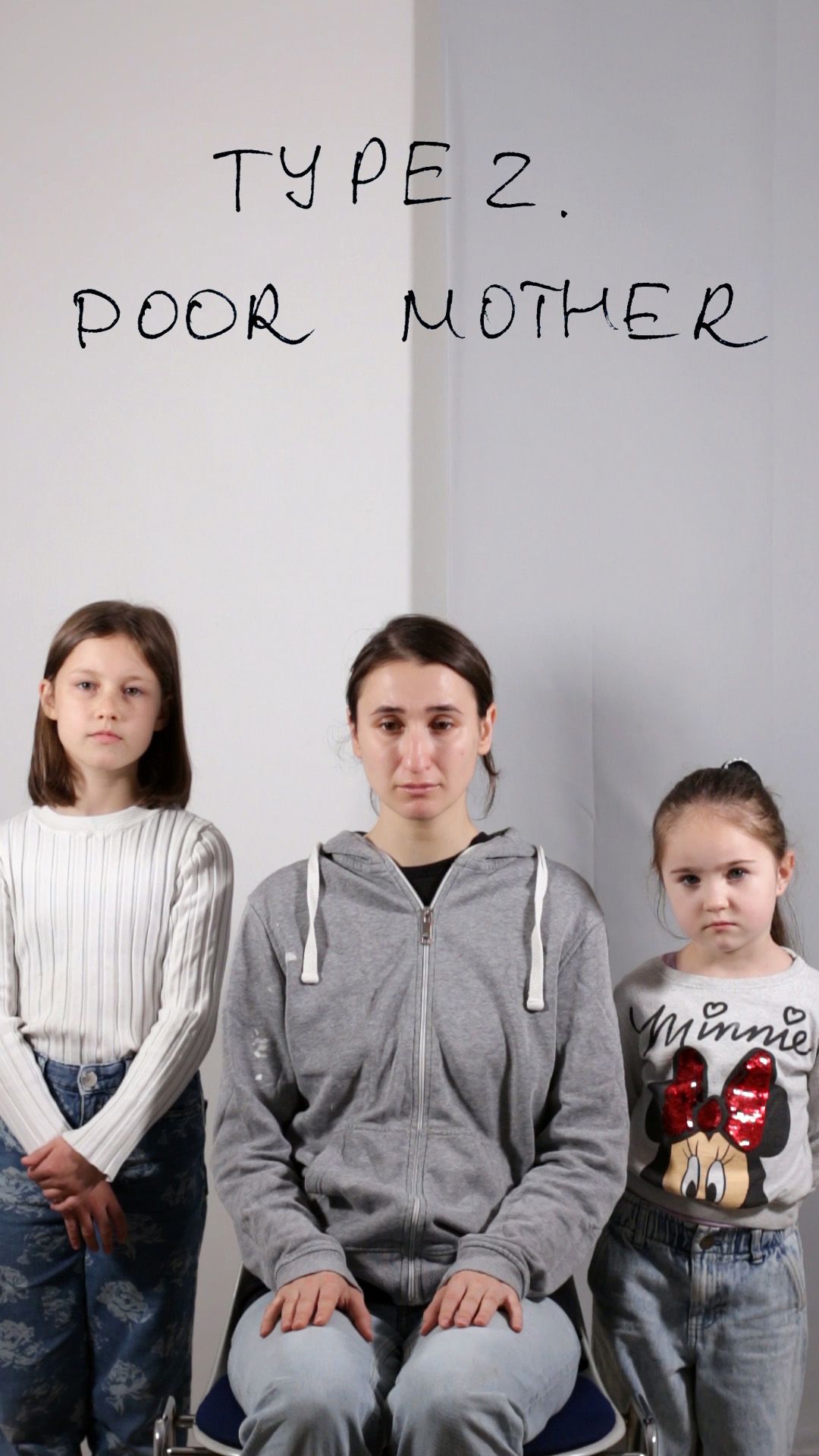
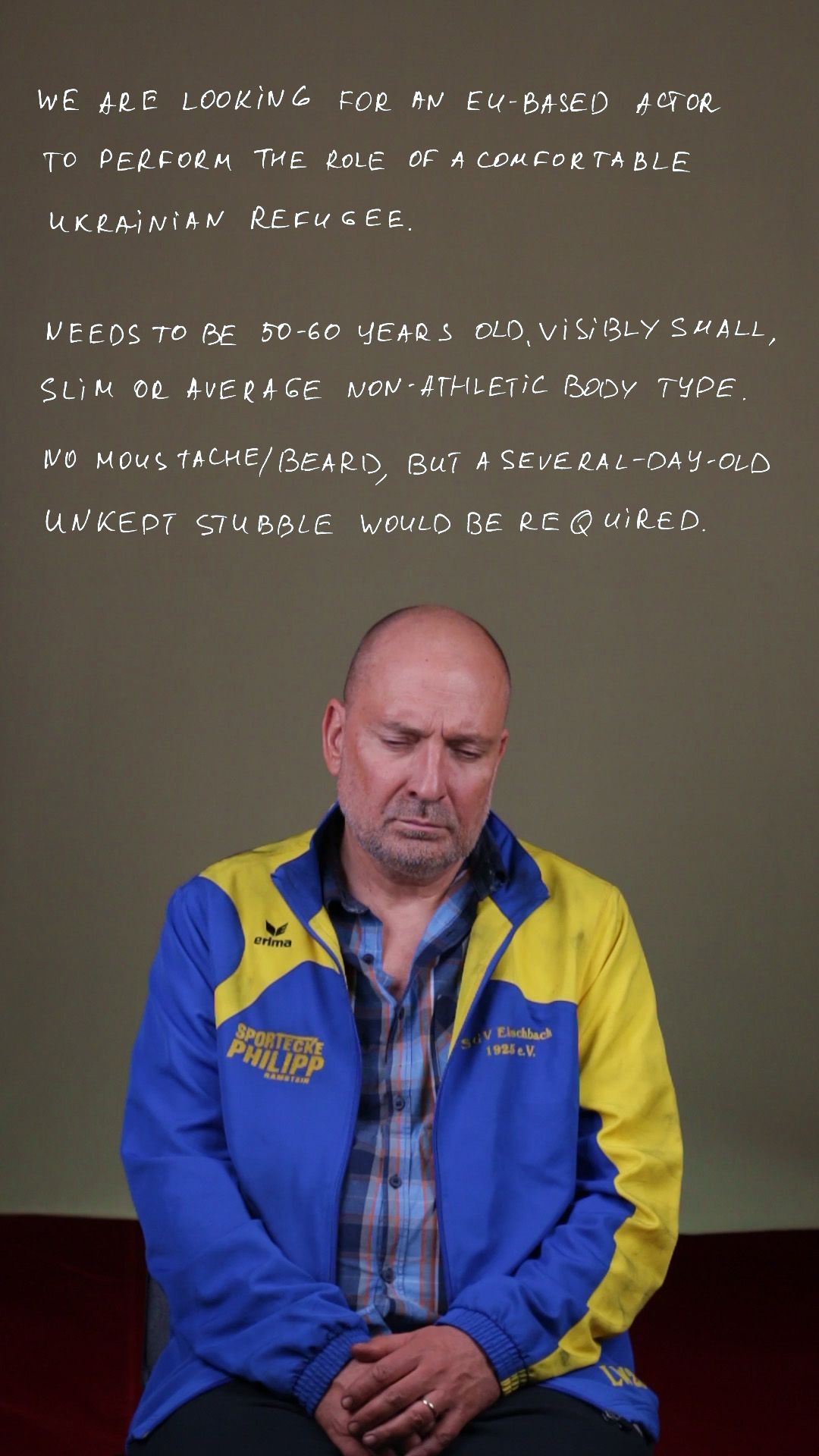
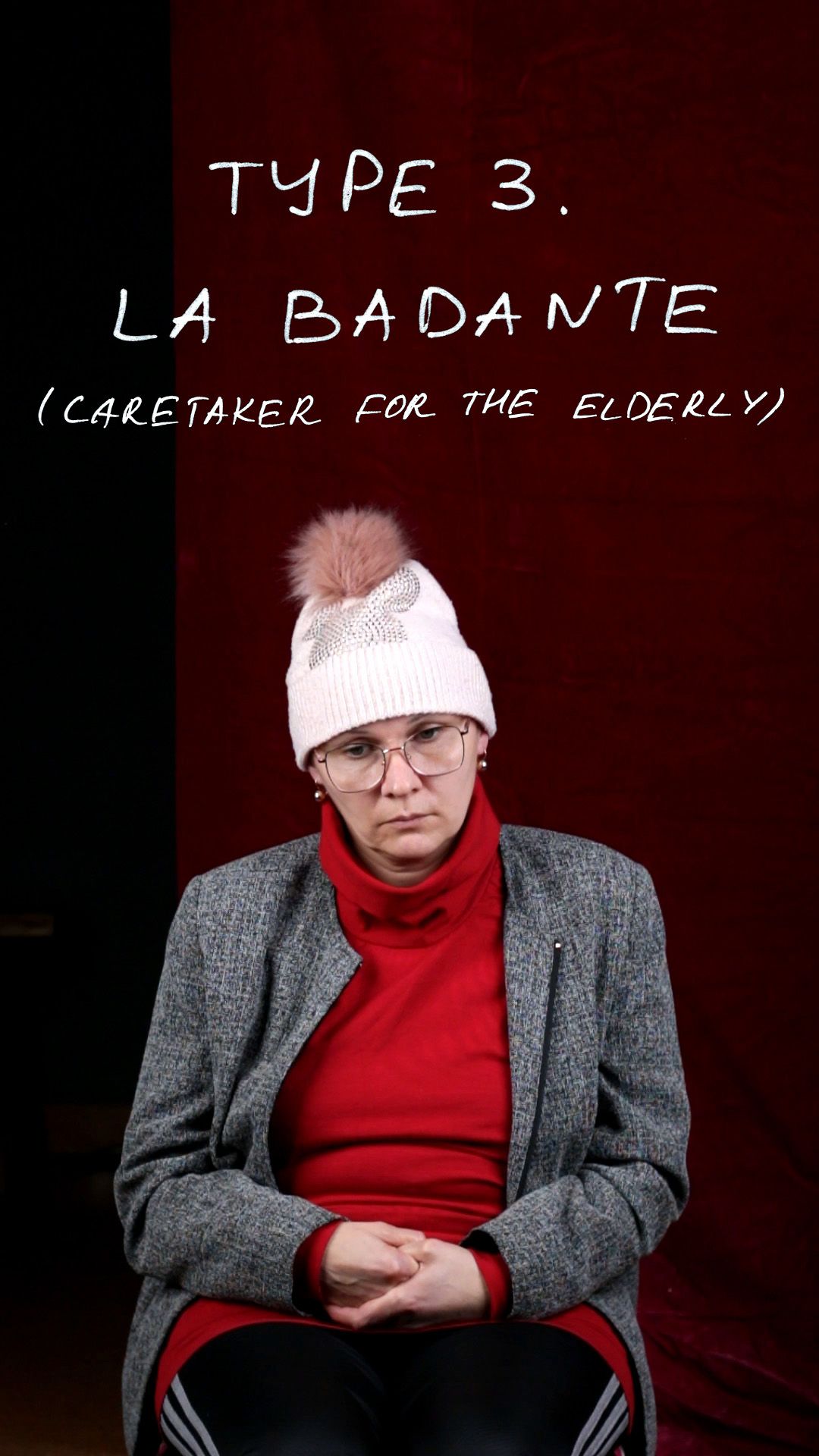
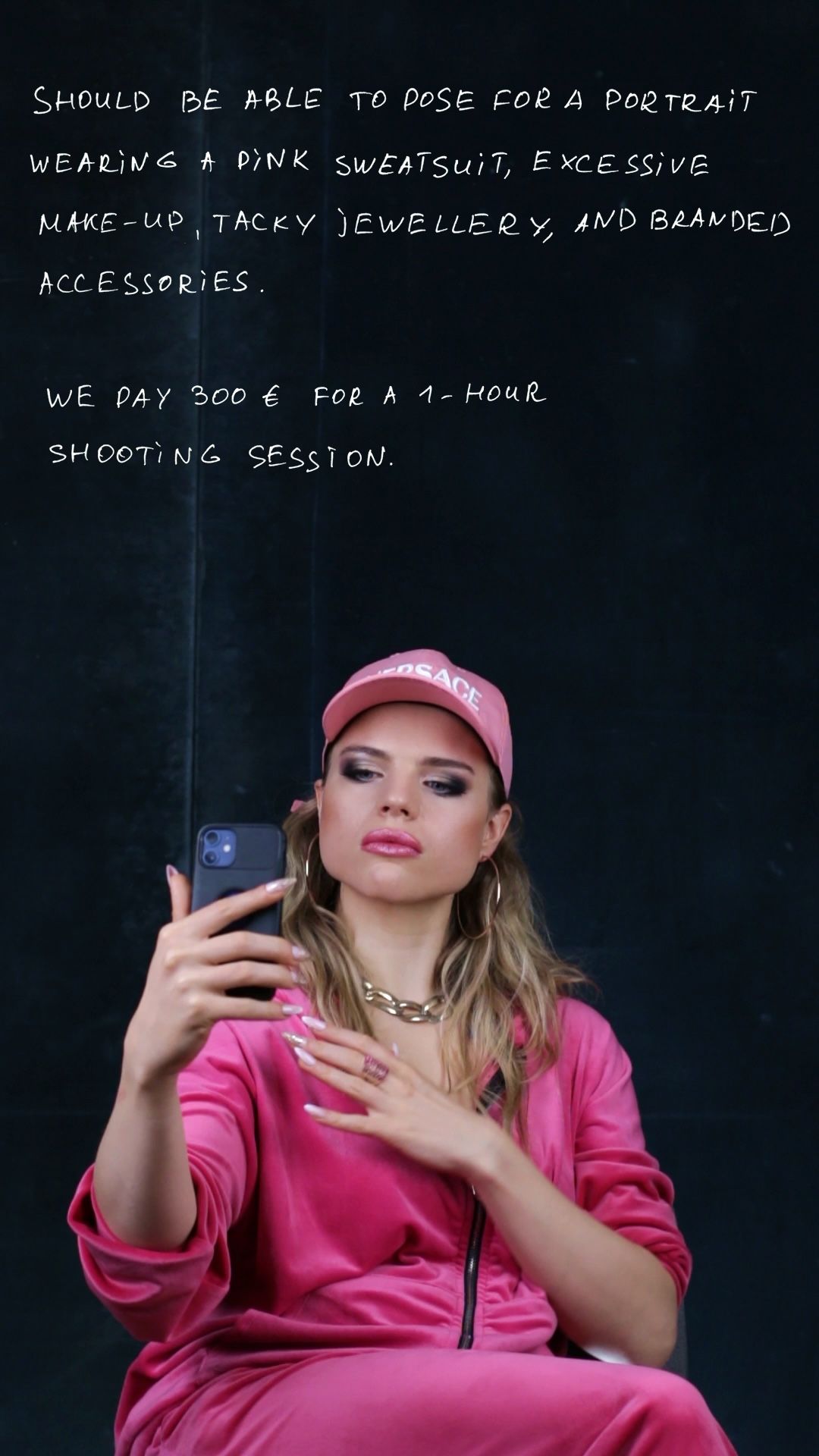
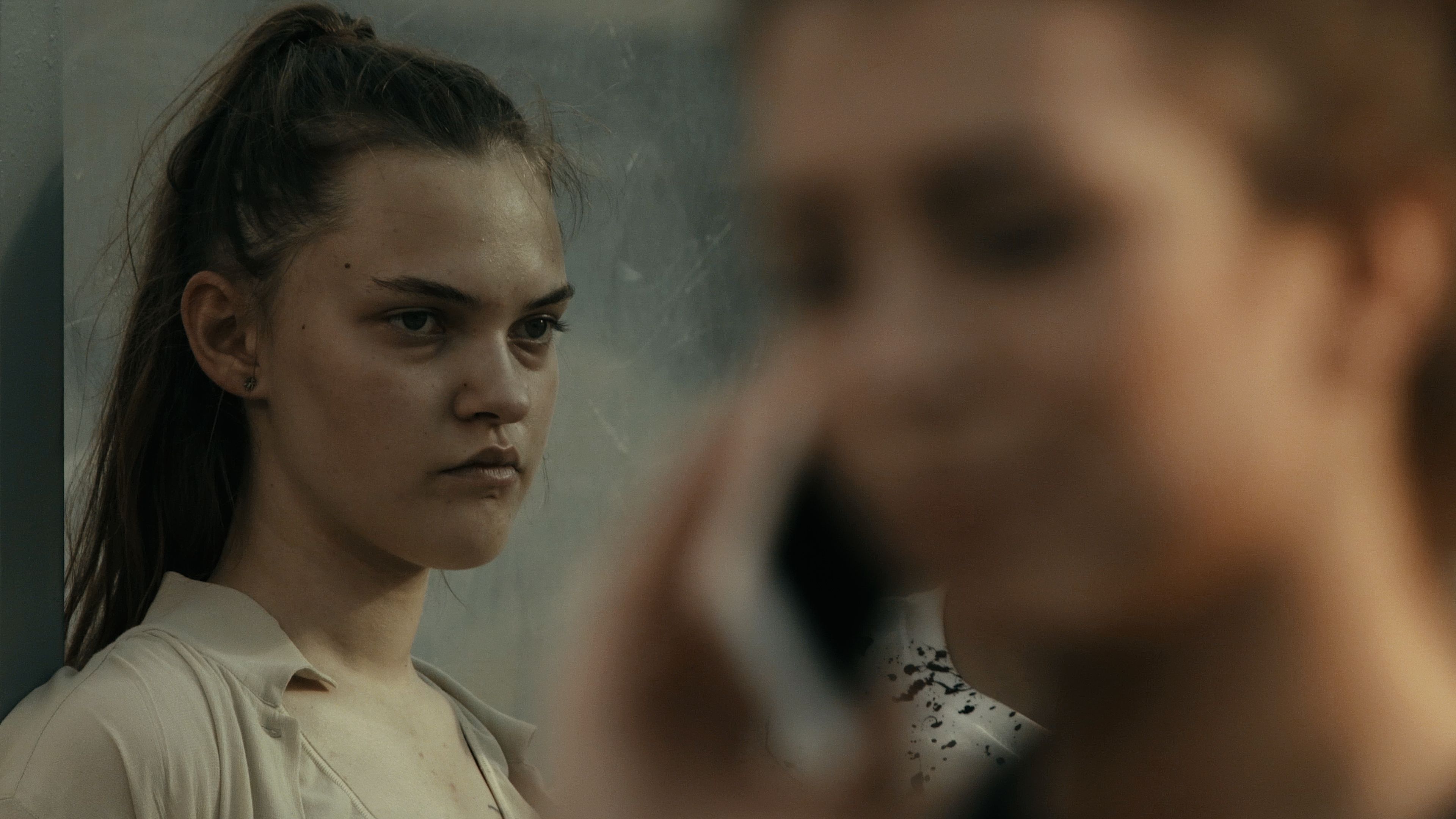
Her collaborative installation Comfort Work, made with Andrii Dostliev for the Ukrainian Pavilion at the 2024 Biennale, reverses that mechanism. Ten actors from the European Union and the United Kingdom performed stereotypical versions of the “acceptable” Ukrainian refugee, based on interviews with displaced Ukrainians about the behaviour, appearance and social status expected by host societies. Rather than asking refugees to prove their suffering, the work confronts European spectators with the cues through which they decide who deserves care.
Nakonechna has encountered another form of reduction: invitations to appear onstage with Russian artists. When she refused, organisers interpreted her decision as nationalism. She pointed out that they had made nationality decisive by inviting her as a Ukrainian rather than simply as an artist. Only then, she said, did they listen.
Yet these accounts do not support a simple story in which every international institution consumes Ukrainian suffering. Libkind says she felt no curatorial pressure while working in Białystok and Warsaw. Nor does she consider it inherently wrong for an institution to see a Ukrainian artist as someone representing a country at war. That is a geopolitical reality, she argues, and ignoring it would be hypocritical. Reduction occurs when it becomes the only permitted context.
“A good artwork is both about the war and not about the war at the same time”
“War made us popular and, in a sense, made us exist for Europe,” Libkind says. Before 2022, Ukrainian art was often marginalised, absorbed into a vaguely “post-Soviet” category or interpreted through Russian cultural frameworks. Now Dostlieva observes the other end of the cycle: ubiquitous flags, events and images have created a false sense of familiarity. Some Western audiences appear to believe they have already learned everything about Ukraine, replacing curiosity with “Ukraine fatigue”. Funding explicitly related to Ukraine is becoming harder to secure.
Iakovlenko therefore distinguishes emergency solidarity from lasting professional inclusion. Grants and residencies were vital, but the more difficult test is what remains: long-term research, sustained partnerships and Ukrainian work entering permanent museum collections. Comfort Work was acquired by Open Eye Gallery in Liverpool in 2024, moving from a wartime national pavilion into a British collection. Lasting inclusion would also allow Ukrainian artists, curators and researchers to shape discussions of European art, colonialism, ecology or feminism without being invited only to explain Ukraine.
The freedom at stake is not the freedom to erase war from Ukrainian art, or to pretend that geopolitics can be left outside the gallery. It is the freedom for a rave, a flower, a shirt, a joke or a cat to carry the context of war without being exhausted by it. As Iakovlenko puts it: “A good artwork is both about the war and not about the war at the same time.”—[O]
Main image: Yarema Malashchuk and Roman Khimei, You Shouldn’t Have to See This (2025). Courtesy the artists and Museo Nacional Thyssen-Bornemisza. Photo: Mathias Völzke.





A respected voice in contemporary art discourse.
Focusing on ambitious storytelling and insightful art-world commentary. Ocula Magazine publishes in-depth interviews, critical essays and timely analysis on the artists, exhibitions and ideas driving the global art world.
Learn more about Ocula Magazine
Showcasing the best of the art world.
Ocula partners with galleries from around the world to highlight their artists, artworks and exhibitions. Gallery membership is by application and invitation, with each member vetted by an independent panel.
Learn more about Ocula Membership
Specialises in the sale of major artworks.
Led by a team with deep ties to the world’s leading auction houses, galleries and collectors. Ocula’s advisory team offers bespoke services to high-net-worth clients from around the world who are looking to acquire the best of contemporary and modern art.
Learn more about our team and services