







Why is the Art World Obsessed with Mannequins?
Are mannequins a capitalist symbol, a soulless representation of a misogynistic fashion industry, or a portent of a post‑human future? Lydia Eliza Trail undresses the art world’s fascination with the shop‑window dummy. Save to My OculaIn Duchamp Mannequin (I-III) (1938) from 2025, Lucy McKenzie presented her own interpretation of a mannequin made by the French-American avant-garde artist Marcel Duchamp for the International Surrealist Exhibition in 1938. Duchamp’s original model was outfitted in a curly blonde wig and Duchamp’s own clothes: a three-piece-suit jacket and a trilby hat. In the model’s pocket there was a red lightbulb that cast the installation in the glow associated with red light districts; the name of Duchamp’s alter-ego, Rrose Sélavy (a play on the French phrase “Eros, that is life”), was signed on the mannequin’s smooth, undelineated crotch. McKenzie recreated the outfit, but approximately: “a hastily put-together Halloween costume” version, constructed out of a “carnival ‘flapper’ wig and charity shop clothes,” as she says. McKenzie allowed her mannequin to sit on the floor, relaxed and leaning back to rest on her arms, “off duty”.
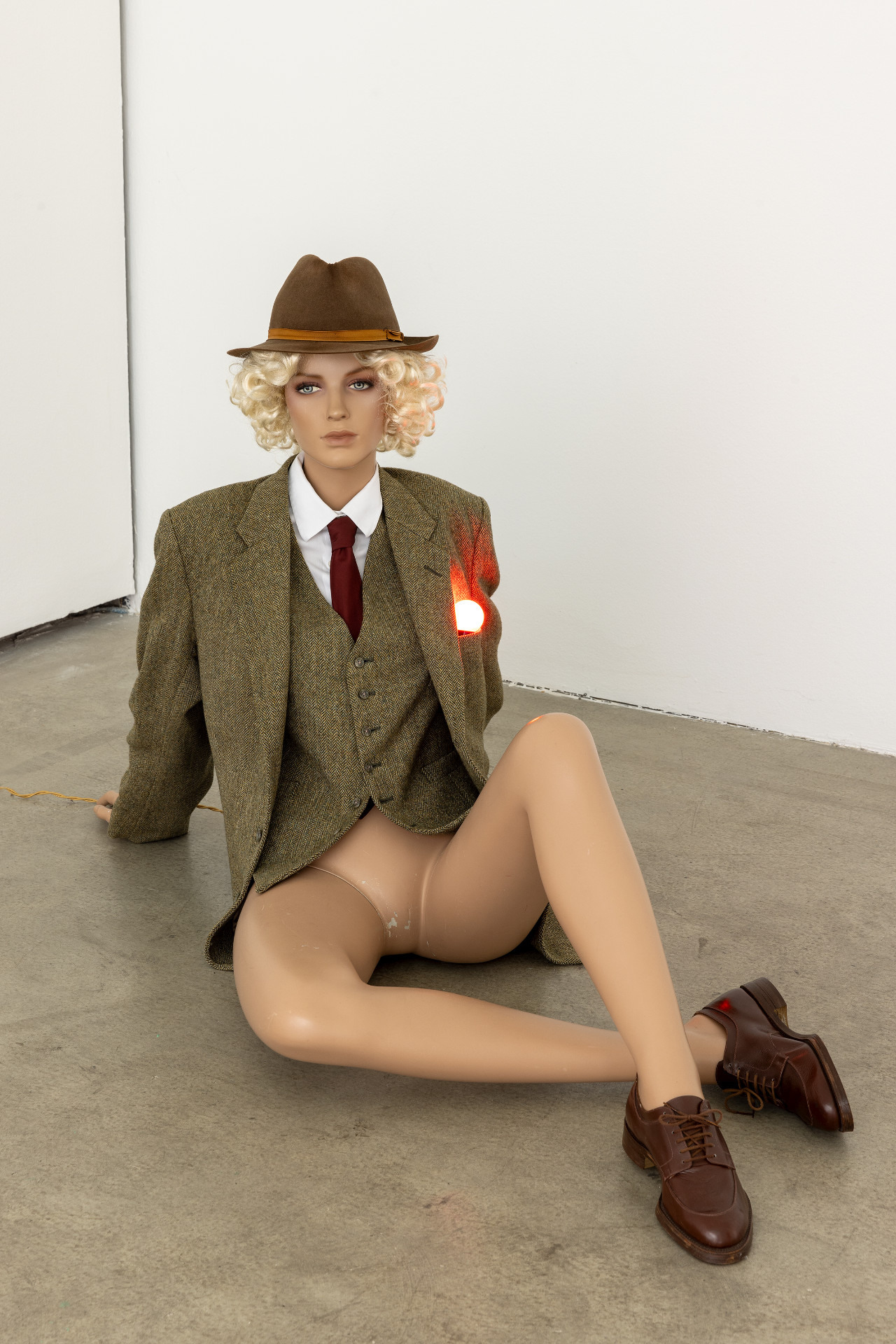
Letting her mannequin recline rather than stand stiffly, McKenzie imbued the form with agency. “I’m already siding with the mannequin, a noble object that comes from a sophisticated mass cultural ecosystem,” says the Scottish artist. For her, the mannequin has its own value as the embodiment of the system of desire and commerce through which things are bought and sold. The mannequin “figures as the hyper-capitalist body, which can then be placed into contrast with other types of body”. This position, as she sees it, opposes the usual interpretation “that it’s a banal vessel, to be filled with meaning by an artist”.
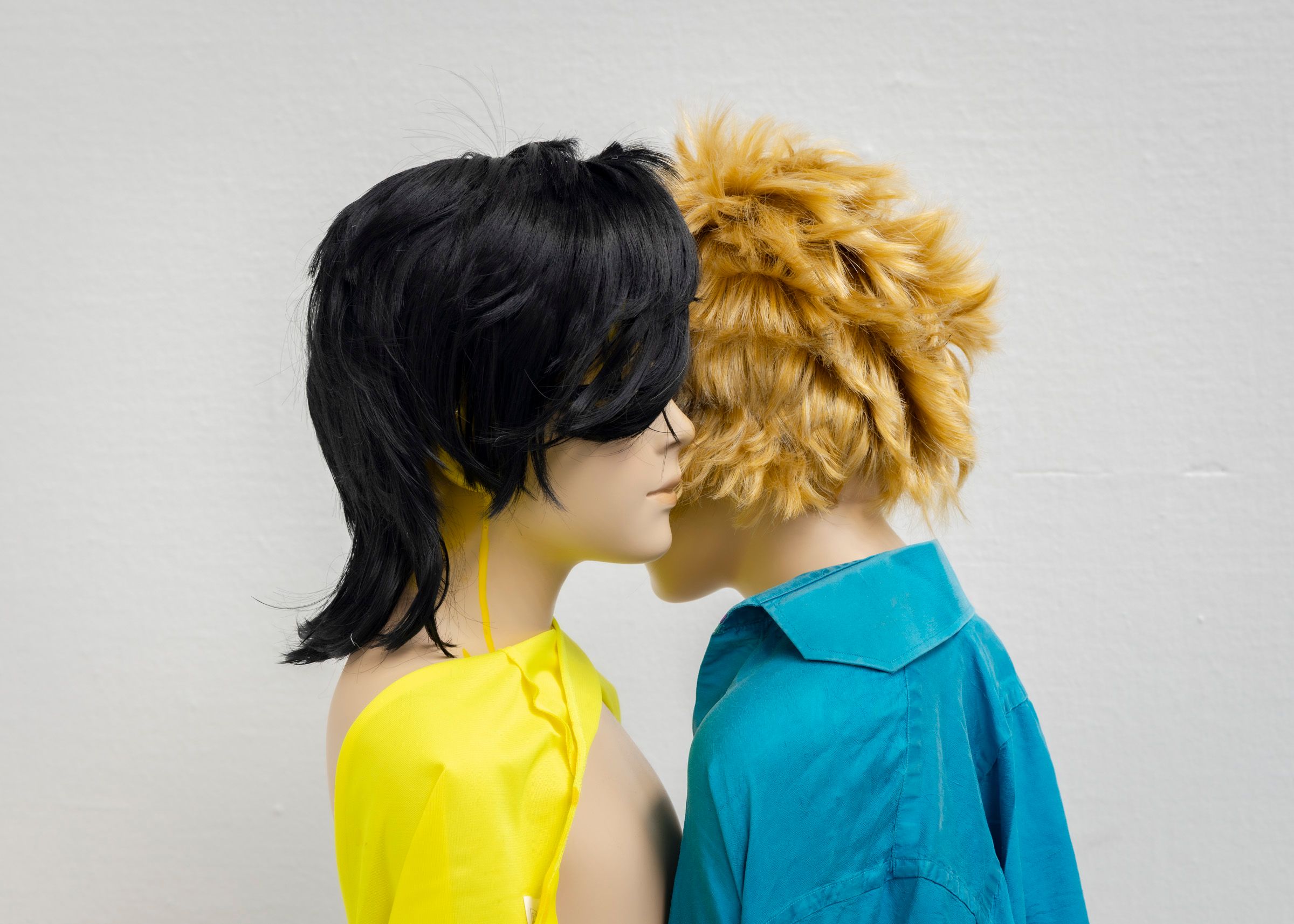
McKenzie, who will present a new body of work with mannequins at a forthcoming show at Palace Galleria in Paris in 2027, in collaboration with Musée Grévin (France’s Madame Tussauds), is immersed in a broader resurgence of interest in the form of the mannequin. Mannequins were present at the opening of the New Museum’s New Humans: Memories of the Future, in the form of Precious Okoyomon’s robotic 1960s Blackface doll dressed in lambs’ wool and handmade hooves, When the Lambs Rise Up Against the Bird of Prey (2024). Earlier this year, in her World Receiver exhibition at Den Frie in Copenhagen, Iza Genzken showed pieces from her Schauspieler (Actors) series, child-sized mannequins dressed in chaotic outfits incorporating heavy-duty protective gear that evoked an apocalyptic future. NYC collective Women’s History Museum presented Needle Trades, an exhibition featuring repurposed lingerie mannequins from the 1930s to the 1950s at Soft Opening in London in January 2026. The girls were mostly headless, with heeled feet and 22-inch waists, dressed in bondage wear and vintage fur merkins (pubic wigs), shaped by the ideals of a male-led fashion industry.
“Mannequins’ lifelessness makes them interesting as stand-ins for the post-human: they sit somewhere between human and object”
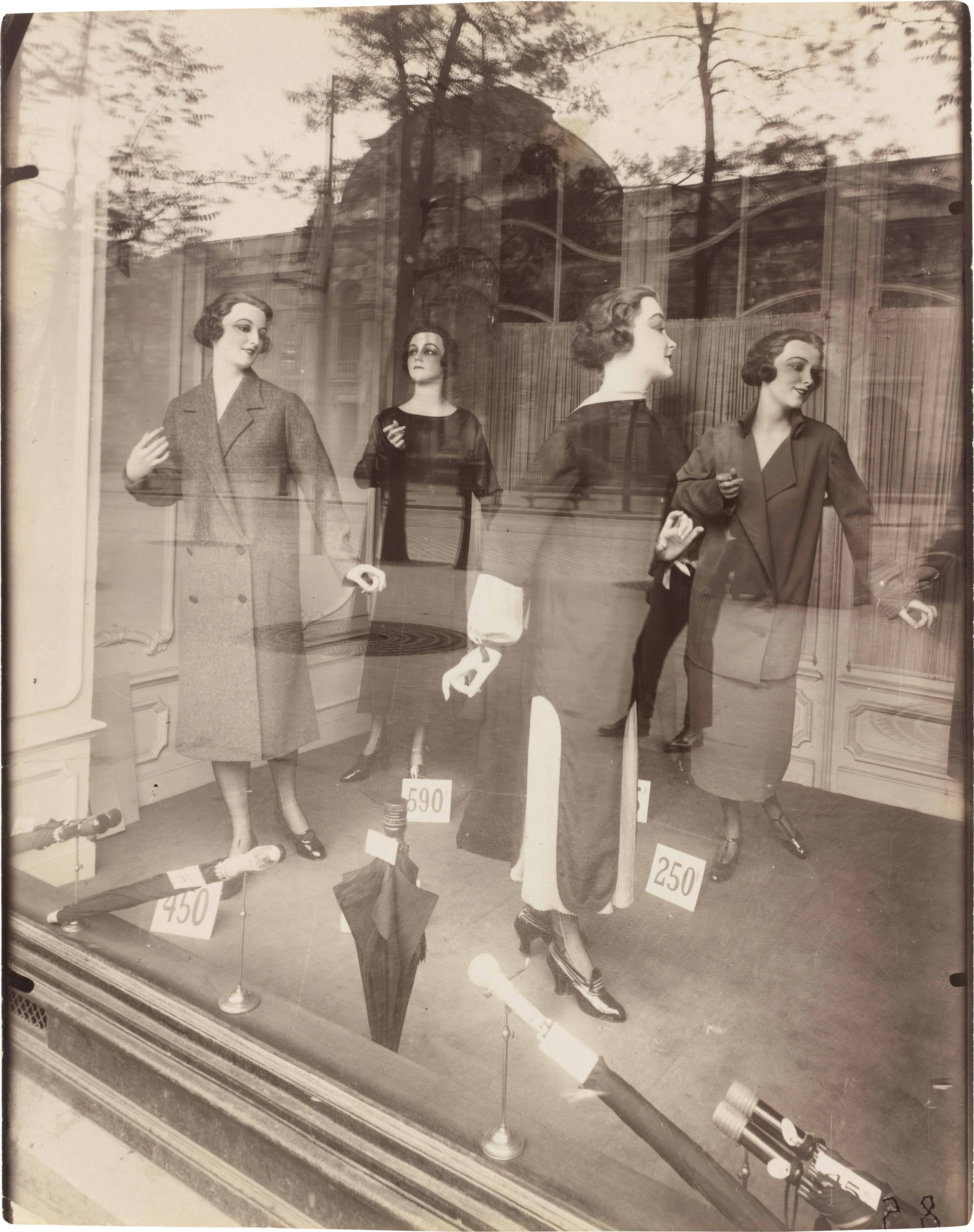
Our fascination with the mannequin is not new, of course. In his 1919 essay The Uncanny, Sigmund Freud pointed to the mannequin as an example of a doppelgänger, its form generating a palpable feeling of das Unheimliche or the uncanny. Eugène Atget, a muse of the Surrealists, first captured this eeriness in a series of black-and-white photographs of mannequins in Parisian window displays, taken at a time when the city, and the nature of its consumption, was changing; clothing was now being mass-produced, alongside its models. Eerily poised behind the glass, the frozen forms of the mannequins evoke a feeling of disquiet; embodying the anxiety of modernisation. In the 1970s, Allen Jones infamously turned the mannequin into misogynistic furniture: fibreglass, painted, corseted women became the three sculptures Hatstand, Table and Chair (all 1970). Cindy Sherman’s Sex Pictures series (1992) fused sex dolls with medical protheses in a graphic rebuttal of the idealised female form. In 1993, Mike Kelley staged The Uncanny, a group show including work by American sculptor Robert Gober and multidisciplinary artist Paul McCarthy. Kelley saw the unsuccessful lifelikeness of the waxwork, or mannequin, used by the artists as a pastiche of the artificial optimism of Reagan-era “Americana”.
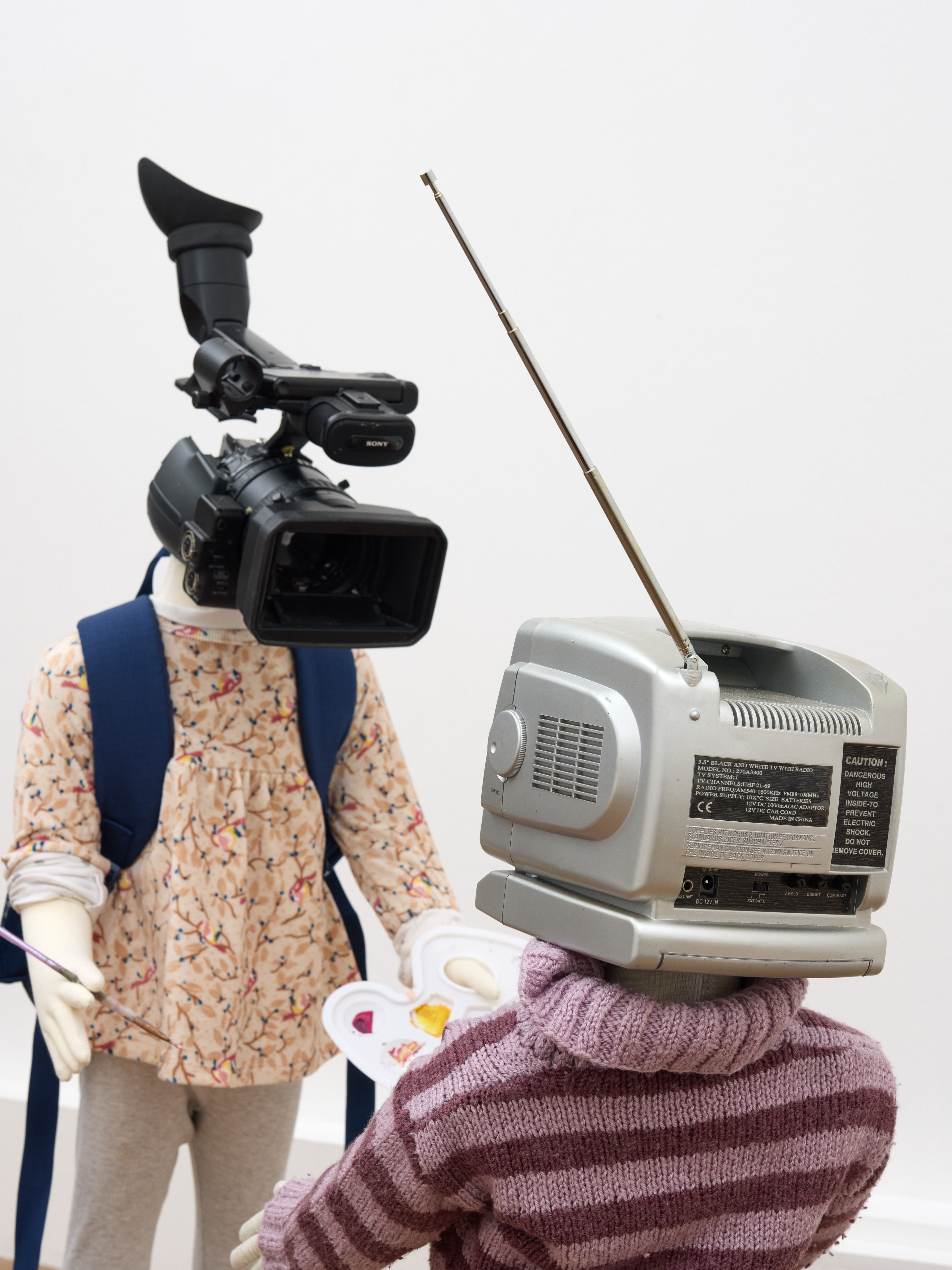
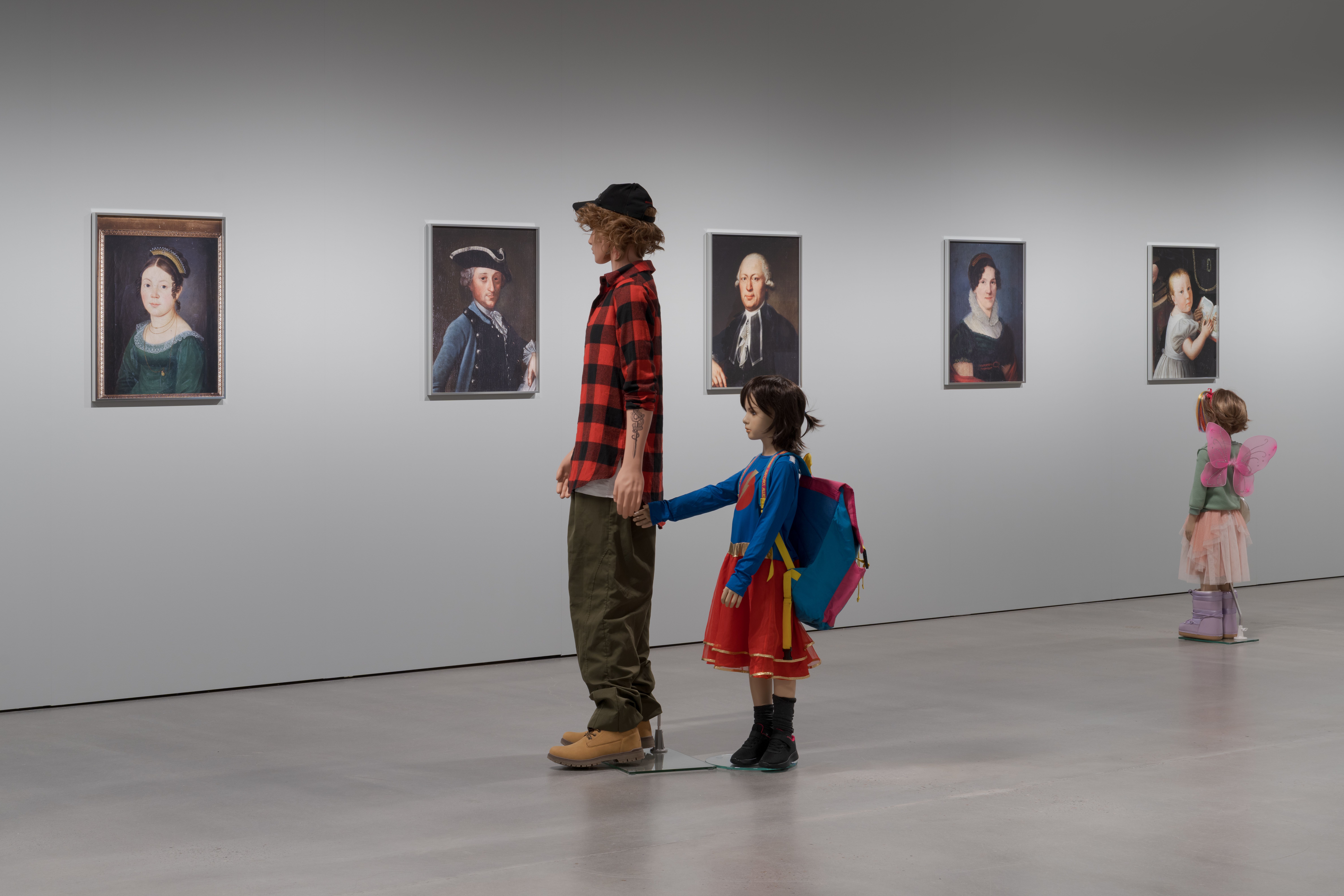
For artists working today, mannequins’ lifelessness makes them interesting as stand-ins for the post-human: they sit somewhere between human and object. How it feels to have a digital “avatar” — in our messaging apps and computer games, our AI assistants and AI-generated women on Instagram “For You Pages”—is present in the mannequin’s formal qualities: oversimplified, smooth, undelineated. In Morag Keil’s spring 2026 show at Arcadia Missa, titled With You For Life, the mannequins were conjoined with recording equipment (camcorders or CCTV cameras) giving them their own kind of intelligence. Keil cites American assemblage artists Ed and Nancy Kienholz and their work The Art Show (1963–1977), for which they arranged 19 life-size plaster-cast mannequins modelled after the couple’s actual friends and contemporaneous art world figures in the gallery space. “The mannequin is a fast track to a being that is like you, similar to the mirror, but as it is mass produced,” says the artist, we can “it is designed for us to project our ideals on to.” In a show at ARoS, Danish artist Nina Beier and American artist John Miller have created an installation of a similar nature: recreating the private view, mannequins stand face to face with photographs of portrait paintings, raising the question of where the line between a likeness and a person falls.
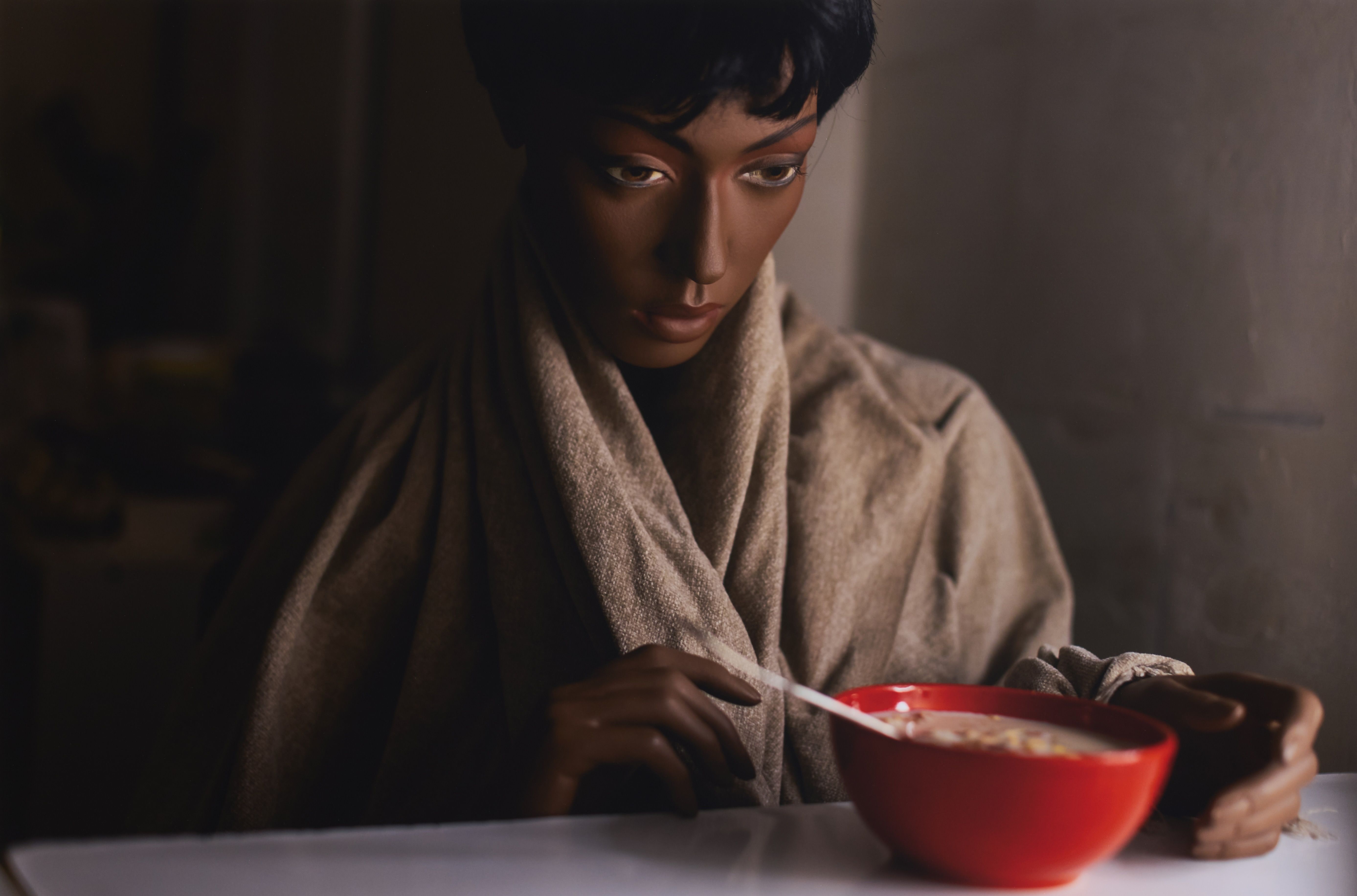
In the photographic series You Look Lonely (2021), which went on show at Camden Art Centre in 2023, French artist Atiéna R. Kilfa positioned Black androgynous mannequins in domestic interiors (eating a bowl of cereal, looking inside the fridge) using them as part of a broader exploration of the sensation of not feeling at home in the home. These photographs have a sense of latent threat, hinting at the domestication of the cyborg, and its gradual introduction into everyday life. “I wanted to enhance a kind of paradox between rot and decay,” she says in a video for the exhibition. The sculptures have “a very CGI-like plasticity which totally resists the idea of obsolescence”. Kilfa also looks at the mannequin’s (or cyborg’s) burgeoning consciousness and subsequent sadness; in one photo, an artificial tear runs down the plastic cheek.
At This Causes Consciousness to Fracture—A Puppet Play at Haus Am Waldsee (2024) the doll was used to give shape to invisible forms of repression. In her installation Dolls in Glass Boxes (2003–2021), French-Austrian artist Gisèle Vienne placed 12 child-sized puppets in glass vitrines, where they lay, inert. These dolls were meticulously styled in clothing associated with teenagers: preppy teens in pleated skirts and Mary-Janes, sporty teens in white Fila sneakers and floppy blonde side fringes. Look closer and you see they have bloodstained fingernails, rouged lips and cheeks, and bloodied footsteps are dotted around the vitrines. We encounter the dolls post-movement, post-action. Vienne’s message is deliberately ambiguous: have they caused the violence, or are they the victims of a crime? Is the mannequin a threat, or a warning that hints at our fast-approaching disregard for the human form in favour of the artificial?—[O]
Main image: Atiéna R. Kilfa, Untitled (Midnight Snack) (2021). Courtesy the artist, Cabinet, London and Neue Alte Brücke, Frankfurt.




















A respected voice in contemporary art discourse.
Focusing on ambitious storytelling and insightful art-world commentary. Ocula Magazine publishes in-depth interviews, critical essays and timely analysis on the artists, exhibitions and ideas driving the global art world.
Learn more about Ocula Magazine
Showcasing the best of the art world.
Ocula partners with galleries from around the world to highlight their artists, artworks and exhibitions. Gallery membership is by application and invitation, with each member vetted by an independent panel.
Learn more about Ocula Membership
Specialises in the sale of major artworks.
Led by a team with deep ties to the world’s leading auction houses, galleries and collectors. Ocula’s advisory team offers bespoke services to high-net-worth clients from around the world who are looking to acquire the best of contemporary and modern art.
Learn more about our team and services