





Artist-Run Cinema in Yogyakarta Will Quench ‘Thirst’ For Non-Mainstream Films

Founders and directors Riar Rizaldi and Hera Chan on the future building site in Sembungan, Bantul, Yogyakarta. Photo: Husain Alfarizi.
Yogyakarta in Indonesia has a lively cinema culture, based around community-organised screenings, but few permanent venues for arthouse films. Artist-filmmaker Riar Rizaldi and curator Hera Chan hope to address that gap with Otonomia Bioskop, an independent cinema and moving-image art centre they plan to open in Sembungan, south of the city, in early 2029. They will present the programme and plans today, ahead of Art Jakarta, with a pre-screening event at Krapela in South Jakarta.
The proposed venue would include a 50-to-60-seat indoor cinema, an outdoor screening area, a gallery and a public park. The founders envisage weekly screenings, with room for guest programmers. They will look to bring in films rarely shown in mainstream cinemas.
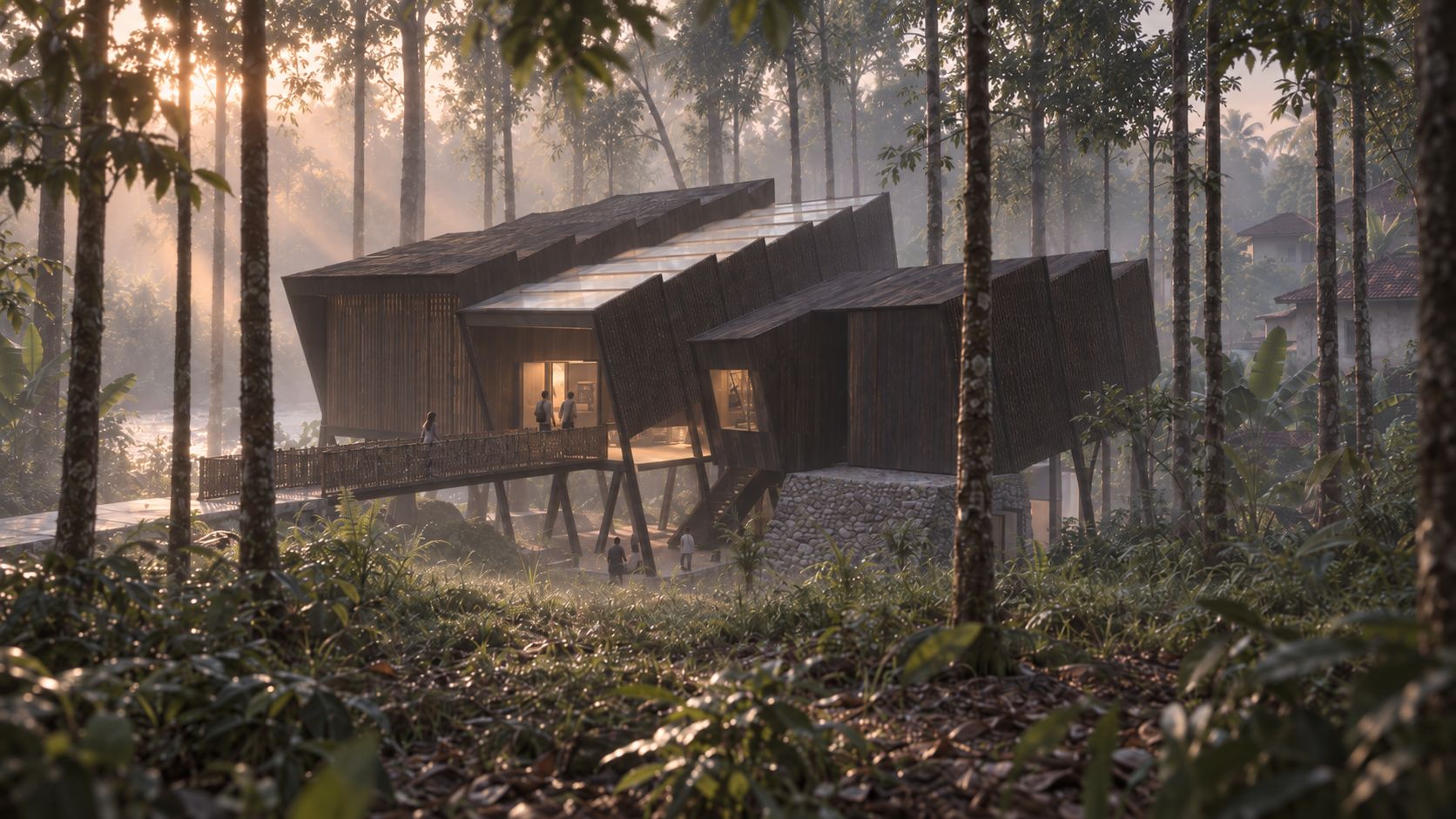
The aim is to plug a gap. “The only thing that is very sustainable in Indonesia is, actually, community cinema,” Rizaldi told Ocula, speaking from the set of his second feature film. He describes a distribution system dominated by multiplex chains, where a film’s opening-weekend takings can determine whether it stays on screen. Independent arthouse cinemas have opened and closed. But, Chan says, Yogyakarta is “an art centre”, pointing to artists working across visual and traditional forms, as well as an active art-viewing audience. “There’s not a want of audiences here,” she said. “In fact, there’s a thirst for more programmes.”
Chan’s background in commissioning and presenting artists’ films, honed during her time as curator of Asia-Pacific art at Tate Modern and co-curator of the 2025 Thailand Biennale, provides a foundation for the programme. They have visions of presenting artists’ moving-image films from Indonesia and abroad. Rizaldi also wants to revisit films that have become difficult to find, from 1980s visual anthropology to horror movies through which filmmakers addressed the New Order, the authoritarian political regime which ran from the 1960s to the 1990s. Installations, exhibitions and a temporary school are among other ideas in the works.
The proposed site of Otonimia Bioskop belongs to artist Uji Hahan Handoko, a founding member of Ace House Collective, who has offered land for the project. Chan says the indoor cinema will provide the sound quality and equipment needed for screenings and performances, while much of the building will open on to the surrounding area.

There will also be an element of local engagement. Sembungan is home to traditional arts practitioners and a community of people who work making clay bricks, some of whom also make their own videos. “We really want to work with them to understand what cinema means to them,” said Rizaldi. He has been surprised by reactions in the past. He recalled participating in a project by writer and curator May Adadol Ingawanij, in which films were offered to spirits in Thailand. He was told that his film seemed unpopular with the spirits, while a sound-only performance made with another artist the next day apparently went down better. The story speaks to the founder’s wider curiosity about how cinema might be experienced beyond the conventions of a black-box screening room.
Chan says uncertainty in the art industry has made institutions more risk-averse, even as artists face less secure ways of circulating their work. “We feel that at this time, it’s important to actually take risks,” she said. She and Rizaldi sometimes call Otonomia a “spaceship”: a place to test what moving images might become.



A respected voice in contemporary art discourse.
Focusing on ambitious storytelling and insightful art-world commentary. Ocula Magazine publishes in-depth interviews, critical essays and timely analysis on the artists, exhibitions and ideas driving the global art world.
Learn more about Ocula Magazine
Showcasing the best of the art world.
Ocula partners with galleries from around the world to highlight their artists, artworks and exhibitions. Gallery membership is by application and invitation, with each member vetted by an independent panel.
Learn more about Ocula Membership
Specialises in the sale of major artworks.
Led by a team with deep ties to the world’s leading auction houses, galleries and collectors. Ocula’s advisory team offers bespoke services to high-net-worth clients from around the world who are looking to acquire the best of contemporary and modern art.
Learn more about our team and services