



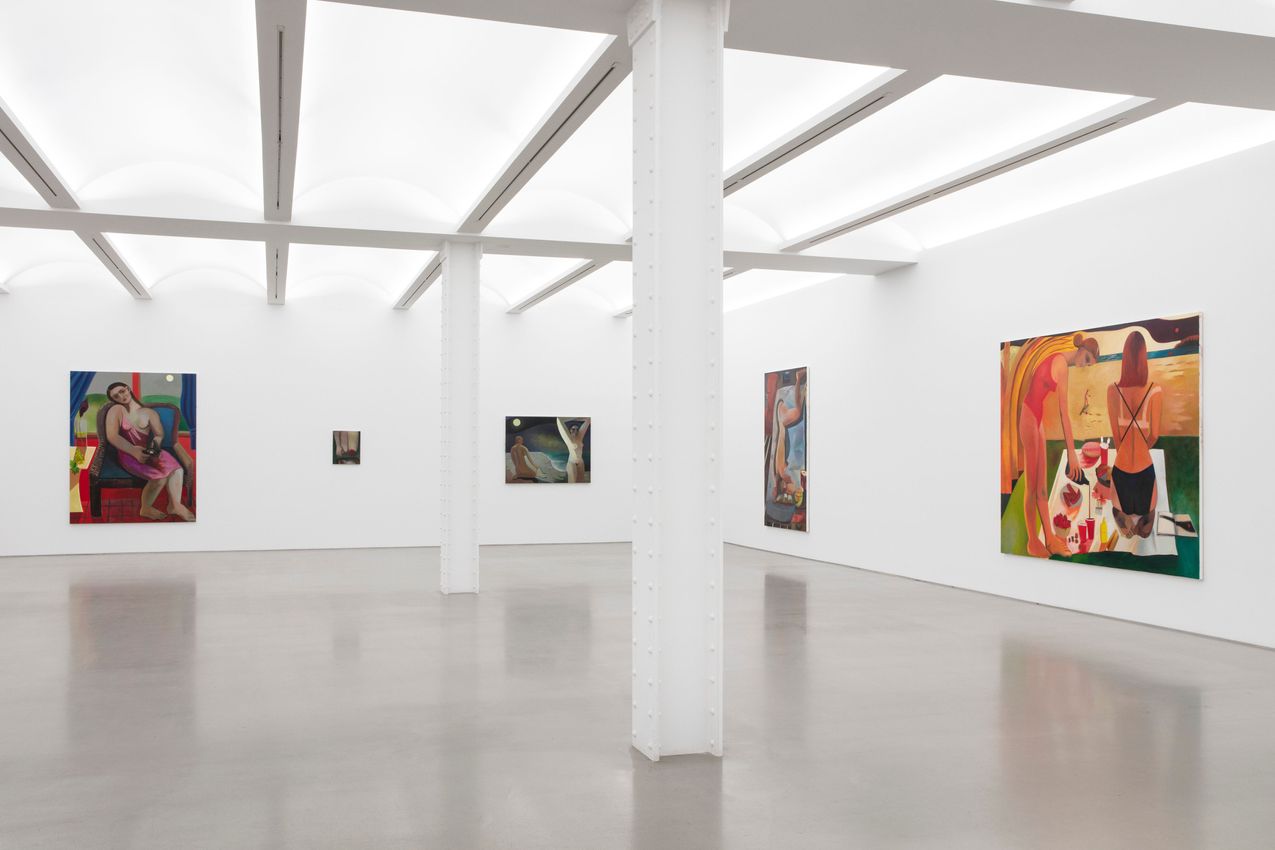
Perrotin is pleased to present You Are a Serpent Who’ll Returnto the Ocean, Danielle Orchard’s first solo exhibition at PerrotinNew York.
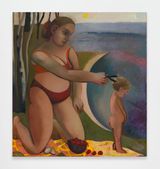
Danielle Orchard revisits the history of painting to find new possibilitiesfor female representation and embodiment. Her cheeky formalism playswith the grammar and iconography of modern art to create smart,arresting, and often funny images that capture the realities ofcontemporary womanhood. Though Orchard’s laundresses, odalisques,and bathers are rendered with the sharp and sensuous lines of cubistfacture, in their details, they shed the rigidity and sexism of painterlytradition. Freed from the strictures of the male gaze, liberated frommisogynist fantasy, these stock characters of art history become self-possessed and self-aware, drolly unsettling the preconceptions of theviewer. Orchard’s washerwomen scrub thongs, not shirtsleeves; theirbathtubs are spaces reserved as much for preening as for catching upon some light reading. When they recline, it is at their own pleasure,sprawled out beside slices of pepperoni pizza and bowls overflowingwith junk food.
For her first exhibition at Perrotin New York, Orchard continues to expandthe borders of female representation but does so with a new sense ofpersonal urgency. As Orchard explains, she began theorizing theexhibition around the same time that she made the decision to have achild. Early stages of planning and painting coincided with the conceptionof her pregnancy, while later ones overlapped with that pregnancy’s
premature end. The exhibition’s title, You Are a Serpent Who’ll Return tothe Ocean, is adapted from a highly enigmatic phrase from an encounterat the hospital shared with Orchard moments before her miscarriage.Bookended by intimate physical transformation, the works on viewricochet between optimism, grief, and absurdism, conveying thehopefulness of pregnancy, the devastation of miscarriage, and the senseof humor required to cope with this form of loss—one that is rarely shownin popular media despite its prevalence.
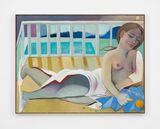
Full of rounded breasts and swollen bellies, Orchard’s new paintingsrevel in the nude pregnant form, paying homage to work by artists likePaula Modersohn-Becker. At the same time, they comment on thefragility of pregnancy through tongue-in-cheek allusions to infertility inthe form of wilting flora, contorted fruits, and broken or fried eggs.Inspired by Andrew Wyeth’s ethereal Day Dream (1980), OurSympathies (After Wyeth) (2023) was originally intended to capture ascene of luxuriant rest. The present version, instead depicts a moment ofanxious recuperation. A woman spread out on a daybed clutches a lightlydistended stomach, her eyes hollowed with fatigue. Her caretaker,dressed in mourning attire, lingers in the doorway having just delivereda convalescent meal of sardonic symbolism, comprising one overcookedovum and one warped peach, its fleshy curves dulled and flattened.
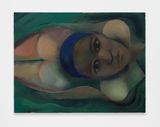
A similar reversal of dream and nightmare occurs in Le Cauchemar (2023), a moody reimagining of Picasso’s Le Rêve (1932). Unlike theplacid dreamer in the original, Orchard’s subject sits wide awake into the early morning hours, a hazy sun illuminating her exposed torso. In her lap,she cradles a bird’s nest that has been attacked by a hostile predator, awriggling green snake emerging from its lonesome egg in place of ababy bird. On a nearby side table, sperm cells swim inside a crystallinebouquet of grapes. Like many in the exhibition, the image speaks to boththe beauty and abjection of nature—its capacity to delight and disgustour expectations. The potted plants lining the windows in _Sculptress_(2023) appear to simultaneously be waxing and waning. Are they in themidst of growing or rotting away? One might ask a similar question ofsleeping women in A Fallow Field (2023) and Pêches Plates (2022). Dothe bloated shadows encircling their naked bodies foreshadow futurepregnancy or record sites of pregnancies now past? In their malleableand multiple meanings, Orchard’s work makes overt the contradictionsthat lie at the heart of Western maternal iconography. Modersohn-Beckerdied of unexpected postpartum complications, a victim of the veryfecundity whose contours she so boldly and beautifully committed to canvas. The Virgin Mary, the gold standard of maternity, gave birth amid premonitions of sacrifice—the nativity but a prequel to the main event of the pieta.
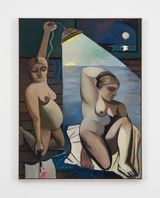
As wonderful as pregnancy is, it can also be a “sham” and a “con.” This is the message of the shampoo and conditioner on the edge of the tub in Red Bath (2023), showing a bathroom aglow in low red lighting reminiscent of a darkroom. Abbreviated with Braque-like precision, the bottle labels use Orchard’s characteristic penchant for visual puns and wordplay to process female corporeality in all its complexity.
Recalling the work of Matisse, Picasso, and Modigliani, New York-based artist Danielle Orchard’s nudes generate art historical and contemporary familiarity. Exploring female representation, her paintings infuse currents of 20th-century modernist painting with contemporary narratives.


A respected voice in contemporary art discourse.
Focusing on ambitious storytelling and insightful art-world commentary. Ocula Magazine publishes in-depth interviews, critical essays and timely analysis on the artists, exhibitions and ideas driving the global art world.
Learn more about Ocula Magazine
Showcasing the best of the art world.
Ocula partners with galleries from around the world to highlight their artists, artworks and exhibitions. Gallery membership is by application and invitation, with each member vetted by an independent panel.
Learn more about Ocula Membership

Specialises in the sale of major artworks.
Led by a team with deep ties to the world’s leading auction houses, galleries and collectors. Ocula’s advisory team offers bespoke services to high-net-worth clients from around the world who are looking to acquire the best of contemporary and modern art.
Learn more about our team and services