Press Release

Human Things by Marianne Derrien

“And with what body do they come?”—Then they do come

—Rejoice! What Door—What Hour—Run—run—My Soul!

Illuminate the House!

Emily Dickinson

Living with painting, and through it. For Nikki Maloof, art is a way

to organize time, to inhabit it and to occupy spaces—a house, a

garden, a studio. When the public and private spheres are

interwoven with persistent tension and anxiety, painting allows

her to capture the very essence of things and beings in order to

acknowledge human distress.

__

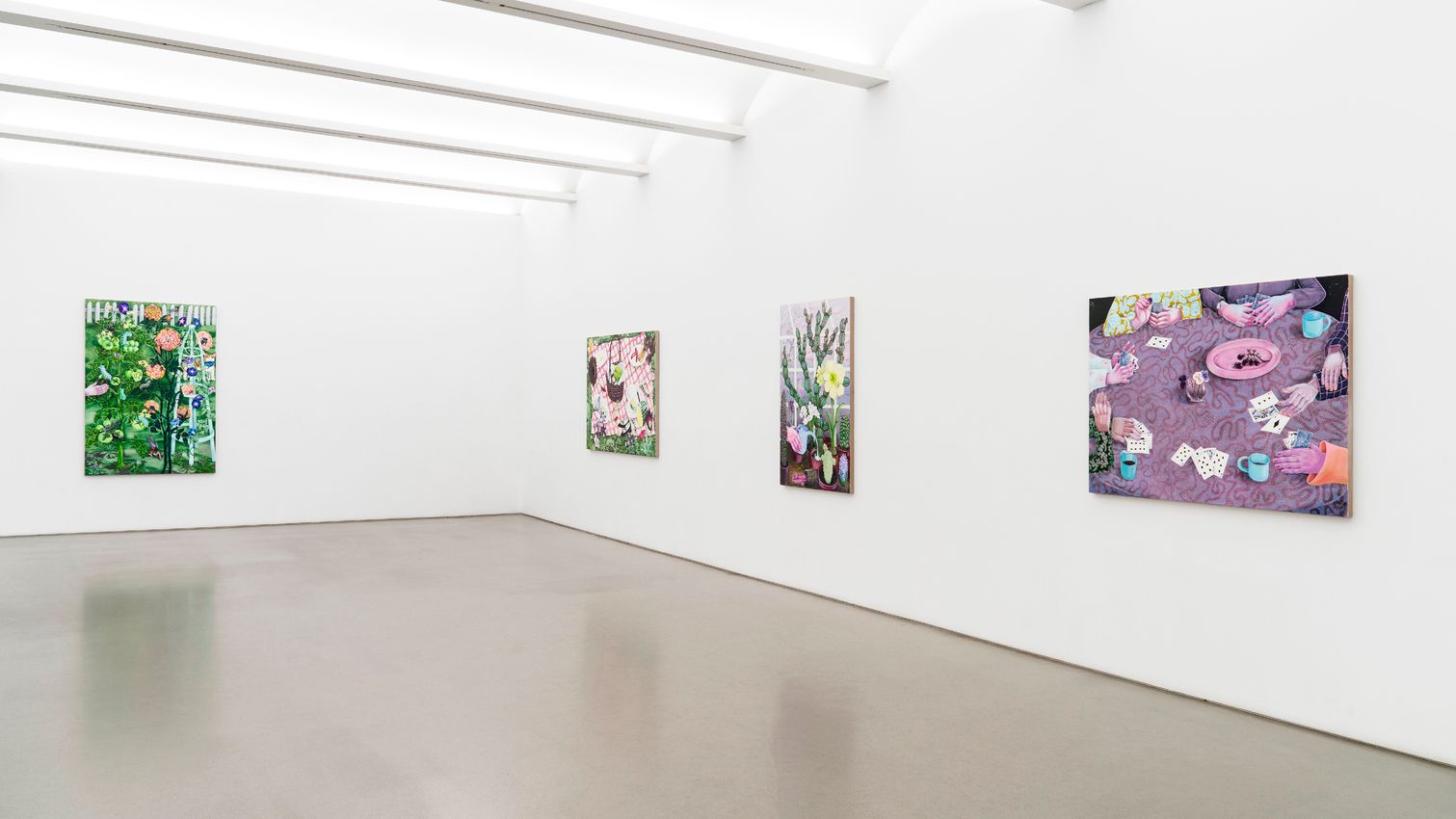
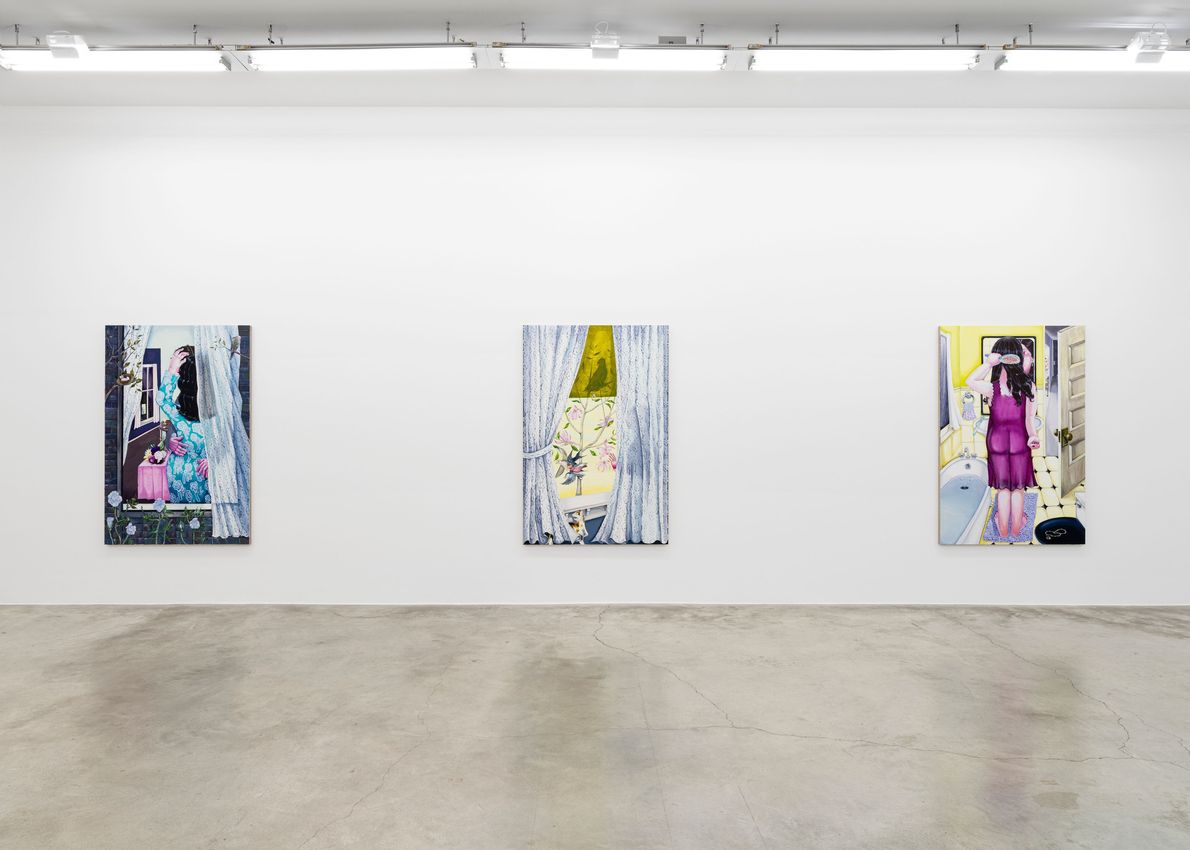
With her exhibition Around the Clock, Nikki Maloof explores the

diversity and complexity of the material and perceptible world. Each

domestic scene that she represents shows the depth of daily life and

shares an intimate experience of her joys, hopes, or fears. Offering an

original interpretation of the still life to reflect on the state of our

world 1_, her audacious painting—combining beauty, mischief, and_

darkness—puts our relationship to the instability of life into perspective.

While one thing contains so many others, everything that reconditions

our connection to (re)productive time (work, parenting) participates in

the emotional density of her artwork. There is a connection here to

Emily Dickinson, who, isolated and reclusive in her family home in the

Puritan austerity of 19th–century New England, described with

astonishing modernity the chaos of her inner life and its sentimental,

sometimes mystical, experiences. Her concise, elliptical poetry, which

she described as “explosive and fitful,” allowed her to become a man,

a woman, or an object.

Choosing to leave behind American urban life, Nikki Maloof lives in the

countryside of western Massachusetts. In her recent paintings, she

focuses on vital actions such as eating, washing, discussing, or

sleeping. These recurring moments are part of the process of

constructing our identity. “In the private sphere, away from the eyes of

others, in close contact with desires, weakness, relationships of

intimate power,” 2 the art of living frees itself 3 from the social gaze,

sketching a geography that is both personal and relational. If the

house is a world unto itself, a bedroom, a bathroom, a dining room, a

garden, or a kitchen become the spatial expressions of our

consciousness.

These are interior and exterior landscapes where simple daily actions

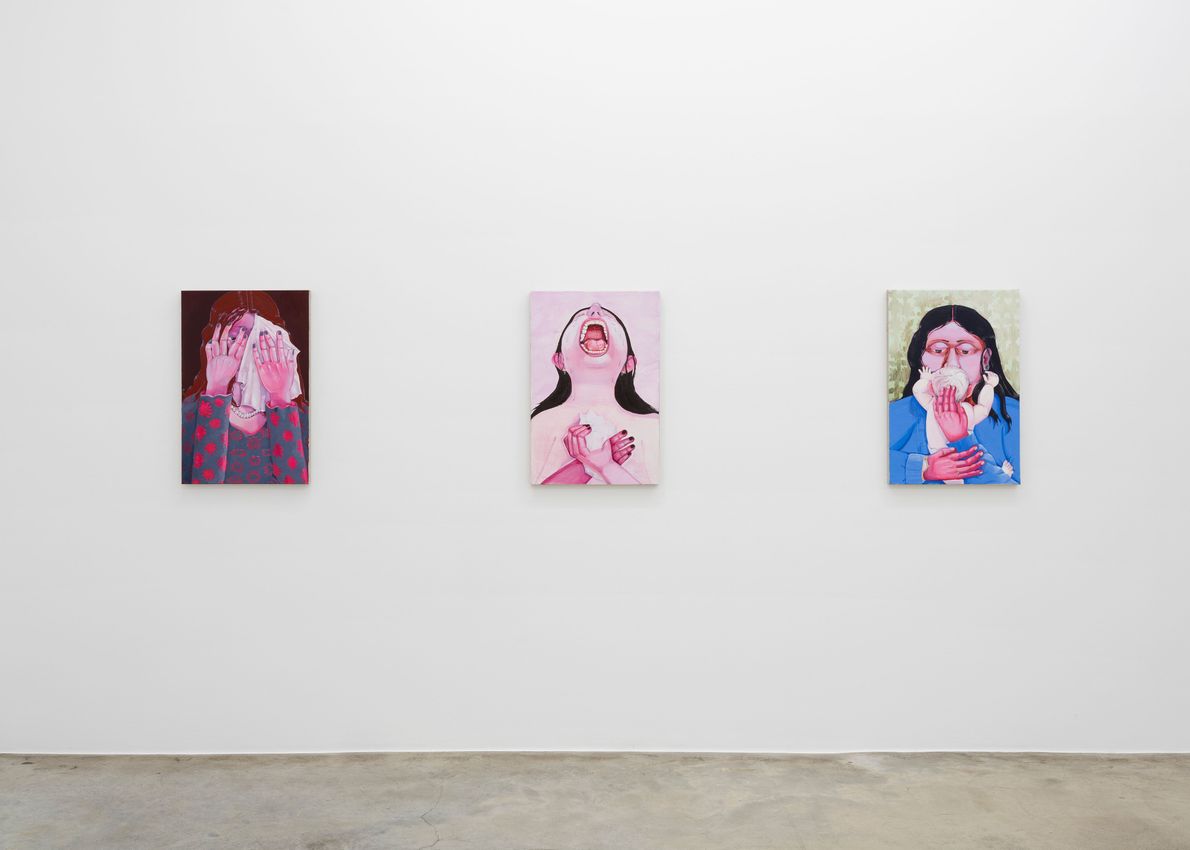
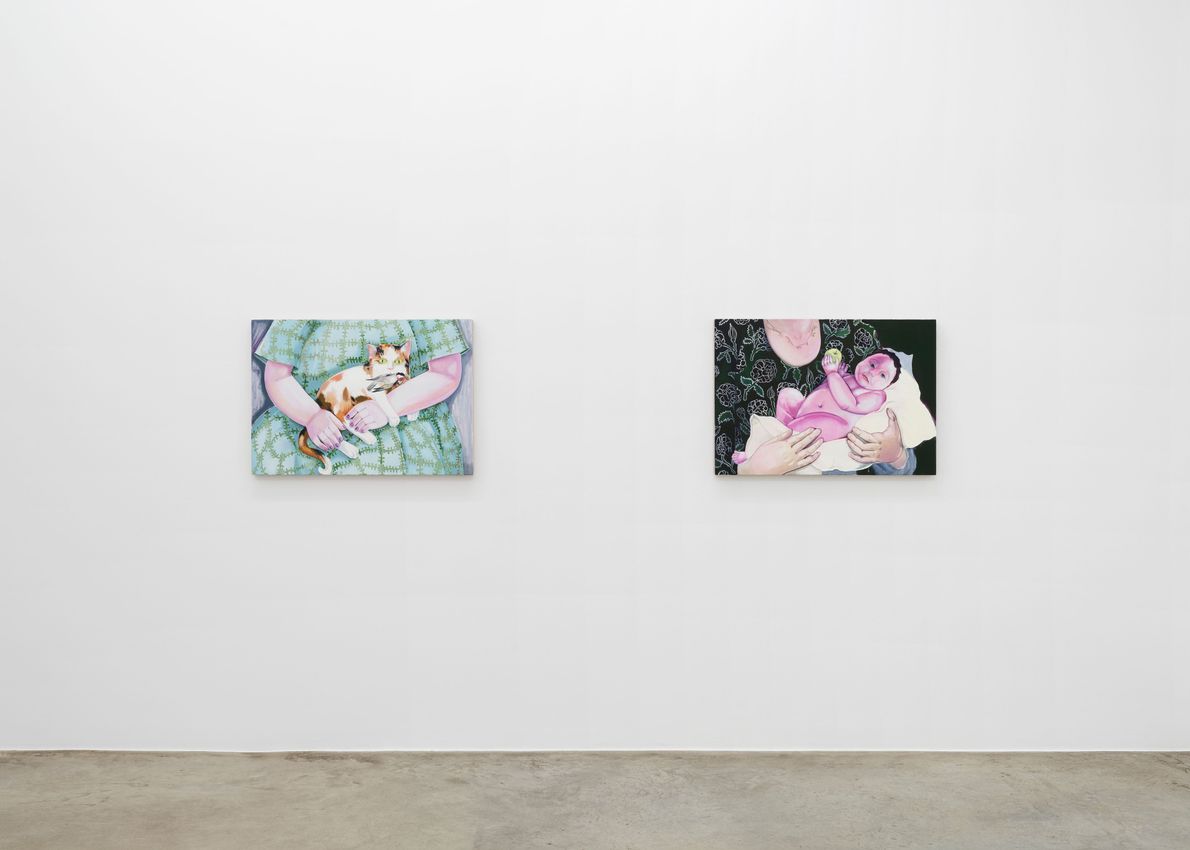
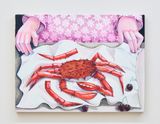
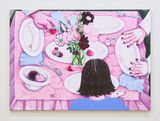
take place (The Cut, Dinner Discussion). Hands play an essential role,

active and affectionate, and sometimes threatening. In Cosleep at

Dawn, the artist/mother and child hold each other in bed in a moment

of shared affection. While the bedroom, a symbolic and carnal place,

expresses the history of the body and its relationship to things 4_, this_

painting, with its pink and reddish colors, particularly evokes Couple

in Bed (1977) by Philip Guston, with its style recalling comics.

Between pleasure and pain, “what shall I paint but the enigma?”

Guston asked, evoking the darkest aspects of being.

Painting himself in bed with his wife posed like Brancusi’s Kiss,

Guston represented a moment of great tenderness filled with darkness

in order to emphasize the absurd nature of the human condition. In the

same perspective, Nikki Maloof’s work is charged with psychological

power, combining the personal and the political, humor and tragedy.

Her painting expresses itself through this constant dialogue with other

artists and rejects the limits of time by conveying multiple artistic

references from past eras and today.

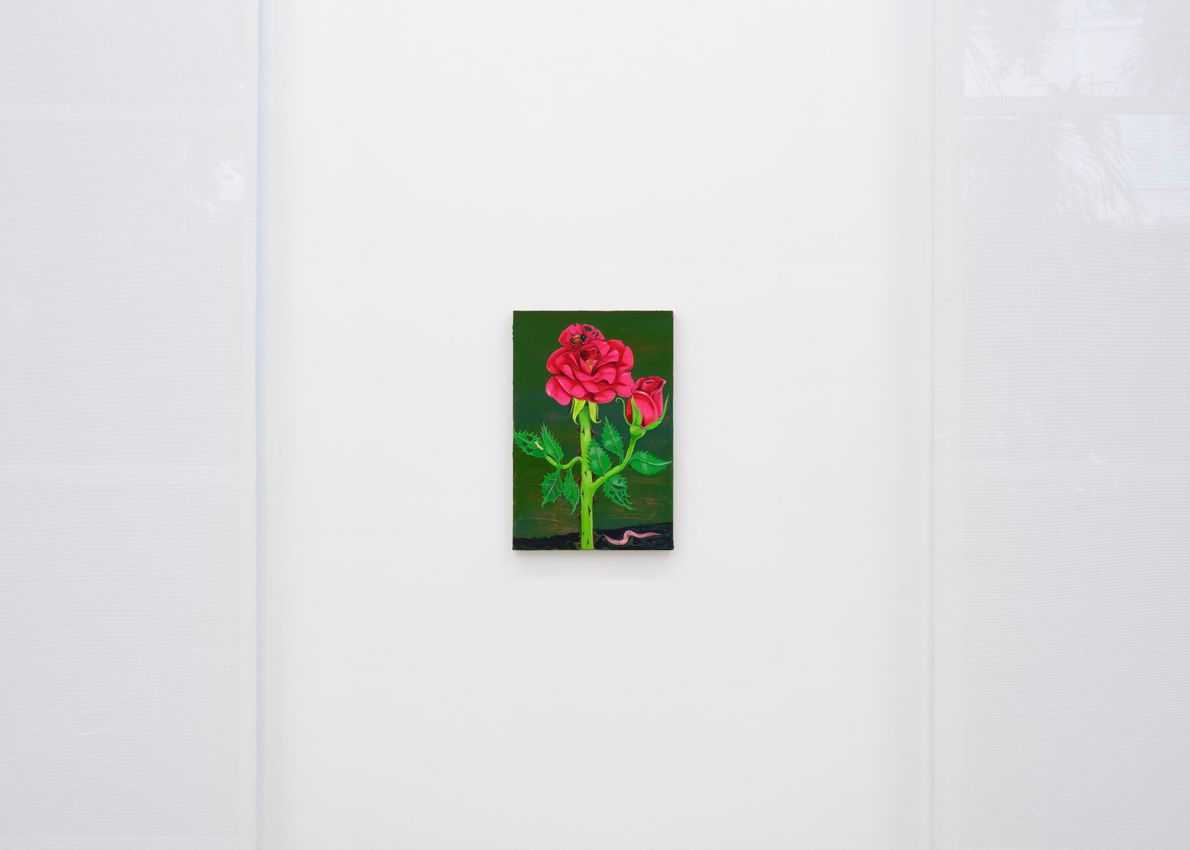
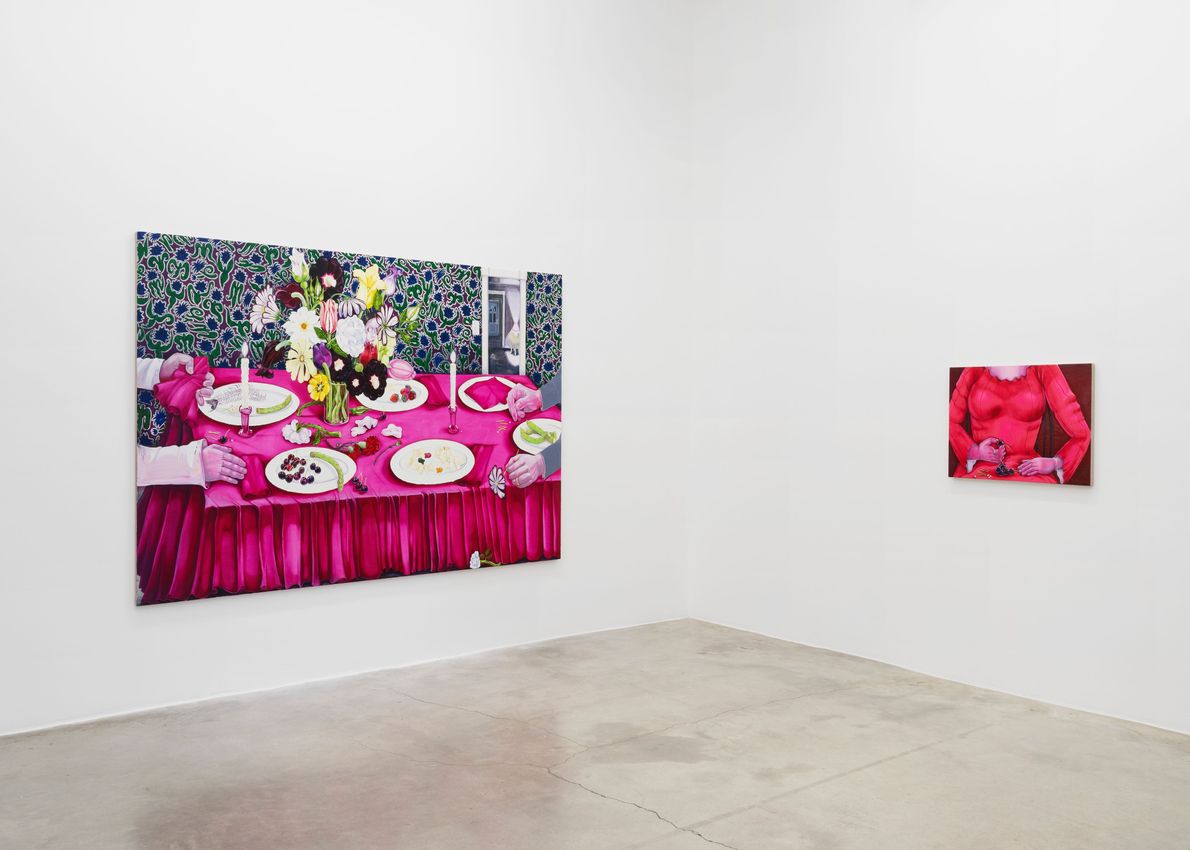
The omnipresence of plants, flowers, and insects and the arrangement

of the interiors are in conversation with Italian and Flemish Renaissance

painting, although Maloof’s work liberates itself from certain codes

(The First Supper, Other, Girlhood). These images also recall the

symbolism of the vanitas, read as allegorical representations of the

fleeting nature of our existence. With this current-day look at

domesticity, Maloof distances herself from a strictly androcentric and

anthropocentric vision. Blurring the boundaries between species and

kingdoms through an overarching equality between ordinary things

and beings, she constructs an oeuvre of attachment and detachment.

Marianne Derrien, art critic and independent curator

Read More

Installation Views

About the Artist

Nikki Maloof is an American artist known for her still life paintings that depict animals in brightly coloured and highly patterned settings. Her drawings and oil paintings portray anthropomorphised creatures that oscillate between being humorous and unnerving.

View Artist Profile

Also Exhibiting

About the Gallery

Emmanuel Perrotin founded his first gallery in 1989 at the age of 21. He has opened since then over 17 different spaces, with the aim of continuing to offer increasingly vibrant and creative environments to experience artists work. He has worked closely with his roster of artists, some since more than 25 years, to help fulfil their ambitious dreams and projects.

View Gallery Profile
Address
76 rue de Turenne
Paris
France
Opening Hours
Tuesday – Saturday
10am – 6pm
(1)
Paris 76 rue de Turenne
Perrotin
76 rue de Turenne, Paris, France
+33 1 42 16 79 79
http://www.perrotin.com

Opening hours
Tuesday – Saturday
10am – 6pm
The art world in focus