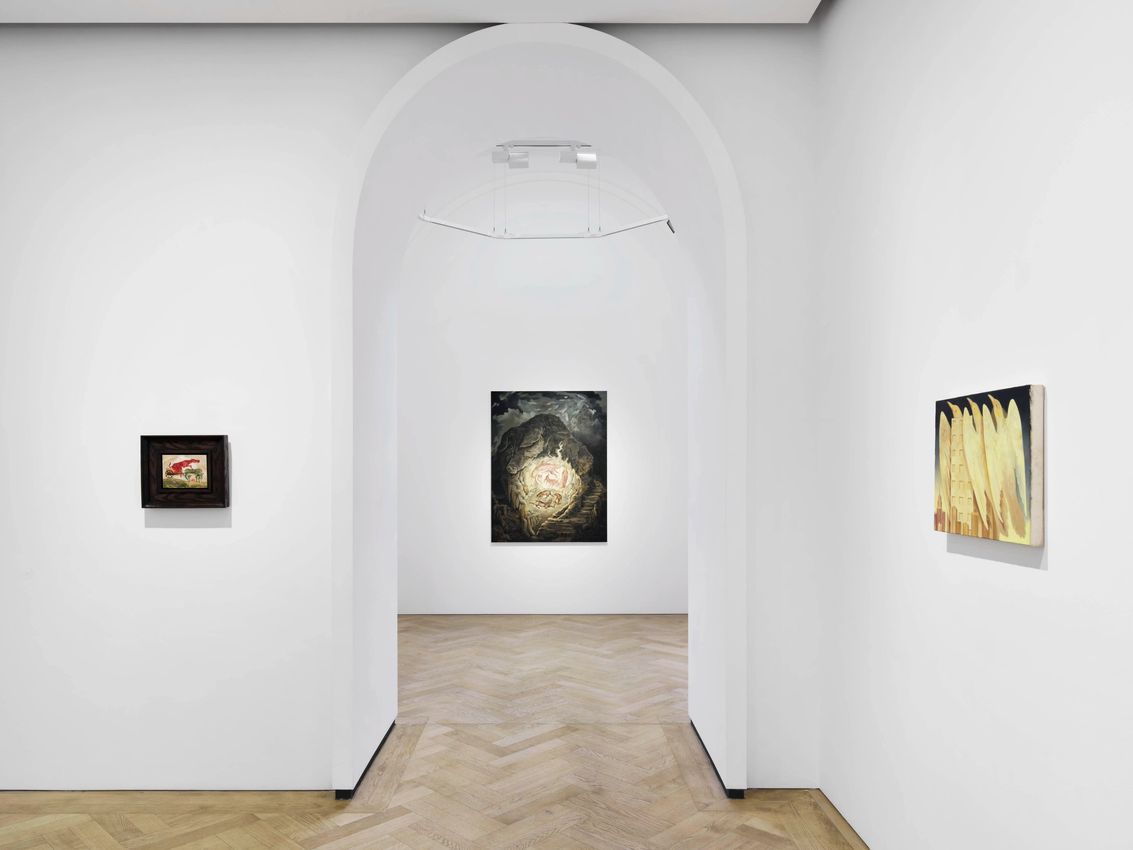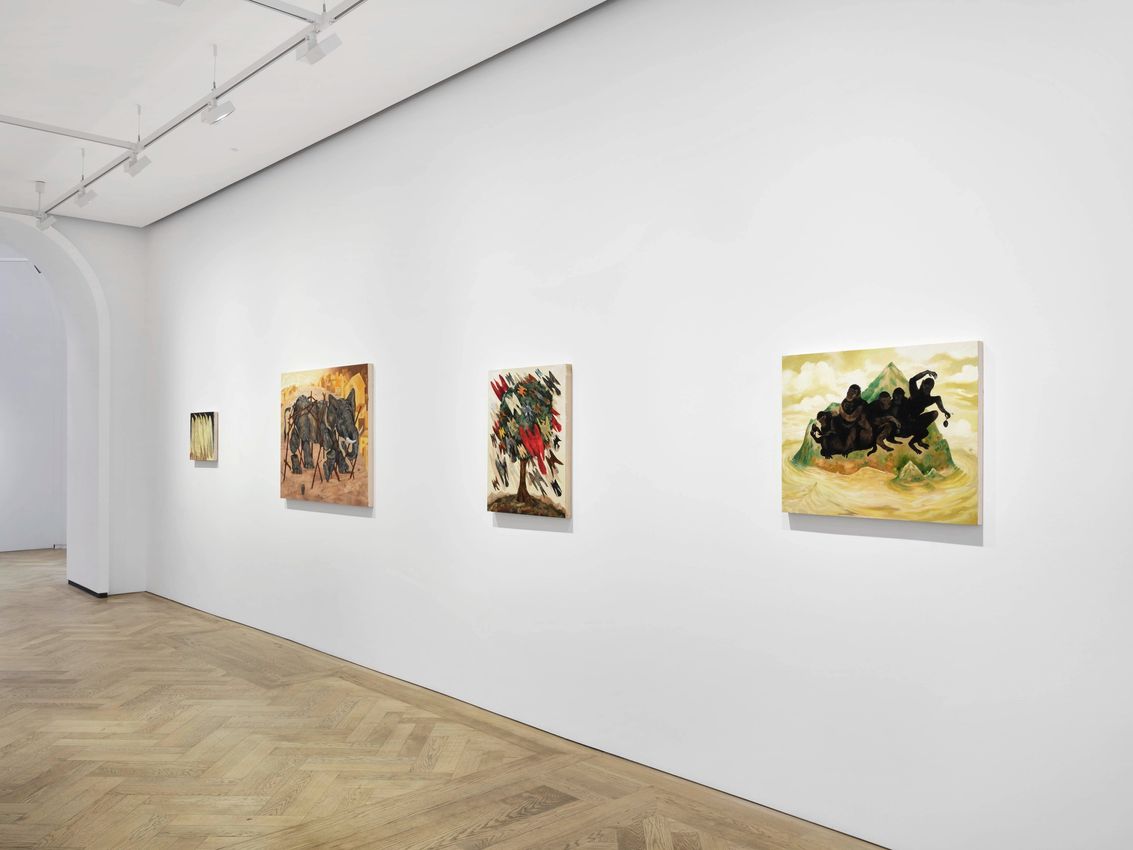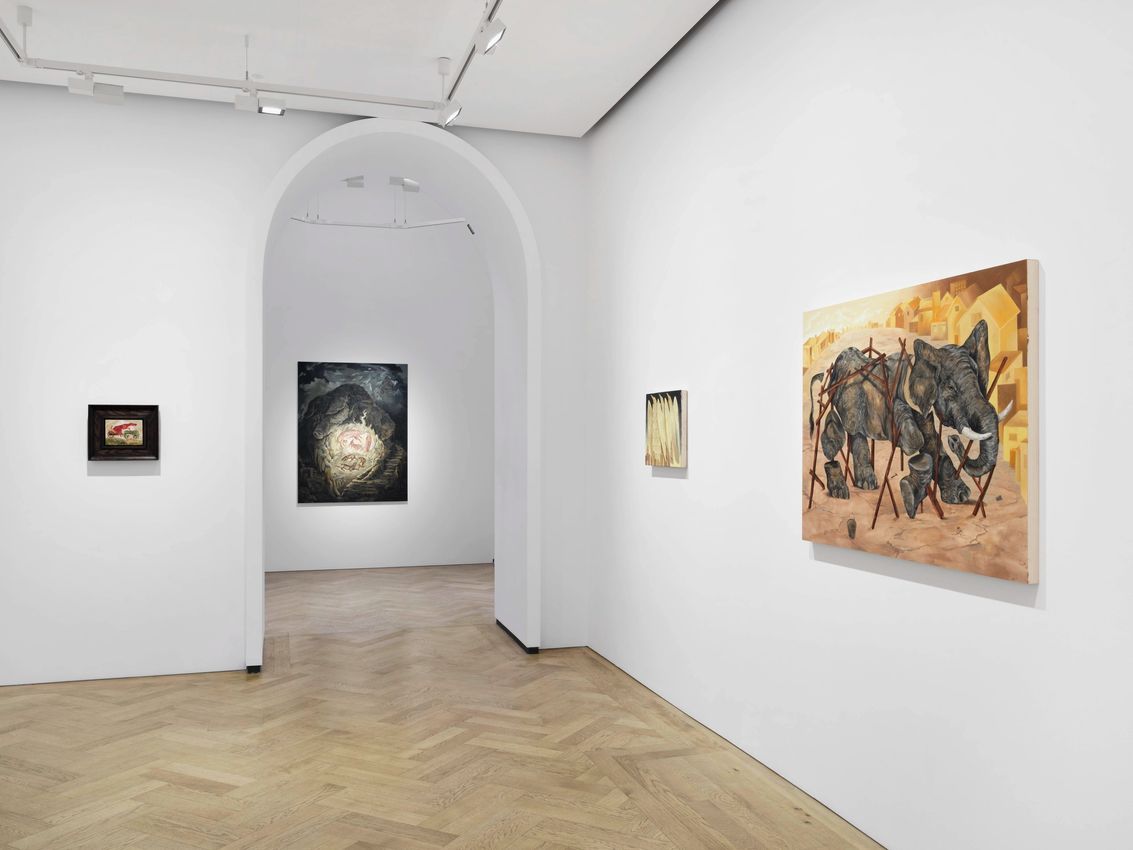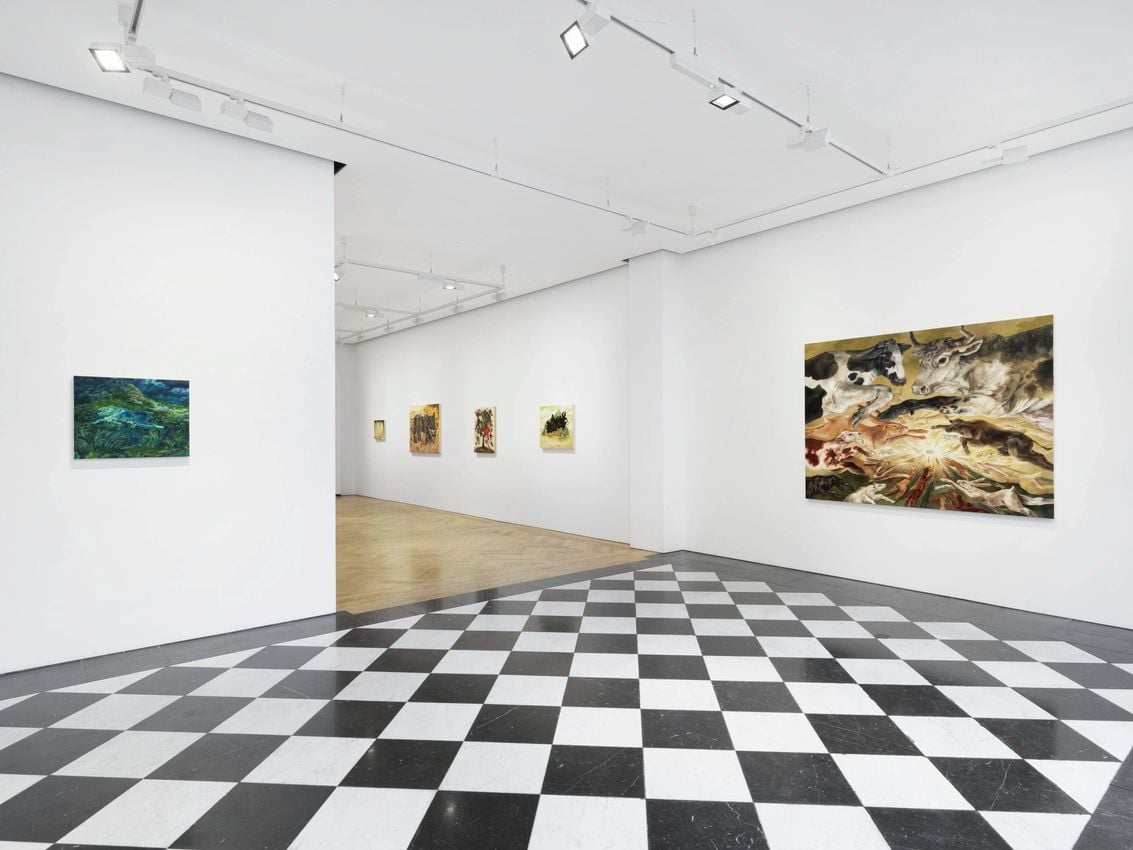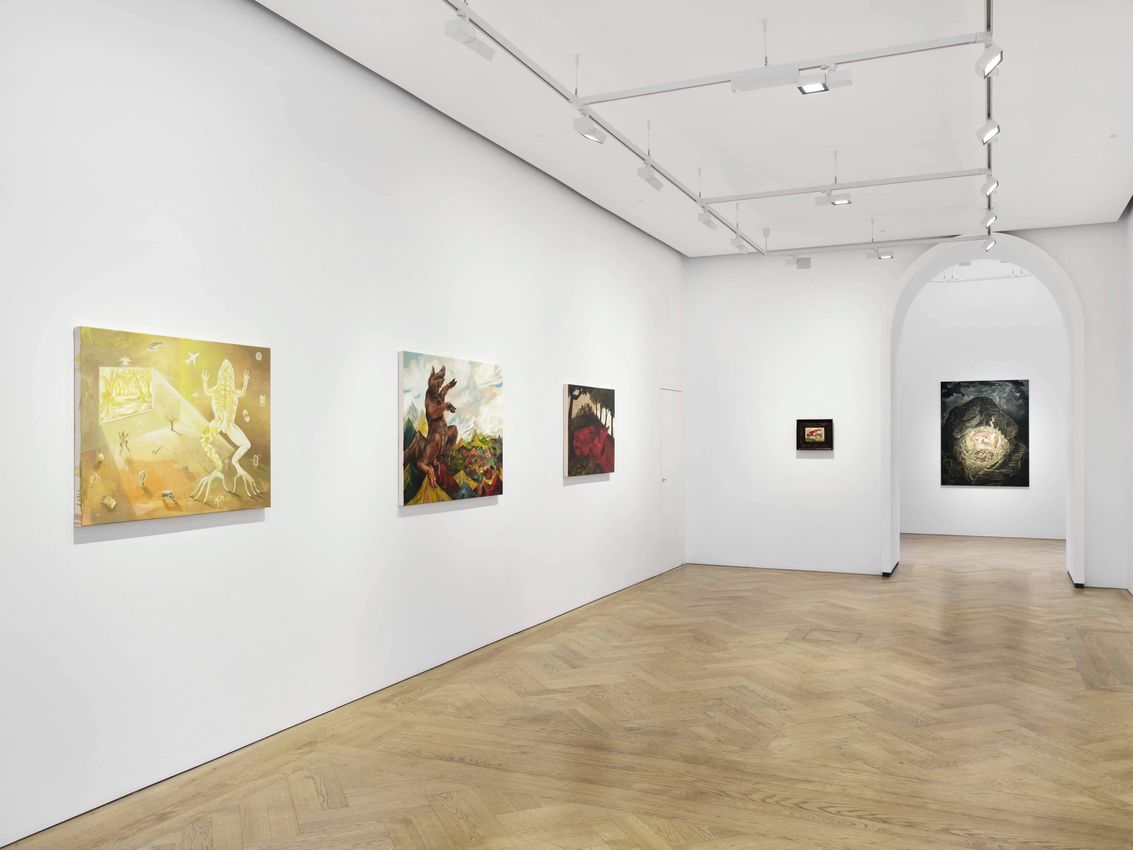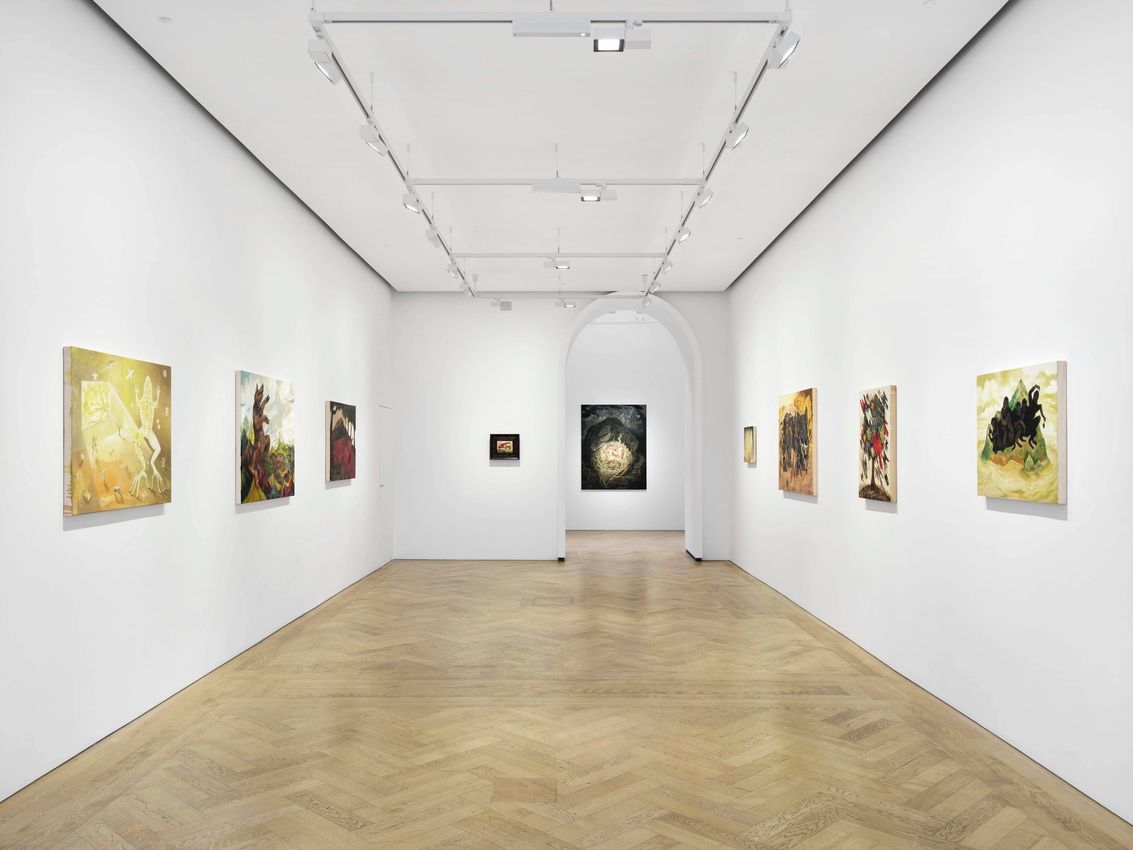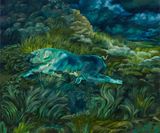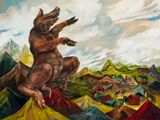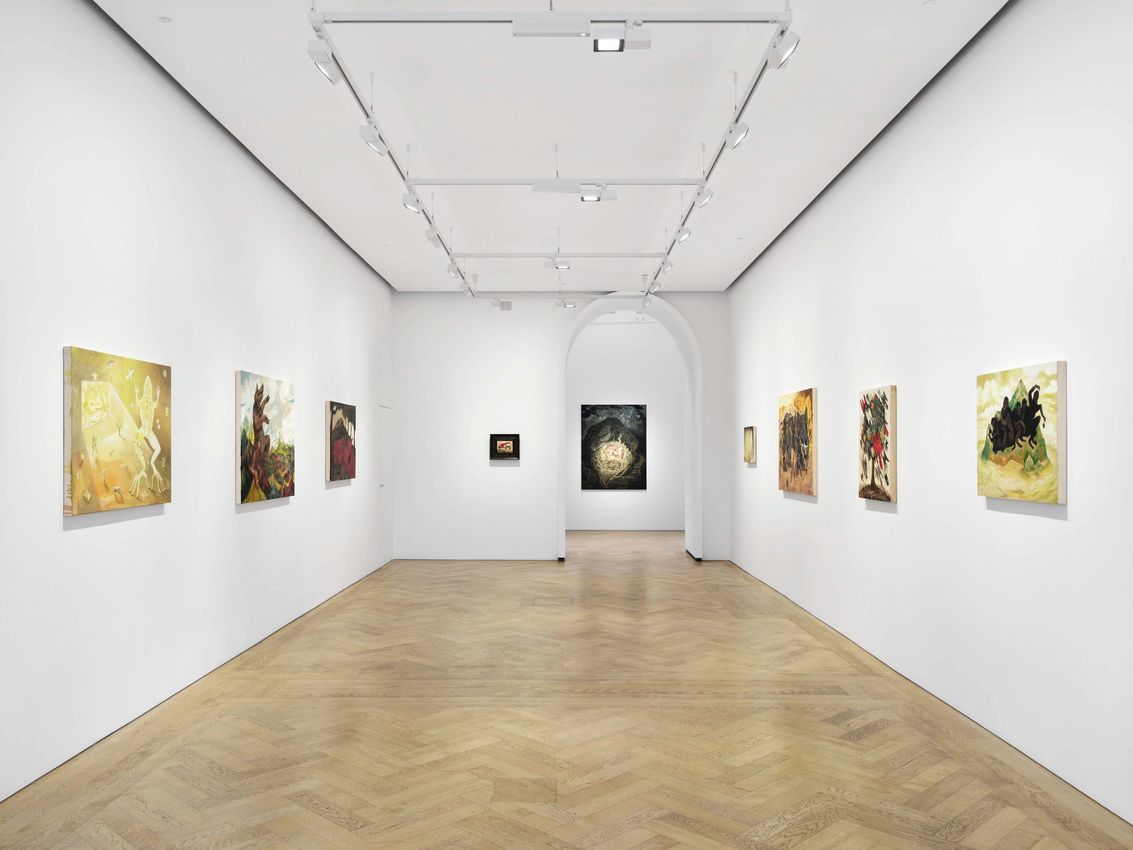
Pilar Corrias presents The Familiars, an exhibition of new paintings by Kat Lyons that examines how animals have shaped the human world materially, technologically and philosophically. The works consider animals’ shifting presence in daily life, as they recede from direct experience into increasingly unseen realms, replaced by images, caricatures and mediated versions of their former roles. Lyons reflects on animals’ status as both defunct tools within human systems and as intimate companions who persist at the edges of cultural memory. Through this dual lens, The Familiars explores absence, labour and the evolving relationship between human and nonhuman life.
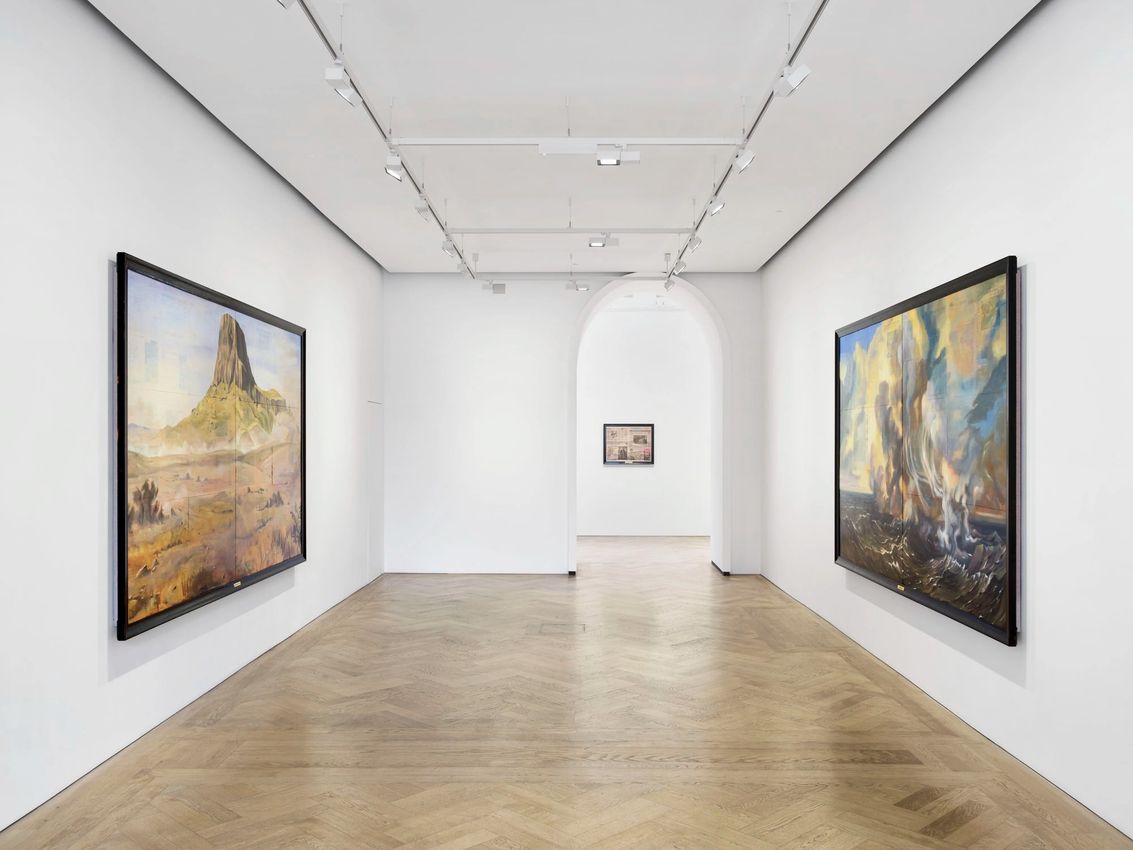
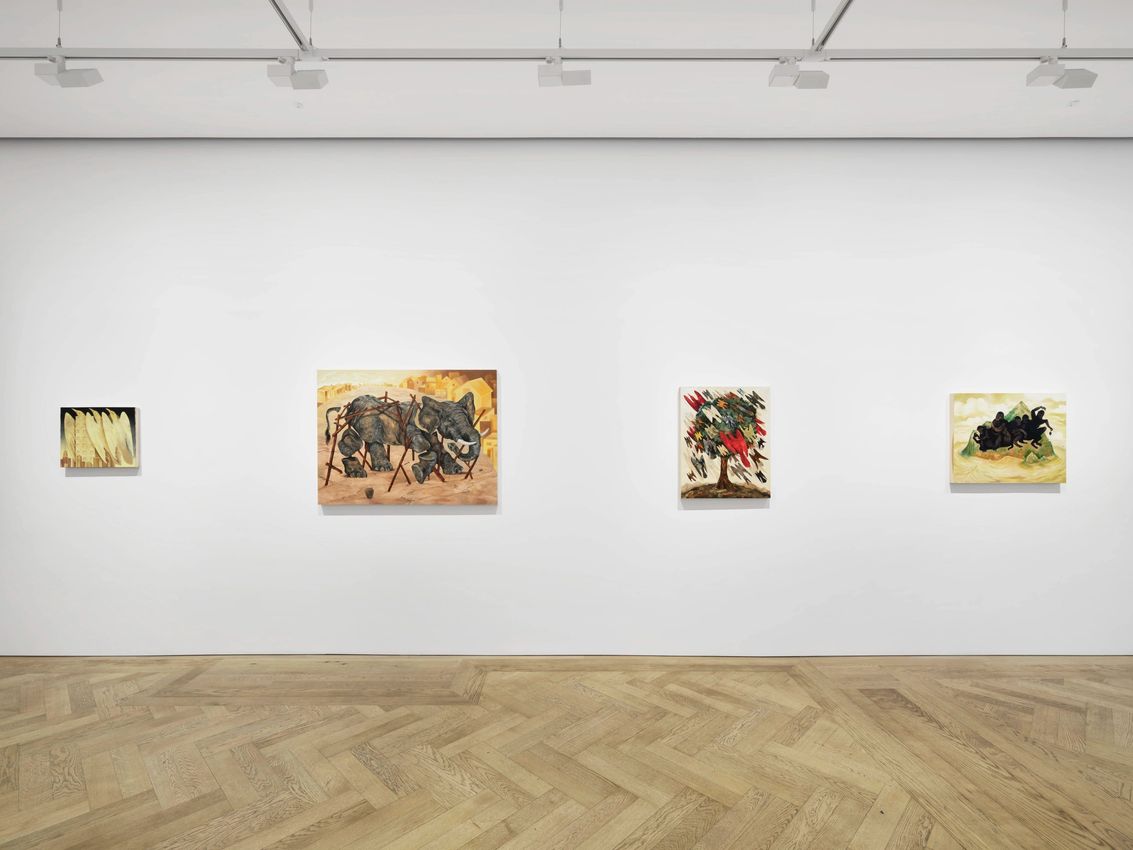
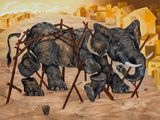
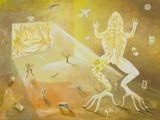
Each of the exhibition’s works is rooted in a specific historical and scientific context, such as The Electric Body, a portrait of a frog which references the 1780s electrical experiments of Italian physician Luigi Galvani. Galvani’s work on reanimation shaped early ideas about life and technology that were later echoed in Mary Shelley’s Frankenstein. Drawing on these histories, Lyons foregrounds animals’ contributions at the frontier of technological experimentation, often as the first to physically and psychologically experience its effects. Civil Square, conversely, deanimates the subject: a large elephant stands among buildings, stabilised by visible infrastructure mid-assembly, highlighting the history of elephants as popular spectacles in city centres.
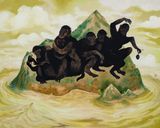
A similar line of inquiry appears in The Invisible Island, a portrait of a group of rhesus macaques, living in a primate research facility on Cayo Santiago off the coast of Puerto Rico. The small colony that remains on the otherwise isolated island are the descendants of generations of macaques used in groundbreaking research across various scientific fields. No longer used for medical experimentation, these monkeys prompt questions about the legacy and enduring implications of human intervention in animal lives.
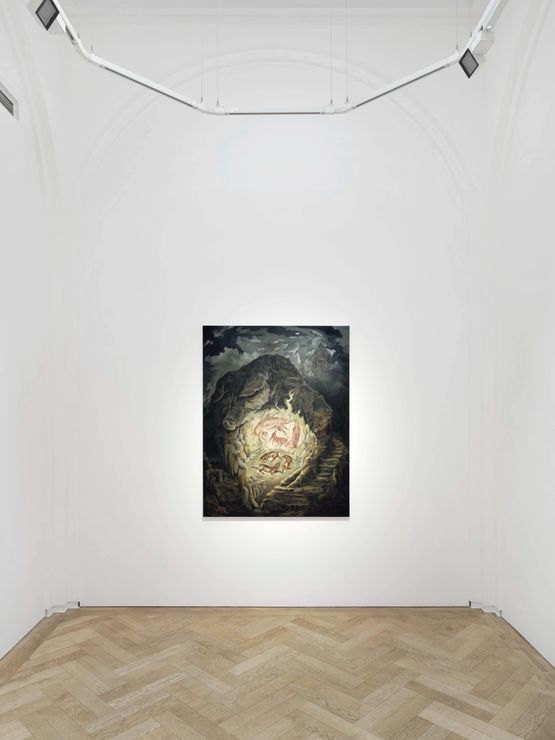
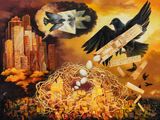
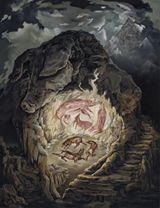
Meanwhile, The Cave, a large-scale painting featuring multiple representations of pigs, invokes Plato’s Allegory of the Cave. Lyons draws on the philosopher’s Theory of Forms to reflect on the preference for representational animal figures in lieu of their real selves. Plato’s omission of the possibility of rogue animals, which would have disrupted the operation had they infiltrated the scene, marks for Lyons, an early moment of philosophical partitioning of human and nonhuman worlds. As a counterpoint, Lyons considers the oldest known figurative painting, depicting three hogs, discovered in the caves of Sulawesi and estimated to be around 45,000 years old. From here, she traces a link to the childhood story, The Three Little Pigs, finding a remarkable sense of familiarity in the cave artist’s tender rendering of their earthly companions.
Across the exhibition, Lyons brings together dichotomies of domestic and wild, decorative and functional, familiar and strange. In one painting, cows and rabbits collide mid-air above a pastoral landscape in a procreative parade; in another, a pig, whose species is largely produced as unseen stock, appears in a moment of technicolour pastoral leisure. Winter Fields depicts a procession of zebras and donkeys, staging a contrast between their material value. Lyons’ paintings inhabit these tensions as animals appear as subjects, structures, projections and traces, both present and displaced. By withholding resolution, she opens a space for reflection that foregrounds the complexity of our shared histories.


Kat Lyons (b. 1991 in Louisville, Kentucky) lives and works in Sharon, Connecticut.
Pilar Corrias Gallery is a contemporary art gallery owned by Pilar Corrias.Since its inception, the gallery has worked with emerging and established artists with the central aim of allowing their work to grow both in terms of production of new projects and the making of new exhibitions. Pilar Corrias now represents a total of thirty-five international artists, two-thirds of whom are female.

A respected voice in contemporary art discourse.
Focusing on ambitious storytelling and insightful art-world commentary. Ocula Magazine publishes in-depth interviews, critical essays and timely analysis on the artists, exhibitions and ideas driving the global art world.
Learn more about Ocula Magazine
Showcasing the best of the art world.
Ocula partners with galleries from around the world to highlight their artists, artworks and exhibitions. Gallery membership is by application and invitation, with each member vetted by an independent panel.
Learn more about Ocula Membership

Specialises in the sale of major artworks.
Led by a team with deep ties to the world’s leading auction houses, galleries and collectors. Ocula’s advisory team offers bespoke services to high-net-worth clients from around the world who are looking to acquire the best of contemporary and modern art.
Learn more about our team and services