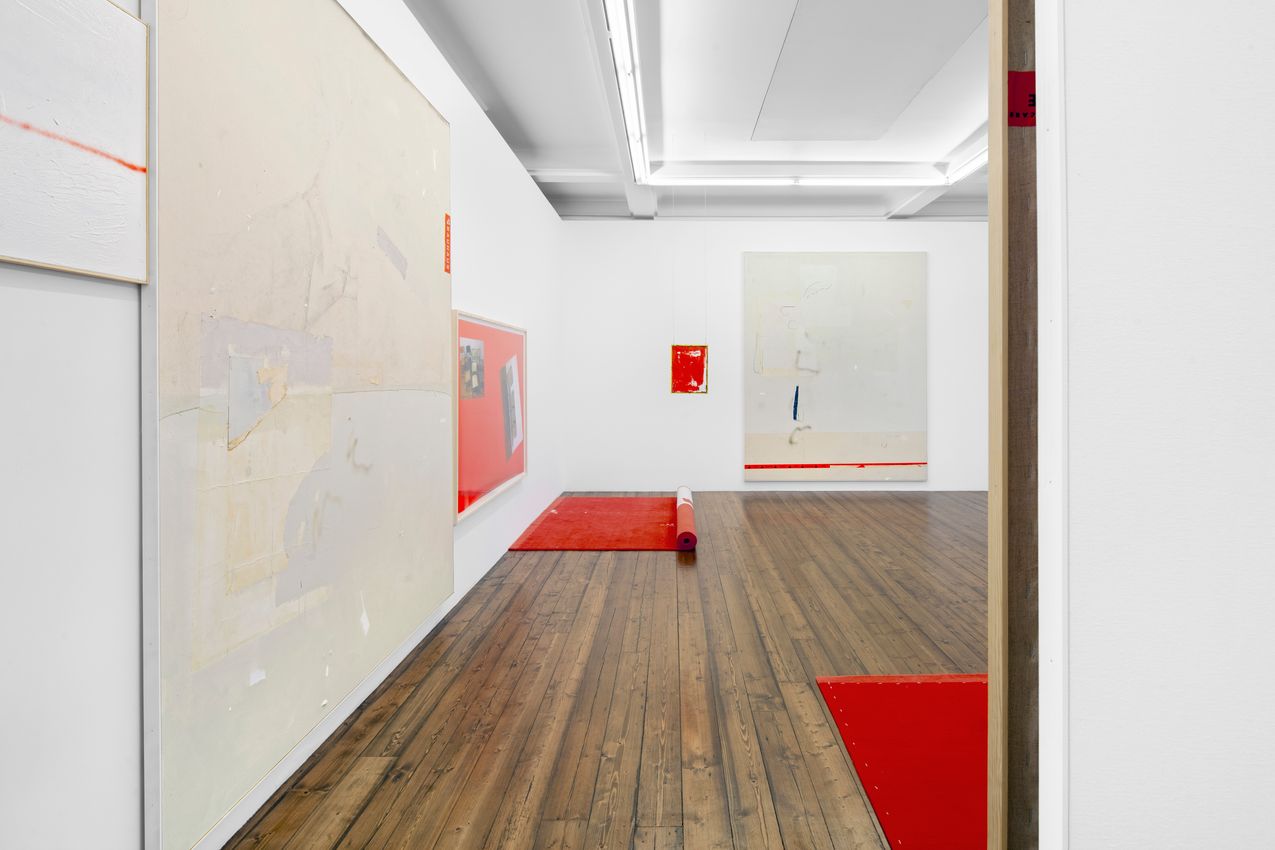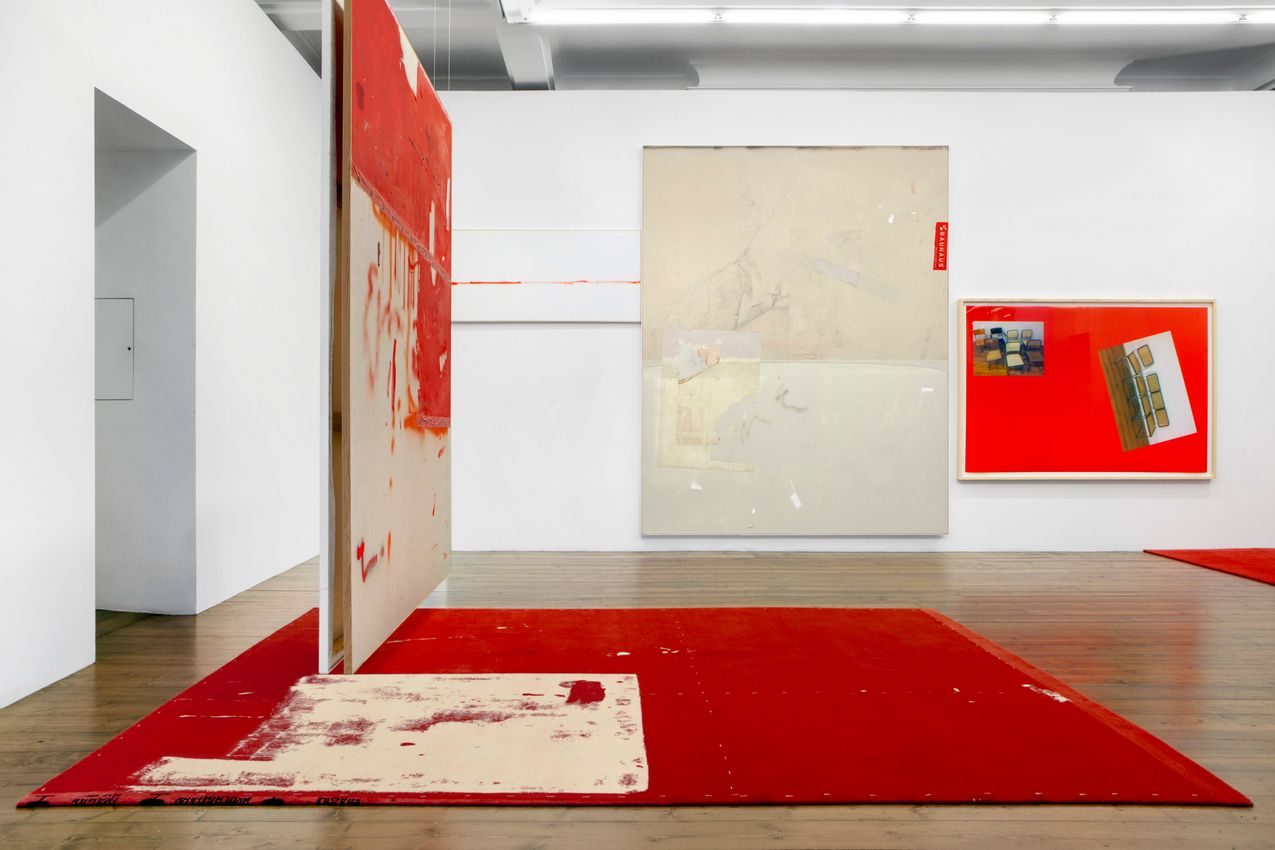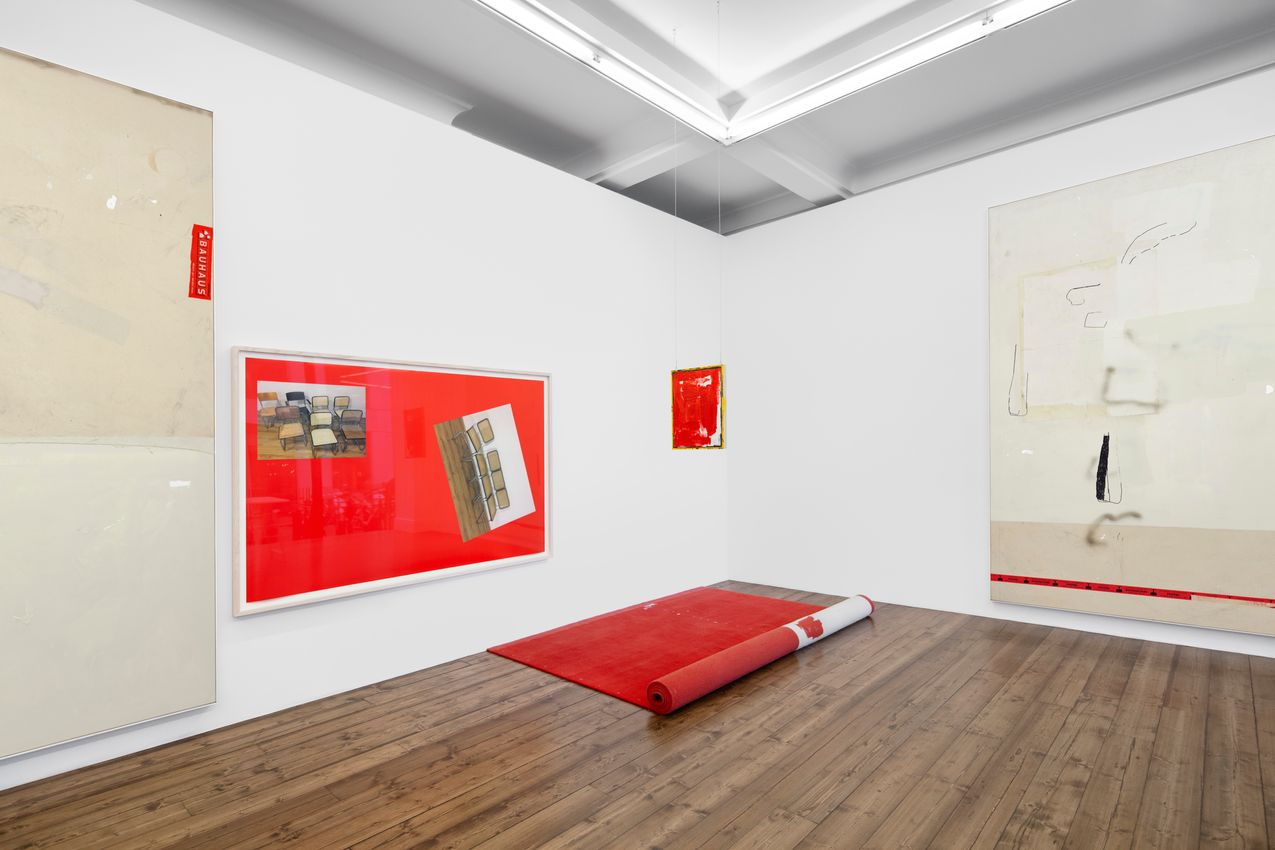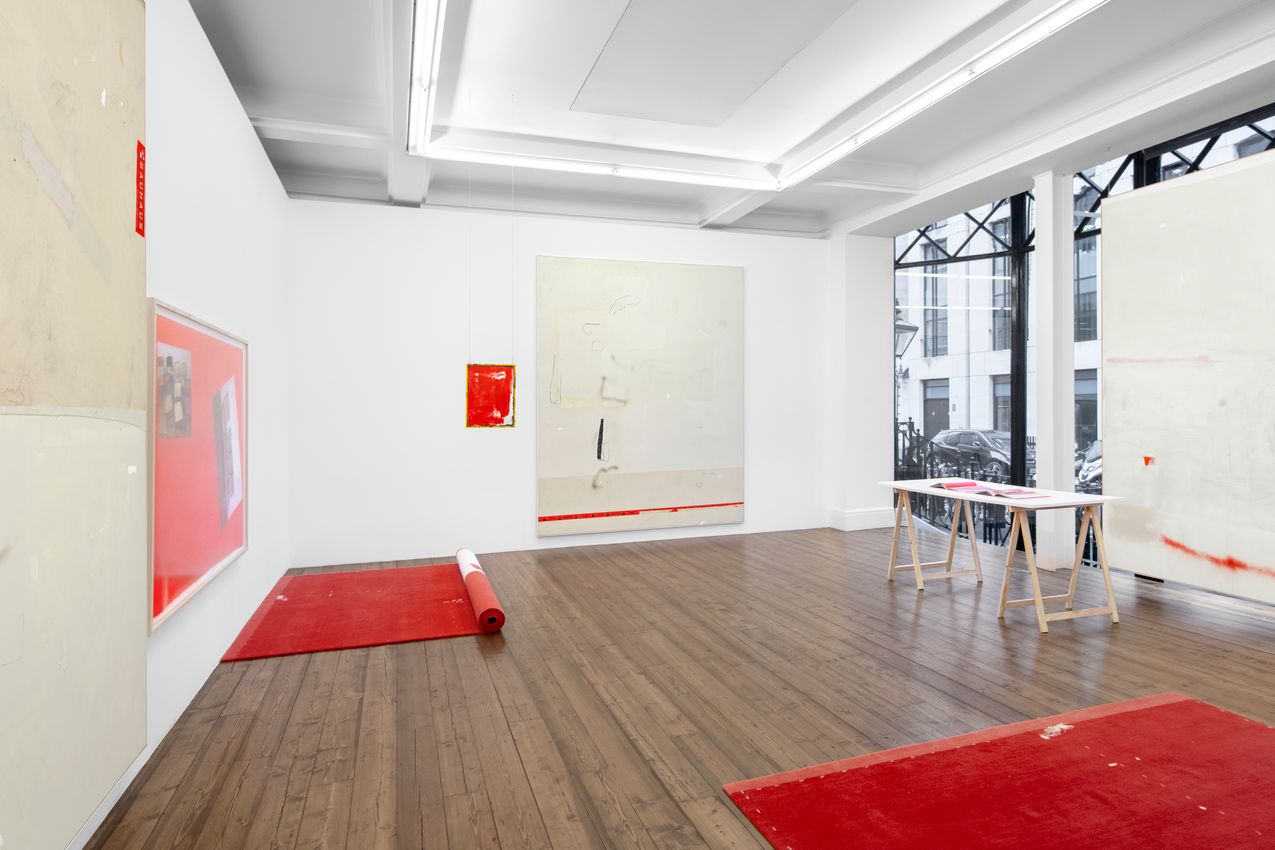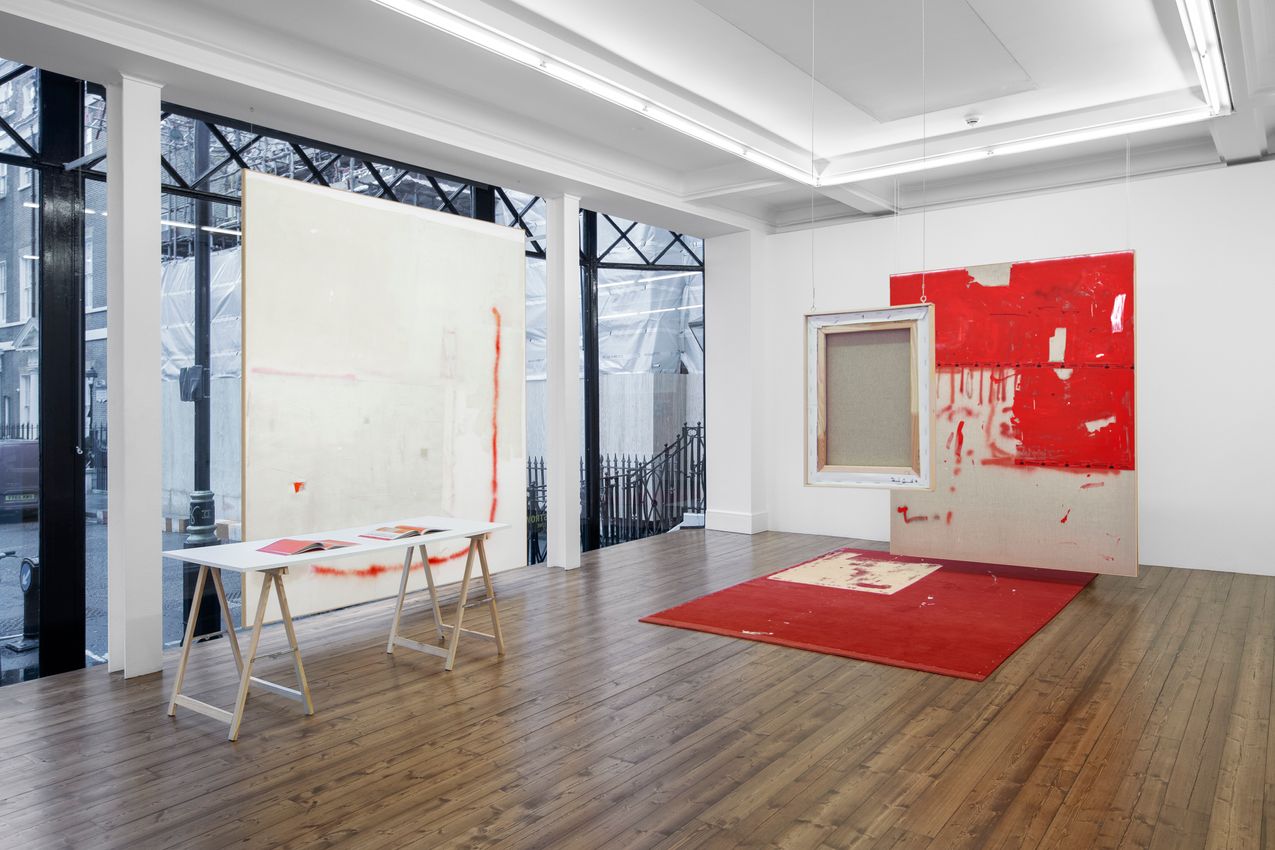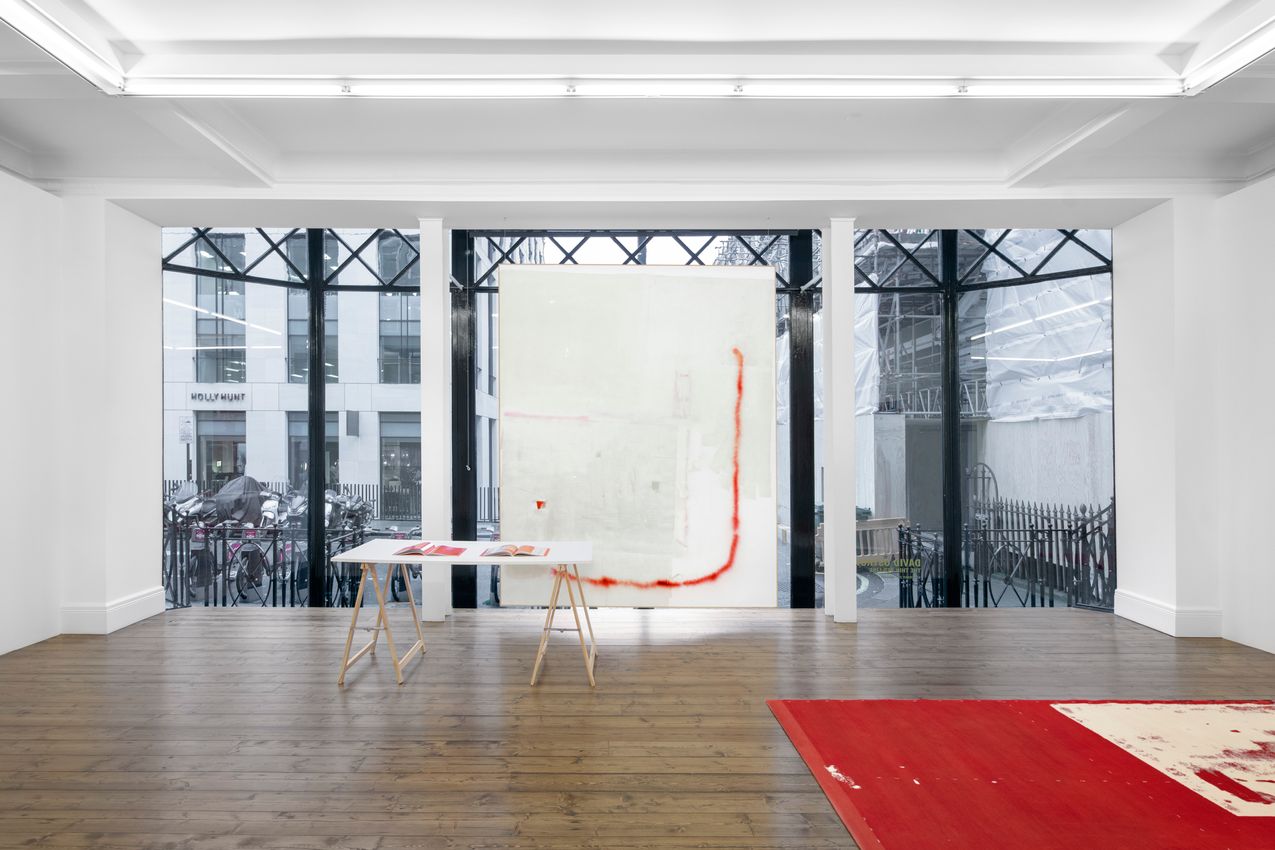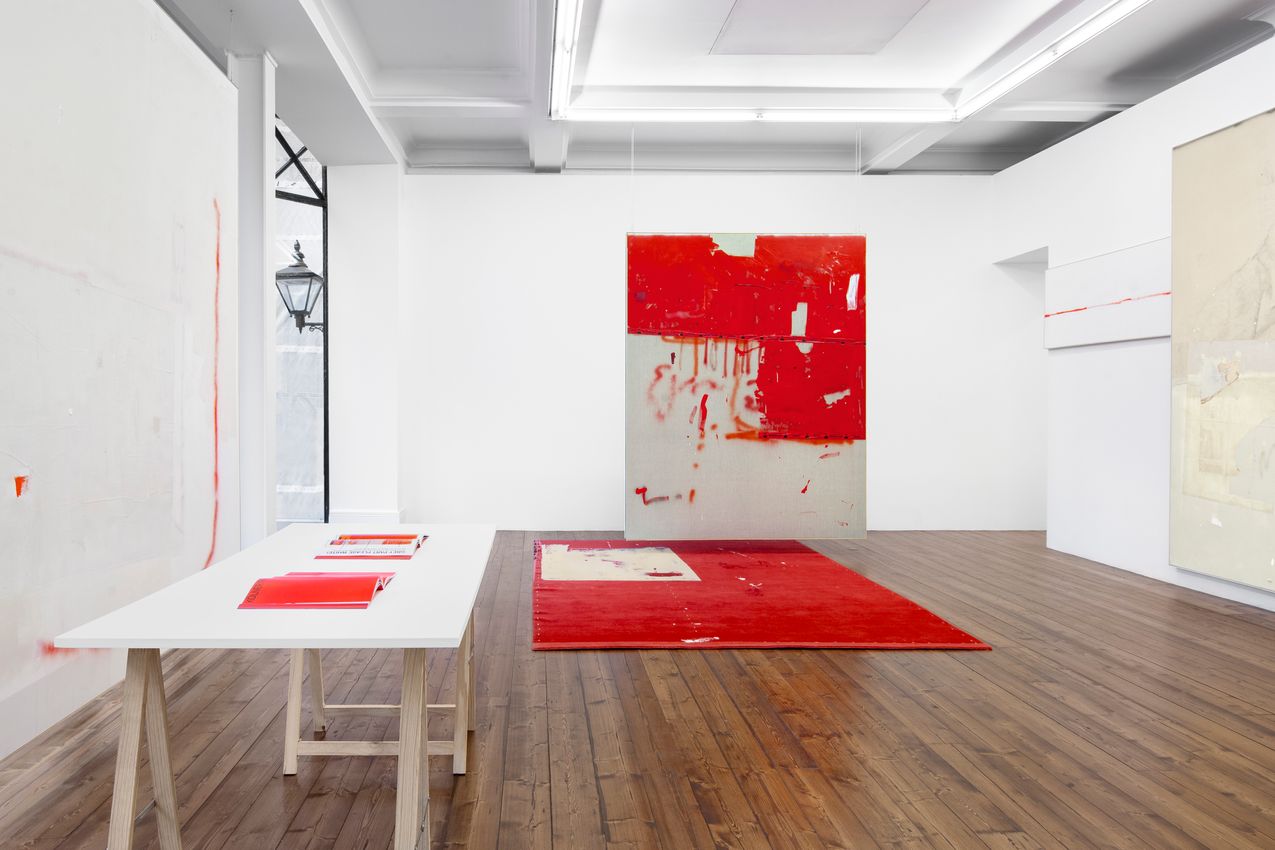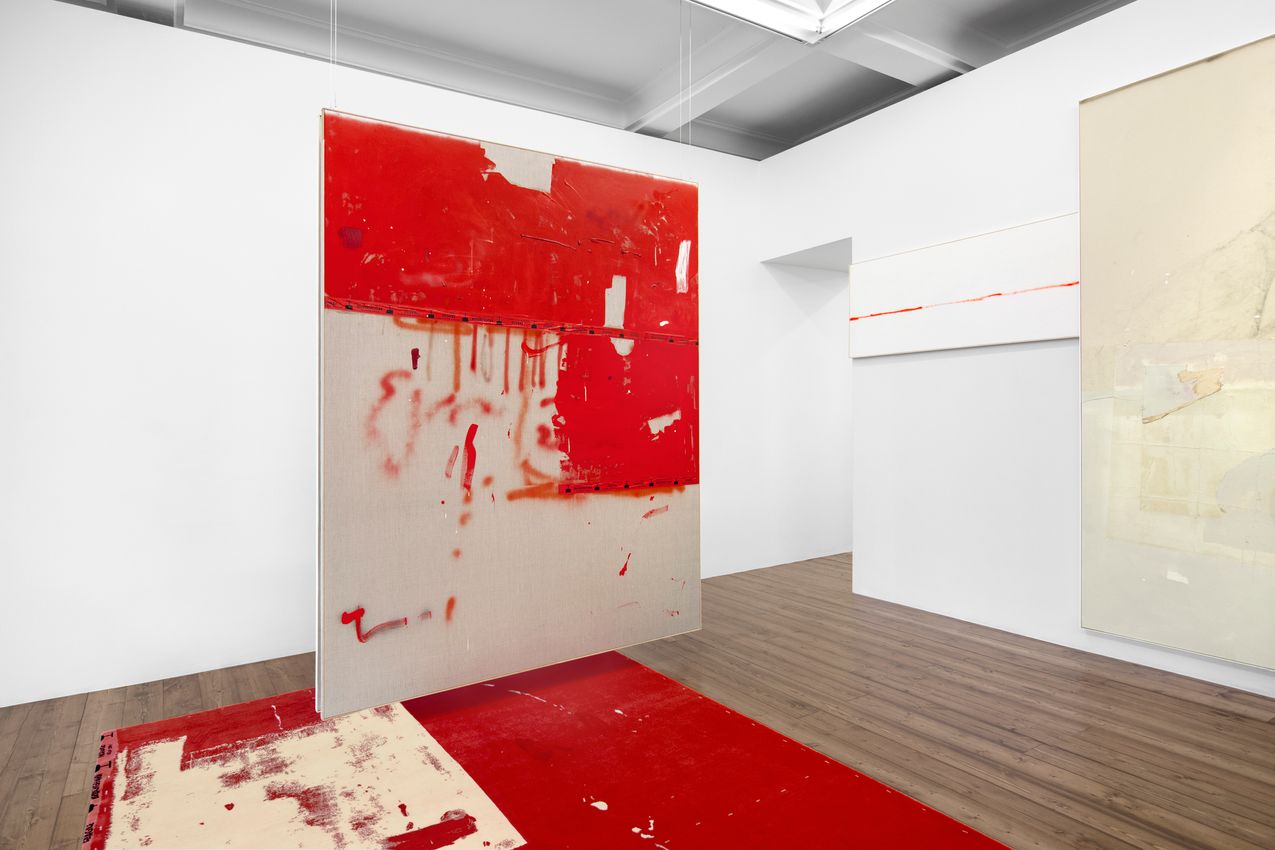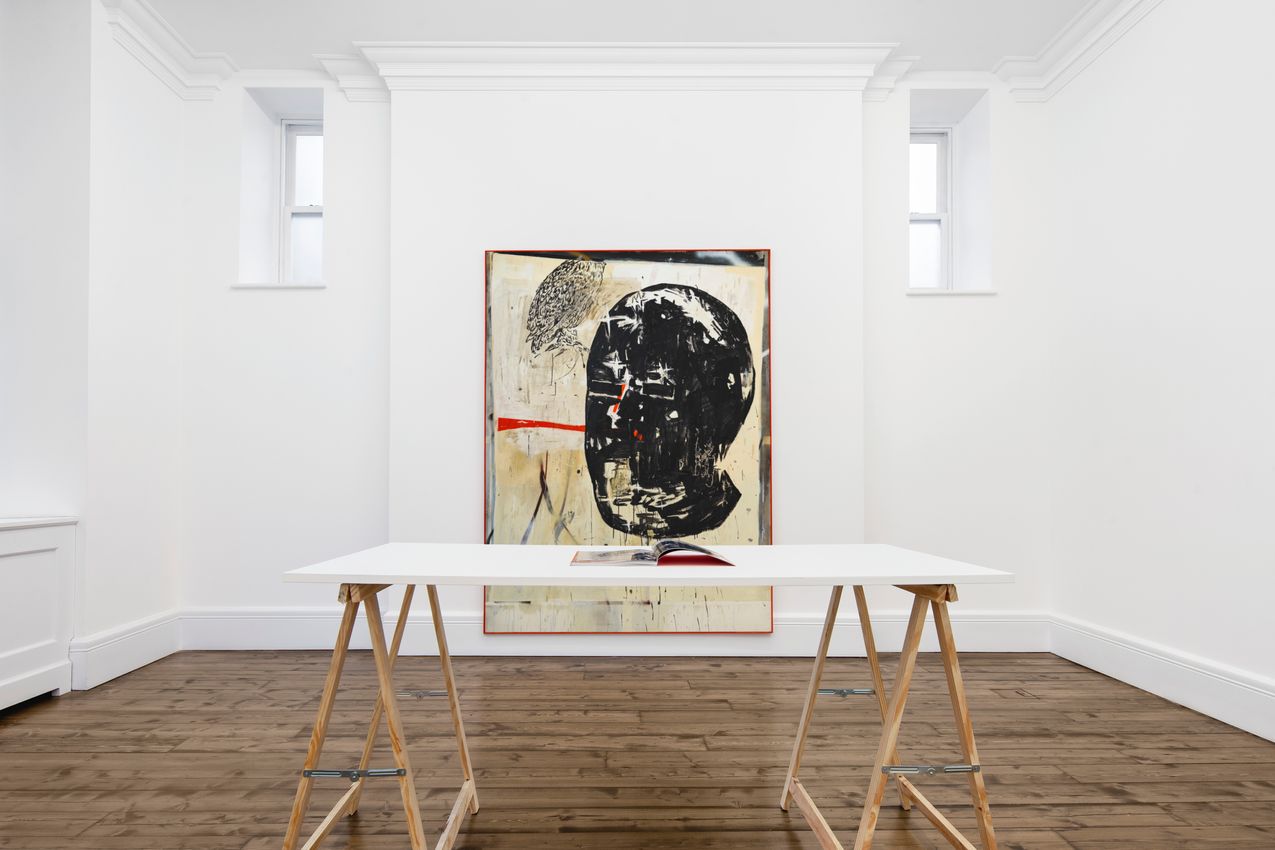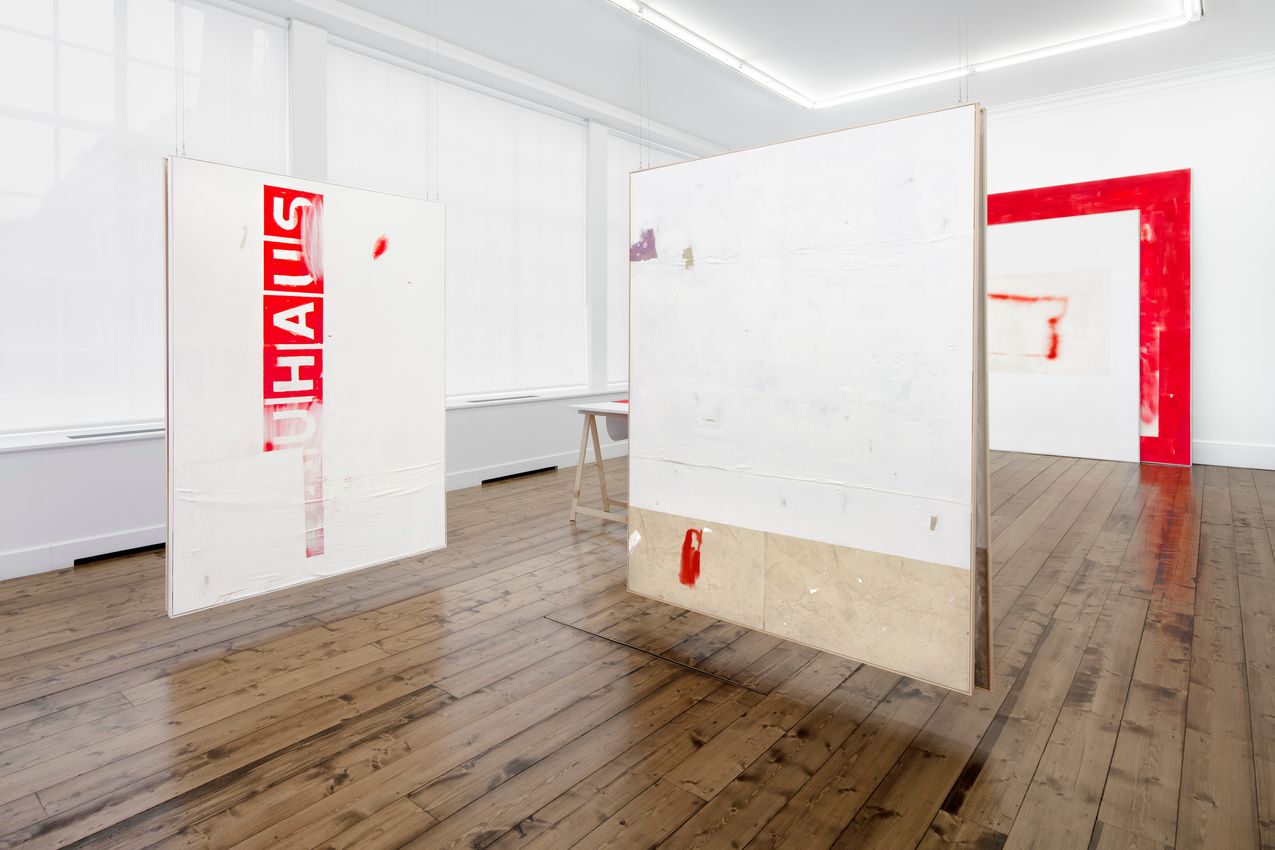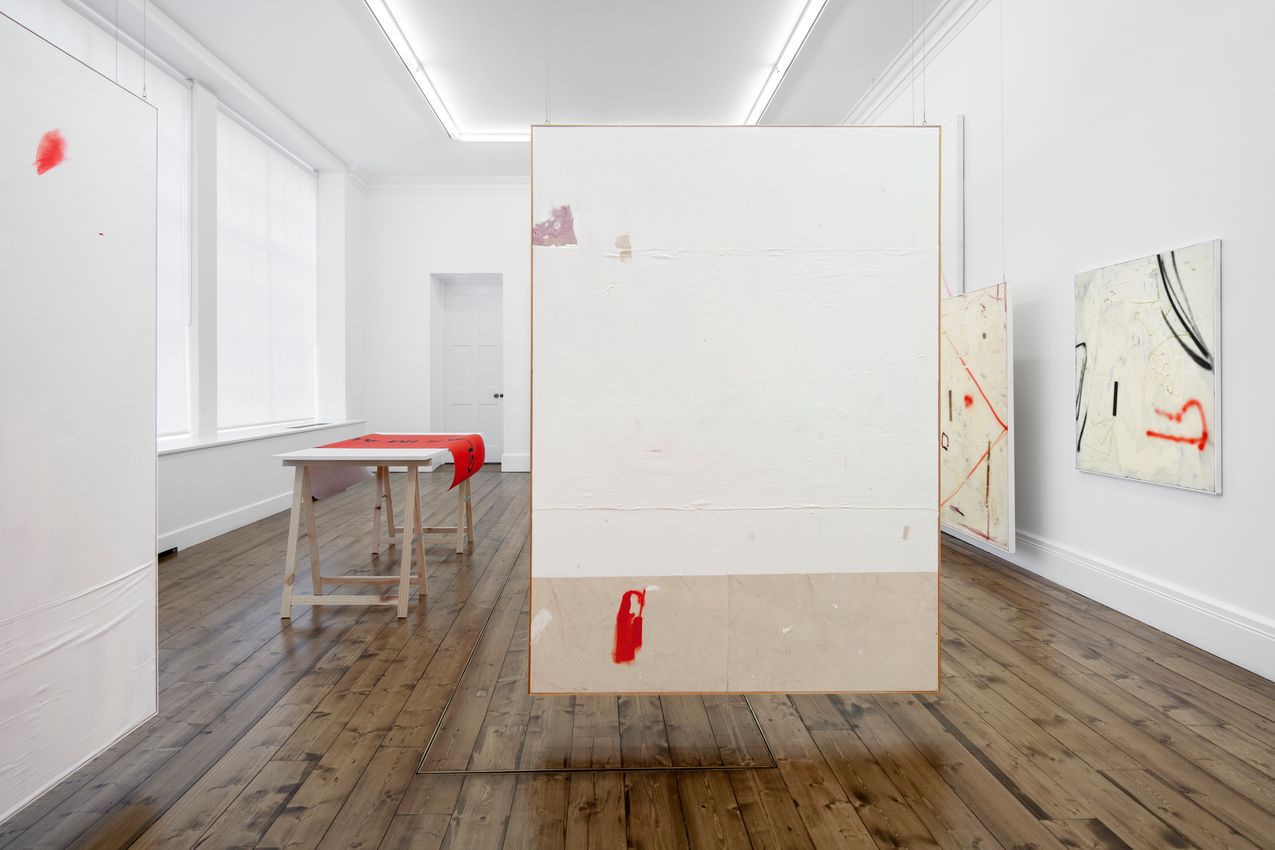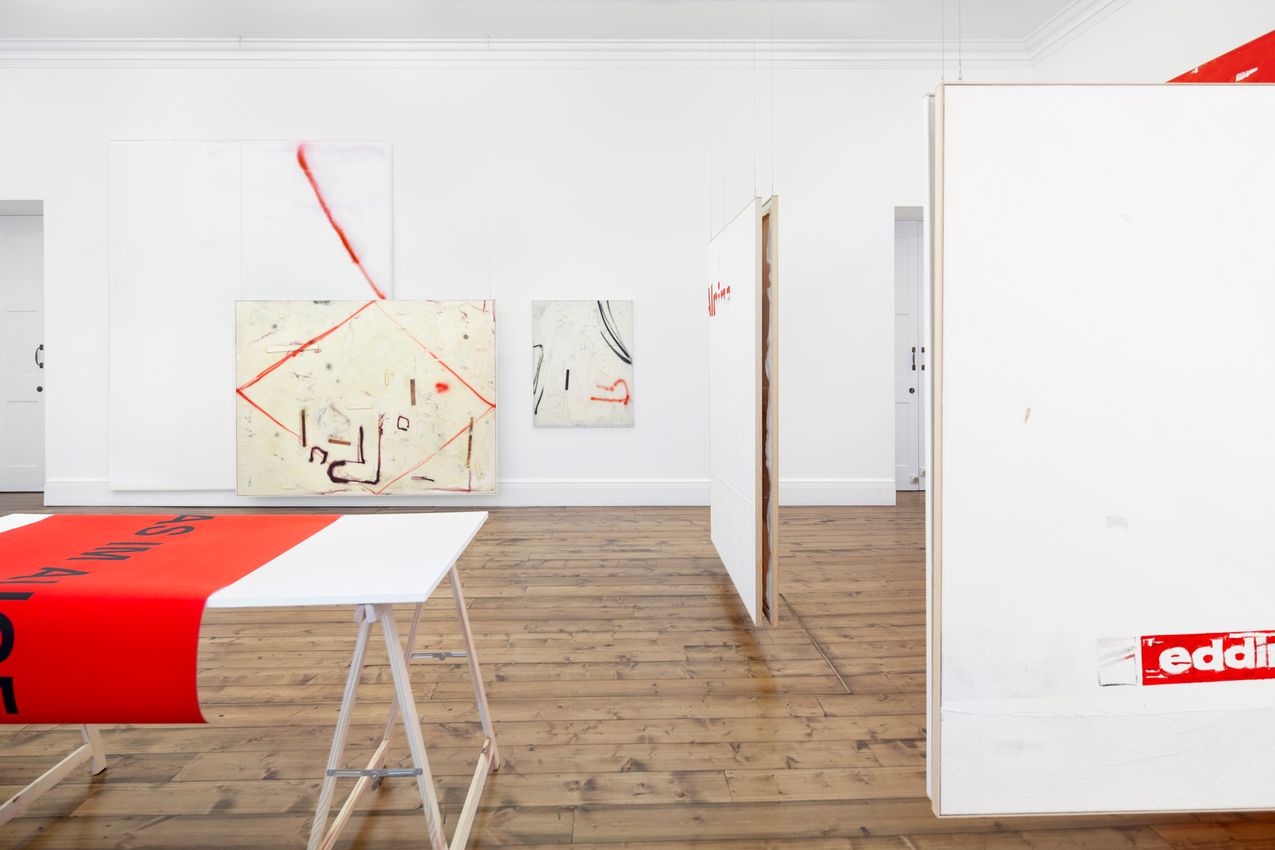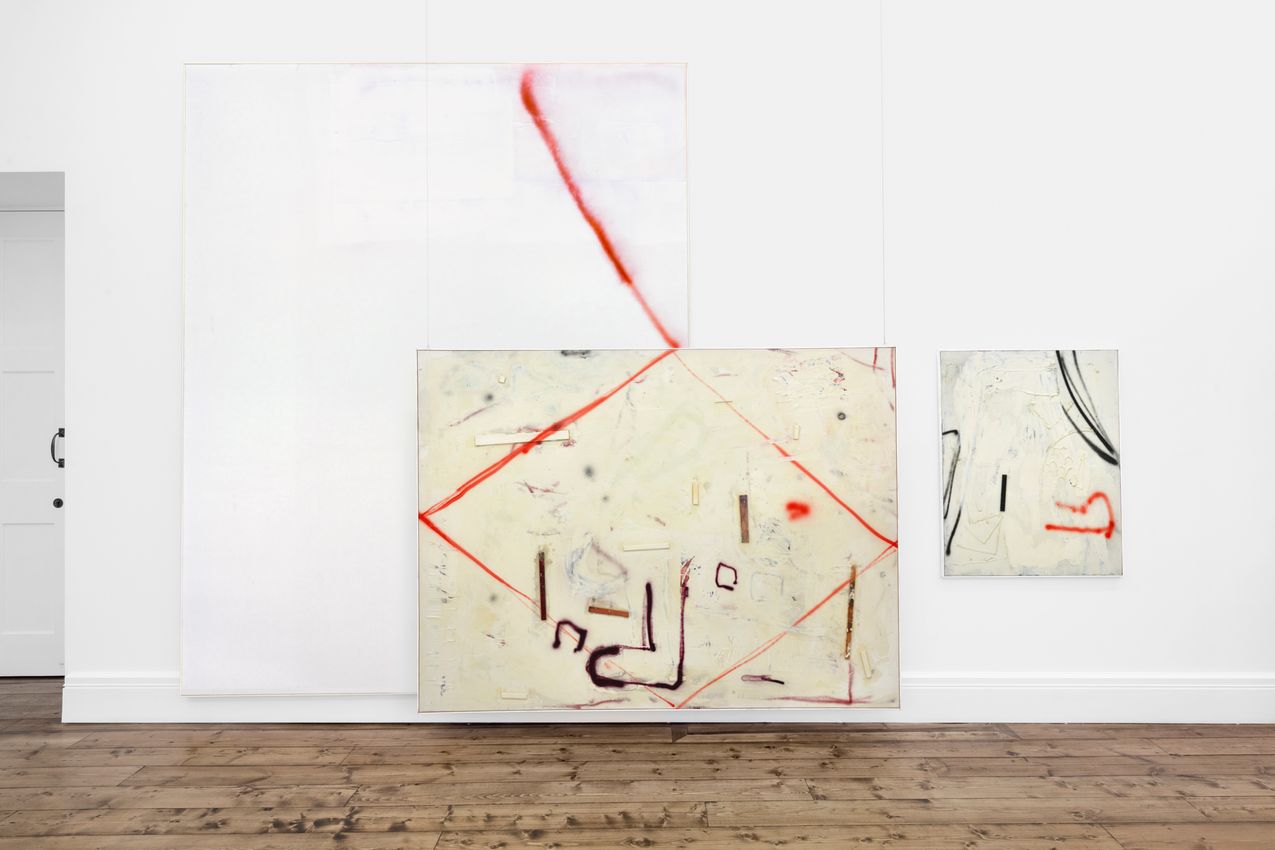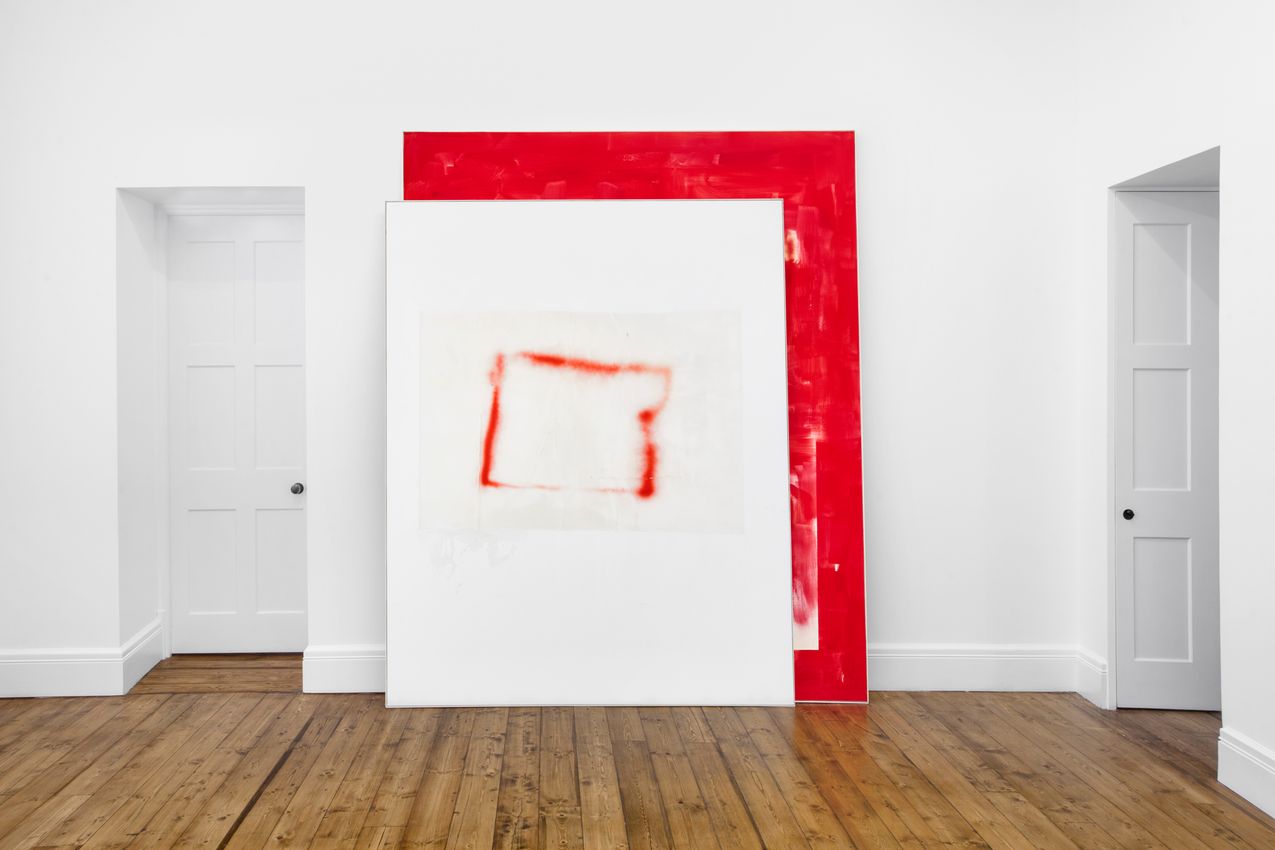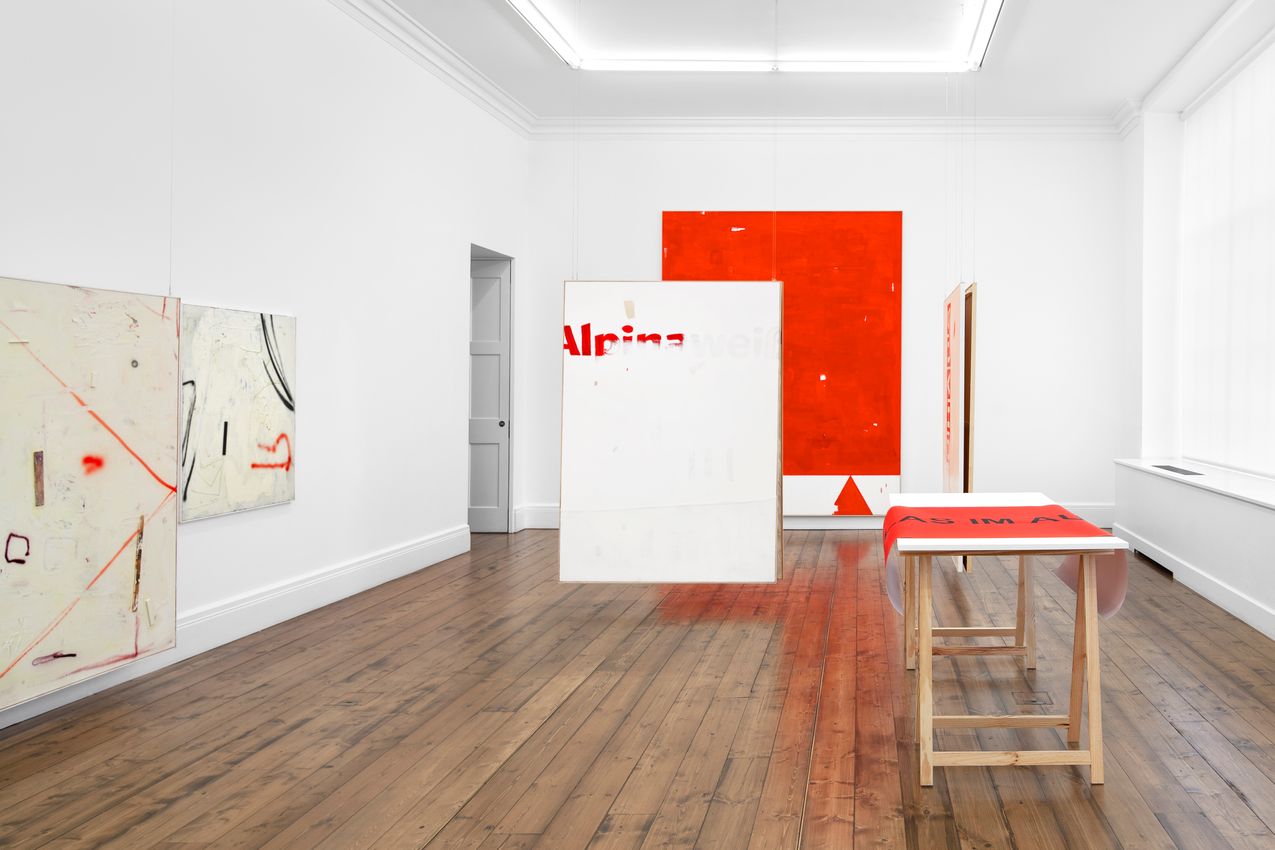




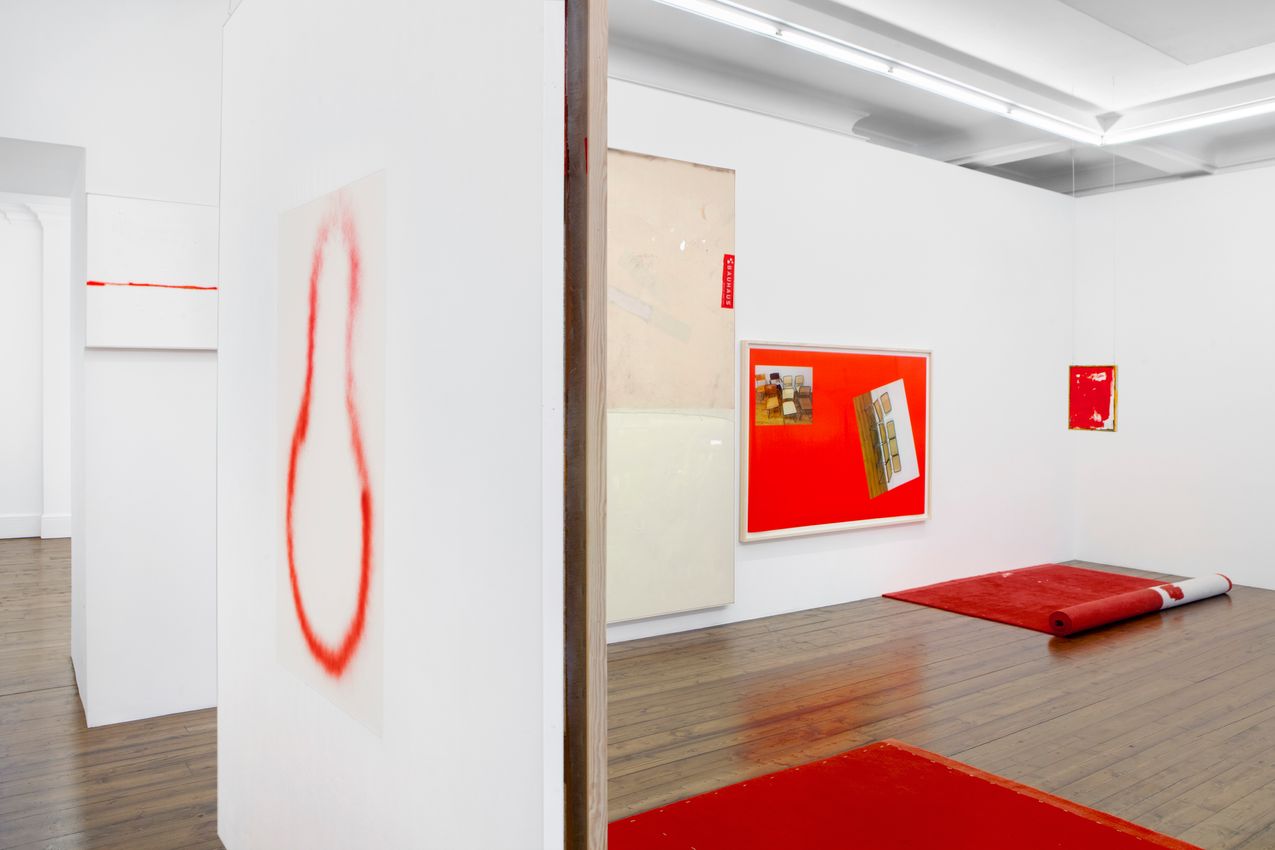
The Thin Red Line is David Ostrowski’s very first solo show with Sprüth Magers in London, for which he has developed a new body of paintings and materials that serve as a meditation on the colour red.
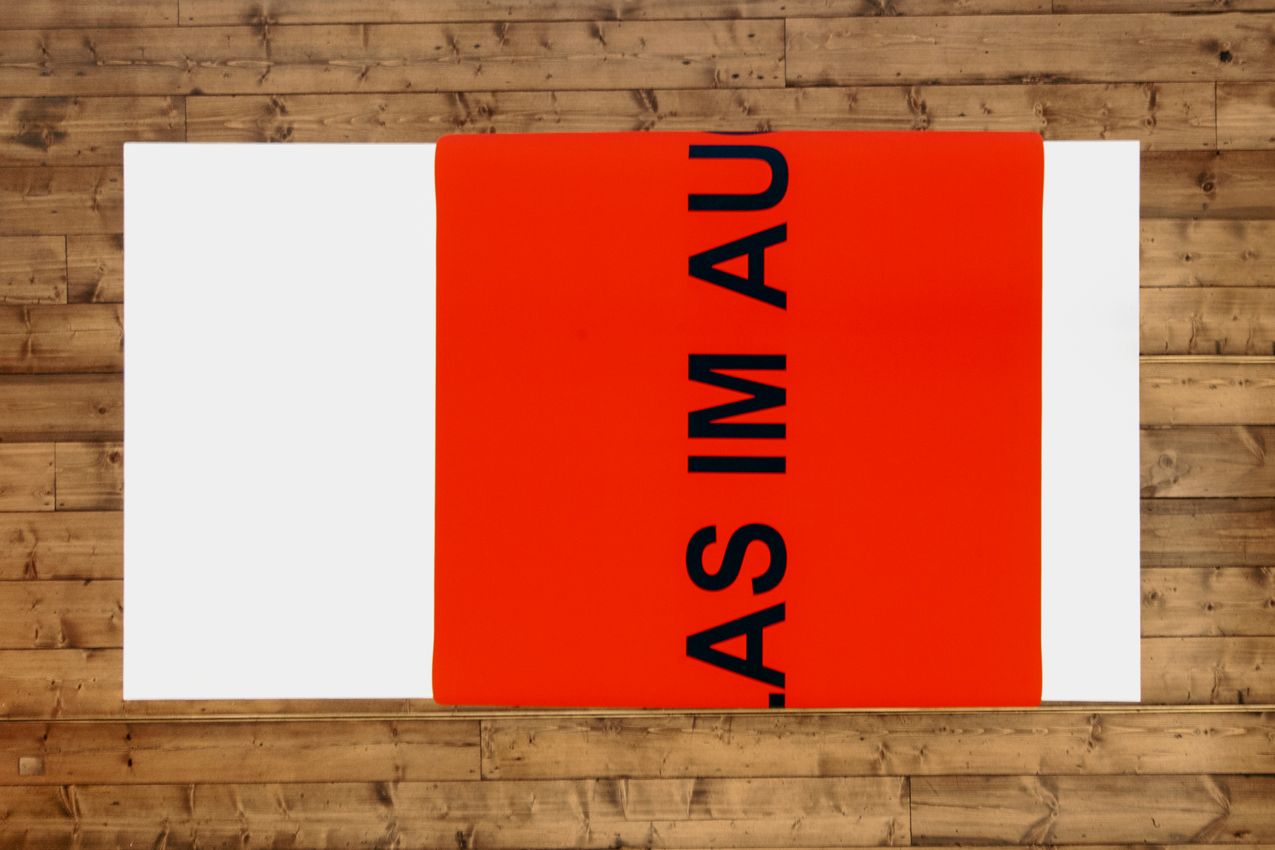
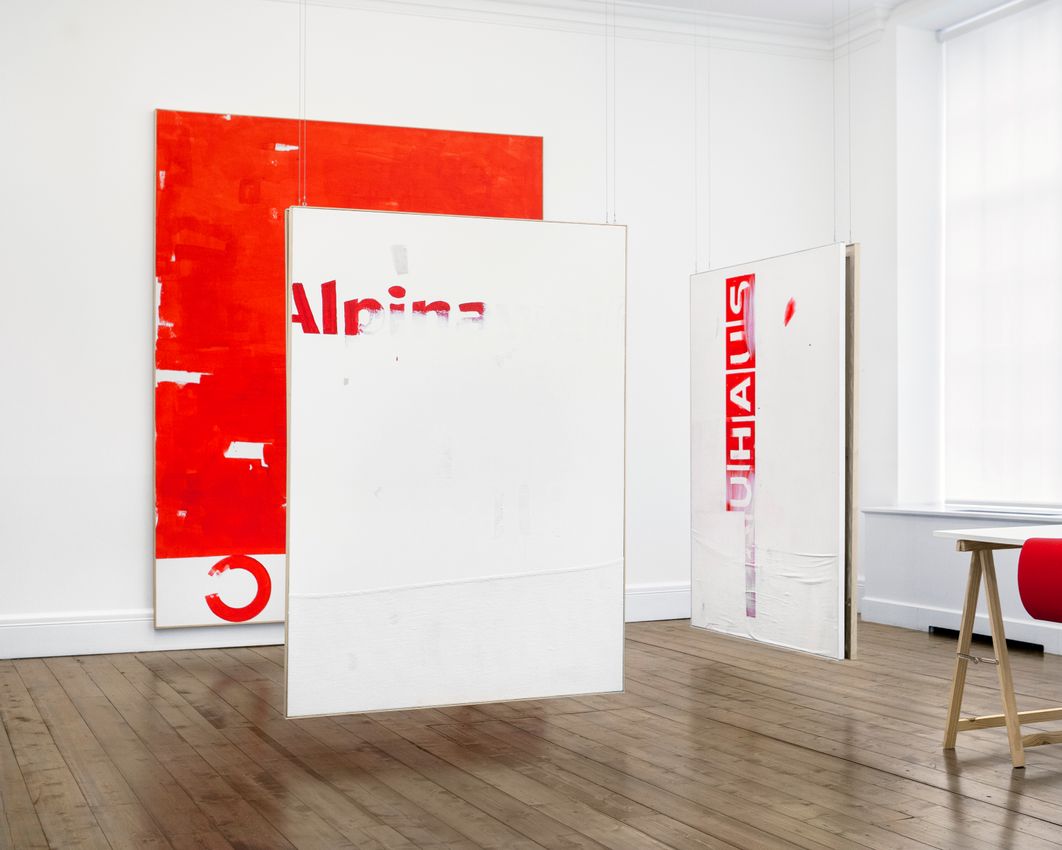
The series was begun earlier this year as part of a new red phase in Ostrowski’s practice, which has focused previously on minimal interventions of blue spray paint and applied elements on largely white or neutral canvases. The colour red had appeared in Ostrowski’s work as early as 2009, but it has taken nearly ten years for him to return to the colour exclusively. The cultural relativity of the colour red was an initial point of interest for the artist; it connotes affairs of the heart for some, has become almost universally synonymous with danger, and represents good luck in other cultures. Grappling with this complex personality and its cultural preconceptions was a central concern for Ostrowski in developing the current works, which have materialised as repositories of the presence and absence of the colour red. The artist applied found materials from his studio, elements such as cotton, wood and paper, to canvases which have been painted in acrylic and lacquer. F (Component), features part of the name of a German paint brand, Alpinaweiß, painted in red acrylic on a pale background, whilst F (Freischwinger) is a digital pigment print of antique chairs superimposed on a red backdrop. Paintings with large areas of paintwork signal Ostrowski’s idiosyncratic painting style–working quickly and spontaneously with fast-drying materials, adding texture and depth through collaged elements.
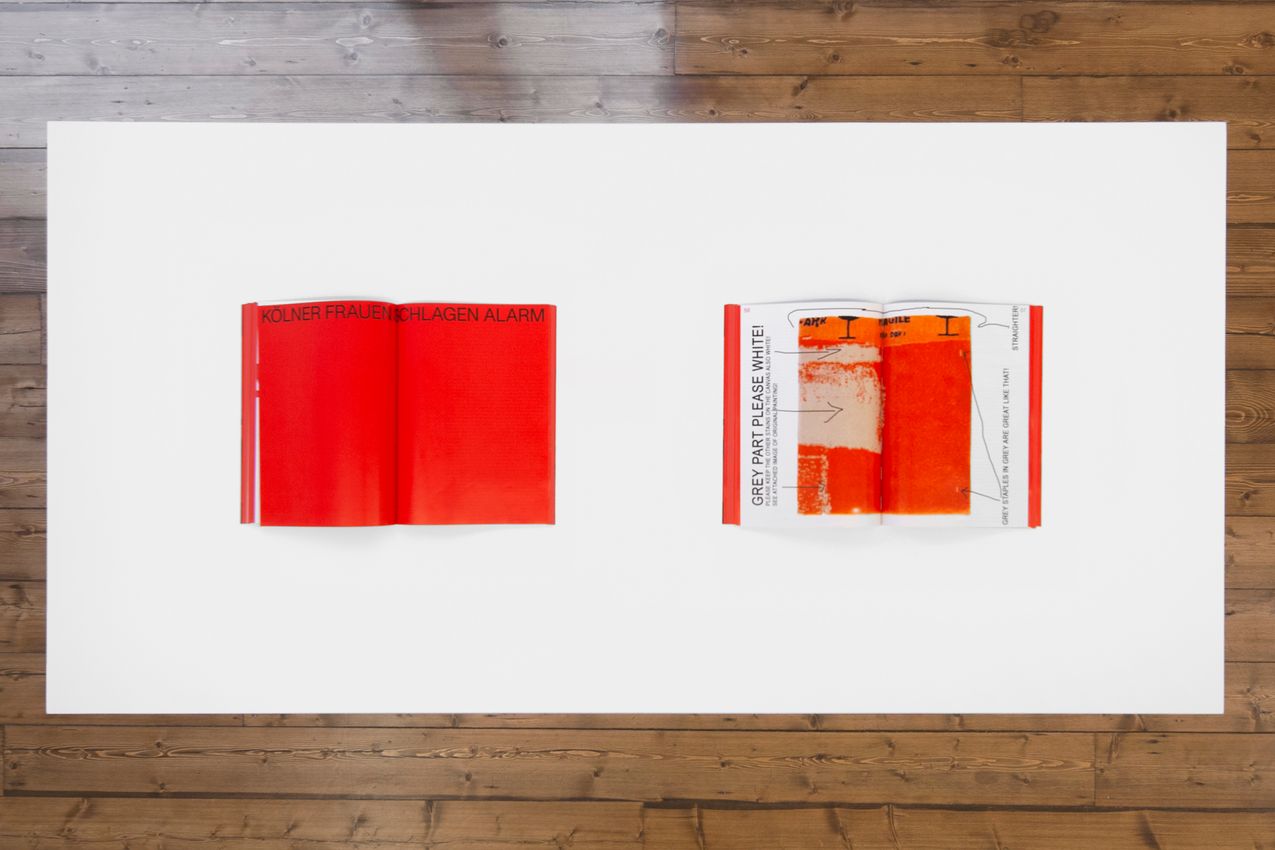
The accompanying catalogue The Thin Red Line explores further the complexity of the colour red, and should be viewed as part of the exhibition itself. Ostrowski commissioned a series of texts from writers and academics, with ‘red’ as his only specification. In Tenzing Barshee’s fictional text, ‘Very Idea’, the figures A, B and C pontificate on art, and in so doing, characterise red variously as ‘patriarchy’, ‘systemic violence’, ‘the red flag’, ‘lipstick’ and ‘blood vessels’. Meanwhile Torsten Schmidt takes A Thin Red Line as the title for a fictional narrative about a car crash, whilst other texts explore the sociopolitical, psychological and biological context of the colour red.
The catalogue The Thin Red Line will be published by Mousse Publishing, Milan, in collaboration with Karma Books, New York, with further written contributions from Elisa R. Linn, Gregor Quack and Lennart Wolff.
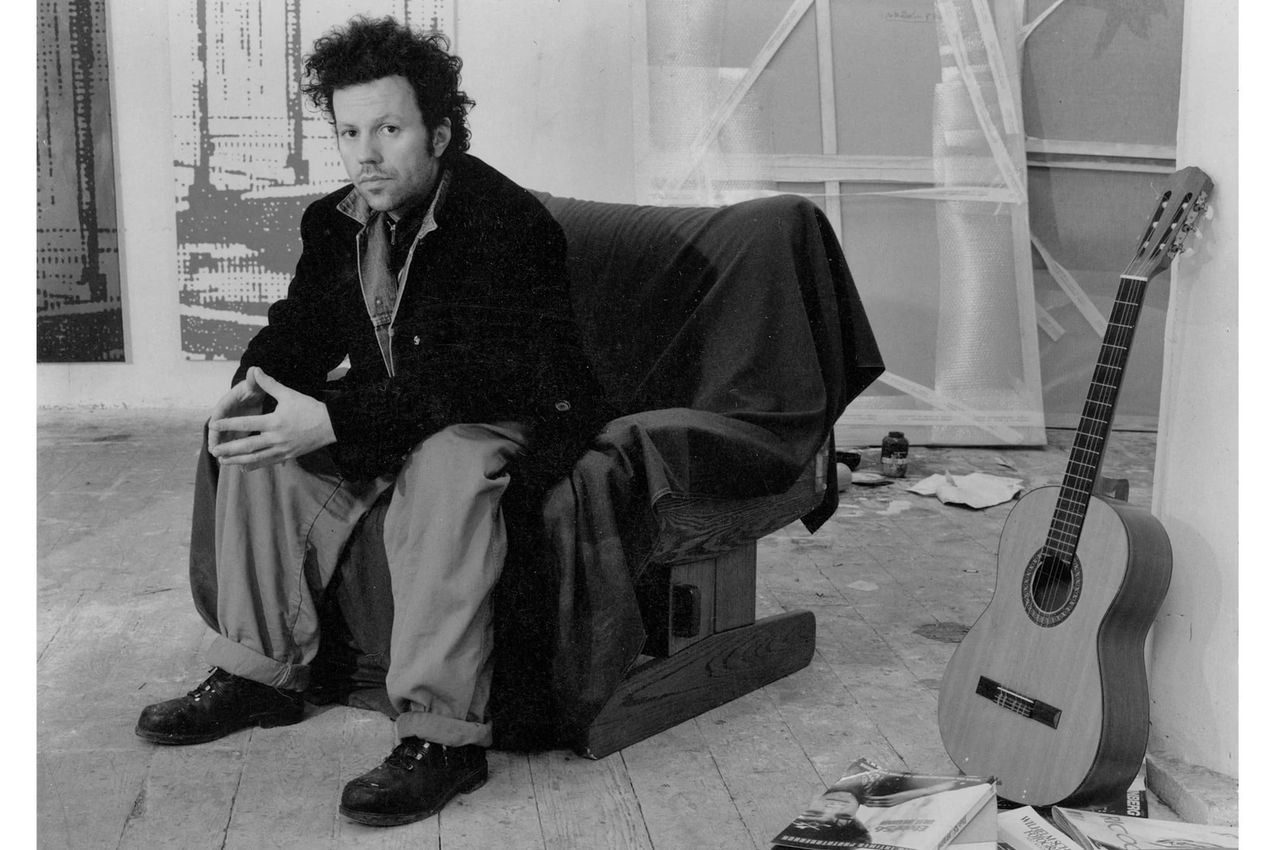
David Ostrowski (*1981) lives and works in Cologne. Ostrowski studied at the Kunstakademie Düsseldorf with Albert Oehlen from 2004–2009. He was awarded the Atelierstipendium by the Kölnischer Kunstverein and the Imhoff-Stiftung, Cologne, in 2012. Recent solo exhibitions include Bei mir geht es in den Keller hoch at Blueproject Foundation, Barcelona (2017), To Lose (a two man show with Michail Pirgelis) at the Leopold-Hoesch-Museum, Düren (2016), The F Word at the ARKEN Museum, Copenhagen, and I want to die forever at Kunstraum Innsbruck (both 2015), as well as How to do things left at Rubell Family Collection, Miami and Just do it at the Fondazione Sandretto Re Rebaudengo, Turin (both 2014). Ostrowski’s work has also been included in group exhibitions at the M Woods Museum, Beijing (2015), Halle für Kunst & Medien, Graz (2014), and at the ICA, London (2014). Ostrowski’s work also featured in DONT the Music and Art Performance at Halle 9 Kirowwerk, Leipzig (2017).
David Ostrowski produces large abstract canvases in manic moments of artistic instinct. He believes that the medium of painting has a relentless life cycle, and by bringing painting into conversation with contemporary artistic practice, he challenges the powerful role that technology plays in current artistic trends. Ostrowski studied painting at the Kunstakademie in Düsseldorf under Albert Oehlen, who siginificantly influenced the young artist and prompted him to explore Abstract art in depth. A serious fire at Ostrowski’s studio in 2005 gave the artist a new perspective on how to approach his work, by revealing the power that chance plays in producing art. This ideology persists in his practice and allows him to explore the boundaries of painting in its production and perception. To achieve artworks that are formed as a result of chance, many of Ostrowski’s techniques involve speed of application, incorporating spray paint and fast-drying lacquers. The process builds up multiple layers on the canvas as the artist repeatedly paints over certain parts of each composition. Speed, immediacy and impulse are integral to the editing process as they drive him to make quick decisions. Paint is not the only mediun that Ostrowski incorporates into his large artworks: found objects from his studio such as newspaper, scraps of wood and bits of dirt are glued to the canvas, creating a sense of depth, texture and a sculptural element to the composition. The accumulation of layers exemplifies how each canvas is constantly subject to consideration and revision. The installation and presentation of artworks is an equally important factor in the production process for Ostrowski. He rejects conventional gallery-hangs – exhibiting works on the wall at eye level. Instead, Ostrowski hangs his canvases from the ceiling in the middle of the gallery space, sometimes hanging works back-to-back.
Sprüth Magers has expanded from its roots in Cologne (Germany) to become an international gallery dedicated to exhibiting the very best in groundbreaking modern and contemporary art. With galleries located in Berlin Mitte, London’s Mayfair and the Miracle Mile in Los Angeles–as well as an office in Cologne and an outpost in Hong Kong–Sprüth Magers retains close ties with the studios and communities of the German and American artists who form the core of its roster.

A respected voice in contemporary art discourse.
Focusing on ambitious storytelling and insightful art-world commentary. Ocula Magazine publishes in-depth interviews, critical essays and timely analysis on the artists, exhibitions and ideas driving the global art world.
Learn more about Ocula Magazine
Showcasing the best of the art world.
Ocula partners with galleries from around the world to highlight their artists, artworks and exhibitions. Gallery membership is by application and invitation, with each member vetted by an independent panel.
Learn more about Ocula Membership

Specialises in the sale of major artworks.
Led by a team with deep ties to the world’s leading auction houses, galleries and collectors. Ocula’s advisory team offers bespoke services to high-net-worth clients from around the world who are looking to acquire the best of contemporary and modern art.
Learn more about our team and services