Press Release

Tang Contemporary Art is pleased to announce the opening of the solo exhibition “Beyond Materialism” by Li Bangyao, one of the most iconic Pop artists in Chinese contemporary art, on 19 October at 4pm at Beijing 1st Space. The exhibition is curated by Pi Daojian and co-organised by Tang Contemporary Art and Duende Art Museum.

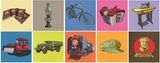
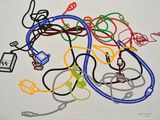
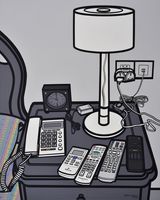
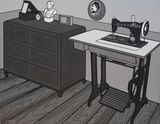
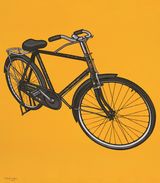
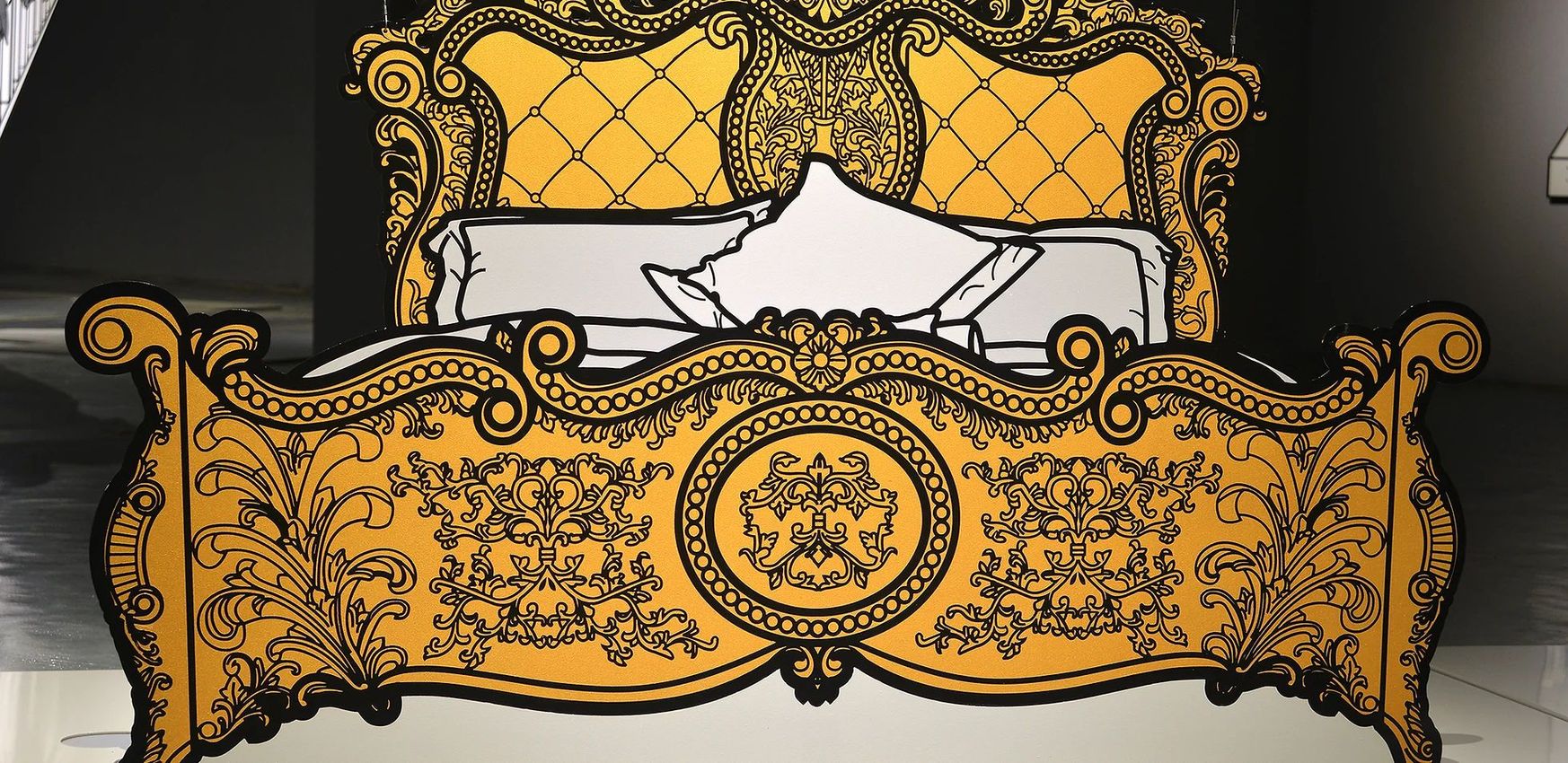
The exhibition presents Li Bangyao’s new works from 2024, including Mystery of Production, A Thousand Miles of Rivers and Mountains, Kun, and Carnal Production, as well as his works since 2019, including the series Interior, Private Handbooks, and Forgotten Poems. Throughout Li’s nearly 40 years of career, his insights into human alienation through the symbols of “material” and his humane concern with a historical perspective of social development have remained unchanged.

Beyond Materialism - The Path to Human Liberation

By Pi Daojian

Throughout his nearly forty years of artistic practice, Li Bangyao has consistently conveyed his insights into human alienation through carefully selected symbols, paired with a humanitarian perspective grounded in an understanding of social development.

Li’s works often give the impression of being focused on material objects and things in themselves. This common perception has led to the simplistic categorisation of his work as a continuation of “Pop Art,” emphasising philosophical ideas while overlooking the human and emotional layers embedded within. In reality, Li’s representation of objects is fundamentally driven by a deep concern for humanity. While human figures may be absent in form and narrative, they are vividly present through the objects that stand in for them. For instance, in Interior, although the style is minimalist, the ordinary objects and arrangements radiate a sense of human warmth. In Private Handbooks, objects reflect the spiritual dimensions of class, status, and taste. Tracing the theme of human concern and empathy, we can better understand his recent works, including the Mystery of Production series and installations like A Thousand Miles of Rivers and Mountains and Kun.

The Mystery of Production series takes its inspiration from Shunde, an industrial powerhouse in southern China and a district of Foshan. Shunde has a strong industrial foundation and a thriving manufacturing sector, making it the largest production hub for home appliances and furniture in the country. The city’s rise parallels the emergence of China’s middle class. Yet while its products are well-known, the people behind them are often overlooked. In this series, Li continues his minimalist line style to depict machines producing these goods, but the slogans on the walls make human presence unmistakable: “Work hard today, or tomorrow you’ll work hard to find a job,” “Together we can break through anything,” “Good habits raise quality,” “Mind your progress bar and prioritise,” “Character shapes products, and products reflect character,” and “Without direction, you’ll never arrive.” These motivational, almost “worker literature” slogans reveal not only the industry’s existence but also its mechanisms of self-discipline. The modern system and structure of commodity production not only churn out massive amounts of goods but also shape the individuals who consume and manufacture them, along with the values they uphold. Unlike Interior and Private Handbooks, which focus on urban dwellers and the middle class, Mystery of Production goes beyond the objects within the production system to shift its attention from the owners of these objects to the producers. Li’s focus expands from aesthetics and taste to include the workers shaped by the production system and the system itself.

There is no doubt that Li’s work is closely connected to modern philosophical theories of commodities and critiques of capitalism. Building on Marx’s classic theory of commodity and alienation, Henri Lefebvre introduced the concept of the “spectacle.” This refers not merely to visible cityscapes or natural landscapes but to the spatial expression of social practices and meanings. The spectacle represents the spatial manifestation of social relations, the places where people live and engage in activities, spaces constructed and endowed with significance through lived experience and social practice. Lefebvre argued that in modern capitalist societies, the spectacle has been commodified, urbanised, and bureaucratised, no longer serving as a space for human life and creativity. Li’s work depicts exactly this kind of spectacle criticised by Lefebvre. As Lefebvre stated, “Capital, when accumulated to a certain degree, becomes a spectacle.” In Li’s work, the spectacle of accumulated objects is not just a physical space but a social space, infused with meaning shaped by life experiences and social practices. Beginning with Mystery of Production, Li shifts his focus from presenting objects as spectacles to exploring the systems of production and the power relations behind them. The questions posed by Mystery of Production echo Deleuze’s inquiry in A Thousand Plateaus: how can we re-establish human connection and autonomy within the capitalist system of production? This structure is evident in the centralised labour of the production line, where each worker performs a specific task, one step linking to the next. This system inherently disciplines individuals, limiting their autonomy and creativity, as seen in the slogans in Mystery of Production. Deleuze advocates breaking away from traditional power structures and pursuing decentralised and diverse modes of production. He introduced the concept of “molecular” structures, emphasising interaction, relationships, and connections between individuals and groups, to promote more inclusive and creative social relations.

The installation works A Thousand Miles of Rivers and Mountains and Kun perhaps offer the artist a higher-level resolution rooted in Eastern philosophy. A Thousand Miles of Rivers and Mountains features a massive pipeline connecting various pressure gauges, thermometers, and control valves, visually presenting the myriad processes of detection, control, and adjustment within the production system. However, the title—borrowed from a famous work—immediately strips the piece of its functional significance. With a rare and almost teasing attitude, Li evokes Zhuangzi’s Free and Easy Wandering and his famous saying: “To engage with things without being bound by them.” The following line from Zhuangzi states, “To think of thoughts without fixating on them,” suggesting a transcendence over trivial concerns and a pursuit of inner peace and clarity. This profound philosophy emphasises the need to break free from material constraints in order to seek spiritual liberation and intellectual elevation.

The work Kun employs blue pipes to visually symbolize the Kun trigram from the I Ching. The Kun trigram represents the earth and embodies the power of convergence and gathering, akin to the earth itself, which collects various resources to nourish growth and development. On the surface, Li draws a parallel to the flow and popularity in modern commodity production, but on a deeper level, Kun signifies traits of inclusivity, nurturing, gentleness, and support—characteristics associated with both the earth and motherhood. It embodies a soft energy that reflects a state of calm adaptability. Perhaps Li suggests that this is the way to liberate humanity (both users and producers) from the rhythm of materialism.

Read More
About the Artist

Li Bangyao is one of Chinese contemporary art’s most notable Pop practitioners. In a sense, his thirty-year career in art has reflected the shifts in Chinese modern art from Expressionism to Cubism, from Primitivism to Conceptual Art, and from Process Art to Pop Art. In the 1980s, Li participated in the ‘85 New Wave as a member of the Hubei modern art group Tribe, Tribe. In 1986, Li Bangyao exhibited Mountain Spring, Langya Grass with Langya Grass and People on the Easel, and Accompaniment without Langya Grass at “The First Tribe, Tribe Exhibition” at the Hubei Institute of Fine Arts. His combination of naturalism and symbolism, as well as his interpretation of the relationship between nature and civilization, presented the evolution of humanity from remote antiquity into the future. In 1992, with the development of the market economy in China, Li Bangyao created his career-defining piece Product of Trust, which was shown that same year at the Guangzhou Biennial.

View Artist Profile

Also Exhibiting at Tang Contemporary Art

About the Gallery

Tang Contemporary Art was established in 1997 in Bangkok, later establishing galleries in Beijing and most recently Hong Kong. Tang Contemporary Art is fully committed to producing critical projects and exhibitions to promote Contemporary Chinese art regionally and worldwide and encourage a dynamic exchange between Chinese artists and those abroad.

View Gallery Profile
Address
D06, 798 Art District
No.2 Jiuxianqiao Road
Chaoyang District
Beijing
China
Opening Hours
November – April
Tuesday – Sunday
11am – 5:30pm

May – October
Tuesday – Sunday
11am – 6:30pm
(1)
Beijing D06, 798 Art District, No.2 Jiuxianqiao Road
Tang Contemporary Art
D06, 798 Art District, No.2 Jiuxianqiao Road, Chaoyang District, Beijing, China

Opening hours
November – April
Tuesday – Sunday
11am – 5:30pm

May – October
Tuesday – Sunday
11am – 6:30pm
The art world in focus