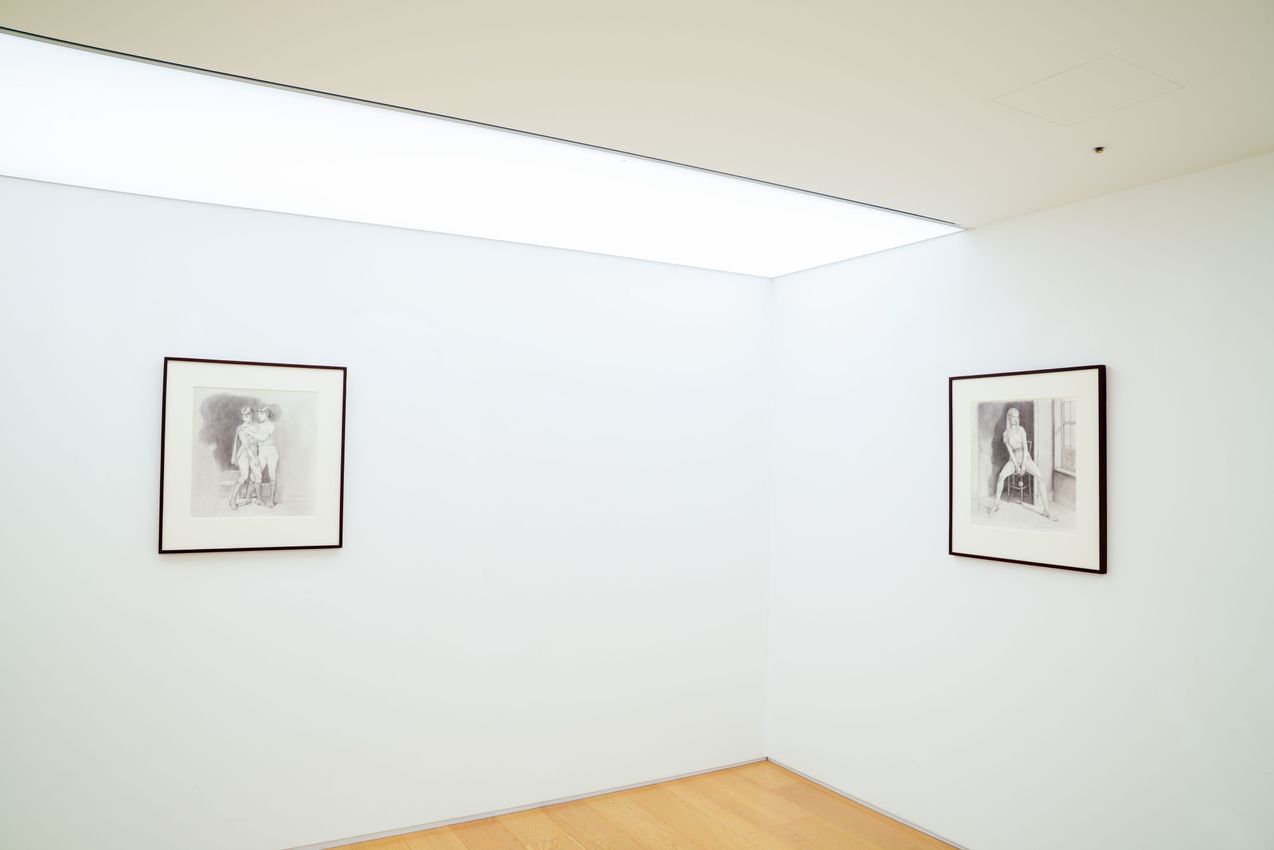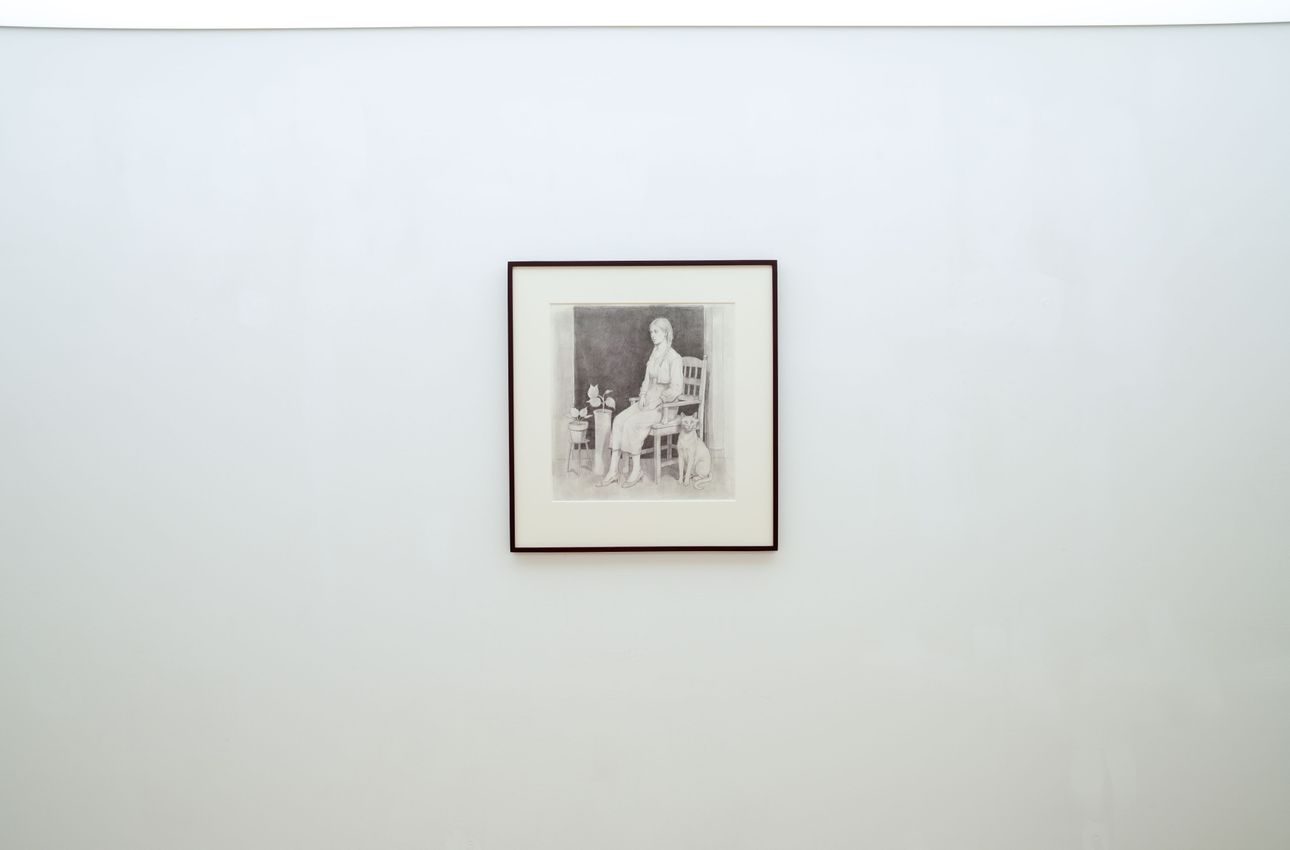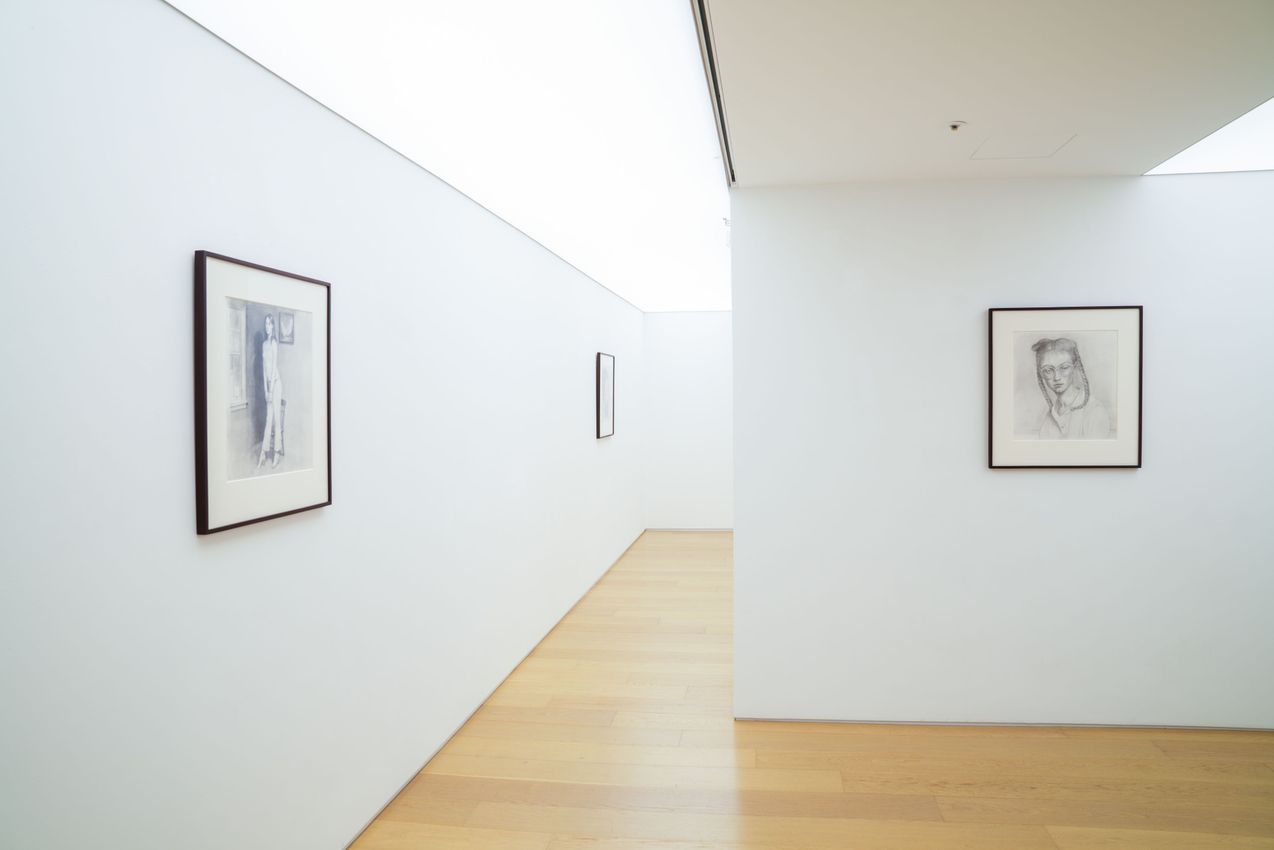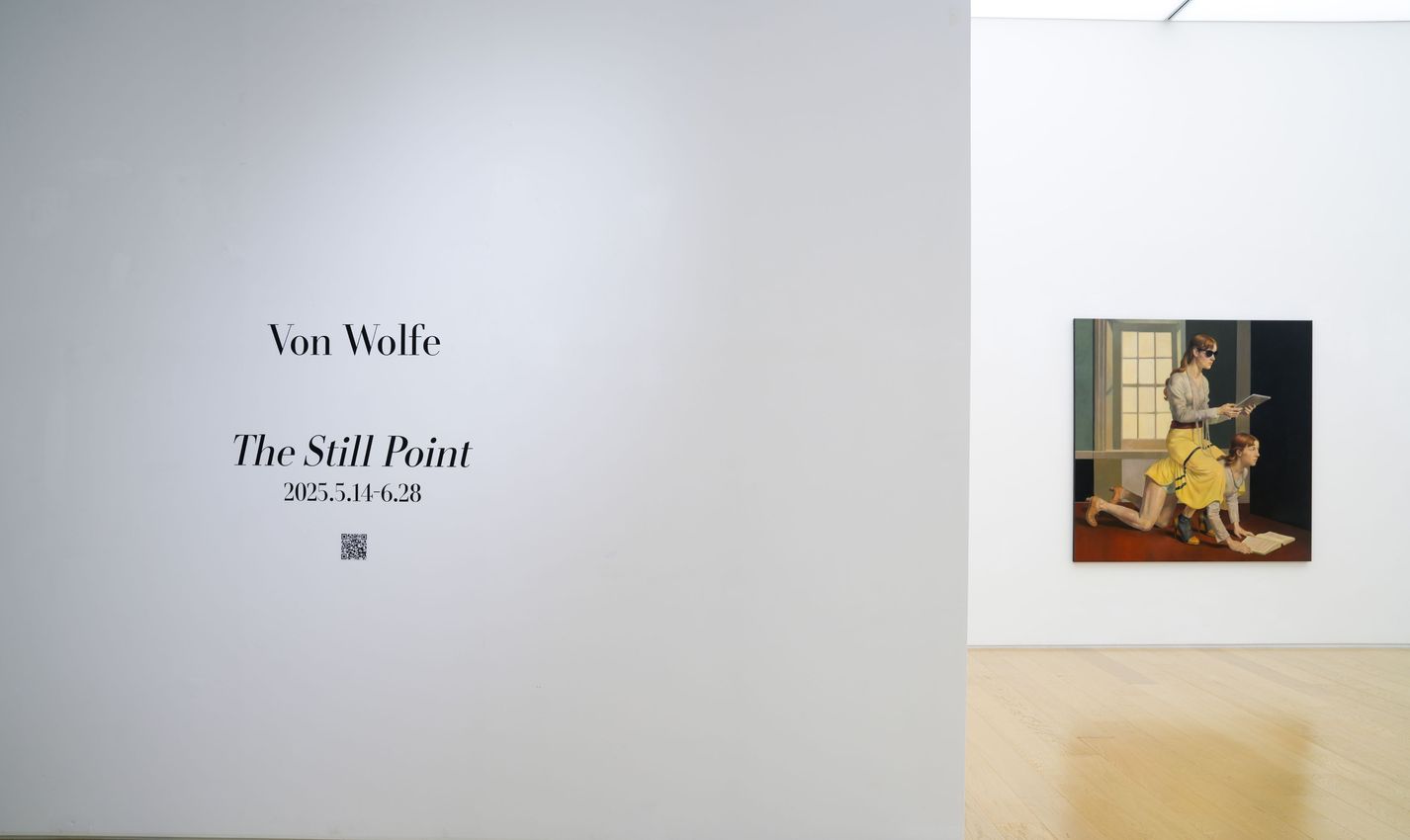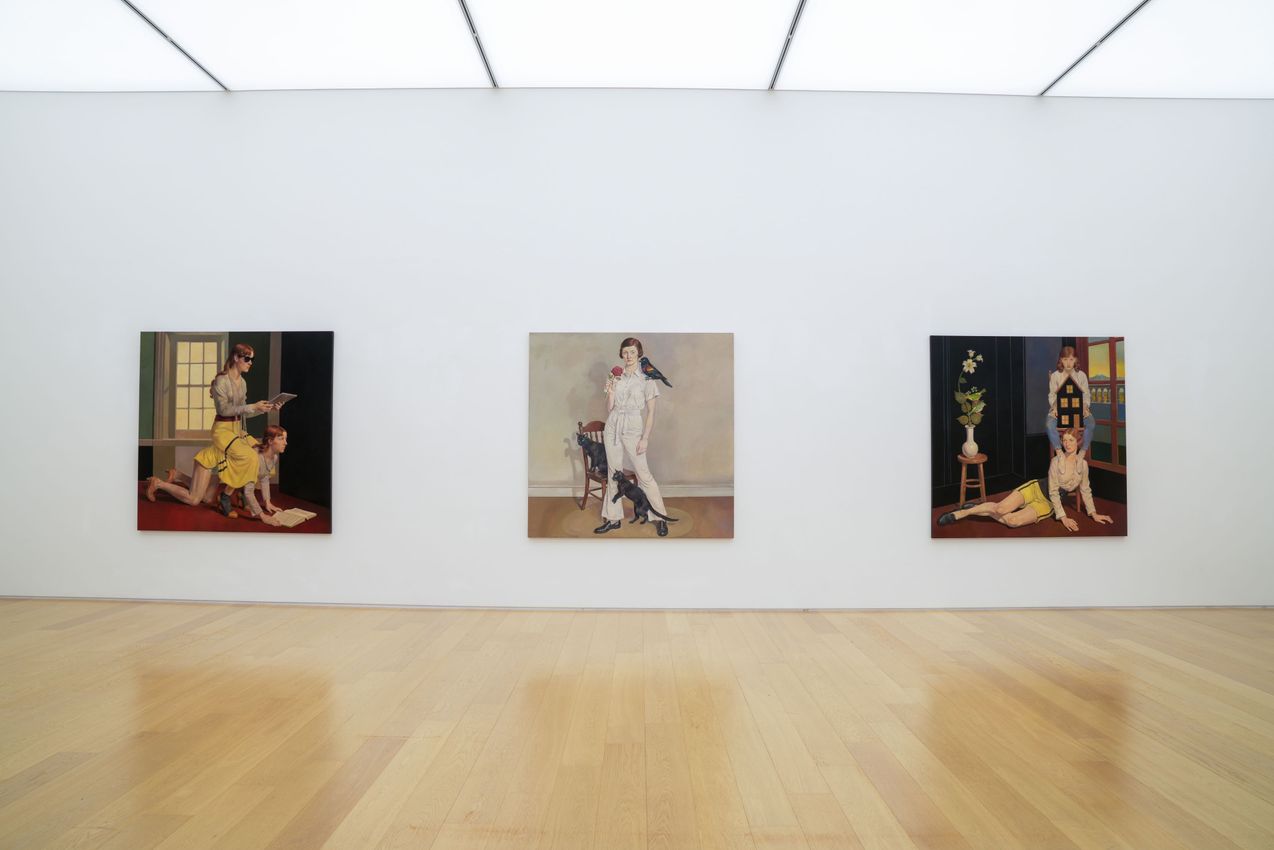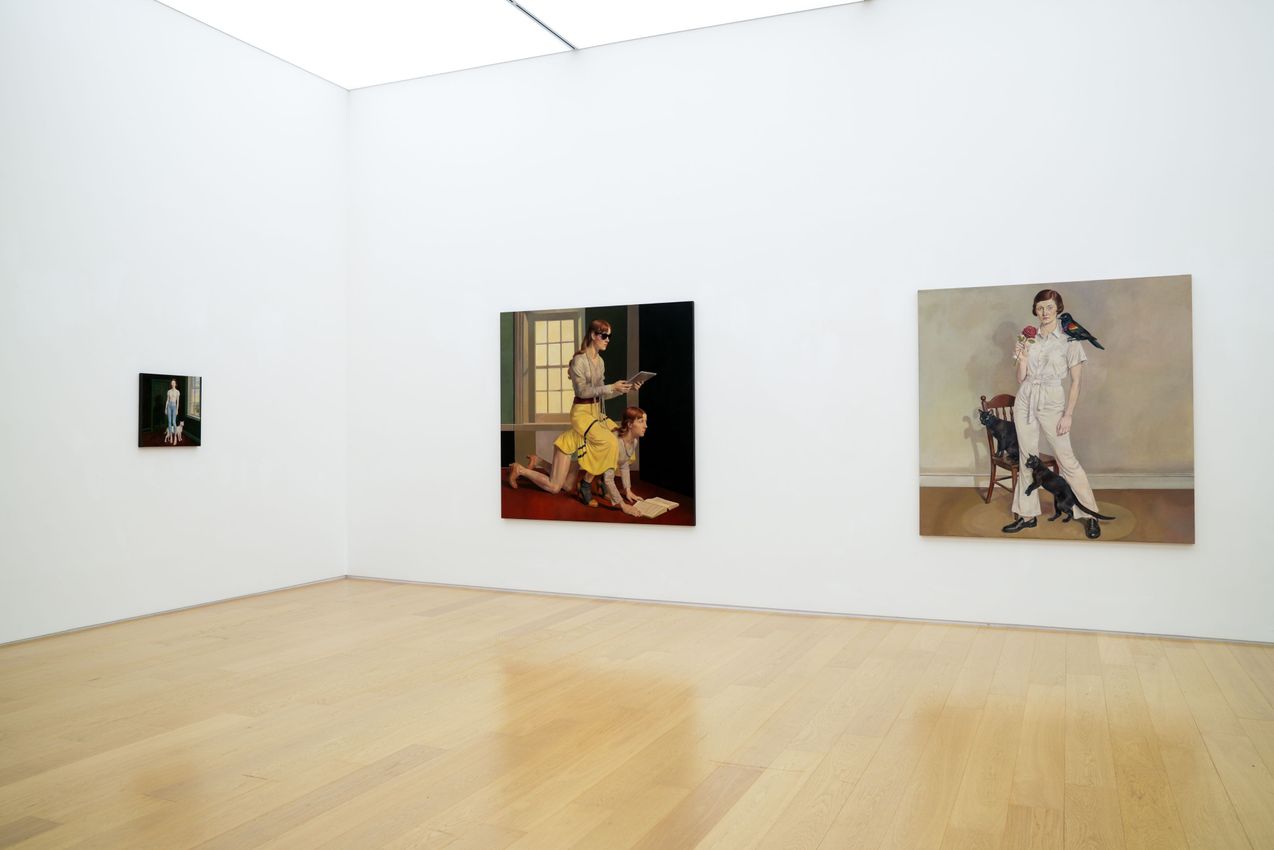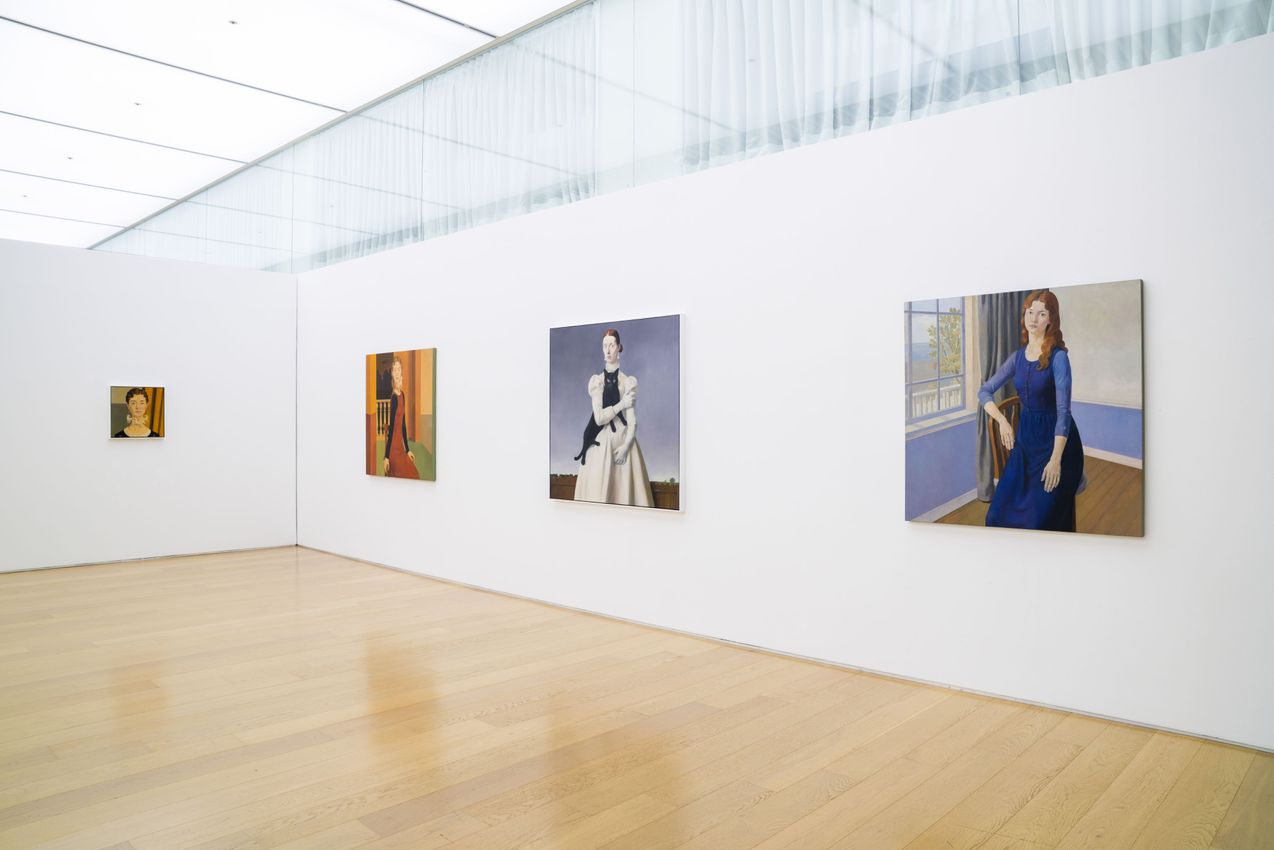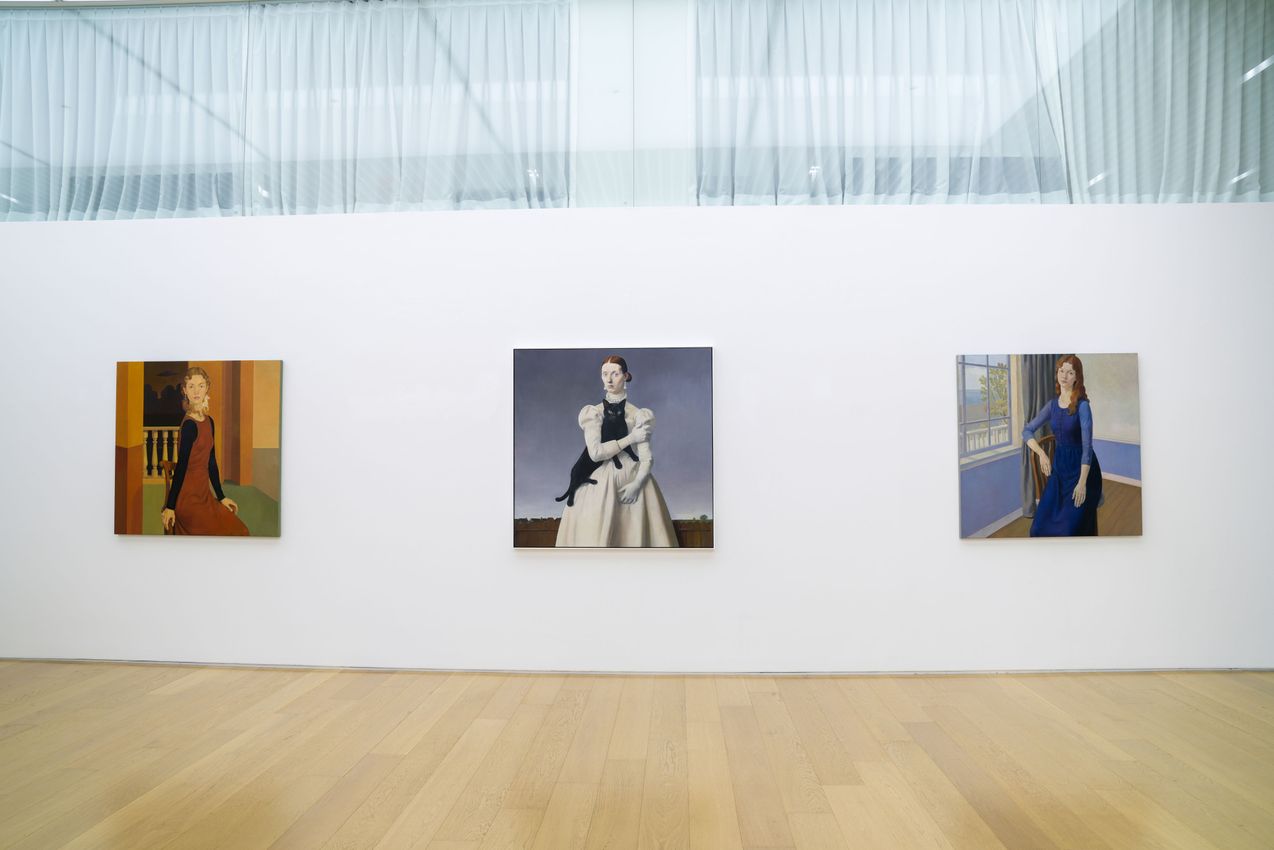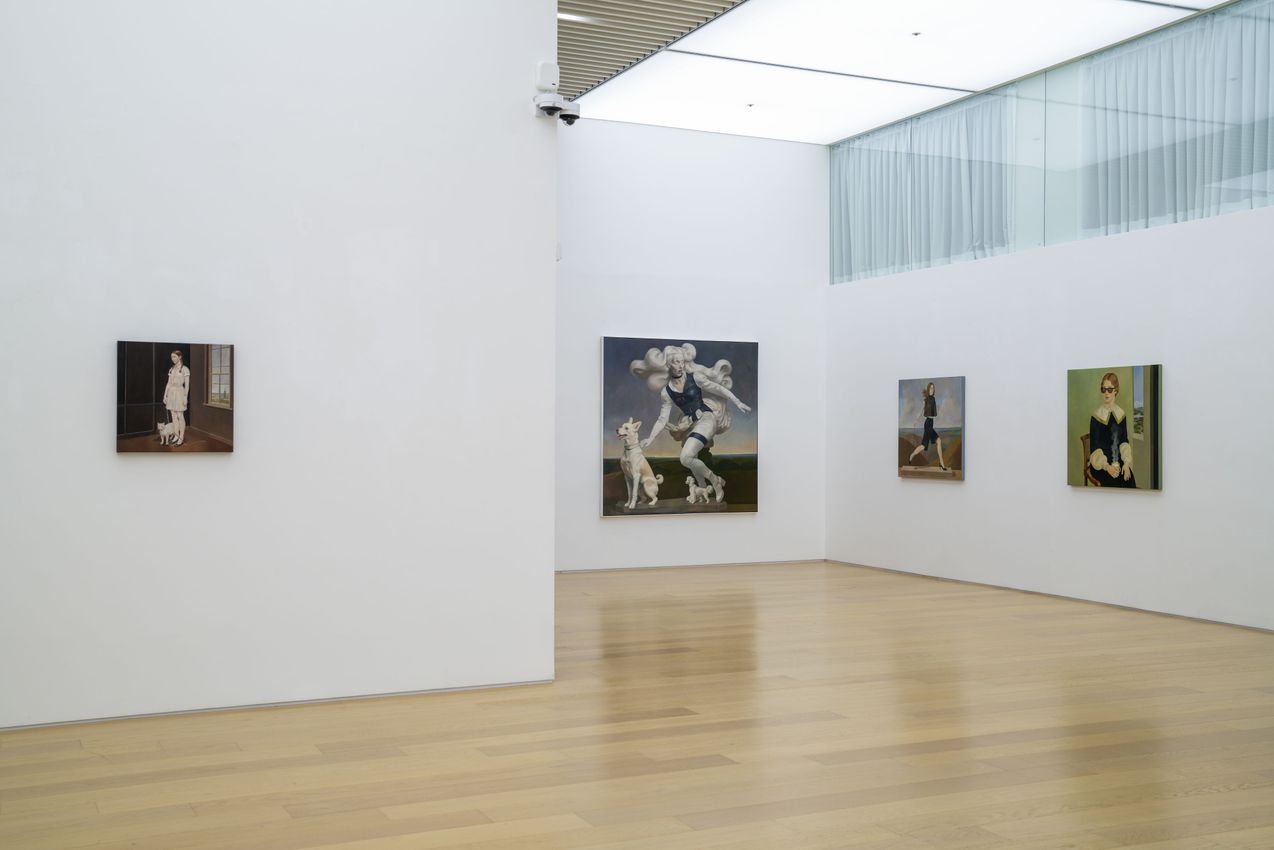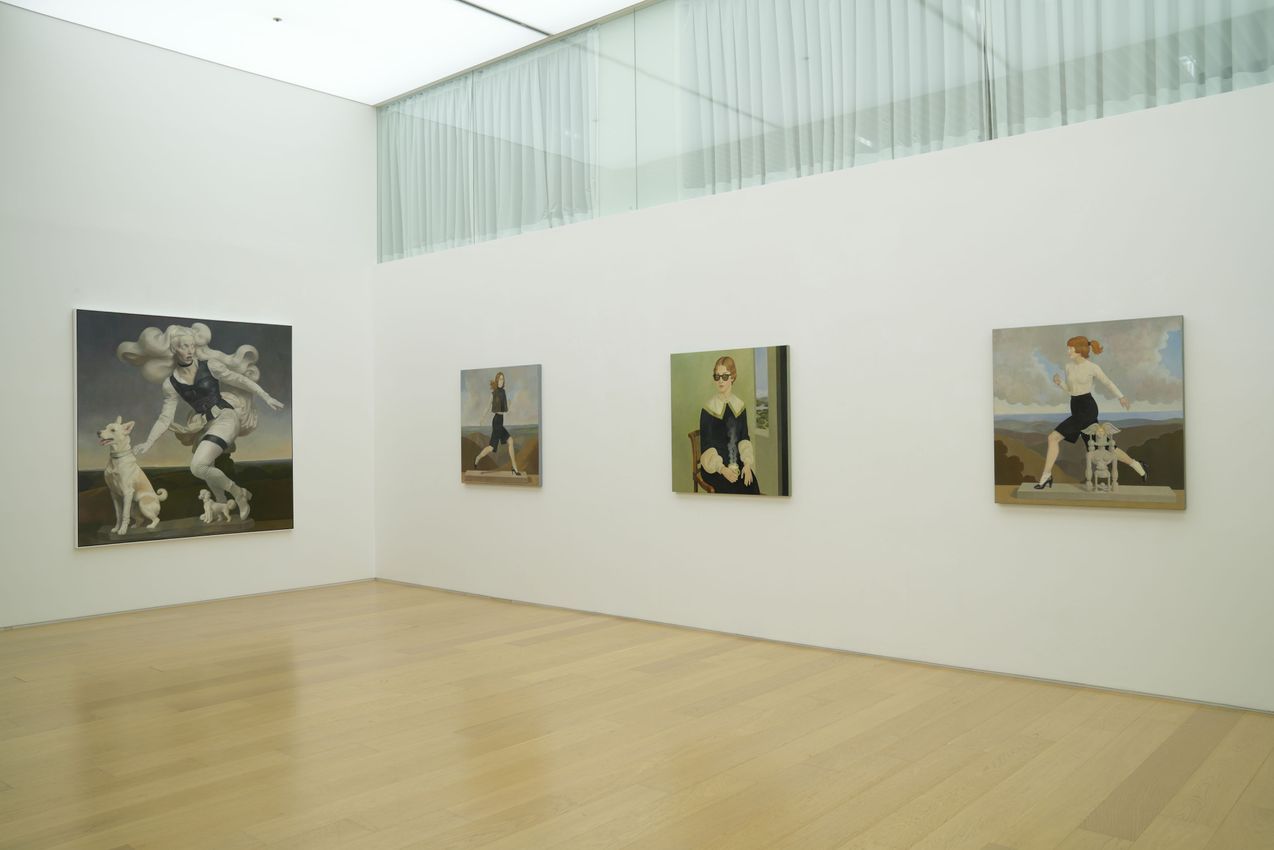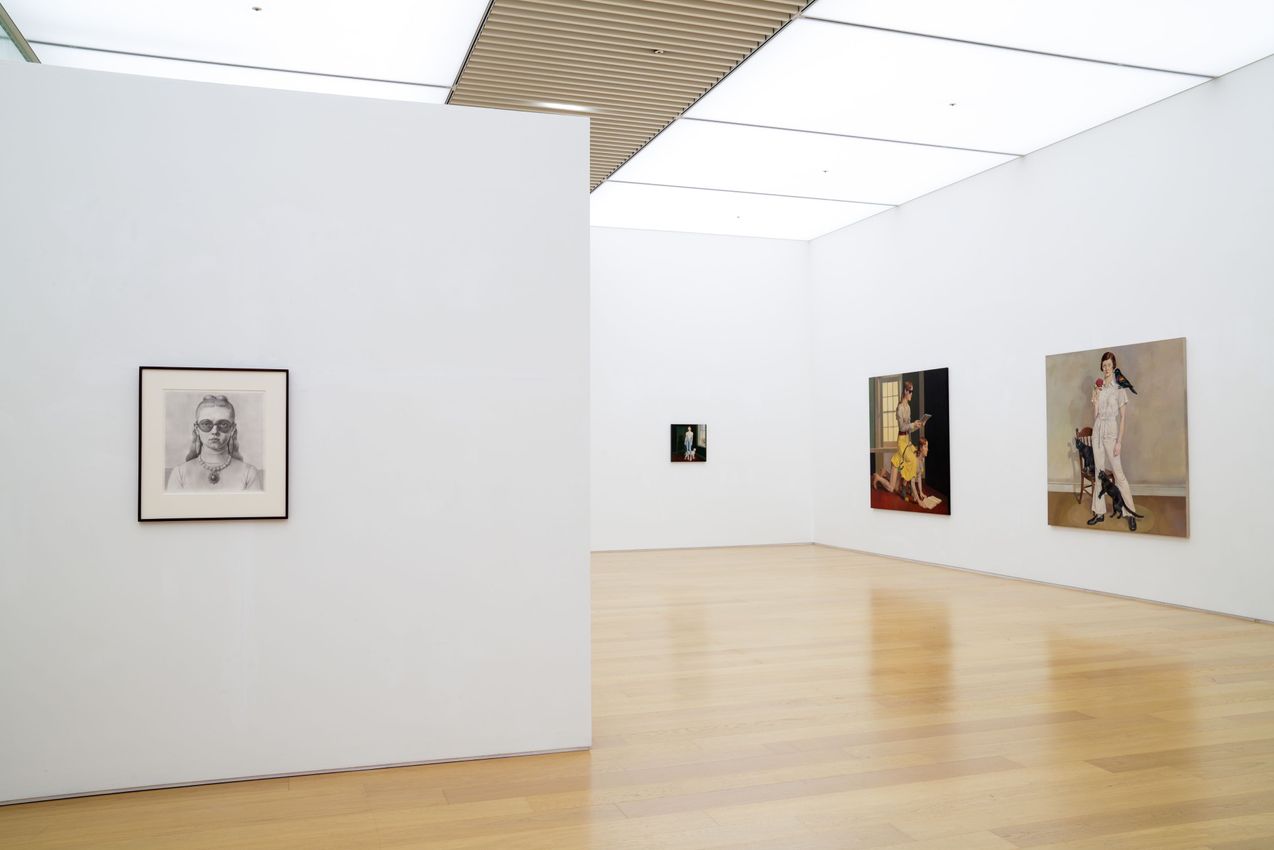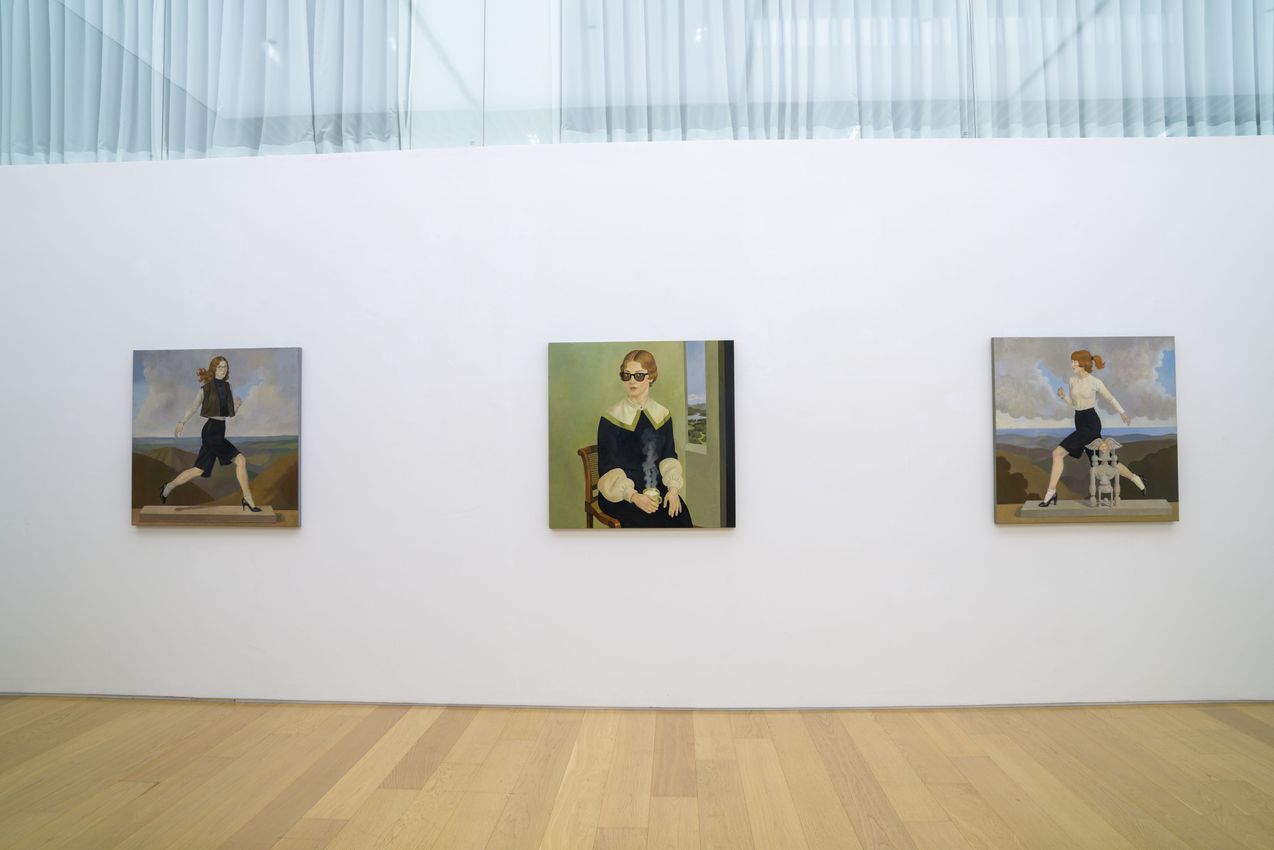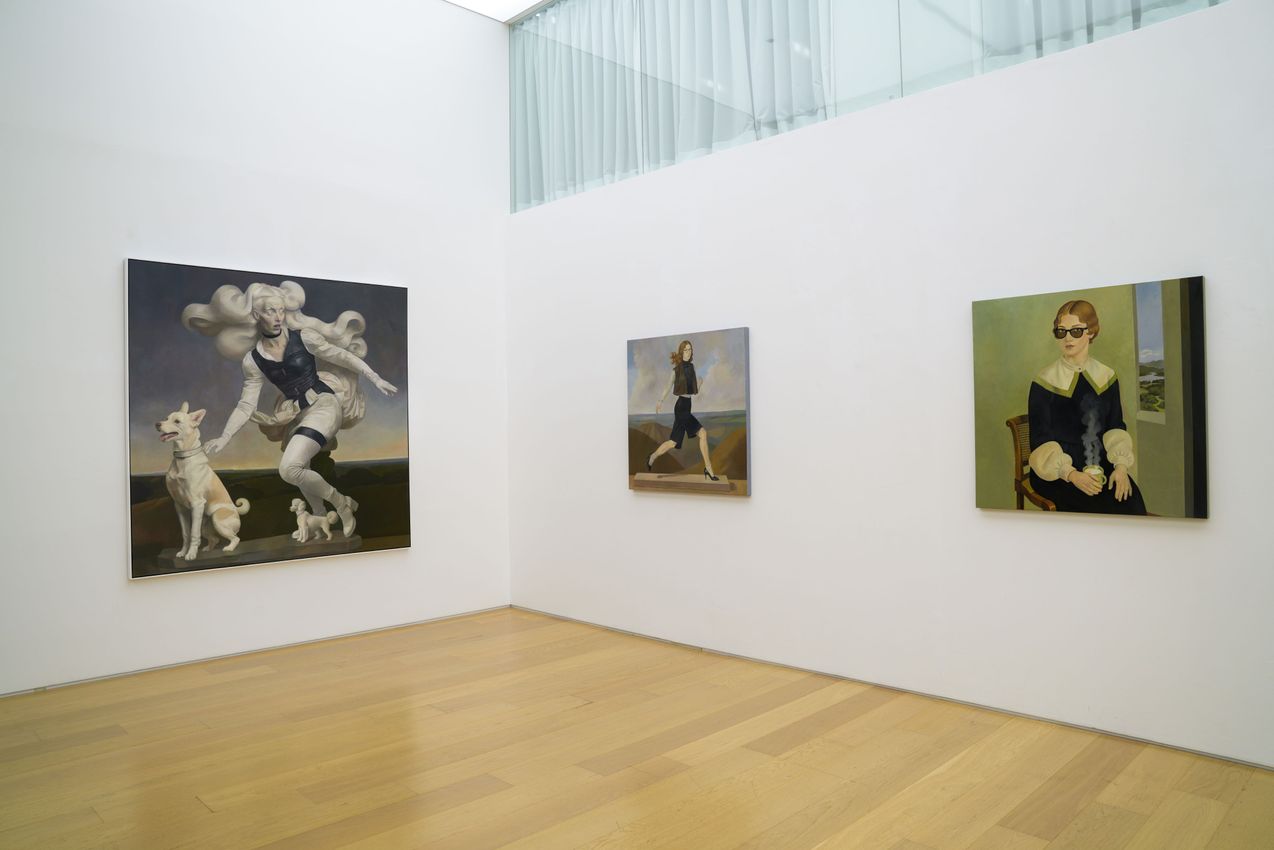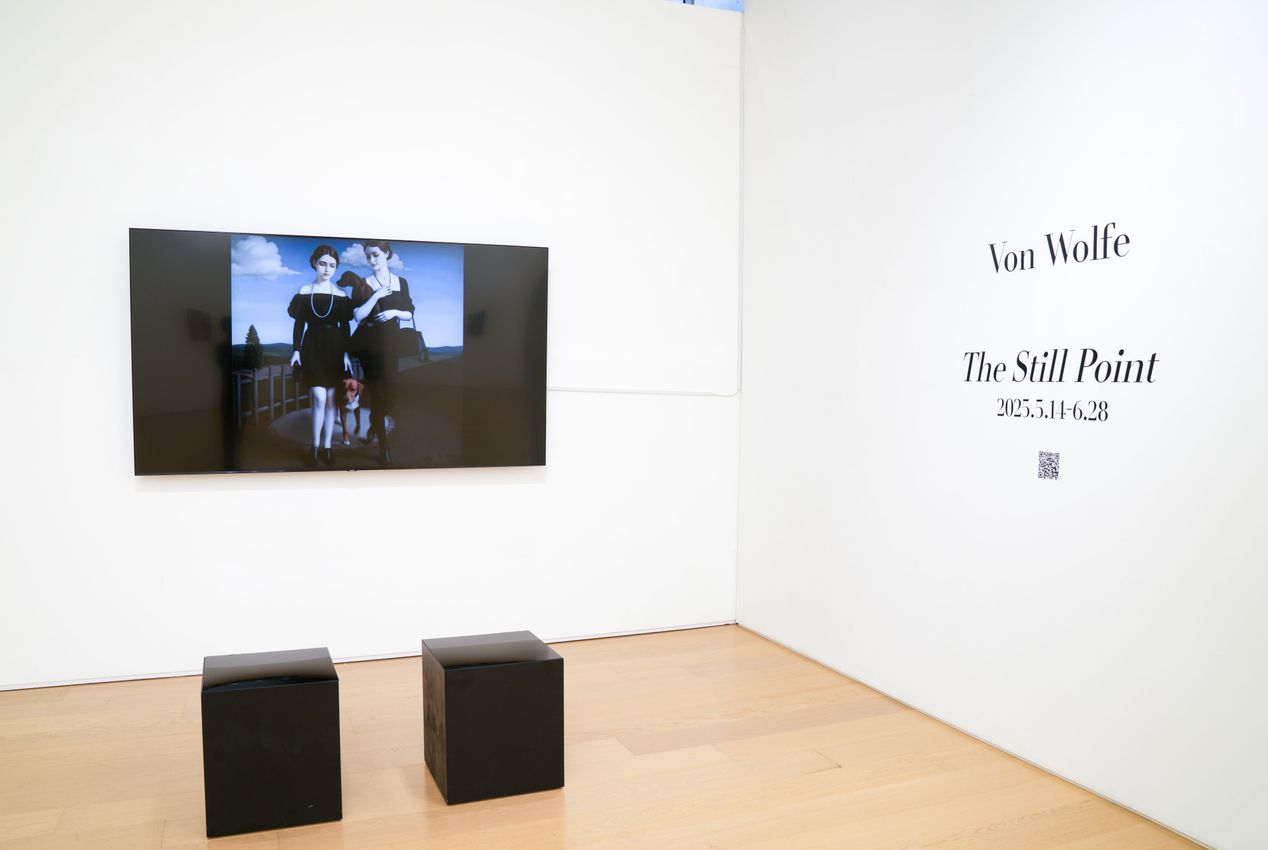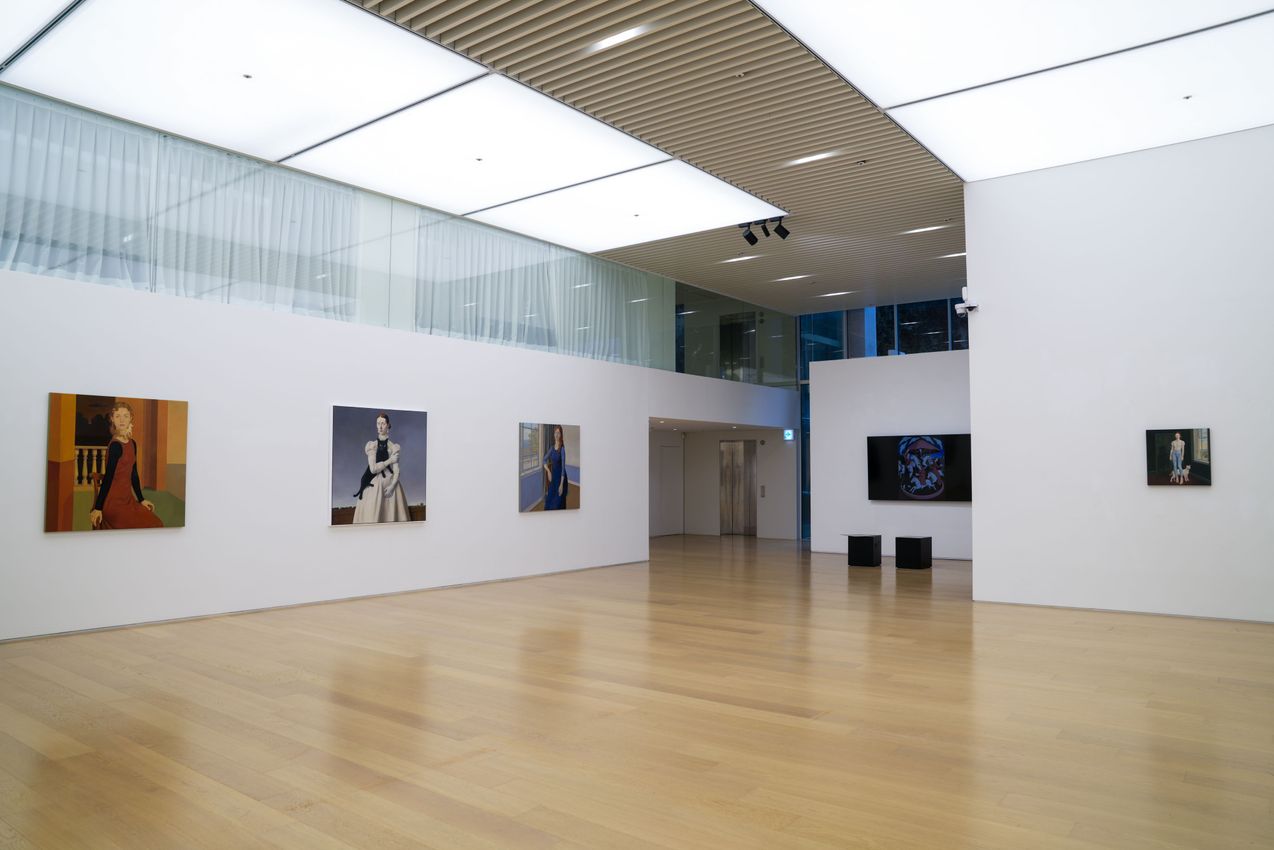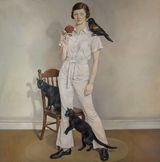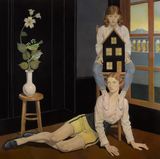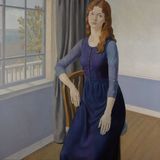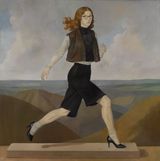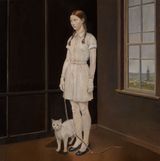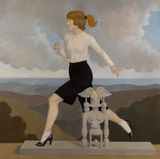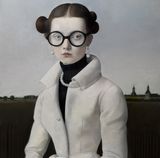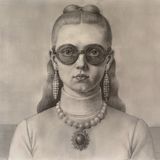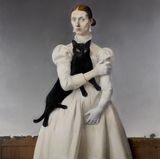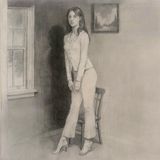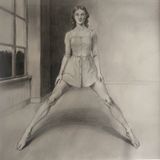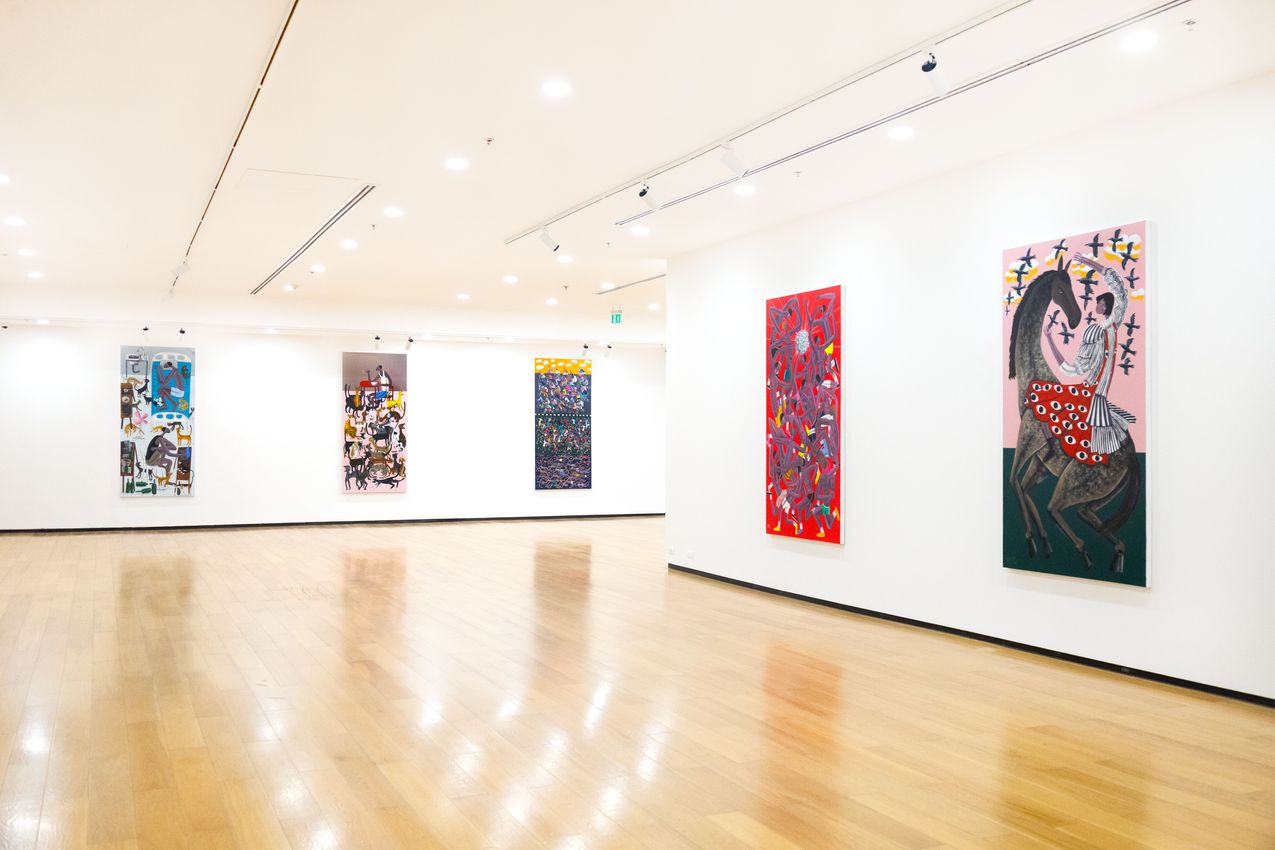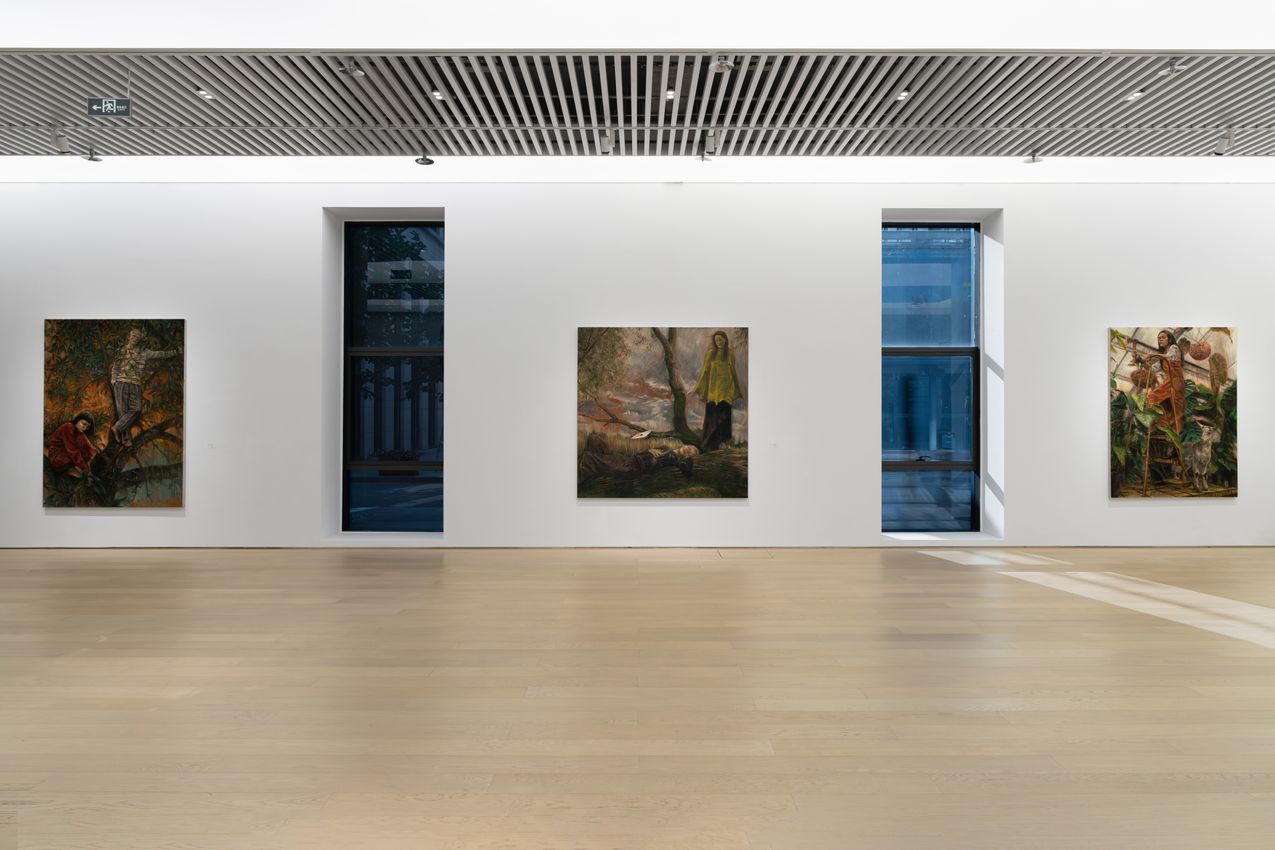




Von Wolfe’s first solo exhibition, The Still Point, presented at Tang Contemporary Art Seoul, explores the charged resonance of psychological stillness within the pictorial plane. Through a series of meticulously composed paintings, Wolfe delves into the layered depths of emotional experience, drawing out the subterranean textures of feeling that lie beneath the surface of representation. These works do not merely depict moments of suspension; they inhabit them, capturing a quiet yet potent interval where tension, gaze, and agency coalesce within stillness itself.
The exhibition’s title, The Still Point, is drawn from T. S. Eliot’s Four Quartets, where he writes of ‘the still point of the turning world.’ This paradox of motion within stasis finds a compelling visual analogue in Wolfe’s work. The paintings revolve around a psychological core, where serenity and unease coexist, and the centrifugal pull of emotion and unconscious drive becomes perceptible. Within balanced, composed arrangements, the artist inserts a kind of dignified silence—one that invites the viewer to step outside the rhythm of daily perception and into a denser, slower register of feeling.
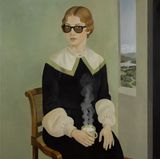
The female figures that populate these paintings are rendered with subtle distance and restraint. Their poised, composed bodies suggest both containment and latent intensity; their expressions and gestures intimate an emotional complexity that resists legibility. These women are not passive objects of the gaze, but active subjects—self-aware, withholding, and sovereign. Frequently, their eyes avert direct contact with the viewer, instead settling on unseen spaces beyond the frame. In doing so, they create a psychological dissonance, opening a space of ambiguity that defers resolution and multiplies meaning.
Animals appear throughout the exhibition not as decorative background elements, but as deliberate and symbolic presences. Cats, birds, and dogs often gaze out with dispassionate eyes, or interrupt the space with silent attentiveness. From a psychoanalytic perspective, these creatures can be read as projections of the unconscious, symbols of repressed desires, or affective doubles of the human figures they accompany. Their mute presence heightens the sense of a scene being watched both from within and without complicating the emotional register of each composition.
What distinguishes Wolfe’s practice most clearly is the artist’s considered integration of artificial intelligence not as a mere tool, but as a conceptual and aesthetic collaborator in the creative process. Working with image-generation models He has trained himself, Wolfe explores a vast range of visual possibilities. From this ocean of outputs, he selects those that feel suspended between the real and the uncanny—images that hover at the edge of recognition. These are then meticulously translated into oil on canvas, where human intuition and digital randomness converge. In this hybrid methodology, intention and accident, algorithm and gesture, technology and embodiment, coalesce to produce works that ask urgent questions about authorship, authenticity, and the evolving ontology of the image.
Spatial composition is another defining feature of Wolfe’s visual language. The figures are frequently situated within muted, austere interior rooms that feel at once intimate and estranged. Windows appear often but rarely offer a full view outside; they gesture toward an external world that remains perpetually out of reach. This sense of ‘blocked openness’ mirrors the figures’ internal states and reflects a consciousness that is enclosed yet imaginatively extending beyond the confines of the present. The domestic realm here, is not a haven of comfort, but a subtle theatre of psychological dislocation.
The palette is characteristically restrained. Wolfe avoids saturated hues and opts instead for soft gradients and muted tonalities that allow emotion to simmer rather than swell. Brushwork is finely controlled, with the surface of the canvas often smoothed to the point of disappearance. Texture yields to the atmosphere. As a result, these paintings do not confront the viewer directly, but envelop them gradually leaving behind a resonant, lingering echo rather than a declarative statement.
The Still Point may be understood as both a still life of interiority and a landscape of psychological silence. The emotions represented here have passed through the filter of technological mediation, only to be re-embodied through the enduring medium of paint. These images are not snapshots of paused time; they are condensations of memory, tension, and deferred expression. Through the quiet intensity of these works, Wolfe magnifies the subtle energies that pulse beneath surfaces—those unspoken forces that shape how we inhabit space, relate to others, and navigate the self.
In the presence of these paintings, the viewer is prompted to ask: What moves in stillness? What is felt in silence? What escapes notice between gaze and gesture? Wolfe’s work poses these questions not with words, but through the eloquence of visual withholding. It is a form of painterly thinking, an art of perception and interiority that speaks most clearly through what it chooses not to reveal.
Curated by Yonni Park and Jeeeun Hong | Tang Contemporary Art
Wolfe von Lenkiewicz (Von Wolfe) is a British artist based in London whose work primarily examines themes of identity, intimacy, psychological depth and power dynamics, offering nuanced reflections on universal experience. The artworks often highlight the tension between control and autonomy, illuminating how unseen societal, technological, and psychological forces influence and shape individual agency.
Tang Contemporary Art was established in 1997 in Bangkok, and now institutes over 48,000 square feet of gallery spaces in Bangkok, Beijing, Hong Kong, and Seoul. The gallery has also recently opened its headquarters space in Beijing, covering a building of 6 storeys. Tang Contemporary Art is fully committed to curating critical projects and exhibitions, as well as collaborating with other art museums and institutions, to promote Chinese contemporary art regionally and worldwide, and encourage a dynamic exchange between Chinese artists and those abroad.

A respected voice in contemporary art discourse.
Focusing on ambitious storytelling and insightful art-world commentary. Ocula Magazine publishes in-depth interviews, critical essays and timely analysis on the artists, exhibitions and ideas driving the global art world.
Learn more about Ocula Magazine
Showcasing the best of the art world.
Ocula partners with galleries from around the world to highlight their artists, artworks and exhibitions. Gallery membership is by application and invitation, with each member vetted by an independent panel.
Learn more about Ocula Membership

Specialises in the sale of major artworks.
Led by a team with deep ties to the world’s leading auction houses, galleries and collectors. Ocula’s advisory team offers bespoke services to high-net-worth clients from around the world who are looking to acquire the best of contemporary and modern art.
Learn more about our team and services