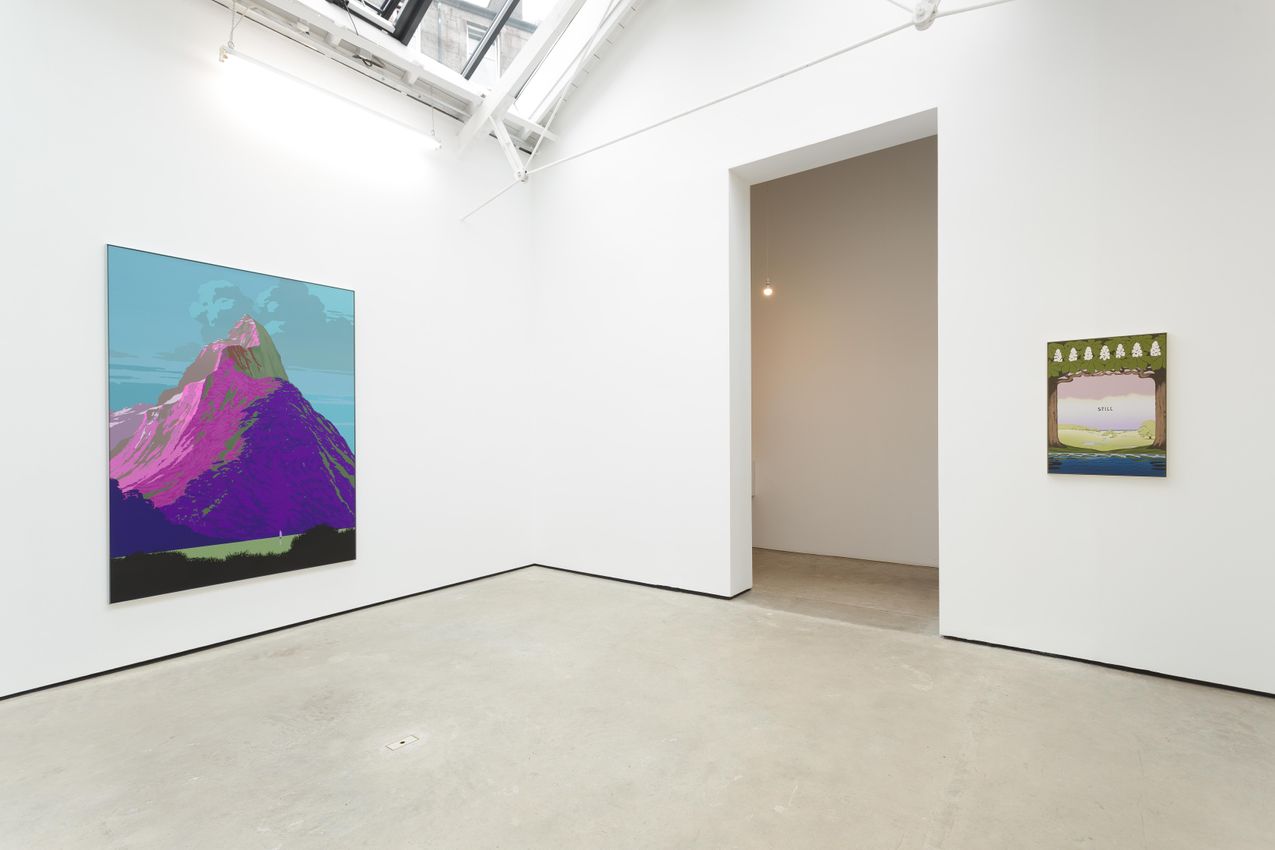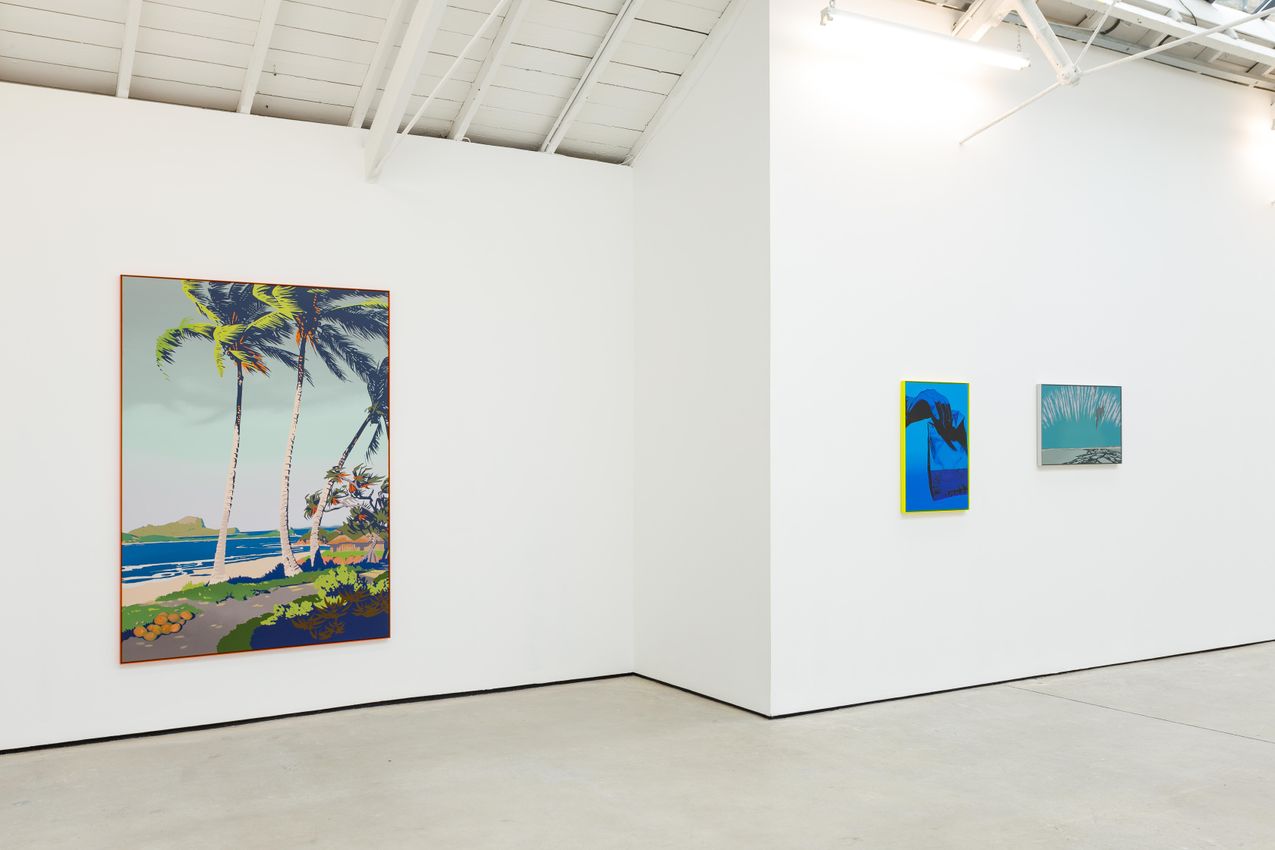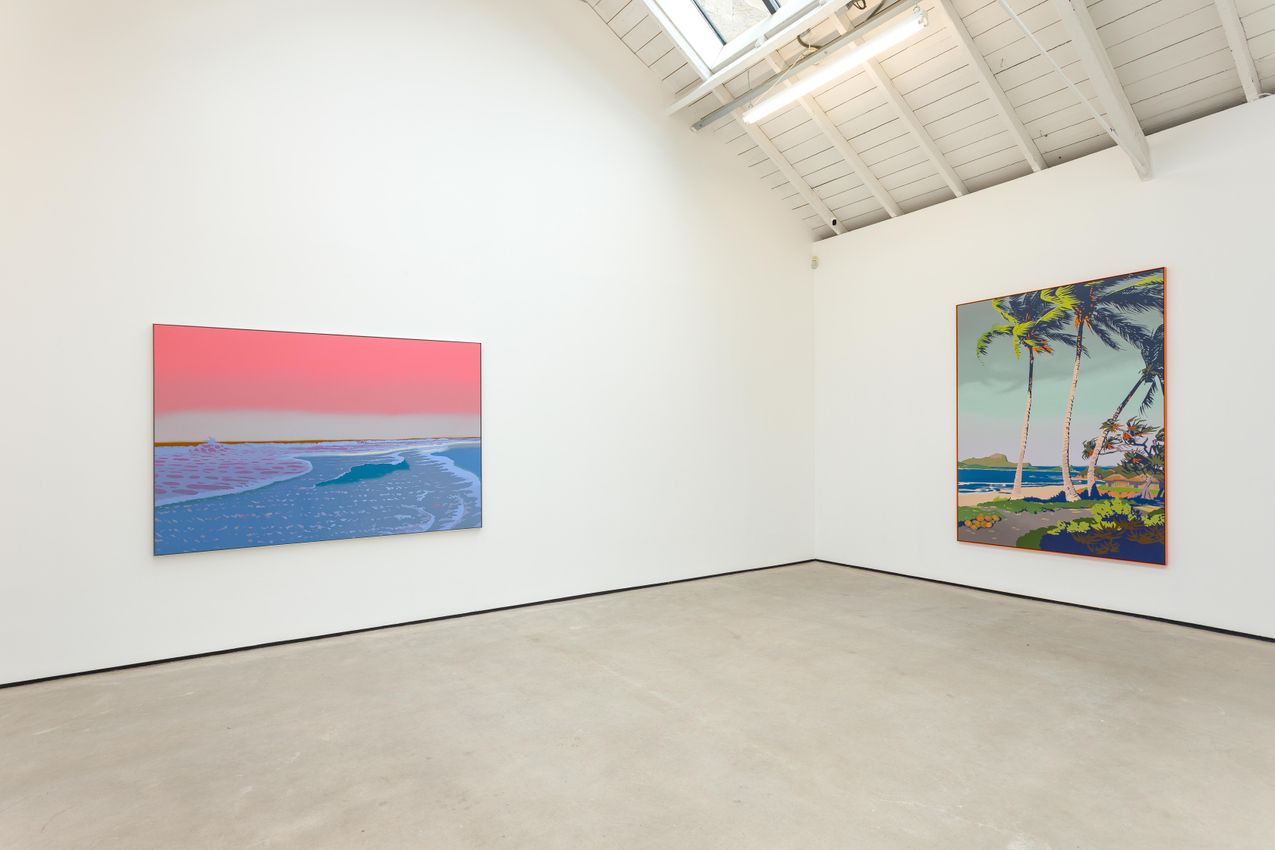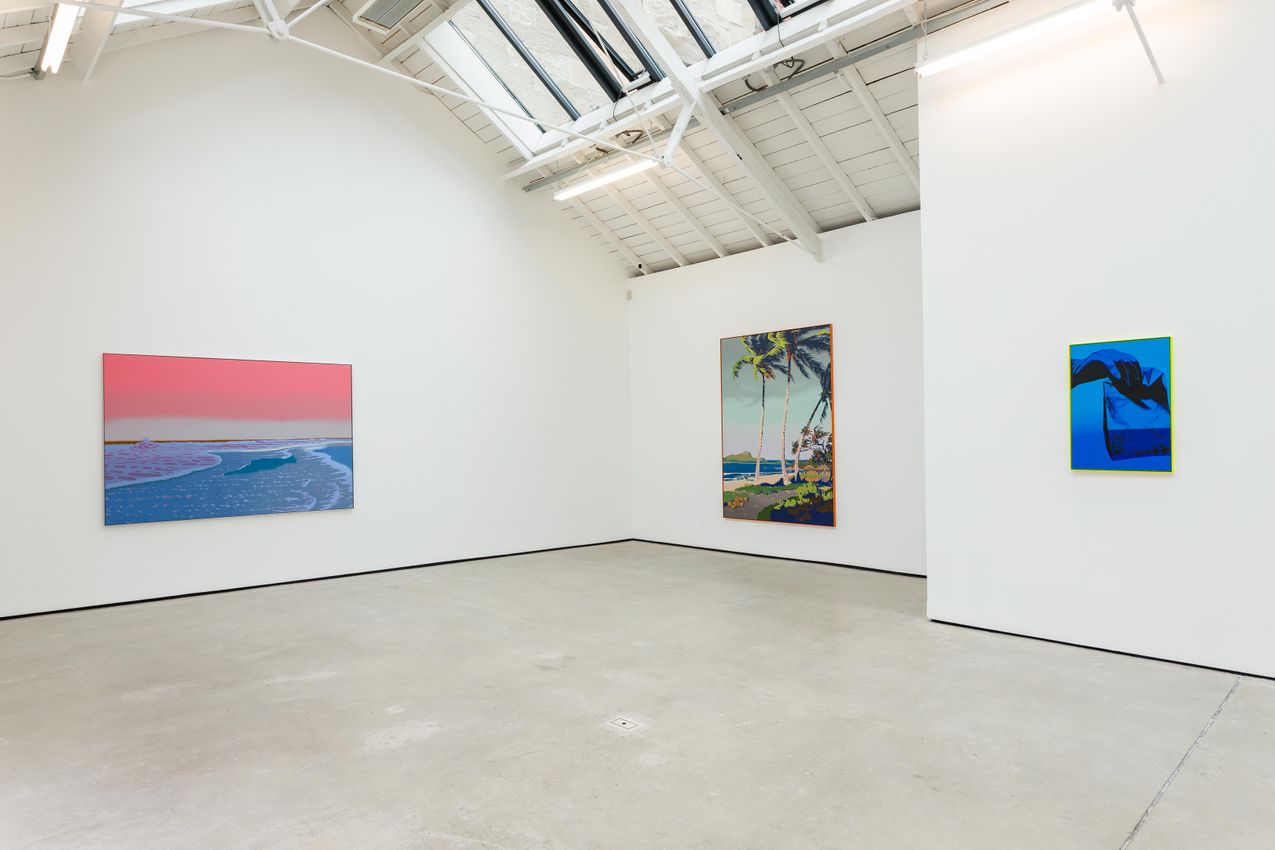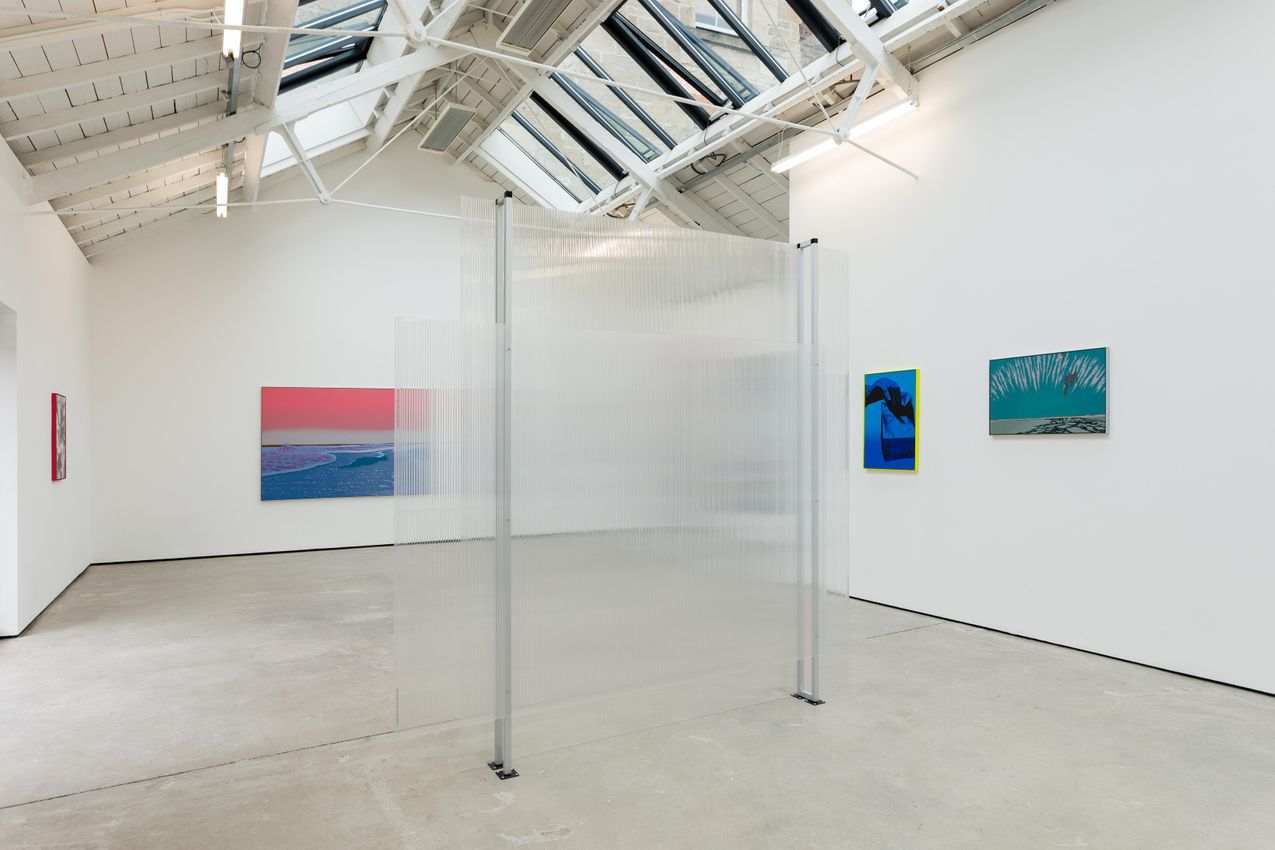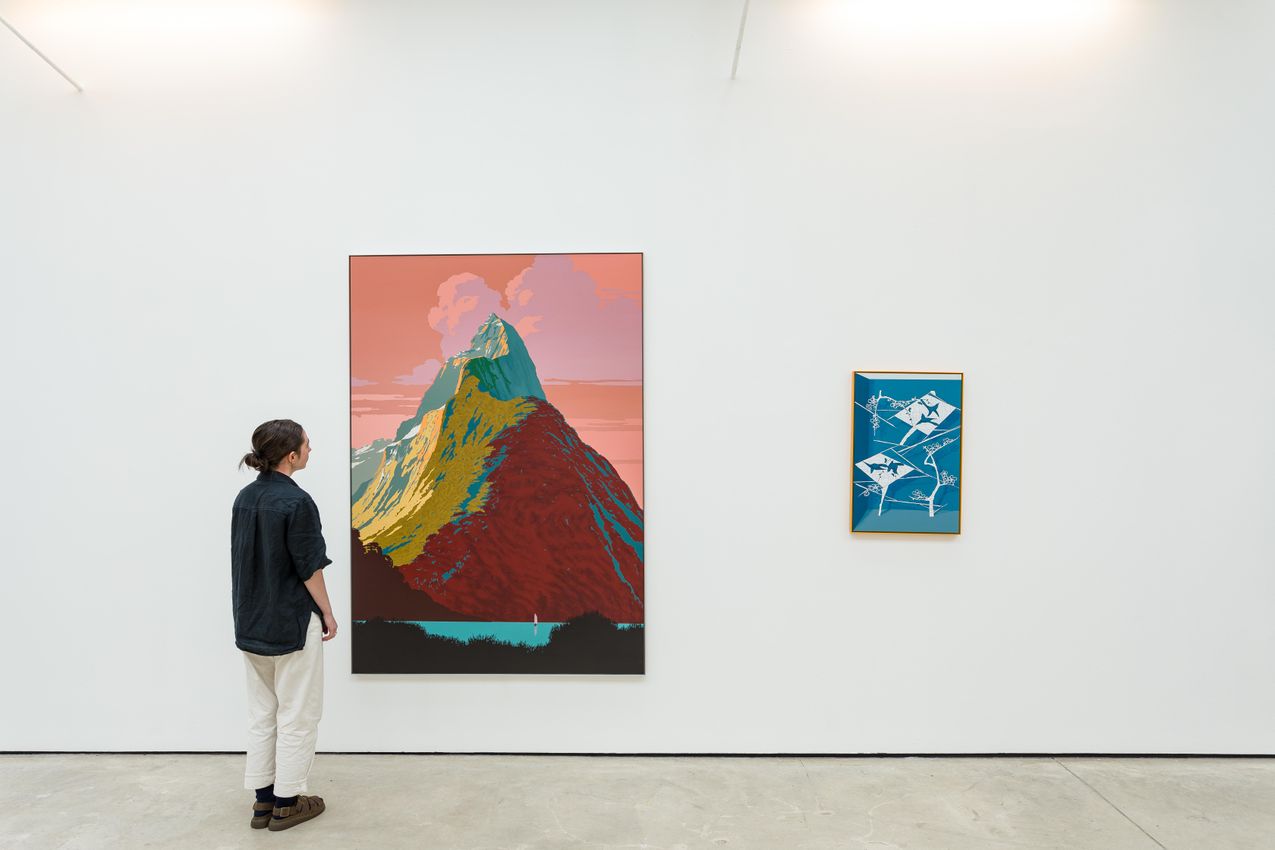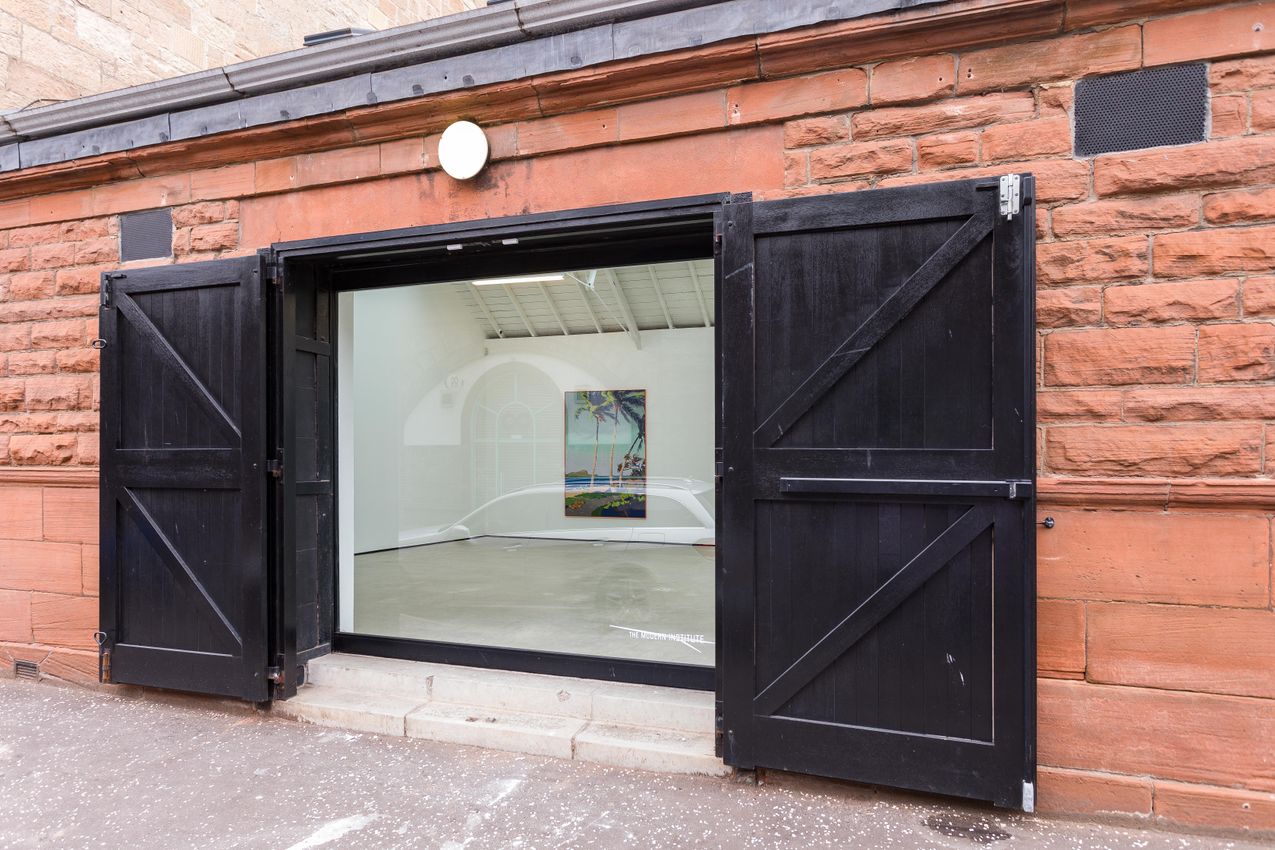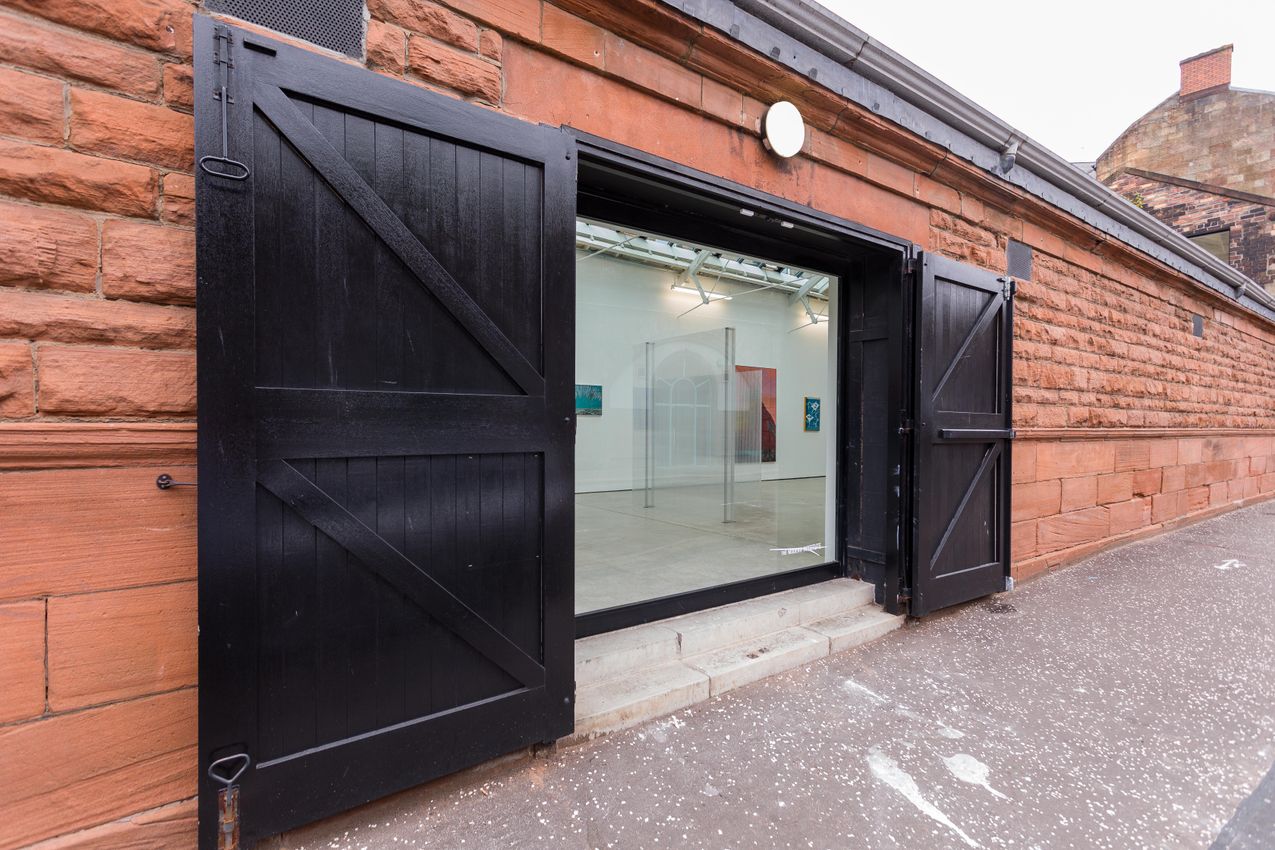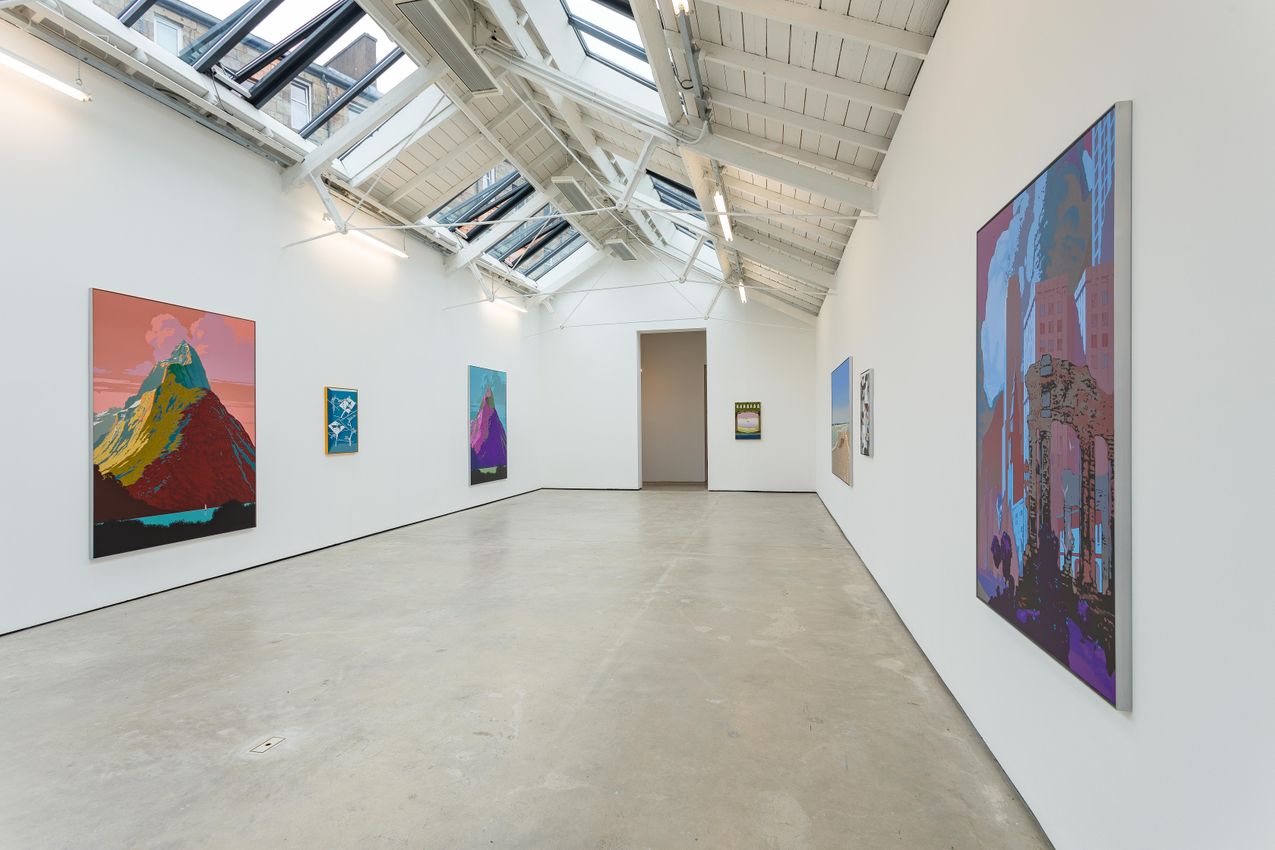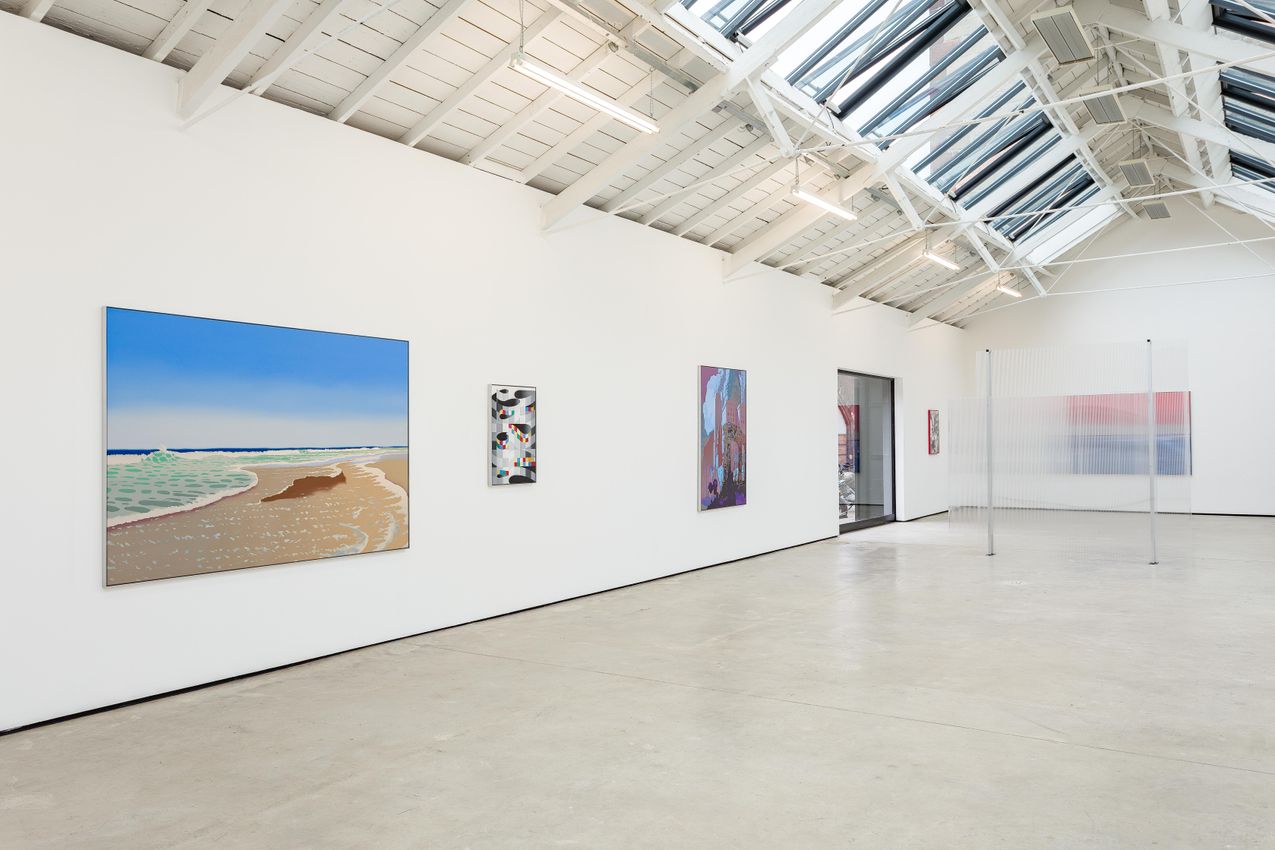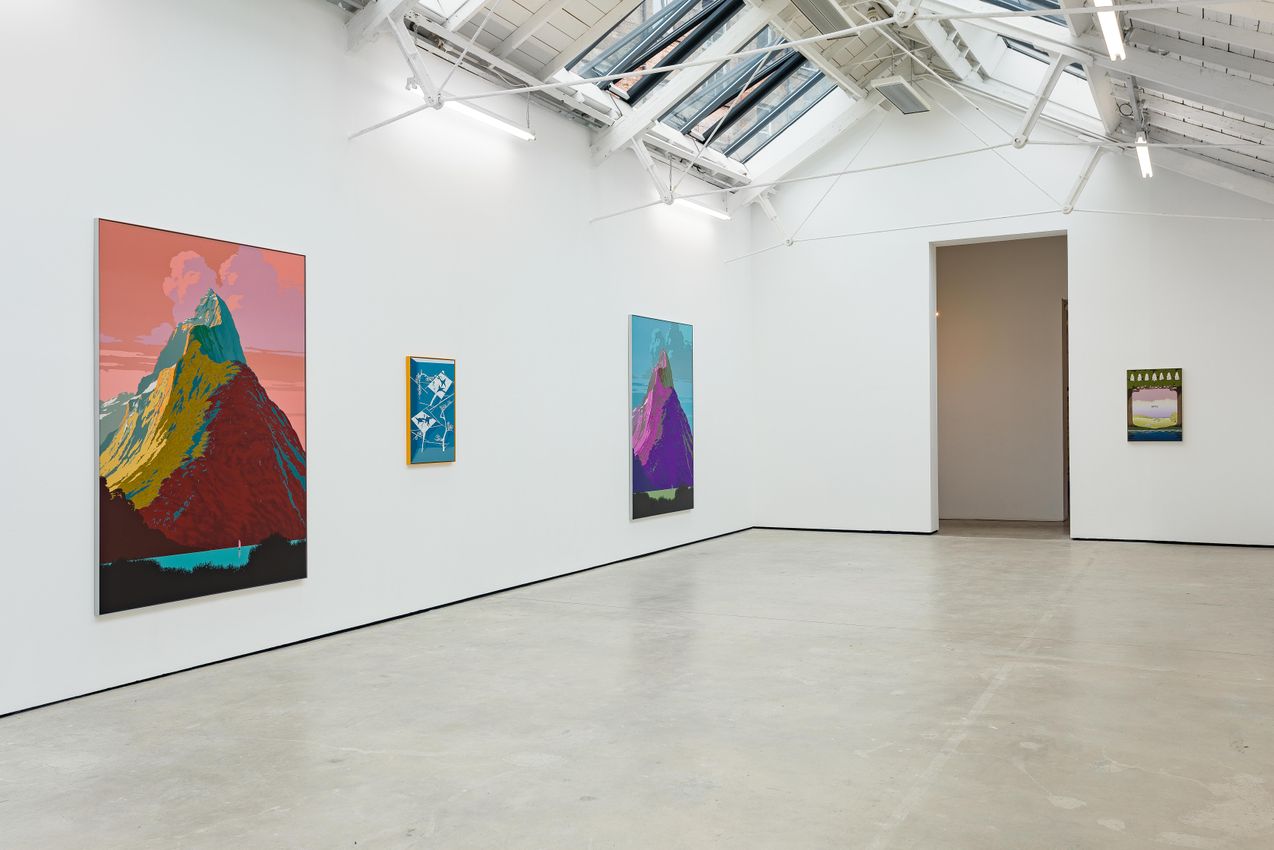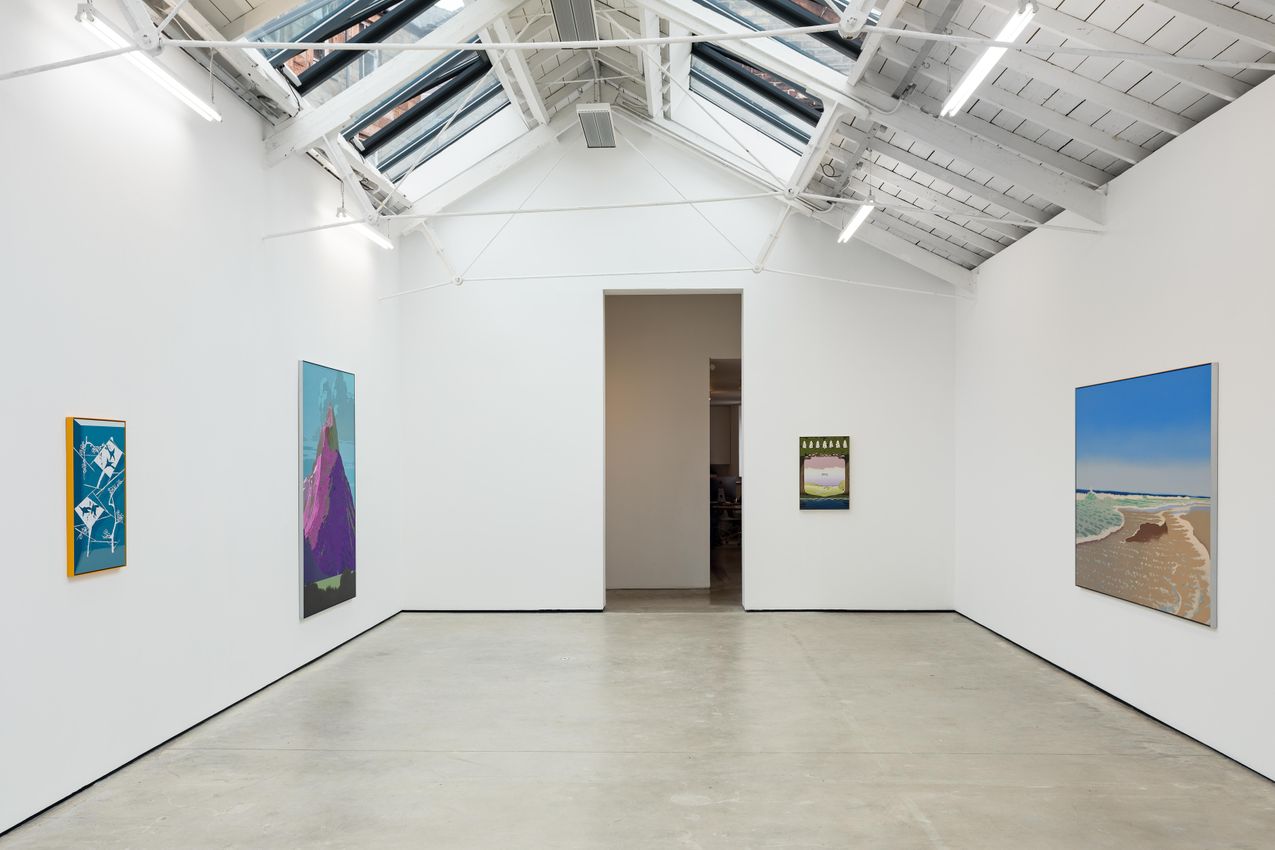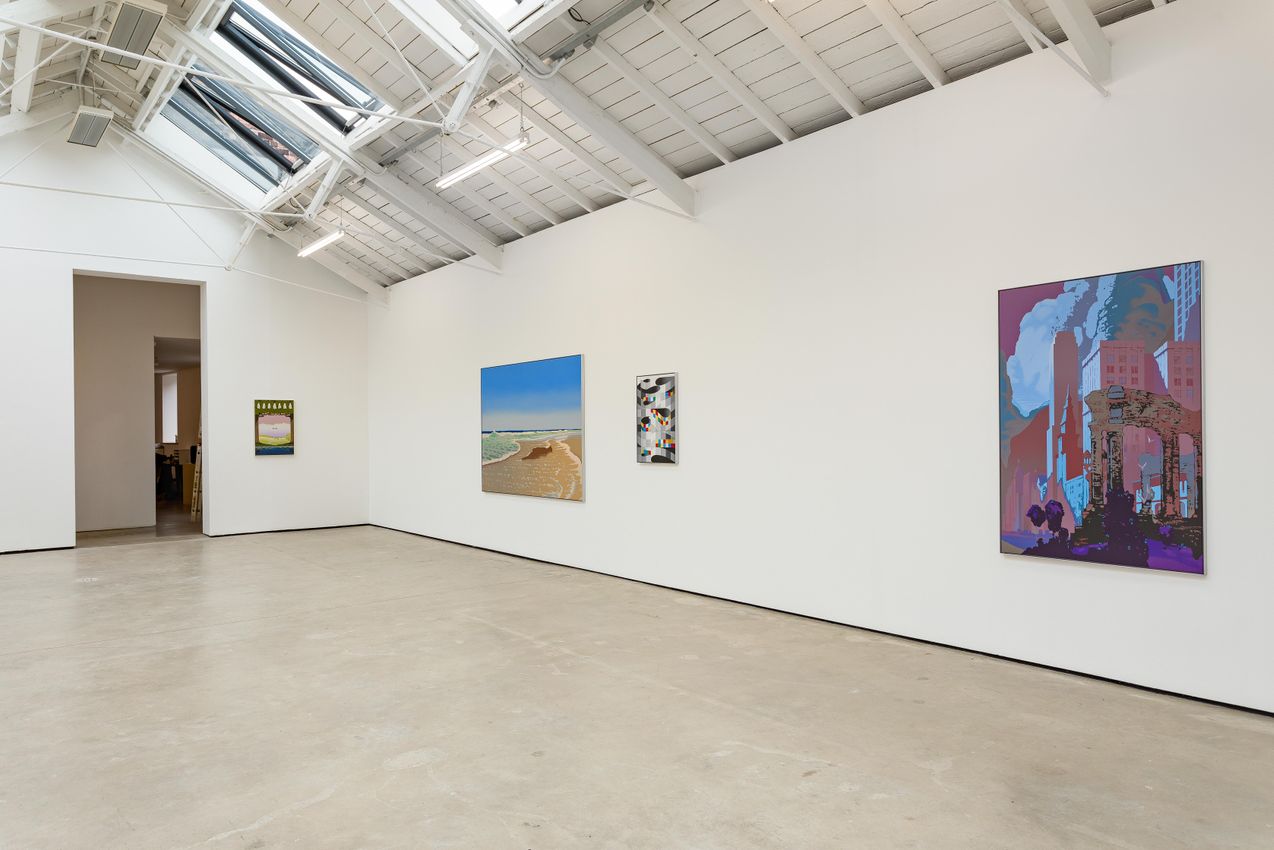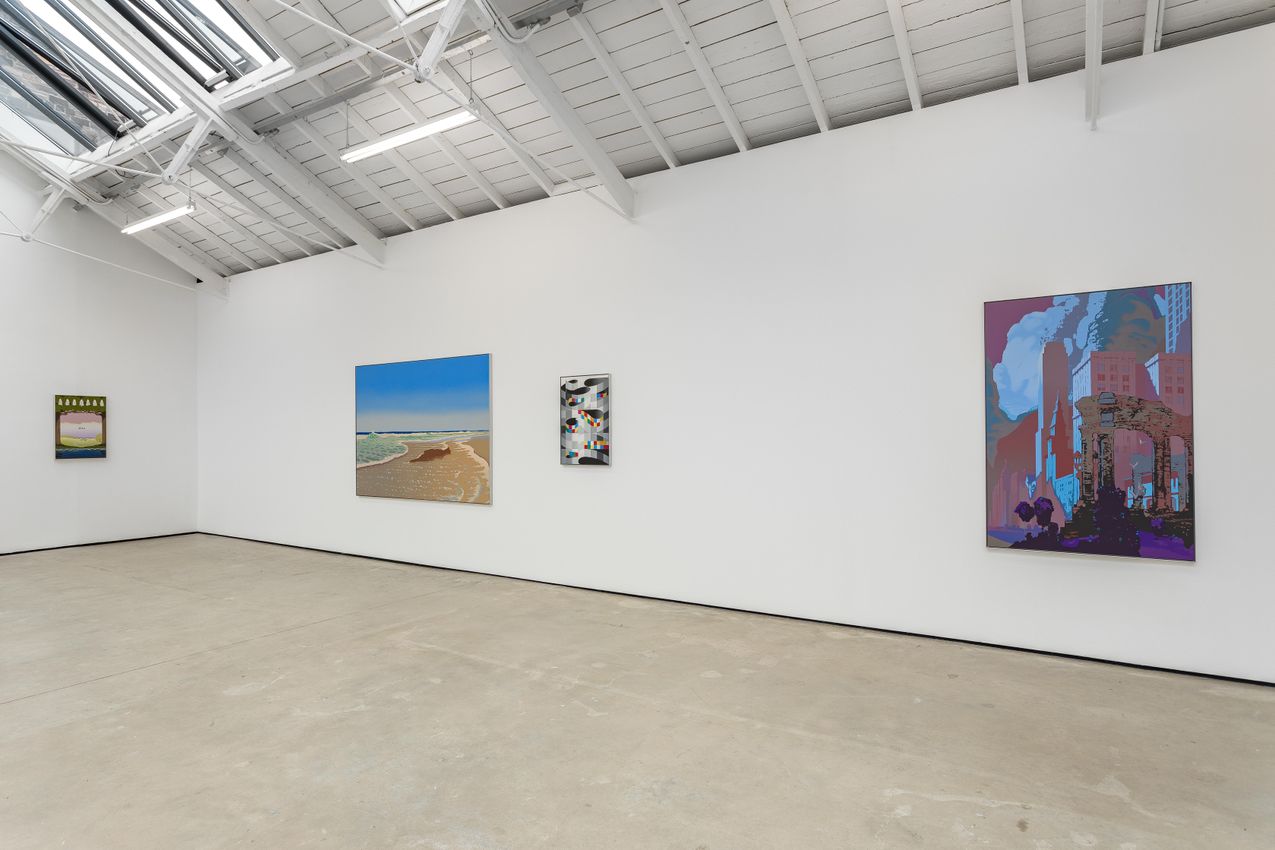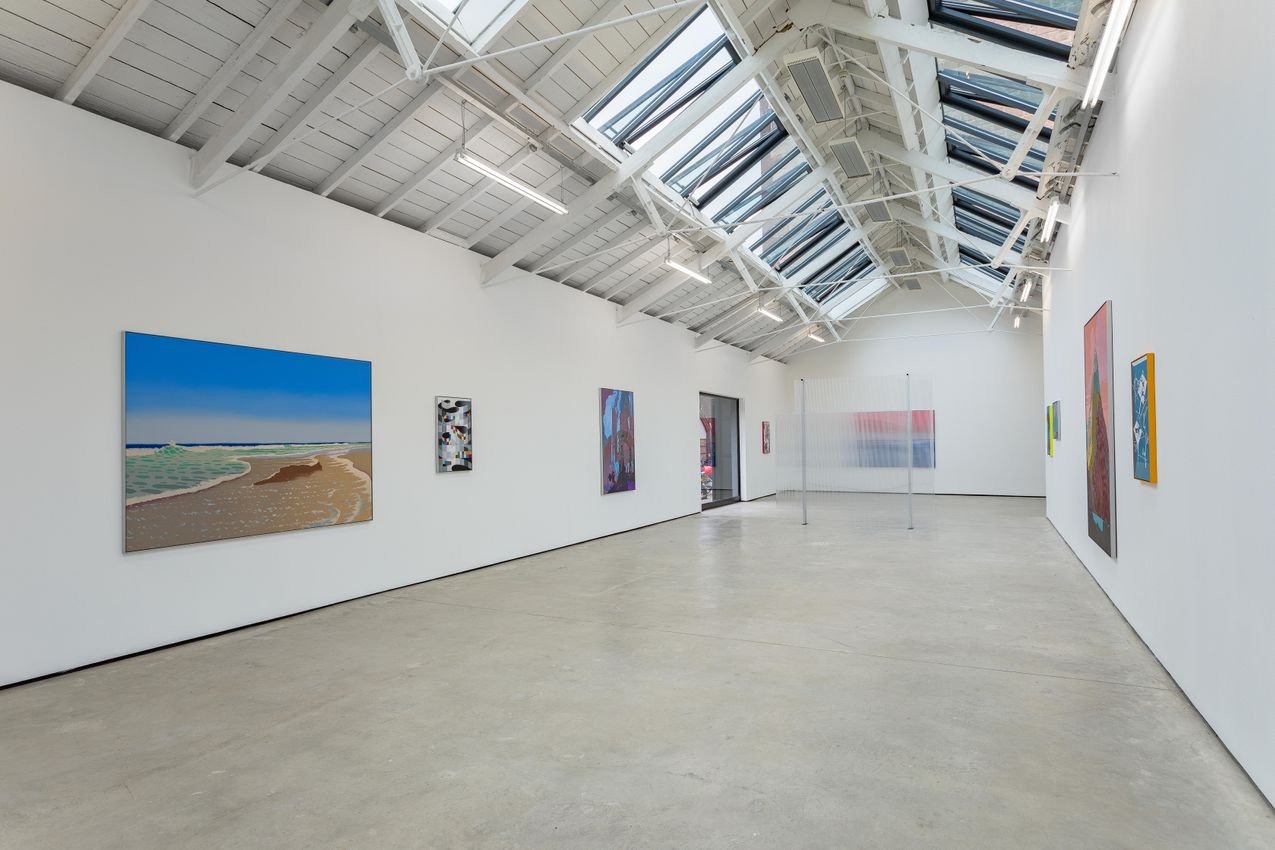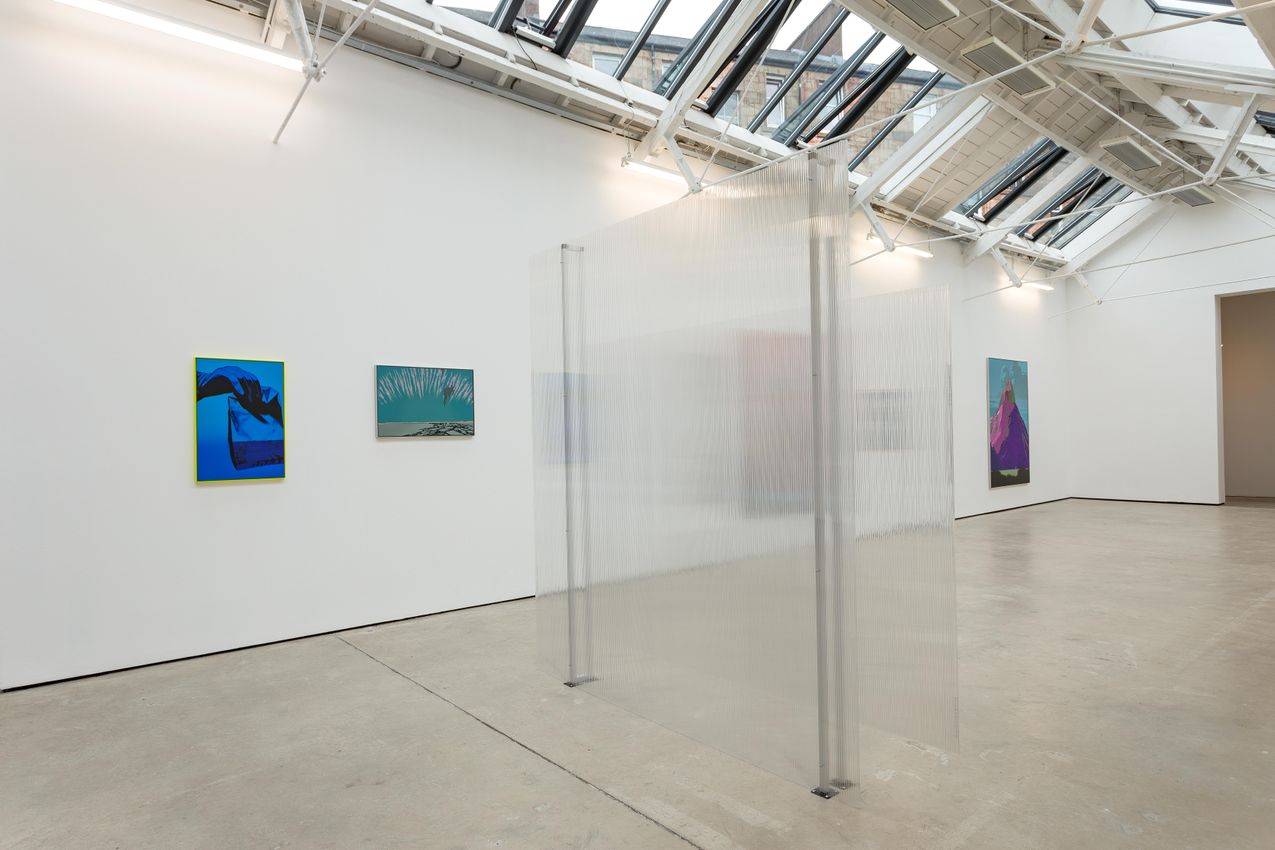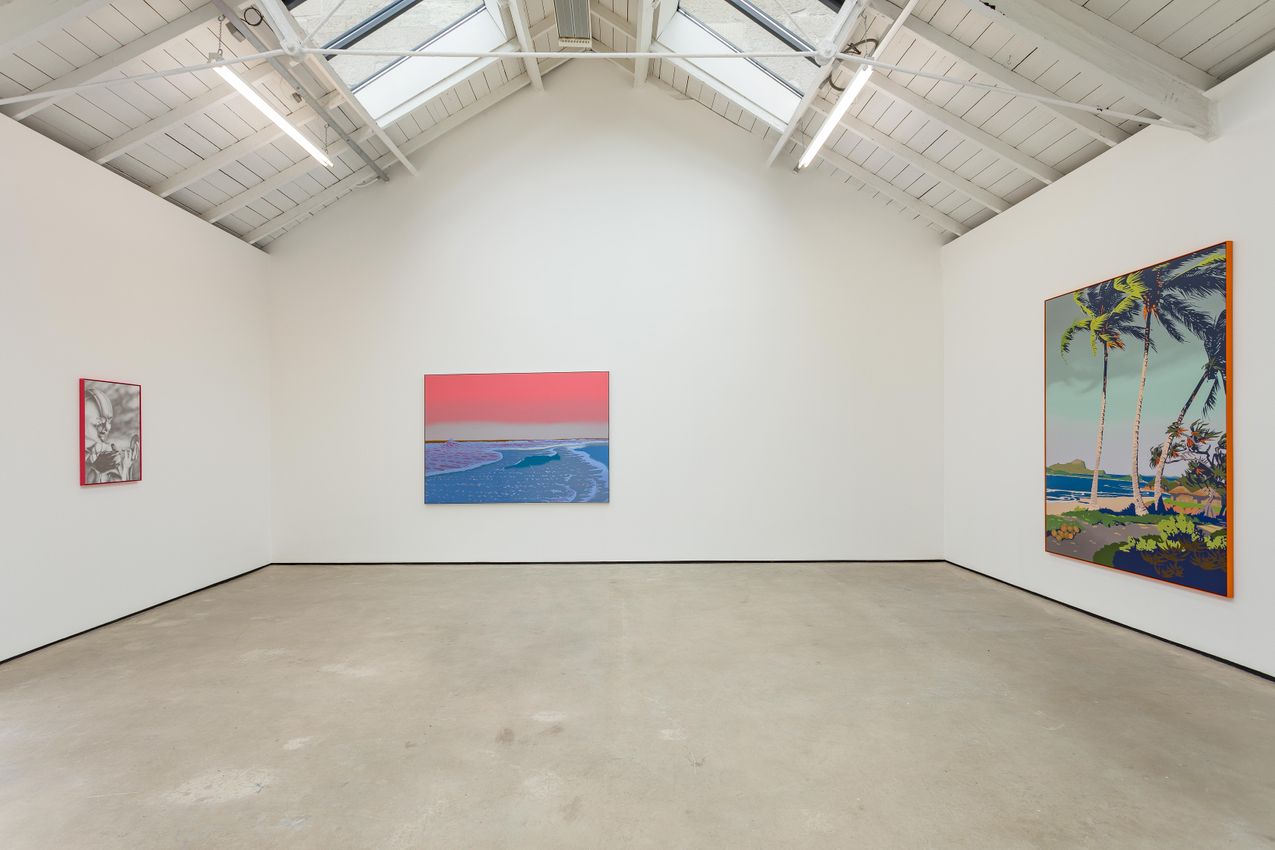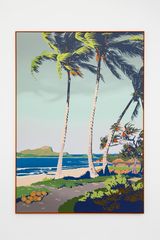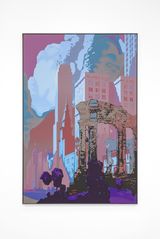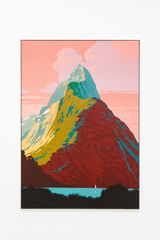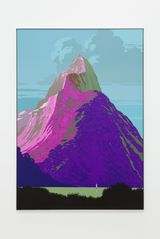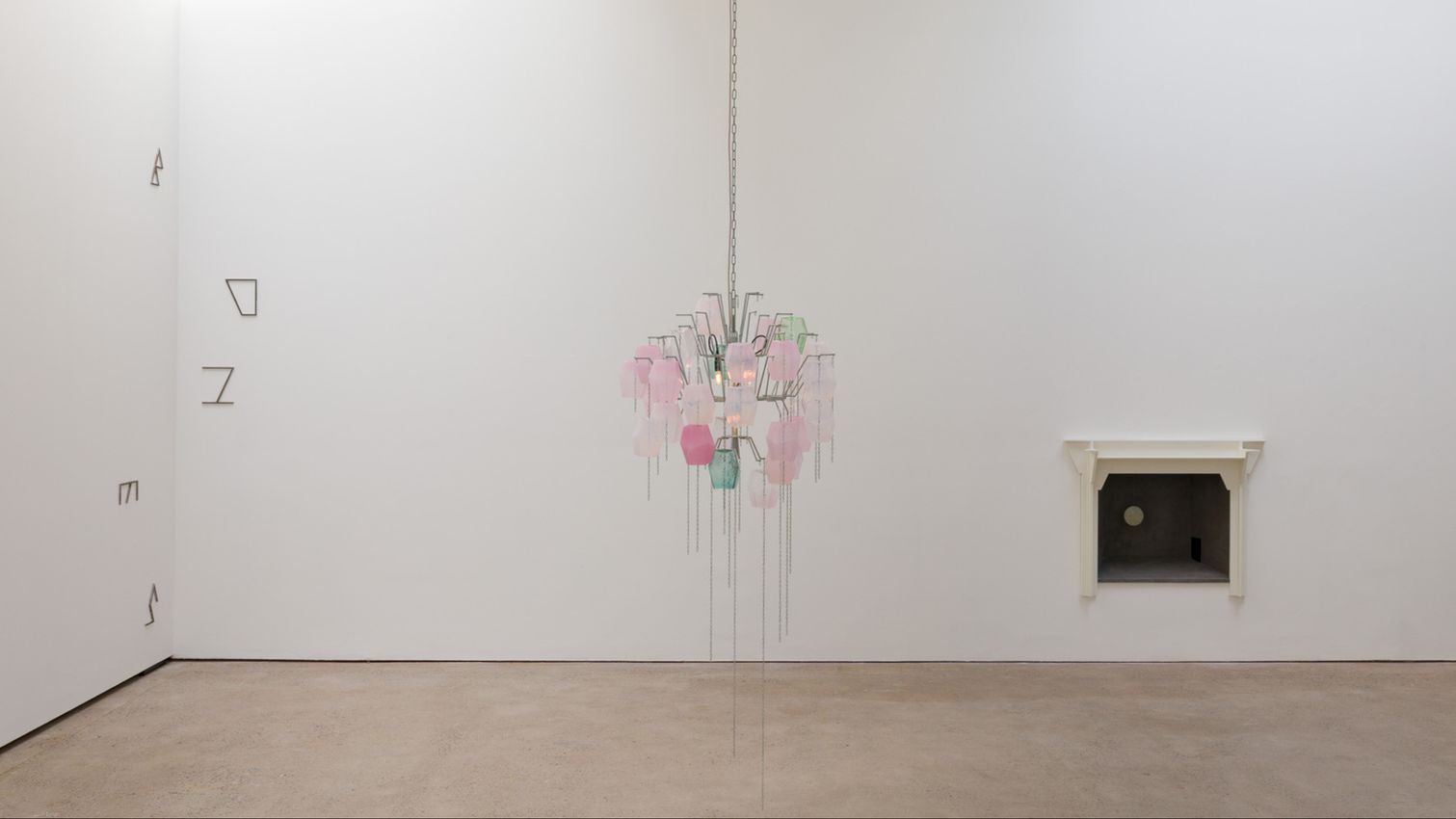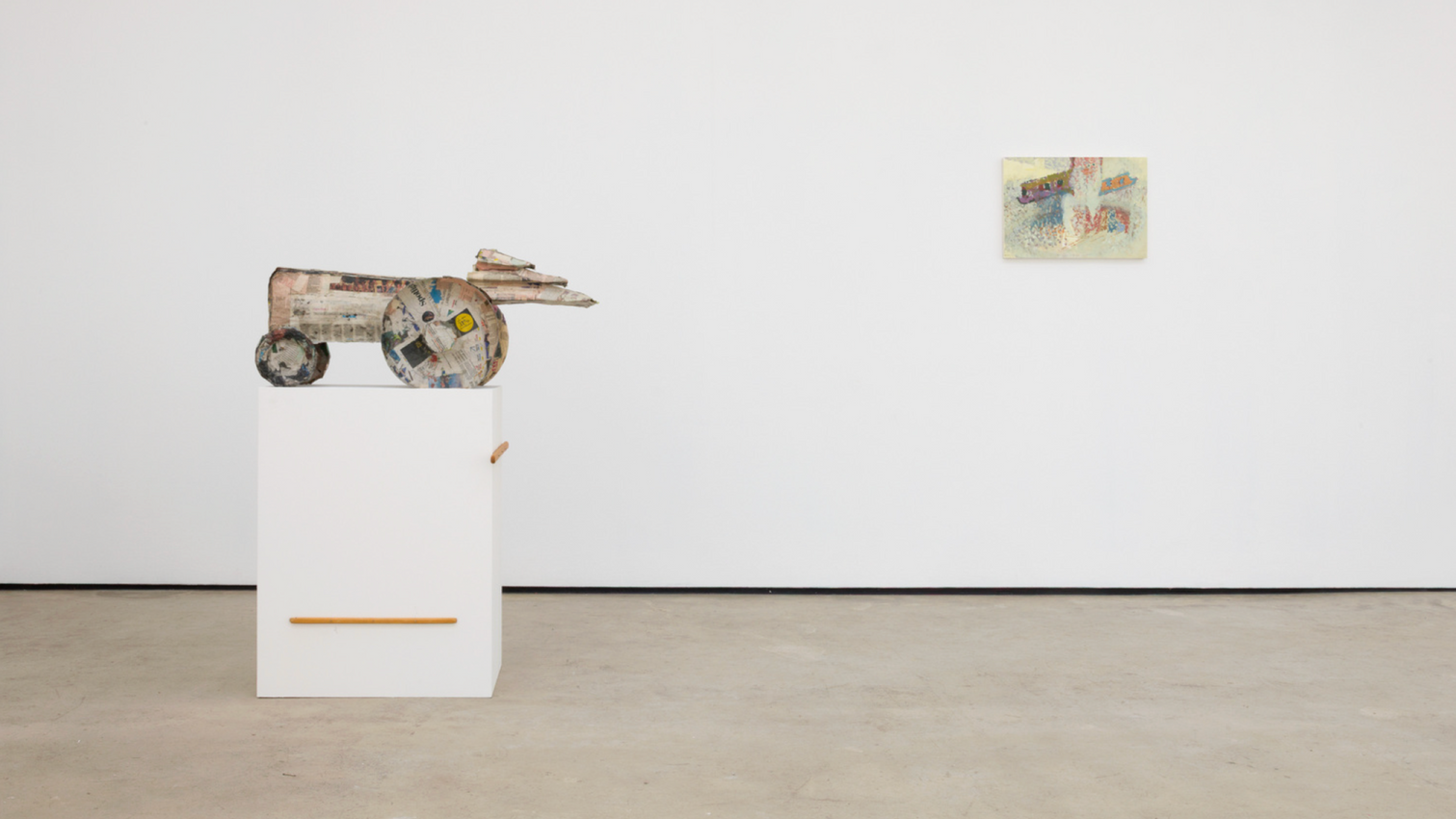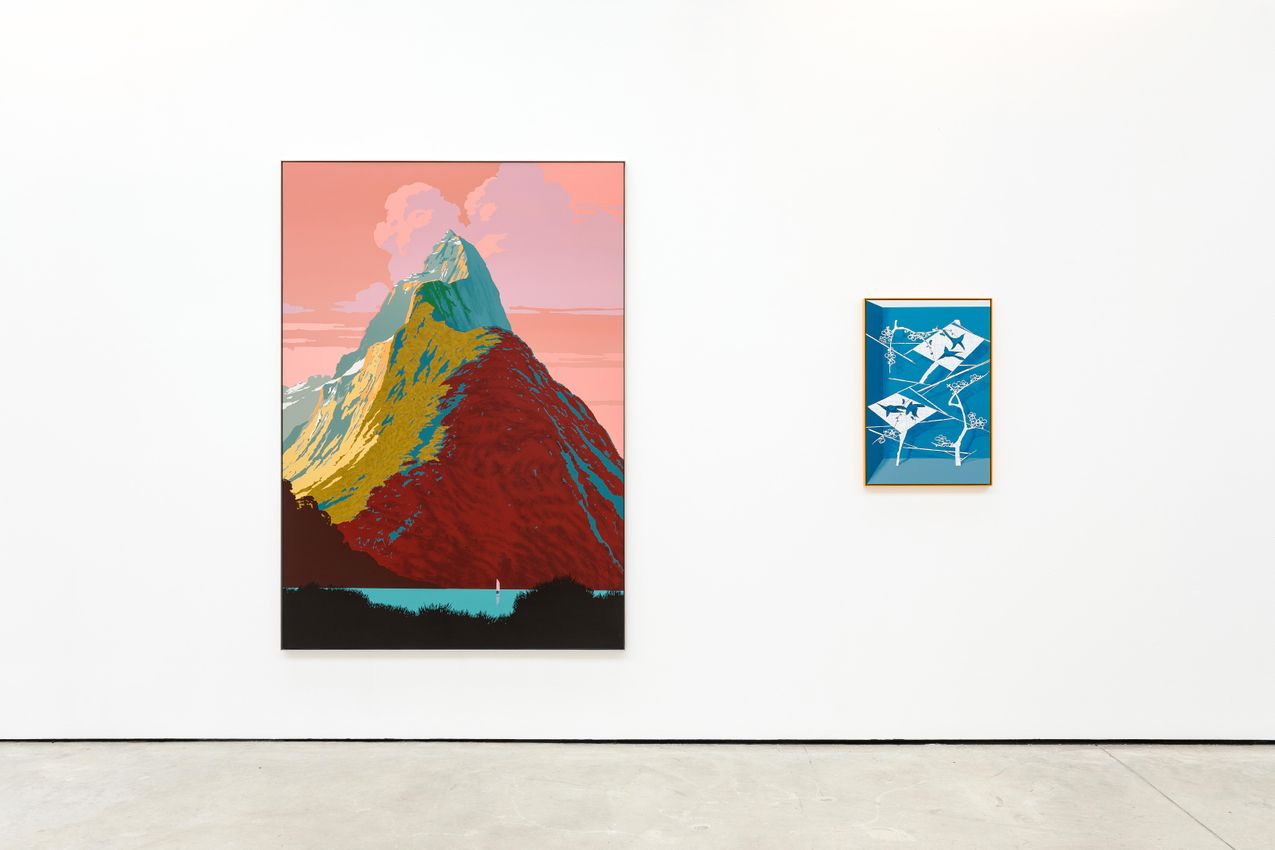
Alex Dordoy’s latest solo exhibition at The Modern Institute, The Weather Channel, presents a body of new paintings that develop the graphic representational language in use since his 2015 show, Model T, with the gallery. Focussing primarily on landscapes, the artist drastically alters found images, transforming them into ethereal, sublime visions that induce a longing for seas and mountains—a desire for nature in the age of smartphones, megacities, and pandemics.
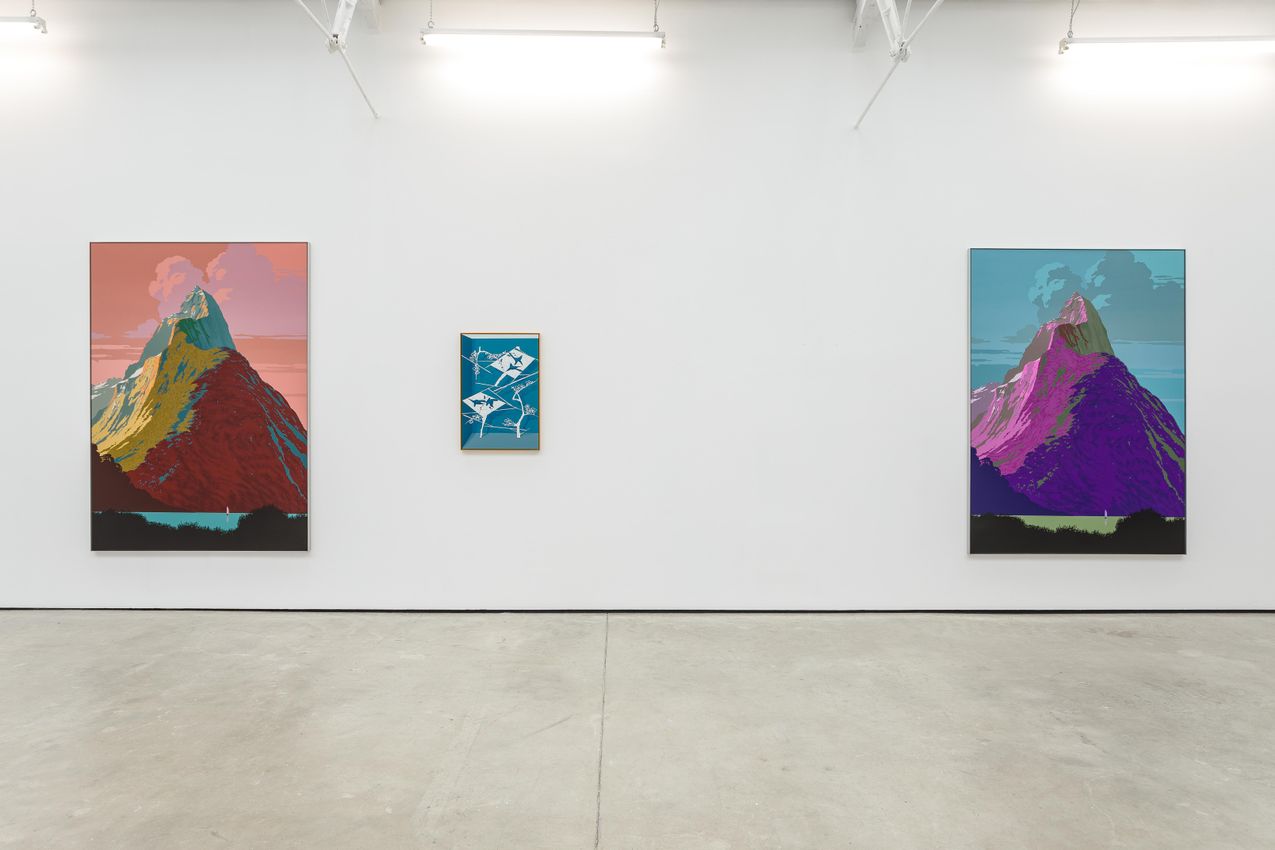
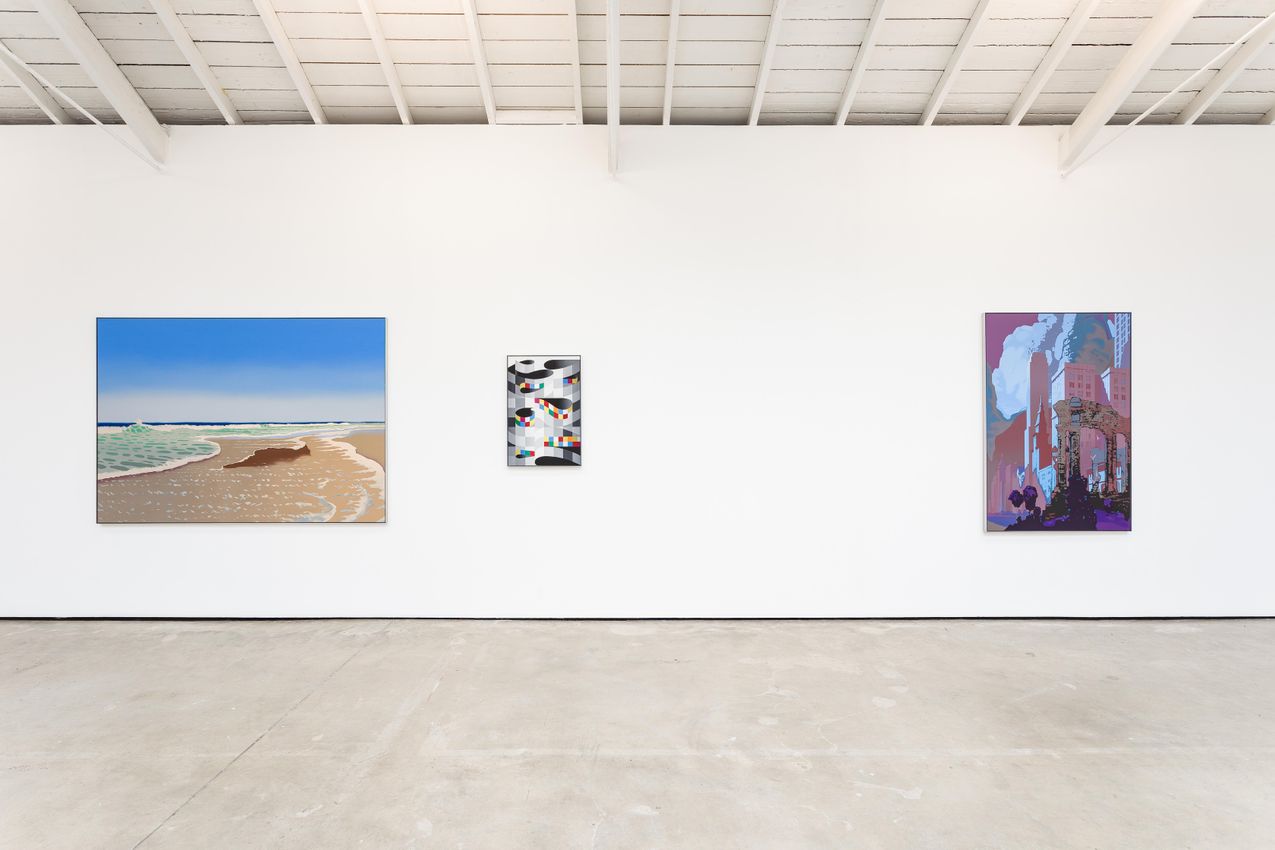
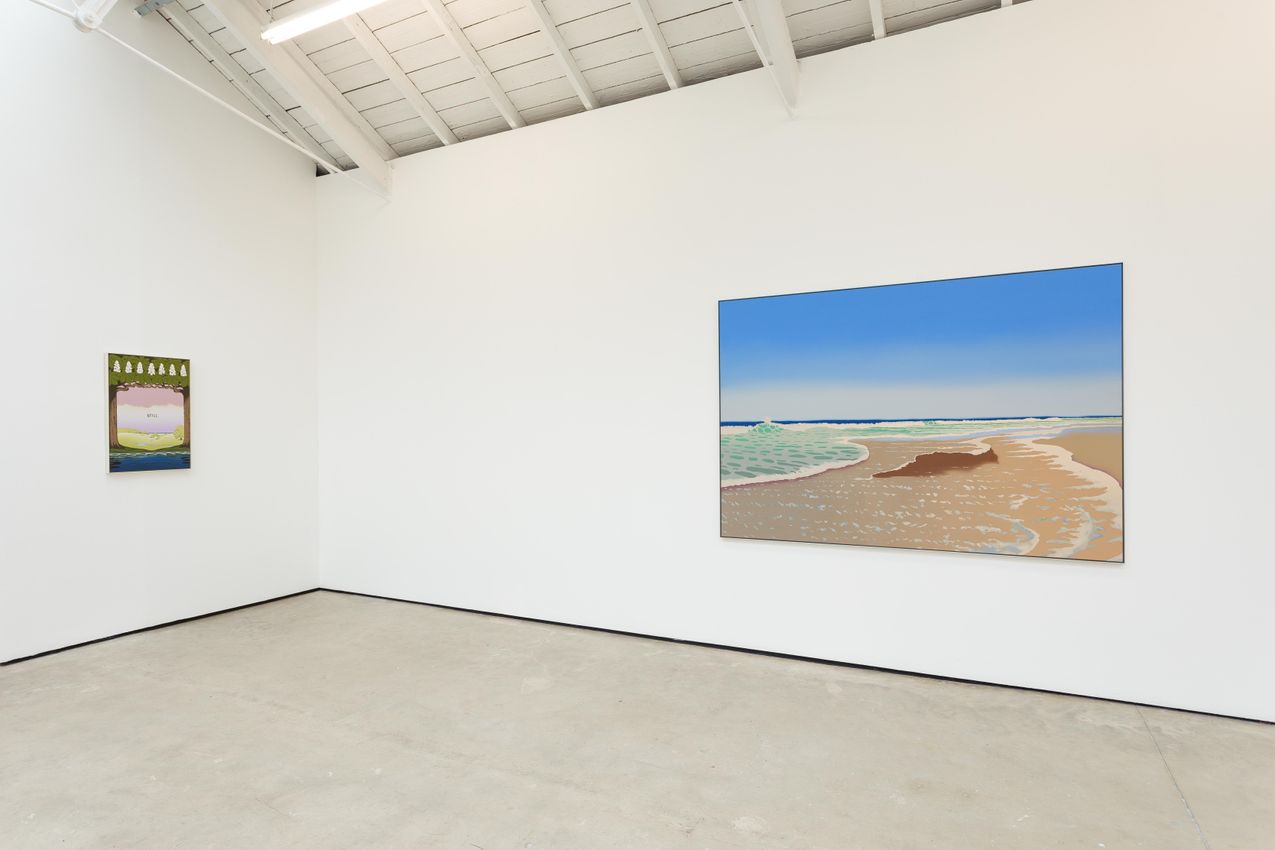
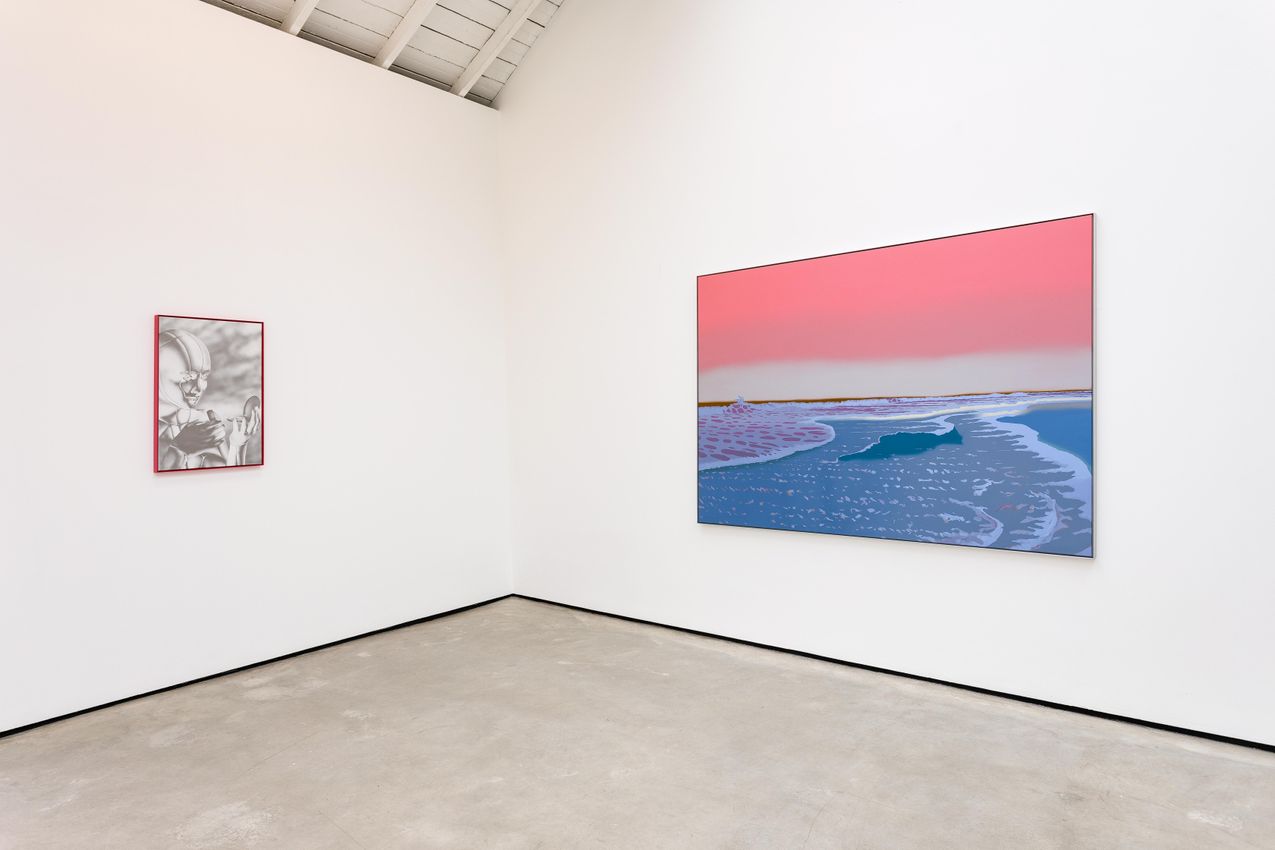
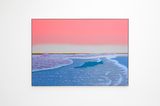
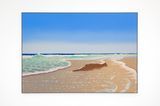
Attracted by their seductive nostalgia, the paintings are derived from vintage travel posters, the specifics stripped from the original adverts to exploit their inherent anonymity. Colours are changed to heighten the atmosphere—sometimes romantic, sometimes ominous—and set the scenes at liminal times of day. In Weather Channel (Dawn) and Weather Channel (Dusk), a small boat anchors the ever-flowing hours. Figures that would have existed in the environment are removed, resulting in landscapes freed of their original time and space. This curious absence of humanity evokes a sense of loneliness: in Striding Behind You and Rising to Meet You, a central figure reclining in the surf has been erased, and the surf now breaks over nothing. Froth on the water is abstracted into a half-formed language, infusing the scene with a new symbolism.
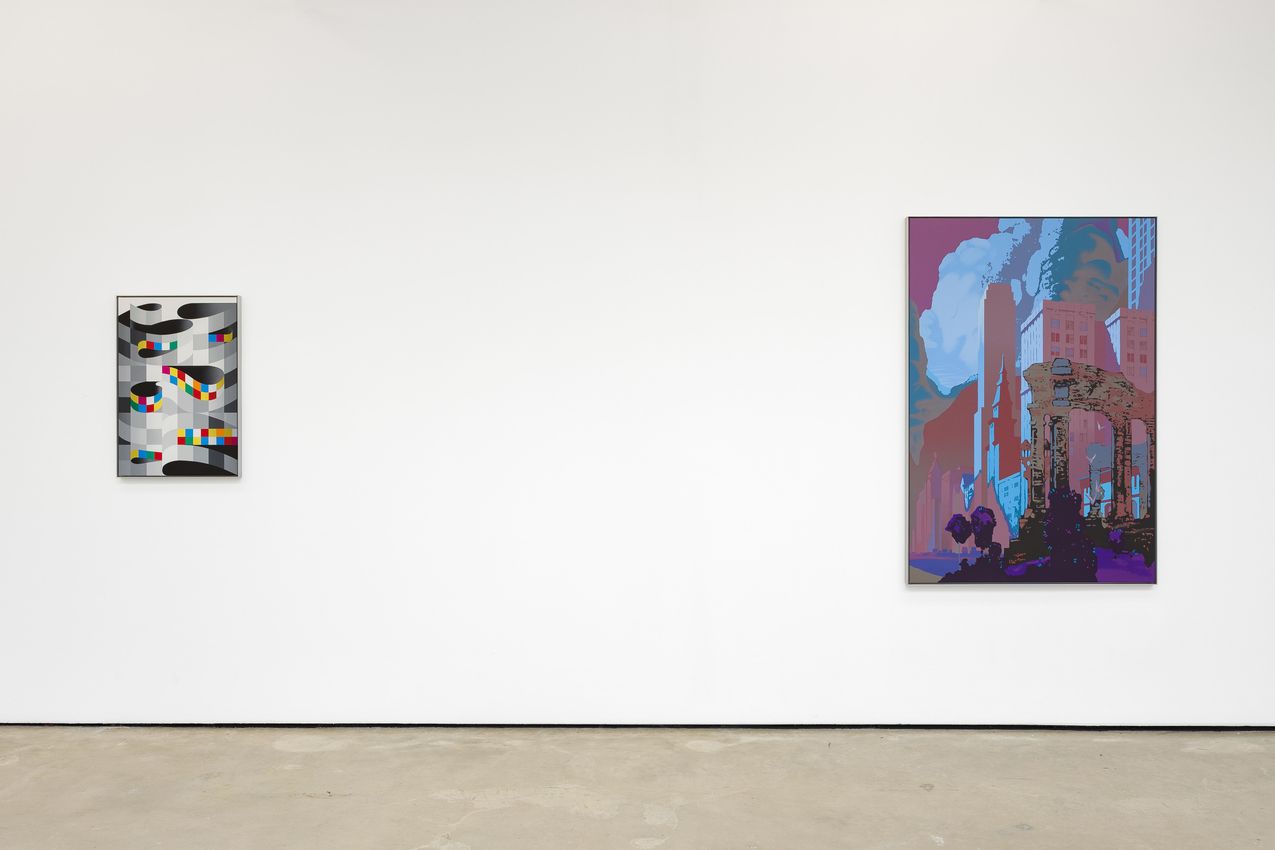
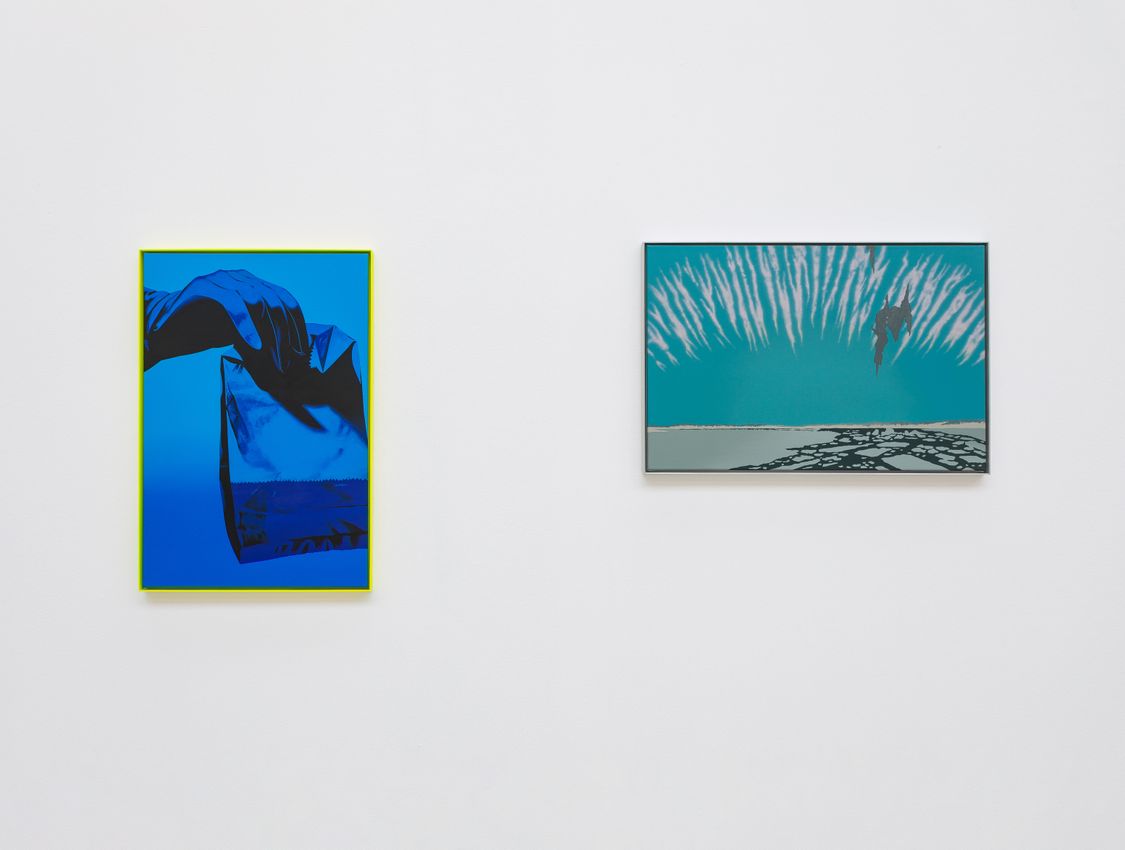
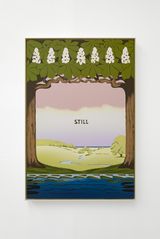
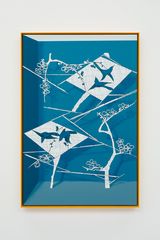
In smaller works, the intimate scale foregrounds a playfulness with imagery and approach. Derived from a Danish Art Deco exhibition poster, The Thousand Year Forest, features the word ‘Still’ cropped from the original Udstilling¹. Reading as both command and defiance, it gives voice to the eerie silence existent in other works. The Weaver Star is based on a stencil for an Edo² period kimono pattern: birds, once free, are now caught in flight, contained in a vitrine—the shadow behind them an illusion of impermanence. Dordoy cites the influence of Japanese prints on Western art, connecting it to the posters referenced in the show and to the start of the hyper-globalised, image-saturated world that we now inhabit.
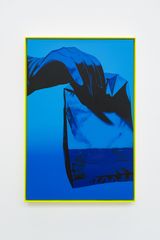
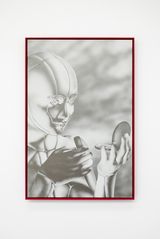
Blocks of intense, flat colour and fades rendered in acrylic are contrasted by different painterly gestures: wet on wet, scumbling, glazing. Layers become a surface architecture, documenting the slow process of their making; and while their precise rendering retains a graphic hardness, traces of the human hand remain. If absence is a running theme throughout the works, it is generally to be understood as an invitation, an expectation that the viewer will step into the landscape and complete the half-formed memory. Not so, however, in The Expected Guest, the show’s figurative anomaly: based on a stock image of a robot looking at itself in the mirror, its gaze is fixed in an impenetrable feedback loop. Painted in airbrushed metallic acrylic, the surface has no give. Yet, in its own way, as with the rest of the paintings in the show, it is an image of longing—a longing to break out from the self, from the screen, from the city, and a desire disappear into the forgotten beauty of nature.
Alex Dordoy (b. 1985, Newcastle) lives and works in London. He received his BFA from the Glasgow School of Art in 2007 and completed the residency program at De Ateliers, Amsterdam in 2009. Recent solo exhibitions include: Ruin is Rune, GRIMM, New York (2020); Summer’s Ego, GRIMM, Amsterdam (2018); The Moss is Dreaming (Curated by Tom Morton), BlainSouthern, London (2017); From Svalbard Soil, The Modern Institute, 14—20 Osborne Street, Glasgow (2017); Model T, The Modern Institute, 3 Aird’s Lane, Glasgow (2015); Sleepwalker, Gemeentemuseum, Den Haag (2014); persistencebeatsresistance, Inverleith House, Edinburgh (2014); I’d planned a cloud but it took me by surprise, ReMap4, Athens (2013).
Selected group exhibitions include: Away in the Hill, GRIMM, New York (2019); Doodle & Disegno, BlainSouthern, Berlin (2018); Future Eaters, Monash University Museum of Art , Caulfield East (2017); I still believe in miracles, Inverleith House, Edinburgh (2016); What’s Up, Soho Revue and Union Club, London (2016); Use/User/Used, Zabludowicz Collection, London (2016); Office Space, Yerba Buena Center for the Arts, San Francisco (2015); Crab Walk, Northern Gallery for Contemporary Art, Sunderland (2015); Breakin’ Up Is Hard to Do, KARST, Plymouth (2015); THE NOING UV IT, Bergen Kunsthall, Bergen (2015); GENERATION: 25 Years of Contemporary Art in Scotland, Scottish National Gallery of Modern Art, Edinburgh (2014).
¹ Danish, ‘exhibition’
² Between 1603 and 1867 in the history of Japan
Alex Dordoy explores ideas of artificiality, nostalgia, and the role of technology in image-making. The unearthly scenes and objects depicted in Dordoy’s paintings reference Art Nouveau advertisements and designs, awakening the symbolic potential of their imagery. The artist edits and manipulates his source imagery using Photoshop and paints the resulting compositions, returning these representations to the physical realm.


The Modern Institute was founded in Glasgow in 1997. The gallery works with internationally established and emerging artists including Martin Boyce, Jim Lambie, Richard Wright, Anne Collier, Cathy Wilkes, Simon Starling, Urs Fischer, Luke Fowler and Nicolas Party.

A respected voice in contemporary art discourse.
Focusing on ambitious storytelling and insightful art-world commentary. Ocula Magazine publishes in-depth interviews, critical essays and timely analysis on the artists, exhibitions and ideas driving the global art world.
Learn more about Ocula Magazine
Showcasing the best of the art world.
Ocula partners with galleries from around the world to highlight their artists, artworks and exhibitions. Gallery membership is by application and invitation, with each member vetted by an independent panel.
Learn more about Ocula Membership

Specialises in the sale of major artworks.
Led by a team with deep ties to the world’s leading auction houses, galleries and collectors. Ocula’s advisory team offers bespoke services to high-net-worth clients from around the world who are looking to acquire the best of contemporary and modern art.
Learn more about our team and services