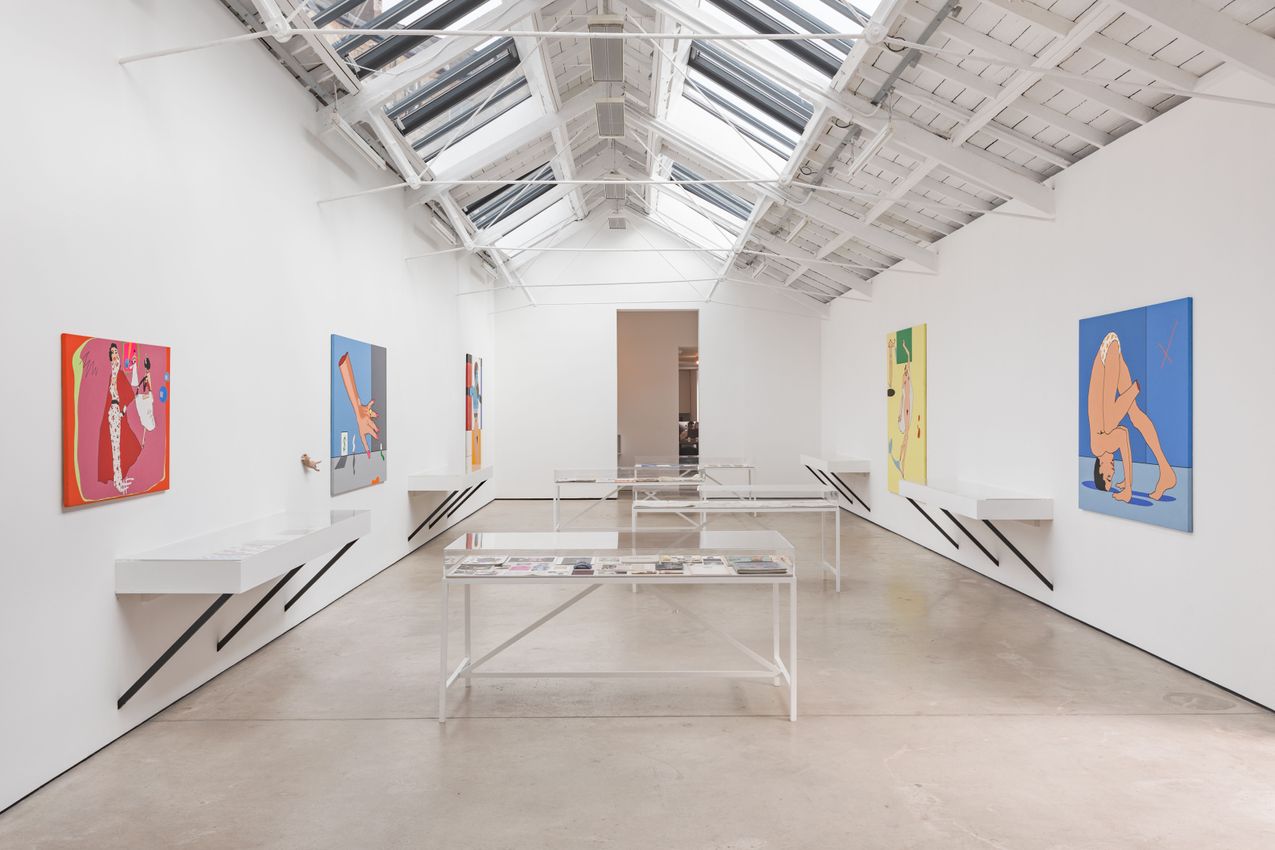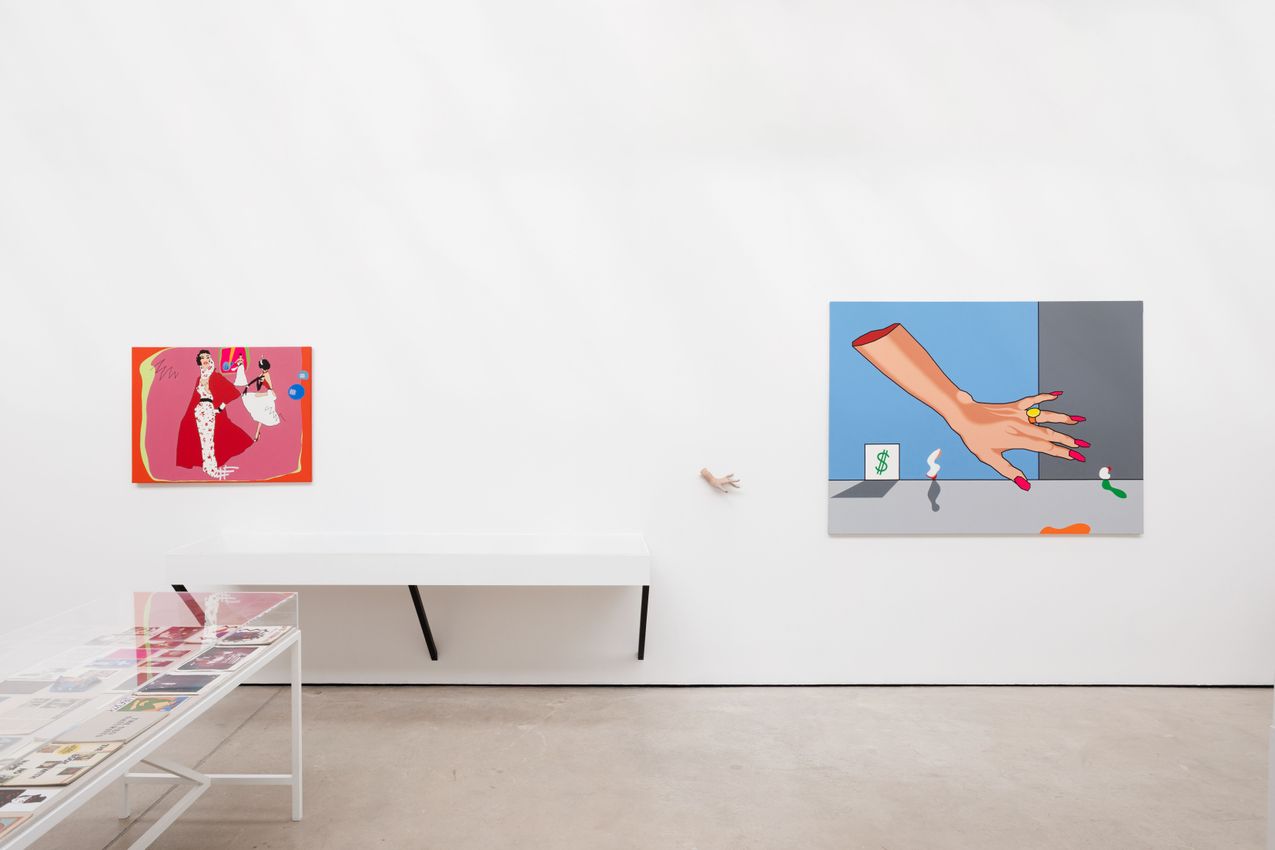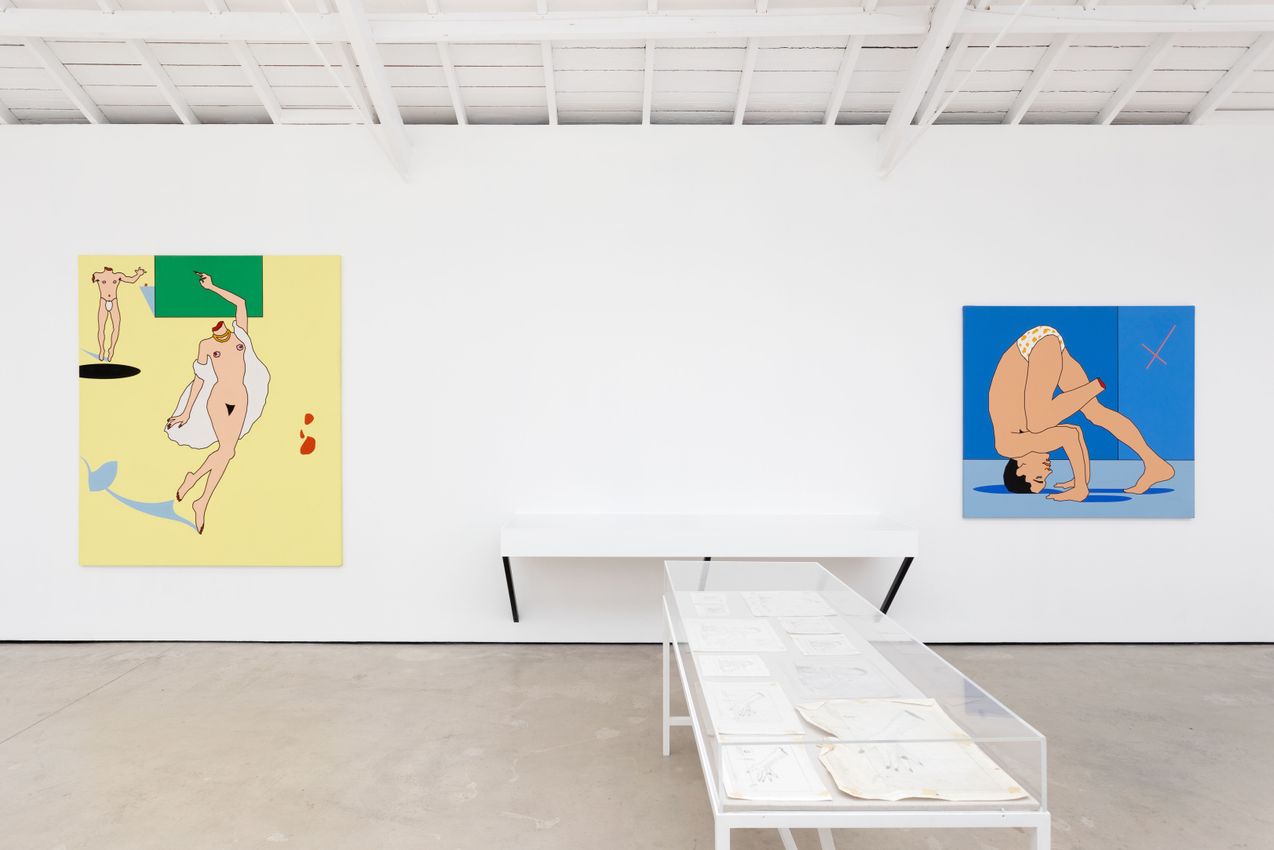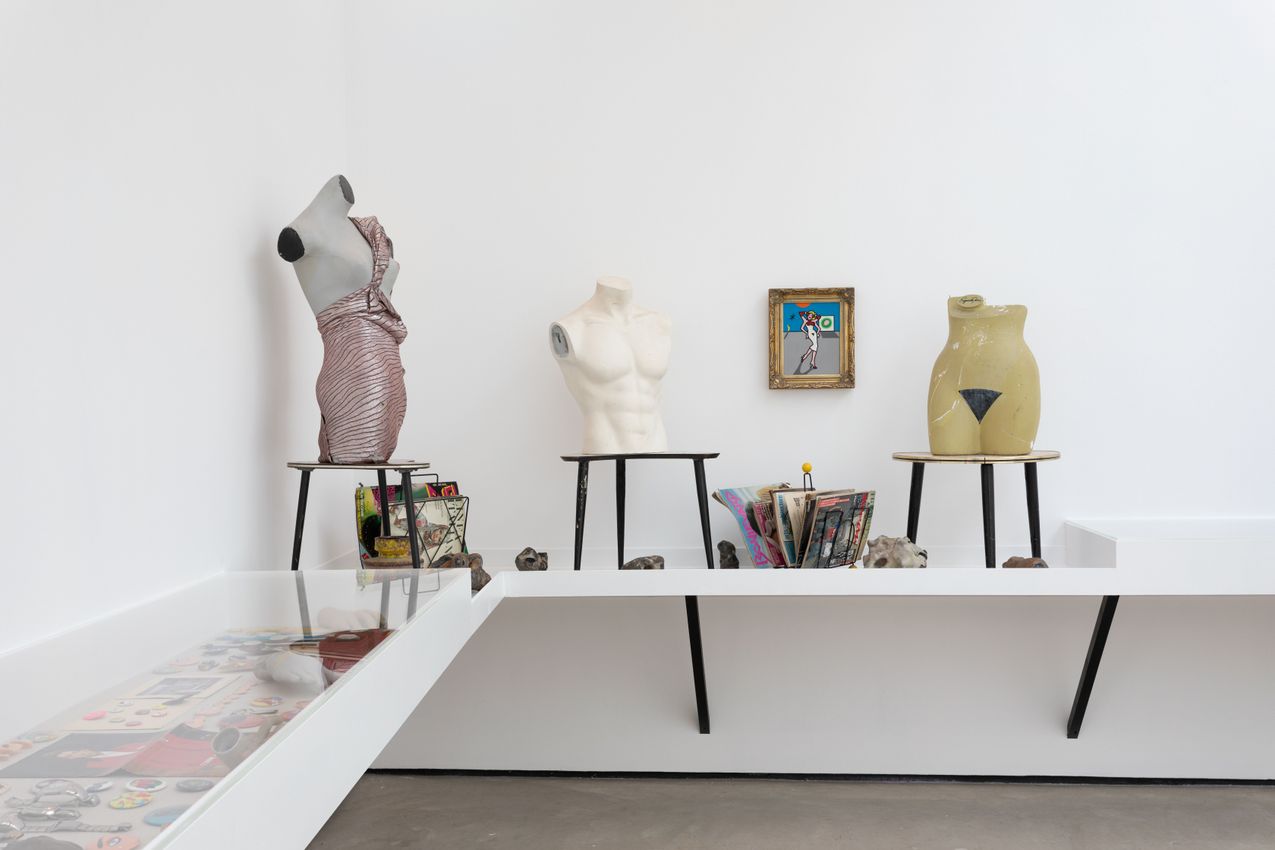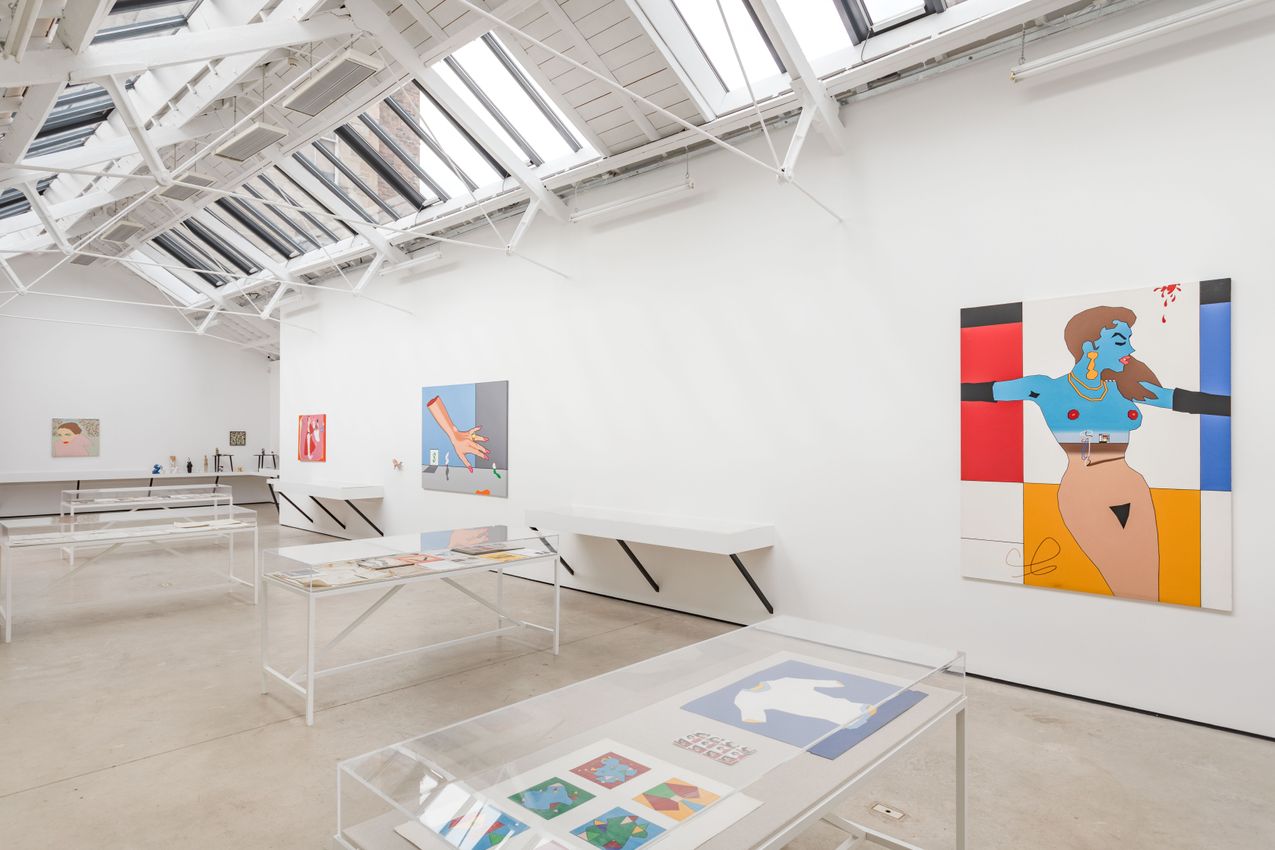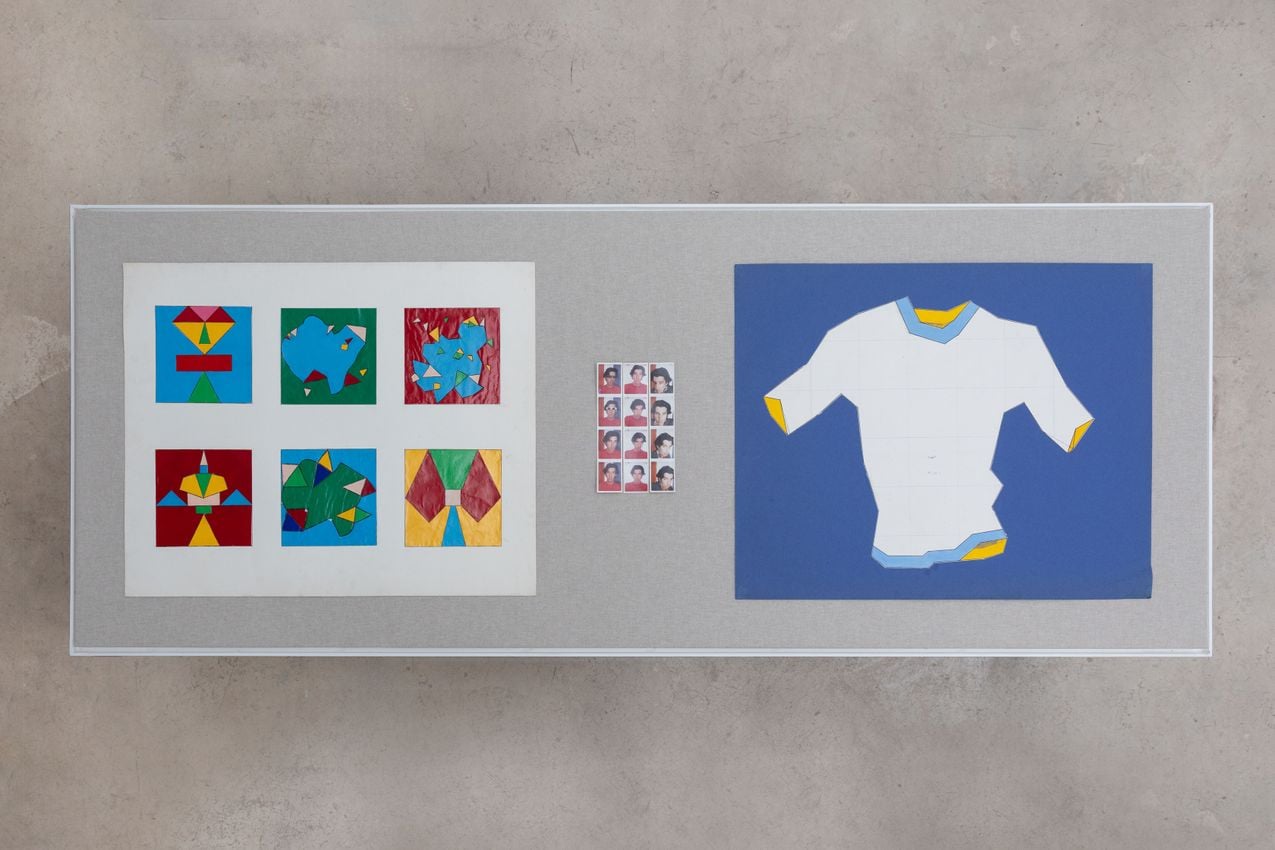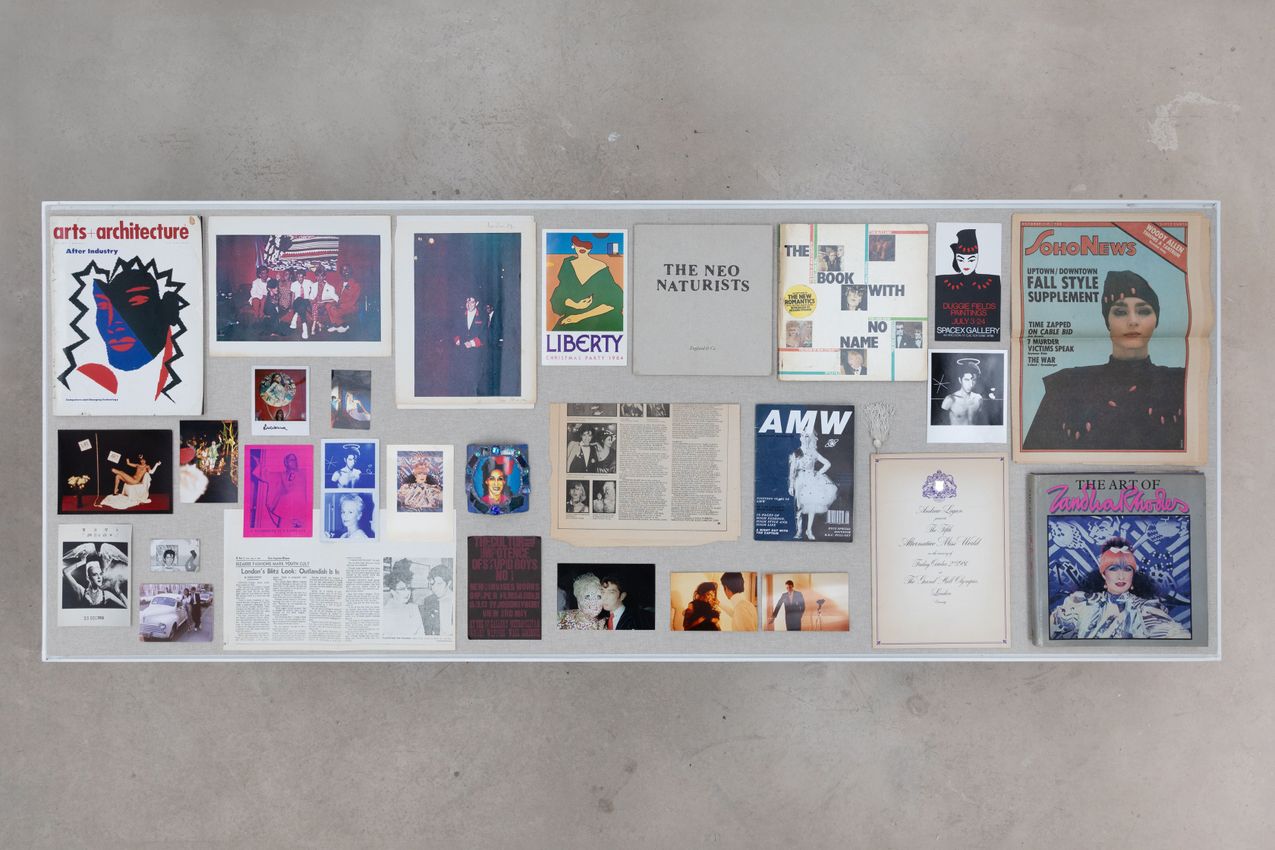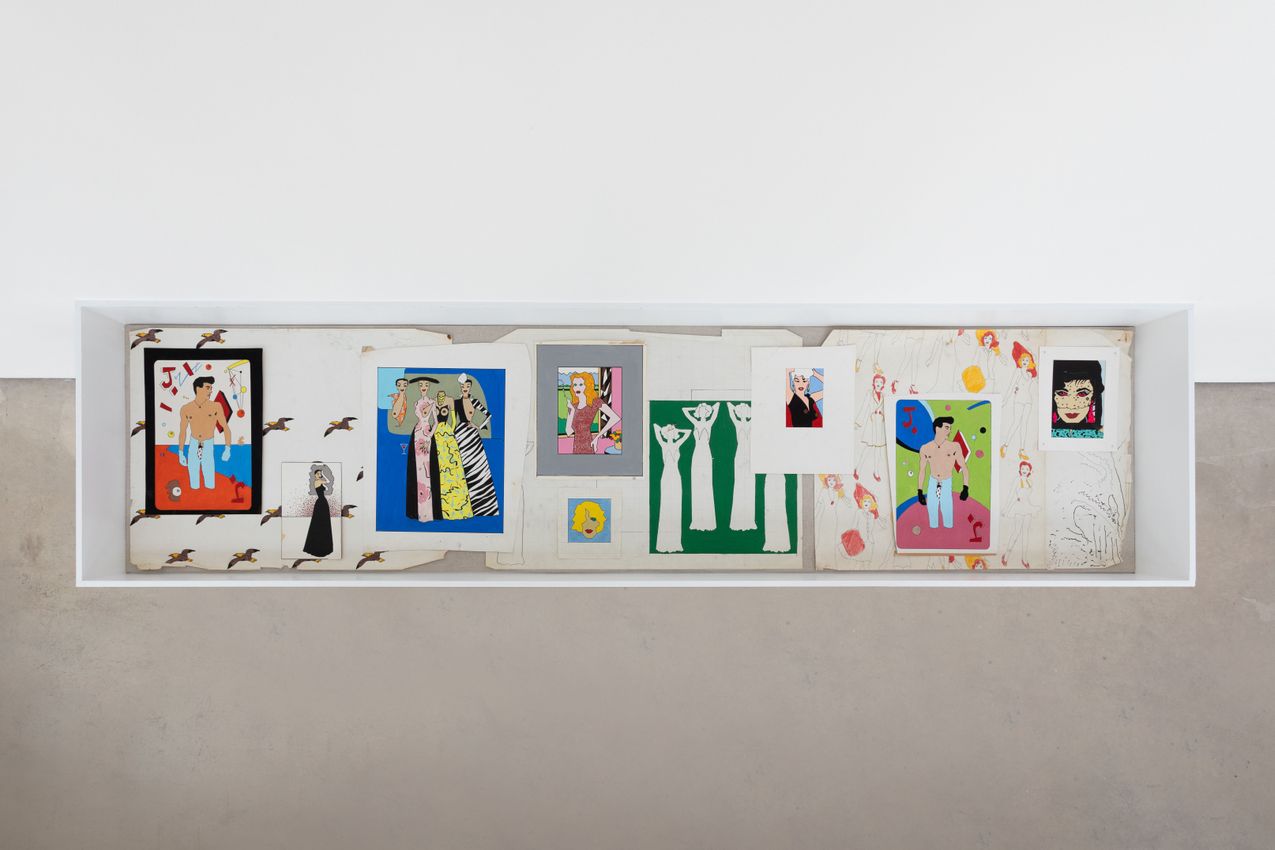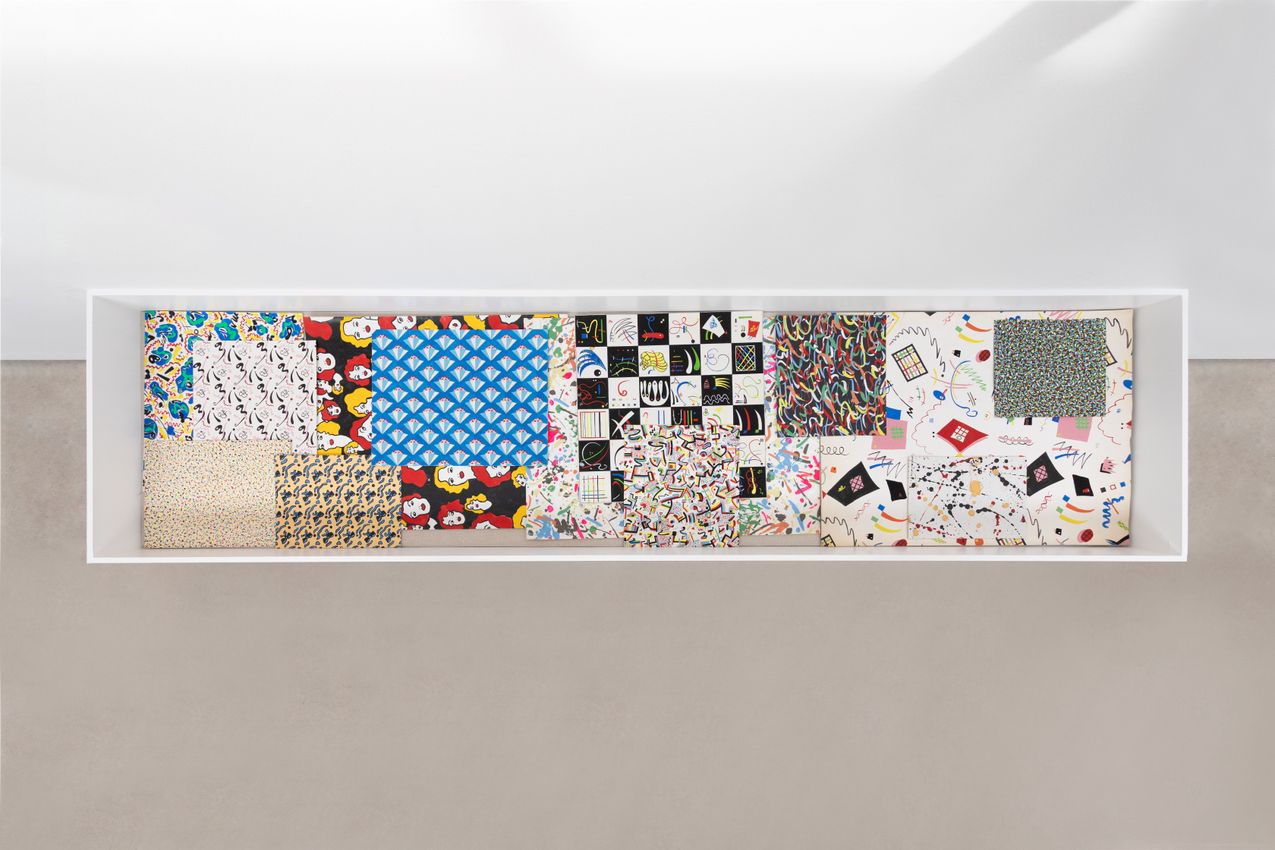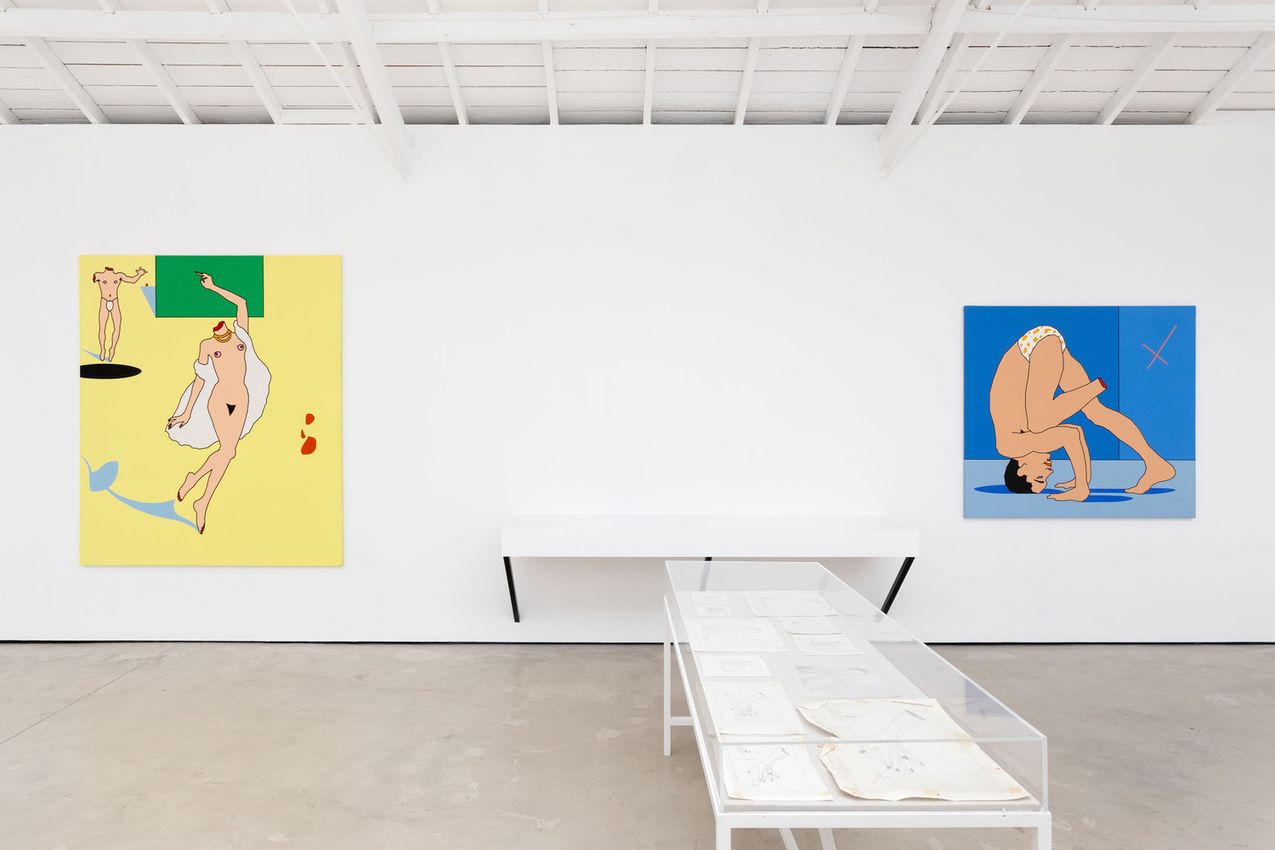
The Modern Institute first worked with Duggie Fields across 2016-2018, a collaboration which culminated in an exhibition reimagining the live-work environment of his famous Earl’s Court flat (initially shared with Syd Barrett) which became a kind of ‘total artwork’ in its own right. Since his death in 2021, The Modern Institute have been working with The Duggie Fields Estate to begin to collate and order the artist’s vast archive. ‘Less is less, more or less’ draws together paintings, preparatory drawings, personal artefacts, photographs, postcards, advertising work, and furniture. It is in no way definitive and the title, a quote from Fields, speaks to the abundance of material on display. The exhibition unfolds along a loose chronology, associatively connecting key moments in the artist’s career from the 1950s-1980s – beginning with his youth in Tidworth, Wiltshire. Some materials relate directly to his studio processes and influences and others provide a sense of Fields’ projects and social life.
Duggie Fields (1945-2021) was a prolific artist who worked across painting, design and fashion, blurring the lines between art and life. He was a consistent figure in London’s Queer community and his friends across the 70s, 80s and beyond included, artist Andrew Logan (founder of Alternative Miss World), fashion designer Zandra Rhodes, filmmaker Derek Jarman and painter Luciana Martinez de la Rosa. His maximalist visual language had an important impact on the trajectory of art and fashion internationally from the 80s onwards – influencing John Maybury, Ozwald Boateng and Rei Kawakubo. Fields was born at the close of World War II, and he always understood and articulated his practice within the tides of history, in relation to such events – working within and against their pressures and the new societal forces they produced. His practice emerges amongst the objects and desires of post-war British capitalism, defined by American influence, in South West England. As he put it in an artist statement from 1991, ‘Born in a small country village in the heart of an English army base the day that Hiroshima was bombed, I spent part of my formative childhood years playing in the conservatory of my parents’ chemist shop amongst the discarded advertising placards and display dummies from the cosmetics counter.’
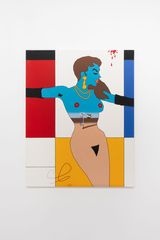
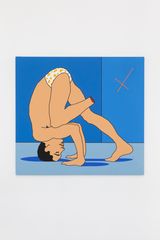
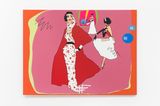
On moving to London, Fields began at Chelsea School of Art in 1964 when John Hoyland, Patrick Caulfield, Allen Jones and Prunella Clough were on the faculty. While there, he began to combine a burgeoning interesting in minimalist abstraction his trademark irreverence. His hard-edge figurative style came out of the post-war abstract painting of his tutors but not everything was plain sailing. He was once reprimanded for including an image of Donald Duck in one painting, a decision that pointed to the direction his work was taking. Perhaps because of his progressive attitude he found Hoyland to be an unsupportive head of studio – effectively blocking Fields’ entry to the postgraduate programme. His work bridged the gap between Pop Art and Postmodernism taking in a range of influences from fashion, comics and photography as well as art history. His interest in kitsch and mass media imagery provided inspiration along with travel – to America in 1968, Japan in the mid-1980s to work with Shiseido and clothing brand Cream Soda, and later to Greece. Artefacts and imagery from these adventures entered Fields’ visual system.
As Judy Marle comments, ‘The paintings sprout from a heap of compost Duggie always keeps to hand, that is always on the go: a pile of images that have caught his eye and are clipped, stripped, and tossed on the heap until the time comes when they suggest a painting.’ His construction of pictures was hard won, involving transferring forms onto tracing paper and then graph paper, finally producing colour studies which provided a template for larger paintings. In the 60s Fields embedded himself in the burgeoning King’s Road scene, catching an early concert by The Rolling Stones. And on his return from America, he settled in a flat in Earl’s Court Square, which became his home and studio for the next 50 years. For all the influence of America, his practice remained rooted in Britain and the immediate London scene. Fields was an elder, along with Logan, of the Queer community that emerged at the Blitz club in Covent Garden in the late 70s and early 80s, as Margaret Thatcher’s time as Prime Minister began. As stylist and designer Judy Blame commented in Kevin Hegge’s film Tramps! (2023), ‘You kind of knew it was going to be a good party if you saw Duggie and Andrew there. And they were so accepting of everything, ‘cause you weren’t always being accepted everywhere, were you? So, it was like a kind of shining light.’ In the context of Tate Modern producing a show on the work, life and influence of artist Leigh Bowery, another key figure in 80s London, it is important to consider the influence of forebearers of this scene like Fields, who have been often ignored or written out of the histories of this time. A further study of Fields’ work in the 1990s and 2000s is much needed. This would take on a different character, as the artist moved in the digital realm, utilising design tools and new software to edit and produce new imagery – videos, prints and music.


The Modern Institute was founded in Glasgow in 1997. The gallery works with internationally established and emerging artists including Martin Boyce, Jim Lambie, Richard Wright, Anne Collier, Cathy Wilkes, Simon Starling, Urs Fischer, Luke Fowler and Nicolas Party.

A respected voice in contemporary art discourse.
Focusing on ambitious storytelling and insightful art-world commentary. Ocula Magazine publishes in-depth interviews, critical essays and timely analysis on the artists, exhibitions and ideas driving the global art world.
Learn more about Ocula Magazine
Showcasing the best of the art world.
Ocula partners with galleries from around the world to highlight their artists, artworks and exhibitions. Gallery membership is by application and invitation, with each member vetted by an independent panel.
Learn more about Ocula Membership

Specialises in the sale of major artworks.
Led by a team with deep ties to the world’s leading auction houses, galleries and collectors. Ocula’s advisory team offers bespoke services to high-net-worth clients from around the world who are looking to acquire the best of contemporary and modern art.
Learn more about our team and services