RE: PÚBLICA will be José Damasceno’s third exhibition at Thomas Dane Gallery, and his first in the UK since Plot, his Artangel commission of 2014.
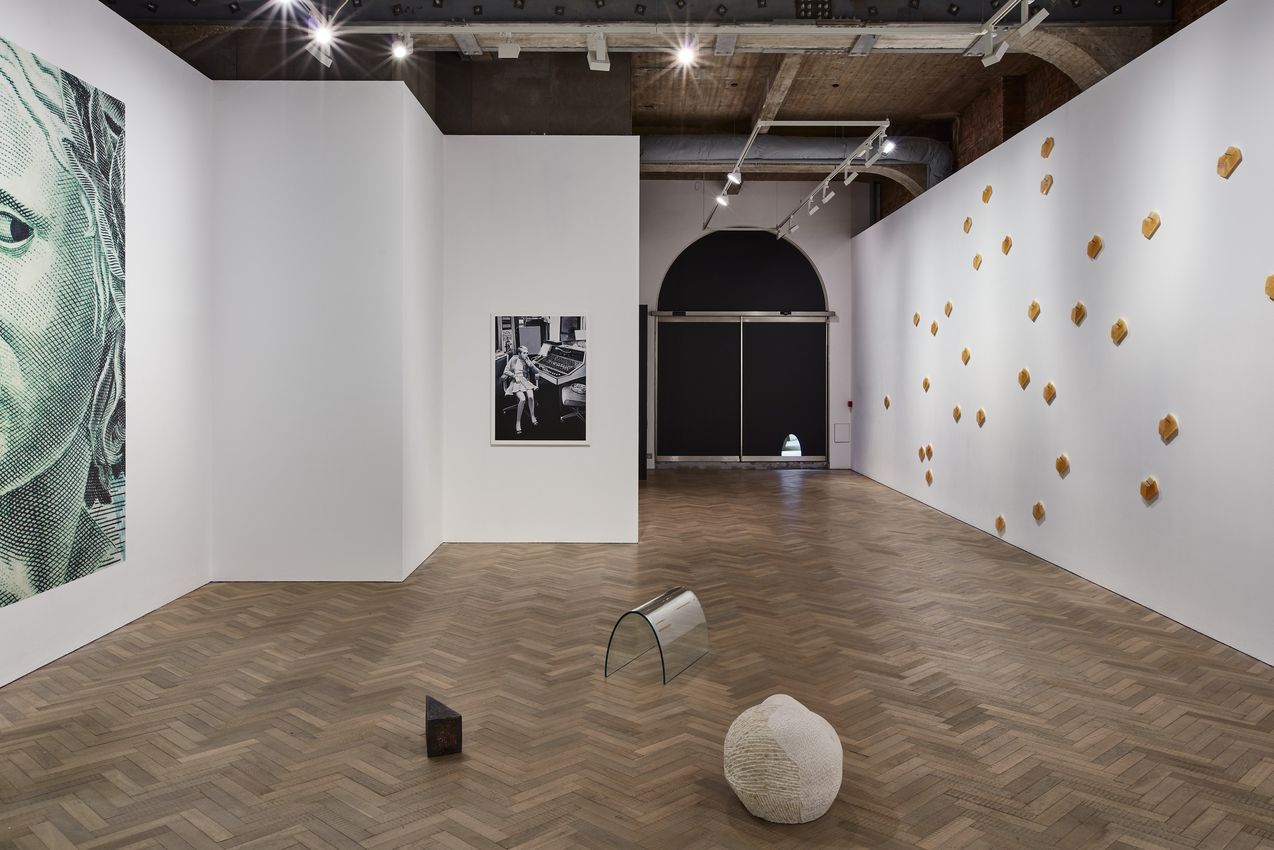
Entirely blacking out the windows of the gallery, Damasceno completely encloses the space from the outside world. Approaching from the street the gallery seems closed, but for a small arched mouse hole ellipse cut from the blackout in the bottom corner of the front window, the only perceivable invitation in. Damasceno forces us (in mind if not in body) to enter his world through this curious aperture, and – as Alice down the rabbit-hole – our perceptions begin to shift. Once inside, the chink of light from the window suggests the gallery as a kind of giant camera obscura or even a magic lantern, filtering the outside world and projecting it in to the gallery.
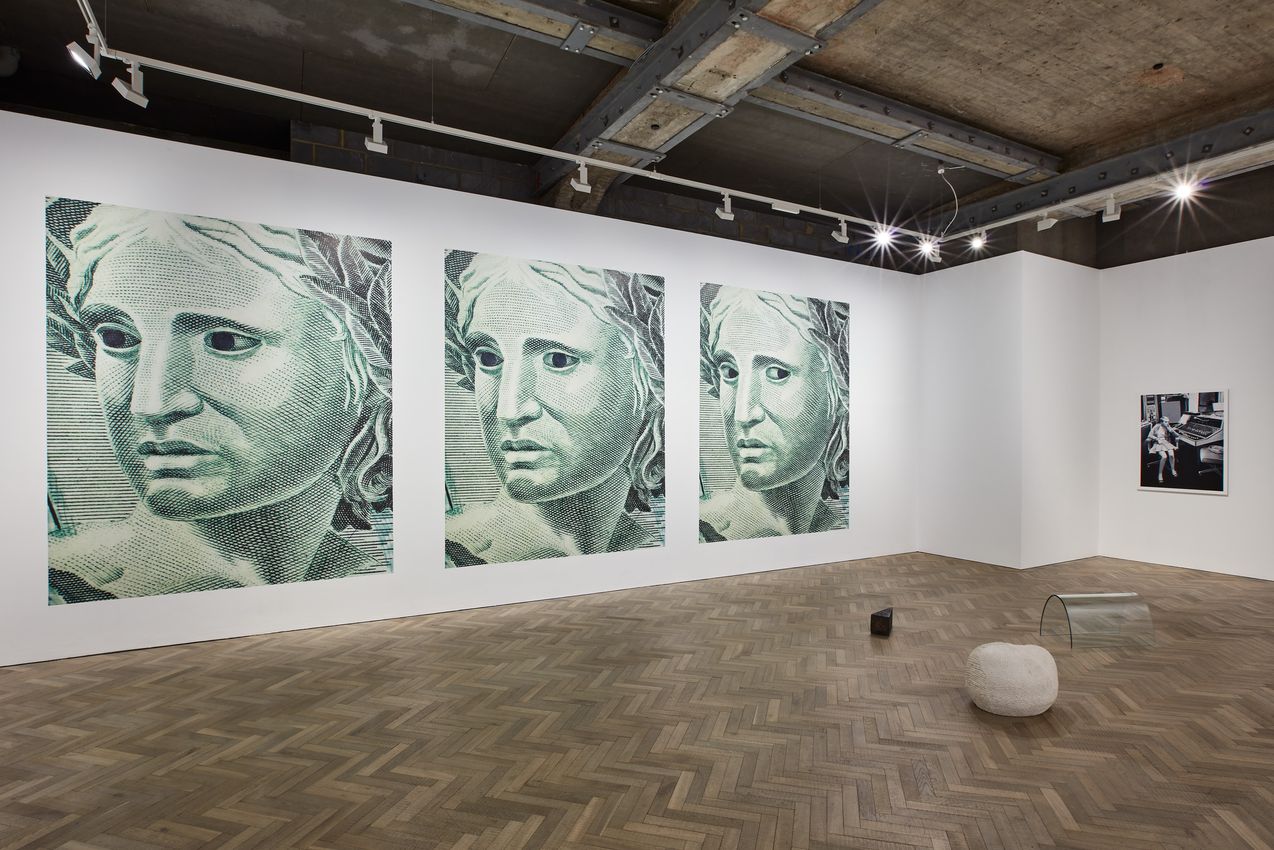
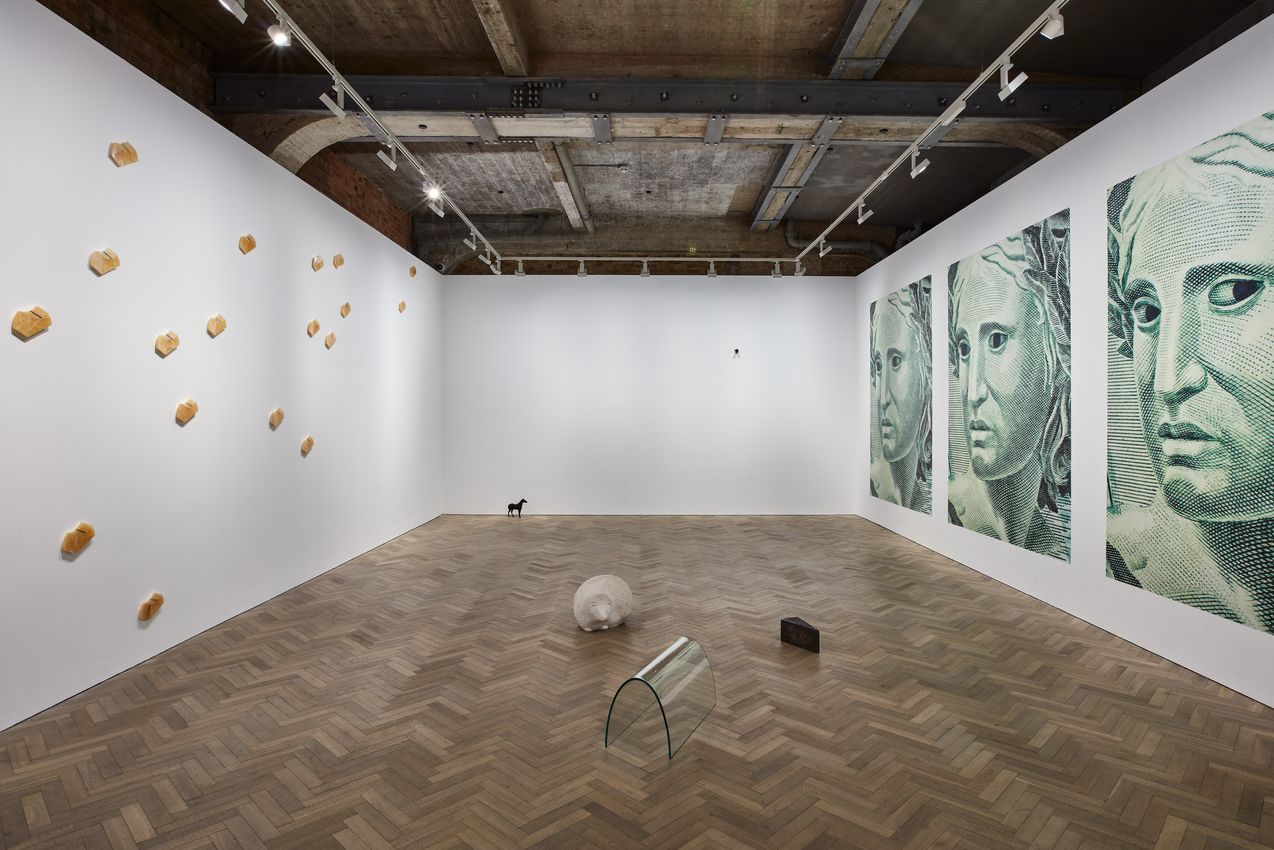
Dominating the space are three giant billposters, each of the symbolic face of The Republic (República) cropped from the Brazilian Real banknotes. In each poster her normally emotionless, stony eyes have been drawn in by hand such that she has now awakened, and looks anxiously over her shoulder. This triptych of images originally appeared last year on the streets of Rio de Janeiro, Damasceno’s hometown, as well as in São Paulo and Belo Horizonte. The artist pasting a number of them across the city, amongst the advertisements and political fly-posters on hoardings and empty shop-fronts. Her anxiety seems ambiguous: a shifting global politics (especially in Damasceno’s native Brazil), something else in the world she is now able to see, or perhaps something inside herself.
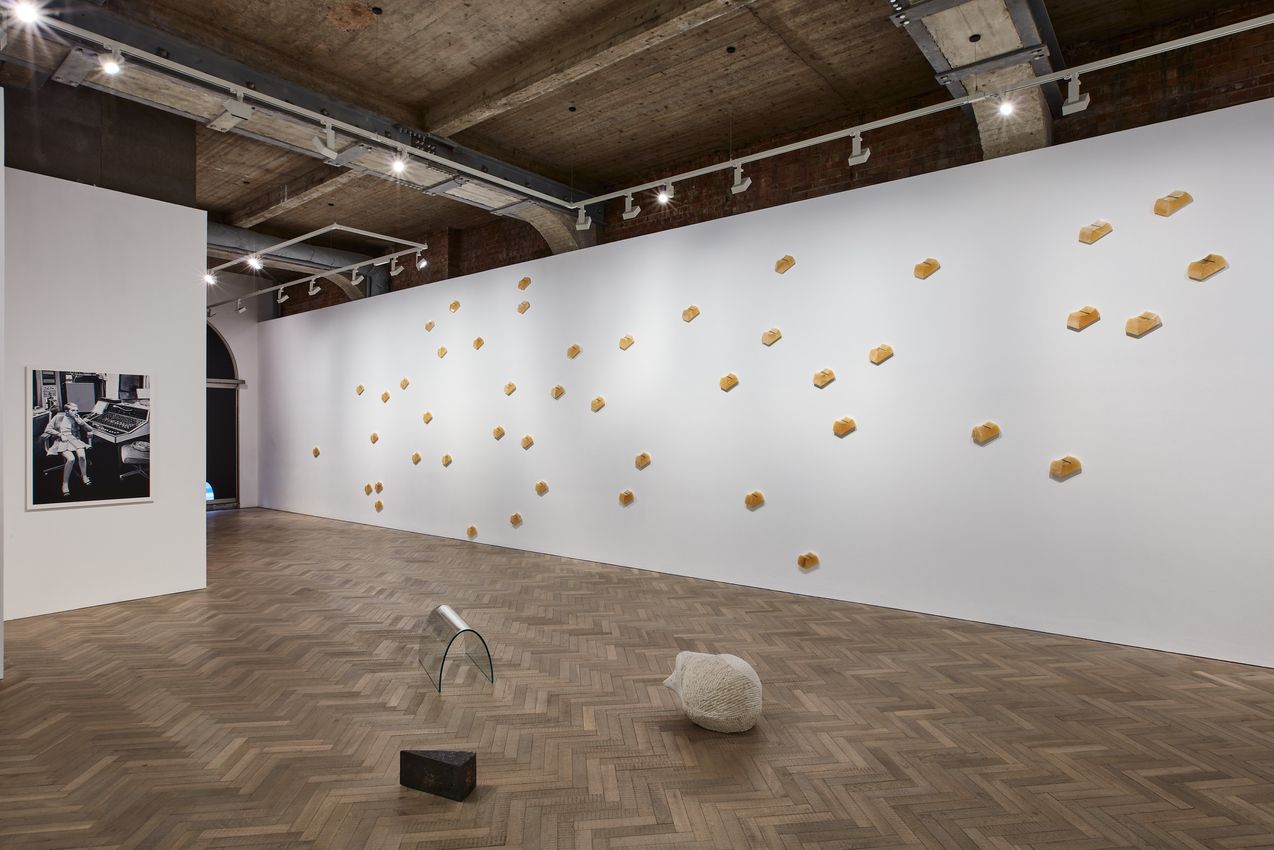
Across from República the slide keys of a 48-channel mixing desk, each carved from stone, stretch across the length of the wall. There is a sense of synaesthesia in Damasceno’s materials, here we begin to see or imagine what it would be to touch sound. From a dance turned to stone (Dance Floor (Step by Step), 2006) or hammers into music (Soundtrack, 2002), Damasceno delights in these often surreal or contradictory substitutions that draws on the intuitive essence of materials.
From República and mixing desks Damasceno turns our attention to Twiggy. More precisely a photograph of the 60s star looking typically aloof in a London sound-studio. The echo of her iconic eyes and the mixing desk create a formal, if somewhat unusual, bridge to this new starting point. At first appearance, the image seems familiar, or at least recognisable, though we sense that nothing is what is seems. The photograph is of a painting, which in turn has been made as a copy of a photograph (in fact, the original photograph was serendipitously found in a thrift store close to Damasceno’s studio in Rio, but taken and printed at the time in London). In returning this image home, via the tradition of Brazilian film poster painting, Damasceno filters our perception of the image and imbues it with virtually unseen idiosyncrasies.
Statues continue to echo through the rest of the exhibition. The seemingly allegorical works are composed of combinations of found and artist-made models of animals, which suggest a type of surreal storytelling. A hedgehog, perhaps whose front door we saw on the way into the gallery, emerges from a glass tunnel. A wall-dwelling dog and a floor-dwelling horse contemplate each other across the different planes of their intersecting worlds. In Damasceno’s world we encounter real, concrete objects; however, what we were sure of when we began to look them is quickly eroded as their physical form dissolves into a myriad of imaginative meanings and projections.
Thomas Dane Gallery was established in 2004 and currently exists in two London gallery spaces at 3 and 11 Duke Street St. James’s, with a third space in Naples on Via Francesco Crispi which opened in 2018. A feature of the gallery is its commitment to the moving image, supporting the production and exhibition of works by Steve McQueen, John Gerrard, Akram Zaatari, Paul Pfeiffer and Bruce Conner.

A respected voice in contemporary art discourse.
Focusing on ambitious storytelling and insightful art-world commentary. Ocula Magazine publishes in-depth interviews, critical essays and timely analysis on the artists, exhibitions and ideas driving the global art world.
Learn more about Ocula Magazine
Showcasing the best of the art world.
Ocula partners with galleries from around the world to highlight their artists, artworks and exhibitions. Gallery membership is by application and invitation, with each member vetted by an independent panel.
Learn more about Ocula Membership

Specialises in the sale of major artworks.
Led by a team with deep ties to the world’s leading auction houses, galleries and collectors. Ocula’s advisory team offers bespoke services to high-net-worth clients from around the world who are looking to acquire the best of contemporary and modern art.
Learn more about our team and services