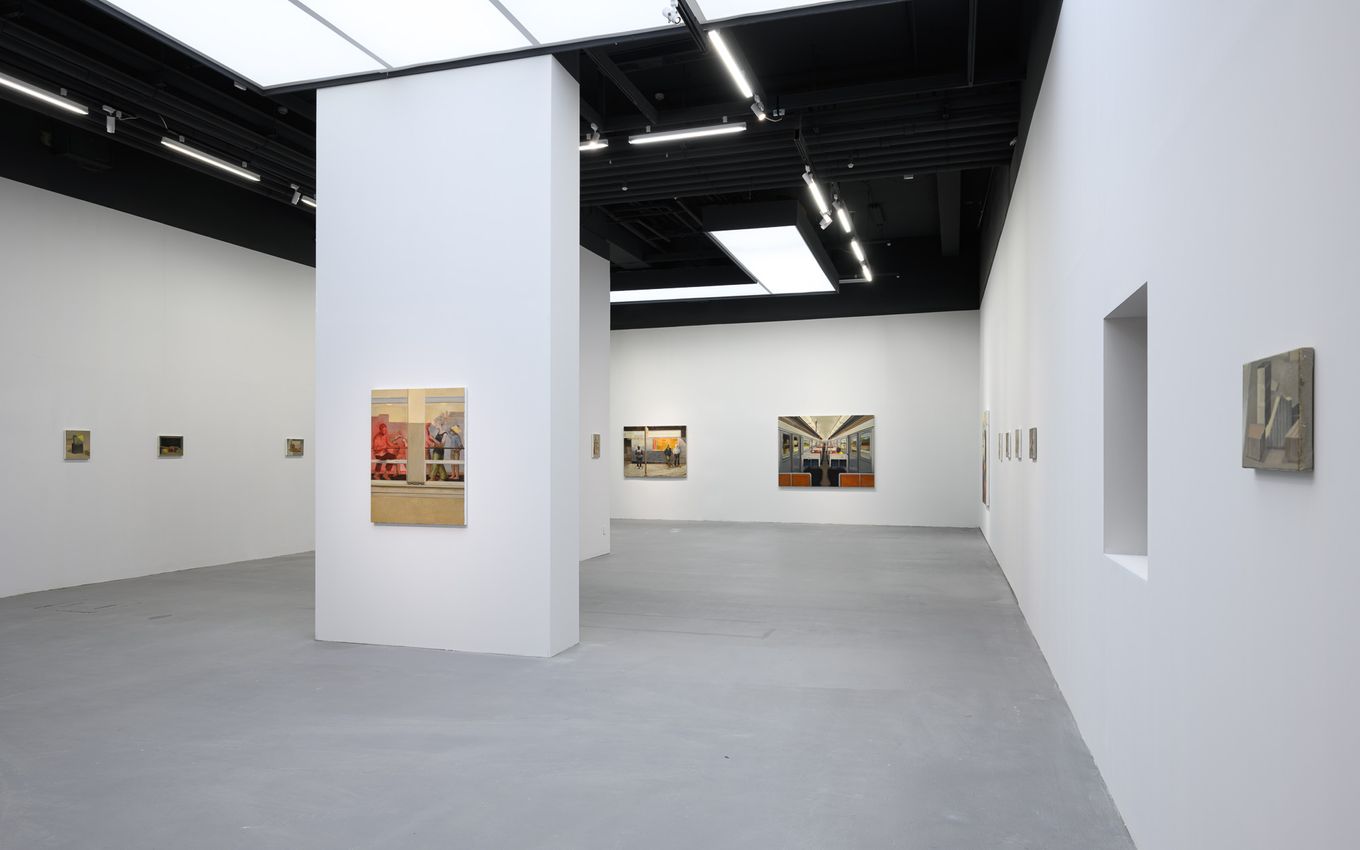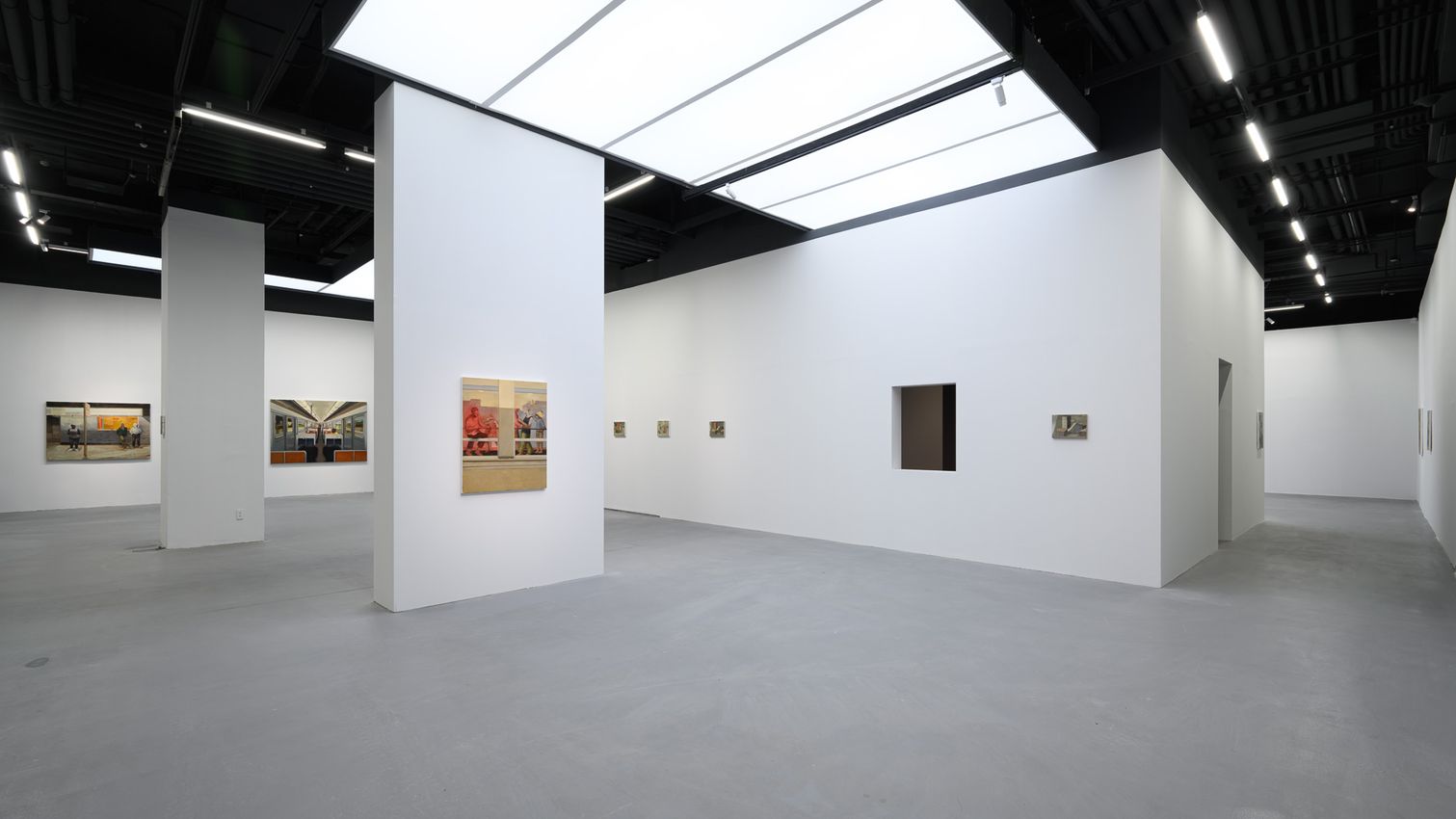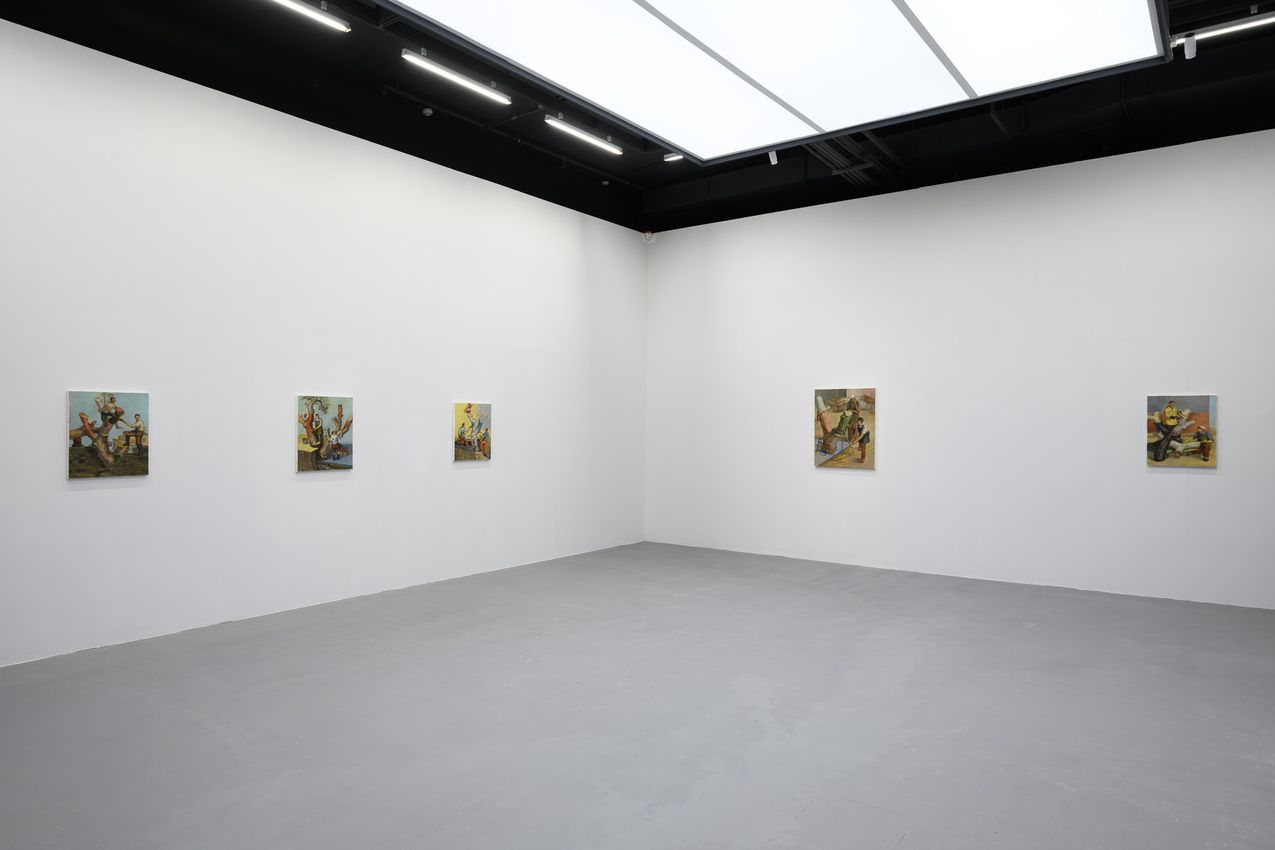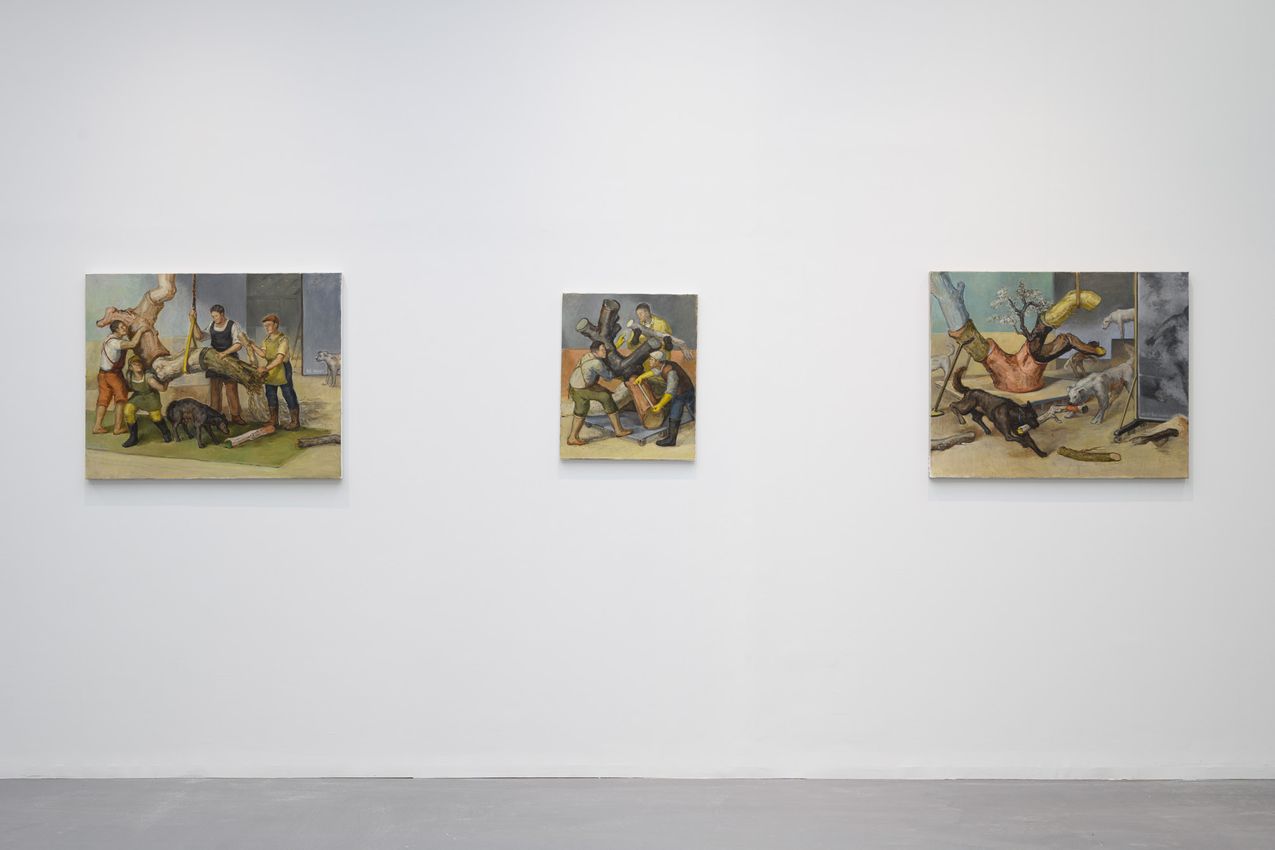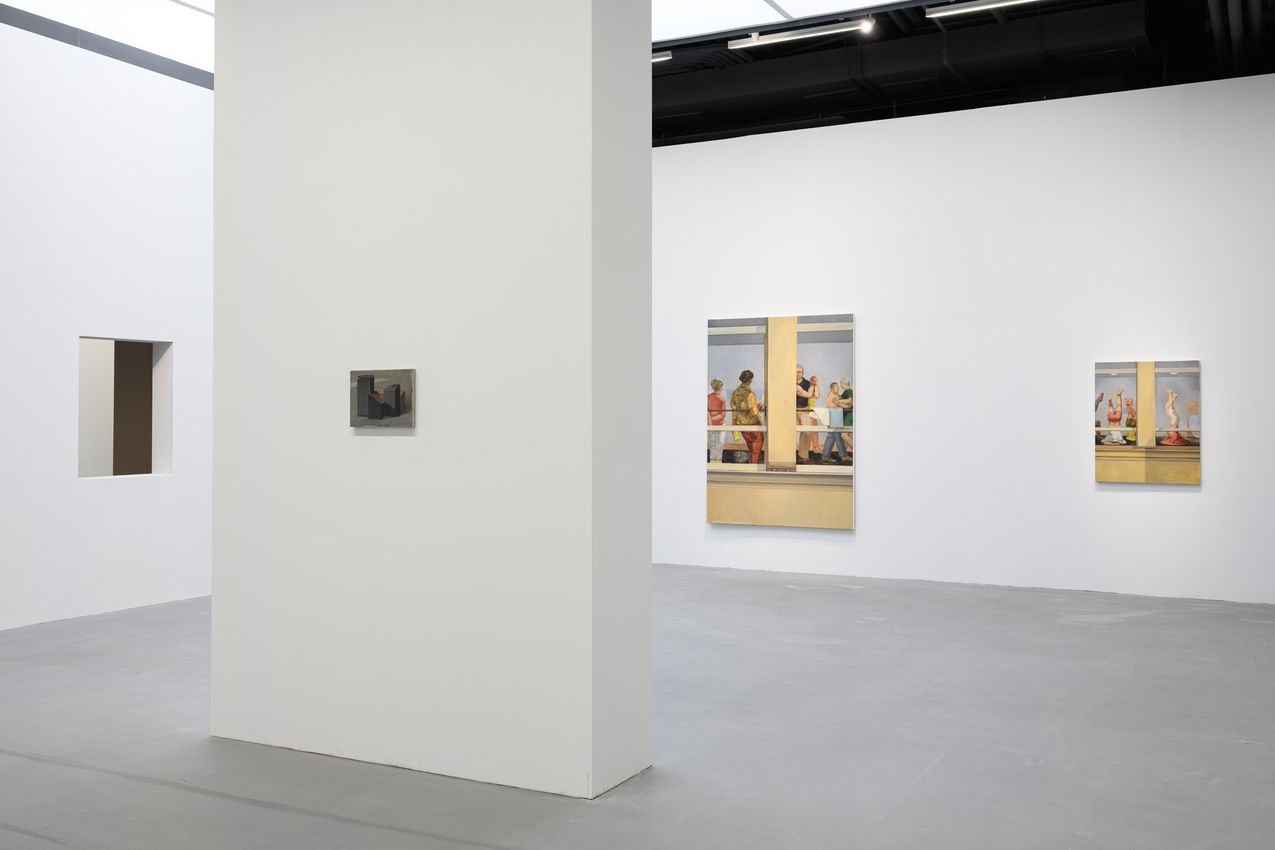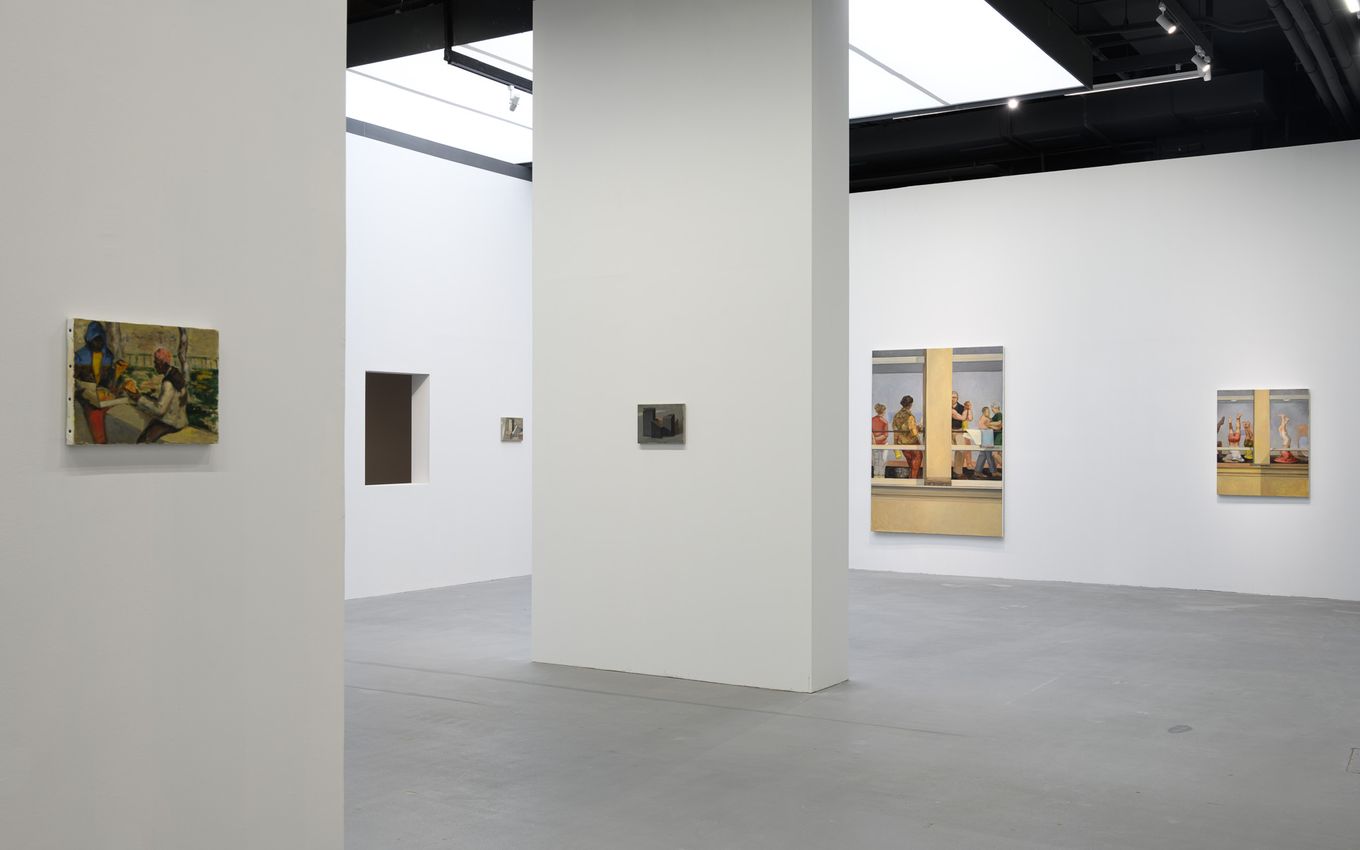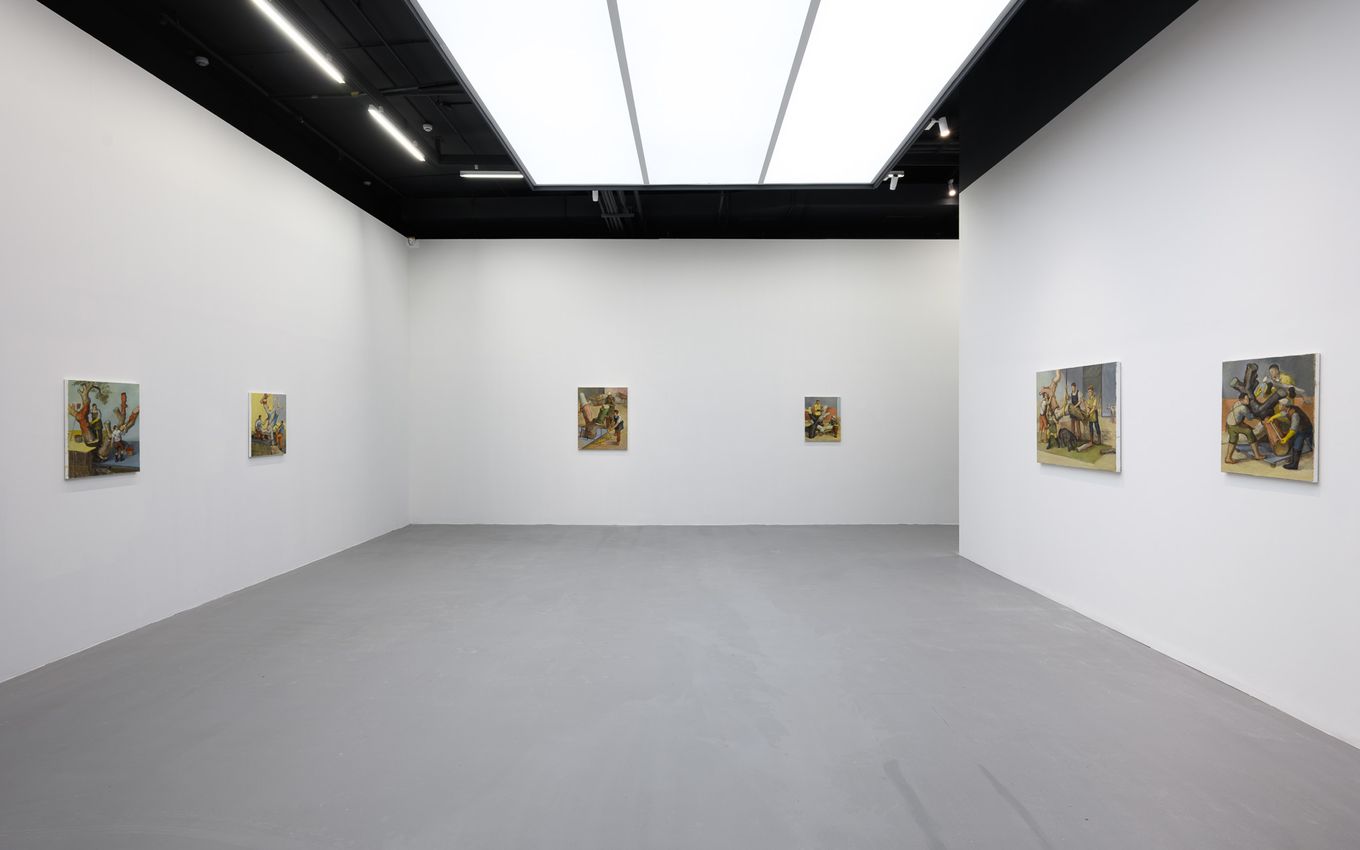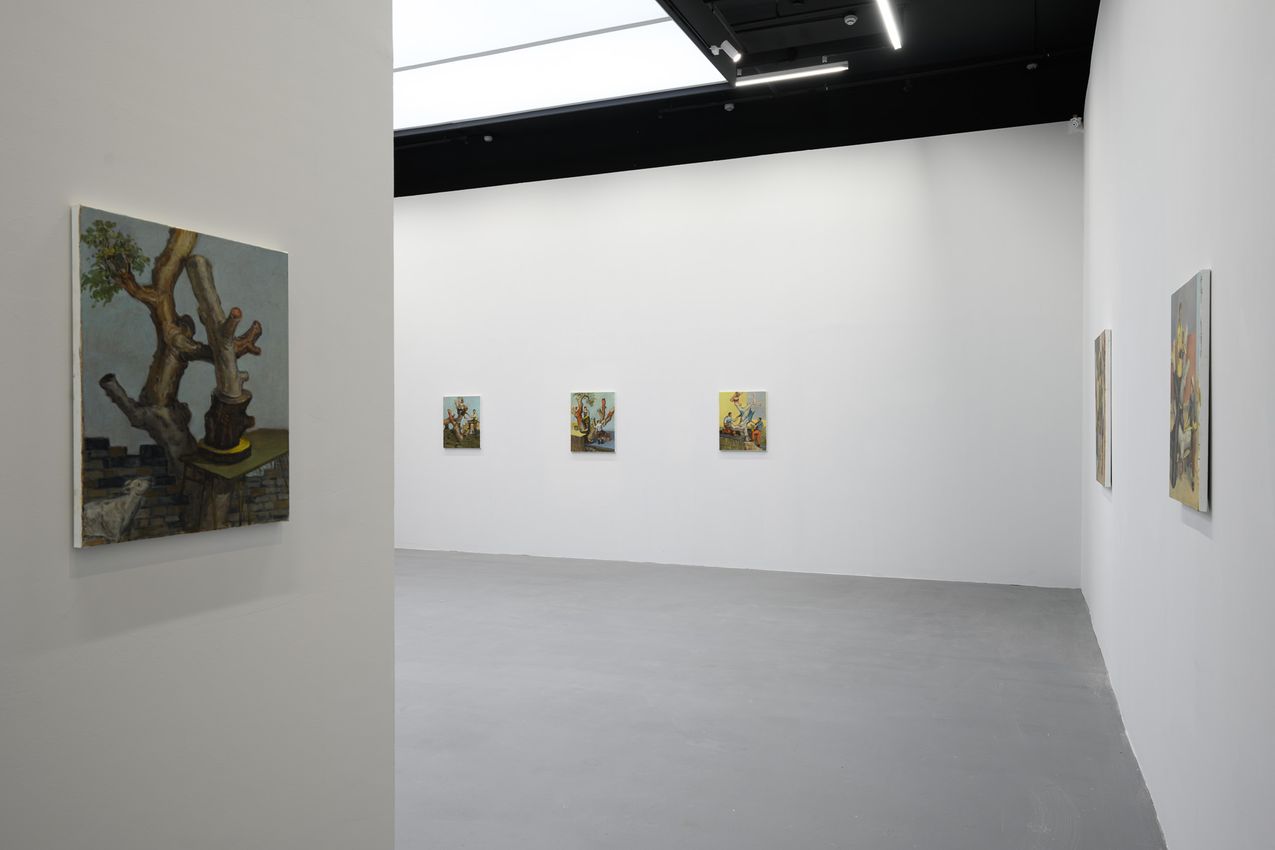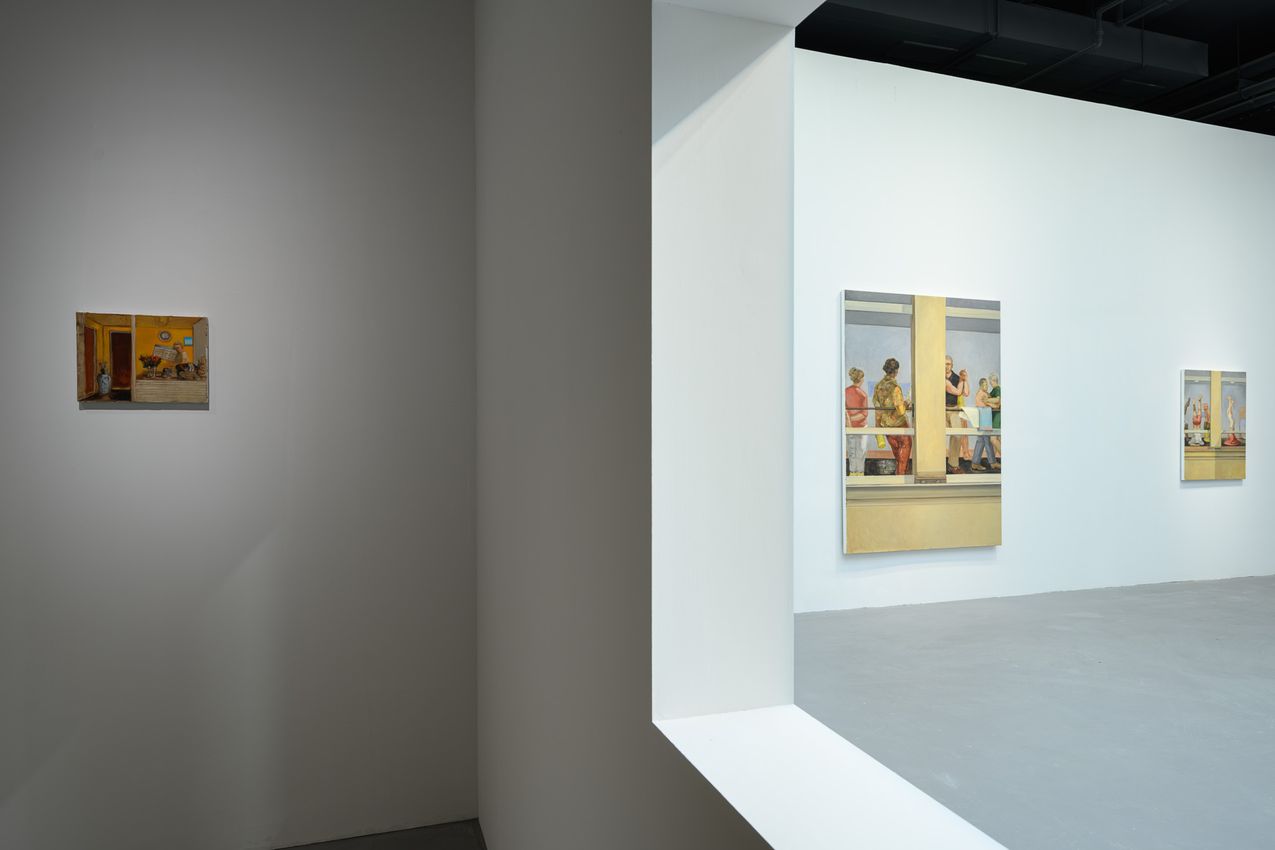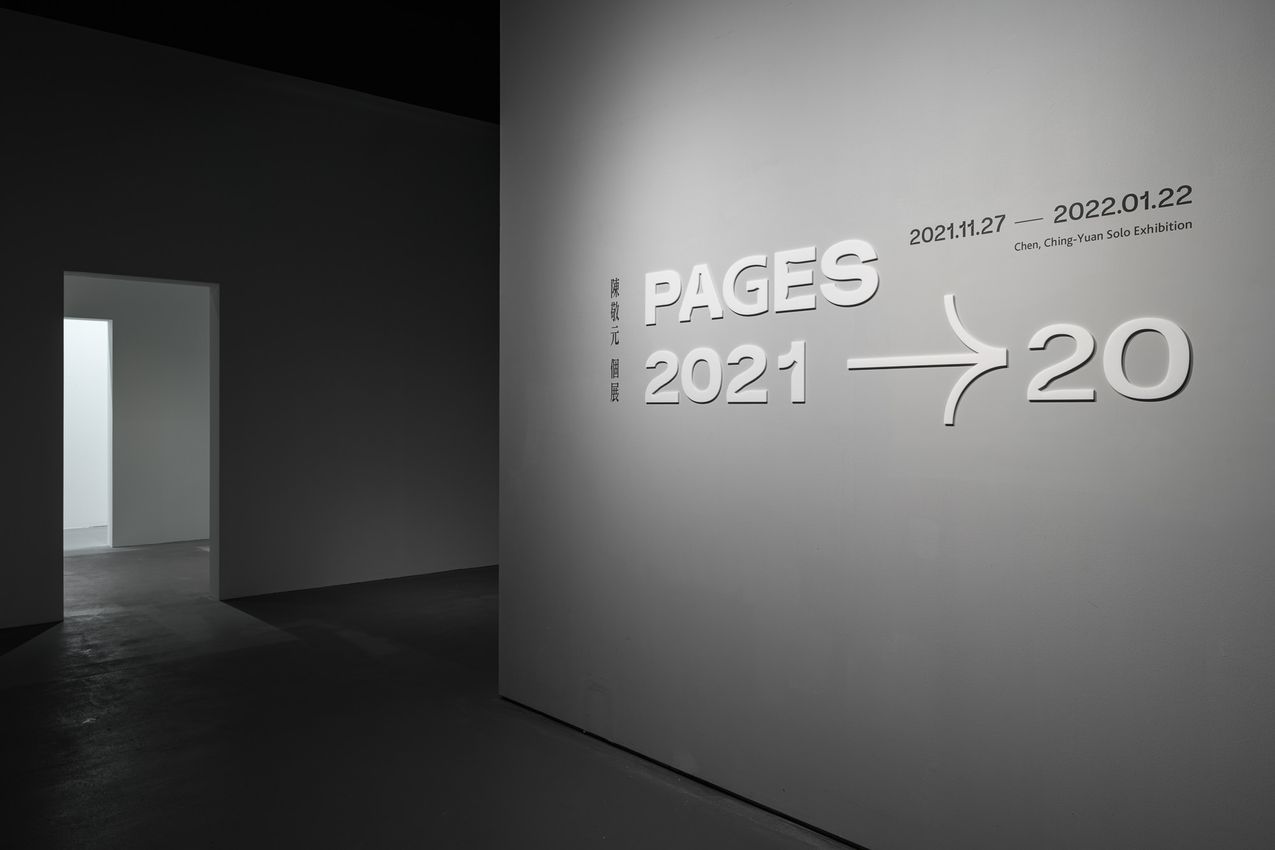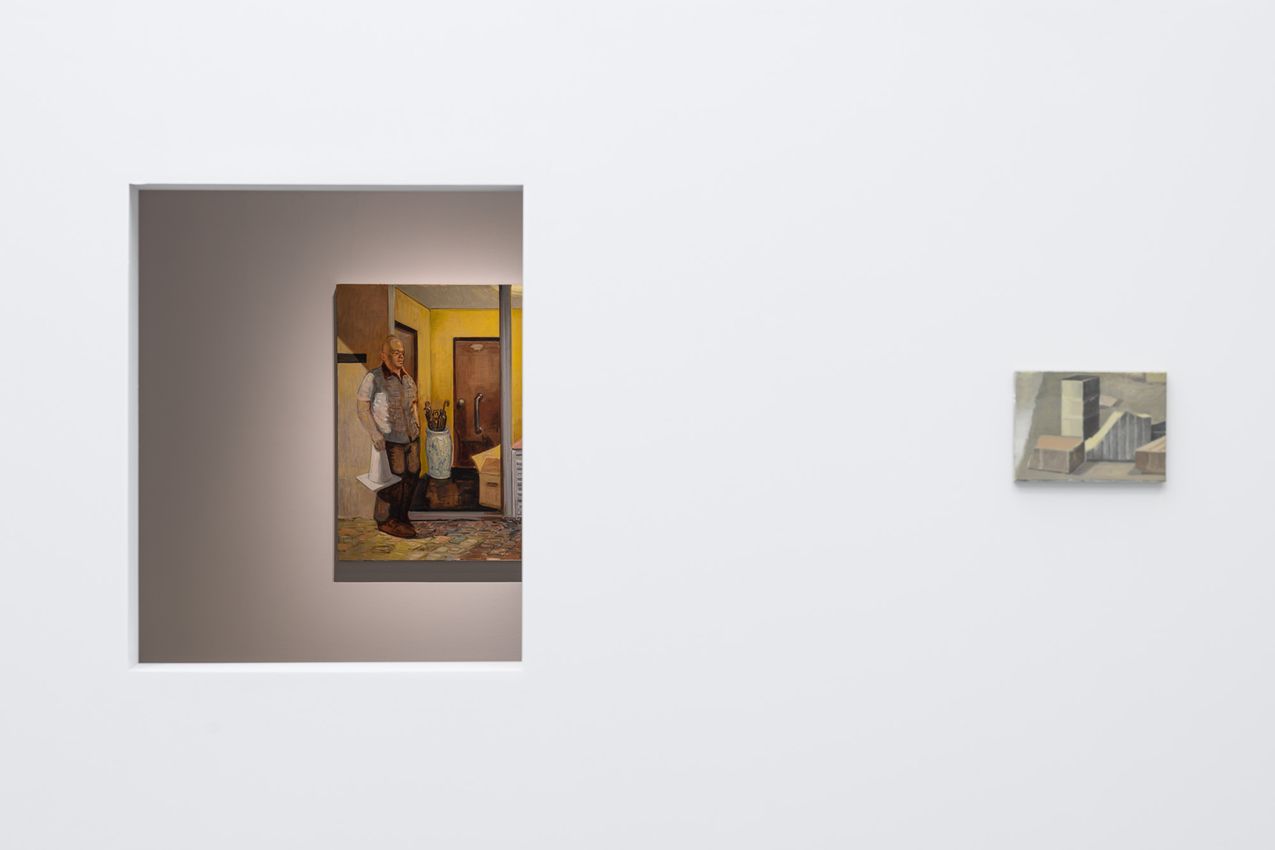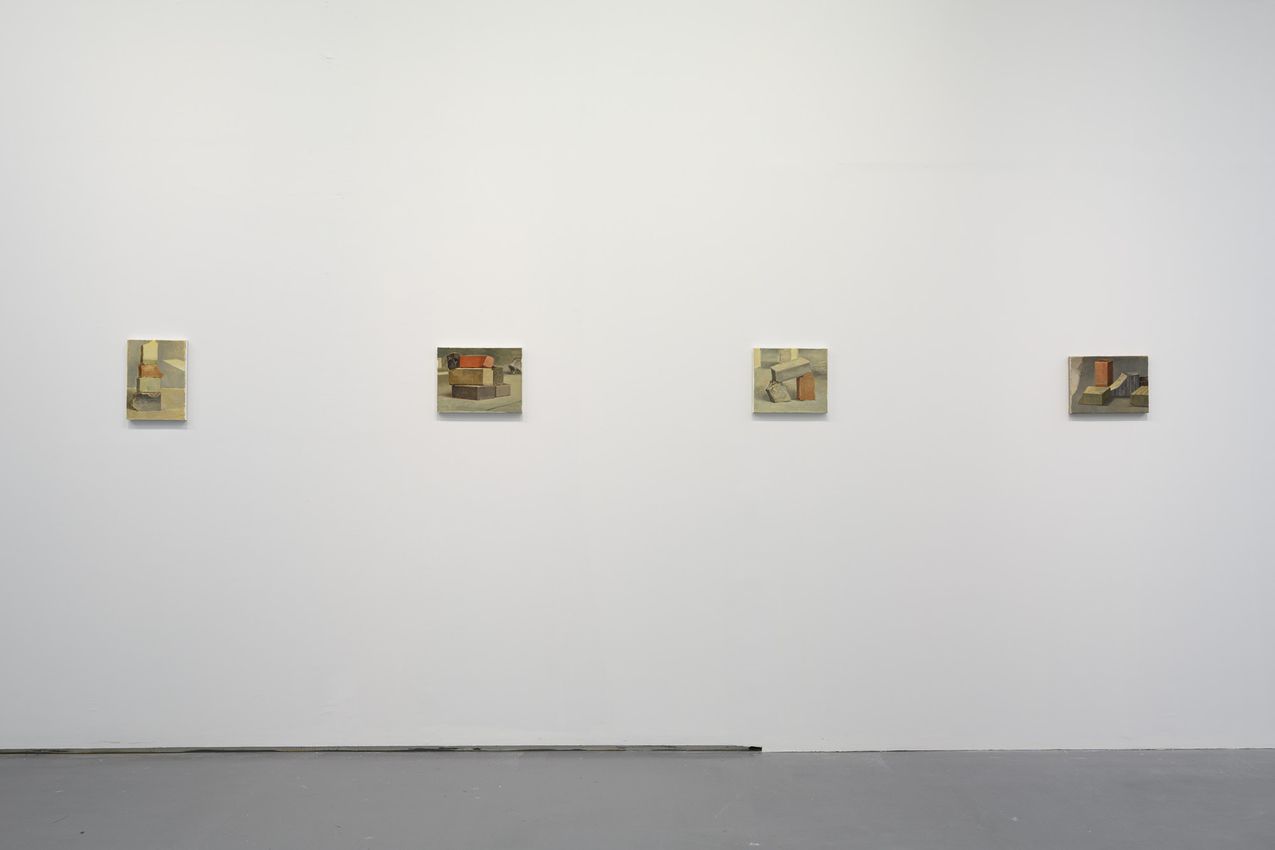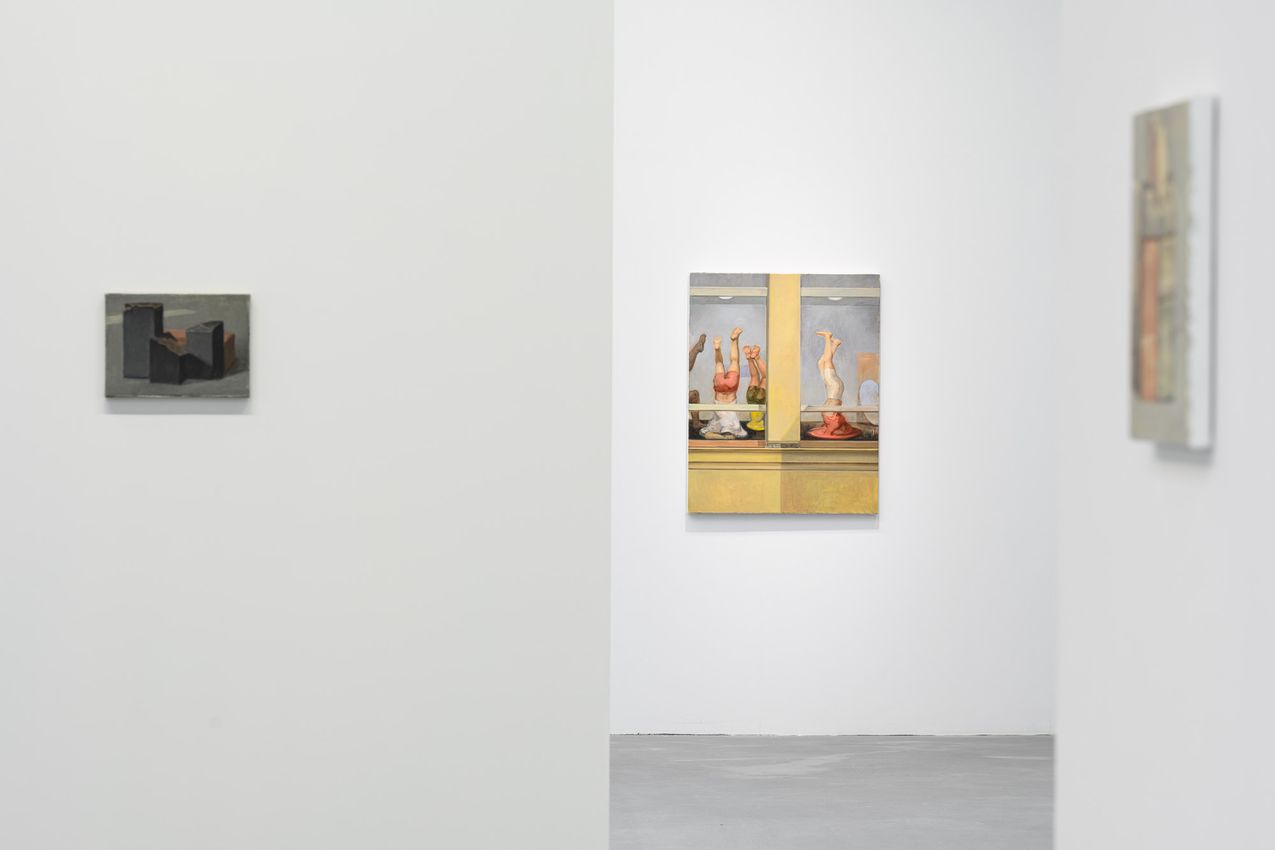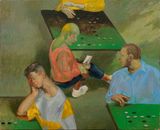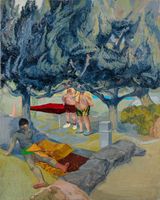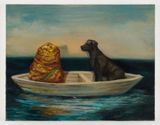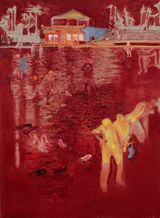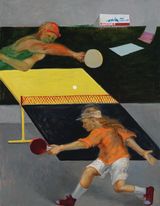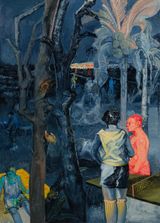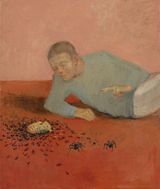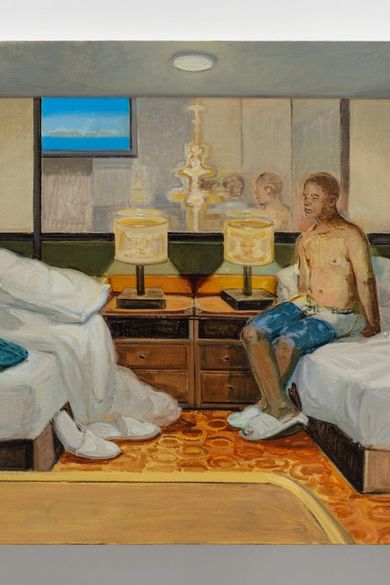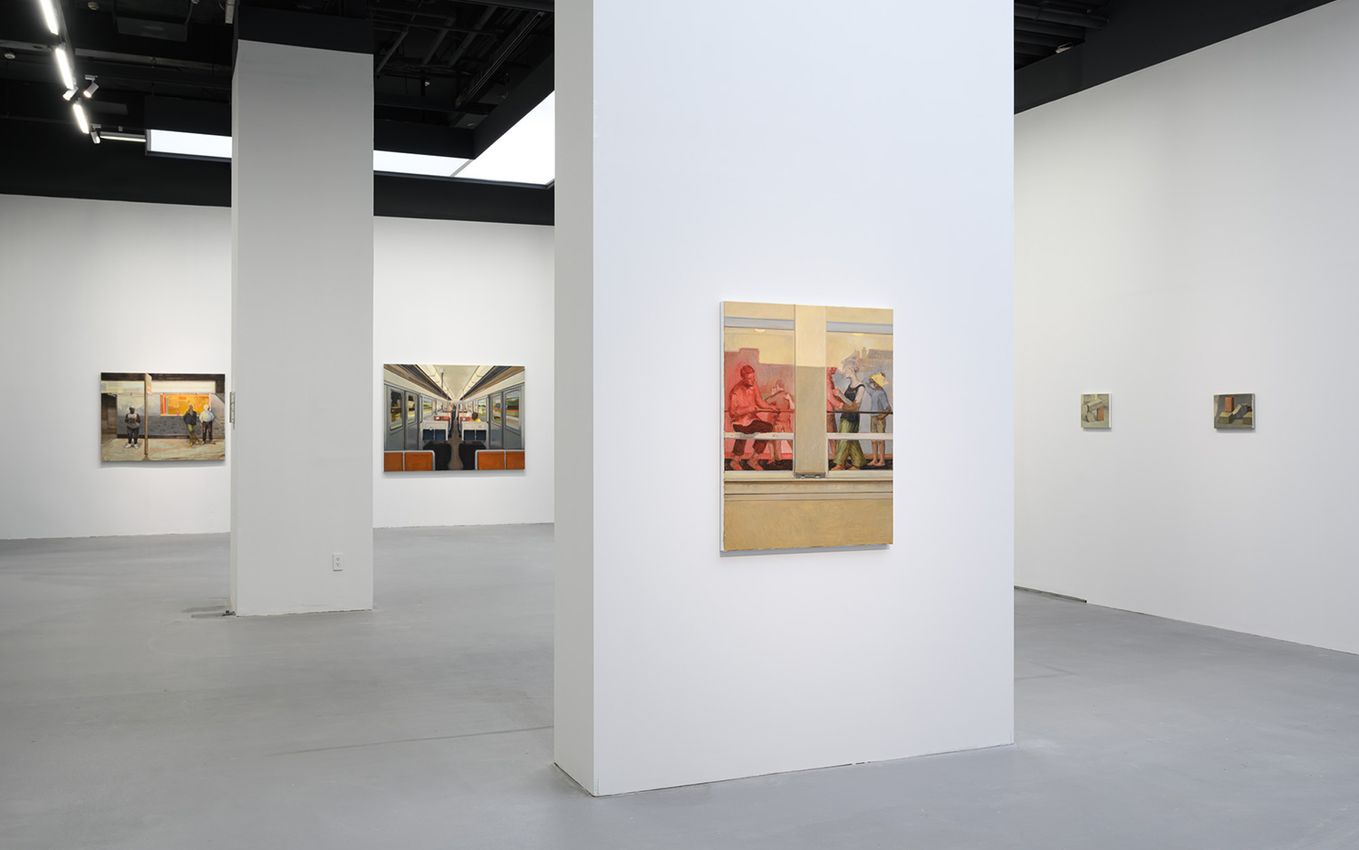
TKG+ is pleased to present Chen Ching-Yuan: PAGES (2021-20), the artist’s first solo exhibition at TKG+ in five years. Comprising his latest body of work made during his residency at the Cité internationale des arts in Paris in 2020, PAGES (2021-20) traces his lived experience warped by the pandemic. If seeing is a way to perceive the world, then language becomes the gauge and extension of one’s response to his own thoughts and feelings. The disparities in how people in different cultural contexts compartmentalise the world, and how they evaluate the structure of the world, manifest themselves in human activities through the way the individual compartmentalises space. On one hand, this implies that there are similarities across cultures. On the other, this indicates that humanity uses themselves as a means to measure the world: We navigate space according to our own body, or to the experiences we gain from interacting with others, in an attempt to satisfy our biological needs and to form social relationships.
If we attempt to define the principles which guide the individual’s navigation of space in their worldview, two things might come to our attention. For one, distance means that the degree to which social relations are available, whether intimate or aloof, is closely intertwined with interpersonal relationships. Second, the openness or closeness of space involves the human desire for freedom, both biologically and psychologically. Freedom means space. It means the ability to move around; it means that there is room where one can move around, that one has the power to transcend the status quo and limitations. If space embodies the degree of openness and freedom, would the distance between people affect its symbolic meaning? How do people shape their way of thinking and observation in a societal space meticulously planned and controlled by the state?
While PAGES (2021-20) concludes the body of work he made between 2020 and 2021 in a title that is seemingly non-referential, these years have been engulfed by waves of disruption and a doomsday-esque atmosphere. Chen attended an artist residency program in early 2020 at the Cité internationale des arts in Paris. The residency coincided with the major outbreak of the coronavirus across Europe. Almost six months of social isolation during lockdown, daily outdoor activities allowed only in a one-kilometer radius within one hour, the same route day after day, a lost sense of time induced by the Sun’s path (the day is light even at 10 p.m. during summer in Europe). Surreal scenes play out in the streets of Paris, serving as Chen’s creative fodder and allowing him to broaden different themes and diversify his painting approach.
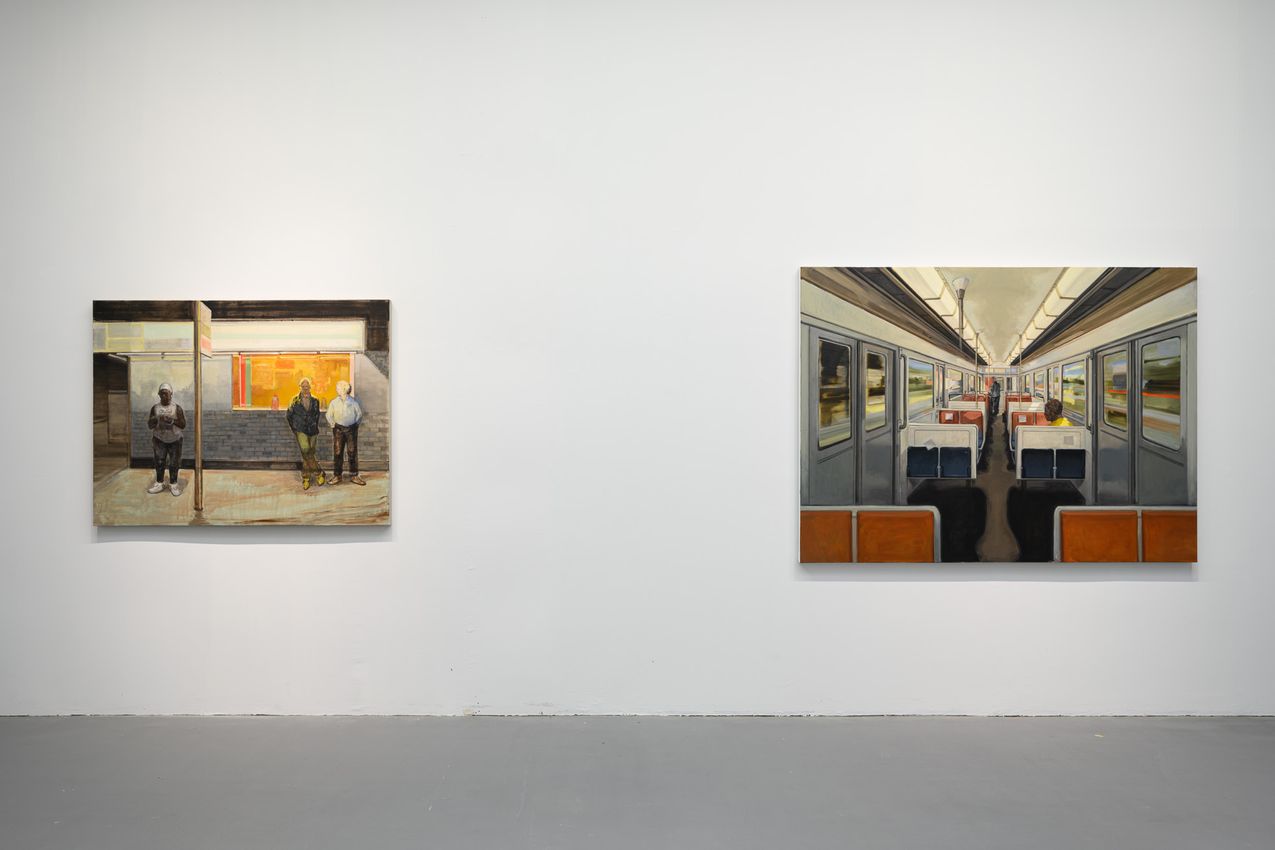
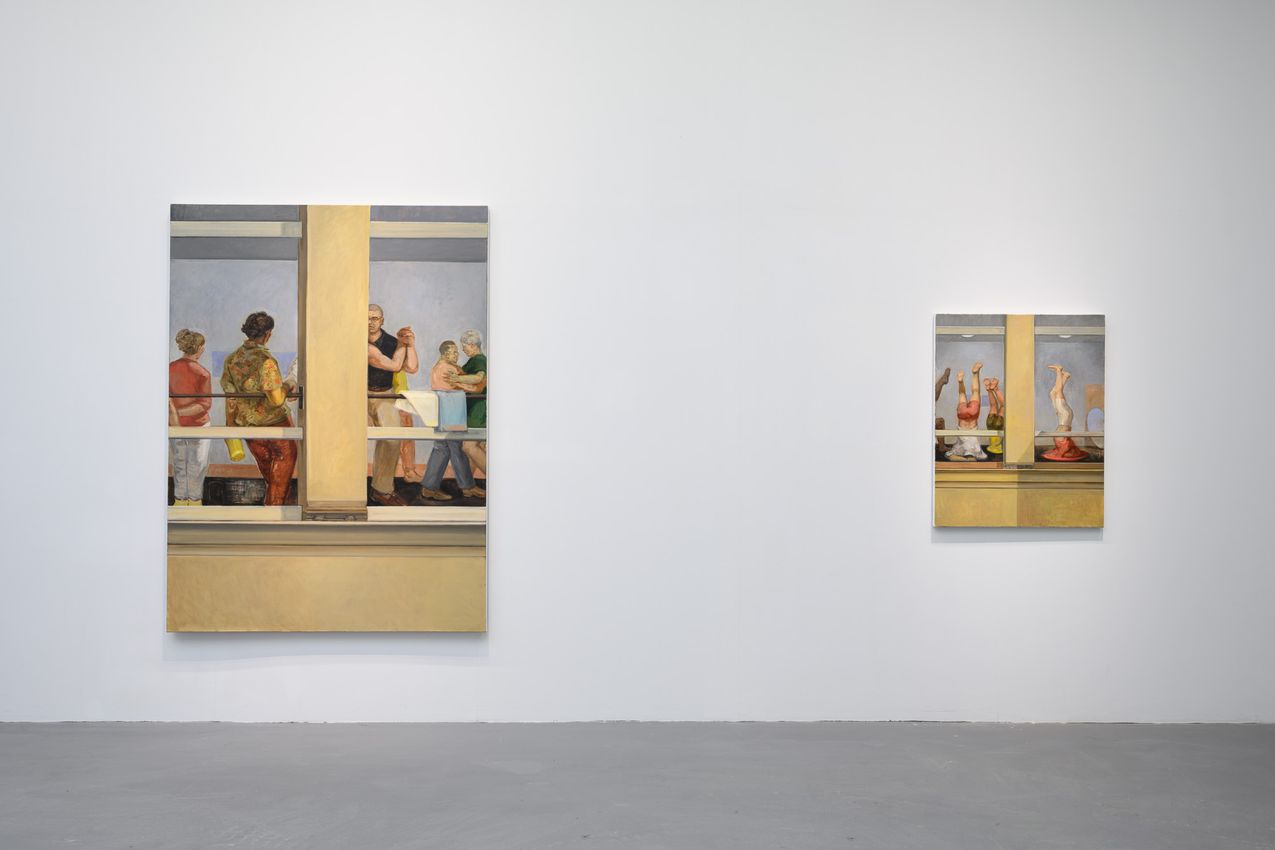
Distinguished by surrealism, Chen’s past body of work is suffused with a potent sense of colour. Cast in a dim light, his subject as the focal point of his painting, is enshrouded in a sense of theatre that evokes classical painting. The canvas, under Chen’s paintbrush, becomes a stage where his subject rendered in a tonal palette comes to life, forming a dramatic contrast with the backdrop, frozen eternally in a moment of passion. However, the Cité residency turned out to be anything but what Chen had expected. The city lockdown shortly after his arrival foiled his original plans. The ensuing sense of conflict forced him to reorient himself mentally and physically. As space became constricted, and the sense of time became prolonged, a pronounced shift in his use of light and hue was tangible. When the body was confined, the yearning for open space was quenched merely by looking out the window, or quietly waiting for daylight to percolate into the room. These mundane, elusive shades of feelings were sketched out first in a notebook, before gradually evolving into paintings. Part of the works on view in PAGES (2021–20) is an extension of his sketches, images of brick pavement he found online, and photographs he took of a dance studio and a guard booth at the gate of the Cité building that he passed by daily.
The common motif in Chen’s latest body of work is the scene, which when combined with the characters that are separated by horizontal and vertical lines, transmutes into a theatrical mise-en-scène. The dramatic tension that permeates his past body of work becomes amplified in his new painting. His shift to a more subdued, grayscale approach to colour sees his somber palette emancipated, influenced by the space where he was allowed to move during the residency, as well as his experience of daylight in Paris. The confines of his studio space, the change in canvas size, his grappling with brushwork in relation to different scales and pigments, the distance between subjective viewing and objective viewing in painting: His attunement to the transition between life and art making reverberates across the canvas, where he sets the stage for theatrical equilibrium.
A chronicle of intense experiences of time and space, PAGES (2021–20) instantiates the artist’s state of mind during the creative process, at the same time embodying the interconnection between art making and reality. While this may be a response to the real world, it could also be a starting point for a creative shift in the artist’s practice. The artist’s body, enveloped in the space he occupies, becomes an instrument to measure the world, allowing the physicality in his work to manifest itself. Art making, in this day and age, is a medium involved in broader social and psychological construction and redistribution. But it is also of a spiritual nature; it is understanding and insight born out of the act of seeing.

Chen Ching-Yuan received his M.F.A. in 2013 from the School of Fine Arts of the Taipei National University of the Arts. In recent years, Chen Ching-Yuan attempts to capture through his painting the subtle sensibility that weaves through literature, mythology, and history in different cultural contexts. The artist’s unique compositions coalesce into a constellation of images where the absence of the temporal element and the fragmentation of meaning elicit unexpected narrative parallels between the artist’s imaginary worlds and the essence of humanity.
A forerunner of Taiwanese modern art, the Tina Keng Gallery hinges upon the philosophy that art is a reflection of the times. The Tina Keng Gallery has its roots in the Lin & Keng Gallery (1992–2009) based in Taipei, Taiwan and Beijing, China. Delving into Western painting and Chinese art history, Lin & Keng tirelessly promoted the work of Asian classical masters, cultivating a critical thought on Greater Chinese modern art. The Tina Keng Gallery has continued this tradition by centering its focus on Asia, further excavating art history and rediscovering modern aesthetics. Upon this foundation, the Tina Keng Gallery is steadfast in nurturing Taiwanese modern and contemporary art, with hopes to capture the changing states of art through writings of history, in so doing highlighting the cultural underpinnings of its worldview. Art arises from culture, and culture mirrors the times. The Tina Keng Gallery endeavors not only to support Greater Chinese modern and contemporary art, but to shape a perspective that is elementally Asian.

A respected voice in contemporary art discourse.
Focusing on ambitious storytelling and insightful art-world commentary. Ocula Magazine publishes in-depth interviews, critical essays and timely analysis on the artists, exhibitions and ideas driving the global art world.
Learn more about Ocula Magazine
Showcasing the best of the art world.
Ocula partners with galleries from around the world to highlight their artists, artworks and exhibitions. Gallery membership is by application and invitation, with each member vetted by an independent panel.
Learn more about Ocula Membership

Specialises in the sale of major artworks.
Led by a team with deep ties to the world’s leading auction houses, galleries and collectors. Ocula’s advisory team offers bespoke services to high-net-worth clients from around the world who are looking to acquire the best of contemporary and modern art.
Learn more about our team and services