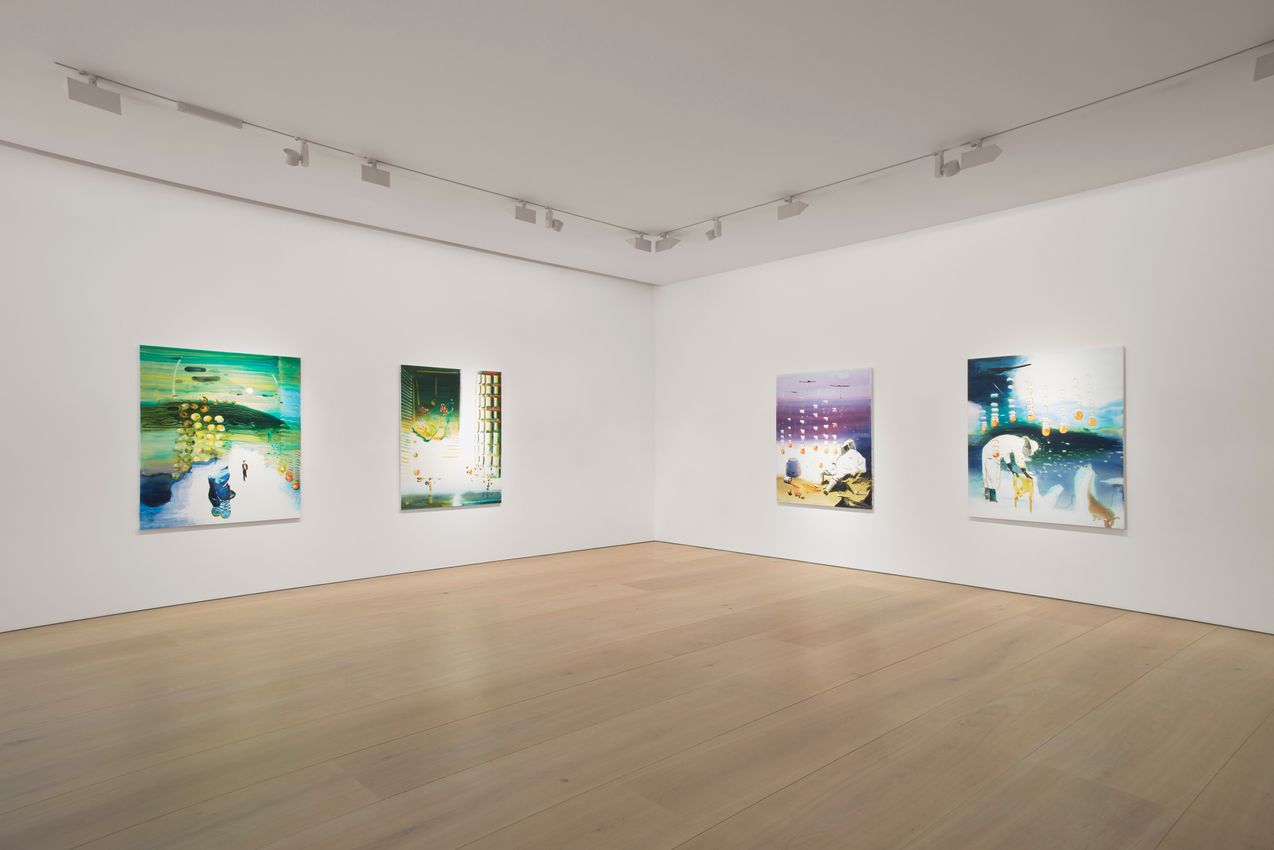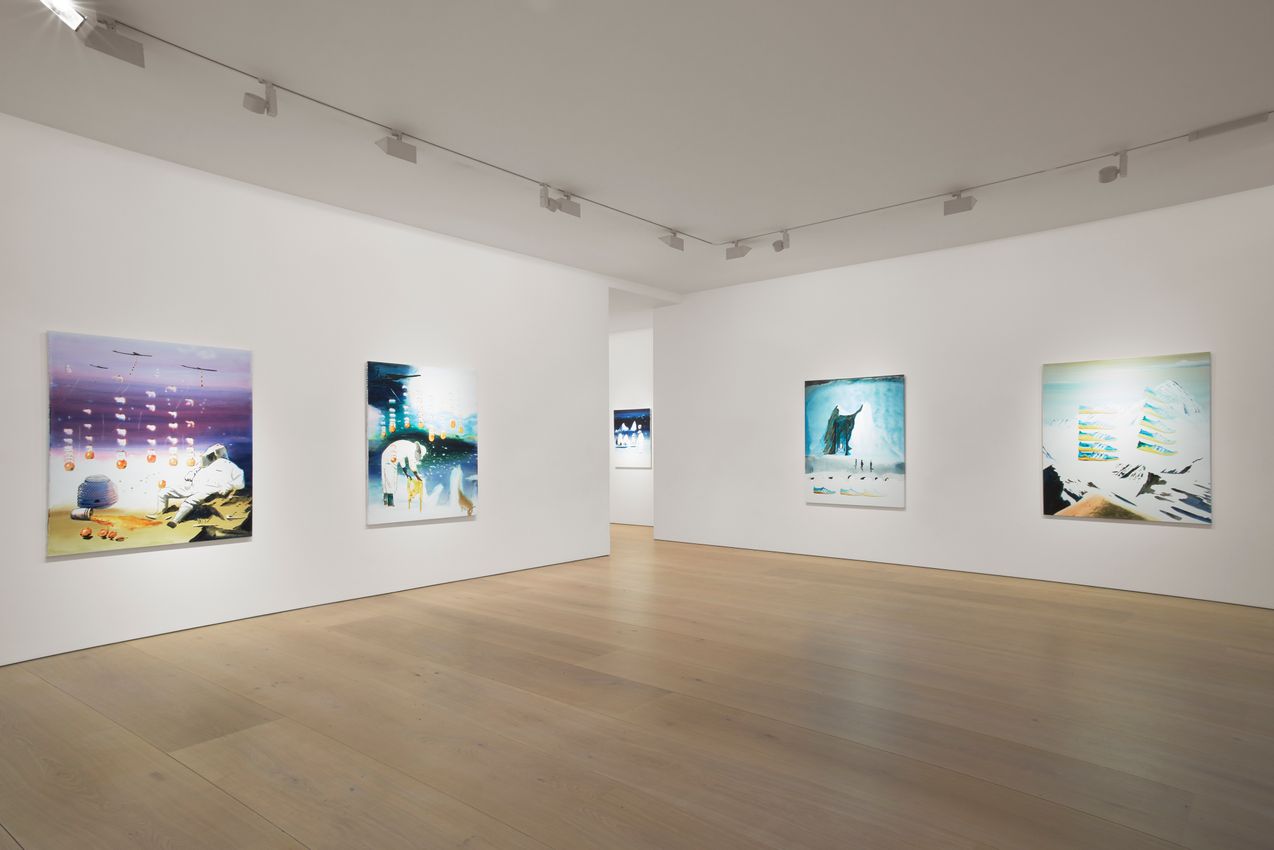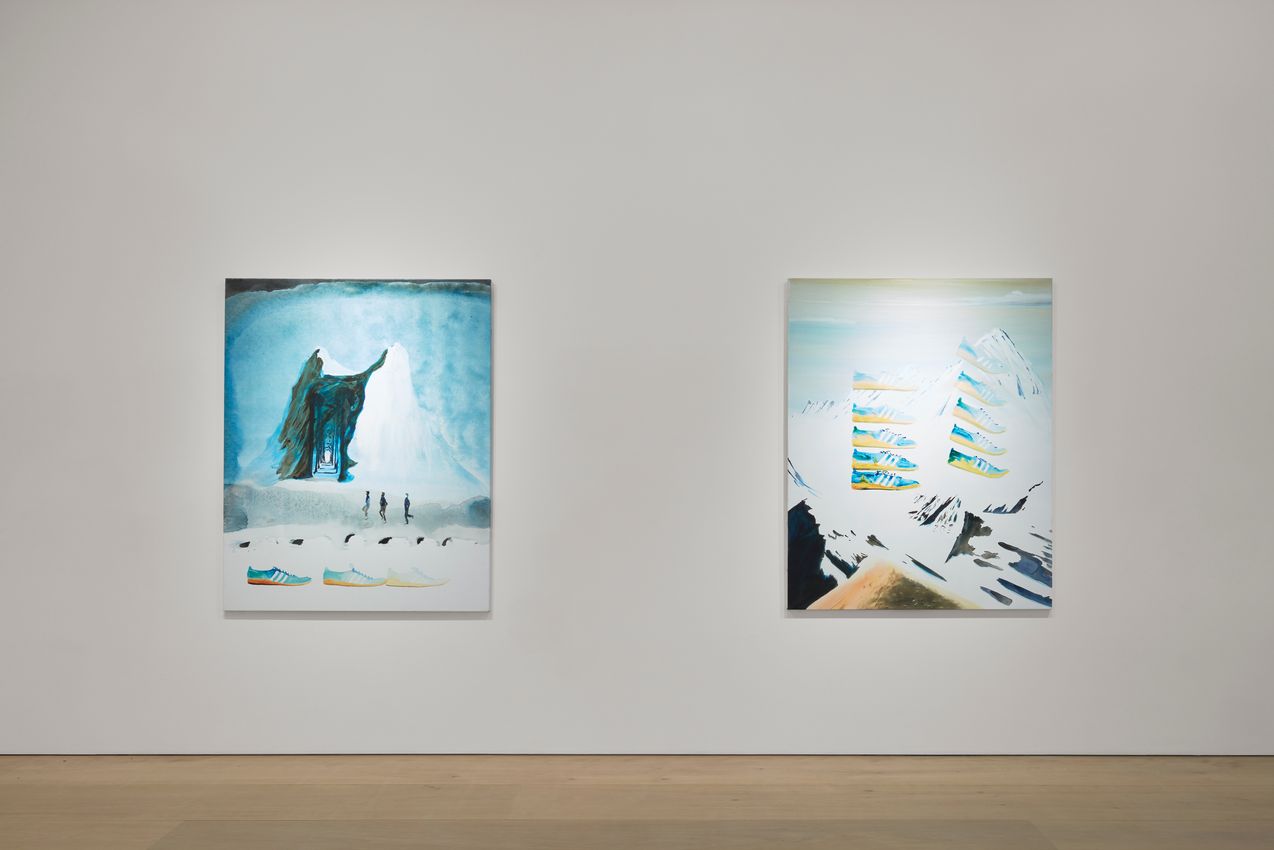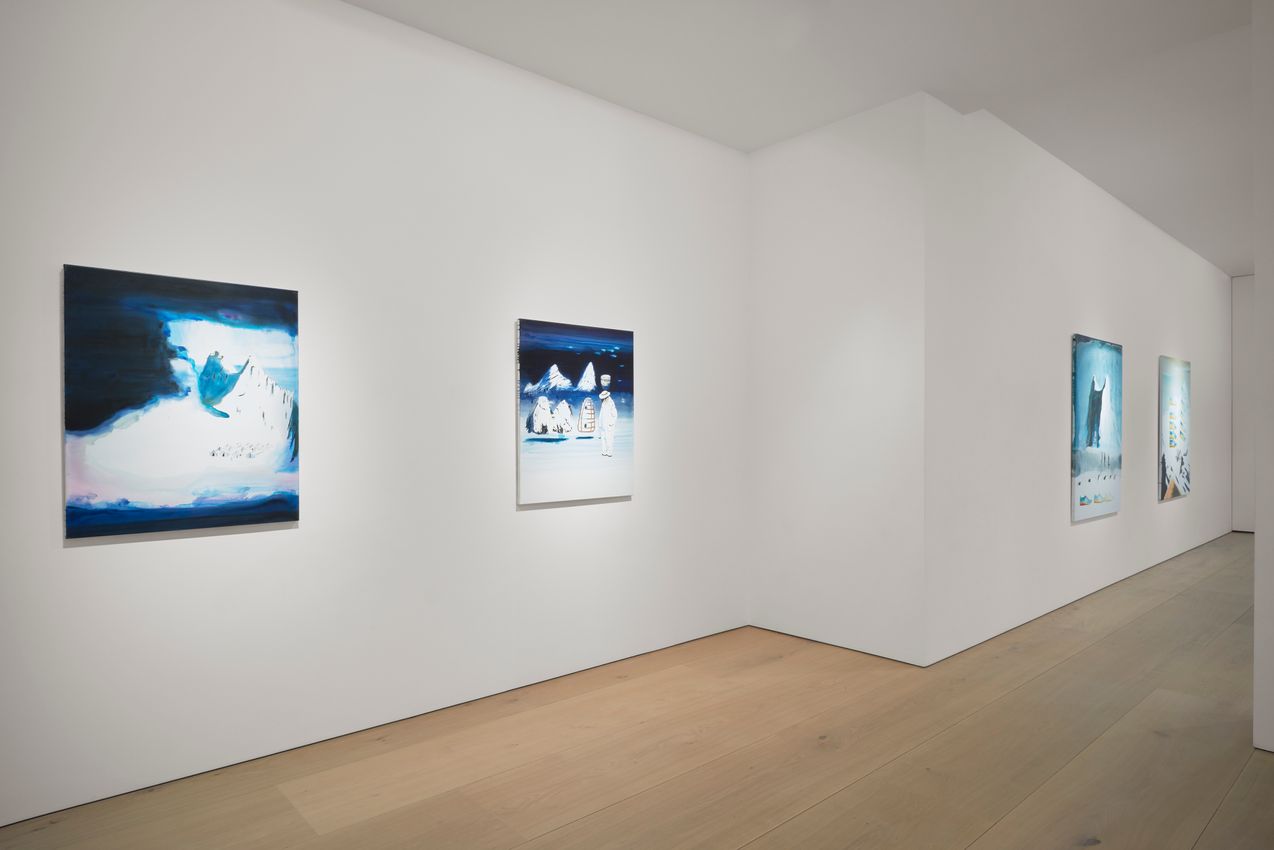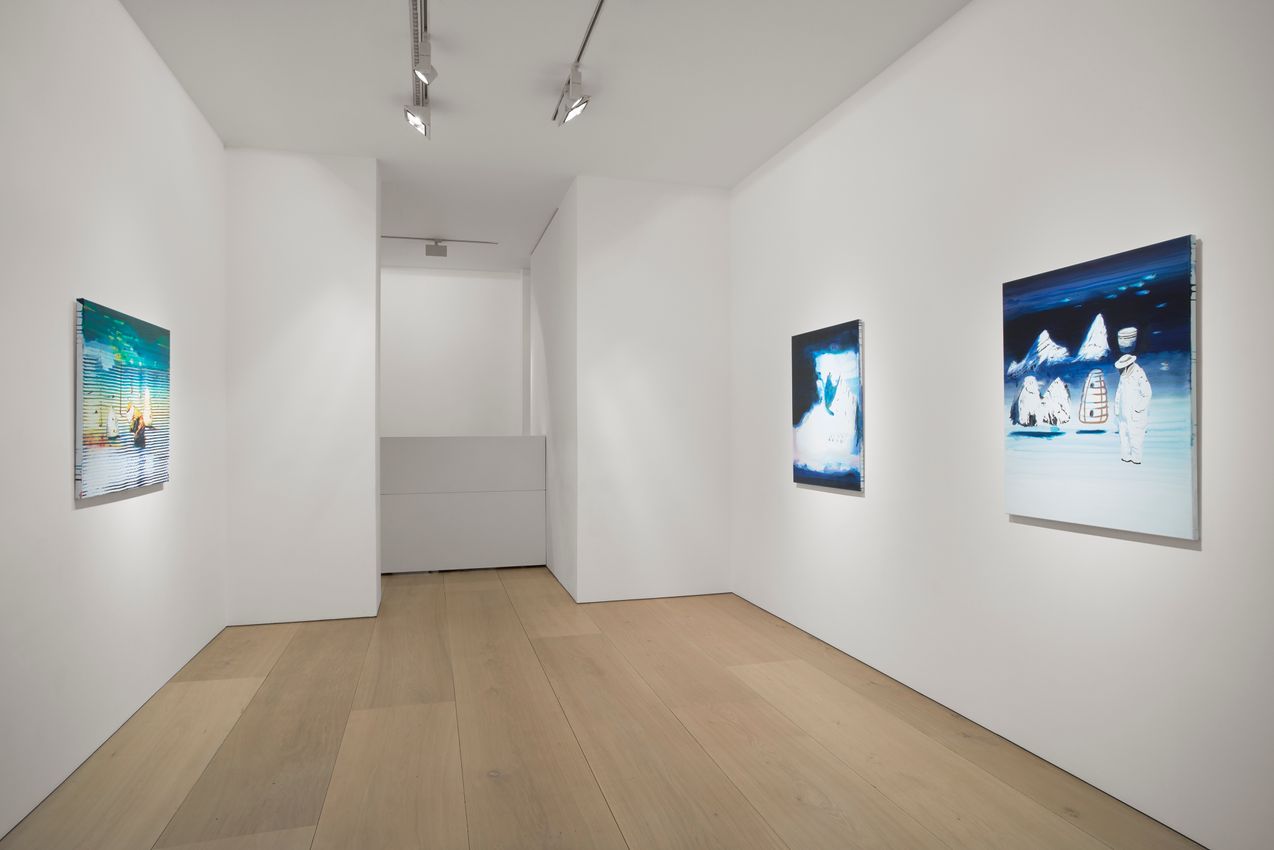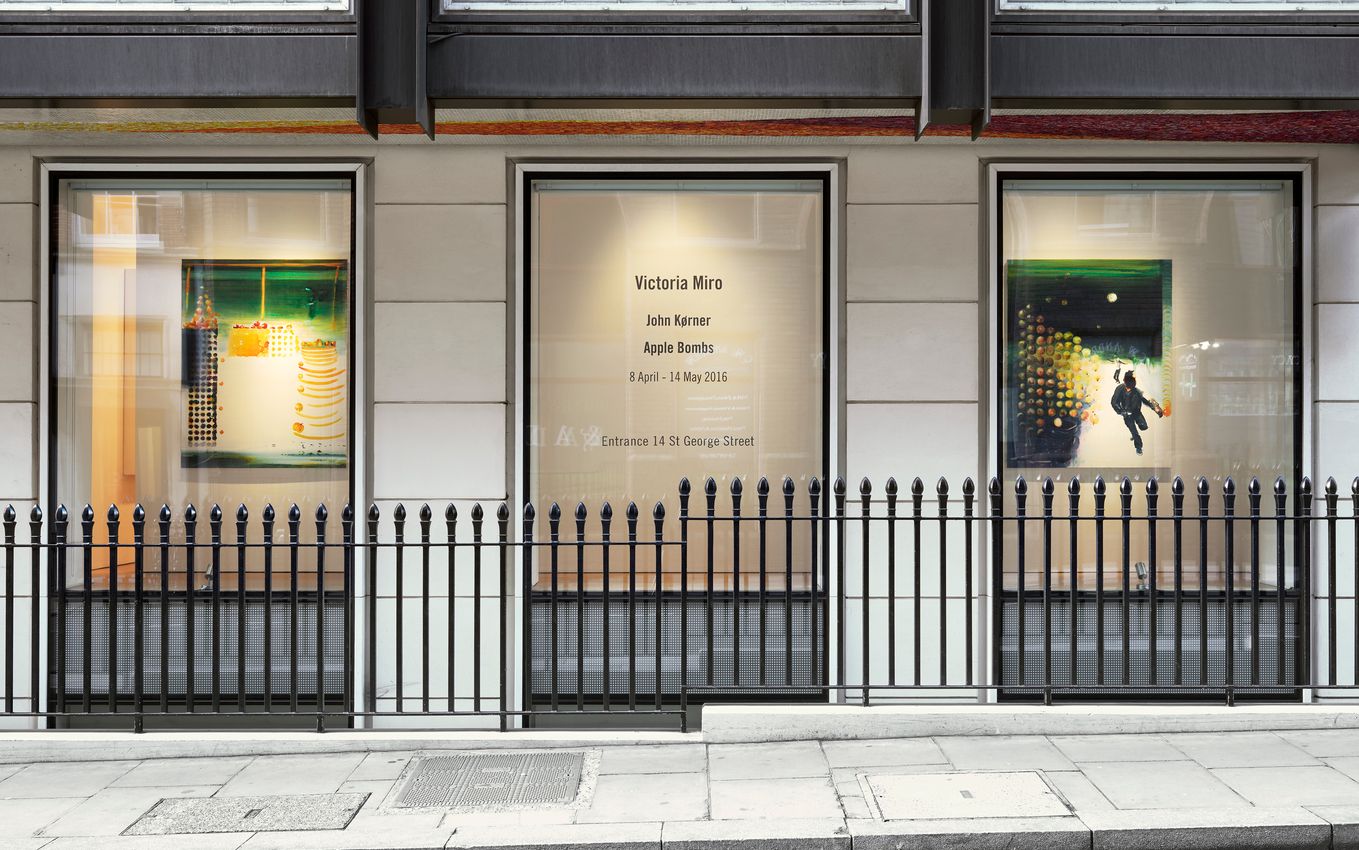
Victoria Miro is pleased to announce Apple Bombs, an exhibition of new paintings by the Copenhagen-based artist John Kørner, which opens at the Mayfair gallery on 8 April.
Painting, for Kørner, serves the unambiguous, if impalpable, function of exercising the imagination much in the same way as a bicycle stretches out the legs. The artist’s previous work has variously taken the situations of sex workers and Danish soldiers killed in combat in Afghanistan as points of departure, alluding to its topical content with various degrees of abstraction and metaphor; in this exhibition, aspects of contemporary geopolitics including imbalances of wealth and the displacement of populations are obliquely problematised. Rather than predetermined allegorical narratives, the paintings in Apple Bombs present a constellation of seemingly incongruous pictorial elements in which the viewer is caught up, setting in motion dialogues concerning wellbeing, human relationships, consumption and survival.
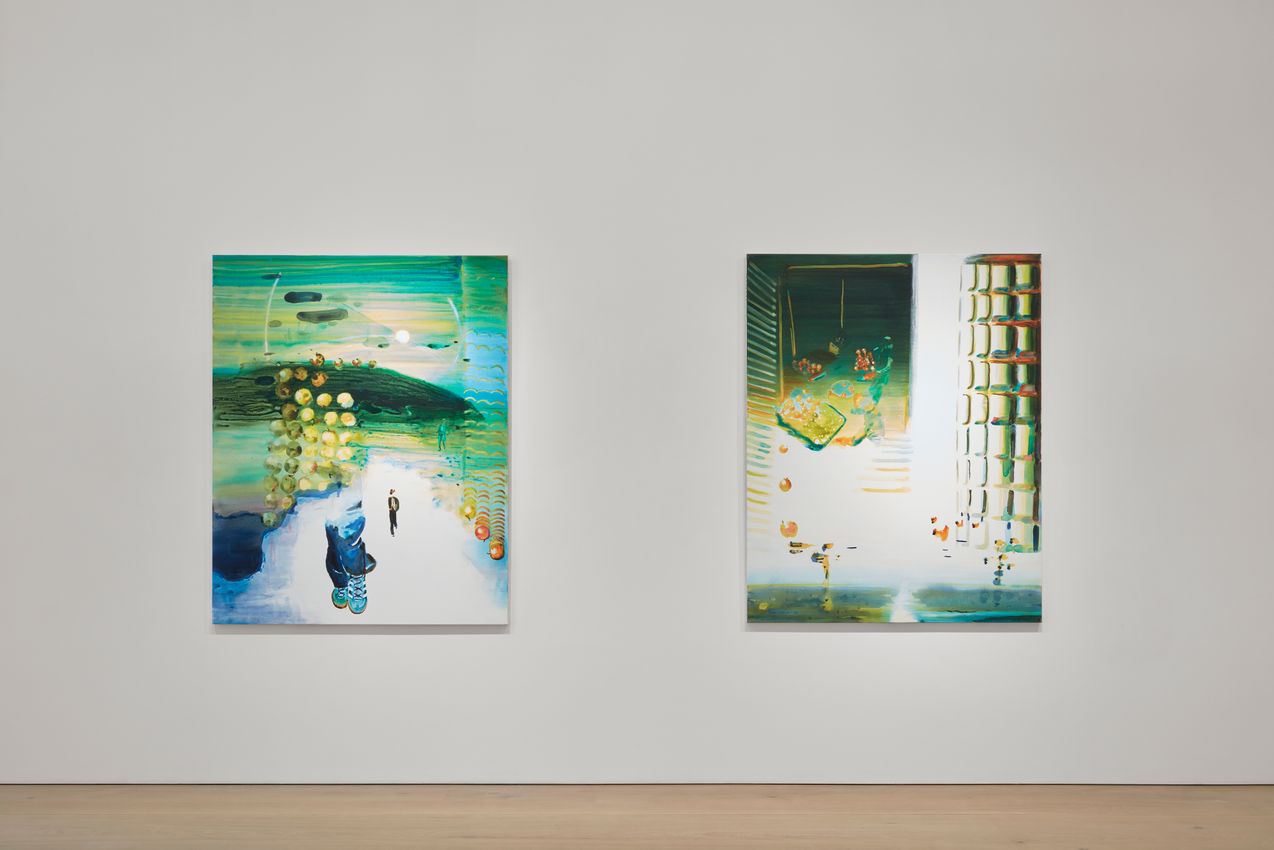
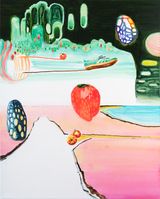
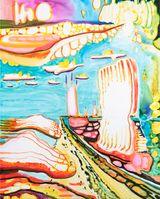
Subject to the alchemies of representation, recognisable fragments taken from everyday life re-emerge suspended on the two dimensional planes of Kørner’s canvases, occupying an abstracted or ambiguous landscape that seems to vibrate with potential. This open-endedness makes an unstable tool of paint, exceeding conventionally understood boundaries between objects. Architecture Lines and Architecture Dots, two works from 2015, are punctuated by apple shapes that remain only barely within the realm of figuration, seemingly continuously emerging in towers of rhythmic brushstrokes as if performing an impulse towards abstraction. Departing from the objective existence of buildings, architecture is detected as a felt presence in these works: a series of fleeting impressions.
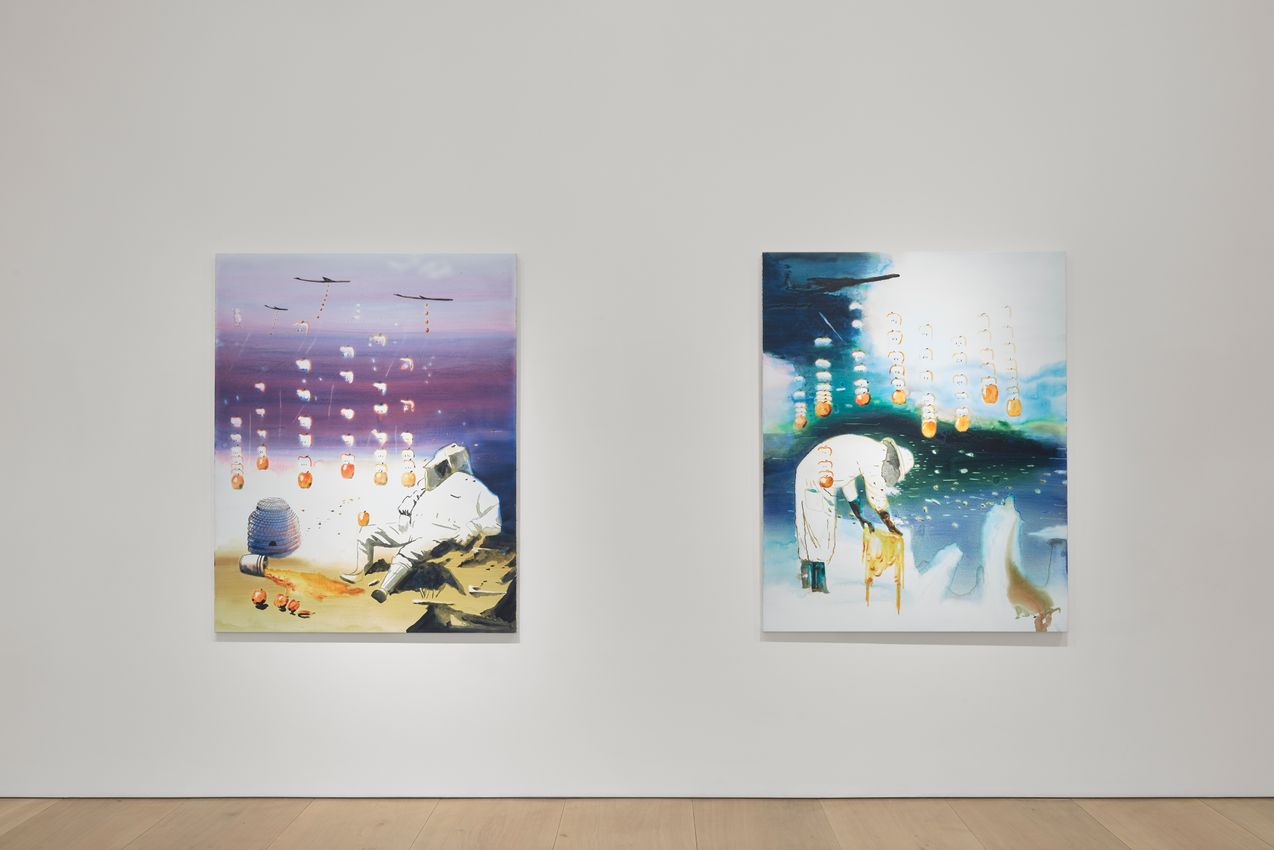
These mutable fruits continue to fall in hypnotic grids across the artist’s newest works, where they descend to meet men running as if headlong at the viewer, and veiled beekeepers who assiduously tend to their charges – or, perhaps satiated by honey, relax before the riches dropped at their feet. It’s an abundant, if restless, world these figures inhabit, a fertile place of easy pleasures quickened by certain tensions – apple-missiles, discharged by planes, are objects of desire, or perhaps agents of explosive transformation. Yet, this world is also home to certain lingering darknesses that shadow its fluid land, sea and sky-scapes rendered in surges of watered-down acrylic paint.
Illuminated by flashes of negative white space, these paintings sustain an unresolved quality that leaves plenty of room for the viewer’s imagination to go to work, configuring, creating narratives, or thinking through previously unmade connections. With Kørner’s trademark lightness of touch and painterly dexterity, the work oscillates between external realities and the subjective textures of experience, finding potential in the painterly space that exists between the two.
Born in Århus, Denmark in 1967, John Kørner lives and works in Copenhagen. He studied at the Royal Danish Academy of Fine Arts Copenhagen between 1992 and 1998. Kørner has had solo exhibitions at Herning Museum of Contemporary Art, Denmark (2003, 2013); The Workers’ Museum, Copenhagen, Denmark (2011); ARoS Århus Kunstmuseum, Denmark (2006) and Moderna Museet, Sweden (2005). His work was recently included in group exhibitions at institutions including the Scandinavian Institute, New York, (2014); Palais De Tokyo, Paris (2012); Herning Art Museum, Denmark (2009, 2012) Hamburger Bahnhof, Berlin (2011); 1st Berlin Kreuzberg Biennale for Contemporary Art (2010); Tate Modern, London (2010); KUNSTEN Museum of Modern Art Aalborg, Denmark (2010); U-Turn Copenhagen Quadriennial (2008); Kunshthal Charlottenburg, Copenhagen (2008); and the Arken Musem of Modern Art, Denmark (2007).
With lightness of touch and painterly dexterity, John Kørner explores his medium’s fundamental duality - its physical presence and its descriptive powers - and the potential for communication or miscommunication that ensues. Kørner has referred to his apparently cheerful paintings as Problems. The viewer is often presented with non-figurative forms including multicoloured ovals and dancing arabesques that symbolise a kind of pre-thought, and simple figurative elements that remind us of the ways in which paint can be used to evoke universally recognisable things: a bicycle, a crocodile, a ship, a person. When displayed simultaneously, often on grounds of intense colour in the works for which Kørner first became known, these abstract signs and nameable things cause the eye to dance between levels of recognition.


Since Victoria Miro founded her eponymous gallery in Cork Street, Mayfair, in 1985, the gallery has grown to represent over 40 artists and estates. With a reputation for presenting ground-breaking artworks from around the world, Victoria Miro has exhibition spaces in Mayfair and Wharf Road in London, and a further gallery space in Venice.

A respected voice in contemporary art discourse.
Focusing on ambitious storytelling and insightful art-world commentary. Ocula Magazine publishes in-depth interviews, critical essays and timely analysis on the artists, exhibitions and ideas driving the global art world.
Learn more about Ocula Magazine
Showcasing the best of the art world.
Ocula partners with galleries from around the world to highlight their artists, artworks and exhibitions. Gallery membership is by application and invitation, with each member vetted by an independent panel.
Learn more about Ocula Membership

Specialises in the sale of major artworks.
Led by a team with deep ties to the world’s leading auction houses, galleries and collectors. Ocula’s advisory team offers bespoke services to high-net-worth clients from around the world who are looking to acquire the best of contemporary and modern art.
Learn more about our team and services