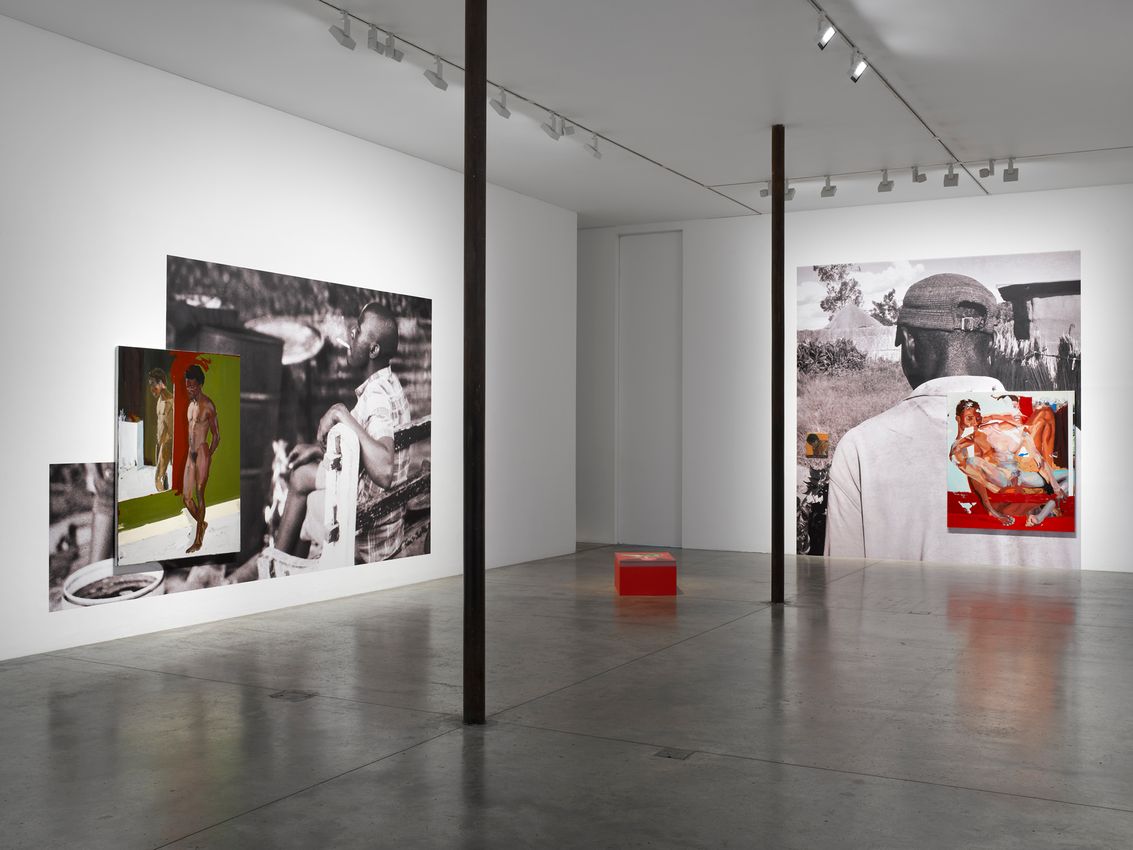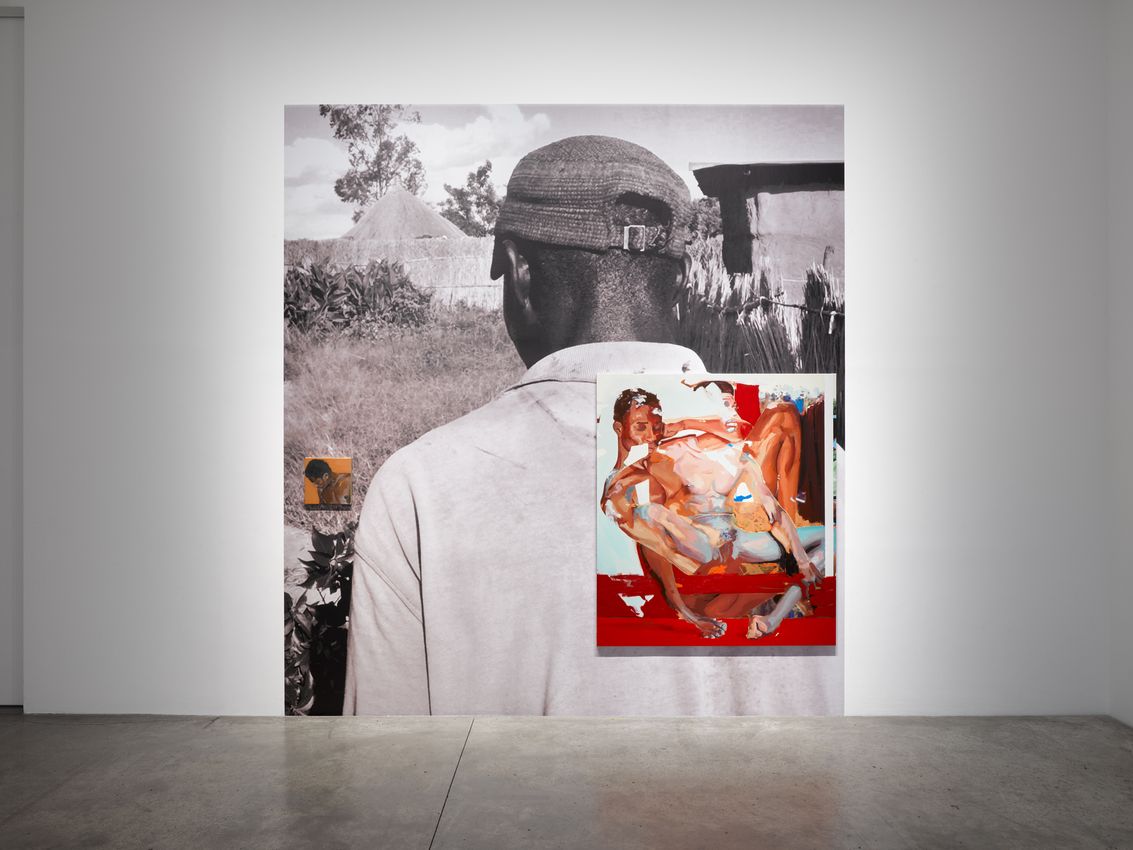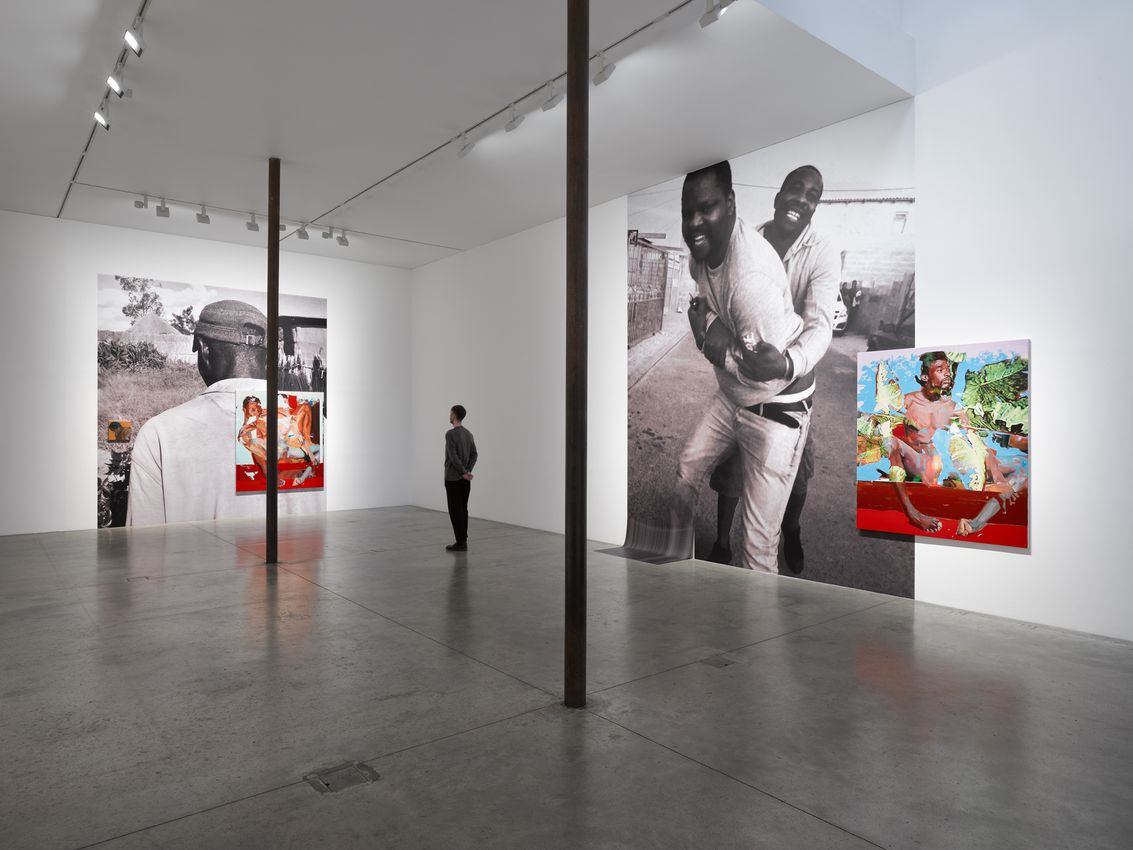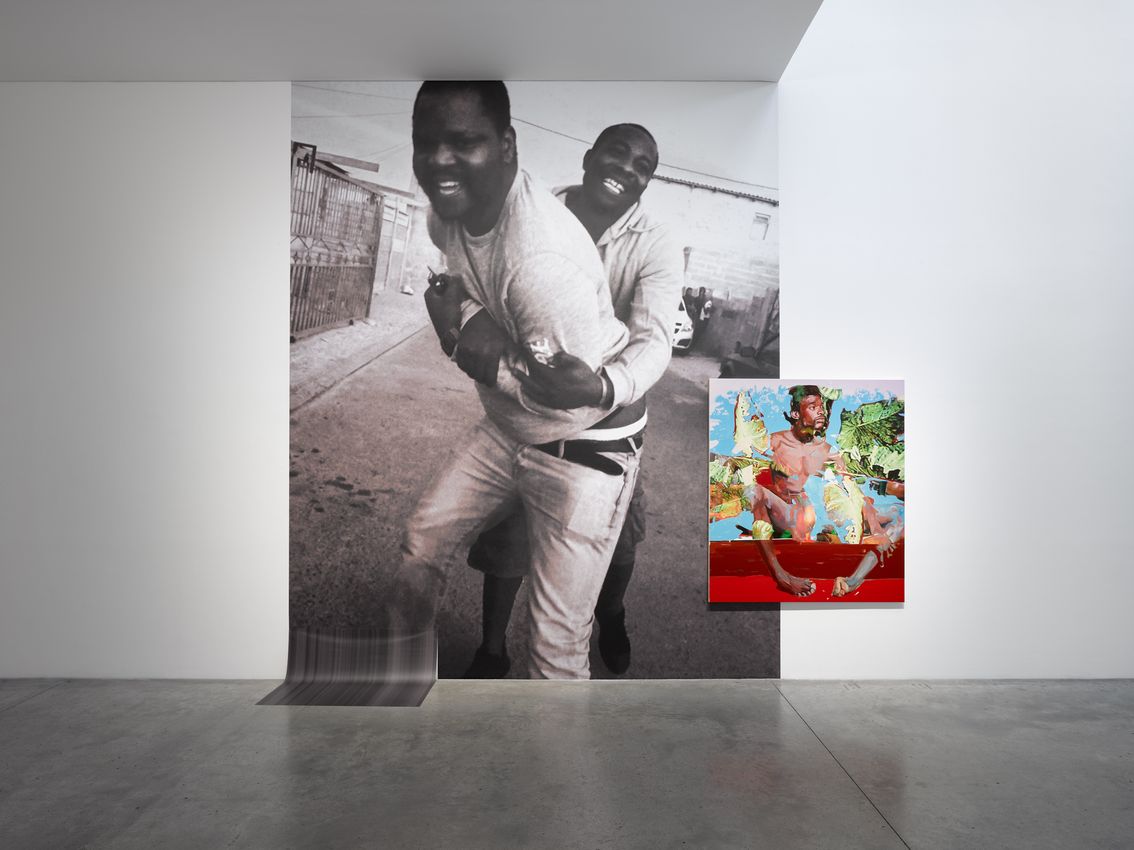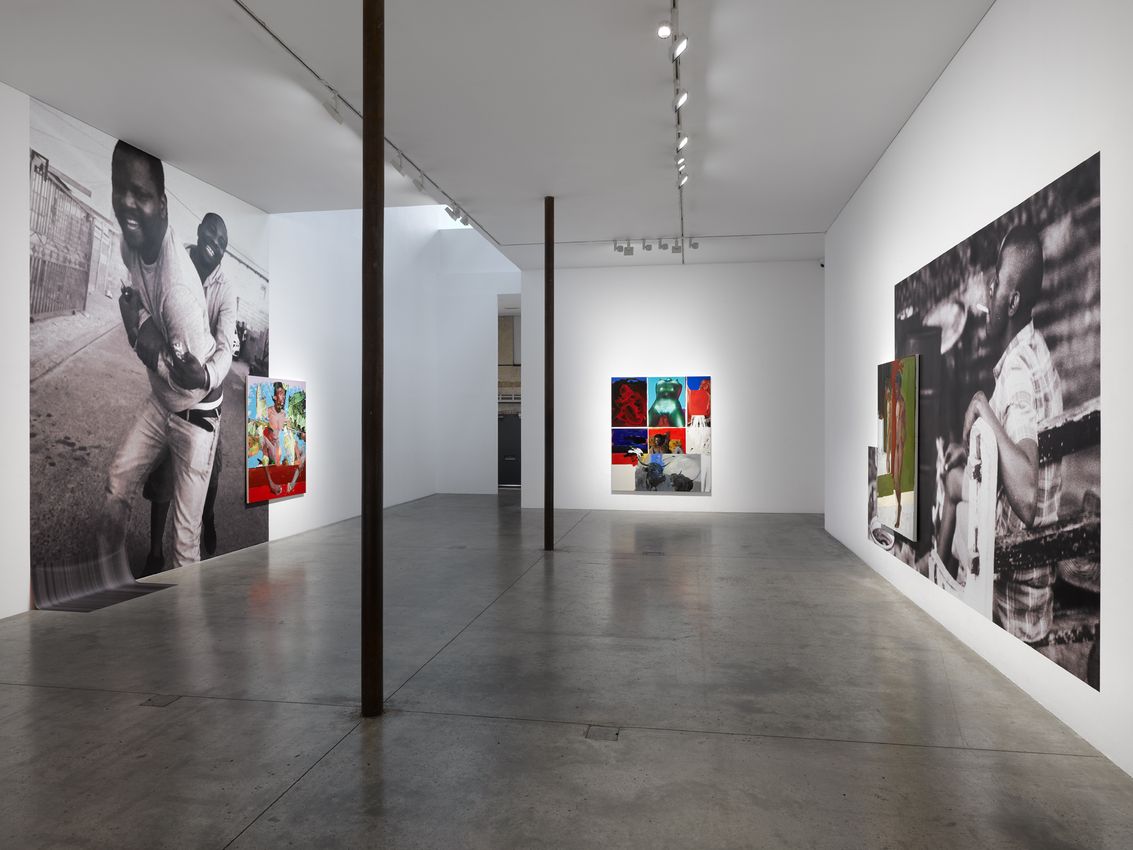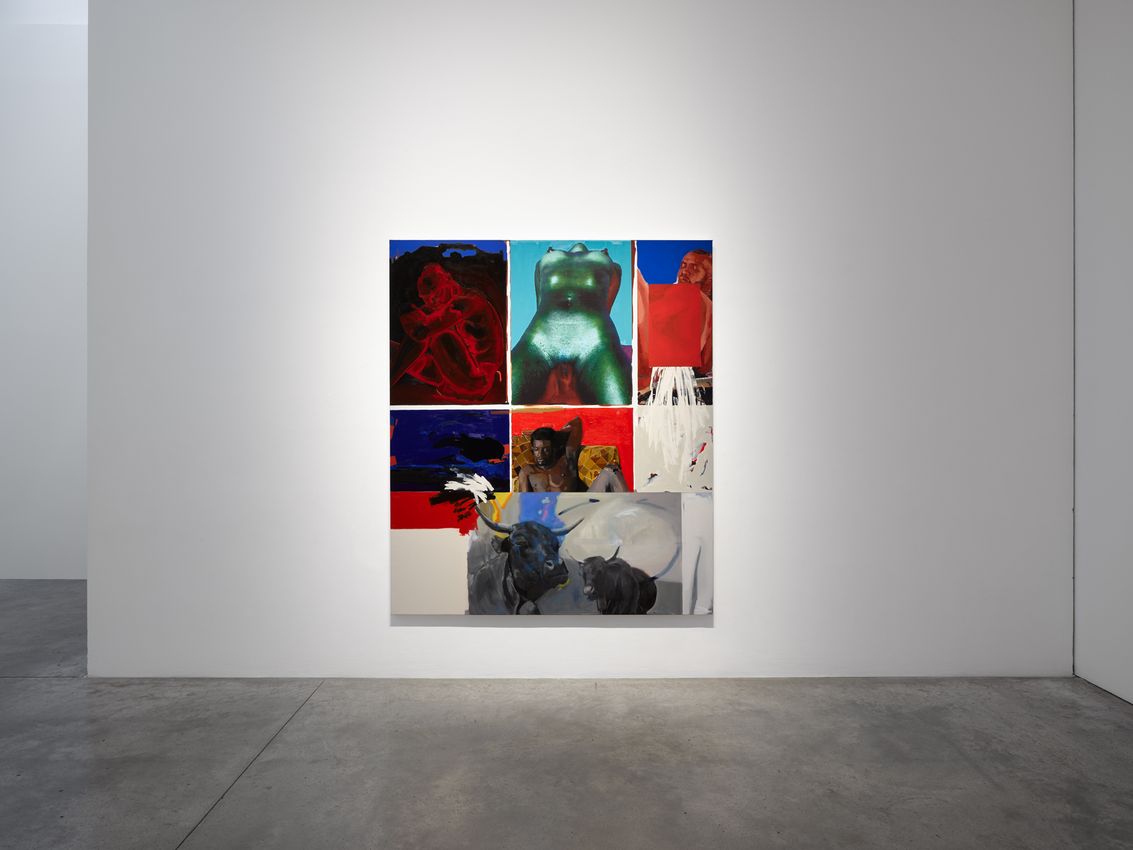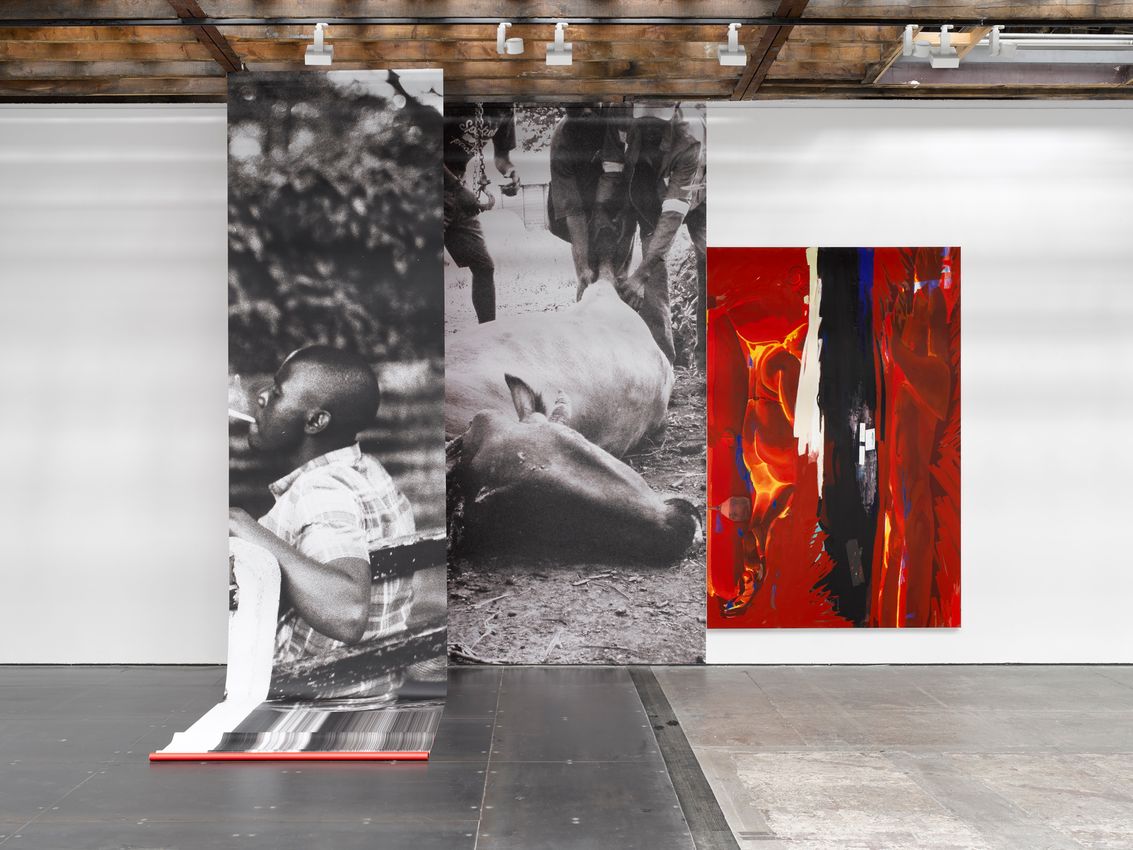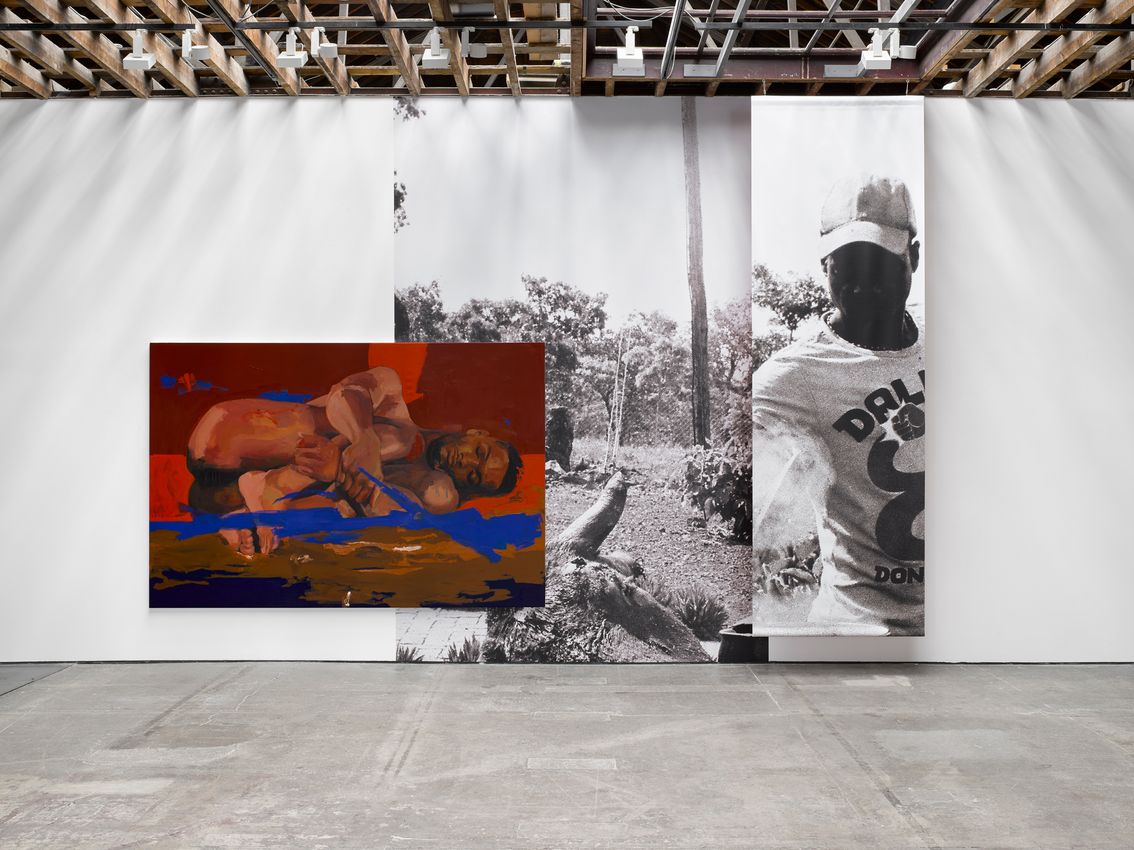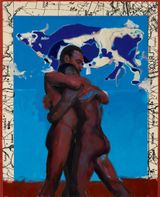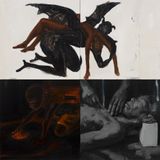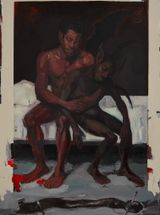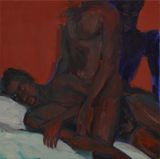


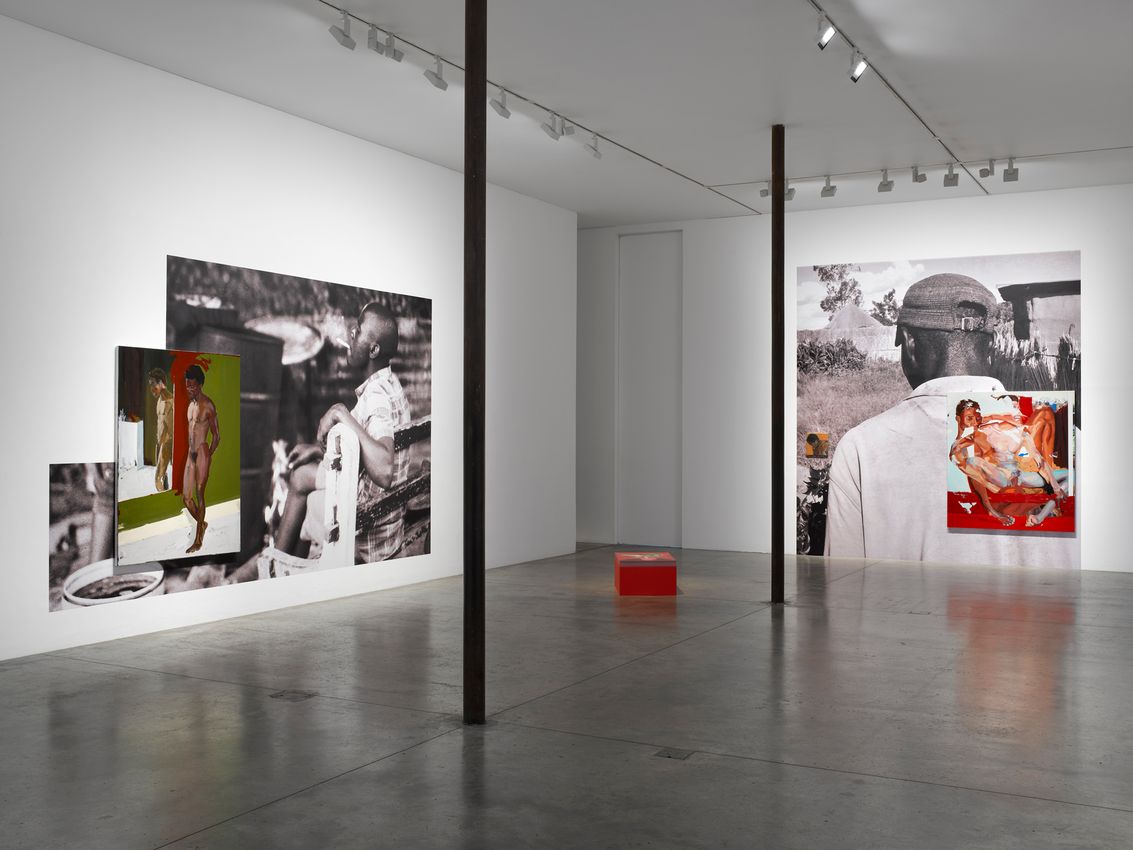
Victoria Miro is delighted to present an exhibition of new work by Kudzanai-Violet Hwami. Comprising paintings in dialogue with large-scale wall-based and suspended photographic images, A Making of Ghosts reflects on aspects of grief and the action of memory, unfolding as the viewer moves through the gallery space.
Kudzanai-Violet Hwami’s paintings combine visual fragments from a myriad of sources, such as online and archival images, and personal photographs, which collapse past and present. Autobiographical in nature and ‘dealing with internal and private curiosities,’ her works address how in a digitised world of infinite images we construct a sense of self, or experience and try to understand one another in a complex social reality.
Conceived across both levels of the gallery, A Making of Ghosts, the artist’s second solo exhibition at the gallery, features paintings and large-scale photographic images–some presented as floor-to-ceiling vinyls, others suspended in the space – sharing references including family photographs that act as touchstones for thoughts about grief, its action on memory and its fragmentary and disorienting effects.
Hwami’s work often speaks to the fallibility of memory as images are produced and reproduced, impressing themselves upon us while becoming unmoored from their original sources. Through her process, the artist questions things that appear fixed, or possess apparent finality, opening up a space of imagination and discovery shaped in part by her years growing up in Zimbabwe and South Africa, her interest in metaphysics and spirituality, and expressions of contemporary Black and Queer identities. Here, the historical medium of painting is folded into a collage-like approach analogous with the layering of formats we associate with social media platforms today. ‘I think I am seeking freedom,’ Hwami has said. ‘Collage making, which is a process I use to create a picture, has given me absolute freedom as a strategy...’
In the context of A Making of Ghosts, the digital and physical processes Hwami employs – splice, repetition, overlay, changes of scale and medium, in addition to the free play of imagination – are intrinsically linked to ideas of proximity in time and space, and how images and their accompanying narratives are endlessly constructed and reconstructed, living within us and beyond us.
As Osei Bonsu comments in the publication accompanying the artist’s 2022 solo exhibition at Kunsthaus Pasquart, Switzerland, ‘Hwami’s images are digitally recomposed to question the legitimacy of the “real” in relation to spiritual and existential experiences connected to memory, time or place. In a world dominated by digital technologies, Hwami’s mixing of timelines and temporalities evokes connections between places near and far, generations living and dead, a space between home and a possible elsewhere.’
Kudzanai-Violet Hwami was born in Gutu, Zimbabwe in 1993, and lived in South Africa from the ages of nine to seventeen.


A respected voice in contemporary art discourse.
Focusing on ambitious storytelling and insightful art-world commentary. Ocula Magazine publishes in-depth interviews, critical essays and timely analysis on the artists, exhibitions and ideas driving the global art world.
Learn more about Ocula Magazine
Showcasing the best of the art world.
Ocula partners with galleries from around the world to highlight their artists, artworks and exhibitions. Gallery membership is by application and invitation, with each member vetted by an independent panel.
Learn more about Ocula Membership

Specialises in the sale of major artworks.
Led by a team with deep ties to the world’s leading auction houses, galleries and collectors. Ocula’s advisory team offers bespoke services to high-net-worth clients from around the world who are looking to acquire the best of contemporary and modern art.
Learn more about our team and services