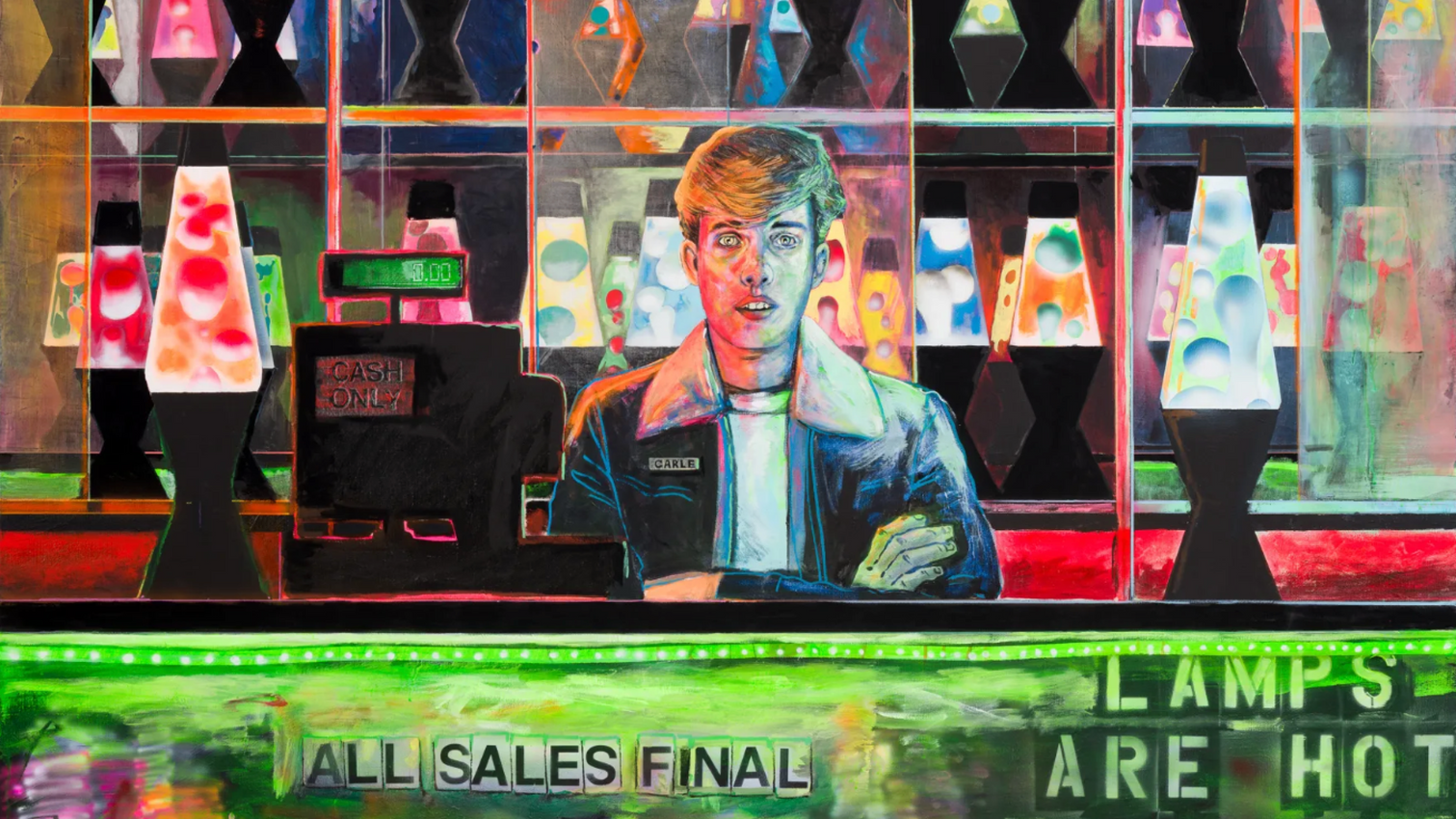
Victoria Miro is delighted to announce an exhibition of new paintings by Jules de Balincourt taking place at the gallery in London this autumn. New writing on the artist by Bob Nickas accompanies the exhibition.
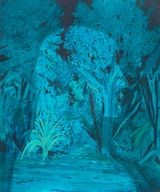
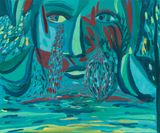
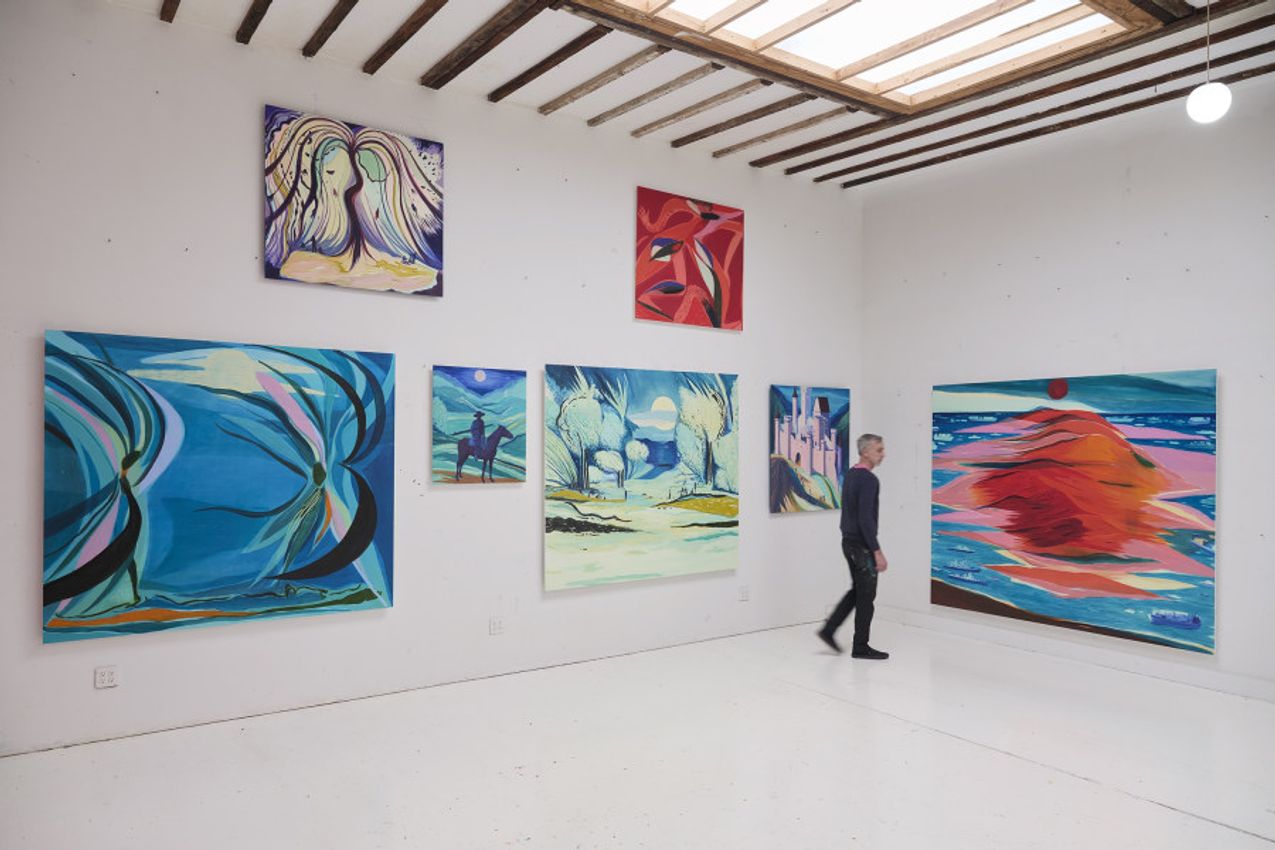
Jules de Balincourt’s paintings are states of mind rather than descriptions of reality. In this new body of work, the Brooklyn-based artist continues his exploration of painting as an intuitive process, resulting in fantasy-like worlds in which landscapes and seascapes interplay with more abstract works.
In de Balincourt’s paintings land and sea become sites of possibility and escape, while also containing elements of mysterious unease.Rather than rely on sketch, photography, or direct reference, the artist’s process initially involves him building up many translucent layers of paint, working from abstraction into a figurative depiction. In these ambiguous, evocative spaces, where figures seem to be in perpetual motion, one senses the movement of an ever-changing, volatile world. At times, landscapes and figures start to break down into more abstract imagery, retaining figurative elements that allude to meditation or escape from our reality. Often, large and small paintings co-exist, sometimes arranged in a salon-style installation, leaving the viewer to free-associate between the images on view.

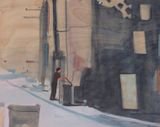
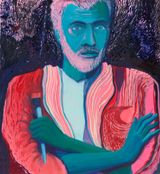
Evoking notions of utopia and dystopia, Jules de Balincourt’s paintings investigate public and private spaces and suggest an ever-changing landscape – both physical and psychological. In the paintings for which he first became known, de Balincourt worked from the position of an outsider (the Paris-born artist has lived in the United States since childhood), questioning structures of power and influence, laying bare injustices and hypocrisies while maintaining an amused attachment to the myths through which identity – individual and national – is constructed. From big screen legends, such as celluloid cowboy Clint Eastwood (Good, Bad, Ugly, 2008) to newsreel-like pronouncements (United We Stood, 2005), in these paintings de Balincourt employs a post-Pop painterly language to signal shifting sentiments or former glories, made all the more melancholy when they appear etched in mainstream culture.


A respected voice in contemporary art discourse.
Focusing on ambitious storytelling and insightful art-world commentary. Ocula Magazine publishes in-depth interviews, critical essays and timely analysis on the artists, exhibitions and ideas driving the global art world.
Learn more about Ocula Magazine
Showcasing the best of the art world.
Ocula partners with galleries from around the world to highlight their artists, artworks and exhibitions. Gallery membership is by application and invitation, with each member vetted by an independent panel.
Learn more about Ocula Membership

Specialises in the sale of major artworks.
Led by a team with deep ties to the world’s leading auction houses, galleries and collectors. Ocula’s advisory team offers bespoke services to high-net-worth clients from around the world who are looking to acquire the best of contemporary and modern art.
Learn more about our team and services