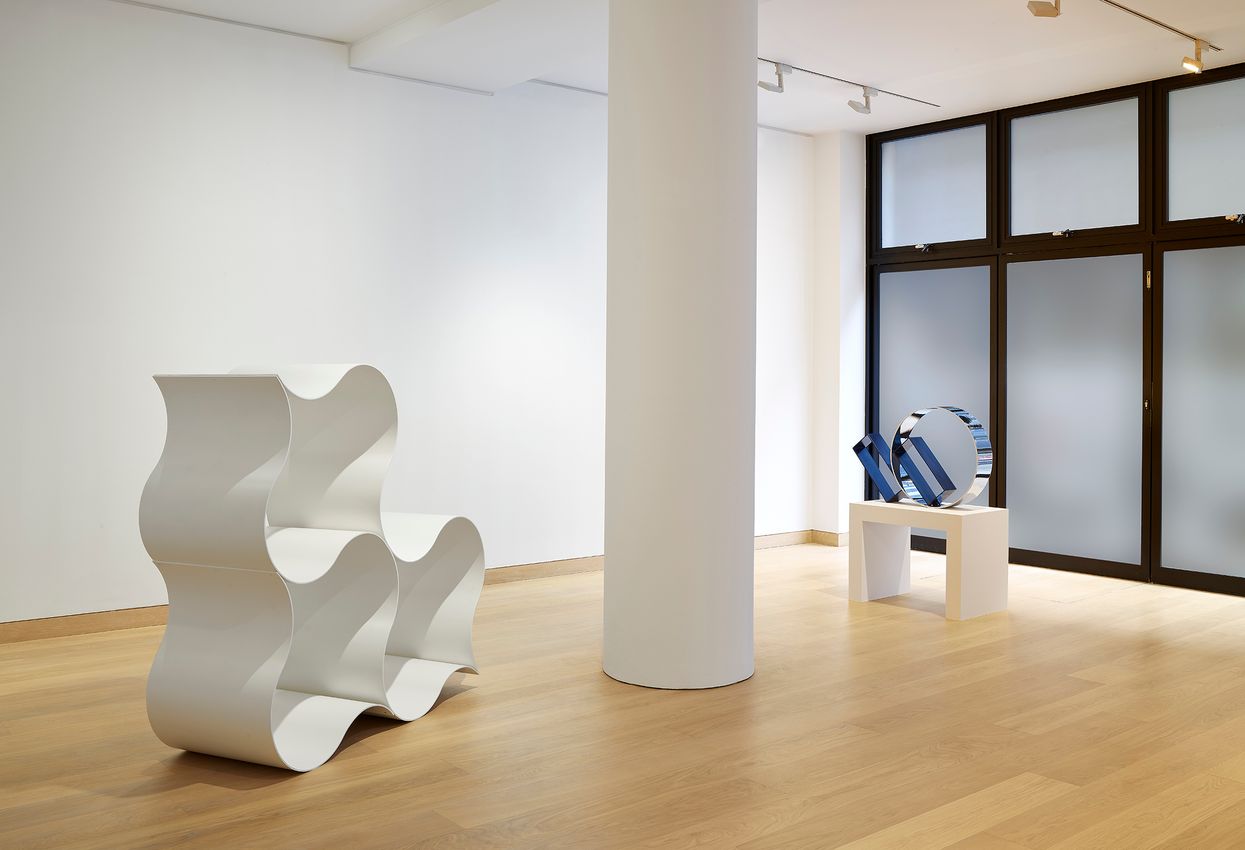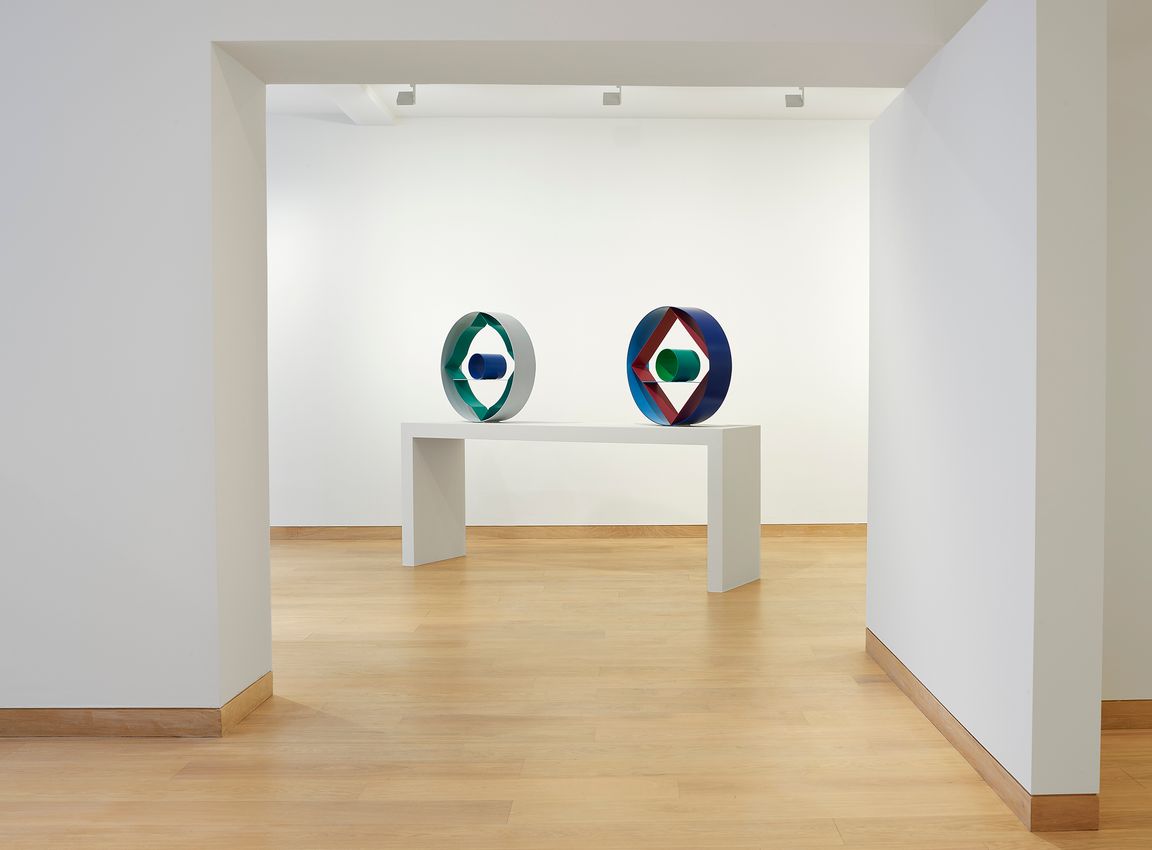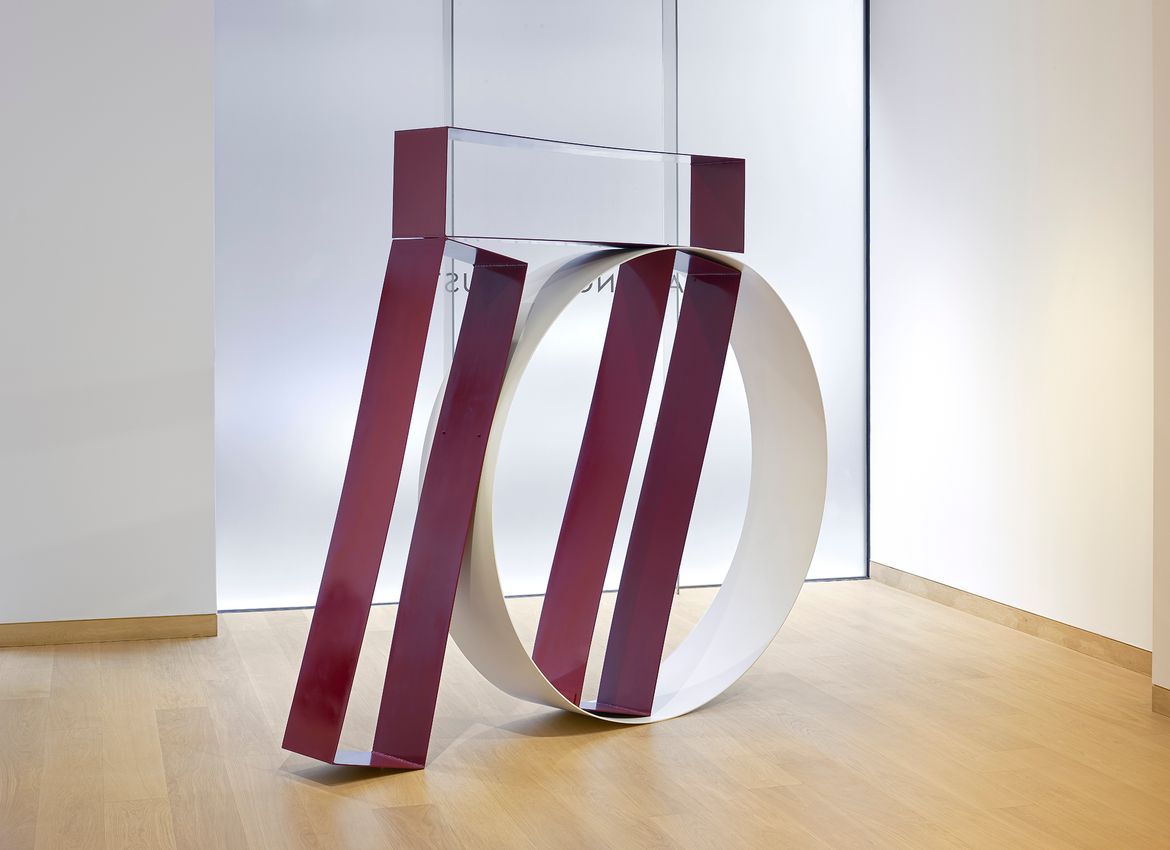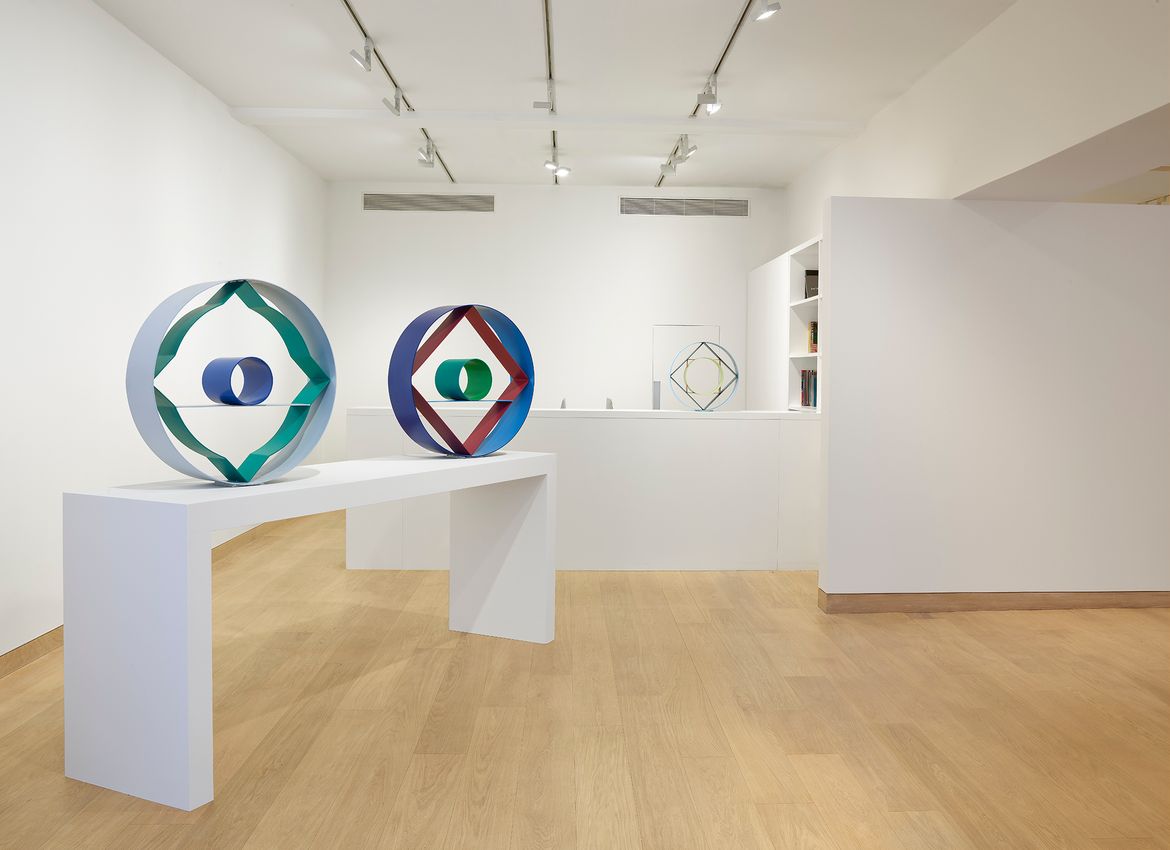
Waddington Custot is delighted to present a solo exhibition by British sculptor David Annesley. The exhibition will feature a selection of Annesley’s celebrated large-scale, geometric colour sculpture from the 1960s, shown alongside more recent table-top sculptures which return to the same ideas of colour, lightness and movement of his earlier work.
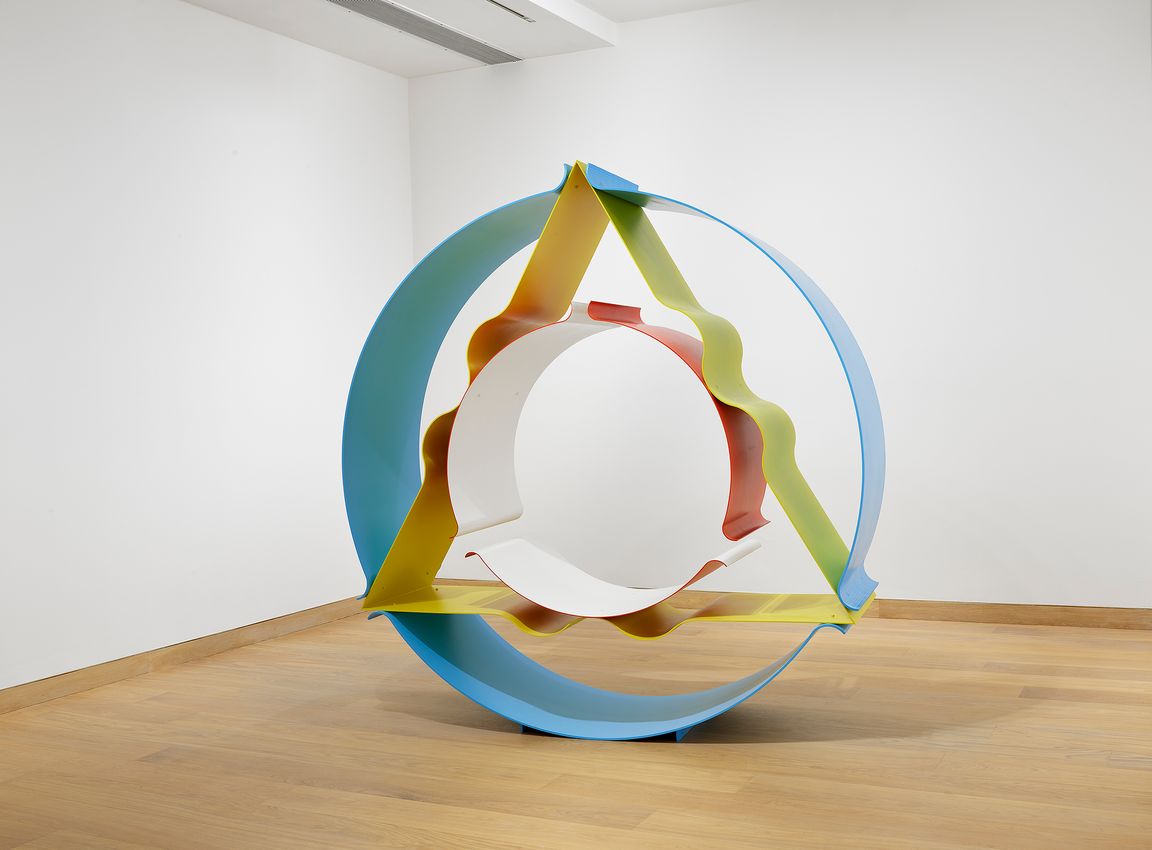
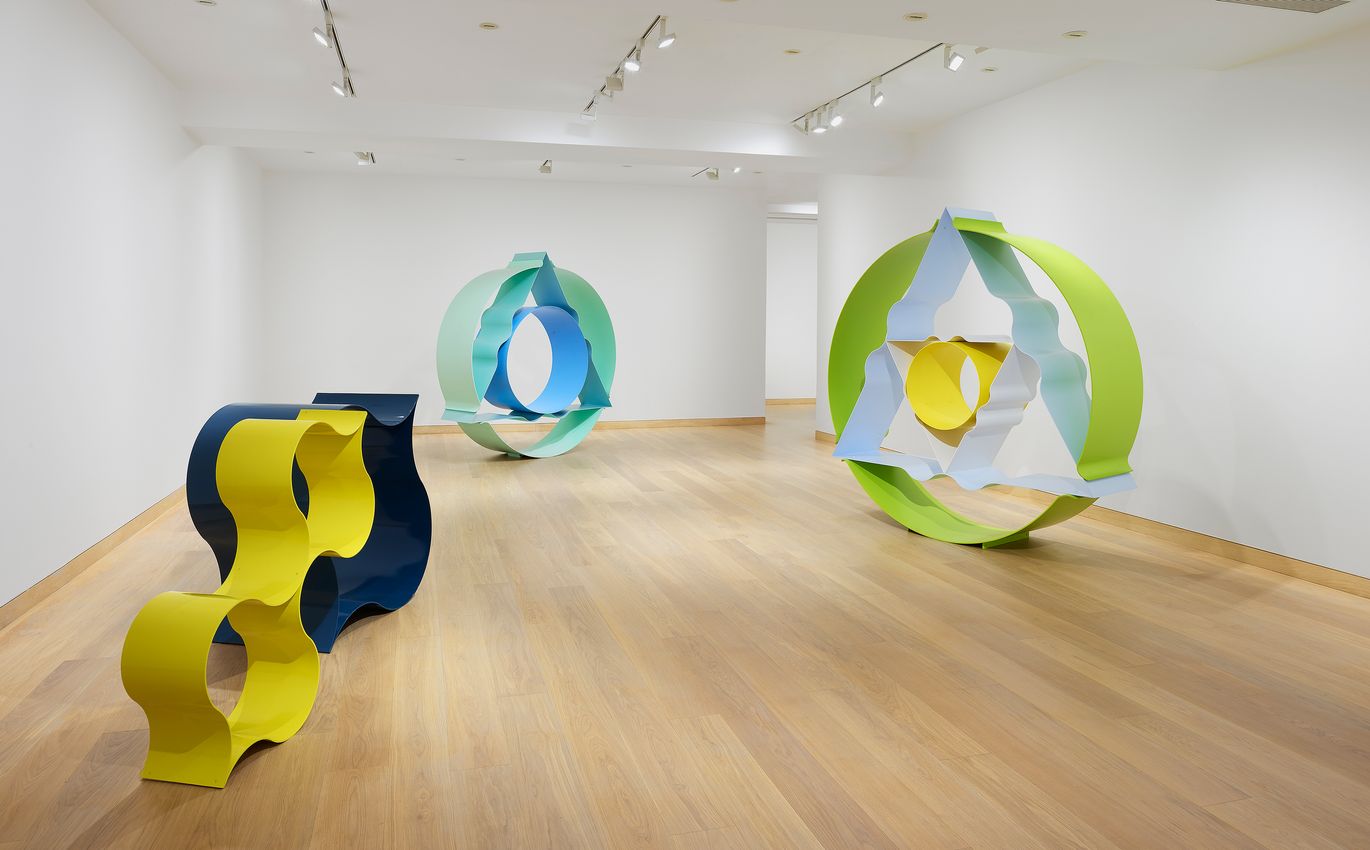
Annesley’s 1960s welded steel and aluminium sculptures are imposing in presence but still retain a delicacy of structure. He used colour to suggest the idea of dynamism and weightlessness in his sculptures, believing that colour opened up ‘a whole new way of articulating and realising feeling in sculpture’. This is evident in Untitled, 1968–1969, a circle contained within a triangular shape set in a larger circle, where Annesley’s use of complementary light blue and green tones disguise the mass of the material and convey a sense of lightness. The artist Kenneth Noland, who was a close friend, saw Annesley’s sculptures as the extension of colour field painting: as painting got flatter, Annesley saw the potential of sculpture to take colour to another dimension.
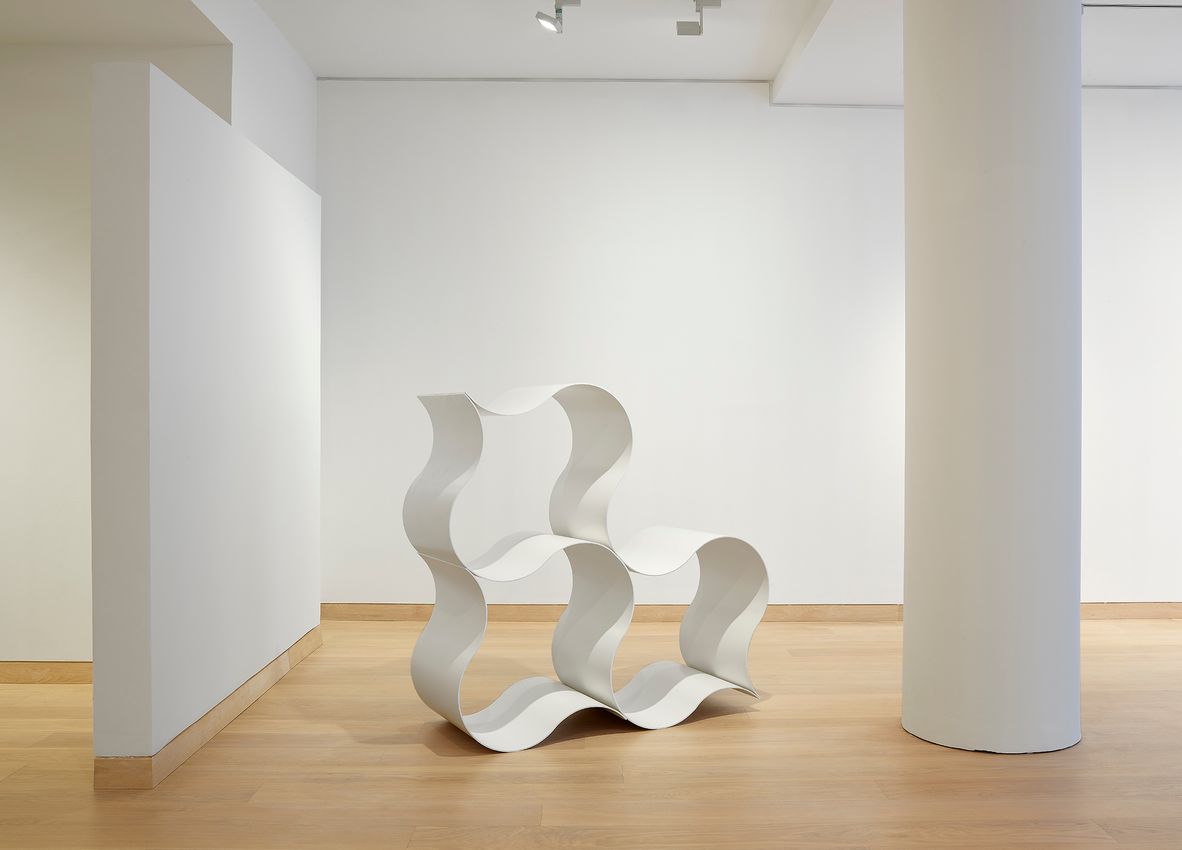
The work from the sixties explores the relation of the body to the sculpture, examining the ratio of the parts to the whole. Many of the sculptures work in series, featuring the same motif, repeated or reduced in size. Two sculptures, Loquat, 1965–2017 and Godroon, 1966–2017 relate to each other in this way. Both use wave-like shapes, built up in varying sizes, forms and colour. The lack of a straight edge on which the sculpture should sit gives the illusion of instability and movement.These two sculptures, as well as Untitled, 1969–2017, have been remade this year under the supervision of the artist. All three sculptures were destroyed in the Momart fire of 2004, but following a lengthy process and using the original specifications, the sculptures have been reconstructed on the occasion of this exhibition as a chance to revisit the ideas that persistently arise in Annesley’s work. Annesley’s first-ever solo exhibition was at Waddington Galleries in 1966. This 2017 exhibition, looking back to Annesley’s works from the 1960s, brings these seminal sculptures to the fore and reassesses them from acontemporary viewpoint. The exhibition will be accompanied by a catalogue featuring two newly commissioned essays by the artist Richard Wentworth and Jon Wood, Head of Research at the Henry Moore Institute, Leeds.
David Annesley (b. 1936, London) received early recognition for his colour sculptures at The New Generation: 1965 show at the Whitechapel Gallery, London. The exhibition showcased a new generation of sculptors who had been taught by Frank Martin and Anthony Caro at St Martin’s School of Art in London in the early sixties. The new approach was defined by the placement of sculptures directly on the ground, allowing them to occupy the same floor-space as the viewer; the use of new materials such as fibreglass, aluminium and plastic, which allowed the artists to transcend art historical associations with materials; and the use of bright colours, often with the addition of a ‘skin’ of coloured paint to further reduce attention to the specific material of the work.


Waddington Custot was formed through the partnership of French art dealer Stephane Custot and long-time London art dealer Leslie Waddington, in 2010. Located in Cork Street since 1958, formerly as Waddington Galleries, the gallery has a rich heritage and an international reputation for quality and expertise in works by modern and contemporary masters, with a particular focus on monumental sculpture.

A respected voice in contemporary art discourse.
Focusing on ambitious storytelling and insightful art-world commentary. Ocula Magazine publishes in-depth interviews, critical essays and timely analysis on the artists, exhibitions and ideas driving the global art world.
Learn more about Ocula Magazine
Showcasing the best of the art world.
Ocula partners with galleries from around the world to highlight their artists, artworks and exhibitions. Gallery membership is by application and invitation, with each member vetted by an independent panel.
Learn more about Ocula Membership

Specialises in the sale of major artworks.
Led by a team with deep ties to the world’s leading auction houses, galleries and collectors. Ocula’s advisory team offers bespoke services to high-net-worth clients from around the world who are looking to acquire the best of contemporary and modern art.
Learn more about our team and services