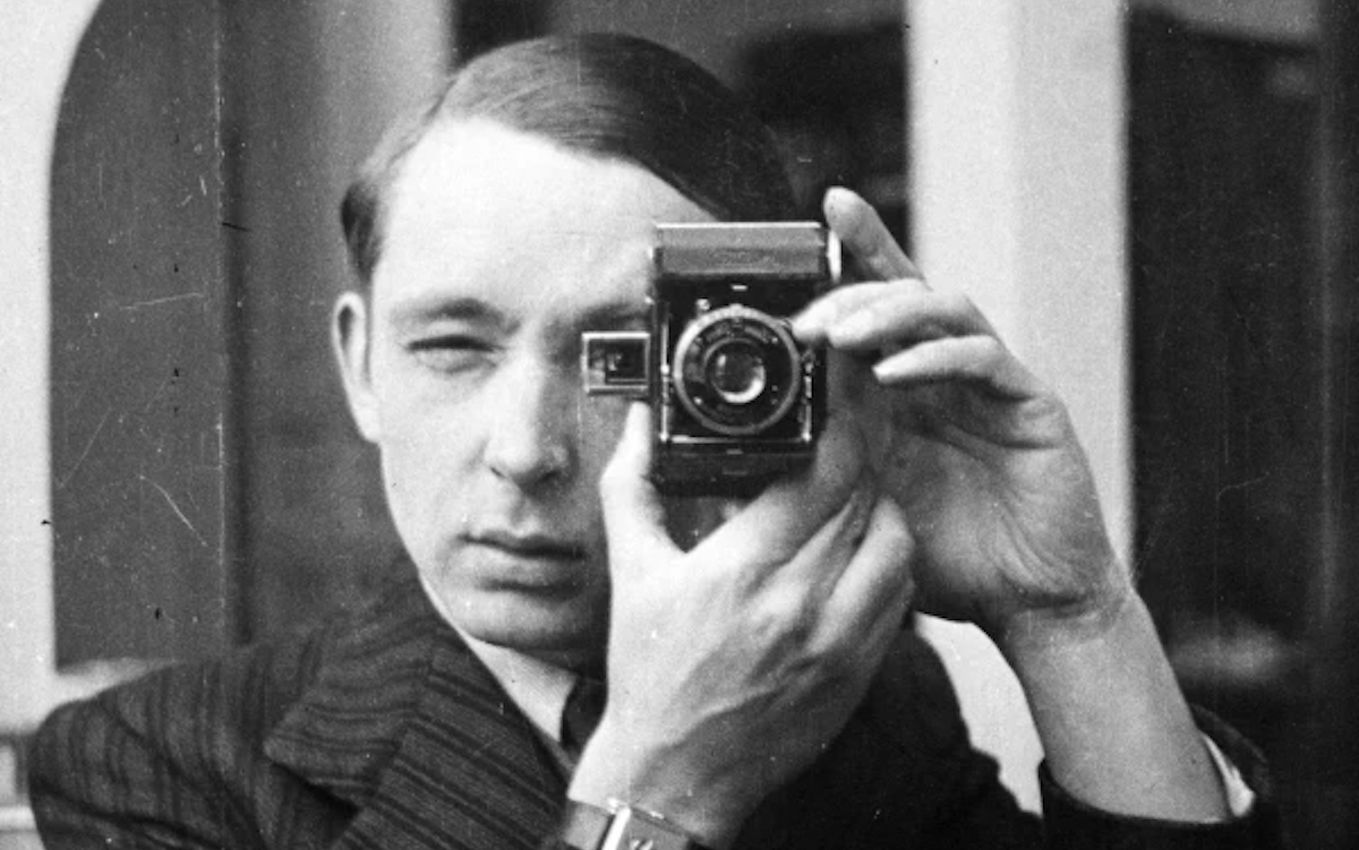
‘I took photos of everything that interested me in the world: people, clouds, water, mountains, cracks, stains, and all sorts of light and shade effects, which–sometimes–have a more or less direct relationship to my painting.’
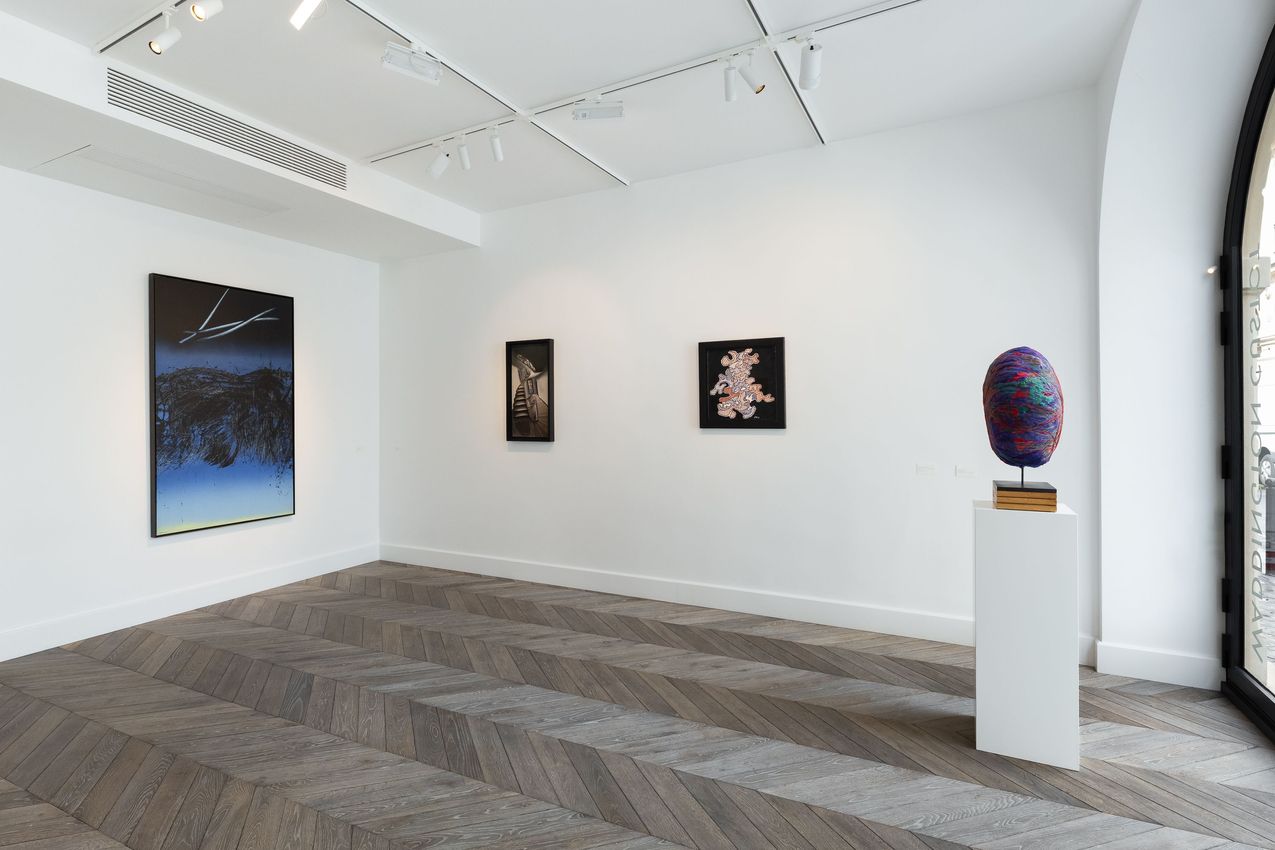
While many are familiar with the abstract paintings of German-French artist Hans Hartung (b.1904, Leipzig, Germany; d.1989, Antibes, France), few know of their connection to his photography. In collaboration with the Hartung-Bergman Foundation, Waddington Custot presents Hans Hartung: Painter, Photographer, a museum-quality exhibition that illuminates the importance of photography to the development of the painter’s work. Today, approximately 30,000 photographic negatives are held by the Foundation, with those the artist printed organised chronologically and thematically in numerous albums, demonstrating the tremendous value he ascribed them. Nevertheless Hartung’s photographs–a vital yet rarely explored aspect of his practice–have never before been exhibited in London; this will be the first time that some have been publicly exhibited.
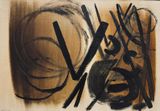
Shown alongside paintings spanning four decades–including masterpieces from the 1940s to the hazy, sulfateuse canvases of the 1980s–Hartung’s photographs show how his approach to abstraction was rooted in an external, lived reality of the world, in contrast to the internal concerns of the self that occupied many painters working at that time.
A childhood fascination with light and lightning, which Hartung drew obsessively and later photographed, gave Hartung the moniker ‘the painter of lightning’, and he later described ‘I am sure that those childish bolts influenced my artistic development, the way I paint. They gave me the sense of speed in drawing a line, the desire to capture the instant with a pencil or brush’. As a child, Hartung turned his father’s cigar boxes into pinhole cameras and even invented a telescope with a camera embedded to photograph the moon.
The subsequent availability of the lightweight, portable camera allowed Hartung to keep one of two different devices–a Minox and a Leica–about him at all times. Using these intensively, Hartung described his photographs as ‘a second memory’; during a trip to Norway with his wife, the artist Anna-Eva Bergman, he took more than 1,000 pictures of their journey beyond the North Cape.
In his continuous search for abstraction, Hartung looked anew at the world and photographed everything in his locale, rejecting artificial distinctions of beauty to trace and memorise textures of the everyday. His photographs find linear patterns in jet trails crossing the Antibes sky and in speeding lights captured with a long exposure; they discover calligraphic shapes in intertwined branches and the reflections of his swimming pool; they enhance the black shadows of the centuries-old olives on his Antibes property, and show that the granular textures of stones and sand echo grainy images of clouds and sky.
These abstract patterns of light and shadow reverberate through Hartung’s oeuvre. In 1932, Hartung began to scratch and paint striations directly onto his negatives, an experiment that evolved into his layered compositions with calligraphic motifs of the 1940s and 1950s. Continuing his love of innovation, towards the 1960s Hartung started to invent painting tools to trace and mimic the light effects and textures captured by his photographs: sharp instruments scratch into paint to reveal other colours beneath–an echo of his lightning bolts–while comb-like implements and found items like olive tree branches provide striations and texture. For the hazy sulfateuse paintings of the 1980s, Hartung used spray guns to create paint effects that mimic both grainy stones and the atmospheric quality of light and sky. Drawn from encounters with light and slices of the real world, these majestic paintings oscillate between the concrete and the abstract. Produced quickly and at arm’s length they parallel photography’s speed and distance: spontaneous and instinctive, both practices similarly experiment with pattern and light.
While exhibitions in France, Germany and the United States have explored the interconnected nature of Hartung’s photographs and paintings, the subject is yet to reach UK audiences. This new exhibition, Hans Hartung: Painter, Photographer uncovers how both disciplines were tools that Hartung used to reveal his singular vision of the world and continuous search for visual abstraction within it.
Hartung-Bergman Foundation and Perrotin Gallery provide exceptional support for the exhibition Hans Hartung: Painter, Photographer at Waddington Custot in London.
Hans Hartung (b. 1904, Leipzig, Germany; d. 1989, Antibes, France) was positioned at the forefront of the avant-garde by the 1950s, after years of working alone on his own trajectory, largely unrecognised. Between 1954 and 1955, he was making hundreds of Indian ink drawings which had a strong influence on his painting. He went on to use vinyl paints, which increased the spontaneity of his painting, and worked directly on large format canvases. He scraped lines into paint, using different tools, and developed a method of spraying colour onto canvas. His technique of transferring his works on paper into the medium of oil on canvas would allow him to retain the same feeling of movement characteristic of his drawings. Known for his distinct calligraphic motif, rapid brushstrokes with a transient, fleeting nature, Hartung’s lyrical abstraction focused on dynamism created through the use of materials and form, quality of line, brushstroke and colour, revealing the direct connection with the artist.
Waddington Custot was formed through the partnership of French art dealer Stephane Custot and long-time London art dealer Leslie Waddington, in 2010. Located in Cork Street since 1958, formerly as Waddington Galleries, the gallery has a rich heritage and an international reputation for quality and expertise in works by modern and contemporary masters, with a particular focus on monumental sculpture.

A respected voice in contemporary art discourse.
Focusing on ambitious storytelling and insightful art-world commentary. Ocula Magazine publishes in-depth interviews, critical essays and timely analysis on the artists, exhibitions and ideas driving the global art world.
Learn more about Ocula Magazine
Showcasing the best of the art world.
Ocula partners with galleries from around the world to highlight their artists, artworks and exhibitions. Gallery membership is by application and invitation, with each member vetted by an independent panel.
Learn more about Ocula Membership

Specialises in the sale of major artworks.
Led by a team with deep ties to the world’s leading auction houses, galleries and collectors. Ocula’s advisory team offers bespoke services to high-net-worth clients from around the world who are looking to acquire the best of contemporary and modern art.
Learn more about our team and services