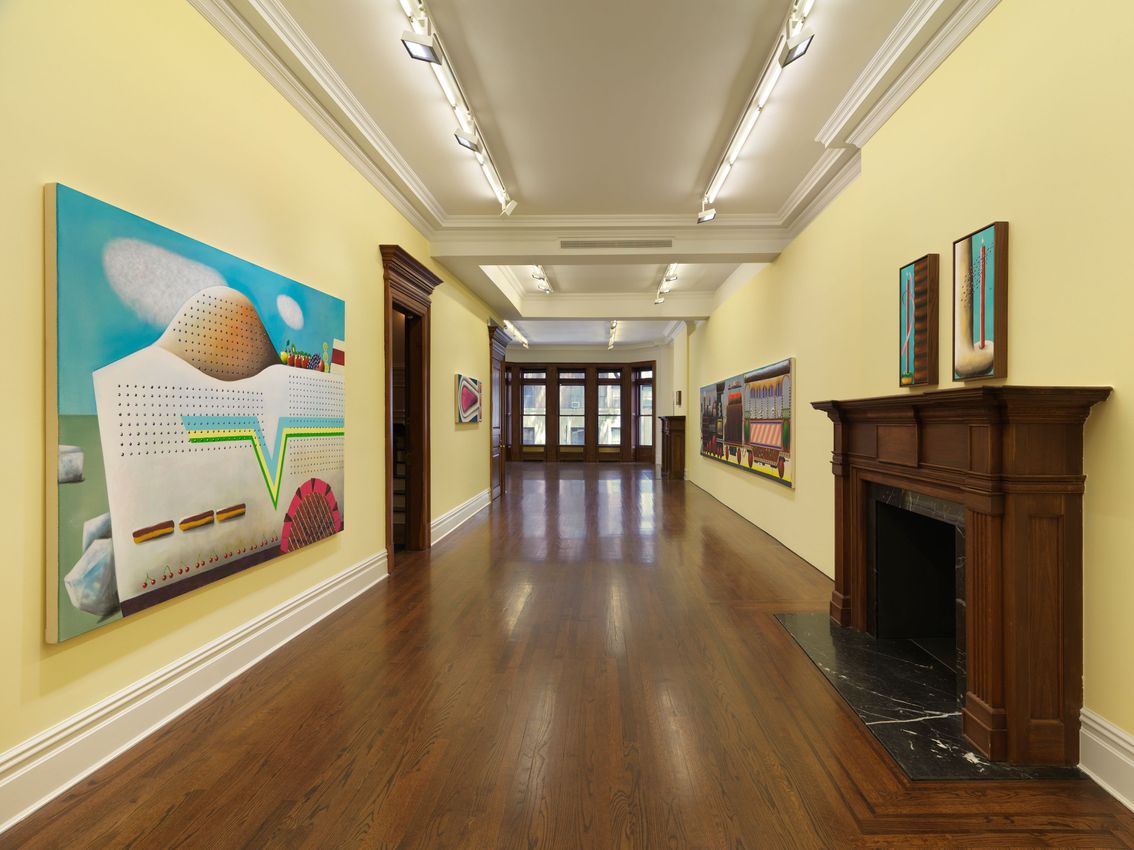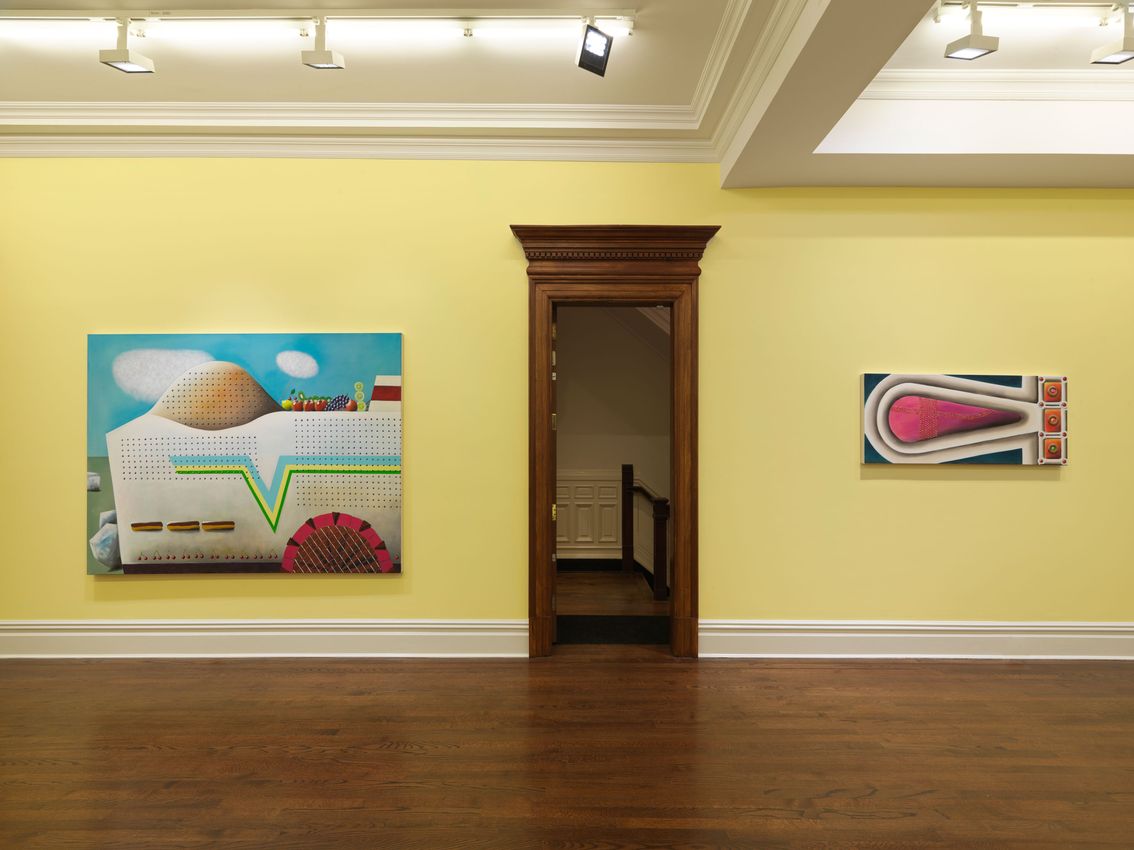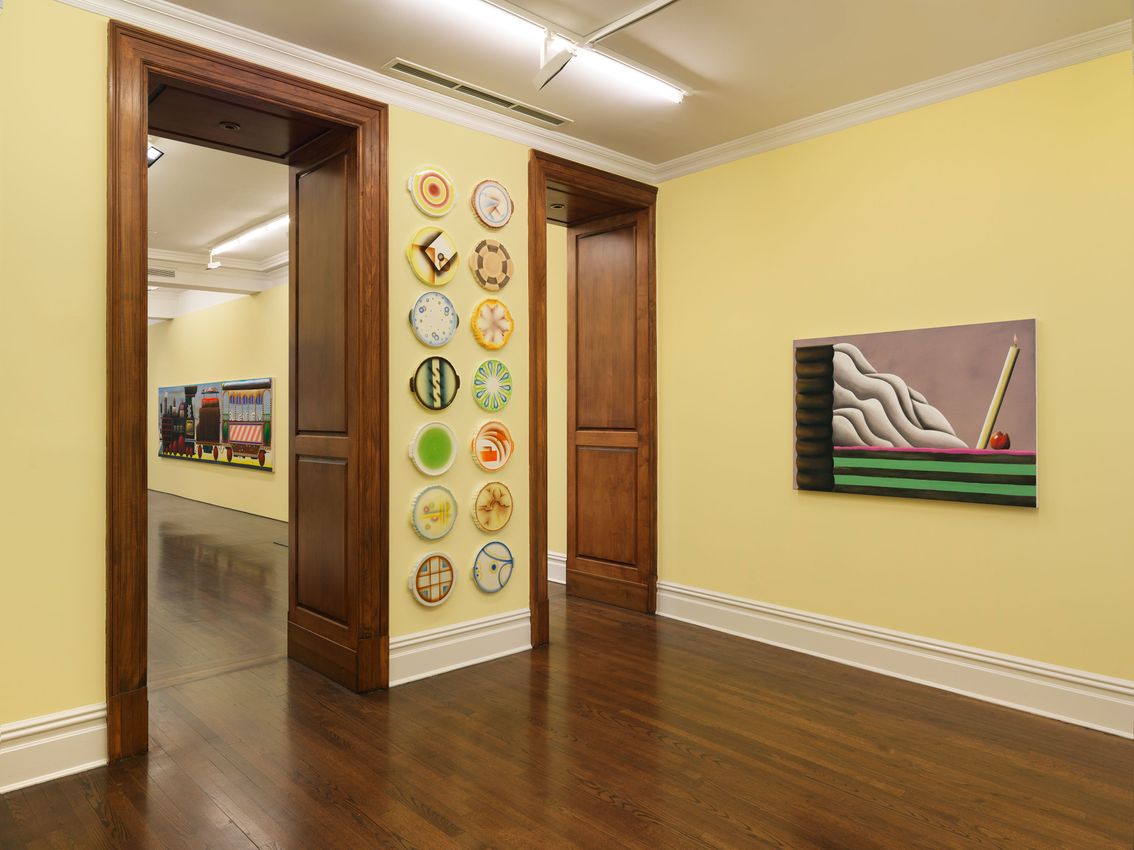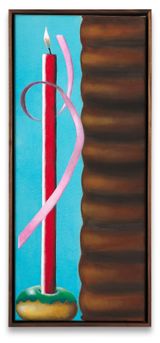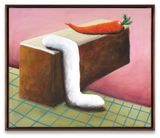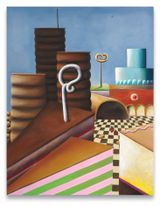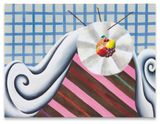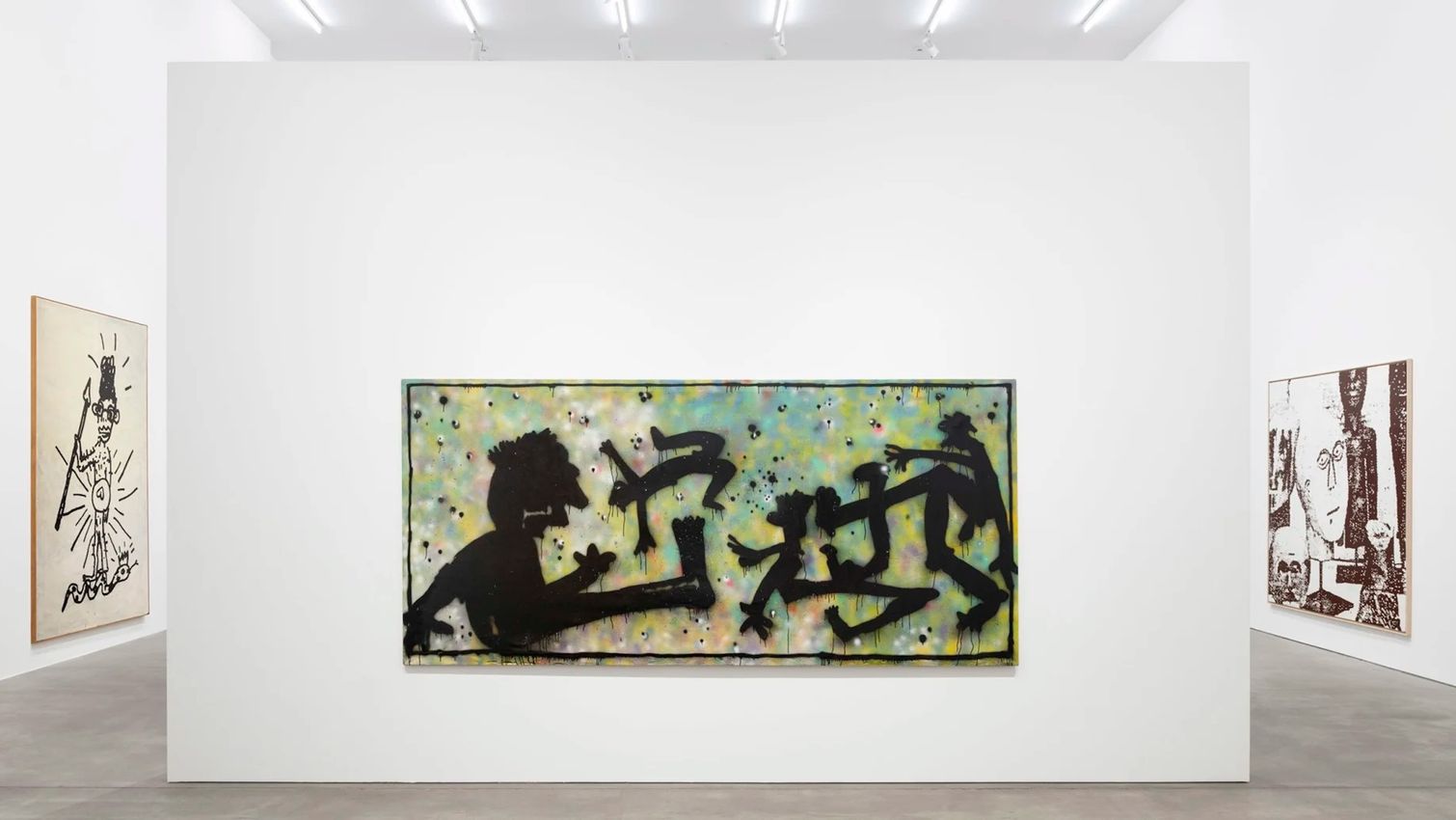
Featuring all new paintings, the exhibition Cake demonstrates the uniqueness of Andreas Schulze’s decades-long practice through the canvases’ joyful play and artistic variety, with multiple layered references to pop culture and art history.
Andreas Schulze is one of the most influential German painters of his generation, and with his singular approach to painting, a key member of the gallery program for over 40 years. Following his major exhibition at the Institution of Contemporary Art in Miami, Cake is Schulze’s first solo exhibition in the New York gallery space.
Cake is a motif that the artist has revisited at different points in his career, though this exhibition is the very first time that this body of work has been shown publicly. As a subject involved with decoration, pleasure, display, and everyday comforts, cake encapsulates many of the ideas around color, emotion and the details of daily life that characterize Schulze’s work.
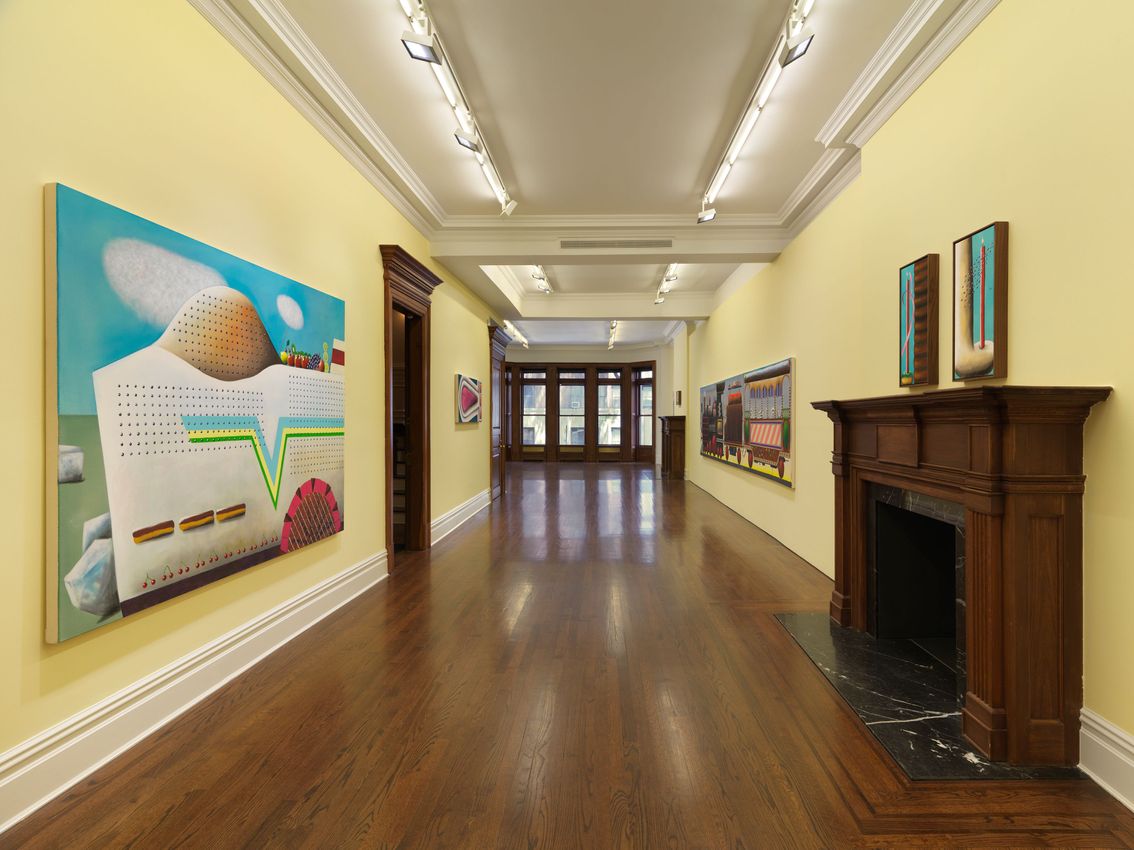
His approach to the motif varies from paintings that focus on cake-like details, often to the point of abstraction, to scenes of objects transformed into cakes themselves: The monumental, three-part Untitled (Cake Train) (all works 2026) processes down one of the gallery walls, reminiscent of one of Schulze’s best-known series of car paintings, Traffic Jam. Each canvas features its own train car composed entirely of cakes, slices, baking accouterments and food décor, all rendered in refined detail.
Untitled (MSC), inspired by a docked cruise ship in Miami, sits with blueberries standing in for rows of portholes amid a gauzy landscape typical of Schulze’s œuvre, with fluffy clouds on rocks that could also be made of sweets.
Paintings such as Untitled (Torta Ettore) and Untitled (Crash) zoom in on facets of cake, transforming familiar objects into abstracted forms that always hang in tight balance between abstraction and representation.
“For me, abstraction and figuration are not mutually exclusive. On the contrary, you can’t separate one from the other. I also see abstraction as a form of realism.” –Andreas Schulze
The cake paintings’ emphasis on everyday subjects, and cake in particular, likewise connects these works to a lineage of Pop artists who explored how such objects function within daily life. The cake paintings of Wayne Thiebaud, Claes Oldenburg’s papier-mâché marketplace, and even Andy Warhol’s silkscreened foods elevated common things to outsized status, triggering emotions and memories.
Thiebaud, moreover, foregrounded the concept of presentation in his paintings of bakery displays; this theme runs through Schulze’s canvases as well, including Untitled (Frankfurter Kranz), with its towers of cake, checkerboard flooring, and stage-like setting, which simultaneously evoke a city skyline formed from cake in the style of de Chirico.
“Painting should be enjoyable, which is not incompatible with it also having a deeper meaning. When you enjoy something, you look at it more closely, which opens the door to deeper reflection.” –Andreas Schulze


Andreas Schulze first came to prominence in the early 1980’s, as a pivotal figure in the explosive flourishing of creativity which centred around Monika Sprüth’s gallery in Cologne. Schulze has since been recognised as an inventor of new pictorial worlds, having developed an autonomous and unmistakable visual language with which to explore various interior views of society. A fundamental theme in the artist’s work is the power of painting to create illusion, giving multifaceted treatment to the theme of the interplay between being and appearance, reality and staging in the medium of painting. An independent and anti-hierarchical use of traditional styles of painting links his work with the Avant Garde movements of the early twentieth century, above all Dada, Surrealism and Symbolism, yet his cool, analytical compositions and his independent themes allow Schulze to retain a unique position within the context of contemporary art.

A respected voice in contemporary art discourse.
Focusing on ambitious storytelling and insightful art-world commentary. Ocula Magazine publishes in-depth interviews, critical essays and timely analysis on the artists, exhibitions and ideas driving the global art world.
Learn more about Ocula Magazine
Showcasing the best of the art world.
Ocula partners with galleries from around the world to highlight their artists, artworks and exhibitions. Gallery membership is by application and invitation, with each member vetted by an independent panel.
Learn more about Ocula Membership

Specialises in the sale of major artworks.
Led by a team with deep ties to the world’s leading auction houses, galleries and collectors. Ocula’s advisory team offers bespoke services to high-net-worth clients from around the world who are looking to acquire the best of contemporary and modern art.
Learn more about our team and services