Press Release

Opening during Frieze London, White Cube presents the first UK solo exhibition of works by São Paulo-based artist Marina Rheingantz.

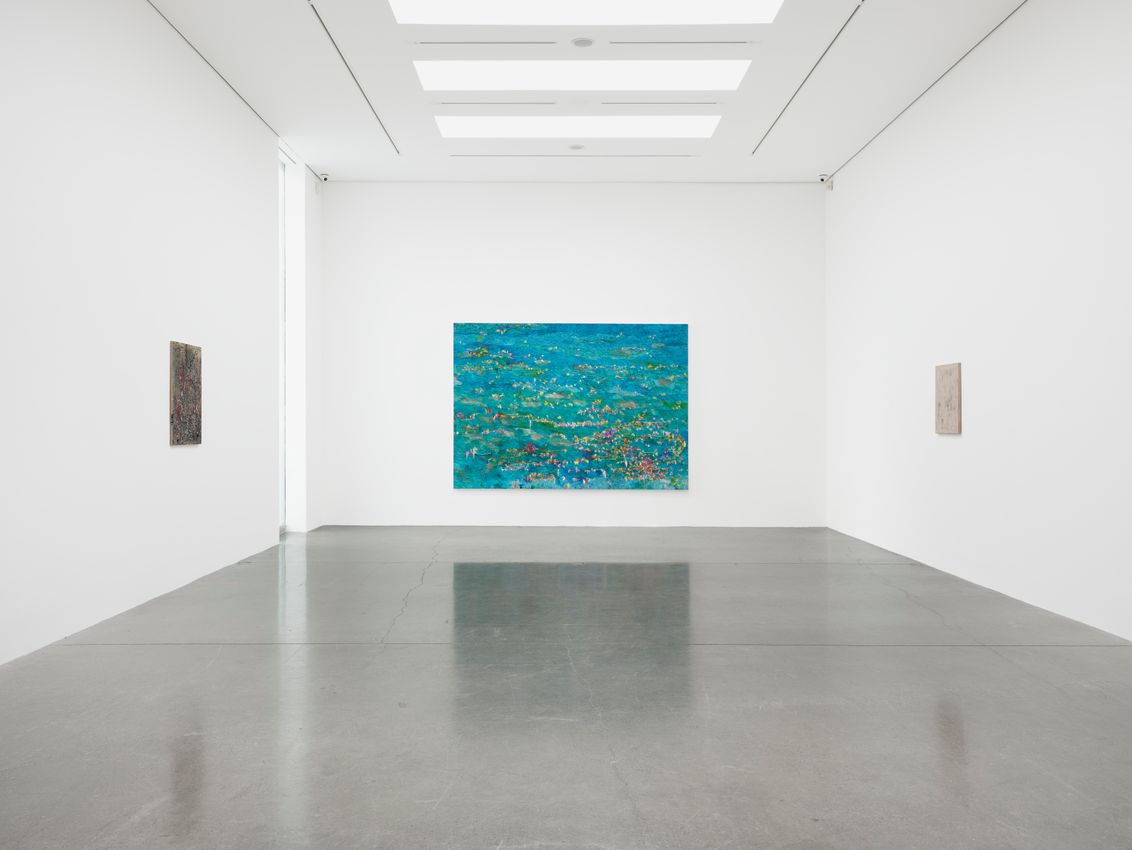
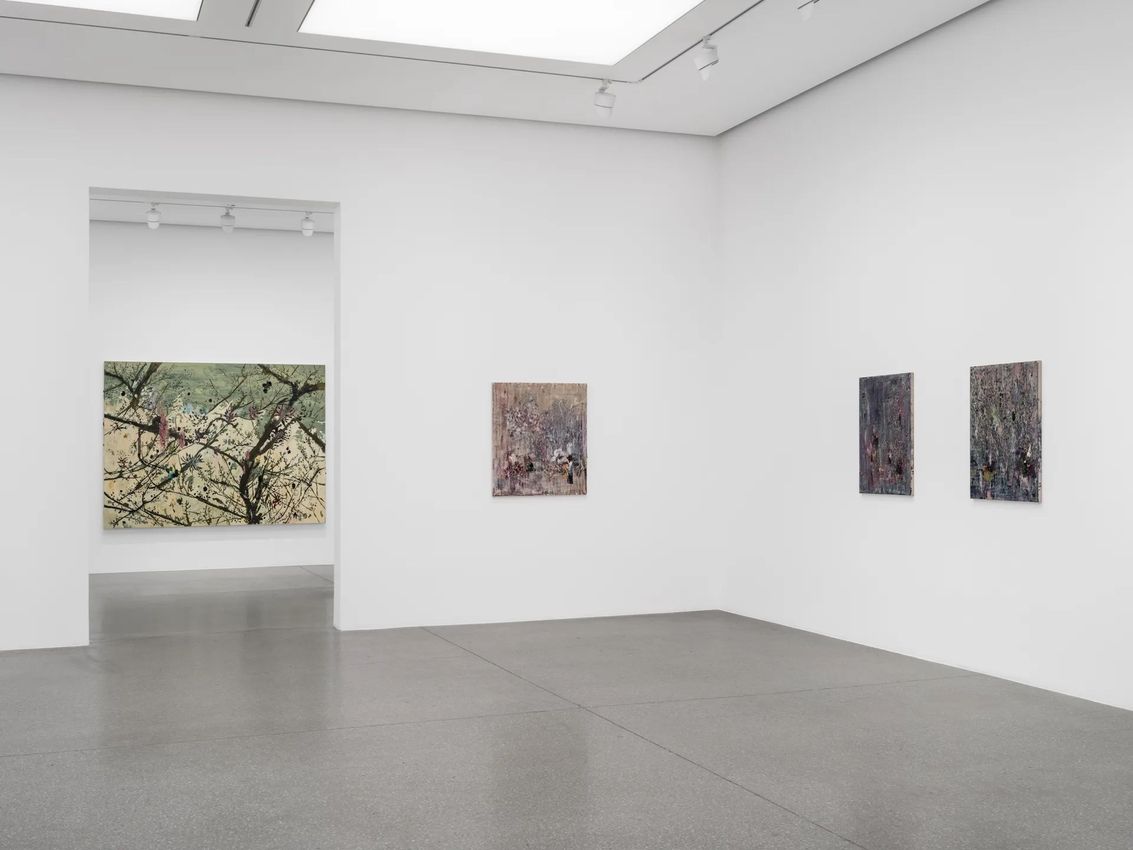
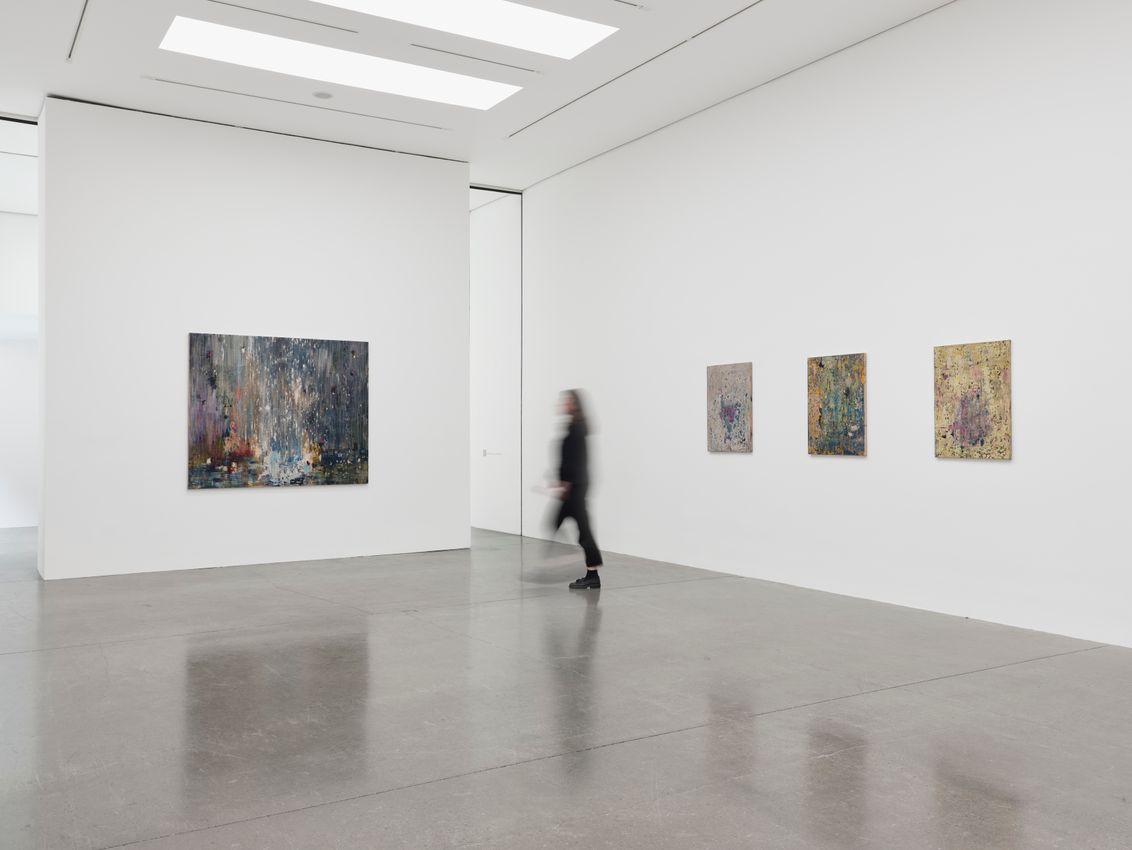
Informing the exhibition’s titular motif, ‘Maré’ – the Portuguese word for ‘Tide’ – the artist’s recent paintings, embroidery and tapestry works express a characteristic textural liquidity, imparting the impression of expansive, vacillating motion and unresolved, agitated space. Evincing a dissonant fusion of order and entropy, formal patterning and instinctive gestural strokes, Rheingantz emerges as a particular and innovative force within the long-established conventions of landscape painting.

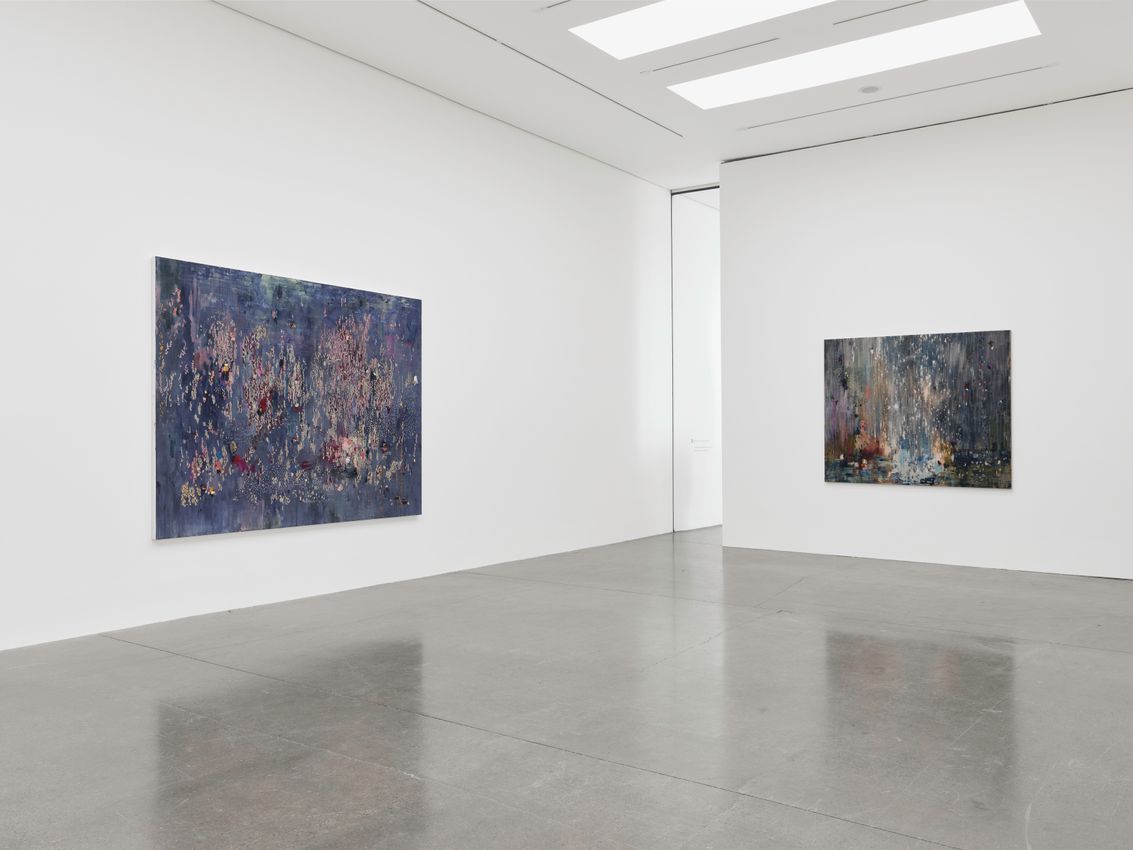
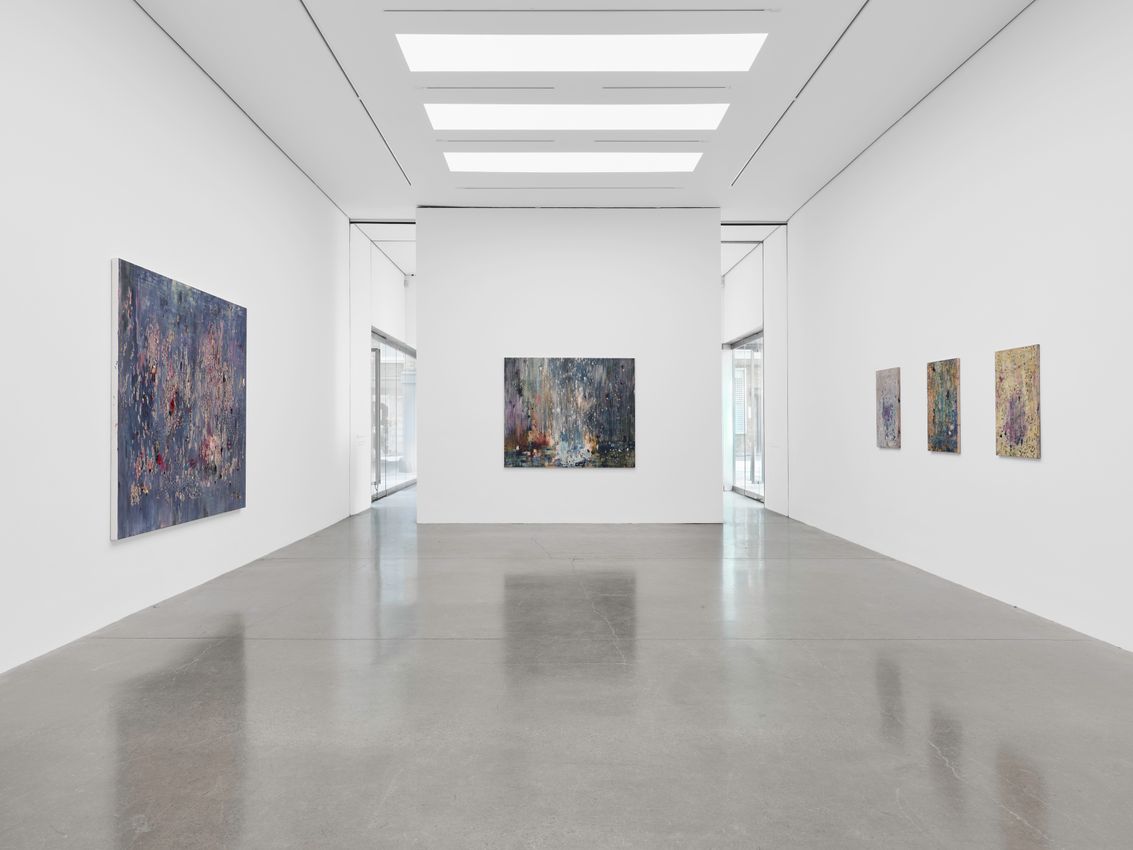
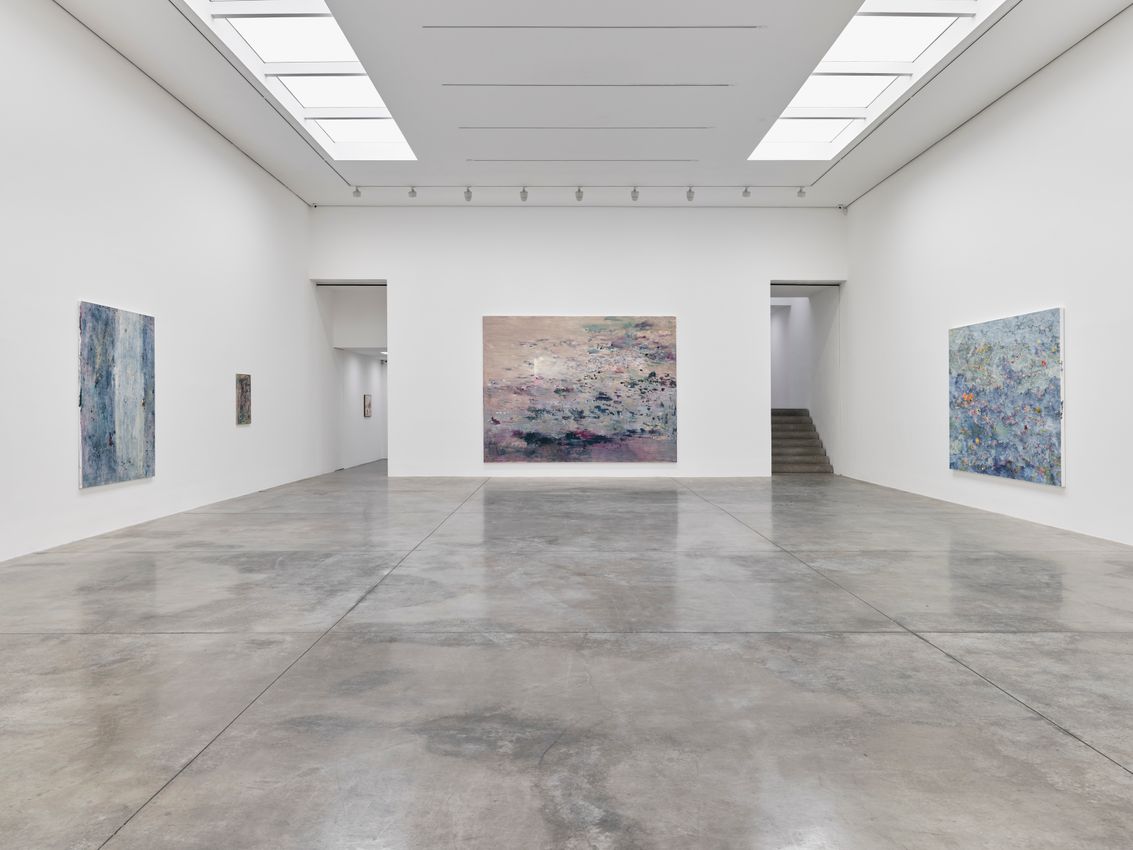
Guided by observations of tidal rhythms, ocean beds and meteorological conditions, Rheingantz infuses landscapes of water with a quasi-sentient vitality. Following a recent visit to Patacho, a beach in north-eastern Brazil, Rheingantz created Maré Baixa (2023), a large-scale oil painting whose murky overlays of paint chronicle the astronomical timekeeping of the water’s tidal oscillations. Across this expanse, small isles of disordered paint manifest turrets of seaweed and dark shingle from the morning’s receding tide, while rivulets of mauve and slate-grey mirror the drifting clouds overhead, presaging the landscape’s imminent submergence beneath the water’s advancing lunar path. Other compositions orchestrate a violent sensibility, exemplified in Canastra and Lightning Water (both 2023), the latter depicting a torrent of white-hot, electric sparks cascading down the canvas with perilous force. For these works, Rheingantz drew inspiration from the Serra da Canastra region of Minas Gerais, Brazil – an area bedizened with waterfalls and turbulent water currents, which stirred in Rheingantz equal parts fear and awe.

Gesturing further afield, paintings such as Oferenda, Arabesco and Rosário (all 2023) pay homage to the artist’s sojourns through India, the abstract symbolic patterning of Moroccan tapestries and the weathered facades of 17th-century Mexican frescoes. In the creation of two large blue paintings, Oferenda and Riverbed (both 2023), the artist was profoundly impacted by an encounter with the Hindu death rituals at the banks of the Ganges River in Varanasi, where the burning ghats of cremating bodies spat orange embers into the early morning river water. For these compositions, Rheingantz used turpentine to dilute the oil paint, imbuing the single-layer paintings with a watery physicality which invites variation of hue and a translucency of surface. Floral elements feature in these images too, offsetting the tenebrous undulations of blue with fiery tones of orange, red and yellow, that are equally suggestive of the assorted offerings of flowers and candles presented during Brazil’s annual festival dedicated to the goddess Iemanjá.

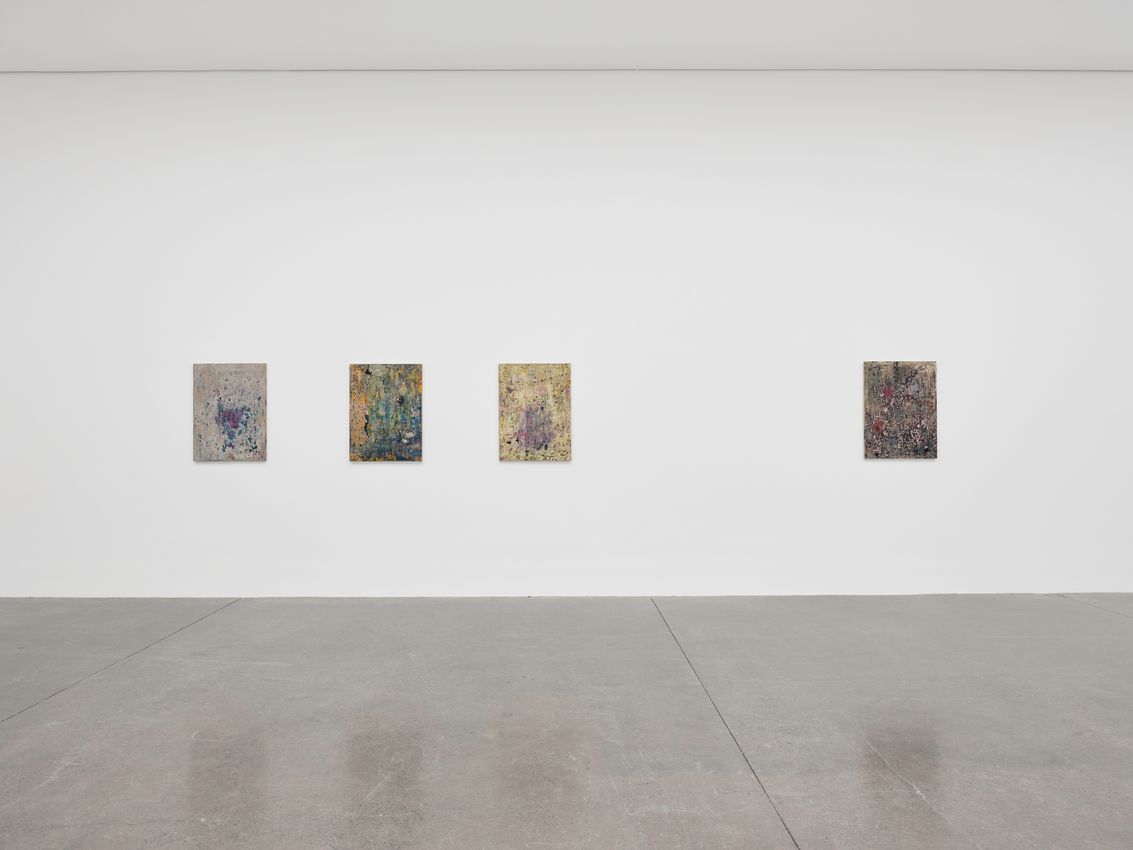
In her ongoing artistic evolution, Rheingantz has increasingly embraced new mediums. For several years, she has worked in collaboration with her mother, together selecting the colours, sizes and compositions from details of her paintings to create embroidered canvases. Most recently, she has ventured into tapestry, partnering with local Uruguayan artisan Jorge Francisco Soto. The embroidery work Ghost (2023) originates from a watercolour painting – a medium whose slippery contingency likewise informs the making of Oferenda and Riverbed. In this collaborative, cross-disciplinary process, the paintings’ implicitly gridded construction is exposed in the embroidery and tapestry works through stacked horizontal panelling, which chart an agglomeration of rhythmic and iterative stitchwork, giving rise to an intriguing hybridity of density and delicacy.In response to the artist’s recent diagnosis of thyroid cancer, Rheingantz’s Células (2023) traces the molecular mapping of an internal chorography. In this painting, patches of crimson are infringed upon by an unruly distribution of pigment across the canvas, their patterned inflection suggestive of an invasive growth. These monochrome configurations disturb the ambivalence of the composition’s muted backdrop, tracing a shifting corporeal terrain of bodily vulnerability. This visceral language resonates with Schmetterlinge im bauch (2023), whose taupe backdrop is stippled with teal, mustard and fuchsia, imbuing the painting with a restless energy that evokes the nervous discordance of the work’s title: Butterflies in the stomach.

Expansive in scale and richly textured, Rheingantz’s landscapes deconstruct topography into its loosest arrangements. Nourished by an ever-evolving cache of memories and photographs, taking cues from the shifting infrastructure of Brazil and her formative memories growing up in the rural Araraquara, the artist navigates place from multiple perspectives and temporalities, portraying place as both perceived and intuited.

Marina Rheingantz (b.1983 Araraquara, Brazil) lives and works in São Paulo, Brazil. Selected solo exhibitions include FRAC Auvergne, Clermont-Ferrand, France (2021); Nichido Contemporary Art, Tokyo (2016); Independent Projects, New York (2014); Centro Cultural São Paulo (2012); and Centro Universitário Maria Antonia USP, São Paulo (2011). Selected group exhibitions include Museum de Fundatie, Zwolle, Netherlands (2023), Kunsthal KAdE, Amersfoort, Netherlands (2022); Museu de Arte do Rio, Rio de Janeiro, Brazil (2020); Museum Dhondt-Dhaenens, Deurle, Belgium (2018); Estação Pinacoteca, São Paulo (2018); LITEXPO, Vilnius, Lithuania (2017); Kunsthal KAdE, Amersfoort, Netherlands (2016); Projeto Piauí, Pivô, São Paulo (2016); The Rubell Family Collection/Contemporary Arts Foundation, Miami, Florida (2016); Museu de Arte Moderna do Rio de Janeiro, Brazil (2015); Contemporary Arts Foundation, Miami, Florida (2015); and The Museum of Fine Arts, Gifu, Japan (2015). Her work is held in international collections including Museu Serralves, Porto, Portugal; Taguchi Art Collection, Tokyo; Pinacoteca do Estado de São Paulo; MAM Rio, Rio de Janeiro; Inhotim, Brumadinho, Brazil; Pinault Collection, Paris; and Itaú Cultural, São Paulo.

Read More

Installation Views

About the Artist

The work of Brazilian artist Marina Rheingantz expands the genre of landscape painting, with space seemingly unpopulated, time decelerated and detail momentarily preserved. Created through a varied application of paint, the artist presents place as indistinguishable from atmosphere as well as remembrance and emotional attachment, negotiating seemingly empty regions as accreted with time and resonant with affect. As vestigial repositories of life and conduits of time’s passing, Rheingantz realises landscapes in the wake of activity long since evacuated: wastelands, ruins, training fields. At times adopting an aerial perspective or the suggestion of flight in her paintings, Rheingantz deconstructs topography into its loosest forms, articulating a lyrical suggestion of place that has been ‘seen, sensed and remembered’.

View Artist Profile

Also Exhibiting

About the Gallery

An international art powerhouse, White Cube was established in 1993 in London by art dealer Jay Jopling. In its space on Duke Street, it served as the early exhibition venue for many now internationally acclaimed British artists, including Tracey Emin, Gilbert & George, Rachel Kneebone and Antony Gormley, who still show with the gallery today.

View Gallery Profile
Address
25–26 Mason's Yard
London
United Kingdom
Opening Hours
Tuesday - Saturday
10am – 6pm
(1)
London 25–26 Mason's Yard
White Cube
25–26 Mason's Yard, London, United Kingdom
+44 207 930 5373
http://whitecube.com

Opening hours
Tuesday - Saturday
10am – 6pm
The art world in focus